Tours
Activities
Places of interest
Where to eat
Where to sleep

Explore Clermont-ferrand with HOTEL OCEANIA

Are you the owner?
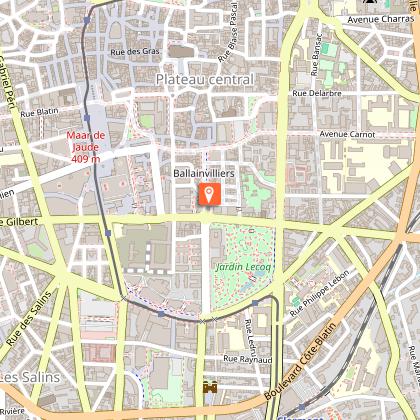
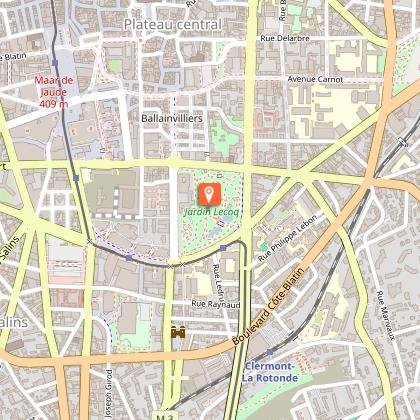
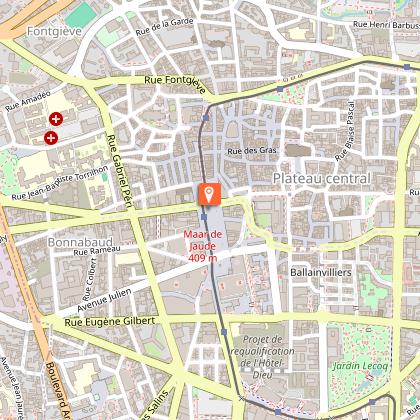
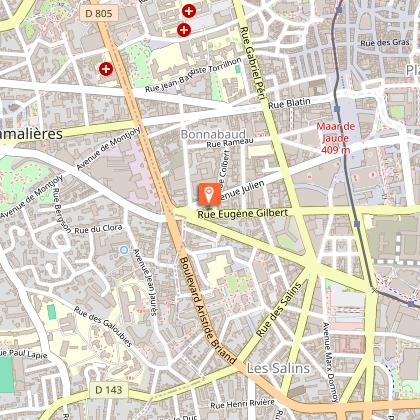
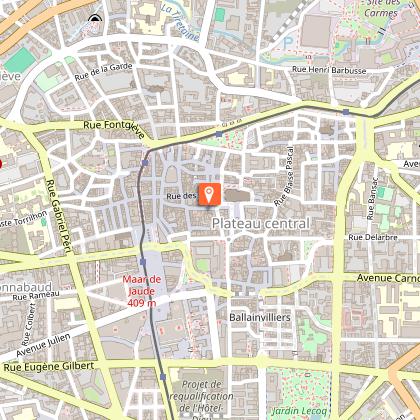
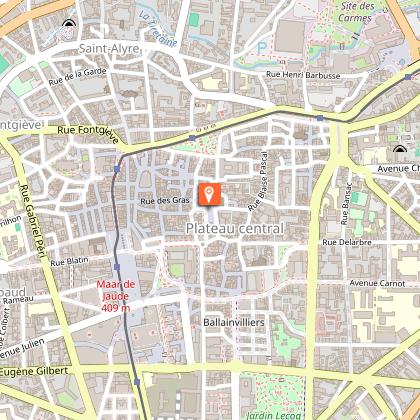
Welcome to Clermont-Ferrand, a city brimming with charm in the heart of Auvergne. During your stay at HOTEL OCEANIA, you’ll be ideally situated to uncover the natural and cultural delights of the Puy-de-Dôme area.
Delve into the history of Clermont-Ferrand by visiting the majestic Notre-Dame-de-l’Assomption Cathedral, a masterpiece of Gothic architecture. Nearby, the Roger-Quilliot Art Museum sh...
See more

Walking around HOTEL OCEANIA

See more suggestions
Accessible hikes near HOTEL OCEANIA.
See more suggestions
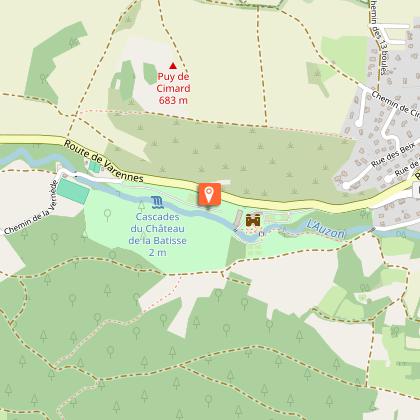
GTMC-VTT - Stage 12 - Clermont-Fd > Volvic
1.5 km

GTMC-VTT - Stage 12 - Clermont-Fd > Volvic

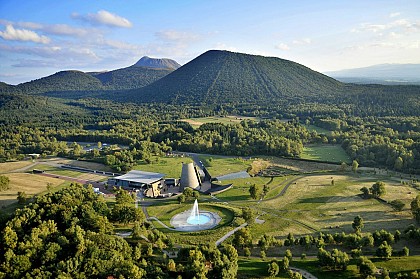
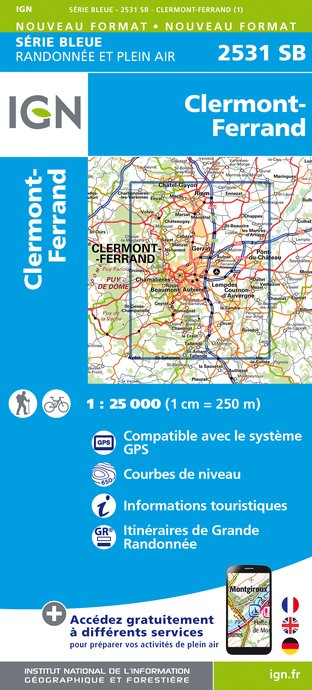
The GTMC-VTT, from Clermont-Ferrand to Volvic. The GTMC mountain bike route continues from Clermont-Ferrand (historic start of the GTMC mountain bike race) to Volvic. From Clermont-Ferrand, the historic departure point for the GTMC mountain bike race, you gradually gain altitude as you head towards the Chaîne des Puys and its 80 volcanoes. Under the gaze of the impressive Puy de Dôme, you'll discover a variety of landscapes, from a 2,000-year-old town to sunny hillsides planted with fruit trees and vines. The route ends in chestnut woods and volcanic cheires, with their chaotic vegetation and morphology. All along the way, the mountain biker's attention is irresistibly drawn to the volcanoes. Volvic, famous for its water and volcanic stone, is the finishing point of this stage. Departure is from Clermont Ferrand railway station. We climb gently up to Place Delille, which we cross before plunging down in front of a large secondary school to follow a long straight line. From set of traffic lights to set of traffic lights, the MTB GTMC takes us to the tarmac slope leading to the Col de Bancillon (alt. 551m). A short but steep descent on a farm track takes us to the Blanzat sports complex. We have to find a passageway to cross it and then climb back up to Blanzat on tarmac. Superb trails through fruit groves and meadows to the village of Malauzat. From Malauzat, we climb through a chestnut grove that takes us right up close to the Chaîne des Puys. Playful, relatively easy trails.

2 h
20 km
Medium
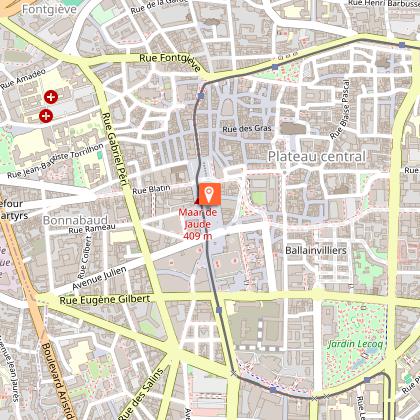
40 Avenue de l'Union Soviétique 63000 Clermont-Ferrand
Show

What to do in HOTEL OCEANIA

See more suggestions
Explore the bookable activity options in HOTEL OCEANIA for all tastes and ages.
See more suggestions
Lemptégy Volcano
12 km

Lemptégy Volcano

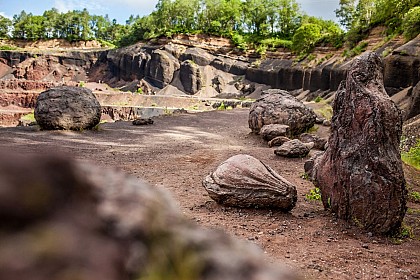
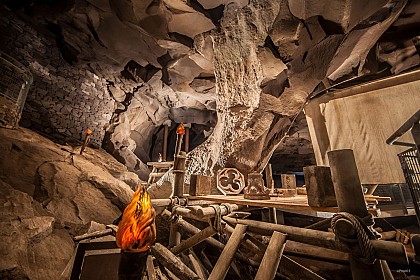
Explore the heart of a real volcano... Located at the center of the tectonic "Chaîne des Puys - Faille de Limagne" UNESCO World Heritage Site, we offer you the unique and unusual opportunity to discover the inside of a 100% natural volcano. Discover the secrets of volcanology with a 2h30 interactive tour of the Lemptégy volcano, comprising 5 stages: - The "volcano and men" tour: this fun, interactive introduction to the visit will familiarize you with the volcano and give you a better understanding of its metamorphosis. A 30-minute self-guided tour. - Guided exploration of the volcano's anatomy: meet your guide on foot or by train. He'll share all his geological and volcanological knowledge with you: bombs, volcanic chimneys, lava flows... and you'll leave with scoria (solidified lava). A wealth of information to help you better understand the landscape around you. - L'âme de Lemptégy": an unusual journey into the site's industrial past, with a visit to the old pozzolan extraction machines once used by quarrymen. - The immersive "Volcano 'Express" attraction: this sensory and emotional experience reveals all the secrets behind the formation of the Chaîne des Puys and the Faille de Limagne. What if the fault were to reopen... Will you reach your destination? - The dynamic 4D film "Aux Origines": enjoy an unprecedented flight over the volcanoes of Auvergne and relive the history of the volcano as if you were there, from its eruptions to the present day. While you're there, treat yourself to a gourmet break at the Volcan de Lemptégy restaurant. The chef offers traditional regional dishes (sausage/aligot, truffade, petit salé...). You can also stroll through the new boutique and discover a wide range of regional products, souvenirs, books... LE REVEIL DU VOLCAN" NIGHT TOUR: a breathtaking nocturnal experience! Entering at night, you'll be propelled into the heart of the Lemptégy Volcano for an extraordinary experience. Along the way, you'll plunge into an erupting volcano and discover magical creatures. A new world to discover and a new way to experience Volcan de Lemptégy. 1.5 km on foot. Prices and schedule: see website. IN JULY AND AUGUST

31 route des Puys Les Maisons Rouges 63230 Saint-Ours
Book from 0 €Book
Show

What to visit in HOTEL OCEANIA

See more suggestions
Engage in outdoor activities in HOTEL OCEANIA.
See more suggestions
Bargoin Museum
370 m

Bargoin Museum

By 2025, the Bargoin Museum will have reinvented itself to become a museum dedicated to the region's archaeology and history. Housed in a neoclassical building inaugurated in 1903, until 2024 the Musée Bargoin presented non-European textile and archaeological collections, mainly from the Clermont-Ferrand area and the Puy-de-Dôme département. In 2025, a new chapter in the museum's history begins. In preparation for the move of the collections in storage to the new conservation center for metropolitan museums, currently under construction, the museum team will begin a vast project to remove dust, consolidate, computerize and package the collections, which will require the use of exhibition spaces. As of January 14, 2025, the museum will therefore only be partially open to carry out this operation. The recently renovated room of the sanctuary of the source des Roches will still be accessible, as will the exhibition space in the hall, which in mid-March will welcome one of the highlights of the archaeological collections: the equestrian statue of the god Jupiter striking down an anguiped monster from Egliseneuve-près-Billom, acquired, thanks to the financial support of the State and the Region, in 2018 and which benefited from a major restoration in 2024. Although its exhibition space will be temporarily reduced, the museum will continue to welcome the public and offer behind-the-scenes visits. Some of the museum's collections will also be on display at other venues, notably the Maison archéologique des Combrailles in Voingt. The museum will also be taking part in major cultural events: Museum Night, the European Archaeology and Heritage Days, the Arts en balade weekend... At the end of this work on the collections, the Bargoin museum will embark on a phase of renovation. When it reopens, it will be entirely devoted to the archaeology and history of the region, and the non-European textile works will join the collections of the Musée d'art Roger Quilliot.

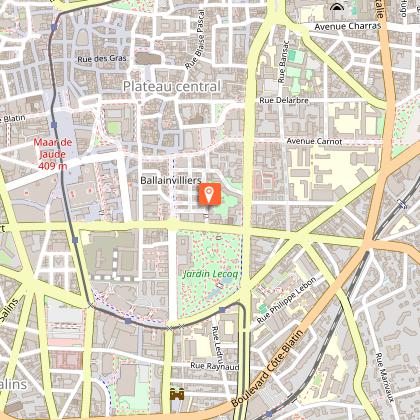
45 rue Ballainvilliers 63000 Clermont-Ferrand
Show
Atelier Bernardin
436 m

Atelier Bernardin

The Bernardin family, iron workers by trade, produced some major iron works at Clermont-Ferrand and in Auvergne, many of which are protected as Historic Monuments. The ironworker Jean-Baptiste Bernardin (1856-1951), known as Bernardin the elder, was the designer of the décor for his workshop house listed on the historic monuments registry since 1981. The house was built in 1890 for sculptor Jean-Baptiste Gourgouillon then acquired by the Bernardin family. The Art Nouveau style ironwork on the balconies, bays and the sign show the artist’s skill, with the remarkable work on the leaves, flowers, vine branches and whiplash lines. Bernardin the elder received many accolades and became member of the jury of the Meilleurs Ouvriers de France competition (a prestigious craftsmen award). He was the designer in Clermont-Ferrand of the doors of the Prefecture, the Bargoin Museum and the ironwork on the former Caisse d’Épargne bank building, now the administrative court, in Cours Sablon. Jean-Baptiste Bernardin is buried in the Carmes cemetery. Jean-Baptiste was the first in a notable line of artistic ironworkers. Auguste (1880-1962) had another workshop, listed on the historic monuments registry in 2006, at 53 Avenue Pasteur in Clermont-Ferrand, with a spectacular Art Nouveau gate. Georges (1894-1974) received the Meilleur Ouvrier de France award in 1962 and the same year received the gold medal at the Salon des Artistes Français. He is responsible in particular for the iron railings on the Saint-Éloy post office, on the humanities university building on Avenue Carnot and on the former Sabourin sanatorium, now Clermont-Ferrrand’s École Nationale Supérieure d’Architecture. Georges Bernardin’s workshop was located successively at 24 Rue Eugène-Gilbert, then at this location, and on Rue Bonnabaud, not far away.

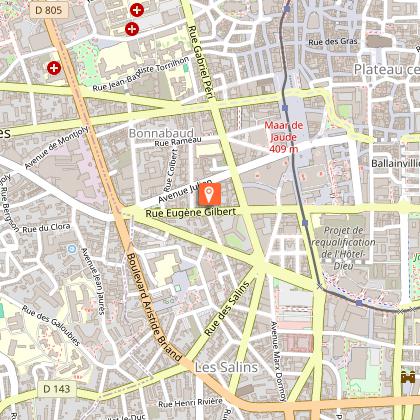
30, rue Eugène Gilbert 63000 Clermont-Ferrand
Show
Henri-Lecoq Museum
470 m

Henri-Lecoq Museum

Monumental herbarium collection, 50,000 samples of rocks, fossils and minerals and La Pascaline: a calculating machine invented by Blaise Pascal. Based in Clermont-Ferrand since 1873, the Henri-Lecoq Museum is a science museum that explores the region's natural heritage, including animals, plants, rocks and fossils. With its educational garden, the museum encourages visitors to reflect on the history of science and technology. The collections, the result of a bequest by Henri Lecoq, are housed in the museum's former mansion and have been enriched over the years. The museum is a candidate for the "Maison des illustres" label. The History of Science and Technology department traces the development of science from the 16th to the 21st century, with remarkable exhibits such as mechanical calculating machines and Louis Pasteur's laboratory balloon, testimony to his time in Clermont-Ferrand. The museum is also involved in the national mission to safeguard contemporary scientific and technical heritage. In the Written and Graphic Heritage department, the collection includes manuscripts, old books and iconographic documents, including works by Henri Lecoq and geological maps published by him. The Botany Department houses a herbarium rich in specimens, tracing the flora of the Massif Central and Europe. The geology department holds almost 50,000 rock and fossil samples, while the vertebrate department contains a vast collection of naturalized animals, including 700 mammals and 2,400 birds. Entomological collections, dating back to the late 19th century, number 290,000 insects, while the mollusc department features 120,000 shells. These collections support research programs and publications, with six catalogs already published, the latest focusing on Henri Lecoq's malacological collection. Visit the Henri Lecoq Museum to discover a rich scientific heritage and a fascinating history of science and technology.

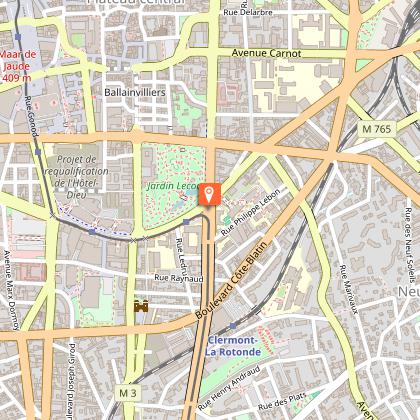
15 rue Bardoux 63000 Clermont-Ferrand
Show
Faculté des Lettres et Sciences Humaines - Faculté de Droits et de Sciences Économiques
507 m

Faculté des Lettres et Sciences Humaines - Faculté de Droits et de Sciences Économiques

The Humanities university building and the Law and Economics university building of Clermont-Ferrand, built in the 1960s, both have Architecture Contemporaine Remarquable (remarkable contemporary architecture) status. HUMANITIES UNIVERSITY BUILDING The humanities university building on Boulevard Gergovia was built between 1963 and 1966 by the architect Georges Noël (1907-1970), Prix de Rome award winner. An example of rational architecture, the building belongs to the Brutalism trend. Recognisable on the boulevard by the considerable size of the large amphitheatre, the university is built entirely from reinforced concrete. The amphitheatre, standing on V-shaped piers, straddles the entrance path to the university. The teaching spaces are organised in a perpendicular five-storey building. This building, with its totally visible reinforced concrete frame, is also sitting on concrete piers. It was awarded “Architecture Contemporaine Remarquable” (remarkable contemporary architecture) status in 2023. LAW AND ECONOMICS UNIVERSITY BUILDING The law and economics university building received the same award, as did the adjoining school for tax studies. The two institutions were inaugurated in 1966. Eugène Beaudoin (1898-1983) was the architect of the law school and Bernard de la Tour d’Auvergne of the tax studies school. Structured into four buildings around a central garden, the two institutions share the space: the northern, eastern and half of the southern section for law; the rest for the tax studies school. The first level is enhanced as a first floor. The floor culminates in a cornice placed on supports, thus creating a simple line of light that highlights the façade. The architects used Volvic stone and aluminium and created large glass surfaces. The monument La France, by Antoine Bourdelle (1861-1929), bequeathed by the sculptor’s widow, depicts France as Pallas or Athena, holding a spear decorated with olive branches, a shield formed from the tablets of stone, and the serpents of wisdom. Opposite is the statue of the Clermont lawyer, Jean Domat, a friend of Blaise Pascal, by Gustave Gournier (1970).

Boulevards Gergovia et François Mitterand 63000 Clermont-Ferrand
Show
Beaurepaire convent chapel
594 m

Beaurepaire convent chapel

Located to the south-west of Clermont, inside Square Aimé Coulaudon, this Romanesque-style chapel dates from the 13th century. It is listed as a Historic Monument. Les Cordeliers, a mendicant order founded by Saint Francis of Assisi in 1210, arrived in Clermont in the early 13th century. They were first located outside the walls of the city and then had the Beaurepaire chapel built. Then, for safety reasons, the convent moved inside the city walls, close to the cathedral, and the monks built the present-day Les Cordeliers chapel (on Place Sugny) in 1248. During the French Revolution the Beaurepaire chapel was sold as a national asset, then became the property of the municipality. It was used as an explosives and arms depot during the 19th century. It was listed as a historic monument in 1919. The entire building is 1 metre below the primitive earth level. It is accessed via a flight of five steps made from Volvic stone. The chapel features a single three-bay nave separated by transverse ribs and ending in a flat apse. The lateral walls are punctuated by semi-circular windows. The main door sits under a pointed arch. This chapel is an interesting example of transitional architecture with semi-circular arch openings, typical of Romanesque architecture, and interior barrel vaulting, pointed arches and hook capitals which are more typical of Gothic architecture. Similarly, the use of Volvic stone did not become widespread until the Clermont cathedral was built in 1248. The supports and frames of bays and arches are made from Volvic stone, making it a trailblazer.

Avenue Julien (angle avec l'avenue Eugène Gilbert) 63000 Clermont-Ferrand
Show

Where to eat in HOTEL OCEANIA

See more suggestions
Explore the culinary traditions of HOTEL OCEANIA.
See more suggestions
Where to sleep in HOTEL OCEANIA

See more suggestions
Find a comfortable stay in HOTEL OCEANIA.
See more suggestions
Caution!
We have no information on the difficulty of this circuit. You may encounter some surprises along the way. Before you go, please feel free to inquire more and take all necessary precautions. Have a good trip! 🌳🥾