Tours
Activities
Places of interest
Where to eat
Where to sleep

Explore Saint-jacut-de-la-mer's hidden treasures

Are you in charge of the destination?
Welcome to Saint-jacut-de-la-mer, a hidden gem in the Côtes-d'Armor, Brittany. This charming coastal town offers a plethora of activities and attractions to enhance your stay. Take time to explore its stunning beaches, perfect for a day of relaxation or a hike along the coastal paths that offer spectacular views. Dive into local history by visiting the remains of the Saint-Jacut priory or strollin...See more

Walking around Saint-jacut-de-la-mer

See more suggestions
Enjoy outdoor walks in Saint-jacut-de-la-mer.
See more suggestions
In Chateaubriand's footsteps in Plancoët (grand tour)
7.9 km

In Chateaubriand's footsteps in Plancoët (grand tour)

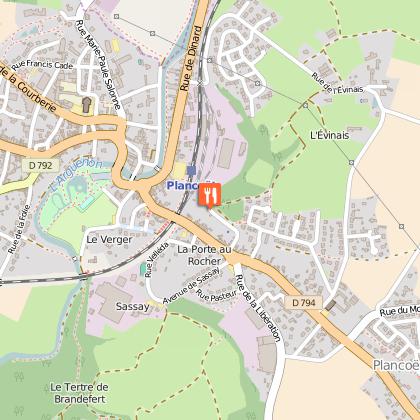
Nazareth district was attached to Plancoët as late as 1841. Before then, it was an important hamlet of Corseul, the Roman city. The central rue de l'Abbaye, with its preserved architecture, is one of the oldest streets of the town. This bank of the Arguenon River is the theater of the first steps of great Romantic author: François-René de Chateaubriand. François-René de Chateaubriand was born in St Malo on Septembre 4th 1768 and was buried, as he asked, at the Grand Bé, in front of St Malo, July 19th 1848. Feeble newborn, he spent his early childhood "at Plancoët's fresh air' where his grand-mother, Madame de Bedée placed him in a nanny's care. He stayed there for approximately three years, then it was Saint-Malo and Combourg, Dol, Rennes and Dinan's schools from where, adolescent, he comes to visit his family. He's the witness of his kin's happiness... This walk follow the circuit that Chateaubriand's mother and grand-mother took between la Bouëtardaye manor, the rented house of Rue de l'Abbaye and Nazareth church. (These suggested itineraries are given as an indication and don't take the possible evolution of the grounds or the environment into account. The use of these circuits is, therefore, left to the personal responsability of the users, the Office de tourisme disengages itself of any responsability towards the use of the maps and the possible accidents that might occur on the offered itinerary).

2 h
7.4 km
Medium
1 Rue Notre Dame 22130 Plancoët
Show
GRP 4 Les belvèdères du Mont-Saint-Michel - de Carolles à Avranches
49 km

GRP 4 Les belvèdères du Mont-Saint-Michel - de Carolles à Avranches

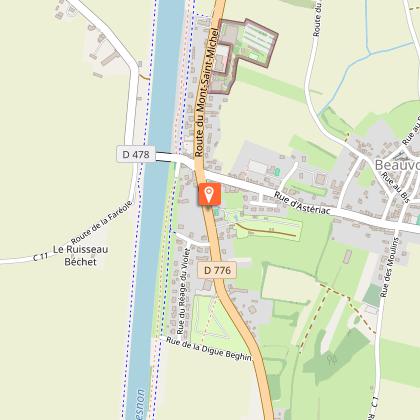
Presentation: Walk the second section by taking part of the GR223 and the GR22. This section leads you to Avranches. Remarkable points on the stroll 11- La falaise de Carolles : Placed between 2 Vauban huts, it offers incomparable panoramas and evokes many stories: legions of Caesar and soldiers of Hitler, Vikings and Chouans, St Scubilion and Vauban, Gargantua and Satan, gold diggers and builders of dykes, naval fights and shipwrecks, silence of the leprous monks of St-Clement and mischievousness of the fetishes of the caves... 12- The church of Saint Jean le Thomas : Be careful at the crossroads, the church of Saint-Jean-le-Thomas is on the left on the D24. Of Romanesque origin from the 12th, 14th and 16th centuries (IMH): traces of fern leaf apparatus, Gothic portal and bell tower; high altar and statues from the 18th century. Commune of Dragey-Ronthon. 13- The church of Saint-Medard Dragey: Built from the twelfth century, it has a stained glass window recalling the drowning of the son of the then owner of the manor Brion, Mr. Isselin with one of his friends. Its Saint-Médard tower was used as a landmark for fishermen, pilgrims or sailors who were in the bay. 14- Les chemins de la Baie et Découverte du Bec Andaine : This sandy point bordered by dunes is the starting point for pedestrian crossings of the bay towards Mont-Saint-Michel, guided mainly by two organisations: Les Chemins de la Baie and Découverte. The crossings take 1h30 and the same for the return. 15- The church of Notre-Dame and Sébastien de Genêts: The church of Notre-Dame and Sébastien, as well as its cemetery, are listed. The bells were also used to guide people lost in the bay in foggy weather. On the benches of the charming south porch, the affairs of the parish were once dealt with. 16- Islet of Tombelaine rock: Look out to sea on the right, you will see the wild islet of Tombelaine rock, which is home to many birds: little egrets, gulls etc. ... You are now on the GR223, which goes around the Cotentin, the coastal path. 17- Pointe du Mont Manet des Près Salés : The point of Mont Manet offers a panorama on the "Grand Port" and the "herbus" or "salt meadows" sheltering cows and sheep that feed on the vegetation loaded with iodine and salt. The flesh of these lambs is particularly appreciated by gourmets. 18- The Romanesque priory of Saint-Leonard: The Romanesque priory of Saint-Leonard dominates the town of Vains. It is made of schist and granite, noble material of the Avranchin for religious buildings. The territory was given by William the Conqueror to an abbey in Caen who founded this priory, around which the town was built. 19- The points of Grouin du Sud and Roche Torin: The points of Grouin du Sud and Roche Torin form ideal elevations to observe the rising tide. During the equinox tides, they are invaded by a crowd that comes to witness the impressive spectacle of the 'flood' invading the shore at the "speed of a galloping horse" and the amazing formation of the tidal bore. 20- The tithing barns of Saint Léonard : Look at the two 17th century tithing barns : one at the entrance of the village of Saint-Léonard, the other near the church of Vains has been restored. The Manor of Vains has an interesting architecture: the North side (XVIth century) was a fortified and defensive farm, the South side (from the XVIIIth century) became a gentleman's residence, when peace returned. 21- The Avranches Scriptorial Museum: The Scriptorial is the Mont-Saint-Michel manuscript museum which presents more than 200 medieval volumes and allows the discovery of the different phases of manuscript production, calligraphy and illumination. It deals with the content of ancient texts, then evokes the evolution towards printing. Its medieval architecture is interesting.

7 h
30 km
Hard
Show

What to do in Saint-jacut-de-la-mer

See more suggestions
Discover surprising activities in Saint-jacut-de-la-mer and book the ones you like.
See more suggestions

What to visit in Saint-jacut-de-la-mer

See more suggestions
Visit the historical sites of Saint-jacut-de-la-mer.
See more suggestions

Where to eat in Saint-jacut-de-la-mer

See more suggestions
Food enthusiasts will love Saint-jacut-de-la-mer's restaurants.
See more suggestions

Where to sleep in Saint-jacut-de-la-mer

See more suggestions
Find a comfortable stay in Saint-jacut-de-la-mer.
See more suggestions
Saint-Jacut's Abbey
1.9 km

Saint-Jacut's Abbey

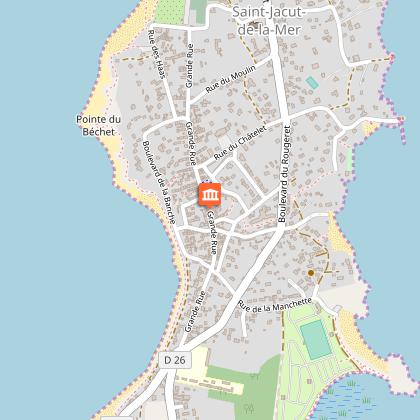
After the Plage des Haas, the costal path follows the abbey’s park. A gate allows you to access this private property and discover its remarkable edifice. History and legend tell us that in the 5th century, two twin monks, Jacut and Guéthenoc, arrived on this peninsula called « Landoac » looking for a fitting place to create a hermitage. A Benedictine monastery was established there and had a great influence on the region’s development and evolution until the French Revolution. Sold as Bien National (National Good), sold again many times, the abbey knows many vicissitudes and different uses (Border guard caserns, home to a wealthy foreign family...). In 1875, the monastery’s ruins are bought by the Congrégation des Sœur de l’Immaculée: a religious order from St-Méen-le-Grand (Ille-et-Vilaine), they’ll turn it into a nursing home for the nuns and a free school for the children of the area. The restoration starts right away. To finance the school, the nuns host, firstly the British tourists who came, under doctor’s orders, to take sea water and hot algae baths. They stream in right from 1876. That’s the start of the “guesthouse”. Along the years, the summer holiday goers keep growing in numbers; the nuns develop the hotel capacities of the Abbey and diversify the activities and the hosting: the Abbey is now a guesthouse and a high place of cultural and spiritual encounters. Please respect the environment and the quietness of the residents.

31-43 Rue des Haas 22750 Saint-Jacut-de-la-Mer
Show
Caution!
We have no information on the difficulty of this circuit. You may encounter some surprises along the way. Before you go, please feel free to inquire more and take all necessary precautions. Have a good trip! 🌳🥾