Tours
Activities
Places of interest
Where to eat
Where to sleep

Camping Naturiste Pallieter: Discover Bourseul, Brittany

Are you the owner?
Welcome to Camping Naturiste Pallieter, an ideal starting point to explore Bourseul and its surroundings. Located in the heart of Côtes-d'Armor, Brittany, this region is rich in activities and attractions that will delight all visitors.

Discover the charming village of Bourseul with its half-timbered houses and picturesque streets. Wander through the local market to taste fresh and artisanal pr...
See more

Walking around CAMPING NATURISTE PALLIETER

See more suggestions
Family walks around CAMPING NATURISTE PALLIETER.
See more suggestions
In Chateaubriand's footsteps in Plancoët (grand tour)
1.8 km

In Chateaubriand's footsteps in Plancoët (grand tour)

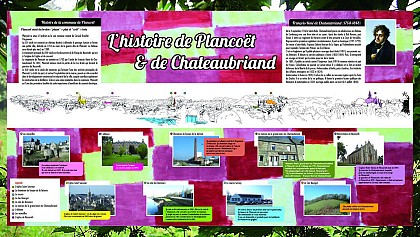
Nazareth district was attached to Plancoët as late as 1841. Before then, it was an important hamlet of Corseul, the Roman city. The central rue de l'Abbaye, with its preserved architecture, is one of the oldest streets of the town. This bank of the Arguenon River is the theater of the first steps of great Romantic author: François-René de Chateaubriand. François-René de Chateaubriand was born in St Malo on Septembre 4th 1768 and was buried, as he asked, at the Grand Bé, in front of St Malo, July 19th 1848. Feeble newborn, he spent his early childhood "at Plancoët's fresh air' where his grand-mother, Madame de Bedée placed him in a nanny's care. He stayed there for approximately three years, then it was Saint-Malo and Combourg, Dol, Rennes and Dinan's schools from where, adolescent, he comes to visit his family. He's the witness of his kin's happiness... This walk follow the circuit that Chateaubriand's mother and grand-mother took between la Bouëtardaye manor, the rented house of Rue de l'Abbaye and Nazareth church. (These suggested itineraries are given as an indication and don't take the possible evolution of the grounds or the environment into account. The use of these circuits is, therefore, left to the personal responsability of the users, the Office de tourisme disengages itself of any responsability towards the use of the maps and the possible accidents that might occur on the offered itinerary).

2 h
7.4 km
Medium
1 Rue Notre Dame 22130 Plancoët
Show

What to do in CAMPING NATURISTE PALLIETER

See more suggestions
Plan your leisure time in CAMPING NATURISTE PALLIETER by booking activities that suit your preferences.
See more suggestions

What to visit in CAMPING NATURISTE PALLIETER

See more suggestions
Shop in the boutiques of CAMPING NATURISTE PALLIETER.
See more suggestions
Velléda's rock
630 m

Velléda's rock

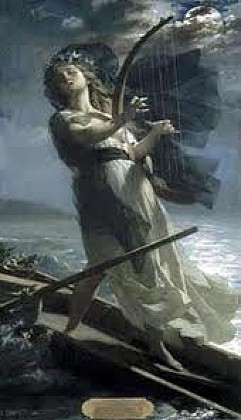
You are arriving, after taking a path, by a stream in front of a rock. Imagine the young Chateaubriand coming here two centuries earlier to take a nap and let himself dream. Facing him, the marshes werein water which the warm summer days turned into mist, favourable to dreams. That's here that he had the vision of druidess Velléda, Romantic figure of the "martyrs". "Soldiers warned me that for a few days a woman exited the wood at the beginning of night, went up alone in a bark and crossed the lake, got down on the opposite bank and disappeared. Hidden amongst the rocks, I waited for a few moments without seeing anything appear. (...) I discover a skiff hanging on the top of a wave, a woman lead it; she was singing whilst fighting the storm, she looked like she was playing amongst the winds; one would have said they were under her powers, so much was she appearing to challenge them. (...) Soon she reaches the shore, soars to terra firma, goes deep into the woods. She passed by me without seeing me. She was tall of height, a black tunique, short with no leaves, barely served as a veil on her nakedness. She was carrying a golden sickle hung to a bronze belt and was crowned of a oak tree branch. The whiteness of her arms and of her skin, her blue eyes, her pink lips, her long blond hair floating freely, told of the daughter of the Gaulish, and contrasted by their softness to her proud and wilde gate. She sang with a melodious voice terrible words and her bare breast fell and rose as the waters' foam." (Extract from Martyrs)

La Basse Lande 22130 Saint-Lormel
Show
Manoir de Monchoix (private property)
1.4 km

Manoir de Monchoix (private property)

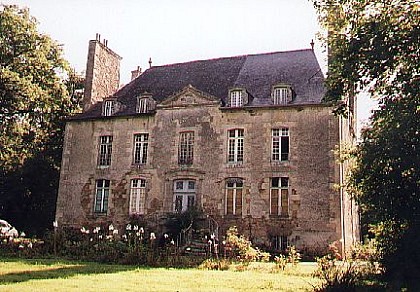
From this point, we can see, West of Plancoët, Monchoix manor, home of happiness which belonged to Antoine de Bedée, called Bedée the Artichoke. "My uncle's castle, the count of Bedée, was situated a league away from Plancoët, in an elevated and pleasant position. Everything breathed joice there; my uncle hilarity was endless. He had tree daughters, Caroline, Marie and Flore, and a son, the count of la Boistardais, adviser to the Parliament, who shared his heart fulfilment. Mon-Choix was always full of the gentlemen of the area. We played music, danced, hunted; we knew jubilation from dawn to dusk. My aunt Madame de Bedée who was seeing my uncle cheerfully eating away his funds and his income, got justly crossed, but wasn't heard out. On the contrarary, her bad temper increased the good spirits of her family, particularly as my aunt herself was prone to many peculiarities; she always had a quarrelsome hunting dog laying in her fold and a private boar which filled the castle with his grunts. When I arrived from the dark and silent paternal house to this home of party and noise, I felt like being in true paradise. This contrast became more apparent, when my family was based in the countryside. To go from Combourg to Mon-Choix, was going from the desert to the world, from the keep of an old Gaulish baron to the villa of a Roman prince." (extract from Memories of my Life) Going to step n°9 is going a long way on a rocky path. You can go directly to step n°10 without getting lost story-wise.

Avenue de Sassay 22130 Corseul
Show
Panorama of the Hillock of Brandefert
1.5 km

Panorama of the Hillock of Brandefert

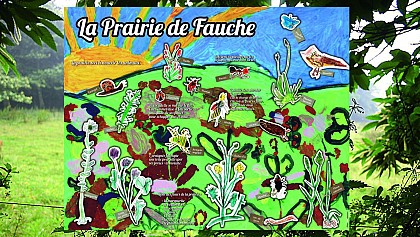
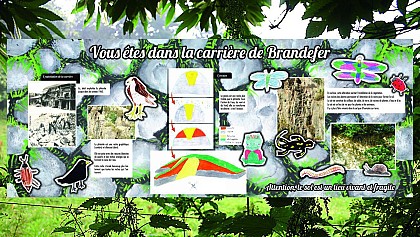
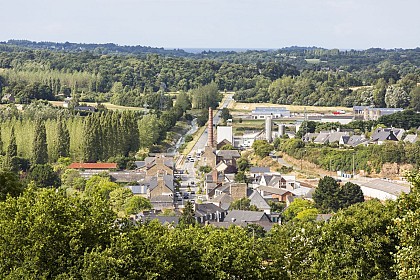
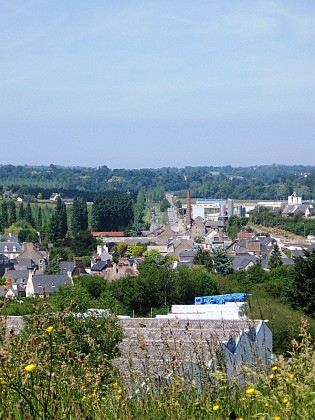
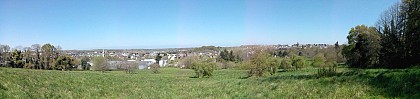
In order to breathe a little, we propose you stop here to enjoy, as a medieval cartographer did, the view given by the hillock. The old hamlet of Plancoët is easily spotted on your left, the hamlet of Nazareth on your right. Separating the two villages : the road, the railway tracks, the Arguenon River. Imagine two centuries ago, the arrival of the young Chateaubriand by carriage, feeble newborn and weaken, to find the "good air of Plancoët". Following your path you enter into a natural sensitive zone, qualified by scientists as an "exceptional island of ordinary biodiversity", and the house to over 795 animal species. From this point, we can see, West of Plancoët, Monchoix manor, home of happiness which belonged to Antoine de Bedée, called Bedée the Artichoke. "My uncle's castle, the count of Bedée, was situated a league away from Plancoët, in an elevated and pleasant position. Everything breathed joice there; my uncle hilarity was endless. He had tree daughters, Caroline, Marie and Flore, and a son, the count of la Boistardais, adviser to the Parliament, who shared his heart's fulfilment. Mon-Choix was always full of the gentlemen of the area. We played music, danced, hunted; we knew jubilation from dawn to dusk. My aunt Madame de Bedée who was seeing my uncle cheerfully eating away his funds and his income, got justly crossed, but wasn't heard out. On the contrarary, her bad temper increased the good spirits of her family, particularly as my aunt herself was prone to many peculiarities; she always had a quarrelsome hunting dog laying in her fold and a private boar which filled the castle with his grunts. When I arrived from the dark and silent paternal house to this home of party and noise, I felt like being in true paradise. This contrast became more apparent, when my family was based in the countryside. To go from Combourg to Mon-Choix, was going from the desert to the world, from the keep of an old Gaulish baron to the villa of a Roman prince." (extract from Memories of my Life). Imagine the young Chateaubriand coming here two centuries earlier to take a nap and let himself dream. Facing him, the marshes were in water which the warm summer days turned into mist, favourable to dreams. That's here that he had the vision of druidess Velléda, Romantic figure of the "martyrs". "Soldiers warned me that for a few days a woman exited the wood at the beginning of night, went up alone in a bark and crossed the lake, got down on the opposite bank and disappeared. Hidden amongst the rocks, I waited for a few moments without seeing anything appear. (...) I discover a skiff hanging on the top of a wave, a woman lead it; she was singing whilst fighting the storm, she looked like she was playing amongst the winds; one would have said they were under her powers, so much was she appearing to challenge them. (...) Soon she reaches the shore, soars to terra firma, goes deep into the woods. She passed by me without seeing me. She was tall of height, a black tunique, short with no leaves, barely served as a veil on her nakedness. She was carrying a golden sickle hung to a bronze belt and was crowned of an oak tree branch. The whiteness of her arms and of her skin, her blue eyes, her pink lips, her long blond hair floating freely, told of the daughter of the Gauls, and contrasted by their softness to her proud and wilde gate. She sang with a melodious voice terrible words and her bare breast fell and rose as the waters' foam." (Extract from Martyrs)

Avenue de Sassay 22130 Plancoët
Show

Where to eat in CAMPING NATURISTE PALLIETER

See more suggestions
Restaurants in CAMPING NATURISTE PALLIETER offer a variety of cuisines.
See more suggestions

Where to sleep in CAMPING NATURISTE PALLIETER

See more suggestions
Book a quality accommodation in CAMPING NATURISTE PALLIETER.
See more suggestions
Saint-Jacut's Abbey
12 km

Saint-Jacut's Abbey

After the Plage des Haas, the costal path follows the abbey’s park. A gate allows you to access this private property and discover its remarkable edifice. History and legend tell us that in the 5th century, two twin monks, Jacut and Guéthenoc, arrived on this peninsula called « Landoac » looking for a fitting place to create a hermitage. A Benedictine monastery was established there and had a great influence on the region’s development and evolution until the French Revolution. Sold as Bien National (National Good), sold again many times, the abbey knows many vicissitudes and different uses (Border guard caserns, home to a wealthy foreign family...). In 1875, the monastery’s ruins are bought by the Congrégation des Sœur de l’Immaculée: a religious order from St-Méen-le-Grand (Ille-et-Vilaine), they’ll turn it into a nursing home for the nuns and a free school for the children of the area. The restoration starts right away. To finance the school, the nuns host, firstly the British tourists who came, under doctor’s orders, to take sea water and hot algae baths. They stream in right from 1876. That’s the start of the “guesthouse”. Along the years, the summer holiday goers keep growing in numbers; the nuns develop the hotel capacities of the Abbey and diversify the activities and the hosting: the Abbey is now a guesthouse and a high place of cultural and spiritual encounters. Please respect the environment and the quietness of the residents.

31-43 Rue des Haas 22750 Saint-Jacut-de-la-Mer
Show
Caution!
We have no information on the difficulty of this circuit. You may encounter some surprises along the way. Before you go, please feel free to inquire more and take all necessary precautions. Have a good trip! 🌳🥾