Tours
Activities
Places of interest
Where to eat
Where to sleep

CAMPO DECOUVERTE: Discover Chamalieres and Puy-de-Dôme

Are you the owner?
Welcome to CAMPO DECOUVERTE! Nestled in the heart of Auvergne, our campsite offers unparalleled access to the wonders of Chamalieres and Puy-de-Dôme. Whether you're a hiking enthusiast, a culture buff, or just seeking relaxation, this region has something for everyone. Start with a climb up the Puy-de-Dôme for breathtaking views of the Auvergne volcanoes. Nature lovers will delight in the trails a...See more

Walking around CAMPO DECOUVERTE

See more suggestions
Walks and discoveries in CAMPO DECOUVERTE.
See more suggestions
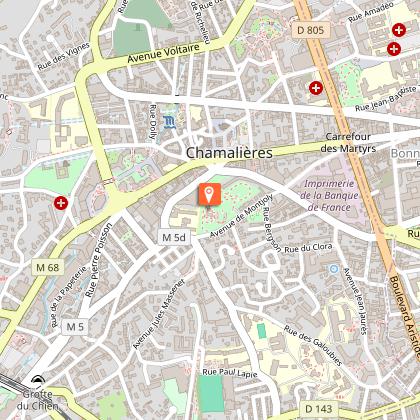
GTMC-VTT - Stage 12 - Clermont-Fd > Volvic
3.3 km

GTMC-VTT - Stage 12 - Clermont-Fd > Volvic

The GTMC-VTT, from Clermont-Ferrand to Volvic. The GTMC mountain bike route continues from Clermont-Ferrand (historic start of the GTMC mountain bike race) to Volvic. From Clermont-Ferrand, the historic departure point for the GTMC mountain bike race, you gradually gain altitude as you head towards the Chaîne des Puys and its 80 volcanoes. Under the gaze of the impressive Puy de Dôme, you'll discover a variety of landscapes, from a 2,000-year-old town to sunny hillsides planted with fruit trees and vines. The route ends in chestnut woods and volcanic cheires, with their chaotic vegetation and morphology. All along the way, the mountain biker's attention is irresistibly drawn to the volcanoes. Volvic, famous for its water and volcanic stone, is the finishing point of this stage. Departure is from Clermont Ferrand railway station. We climb gently up to Place Delille, which we cross before plunging down in front of a large secondary school to follow a long straight line. From set of traffic lights to set of traffic lights, the MTB GTMC takes us to the tarmac slope leading to the Col de Bancillon (alt. 551m). A short but steep descent on a farm track takes us to the Blanzat sports complex. We have to find a passageway to cross it and then climb back up to Blanzat on tarmac. Superb trails through fruit groves and meadows to the village of Malauzat. From Malauzat, we climb through a chestnut grove that takes us right up close to the Chaîne des Puys. Playful, relatively easy trails.

2 h
20 km
Medium
40 Avenue de l'Union Soviétique 63000 Clermont-Ferrand
Show

What to do in CAMPO DECOUVERTE

See more suggestions
Find the best activities in CAMPO DECOUVERTE and book easily online.
See more suggestions
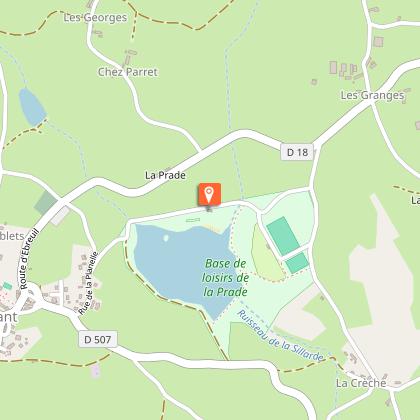
Lemptégy Volcano
10 km

Lemptégy Volcano

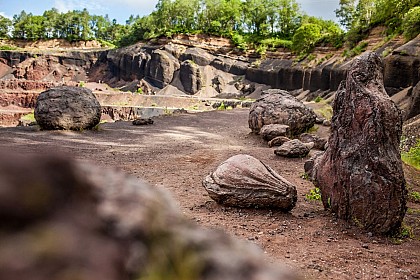
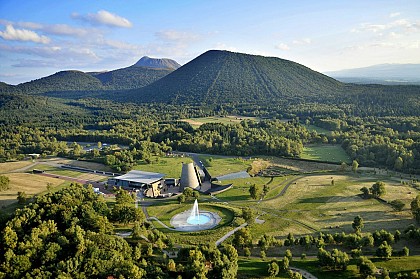
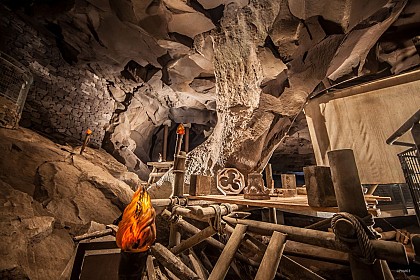
Explore the heart of a real volcano... Located at the center of the tectonic "Chaîne des Puys - Faille de Limagne" UNESCO World Heritage Site, we offer you the unique and unusual opportunity to discover the inside of a 100% natural volcano. Discover the secrets of volcanology with a 2h30 interactive tour of the Lemptégy volcano, comprising 5 stages: - The "volcano and men" tour: this fun, interactive introduction to the visit will familiarize you with the volcano and give you a better understanding of its metamorphosis. A 30-minute self-guided tour. - Guided exploration of the volcano's anatomy: meet your guide on foot or by train. He'll share all his geological and volcanological knowledge with you: bombs, volcanic chimneys, lava flows... and you'll leave with scoria (solidified lava). A wealth of information to help you better understand the landscape around you. - L'âme de Lemptégy": an unusual journey into the site's industrial past, with a visit to the old pozzolan extraction machines once used by quarrymen. - The immersive "Volcano 'Express" attraction: this sensory and emotional experience reveals all the secrets behind the formation of the Chaîne des Puys and the Faille de Limagne. What if the fault were to reopen... Will you reach your destination? - The dynamic 4D film "Aux Origines": enjoy an unprecedented flight over the volcanoes of Auvergne and relive the history of the volcano as if you were there, from its eruptions to the present day. While you're there, treat yourself to a gourmet break at the Volcan de Lemptégy restaurant. The chef offers traditional regional dishes (sausage/aligot, truffade, petit salé...). You can also stroll through the new boutique and discover a wide range of regional products, souvenirs, books... LE REVEIL DU VOLCAN" NIGHT TOUR: a breathtaking nocturnal experience! Entering at night, you'll be propelled into the heart of the Lemptégy Volcano for an extraordinary experience. Along the way, you'll plunge into an erupting volcano and discover magical creatures. A new world to discover and a new way to experience Volcan de Lemptégy. 1.5 km on foot. Prices and schedule: see website. IN JULY AND AUGUST

31 route des Puys Les Maisons Rouges 63230 Saint-Ours
Book from 0 €Book
Show

What to visit in CAMPO DECOUVERTE

See more suggestions
Engage in outdoor activities in CAMPO DECOUVERTE.
See more suggestions
Pavillon Saint-Mart or fontaine des goutteux
219 m

Pavillon Saint-Mart or fontaine des goutteux

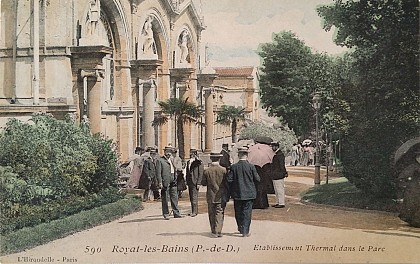
Inspired by Italy and the Orient, the Pavillon Saint-Mart is a former leg treatment bath built in 1912 to boost the activity of the spa town. In 1912, to boost business at the spa, Auguste Rouzaud, owner of the chocolate factory “À la Marquise de Sévigné”, asked architect Louis Jarrier (1862-1982) to rebuild the building, whose spring had been in operation since 1880. The waters were first of all ingested, and then the benefits of leg bathing were discovered. On a cramped piece of land at the edge of the Tiretaine river, Jarrier created an asymmetrical building inspired by Antiquity and the Byzantine Empire, with semi-circular arches, dome, screen walls and Roman barrel roof tiles. The monumental entrance is enhanced by an arch with a row of billets, with its archivolt decorated with a mosaic. The sign, the Saint-Mart coat-of-arms and the fountain in the rushes are made from Briare enamel, while the bottom is made from ceramic sandstone. The words “founded in the century of Augustus” could refer to the antique past of the spa and to the proximity of the Roman baths, but serve as a humorous nod. In reality they are a reference to August Rouzaud. Inside, beneath the dome, the drink stand is staged with a glass bell-shaped cover. The eleven treatment rooms with bath tubs are preceded by a small lounge area. The shower room, with tiles depicting water lilies, has retained the entirety of its spraying system. All the other walls are covered with metropolitan-style white tiles. The spa was inaugurated in 1912. The building has been on the historic monuments registry since 1948. It was closed for treatments permanently in 1980. The spring was directed to the spa for external treatments and to the drink stand for internal treatments.

Parc Thermal 63130 Royat
Show
Royat Theatre and Casino
219 m

Royat Theatre and Casino

The casinos and theatres were essential structures in a bath town where people came for treatments but also for entertainment. The spa town has had three casinos. The casinos and theatres were essential structures in a thermal town where people came for treatments but also for entertainment. In Royat, as in other spa towns, they were located close to the baths. The spa town had three casinos. In 1873, a first gambling institution was built by architect Jacques Cournol. This neo-Norman-style building made from red brick and wood was dubbed “Le Chalet”. It featured several gambling rooms and various reception rooms on the first floor, a restaurant on the ground floor and a performance hall created in 1875, known as “Le Cercle”. In 1882 another casino was built by the architect Lecat, the Samie casino. Today all that remains of this is the Villa des Champs-Elysées (12 avenue Pierre-et-Marie-Curie, Chamalières), belonging to Dr. Bassett (public health inspector between 1864 and 1880) which housed the reading lounges and the casino administration. A fire destroyed Le Chalet in 1919. It was immediately decided to build a new casino and this project was entrusted to the architect Guillaume Tronchet (1857-1969), who also worked on the Petit Palais in Paris. The Art Deco-style casino was adjoined to the theatre, designed by Théodore Charpentier (1891- 1892). This theatre was built from brick, stone and iron. An outside gallery overlooks the garden. Wide bay windows offer a view of the garden and directly light the observation room. People came to see and be seen! The theatre hosted the biggest names in music hall and comedy. Sarah Bernard, Aristide Bruant, Édith Piaf...

Théâtre et Casino de Royat 143 avenue de Royat 63400 Chamalières
Show
Roman Baths
234 m

Roman Baths

The visible remains, listed on the historic monuments registry, are in reality a small portion of the enormous antique baths discovered and cleared in the 19th century. The only spa town in the Clermont Auvergne metropolitan area, the Royat-Chamalières spa developed at the outlet of the Tiretaine valley, below the ancient village of Royat. Its origins date back to Antiquity. Large, high Roman walls are mentioned in texts from 1575 to 1840. In 1881, when the railway viaduct was being built, an archaeological excavation of the site revealed the remains of enormous antique baths over an area of 2,800 sq. m: three large pools placed in a line and four rooms heated through the floor (hypocaust system). All the rooms were richly decorated with marble in all colours, mosaics and bronze or marble statues. Today only one pool with steps and hemicycle seats is still visible. These remains have been listed on the historic monuments registry since 1889. Baths were an integral part of Gallo-Roman culture. They were used for bodily hygiene and full body treatments, but also played an important social role. Within the therapeutic context, the buildings were generally connected to worship such as that of Apollo, the important warrior god of Gaul. The baths also contributed to public cleanliness, with water discharged into the sewers. The journey through the baths generally followed an established order: after the changing rooms, visitors passed through the cold room, the tepid room, the hot room and the sauna (steam baths), or went directly to the palaestra (a public place for wrestling and gymnastics) for the more athletic visitors. The journey varied according to buildings, their size, the season and the cultural fashions. Separation or mixing of men and women also played a part in the organisation of the space and in the opening hours.

Parc Thermal 63130 Royat
Show
Spa resort
344 m

Spa resort

Built in the 19th century, the spa is the centre-piece of the Royat-Chamalières resort. The only spa town in the metropolitan area, the Royat-Chamalières spa developed at the outlet of the Tiretaine valley, below the ancient village of Royat, close to the springs. In the make-up of a spa town the spa is the central monument of the resort, close to the springs. The spa was built between 1852 and 1856 by Agis-Léon Ledru (1816-1885), an architect from Clermont, also the designer of the baths at La Bourboule. It was built at the edge of route 5 leading to Clermont, and today has been converted into an alley in the park. The spa town is connected to the Clermont-Ferrand town centre via the centre of Chamalières, through the tunnelling in 1878 of the current Avenue de Royat. Ledru designed a building made from arkose, considered one of the first spas to have a central gallery and a hall with spacious, bright and airy spaces. On either side two wings are reserved to the west for men and to the east for women. The Antiquity-inspired façade features ionic columns at the top of which are copies of antique statues kept at the Louvre: Diana of Gabii and Venus Genitrix. The interior is decorated in luxury with mosaics. The treatment rooms are equipped with Volvic stone bath tubs. In 1913-1914, the architect Louis Jarrier (1862-1932) extended the building towards the rear for the second- and third-class baths. A building intended for luxury baths was built between 1948 and 1955 by architects Antoine Chanet and Jean Liogier. The spa was completed in 1964 with the Galerie Laussedat (by architect Georges Guignabert) and extended in 1978-1980 (by architects Mosseri and Lanquette).

1 place Allard 63130 Royat
Show
Majestic Hotel and Lodge
367 m

Majestic Hotel and Lodge

In the 19th and 20th centuries, the former Majestic hotel and lodge boosted the reputation of the spa town.They offered wealthy bathers and their esteemed guests the most modern luxury and comfort. After the Grand Hôtel was built, spa visitors had accommodation on site, but also were housed as far away as Clermont in wooden huts, eastern-style tents or rooms improvised in grain stores, according to Émile Thibaud, master glassmaker and son of the mayor of Royat. From 1874 onwards, land located along the cliff opposite the spa was purchased in order to build hotels. It ran along Boulevard Vasquez . The visit to Royat of the Prince of Wales, the future Edward VII, on 27 July, 1884, led to a form of Anglomania that lent itself to the names of hotels, including Hôtel Majestic, Royal St-Mart and Royat Palace. The Grand Hôtel Majestic was built between 1861 and 1864 by Madame Neuville, then purchased by Léon Servant and extended from 1876 to 1911. Construction of this building in brick and stone in neo-Louis XIII style was the work of architects from Clermont (Nicolas Mourton) and Paris (William Klein, Albert Duclos and Ernest Mizard). Once successive renovations were completed, the hotel featured 300 rooms and 50 apartments, all with private bathrooms. The hotel featured the latest technical innovations including lifts and electric lighting from 1891. The interior was decorated in luxurious style. In 1912, the architect Mizard built the Majestic lodge, an Art Nouveau-style annex to the hotel. The two buildings are listed on the historic monuments registry. The hotel's guests included the Goncourt brothers, Alexandre Dumas the son, the Prince of Wales, Émile Zola, Bartholdi, Félix Faure, Armand Peugeot, and Belgian King Léopold II, François Mauriac, the Sultan of Morocco, Pierre Laval, Marshall Pétain and General De Gaulle.

1 Boulevard Bazin 63400 Chamalières
Show
Royat-Chamalières train station
374 m

Royat-Chamalières train station

The Royat-Chamalières train station originated during the spa boom. Its style is in keeping with typical rail station architecture of the Third Republic. Until the Royat train station was built, spa visitors left the train at Clermont-Ferrand and finished their journey by horse and carriage, as Napoleon III when he visited Clermont-Ferrand and Royat in 1862. With the growing success of spa resorts, it became necessary to open new railway lines. Three sections were built to serve these spas: Vichy from Saint-Germain-des-Fossés in 1862, Le Mont-Dore from de Laqueuille, added to the Clermont-Tulle line in 1899 and Châtel-Guyon via Riom in 1912. Decided in 1880, Royat train station was inaugurated in 1886, after the construction in 1881 of the viaduct on the Tiretaine valley. Bathers then arrived from “all four corners of the world” to enjoy the benefits of a thermal cure. The station was the work of Jules Martin, assisted by the engineer Colin. The style of the station was in keeping with typical rail station architecture of the Third Republic, both functional and picturesque. The façade featured a central building with two storeys and three bays. The first storey with wide segmental arch openings, preceded by an atrium window, looks onto the lobby where the ticket offices are located. The second storey houses the station manager’s quarters. The interplay of materials - brick and limestone - is evocative of the architecture under Louis XIII. The hip roof is laid with slate tiles. The train station has been on the historic monuments registry since 1994.

Avenue de la Gare 63400 Chamalières
Show
Eugenie drink stand and Velleda Spring
410 m

Eugenie drink stand and Velleda Spring

The Eugénie drink stand was more than the icon of the thermal spa, it was the embodiment of spa treatments (it also appeared in the Asterix story “Asterix and the Chieftain’s Shield”). The “large spring” discovered in 1843 was named the “Eugénie spring” following the visit of Napoleon and the empress in 1862. The drink stand, which for a long time was a simple stone-edged well, was developed in 1872 and surrounded by a circular cast-iron counter sheltered under a cast-iron kiosk. In 1913, Auguste Rouzaud, director of the spa, commissioned the Clermont-based architect Louis Jarrier to embellish the spring. Jarrier designed a glass bell-shaped cover that was worked like a piece of silverware. The new counter was coated with flamed sandstone and opaline. In 1938, the municipality planned to extend and embellish the thermal spa and commissioned Antoine Chanet and Jean Liogier, architects from Vichy, to work on the drink stand. They replaced the kiosk with a tholos (a circular Greek temple) made from reinforced concrete, enhanced with a water mirror. The columns and bays of the tambour were reminiscent of those of the spa resort and provided a certain harmony. The outer edge of the drink stand was decorated with Greek ceramic mosaics, as were the decorative elements of the counter, designed by Gentil and Bourdet. To echo this, the former building housing the spring, adjoining the drink stand, covered with simple wood trellises, was replaced by a lodge with a resolutely neo-Antique style (four Doric columns, an entablature, a pediment and semi-circular bays). In the 1980s the building housing the spring accommodated the new channels for the Velléda spring, and became the “Pavillon Velléda”. Today the spa water is used for exterior body treatments and is no longer ingested.

Parc Thermal 63130 Royat
Show
Former Fontmaure Hospital
618 m

Former Fontmaure Hospital

The FAC – Fontmaure Art Culture Chamalières Charreton – is located on an estate previously occupied by nuns. Over time, the institution has had different functions. The Sœurs de Saint-Joseph (nuns) have been in Clermont since 1723 when the bishop put them in charge of the Le Bon Pasteur home for young women who did not adhere to the morals of the time. Hounded out during the Revolution, the nuns returned to Clermont after the Concordat of 1801 and moved into the former Ursulines convent in what is now Rue du Bon Pasteur, and this became their central location. The nuns had a role as teachers and founded many schools in the villages of Auvergne. They welcomed girls of all social classes, as well as those with hearing and speech disabilities. In 1872, following a typhoid epidemic, they purchased the Fontmaure property in Chamalières, which was then in the countryside, to move their young pupils away from the town. The institution was built in 1880-1881 by architect Charles-Antoine Couteau (1824-1897). Reconverted into a hospital in the early 20th century, the eclectically-designed building drew inspiration from Gothic and Roman styles. The neo-Roman style chapel retained its statues and stained-glass windows by Félix Gaudin and Lucien Chatain. Some of the buildings have now been converted to apartments. The other part houses the FAC – Fontmaure Art Culture Chamalières Charreton – which includes the École Municipale de Gravure, the Chapel (conference and recital space), the Artothèque and the Victor Charreton (1864-1936) museum space, devoted to artworks by the French painter, donated by the municipality of Chamalières. The building has been on the historic monuments registry since 2011.

Allée de Fontmaure 63400 Chamalières
Show
Montjoly park and its château-mairie
722 m

Montjoly park and its château-mairie

Château de Montjoly is a classically-inspired 18th century residence. South of Chamalières, Michel Girard de la Batisse, dean of the cathedral chapter, purchased the Montjoly estate, whose land belonged in around 1550 to the Gayte family from Clermont. In around 1755, he had a mansion built, surrounded by French-style gardens. This classically-inspired residence is punctuated by large arches on the ground floor, opening onto a terrace overlooking the gardens, which are accessed via a monumental staircase with divergent and convergent steps. The château is topped with a slate-covered Mansard roof. Below, the horseshoe-shaped courtyard gave access to the stables. On the eve of the Revolution, the heirs of the Abbot Girard de la Batisse sold the Château de Montjoly to François Grangier, captain of the Dragons. The estate was put up for sale in 1955. The mayor of Chamalières, Pierre Chatrousse, purchased the house and the majority of the park. The rest of the garden was parcelled up and then occupied by luxury residences and a school. Avenue de Montjoly was created at this time. The château became the headquarters of the new town hall in 1960, and its park was opened to the public. The Second World War memorial was placed there. Before becoming President of France, Valéry Giscard d’Estaing was mayor of Chamalières from 1967 to 1974 and also Minister for the Economy and Finance from 1969 to 1974.

1 Place Claude Wolff 63402 Chamalières
Show

Where to eat in CAMPO DECOUVERTE

See more suggestions
Explore the best dining spots in CAMPO DECOUVERTE.
See more suggestions
Where to sleep in CAMPO DECOUVERTE

See more suggestions
Discover popular accommodations in CAMPO DECOUVERTE.
See more suggestions
Caution!
We have no information on the difficulty of this circuit. You may encounter some surprises along the way. Before you go, please feel free to inquire more and take all necessary precautions. Have a good trip! 🌳🥾