Tours
Activities
Places of interest
Where to eat
Where to sleep

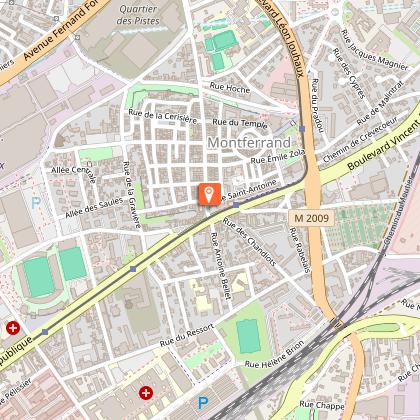
Explore Clermont-ferrand from Hotel Ibis Herbet

Are you the owner?
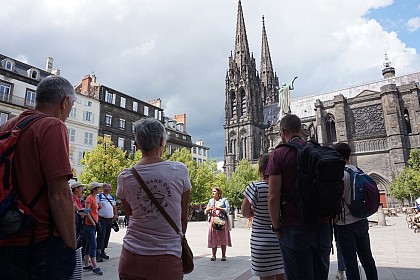
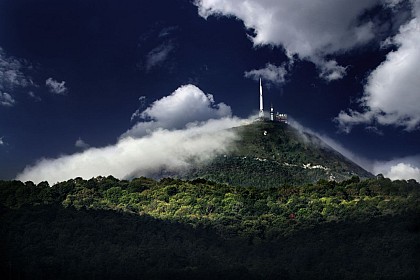
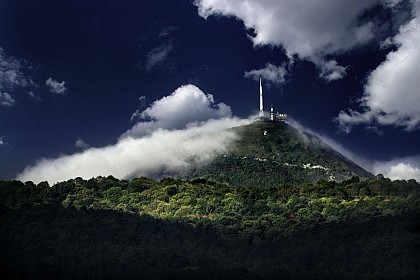
Located in the heart of the volcanic Auvergne region, Clermont-Ferrand offers a unique blend of natural wonders and cultural heritage. From Hotel Ibis Herbet, embark on a journey to the Puy de Dôme, a famous peak for its breathtaking views over the Chaîne des Puys. Hike the Muletiers' path or take the funicular for a more leisurely ascent. Stroll through the historic center of Clermont-Ferrand to ...See more

Walking around HOTEL IBIS HERBET

See more suggestions
Enjoy outdoor walks in HOTEL IBIS HERBET.
See more suggestions
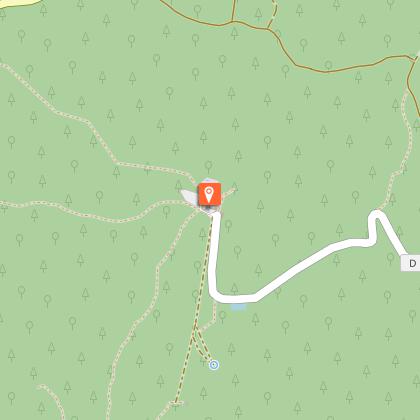
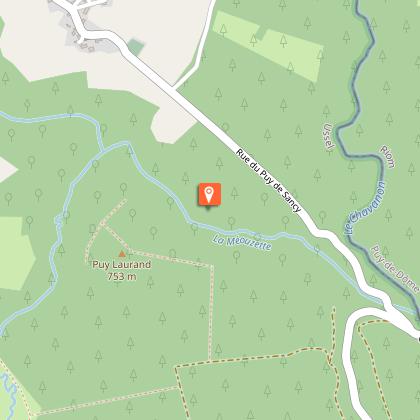
GTMC-VTT - Stage 12 - Clermont-Fd > Volvic
1.4 km

GTMC-VTT - Stage 12 - Clermont-Fd > Volvic

The GTMC-VTT, from Clermont-Ferrand to Volvic. The GTMC mountain bike route continues from Clermont-Ferrand (historic start of the GTMC mountain bike race) to Volvic. From Clermont-Ferrand, the historic departure point for the GTMC mountain bike race, you gradually gain altitude as you head towards the Chaîne des Puys and its 80 volcanoes. Under the gaze of the impressive Puy de Dôme, you'll discover a variety of landscapes, from a 2,000-year-old town to sunny hillsides planted with fruit trees and vines. The route ends in chestnut woods and volcanic cheires, with their chaotic vegetation and morphology. All along the way, the mountain biker's attention is irresistibly drawn to the volcanoes. Volvic, famous for its water and volcanic stone, is the finishing point of this stage. Departure is from Clermont Ferrand railway station. We climb gently up to Place Delille, which we cross before plunging down in front of a large secondary school to follow a long straight line. From set of traffic lights to set of traffic lights, the MTB GTMC takes us to the tarmac slope leading to the Col de Bancillon (alt. 551m). A short but steep descent on a farm track takes us to the Blanzat sports complex. We have to find a passageway to cross it and then climb back up to Blanzat on tarmac. Superb trails through fruit groves and meadows to the village of Malauzat. From Malauzat, we climb through a chestnut grove that takes us right up close to the Chaîne des Puys. Playful, relatively easy trails.

2 h
20 km
Medium
40 Avenue de l'Union Soviétique 63000 Clermont-Ferrand
Show

What to do in HOTEL IBIS HERBET

See more suggestions
Plan a perfect day in HOTEL IBIS HERBET with our bookable activities.
See more suggestions
Lemptégy Volcano
14 km

Lemptégy Volcano

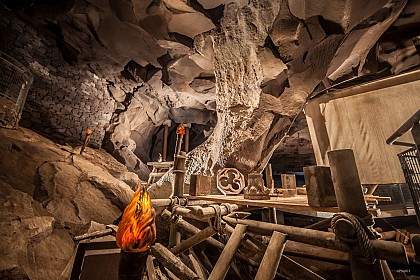
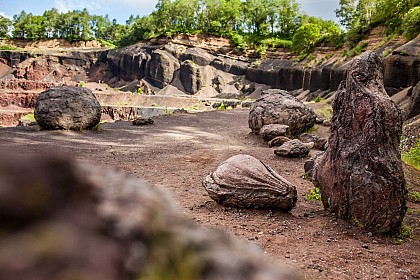
Explore the heart of a real volcano... Located at the center of the tectonic "Chaîne des Puys - Faille de Limagne" UNESCO World Heritage Site, we offer you the unique and unusual opportunity to discover the inside of a 100% natural volcano. Discover the secrets of volcanology with a 2h30 interactive tour of the Lemptégy volcano, comprising 5 stages: - The "volcano and men" tour: this fun, interactive introduction to the visit will familiarize you with the volcano and give you a better understanding of its metamorphosis. A 30-minute self-guided tour. - Guided exploration of the volcano's anatomy: meet your guide on foot or by train. He'll share all his geological and volcanological knowledge with you: bombs, volcanic chimneys, lava flows... and you'll leave with scoria (solidified lava). A wealth of information to help you better understand the landscape around you. - L'âme de Lemptégy": an unusual journey into the site's industrial past, with a visit to the old pozzolan extraction machines once used by quarrymen. - The immersive "Volcano 'Express" attraction: this sensory and emotional experience reveals all the secrets behind the formation of the Chaîne des Puys and the Faille de Limagne. What if the fault were to reopen... Will you reach your destination? - The dynamic 4D film "Aux Origines": enjoy an unprecedented flight over the volcanoes of Auvergne and relive the history of the volcano as if you were there, from its eruptions to the present day. While you're there, treat yourself to a gourmet break at the Volcan de Lemptégy restaurant. The chef offers traditional regional dishes (sausage/aligot, truffade, petit salé...). You can also stroll through the new boutique and discover a wide range of regional products, souvenirs, books... LE REVEIL DU VOLCAN" NIGHT TOUR: a breathtaking nocturnal experience! Entering at night, you'll be propelled into the heart of the Lemptégy Volcano for an extraordinary experience. Along the way, you'll plunge into an erupting volcano and discover magical creatures. A new world to discover and a new way to experience Volcan de Lemptégy. 1.5 km on foot. Prices and schedule: see website. IN JULY AND AUGUST

31 route des Puys Les Maisons Rouges 63230 Saint-Ours
Book from 0 €Book
Show

What to visit in HOTEL IBIS HERBET

See more suggestions
Savor the local cuisine of HOTEL IBIS HERBET.
See more suggestions
Clermont-Ferrand station
1.5 km

Clermont-Ferrand station

Completed in 1945, the Clermont-Ferrand train station is an example of modernist architecture. It has Architecture Contemporaine Remarquable (remarkable contemporary architecture) status. The first train station in Clermont-Ferrand was inaugurated in 1855 for goods transport and passenger travel. An entire new neighbourhood was created to the east of the historic centre of Clermont-Ferrand and urban planning created wide avenues leading to the station. A new parish (Saint Joseph), businesses and hotels completed the development. But the only parts remaining of this first station are the side lodges. The present-day station was completed in 1945. It was the SNCF architect-engineer Paul Peirani who designed it, based on the model for the station at Le Havre (1929-1931) by architect Henri Pacon. The building is an example of modernist architecture with wide bay windows for maximum lighting in the entrance lobby, refined and simple lines, and an emphasis on light. The entrance lobby is decorated with enamelled lava stone by Jean Jaffeux. The clock tower is a recurring feature in train station architecture, since it is a symbol of punctuality and speed. The Clermont-Ferrand train station was awarded “Architecture Contemporaine Remarquable” (remarkable contemporary architecture) status in 2023. Since thermal spa resorts were becoming popular in the 19th century, it became important to establish train connections with them. Royat was connected from 1886 after the construction of a huge viaduct in 1881. Previously, spa visitors left the train at Clermont-Ferrand and finished their journey by horse and carriage. This is what Napoleon III did when he visited Clermont-Ferrand and Royat in 1862.

40, avenue de l'Union Soviétique 63000 Clermont-Ferrand
Show
Private mansions in Montferrand
1.5 km

Private mansions in Montferrand

Les hôtels particuliers de Montferrand, bâtis aux 15e et 16e siècles, témoignent de la prospérité des notables locaux. Derrière leurs sobres façades de pierre de Volvic, cours, galeries et tours révèlent une architecture raffinée et emblématique. The franchise charter granted to Montferrand in 1196 defined the layout of the town: a grid of streets, plots of identical dimensions, and the requirement that each house present a façade on the street. Along today’s Rue Jules-Guesde stood the properties of notable Montferrand families—true dynasties of judicial officials, merchants, and noble bankers. Built in the late 15th or 16th century on the foundations of medieval houses, these residences illustrate Montferrand’s golden age. Typically rectangular in plan, each plot is occupied by two distinct buildings: one at the front and another at the rear. Between them lies a private interior courtyard. The two structures are linked by a series of stacked galleries on one side of the courtyard. Access to the upper floors is provided by a spiral staircase housed in a tower at one end of the galleries. Facing the street, these residences display a narrow façade, usually between five and eight metres wide. Constructed of Volvic stone, the façades are decorated in an understated style. The galleries and staircase towers, however, boast the richest ornamentation, with heraldic sculptures, mythological scenes, and personalised motifs depicting the owners and their families.

Rue Jules Guesde Montferrand 63000 Clermont-Ferrand
Show
Notre-Dame-de-Prospérité church in Montferrand
1.6 km

Notre-Dame-de-Prospérité church in Montferrand

Built of Volvic stone in the Southern GBuilt in the 14th century in response to insecurity, the Church of Notre-Dame-de-Prospérité embodies the Languedoc Gothic style. It houses precious furnishings from Montferrand’s former convents. This church stands on the site of the former chapel of the Counts of Auvergne’s castle. In the 12th and 13th centuries the residents of Montferrand had to leave the fortified enclosure to attend services at the Saint-Robert monastery, south of the town walls. During the Hundred Years’ War (1337–1453) the threat of attack prompted the inhabitants to build a place of worship within the walls. Constructed entirely of Volvic stone, the church was begun in the 1340s, but progress was slow because the town’s finances had been depleted by the pillaging of Montferrand in 1388. The northern tower, started in 1472, was completed in 1566 with the addition of the belfry. The southern tower, built in the early 16th century, was demolished during the French Revolution. The people of Montferrand chose the Languedoc Gothic style, reflecting their attachment to southern France. The single nave is encircled by fifteen chapels and illuminated by 19th-century stained-glass windows, notably those produced in the workshop of Étienne-Hormidas Thévenot. To channel rainwater from the terraces, numerous gargoyles were sculpted around the exterior. Among them are fish, wild animals, birds, sighthounds, as well as human and fantastical figures. The chapels contain woodwork confiscated from Montferrand’s convents (Cordeliers, Ursulines, and Visitandines) and installed here after the French Revolution. The church also preserves a Romanesque stone Virgin and a large 17th-century wooden crucifix.

6 rue Notre-Dame Montferrand 63100 Clermont-Ferrand
Show
Former Ursuline convent in Montferrand
1.6 km

Former Ursuline convent in Montferrand

From Ursuline convent to museum, Montferrand's former monastic complex has passed through the centuries, successively housing nuns, a seminary, a military hospital and, since 1999, the Musée d'Art Roger-Quilliot. The Order of Saint Ursula, or the Ursulines, is a female monastic order dedicated to the education of young girls, founded in Italy in the mid-16th century. The Ursulines arrived in Montferrand in 1637 and settled in former medieval buildings. In 1673 they planned extensive renovations for a new convent, including a cloister, dormitories for the pupils, a refectory, and cells for the nuns. The first stone of the chapel was laid in 1702. During the French Revolution the nuns left the premises. In the 19th century the site was occupied by the grand seminary, which in turn moved out in 1905. During the First World War (1914–1918) the buildings were converted into a military hospital. The last occupants were the Mobile Guard, who remained until 1982, before the City of Clermont-Ferrand acquired the property in 1984. In 1992 the southern part of the convent was converted into housing, now known as the Musée Residence. The northern part was renovated to house the city’s fine-arts collections. In 1999 the museum was renamed the Musée d’Art Roger-Quilliot, in tribute to the city’s mayor from 1973 to 1997. Today, visitors can still see the 17th-century gate of the Cour des Aides (the former civil and criminal tax court), as well as the 18th-century chapel and cloister—located within the residence—both listed as Historic Monuments.

Rue du Temple Montferrand 63000 Clermont-Ferrand
Show
Roger Quilliot Art Museum
1.6 km

Roger Quilliot Art Museum

MARQ Auvergne Métropole is housed in a former Ursuline convent. Its luminous architectural and museographic redesign from the 1990s is a showcase for high-quality heritage works, exhibitions and cultural activities for all. The Musée des Beaux-Arts, located in Clermont-Ferrand, boasts a vast collection of paintings, sculptures and decorative arts, spanning from the medieval period to the 20th century. With over 750 works on display, the museum presents a chronological and educational tour that highlights artistic developments. Medieval collections The museum exhibits unique pieces of Romanesque and Gothic art from Auvergne, including the Virgins in Majesty, a rare 13th-century painting (the Frise des abbés d'Ennezat) and the Savaron casket. Masterpieces also include Léonard Sarson's Athena, a Volvic stone sculpture emblematic of the Auvergne Renaissance. 17th and 18th centuries Among the major works, MARQ presents a group of portraits, such as Philippe de Champaigne's Vincent Voiture, as well as a remarkable series of 12 large decorative paintings illustrating Ariosto's Roland Furieux. The collection also includes works by Jacques Blanchard, and objets d'art such as 17th-century cabinets and Clermont-Ferrand earthenware. 19th century Neoclassicism and Auvergne landscapes are represented by artists such as Thomas Degeorge, Théodore Rousseau, Camille Corot and Victor Charreton. The museum also exhibits Orientalist works by Prosper Marilhat and Jean-Victor Schnetz, as well as historical paintings by Théodore Chassériau and Frédéric Auguste Bartholdi. Portrait lovers will appreciate artists such as Géricault and Rodin. 20th century The tour continues with works from the 1920s-1960s, featuring figurative painters such as Marie Laurencin, Bernard Buffet and Jean Fautrier. In addition, the museum will soon house the textile collections currently housed at the Musée Bargoin. Come and discover the Musée d'Art Roger-Quilliot's must-see works in an exceptional setting, open to art enthusiasts from all walks of life.

Place Louis-Deteix Quartier Historique de Montferrand 63000 Clermont-Ferrand
Show
Royal bailiwick of Montferrand
1.6 km

Royal bailiwick of Montferrand

Once the residence of the Duke of Berry, Montferrand’s royal bailiwick became a major judicial centre in the 15th century. Transformed over time, it went on to house the town hall, a Jesuit college, and later the church of Saint Peter. Montferrand belonged to the Counts of Auvergne from its founding around 1120. In 1292, however, Count Louis de Beaujeu, facing financial ruin, sold the town to King Philip IV of France (Philip the Fair). In 1360 King John II of France (John the Good) granted Montferrand to his son Jean, Duke of Berry, who had this private residence built before his death in 1416. In 1425 the king established a royal bailiwick in Montferrand—an administrative and judicial district of the crown. The bailiff managed the king’s property, collected fees and taxes, and administered justice on the sovereign’s behalf. The bailiwick moved into the Duke of Berry’s former residence to accommodate the many men of law required by the new royal jurisdiction. The commercial role of the early town was soon complemented by significant judicial activity, which encouraged the construction of private residences for the wealthy bourgeoisie and the nobility of the robe. In 1556 Catherine de’ Medici transferred the royal bailiwick from Montferrand to Clermont. The buildings then became a townhouse, with part of the property rented to private individuals. In 1634 the new Jesuit college occupied the site until 1663, when it too moved to Clermont. The municipality regained ownership of the former bailiwick residence and rented part of it for housing, while the other part—the former college church—became a parish church dedicated to Saint Peter.

Place Polly Montferrand 63000 Clermont-Ferrand
Show
Lycée Jeanne d'Arc
1.7 km

Lycée Jeanne d'Arc

Designed at the dawn of the 20th century, the Jeanne-d’Arc high school is the first high school for girls in Clermont-Ferrand. The building makes the very most of the land layout, and features an eclectic style with a blend of influences. Jeanne-d’Arc high school is one of the finest examples of school construction from the Third Republic, an achievement of architect Jean-Joseph Teillard (1854-1915). Construction began in 1896 and was completed in 1899 in the new neighbourhood created when the Clermont-Ferrand’s train station was opened in 1855. First of all, it housed the girls whose education had been entrusted to nuns until 1880. The high school had a U-shaped layout surrounding an interior courtyard closed by a gate that used to overlook the terrace gardens. The rational layout of the buildings depends on their intended destination (administration, student buildings, etc.) and their use (classrooms, dormitories, etc.). Its style is eclectic, its influences include Romanesque (semi-circular arches), Regionalist (materials), Byzantine (minaret) and Nordic (stepped gable). Its materials come in varied shapes and colours: brick, glazed brick, limestone for the supports, glazed terracotta for the decorative features and cast iron. Above the entrance door, on the Avenue de Grande-Bretagne side, the bust of Joan-of-Arc is the work of sculptor Henri Gourgouillon (1858-1902). To the west is the former Petit Lycée for boys, an annex of Blaise-Pascal high school. It has been an integral part of Jeanne-d'Arc high school since 1950. In neo-Classical style, it is the last work of the architect François-Louis Jarrier, built between 1878 and 1880. Its H-shaped layout gives a façade on three levels, with an additional central wing housing the chapel. The walls are made from coated quarry stone and the corner quoins and window frames from Volvic stone. It is an example of a school built just before the Ferry laws in France (establishing free education then mandatory and secular education). It is inspired by a model evocative of the former Collège de l’Oratoire in Riom (17th century).

Avenue Carnot 63000 Clermont-Ferrand
Show

Where to eat in HOTEL IBIS HERBET

See more suggestions
Food enthusiasts will love HOTEL IBIS HERBET's restaurants.
See more suggestions

Where to sleep in HOTEL IBIS HERBET

See more suggestions
Find an ideal lodging in HOTEL IBIS HERBET.
See more suggestions
Caution!
We have no information on the difficulty of this circuit. You may encounter some surprises along the way. Before you go, please feel free to inquire more and take all necessary precautions. Have a good trip! 🌳🥾