Tours
Activities
Places of interest
Where to eat
Where to sleep

Discover Clermont-Ferrand from HOTEL RESTAURANT CAMPANILE CLERMONT FERRAND LE

Are you the owner?
Welcome to Clermont-Ferrand, the heart of Auvergne! Ideally located, HOTEL RESTAURANT CAMPANILE CLERMONT FERRAND LE serves as the perfect launchpad for a variety of exciting activities.

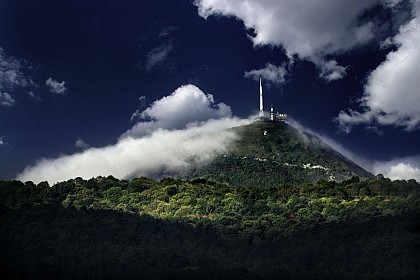
Visit the famous Puy-de-Dôme, an active volcano offering breathtaking views of the Chaîne des Puys. Take the panoramic train and ascend to the summit for an unforgettable experience. Explore the historic richness...
See more

Walking around HOTEL RESTAURANT CAMPANILE CLERMONT FERRAND LE

See more suggestions
Family walks around HOTEL RESTAURANT CAMPANILE CLERMONT FERRAND LE.
See more suggestions
GTMC-VTT - Stage 12 - Clermont-Fd > Volvic
1.6 km

GTMC-VTT - Stage 12 - Clermont-Fd > Volvic

The GTMC-VTT, from Clermont-Ferrand to Volvic. The GTMC mountain bike route continues from Clermont-Ferrand (historic start of the GTMC mountain bike race) to Volvic. From Clermont-Ferrand, the historic departure point for the GTMC mountain bike race, you gradually gain altitude as you head towards the Chaîne des Puys and its 80 volcanoes. Under the gaze of the impressive Puy de Dôme, you'll discover a variety of landscapes, from a 2,000-year-old town to sunny hillsides planted with fruit trees and vines. The route ends in chestnut woods and volcanic cheires, with their chaotic vegetation and morphology. All along the way, the mountain biker's attention is irresistibly drawn to the volcanoes. Volvic, famous for its water and volcanic stone, is the finishing point of this stage. Departure is from Clermont Ferrand railway station. We climb gently up to Place Delille, which we cross before plunging down in front of a large secondary school to follow a long straight line. From set of traffic lights to set of traffic lights, the MTB GTMC takes us to the tarmac slope leading to the Col de Bancillon (alt. 551m). A short but steep descent on a farm track takes us to the Blanzat sports complex. We have to find a passageway to cross it and then climb back up to Blanzat on tarmac. Superb trails through fruit groves and meadows to the village of Malauzat. From Malauzat, we climb through a chestnut grove that takes us right up close to the Chaîne des Puys. Playful, relatively easy trails.

2 h
20 km
Medium
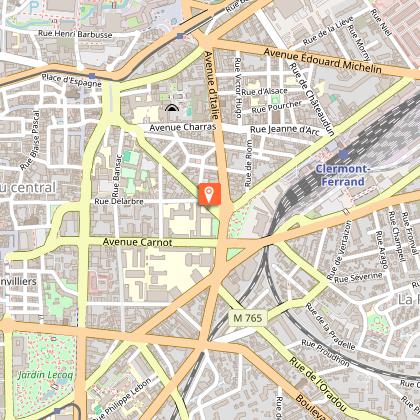
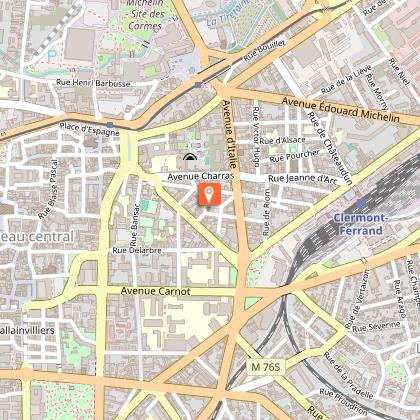
40 Avenue de l'Union Soviétique 63000 Clermont-Ferrand
Show

What to do in HOTEL RESTAURANT CAMPANILE CLERMONT FERRAND LE

See more suggestions
Make your stay in HOTEL RESTAURANT CAMPANILE CLERMONT FERRAND LE special by booking activities.
See more suggestions
Lemptégy Volcano
14 km

Lemptégy Volcano

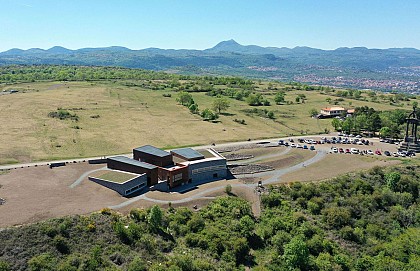
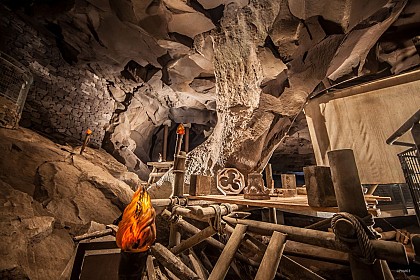
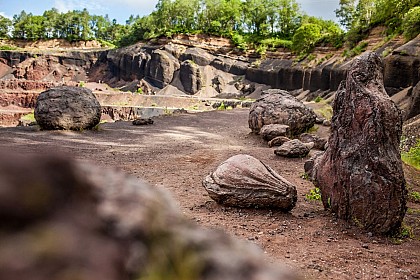
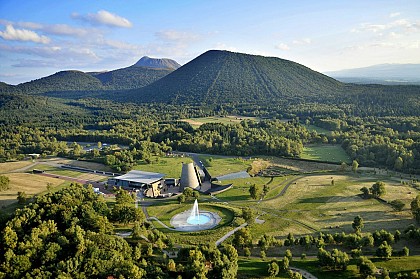
Explore the heart of a real volcano... Located at the center of the tectonic "Chaîne des Puys - Faille de Limagne" UNESCO World Heritage Site, we offer you the unique and unusual opportunity to discover the inside of a 100% natural volcano. Discover the secrets of volcanology with a 2h30 interactive tour of the Lemptégy volcano, comprising 5 stages: - The "volcano and men" tour: this fun, interactive introduction to the visit will familiarize you with the volcano and give you a better understanding of its metamorphosis. A 30-minute self-guided tour. - Guided exploration of the volcano's anatomy: meet your guide on foot or by train. He'll share all his geological and volcanological knowledge with you: bombs, volcanic chimneys, lava flows... and you'll leave with scoria (solidified lava). A wealth of information to help you better understand the landscape around you. - L'âme de Lemptégy": an unusual journey into the site's industrial past, with a visit to the old pozzolan extraction machines once used by quarrymen. - The immersive "Volcano 'Express" attraction: this sensory and emotional experience reveals all the secrets behind the formation of the Chaîne des Puys and the Faille de Limagne. What if the fault were to reopen... Will you reach your destination? - The dynamic 4D film "Aux Origines": enjoy an unprecedented flight over the volcanoes of Auvergne and relive the history of the volcano as if you were there, from its eruptions to the present day. While you're there, treat yourself to a gourmet break at the Volcan de Lemptégy restaurant. The chef offers traditional regional dishes (sausage/aligot, truffade, petit salé...). You can also stroll through the new boutique and discover a wide range of regional products, souvenirs, books... LE REVEIL DU VOLCAN" NIGHT TOUR: a breathtaking nocturnal experience! Entering at night, you'll be propelled into the heart of the Lemptégy Volcano for an extraordinary experience. Along the way, you'll plunge into an erupting volcano and discover magical creatures. A new world to discover and a new way to experience Volcan de Lemptégy. 1.5 km on foot. Prices and schedule: see website. IN JULY AND AUGUST

31 route des Puys Les Maisons Rouges 63230 Saint-Ours
Book from 0 €Book
Show

What to visit in HOTEL RESTAURANT CAMPANILE CLERMONT FERRAND LE

See more suggestions
Visit the iconic landmarks of HOTEL RESTAURANT CAMPANILE CLERMONT FERRAND LE.
See more suggestions
Campus des Cézeaux
1.4 km

Campus des Cézeaux

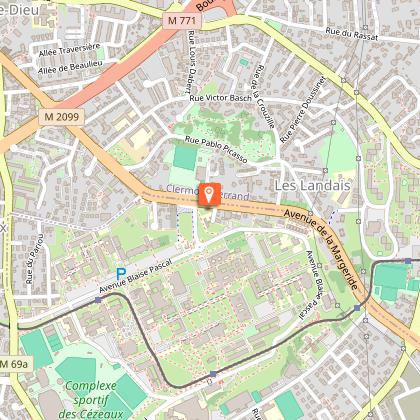
Designed at the end of the 1960s, the Cézeaux campus has rewritten its history since the 1980s, placing emphasis on contemporary architecture. The Cézeaux campus is situated on a basalt plateau today surrounded by the town. It was designed in the late 1960s by the architect Eugène Beaudoin (1898-1983) in charge of the university development of Clermont. The project included teaching buildings, a library, a restaurant and student housing. The historic architects are Daniel Badani, Jean-Louis Douat, Antoine Espinasse, Paul Lanquette and Pierre Roux-Dorlut. At this time the campus was built on the principle of architectural and functional austerity according to a rational plan and a system of work industrialisation. A factory for prefabrication of the construction materials was set up on site. The campus has sculptures corresponding to the development of the site in the 1970s. A few examples: La dématérialisation (1972) by Francis Pellerin (1915-1988), Murs-Fontaines (1972) by Ervin Patkaï (1937-1985), and Silhouettes formant un réceptacle à l’enseignement dispensé par la Connaissance (1978) by Michell. Since the 1980s, the campus has rewritten its history, placing emphasis on contemporary architecture: Polytech (architects Bresson, Ondet, Berthon and Collet); the Laboratoire de Physique Corpusculaire (Paris-based architects Brenac and Gonzalez); The Institut National de Recherche en Sciences et Technologies pour l’Environnement et l’Agriculture (IRSTEA, architect Hauvette and Atelier 4) with its plant-based shell made from maple trees; the Institut Français de Mécanique Avancée (IFMA, architects Ameil and Jalicon) which proposes a shape evocative of the world of industry; the Laboratoire Magmas et Volcans (architecture firm Groupe 6, Hallé) with unstable volumes like moving magma.

Avenue des Landais 63170 Aubière
Show
Clermont-Ferrand station
1.7 km

Clermont-Ferrand station

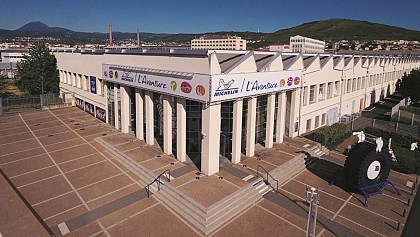
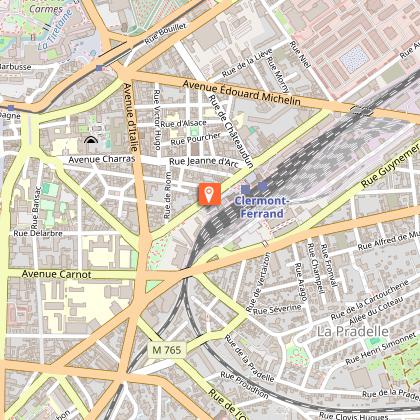
Completed in 1945, the Clermont-Ferrand train station is an example of modernist architecture. It has Architecture Contemporaine Remarquable (remarkable contemporary architecture) status. The first train station in Clermont-Ferrand was inaugurated in 1855 for goods transport and passenger travel. An entire new neighbourhood was created to the east of the historic centre of Clermont-Ferrand and urban planning created wide avenues leading to the station. A new parish (Saint Joseph), businesses and hotels completed the development. But the only parts remaining of this first station are the side lodges. The present-day station was completed in 1945. It was the SNCF architect-engineer Paul Peirani who designed it, based on the model for the station at Le Havre (1929-1931) by architect Henri Pacon. The building is an example of modernist architecture with wide bay windows for maximum lighting in the entrance lobby, refined and simple lines, and an emphasis on light. The entrance lobby is decorated with enamelled lava stone by Jean Jaffeux. The clock tower is a recurring feature in train station architecture, since it is a symbol of punctuality and speed. The Clermont-Ferrand train station was awarded “Architecture Contemporaine Remarquable” (remarkable contemporary architecture) status in 2023. Since thermal spa resorts were becoming popular in the 19th century, it became important to establish train connections with them. Royat was connected from 1886 after the construction of a huge viaduct in 1881. Previously, spa visitors left the train at Clermont-Ferrand and finished their journey by horse and carriage. This is what Napoleon III did when he visited Clermont-Ferrand and Royat in 1862.

40, avenue de l'Union Soviétique 63000 Clermont-Ferrand
Show
Lycée Jeanne d'Arc
1.9 km

Lycée Jeanne d'Arc

Designed at the dawn of the 20th century, the Jeanne-d’Arc high school is the first high school for girls in Clermont-Ferrand. The building makes the very most of the land layout, and features an eclectic style with a blend of influences. Jeanne-d’Arc high school is one of the finest examples of school construction from the Third Republic, an achievement of architect Jean-Joseph Teillard (1854-1915). Construction began in 1896 and was completed in 1899 in the new neighbourhood created when the Clermont-Ferrand’s train station was opened in 1855. First of all, it housed the girls whose education had been entrusted to nuns until 1880. The high school had a U-shaped layout surrounding an interior courtyard closed by a gate that used to overlook the terrace gardens. The rational layout of the buildings depends on their intended destination (administration, student buildings, etc.) and their use (classrooms, dormitories, etc.). Its style is eclectic, its influences include Romanesque (semi-circular arches), Regionalist (materials), Byzantine (minaret) and Nordic (stepped gable). Its materials come in varied shapes and colours: brick, glazed brick, limestone for the supports, glazed terracotta for the decorative features and cast iron. Above the entrance door, on the Avenue de Grande-Bretagne side, the bust of Joan-of-Arc is the work of sculptor Henri Gourgouillon (1858-1902). To the west is the former Petit Lycée for boys, an annex of Blaise-Pascal high school. It has been an integral part of Jeanne-d'Arc high school since 1950. In neo-Classical style, it is the last work of the architect François-Louis Jarrier, built between 1878 and 1880. Its H-shaped layout gives a façade on three levels, with an additional central wing housing the chapel. The walls are made from coated quarry stone and the corner quoins and window frames from Volvic stone. It is an example of a school built just before the Ferry laws in France (establishing free education then mandatory and secular education). It is inspired by a model evocative of the former Collège de l’Oratoire in Riom (17th century).

Avenue Carnot 63000 Clermont-Ferrand
Show
Halle Saint-Joseph
2 km

Halle Saint-Joseph

The Saint-Joseph covered market is a metal-covered market from the 19th century, protected as a Historic Monument. The metropolitan area features other covered markets that are evidence of its trading activity. The Saint-Joseph covered market, in the style of the Baltard market, is one of the last remaining examples in the region without major changes; the markets on Place Renoux and Place Saint-Pierre have been demolished. It was built in 1891-1892 by the ironwork workshop of André Michelin (1853-1931), one of the founding brothers of the famous factory. On a square layout with a central roof window, it is surrounded by a mid-level brick wall with atrium windows. This market is part of a urban planning project for the square for which the town council forbade the use of Volvic stone. The buildings meet strict specifications: “a basement or cellar, a ground floor with bright, spacious storage spaces for the business, a mezzanine with apartments for shopkeepers, two floors with apartments for families or errand boys and a floor with mansard roof for the servants.” The building has been on the historic monuments registry since 2002. The metropolitan area features several other covered markets that are evidence of its trading activity. In rue Ballainvilliers in Clermont-Ferrand is a former covered wheat market built in 1767-1769 in neo-Classical style, which is now renovated to accommodate the Fonds Régional d’Art Contemporain (regional contemporary art collection). In Montferrand on the rue du Séminaire is a former canvas covered market from the 15th century, evidence of the vitality of hemp trading. On Place Poly is another covered market, built in the 19th century, which continues to operate with a weekly Friday market. Elsewhere, Lempdes has a covered market built in 1839, with Volvic stone columns supporting a frame and a hipped roof. Romagnat has a small, elegant, metal covered market, whose workmanship is almost identical to the one in Chauriat (Puy-de-Dôme).

Rue d'Ennezat 63000 Clermont-Ferrand
Show
Roger Quilliot Art Museum
2.1 km

Roger Quilliot Art Museum

MARQ Auvergne Métropole is housed in a former Ursuline convent. Its luminous architectural and museographic redesign from the 1990s is a showcase for high-quality heritage works, exhibitions and cultural activities for all. The Musée des Beaux-Arts, located in Clermont-Ferrand, boasts a vast collection of paintings, sculptures and decorative arts, spanning from the medieval period to the 20th century. With over 750 works on display, the museum presents a chronological and educational tour that highlights artistic developments. Medieval collections The museum exhibits unique pieces of Romanesque and Gothic art from Auvergne, including the Virgins in Majesty, a rare 13th-century painting (the Frise des abbés d'Ennezat) and the Savaron casket. Masterpieces also include Léonard Sarson's Athena, a Volvic stone sculpture emblematic of the Auvergne Renaissance. 17th and 18th centuries Among the major works, MARQ presents a group of portraits, such as Philippe de Champaigne's Vincent Voiture, as well as a remarkable series of 12 large decorative paintings illustrating Ariosto's Roland Furieux. The collection also includes works by Jacques Blanchard, and objets d'art such as 17th-century cabinets and Clermont-Ferrand earthenware. 19th century Neoclassicism and Auvergne landscapes are represented by artists such as Thomas Degeorge, Théodore Rousseau, Camille Corot and Victor Charreton. The museum also exhibits Orientalist works by Prosper Marilhat and Jean-Victor Schnetz, as well as historical paintings by Théodore Chassériau and Frédéric Auguste Bartholdi. Portrait lovers will appreciate artists such as Géricault and Rodin. 20th century The tour continues with works from the 1920s-1960s, featuring figurative painters such as Marie Laurencin, Bernard Buffet and Jean Fautrier. In addition, the museum will soon house the textile collections currently housed at the Musée Bargoin. Come and discover the Musée d'Art Roger-Quilliot's must-see works in an exceptional setting, open to art enthusiasts from all walks of life.

Place Louis-Deteix Quartier Historique de Montferrand 63000 Clermont-Ferrand
Show
Lycée Blaise Pascal
2.1 km

Lycée Blaise Pascal

Designed in the 1950s-1960s, Blaise Pascal high school is built on a hierarchical structured and organised base, both functional and airy. The building boasts a real urban setting. Blaise-Pascal high school was founded in 1808 and was for boys only. It was first housed in the former Jesuits college on rue du Maréchal-Joffre, dating from 1675. The high school was completed in 1877-1880 by the construction of an annex: the Petit Lycée, on Avenue Carnot, by architect François-Louis Jarrier (1829-1881). This annex is now attached to Jeanne-d’Arc high school, built on a lower level from 1896 to 1899 to accommodate girls whose education had thus far been entrusted to nuns. Following World War II, Blaise Pascal high school had become too small to house the pupils. It was therefore decided to build a new school on the site of the former Gribeauval barracks, close to the university. The work began in 1954 according to the project of architect Georges Noël (1907-1970), Prix de Rome award winner, who is also the architect of the Ambroise-Brugière and Sidoine-Apollinaire high schools and of the humanities university at Clermont-Ferrand. The official inauguration took place in 1962. The ten buildings within it are very different and are separated from one another so as to provide openings onto the city. The façades are made from sheets encrusted with ochre-red crushed stone, and the windows highlighted by white painted concrete. Volvic stone is used for the understructures which offset the gradient of the ground and the main entrance on Avenue Carnot. A relief by the sculptor Raymond Coulon (1917-2007) adorns the entrance.

36; avenue Carnot 63000 Clermont-Ferrand
Show

Where to eat in HOTEL RESTAURANT CAMPANILE CLERMONT FERRAND LE

See more suggestions
Restaurants in HOTEL RESTAURANT CAMPANILE CLERMONT FERRAND LE offer a friendly atmosphere.
See more suggestions

Where to sleep in HOTEL RESTAURANT CAMPANILE CLERMONT FERRAND LE

See more suggestions
Enjoy our accommodation recommendations in HOTEL RESTAURANT CAMPANILE CLERMONT FERRAND LE.
See more suggestions
Caution!
We have no information on the difficulty of this circuit. You may encounter some surprises along the way. Before you go, please feel free to inquire more and take all necessary precautions. Have a good trip! 🌳🥾