Tours
Activities
Places of interest
Where to eat
Where to sleep

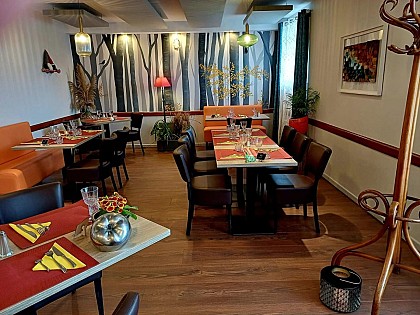
Unveil local wonders at HOTEL RESTAURANT IBIS CLERMONT FERRAND STE MON

Are you the owner?
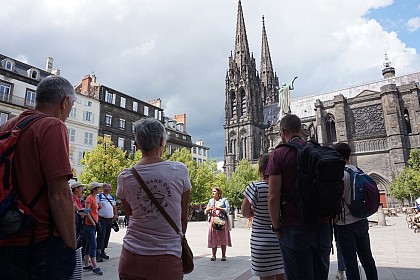
Nestled in the heart of Auvergne, HOTEL RESTAURANT IBIS CLERMONT FERRAND STE MON is the perfect starting point to explore the area's natural beauty and cultural treasures. Clermont-Ferrand is renowned for its majestic Notre-Dame-de-l'Assomption Cathedral, constructed from black lava stone. A stroll through the historic center reveals medieval buildings, lively squares, and fascinating museums.
Fr...
See more

Walking around HOTEL RESTAURANT IBIS CLERMONT FERRAND STE MON

See more suggestions
Take a walk around HOTEL RESTAURANT IBIS CLERMONT FERRAND STE MON.
See more suggestions
GTMC-VTT - Stage 12 - Clermont-Fd > Volvic
1.9 km

GTMC-VTT - Stage 12 - Clermont-Fd > Volvic

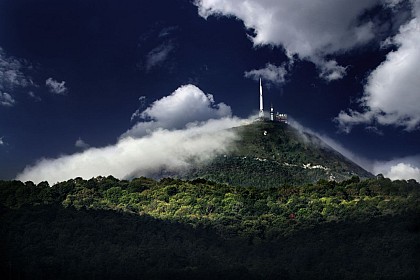
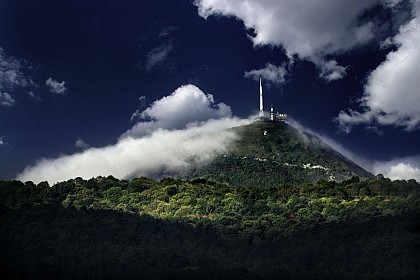
The GTMC-VTT, from Clermont-Ferrand to Volvic. The GTMC mountain bike route continues from Clermont-Ferrand (historic start of the GTMC mountain bike race) to Volvic. From Clermont-Ferrand, the historic departure point for the GTMC mountain bike race, you gradually gain altitude as you head towards the Chaîne des Puys and its 80 volcanoes. Under the gaze of the impressive Puy de Dôme, you'll discover a variety of landscapes, from a 2,000-year-old town to sunny hillsides planted with fruit trees and vines. The route ends in chestnut woods and volcanic cheires, with their chaotic vegetation and morphology. All along the way, the mountain biker's attention is irresistibly drawn to the volcanoes. Volvic, famous for its water and volcanic stone, is the finishing point of this stage. Departure is from Clermont Ferrand railway station. We climb gently up to Place Delille, which we cross before plunging down in front of a large secondary school to follow a long straight line. From set of traffic lights to set of traffic lights, the MTB GTMC takes us to the tarmac slope leading to the Col de Bancillon (alt. 551m). A short but steep descent on a farm track takes us to the Blanzat sports complex. We have to find a passageway to cross it and then climb back up to Blanzat on tarmac. Superb trails through fruit groves and meadows to the village of Malauzat. From Malauzat, we climb through a chestnut grove that takes us right up close to the Chaîne des Puys. Playful, relatively easy trails.

2 h
20 km
Medium
40 Avenue de l'Union Soviétique 63000 Clermont-Ferrand
Show

What to do in HOTEL RESTAURANT IBIS CLERMONT FERRAND STE MON

See more suggestions
Find bookable activities in HOTEL RESTAURANT IBIS CLERMONT FERRAND STE MON for an unforgettable experience.
See more suggestions
Lemptégy Volcano
14 km

Lemptégy Volcano

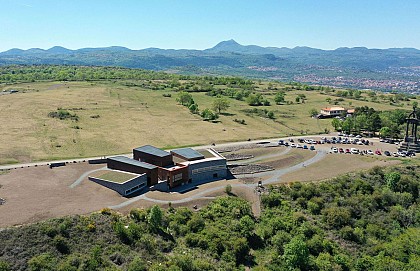
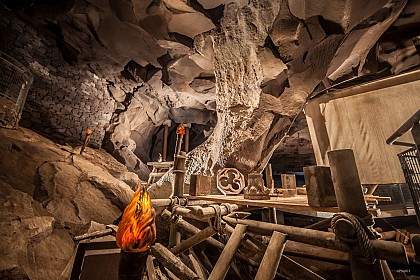
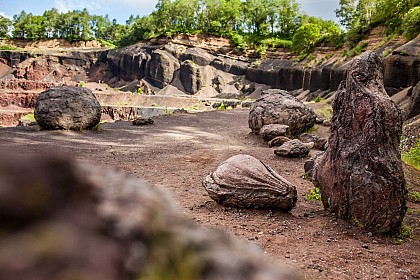
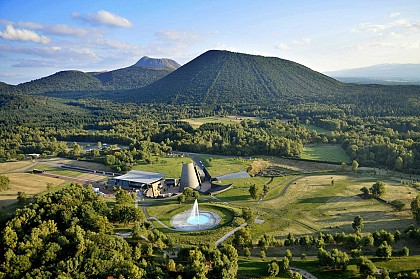
Explore the heart of a real volcano... Located at the center of the tectonic "Chaîne des Puys - Faille de Limagne" UNESCO World Heritage Site, we offer you the unique and unusual opportunity to discover the inside of a 100% natural volcano. Discover the secrets of volcanology with a 2h30 interactive tour of the Lemptégy volcano, comprising 5 stages: - The "volcano and men" tour: this fun, interactive introduction to the visit will familiarize you with the volcano and give you a better understanding of its metamorphosis. A 30-minute self-guided tour. - Guided exploration of the volcano's anatomy: meet your guide on foot or by train. He'll share all his geological and volcanological knowledge with you: bombs, volcanic chimneys, lava flows... and you'll leave with scoria (solidified lava). A wealth of information to help you better understand the landscape around you. - L'âme de Lemptégy": an unusual journey into the site's industrial past, with a visit to the old pozzolan extraction machines once used by quarrymen. - The immersive "Volcano 'Express" attraction: this sensory and emotional experience reveals all the secrets behind the formation of the Chaîne des Puys and the Faille de Limagne. What if the fault were to reopen... Will you reach your destination? - The dynamic 4D film "Aux Origines": enjoy an unprecedented flight over the volcanoes of Auvergne and relive the history of the volcano as if you were there, from its eruptions to the present day. While you're there, treat yourself to a gourmet break at the Volcan de Lemptégy restaurant. The chef offers traditional regional dishes (sausage/aligot, truffade, petit salé...). You can also stroll through the new boutique and discover a wide range of regional products, souvenirs, books... LE REVEIL DU VOLCAN" NIGHT TOUR: a breathtaking nocturnal experience! Entering at night, you'll be propelled into the heart of the Lemptégy Volcano for an extraordinary experience. Along the way, you'll plunge into an erupting volcano and discover magical creatures. A new world to discover and a new way to experience Volcan de Lemptégy. 1.5 km on foot. Prices and schedule: see website. IN JULY AND AUGUST

31 route des Puys Les Maisons Rouges 63230 Saint-Ours
Book from 0 €Book
Show

What to visit in HOTEL RESTAURANT IBIS CLERMONT FERRAND STE MON

See more suggestions
Relax in the parks of HOTEL RESTAURANT IBIS CLERMONT FERRAND STE MON.
See more suggestions
Roger Quilliot Art Museum
386 m

Roger Quilliot Art Museum

MARQ Auvergne Métropole is housed in a former Ursuline convent. Its luminous architectural and museographic redesign from the 1990s is a showcase for high-quality heritage works, exhibitions and cultural activities for all. The Musée des Beaux-Arts, located in Clermont-Ferrand, boasts a vast collection of paintings, sculptures and decorative arts, spanning from the medieval period to the 20th century. With over 750 works on display, the museum presents a chronological and educational tour that highlights artistic developments. Medieval collections The museum exhibits unique pieces of Romanesque and Gothic art from Auvergne, including the Virgins in Majesty, a rare 13th-century painting (the Frise des abbés d'Ennezat) and the Savaron casket. Masterpieces also include Léonard Sarson's Athena, a Volvic stone sculpture emblematic of the Auvergne Renaissance. 17th and 18th centuries Among the major works, MARQ presents a group of portraits, such as Philippe de Champaigne's Vincent Voiture, as well as a remarkable series of 12 large decorative paintings illustrating Ariosto's Roland Furieux. The collection also includes works by Jacques Blanchard, and objets d'art such as 17th-century cabinets and Clermont-Ferrand earthenware. 19th century Neoclassicism and Auvergne landscapes are represented by artists such as Thomas Degeorge, Théodore Rousseau, Camille Corot and Victor Charreton. The museum also exhibits Orientalist works by Prosper Marilhat and Jean-Victor Schnetz, as well as historical paintings by Théodore Chassériau and Frédéric Auguste Bartholdi. Portrait lovers will appreciate artists such as Géricault and Rodin. 20th century The tour continues with works from the 1920s-1960s, featuring figurative painters such as Marie Laurencin, Bernard Buffet and Jean Fautrier. In addition, the museum will soon house the textile collections currently housed at the Musée Bargoin. Come and discover the Musée d'Art Roger-Quilliot's must-see works in an exceptional setting, open to art enthusiasts from all walks of life.

Place Louis-Deteix Quartier Historique de Montferrand 63000 Clermont-Ferrand
Show
Former Sabourin Sanatorium - ENSACF
1.7 km

Former Sabourin Sanatorium - ENSACF

The former Sabourin sanatorium, previously threatened with demolition despite its remarkable architecture, has housed Clermont-Ferrand’s École Nationale Supérieure d'Architecture since 2015. Built in the 1930s by architect Albéric Aubert (1895-1971), this hospital is the region’s only example of modernist architecture from the inter-war period, along with Jean-Zay de Thiers high school. It was given the name of Charles Sabourin (1849-1920), a pneumologist, who had opened France’s first sanatorium nearby in Durtol in 1898. The institution was built on the hillsides of Puy de Chanturgue, according to the criteria for the location of sanatoriums at the time, which included protection from dominant winds, isolation in nature, the possibility to create a closed, monitored park, views of the landscape and clean land. To adjust to the sloped land, the larger wing is built perpendicular to the hillsides while the main façade faces south, so that patients can enjoy a clear view and the sunshine. The building is part of the Functionalism movement inspired by Bauhaus and by the thinking of Gropius and Le Corbusier, architects and urban planners. This architectural style dictates that the building must correspond exactly to its use, with emphasis on light and simple lines, horizontal elements and use of modern materials. The building’s wide horizontal bays, the dominance of the colour white, the fifth façade made up of a terrace and its narrow and formal outline are also characteristic of this style. Decommissioned in 1997, the Sabourin sanatorium was left derelict, renovated in 2006, then housed Clermont-Ferrand’s École Nationale Supérieure d'Architecture in 2015. The building has been on the historic monuments registry since 2000.

85, rue du Docteur Bousquet 63000 Clermont-Ferrand
Show
Chapel of the Carmes-Déchaux convent
1.9 km

Chapel of the Carmes-Déchaux convent

This chapel, with a style unique in the region, is from the 18th century. It is protected as a Historic Monument.Nearby, a cemetery, considered to be the “Père-Lachaise” of Clermont, is classified as a “significant cemetery” by the Association of Significant Cemeteries of Europe. The chapel On the site of a chapel and a cemetery, the cathedral canons founded the Chantoin monastery in the 12th century. In 1631, the fathers of the Secular Order of Discalced Carmelites settled into the building. But the convent and the church burned down in 1699. The church was rebuilt between 1752 and 1775 by architect André Peyrat (circa 1695-1752). With a quatrefoil layout, the chapel has a dome ceiling. It is the only example of this type in the region. The main façade, made from Volvic stone, comprises two superimposed levels with a small cast-iron bell tower on top. The first concave level features the entrance door, framed by two pilasters with ionic capitals. The Louis XV-style door leaves are surmounted by a woodwork tympanum with the coat-of-arms of an archbishop and of the city of Clermont-Ferrand. The second level comprises a screen wall in the centre of which is a large bay lighting the sanctuary. This bay is flanked by two half-gables with inward-facing decorative scrolls reminiscent of “Roman” façades, along the lines of the Church of the Gesù in Rome. The chapel was listed on the historic monuments registry in 1976. It was renovated in 2017 but closed to visitors. The cemetery The Carmes cemetery was inaugurated in 1816. Considered the “Père-Lachaise” of Clermont, it contains the sepulchres of great men from the City. These include politicians (Blatin, Charras), industrialists (Bargoin, Lecoq), artists (musicians Onslow and Claussmann, sculptors Chalonnax, Morel-Ladeuil and Mombur, architects Ledru and Jarrier), scientists (Alluard, Glangeaud) and intellectuals (Varenne, Mège). The Carmes cemetery is classified as a “significant cemetery” by the Association of Significant Cemeteries in Europe. Near its entrance is a monument dedicated to Clermont inhabitants killed during the First World War (1914-1918). Created by the architect André Papillard (1880-1964) and the sculptor Jean Camus (1877-1955), its shape is reminiscent of an ancient Egyptian mastaba. This building is a contemporary of the monument in Place Salford, honouring veterans, with which it was part of a joint competition. It was inaugurated in 1924 and was listed as a historic monument in 2021.

Rue du Souvenir Français 63000 Clermont-Ferrand
Show
Château de Rabanesse
1.9 km

Château de Rabanesse

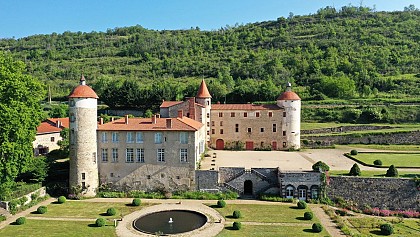
In the Kessler-Rabanesse neighbourhood sits an unusual building with a tower, probably dating from the 15th century. The building nicknamed the Château de Rabanesse was revamped for various uses and served as a meteorological station. The château’s origins dates back to those of an 11th century fiefdom named Rabanisça or Rabanessa in ancient Occitan. Close to the city, this fortified farm supplied the estate with foodstuffs but also assisted in its defence, since its position enabled it to send a warning in the event of an attack. The square tower is probably from the 15th century. It features a spiral staircase lit by six levels of small bay windows framed by Volvic stone moulding. The two-storey adjoining rectangular lodge features irregular openings that may date back to the 17th or 18th century. It also shows traces where adjacent buildings were torn off and demolished. This lodge used to house a wheel mill, since the Tiretaine river flowed in this spot. From 1874 to 1911, the building became a lowland metrological station. The tower was then raised and levelled to a terrace to accommodate the measuring instruments, while the lodge was used successively as a telegraph office, a photo laboratory and a library. Connected to the Puy de Dôme observatory by a telegraph line, the station exchanged observations from the two stations with those of the Paris observatory. In the early 21st century the building was still derelict. It was restored when the Kessler-Rabanesse district was renovated. The château was listed on the historic monuments registry in 2009.

Rue Kessler - rue de Rabanesse 63000 Clermont-Ferrand
Show
Place des Carmes
1.9 km

Place des Carmes

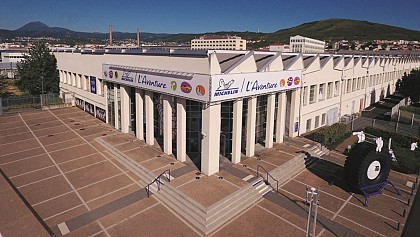
Place des Carmes houses the historic headquarters of the Michelin plant, founded in Clermont-Ferrand in 1889 and its Hevea greenhouse. Located outside the city’s walls and crossed by the former Roman path (currently Chaussée Claudius), Place des Carmes, long occupied by farming land, is close to Route de Montferrand, below Place Champet, today named Place Delille. Its space was given over to religious orders, with the Chantoin monastery in the 6th century, on the site of the chapel and the cemetery, replaced by the Discalced Carmelites in 1653, the Jacobins in the 13th century on the street bearing their name and the Augustines Hospitalières nuns in 1672 in a large enclosure to the south. The river Tiretaine crosses the square from west to east, the driving power generated by the water explaining the presence of the Raynaud mill (future Michelin headquarters) then plants. In 1832, two cousins, Aristide Barbier and Édouard Daubrée, started to manufacture farming machines and equipment for the sugar industry. Under the name “Barbier et Daubrée”, they had workshops on Place des Carmes and in Blanzat, in the early 1850s. The company thrived under the Second Empire, with 400 employees in around 1860. It then diversified into producing small rubber items (balls, joints, marbles, pipes), marking the start of rubber production in Clermont-Ferrand, along with other entrepreneurs such as Torrilhon and Bergougnan. From 1886, brothers André and Édouard Michelin, grandsons of Aristide Barbier, rescued the struggling company and named it Michelin et Cie in 1889. The elder brother, André, was a graduate of the prestigious Centrale Paris engineering school, and a builder of Eiffel-type metallic structures in Paris. He was the architect of the Saint-Joseph covered market in Clermont-Ferrand. Édouard was a law graduate and an artist who came in first place in the École des Beaux-Arts de Paris admissions exam in 1881. Their innovations, including removable tyres and road maps, would set the company on a sustainable track. Since its origins the company headquarters has always been on Place des Carmes. It is the only international company to have kept its headquarters on the site where it was founded. At the site entrance, a large greenhouse houses exotic plants and particularly hevea, which are used to produce rubber. L’Aventure Michelin, 32 rue du Clos-Four in Clermont-Ferrand recounts the entire history of the plant.

Place des Carmes 63000 Clermont-Ferrand
Show
Clermont-Ferrand station
2 km

Clermont-Ferrand station

Completed in 1945, the Clermont-Ferrand train station is an example of modernist architecture. It has Architecture Contemporaine Remarquable (remarkable contemporary architecture) status. The first train station in Clermont-Ferrand was inaugurated in 1855 for goods transport and passenger travel. An entire new neighbourhood was created to the east of the historic centre of Clermont-Ferrand and urban planning created wide avenues leading to the station. A new parish (Saint Joseph), businesses and hotels completed the development. But the only parts remaining of this first station are the side lodges. The present-day station was completed in 1945. It was the SNCF architect-engineer Paul Peirani who designed it, based on the model for the station at Le Havre (1929-1931) by architect Henri Pacon. The building is an example of modernist architecture with wide bay windows for maximum lighting in the entrance lobby, refined and simple lines, and an emphasis on light. The entrance lobby is decorated with enamelled lava stone by Jean Jaffeux. The clock tower is a recurring feature in train station architecture, since it is a symbol of punctuality and speed. The Clermont-Ferrand train station was awarded “Architecture Contemporaine Remarquable” (remarkable contemporary architecture) status in 2023. Since thermal spa resorts were becoming popular in the 19th century, it became important to establish train connections with them. Royat was connected from 1886 after the construction of a huge viaduct in 1881. Previously, spa visitors left the train at Clermont-Ferrand and finished their journey by horse and carriage. This is what Napoleon III did when he visited Clermont-Ferrand and Royat in 1862.

40, avenue de l'Union Soviétique 63000 Clermont-Ferrand
Show

Where to eat in HOTEL RESTAURANT IBIS CLERMONT FERRAND STE MON

See more suggestions
Restaurants in HOTEL RESTAURANT IBIS CLERMONT FERRAND STE MON will captivate you.
See more suggestions

Where to sleep in HOTEL RESTAURANT IBIS CLERMONT FERRAND STE MON

See more suggestions
Book a pleasant stay in HOTEL RESTAURANT IBIS CLERMONT FERRAND STE MON.
See more suggestions
Caution!
We have no information on the difficulty of this circuit. You may encounter some surprises along the way. Before you go, please feel free to inquire more and take all necessary precautions. Have a good trip! 🌳🥾