Tours
Activities
Places of interest
Where to eat
Where to sleep

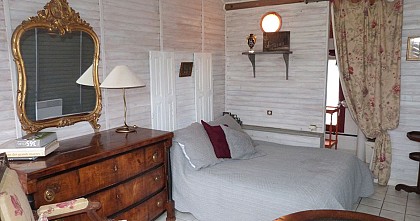
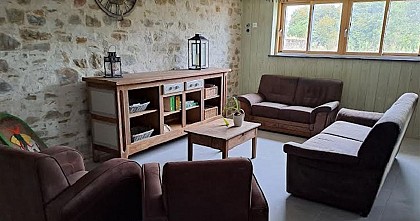
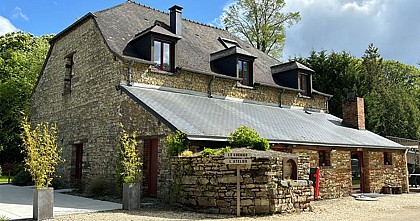
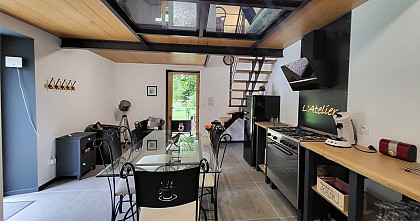
Unforgettable Stay at Brit Hotel Ker Lann Aéroport in Bruz

Are you the owner?
Welcome to Brit Hotel Ker Lann Aéroport, conveniently located in Bruz, Ille-et-Vilaine, Brittany. Take advantage of your stay to discover the local treasures of this historically rich and activity-filled region. Start with a visit to the Parc des Bois, perfect for a nature walk. Don't miss Domaine de Cicé-Blossac, an exceptional venue where you can enjoy golfing or simply savor the tranquility of ...See more

Walking around BRIT HOTEL KER LANN AEROPORT

See more suggestions
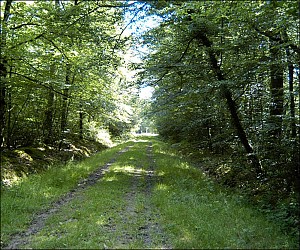
Embark on a hike in BRIT HOTEL KER LANN AEROPORT.
See more suggestions
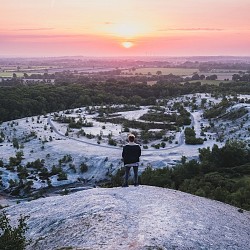
What to do in BRIT HOTEL KER LANN AEROPORT

See more suggestions
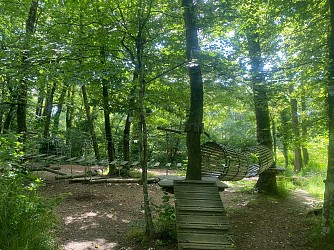
Make your stay in BRIT HOTEL KER LANN AEROPORT special by booking activities.
See more suggestions

What to visit in BRIT HOTEL KER LANN AEROPORT

See more suggestions
Attend events organized in BRIT HOTEL KER LANN AEROPORT.
See more suggestions
Haut-Becherel sanctuary called « Temple de Mars »
55 km

Haut-Becherel sanctuary called « Temple de Mars »

Stay on the same sidewalk for about 250m (after the castle). You can see the layers of the old Roman road. Take on the right the path to Trégouët Abbey, and climb the hill up to the Temple. On this hill, the largest Gallo Roman sanctuary of Brittany stands. Created ex-nihilo, this monument appears as a tool to serve the integration of the local populations and shows the dedication of the Coriosolites city to the Empire. Its construction, based on the size and the cost, was in two stages and on a few decades between the end of the 1st and the beginning of the 2nd century AD. The Romano-Celtic building, facing east, is organised around a vast sacred courtyard covering 5,000m² (108m x 98m). and is surrounded by three raised porticoes. It is said to be Romano-Celtic since it uses, in its architecture, a polygonal cella (most sacred area of the sanctuary) in Celtic tradition, associated to the Greek system with three porticoes, the whole linked with the Etrusco-Italic constructions through its frontality. The columns are in the Tuscan style, very puridied Roman architectural order. One entered the sanctuary through the vestibules which allowed to host, control and guide the pilgrims. The sacred area could hold around 5,000 people. The processions and calls of the Emperor representatives took place under the porticoes. The octogonal cella, (tower originally 22.50m heigh) of which four walls still remain, was the most sacred area of the sanctuary, reserved to the sacerdos (priests) and the elite. The cella housed the tutelar deity's statue, Mars Mullo. The pilgrims couldn't access this area. To pray to the god, they turned in the adjoining gallery and left their offerings to the God in a small exedra. The sanctuary was destroyed by fire, most likely between 275 and 290 AD. Voluntary fires caused during pillages by Saxon pirates going up the Rance River, or by peasants revolts against imperial power and social order. Many a building, public or private, walls or enclosures, of the area has been built with the stones from these ruins. An interpretative itinerary in free access shows you the life of the sanctuary. Slip into Gaius' mind, our mascotte, and let yourself be lead into the pilgrim's ceremony! Go around the site and retrace your steps to CORIOSOLIS.

D794 22130 Corseul
Show
Ossuary and the 3 crosses
56 km

Ossuary and the 3 crosses

The ossuary dates back to the 17th century. It was incorporated to the graveyard next to the church. The parochial presinct being abandonned, the ossuary in the way of traffic, the Germans wanted to raze it, it was moved in 1941/42. It was a collective grave used before the French Revolution. At the time of the ossuary construction, the graveyard was a living place, a fair where happy moments happen.This ossuary is in granite, of heavy architecture, the roof is made of stone slates and the aperture is decorated with two collars. In 1861, the Priest of Plélan, Father Morin, wished to bring those three crosses to make a calvary, destined to walks of Fête-Dieu. Therefore, a mound was raised, half-circular, held by a wall with a earth ramp to access it on marshes grounds where the actual Salle des Fêtes is. The three crosses were moved by some twenty metres on the road to Saint-Maudez (current Media Centre). This new place next to an electric transformer was polemical and in 1971, the municipality decided on a new change, by the graveyard. The two crosses on the sides are called "pattées" (legged), they are latin crosses with the branches wider at the end. They surround the third cross, more curious, in the shape of a Lorraine cross with two cross-pieces, with its shaft slightly curved. The pedestal of these crosses, more ancient, were chosen on the Etrat Path (road from Corseul to Vannes)

15-17 Rue de la Croix Briand 22980 Plélan-le-Petit
Show

Where to eat in BRIT HOTEL KER LANN AEROPORT

See more suggestions
Restaurants in BRIT HOTEL KER LANN AEROPORT offer a friendly atmosphere.
See more suggestions

Where to sleep in BRIT HOTEL KER LANN AEROPORT

See more suggestions
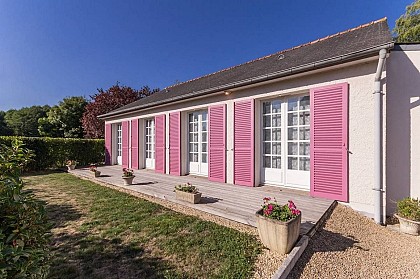
Discover the best lodging options in BRIT HOTEL KER LANN AEROPORT.
See more suggestions
Caution!
We have no information on the difficulty of this circuit. You may encounter some surprises along the way. Before you go, please feel free to inquire more and take all necessary precautions. Have a good trip! 🌳🥾