Tours
Activities
Places of interest
Where to eat
Where to sleep

Discover Mirefleurs from Camping de l'Europe

Are you the owner?
Uncover the hidden gems of Mirefleurs and the surrounding areas while staying at Camping de l'Europe. Conveniently located in Puy-de-Dôme, at the heart of Auvergne, this site offers a variety of activities for the whole family. Begin your journey with a stroll through the charming streets of Mirefleurs, where historical heritage is revealed at every turn. Don't miss the stunning Château de Montlos...See more

Walking around CAMPING DE L'EUROPE

See more suggestions
Walks and hikes around CAMPING DE L'EUROPE.
See more suggestions
What to do in CAMPING DE L'EUROPE

See more suggestions
Choose from a variety of activities in CAMPING DE L'EUROPE and book your favorites.
See more suggestions
Castle of La Batisse
11 km

Castle of La Batisse

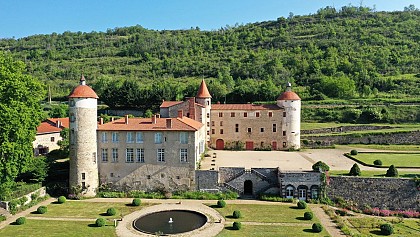
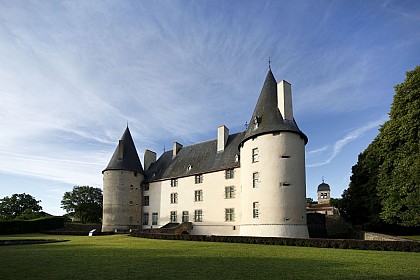
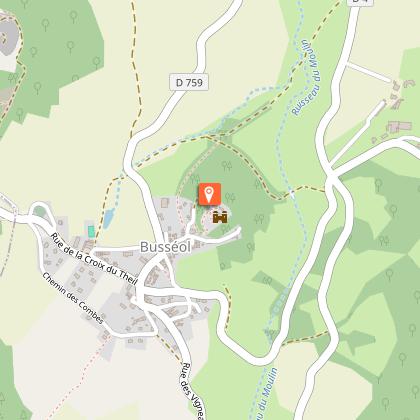
Château de la Batisse, located in Chanonat, is classified as a Historic Monument, as is the entire estate, and is surrounded by a garden that has been awarded the "Jardin Remarquable" label. Originally built in the 13th century as a defensive tower, the Château de La Batisse became a fortified castle in the 14th century. In the 18th century, it was transformed into a true pleasure estate, which is admired today for its rich history, its remarkable architecture, and its gardens—unique in the Auvergne region. Open year-round, the castle hosts both private and professional events, all while coming alive with an inspiring cultural program. Unique exhibitions, exceptional events, and timeless experiences make the site a space for creativity and cultural transmission. Contemporary art, historical reenactments, performances, concerts, and immersive evenings invite visitors to rediscover the château in a new light. Whether you’re a history buff, an art lover, or simply curious, everyone can enjoy unique experiences in the heart of this place steeped in history. Events From June 20 to August 30, 2026, set amid 19 hectares of nature and gardens designated as “Jardin Remarquable” (Remarkable Garden) and traversed by the Auzon River, the estate offers visitors a true respite of freshness and discovery. Shady woods, French-style gardens, waterfalls, orchards, a maze, wooden play structures, and art installations punctuate the visitor experience: Gallery of Auvergne portraits in the maze — Denis Pourcher Lava stone sculptures integrated into the gardens — Thierry Courtadon Floral sculptures in the Roseraie pond — Alexis Boyer “In Search of the Enlightenment”: busts of great philosophers hidden in the grove along the Allée des Cascades Summer 2026 Program Music Festival – June 20, 2026: storytelling during siesta time in the orchard, a costumed procession in the style of Napoleon III, and a free festive evening at the Moulin du Château starting at 6:30 p.m. (in partnership with Auzon Collectif), featuring concerts by local artists, food, and a friendly atmosphere. Concert Evening – July 13: concert featuring Les Frères Maulus followed by a barbecue. Guided Tours of the Château: starting July 8, Wednesdays and Sundays at 3:00 p.m. Napoleon III-themed costumed processions (afternoon): June 20, July 8, August 9 Storytelling tours (afternoon): July 8, August 5 “The Musketeers & Milady” event (July 15–August 13, every Wednesday): performances and fencing workshops.

Route de Varennes 63450 Chanonat
Book from 0 EURBook
Show
The castle of Villeneuve-Lembron
25 km

The castle of Villeneuve-Lembron

Built at the end of the Middle Ages, this château contains some of the most extraordinary furniture and painted decor from the 16th and 17th centuries, a dazzling illustration of the medieval and early Renaissance imagination. 1-hour guided tour only. Château de Villeneuve-Lembron is a seigniorial residence built at the turn of the 15th and 16th centuries. Reflecting a period of transition between the Middle Ages and the Renaissance, the building shows the importance and wealth that the lord of Villeneuve, Rigaud d'Aureille, derived from royal favor, thanks in particular to the preserved furniture and painted decorations. Rigaud d'Aureille (c. 1450-1517), Baron de Villeneuve, was an important figure who enjoyed many privileges. Captain and butler to the king, he earned the trust of the sovereigns and was entrusted with diplomatic missions. The residence he had built away from the old family mansion where he was born was a vast quadrilateral flanked by massive towers and surrounded by deep moats. The lord did not hesitate to depict himself in murals illustrating "dits", short plays with a moral or satirical tone. At the beginning of the 16th century, the land of Villeneuve became a barony and belonged to the Montmorin family. Gaspard de Montmorin embellished the château with a large-scale painted decor, of which some remarkable examples remain in the ceremonial hall and large stables. In 1643, Villeneuve-Lembron was acquired by Isaac Dufour, Treasurer of France, who transformed the inner courtyard, added a porticoed gallery and decorated the ceilings and fireplaces on the second floor. His descendants, who remained in the castle until the end of the 18th century, sold it to the Pélissier de Féligonde family, who kept it until 1919. By decree of May 25, 1926, the château was classified as a Historic Monument. The last owner, Georges Tixier, donated it to the French government in 1937, which undertook its restoration. It is currently managed by the Centre des Monuments Nationaux.

Château de Villeneuve-Lembron 63340 Villeneuve
Book from 0 €Book
Show

What to visit in CAMPING DE L'EUROPE

See more suggestions
Enjoy the green spaces of CAMPING DE L'EUROPE.
See more suggestions
Gondole Oppidum
2.7 km

Gondole Oppidum

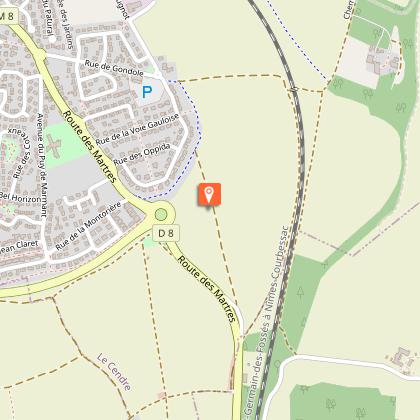
Recent archaeological discoveries revealed the existence of a Gallic fortified town on the site of Gondole, in the shadows of the Plateau de Gergovie. There is evidence of its occupation as far back as the 1st century BCE. Set out on an overlook, the town was protected by a fortification made up of a bank and a trench. The fortification ran 700 metres long, 100 metres wide and 10 metres high. It is still visible today. Inside, vast residences installed on large basements were identified. They were organised around a structured road network, along a main road and on both sides of secondary roads. A huge artisanal district was also discovered. It extended over several hectares, in front of the oppidum. Business was very active: potters, bronze workers (copperware and foundry), blacksmiths (manufacture of small objects), tabletiers (bone rings), horn workers (horns and antlers) and furriers (skins and furs). The presence of many wine amphoras and other imports (ceramic tableware) from Spain or Italy is evidence of trade exchanges with the Romans. Close by, in the plain, a grave containing eight knights and eight horses, with a layout unique in Europe, was discovered in 2022. A short distance from this oppidum are two other sites: the sites of Corent and Gergovie. The oppidum at Gondole was inhabited until 30 BC. Photos : 1/ Gondole Oppidum, between the Allier and the Cournonnaise conurbation (photo by S. Foucras, Inrap/ARAFA) 2/ The men's and horses' tomb (photo by U. Cabezuelo, Inrap) 3/ Battery of four potter's kilns uncovered in the artisanal quarter in front of Gondole (photo by Y. Deberge, Inrap/ARAFA) 4/ Potter's kiln uncovered in the artisanal quarter in front of Gondole (photo by Y. Deberge, Inrap/ARAFA) 5/ Intaglio rings imported from Italy and Gallic ring ornaments (photo by Y. Deberge, Inrap/ARAFA) 6/ Gems (cornelian and glass paste) from rings imported from Italy depicting a canid (top) and a cornucopia (bottom) (photo by Y. Deberge, Inrap/ARAFA) 7/ Accumulation of empty wine amphorae at the bottom of a well (photo by Y. Deberge, Inrap/ARAFA)

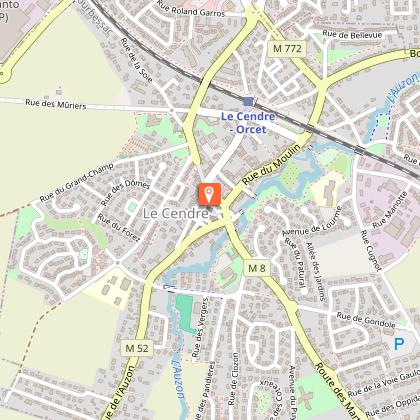
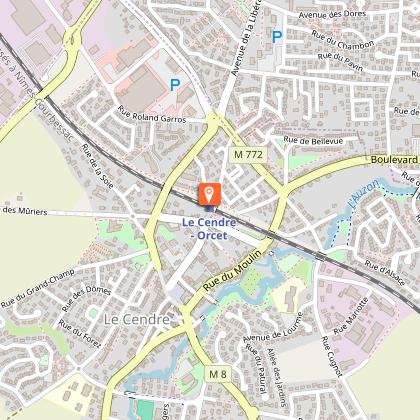
Chemin de Cournon aux Martres-de-Veyre 63670 Le Cendre
Show
Cournon Bridge
3.7 km

Cournon Bridge

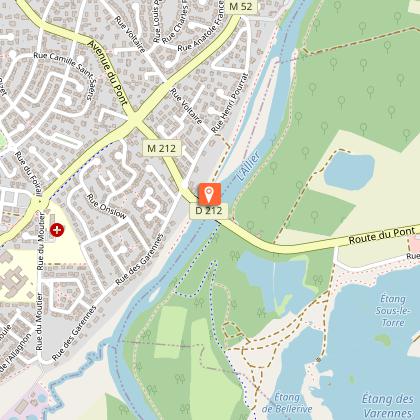
At Cournon-d’Auvergne, several different bridges have crossed the river Allier since the 1st century BCE. Some vestiges of former bridges are still visible. From the first century BCE, under Agrippa (62-12 BCE), a Roman bridge crossed the river Allier at Cournon d’Auvergne, along which the military route ran from Lugdunum (Lyon) to Saintes via Augustonemetum (Clermont-Ferrand). This was a strategic route that crossed the Cournon territory from east to west. Starting at the present-day SNCF train station in Clermont-Ferrand, it more or less followed the railway line to the heights of the Le Cendre train station and passed close to the Ribeyre before joining the Allier. Depending on the level of the river Allier, you can sometimes see a few remains of the piers of this Roman bridge. A bridge was subsequently mentioned in the 13th century in several texts. It was apparently swept away in the early 15th century and, for close to four centuries, it was replaced by a ferry which became the sole means of transport across the Allier. In 1833 the Cournon d’Auvergne town council decided to build a suspension bridge to replace the ferry. Construction began in 1837 and the bridge was inaugurated on 27 June, 1839. This first suspension bridge was designed by the engineer Kermaingant. Various landowners from Cournon d'Auvergne and Pérignat-lès-Allier carried out the construction work in exchange for a 60-year toll franchise. One of these owners was the musician Georges Onslow (1784-1853), who owned the Château de Bellerive (La Roche-Noire). Lava stone piers from this bridge remain clearly visible close to the current bridge. It underwent several major renovations, including after an accident caused by American trucks in 1918, a dramatic event that remains etched in local memory. The suspension bridge was replaced in 1959 by a bridge with a metal arch and reinforced concrete deck. This bridge is still in service today and was widened in 2023.

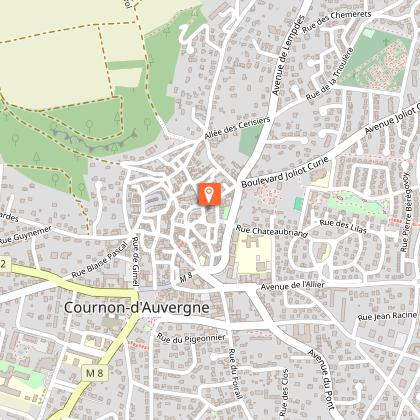
Avenue du Pont 63800 Cournon-d'Auvergne
Show
Saint-Pierre Church
3.9 km

Saint-Pierre Church

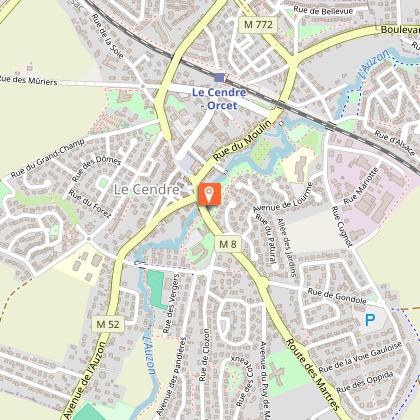
Église Saint-Pierre is a 19th century church in neo-Gothic style, built to replace an older church. In the 19th century, when the Église Saint-Pierre was entirely rebuilt, excavations performed in 1851 revealed the presence of a former Roman church dating back to the 11th and 12th centuries, in place of the current building. The village fort, a highly individualised area, was then structured around this former church and occupied the peak of a hillock that was more pronounced at the time. Constructions built close to one another ensured collective safety inside the fort, which included 23 houses, the church and its cemetery, a common house (municipal services) and a fortified house that no longer exists. A Rue du Fort still exists. In 1849, Aymon Mallay (1805-1883), a departmental architect in Puy-de-Dôme and architect for the diocese, was commissioned for the reconstruction of the church. He had previously worked on several religious buildings in the Auvergne region, including église Saint-Léger de Royat. The present-day church is built from Volvic stone. It is in neo-Gothic style, inspired by medieval forms such as pointed arches, which can be seen above the openings, and rose windows, above the western gate. The church retains a number of statues which are on the additional inventory of historic monuments. As for the bell tower, it has two bells, one cast in 1822 (62 cm in diameter), the other in 1823 (72 cm diameter).

Place de l'église 63670 Le Cendre
Show
Archaeological site of the Gallic oppidum at Corent
4.4 km

Archaeological site of the Gallic oppidum at Corent

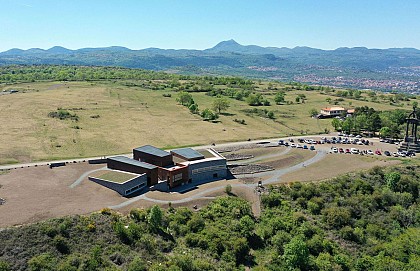
Proudly dominating the plateau, the Corent oppidum reveals the remains of a major Gallic city. Probably the capital of the Arvernes, today it offers a major archaeological site in the heart of a spectacular landscape. Around 130 B.C., the Arvernes, the great Gallic people of present-day Auvergne, founded a vast sanctuary dedicated to rituals and ceremonial banquets at the heart of the Corent plateau. Around this sacred space, specialized districts developed, forming a veritable Gallic city: the Corent oppidum. The site is part of a long history, succeeding ancient Neolithic and Bronze Age settlements and extending into the Gallo-Roman era. Since 2010, the Conseil départemental du Puy-de-Dôme, owner of the site, has undertaken a major enhancement project. Today, a landscaped trail allows visitors to visualize the layering of constructions over the centuries, and to imagine the buildings that once dominated the plateau. To make the site easier to understand, colorful signage accompanies the visit: - Green: Bronze Age - Red: Gallic oppidum - Grey: Gallo-Roman town Explanatory panels and 3D videos (viewable on this page) help to immerse you in the world of the Gallic city and better understand its evolution. A brochure presenting the archaeological site is also available for download. Throughout the year, the site hosts a program of events in partnership with the Musée archéologique de la Bataille de Gergovie. Among them, the spectacular new immersive experience "Revivre Corent au temps des Gaulois" combines guided tour and virtual reality: equipped with a headset, you explore the Gallic town as it might have looked over 2,000 years ago. A unique experience, financially supported by the Département du Puy-de-Dôme.

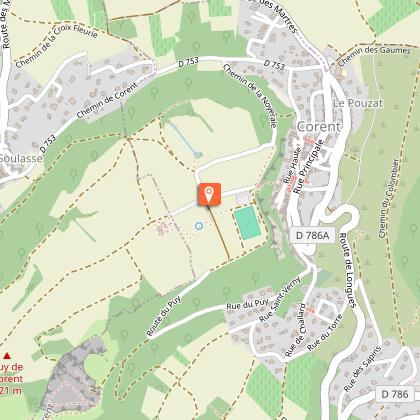
Plateau de Corent 63730 Corent
Show

Where to eat in CAMPING DE L'EUROPE

See more suggestions
Come and taste typical dishes of CAMPING DE L'EUROPE.
See more suggestions
Where to sleep in CAMPING DE L'EUROPE

See more suggestions
Find a comfortable stay in CAMPING DE L'EUROPE.
See more suggestions
Caution!
We have no information on the difficulty of this circuit. You may encounter some surprises along the way. Before you go, please feel free to inquire more and take all necessary precautions. Have a good trip! 🌳🥾