Tours
Activities
Places of interest
Where to eat
Where to sleep

Discover Saint-saturnin at the Naturist Camping in Auvergne

Are you the owner?
Welcome to the page dedicated to your stay at the naturist camping site in Saint-saturnin, in the magnificent region of Puy-de-Dôme, Auvergne. Nestled in the heart of lush and preserved nature, this paradise offers a myriad of activities and sights to explore.

Discover the charming village of Saint-saturnin, classified among the Most Beautiful Villages of France. Stroll through its picturesque st...
See more

Walking around CAMPING NATURISTE

See more suggestions
Explore the natural surroundings of CAMPING NATURISTE.
See more suggestions
Redon-Artière
4.9 km

Redon-Artière

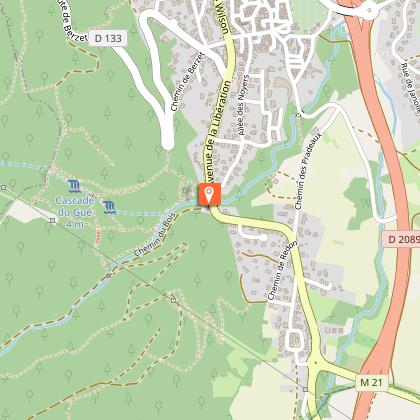
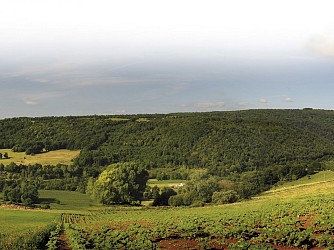
We start by climbing into the forest overlooking the stream. Arriving at the Redon farm, the Puy de Dôme is right in front of you. On the way back, we descend into the wild Artière valley, past boulders including the Samson dolmen. 1 - After 300m, at the foot of a gigantic scree, take the path on the left. It climbs gradually above the valley, into the forest; through the trees you can see Ceyrat and Clermont Fd. 2 - Turn left and continue until you reach marker 3. 3 - Turn right. View of the Gergovie plateau and Montrognon; a little further on the right, you can see the hamlet of Berzet. As you leave the forest, which has been replaced by meadows, the view opens up and the climb is almost over. Go around an anti-vehicle barrier and straight across the Redon farm (watch out for dogs!). After the farm, don't take the path to the left, but continue along the wide track. 4 - Take the right-hand track, which changes direction from south-west to north-west, with a view of Puy de Dôme. Leaving a track coming from the left, go straight ahead until you reach the gate of the INRA research center; at this point, turn sharp right, heading northeast. The path begins to descend. Immediately after crossing it, take a narrower path to the right on the left bank of the river, altitude 815m, a sign reads "Mairie de Ceyrat 4.5km". Follow this path to marker 5. 5 - Take the steep, descending path on the right: "Ceyrat 3.6km", descending towards the Artière; new crossroads under the trees: turn right, continuing downhill. Footbridge over the Artière: from left bank to right bank. The river looks like a torrent, amid the rocks. You arrive at the foot of the Samson dolmen: a huge slab of rock that looks as if it has been carved by man. At a ford, we cross back over to the left bank and discover a gigantic octopus, the work of Breton sculptor Francis Berninca. Crossing a new bridge over the Artière, we walk back along the right bank to the huge scree slope of the outward journey; from here, the path remains the same until we reach the parking lot.

3 h
6.7 km
Parking des "Gorges de l'Artière" Avenue de la Libération 63122 Ceyrat
Show
The Puy of Gourdon
6.3 km

The Puy of Gourdon

We are following the footsteps of the templars who took refuge at the Olloix commandery at the time when Auvergne was one of the main territories of the Order of Hospitallers of Saint John of Jerusalem. Superb views, crosses, bridges, megaliths.... Starting point - From the starting sign, go down towards the village of Chaynat. At the first fork, continue to the right. On the village square, turn right towards the rue du Four à pain until you reach the fountain. 1 - Turn left onto Chemin de Gourdon and continue up about 500 m to an intersection. 2 - Take the right track. At the T-junction, turn left. At a new T-junction on the flat, turn right and continue for 50 m (menhir des Deux territoires), until you reach a fork. 3 - Turn right. At the next road, turn left for 300 m, turn left again and continue until a crossing 300 m further on. 4 - Go up to the right on the wide grassy path for a round trip to the top of the Puy de Gourdon (from the top, distant circular view). Back to point 4, continue the path to the right. On the descent, the oblique path to the left before reaching a T-junction, near an agricultural building. Turn left and follow this main road back to point 3, continue to the right and keep east-west for 500 m. The path then turns largely to the left. Continue straight ahead, reach point 2 and continue until you reach the fountain in Chaynat. Follow the road on the right (D74, route de Ludesse) to pass below the church (church and commandery, 15th century). Stay on the road towards Saint-Saturnin. At the end of the village, turn left into rue des Avats, which runs alongside the castle park before going straight up to the starting point of the circuit.

3 h
10 km
Easy
Parking cimetière de Chaynat - Au bord de la départementale 500 m avant le village 63320 Ludesse
Show

What to do in CAMPING NATURISTE

See more suggestions
Activities for all tastes await you in CAMPING NATURISTE, book them today.
See more suggestions
Lemptégy Volcano
18 km

Lemptégy Volcano

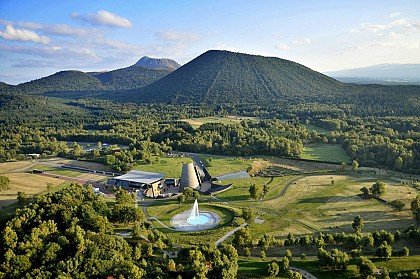
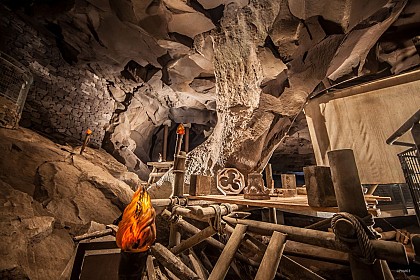
Explore the heart of a real volcano... Located at the center of the tectonic "Chaîne des Puys - Faille de Limagne" UNESCO World Heritage Site, we offer you the unique and unusual opportunity to discover the inside of a 100% natural volcano. Discover the secrets of volcanology with a 2h30 interactive tour of the Lemptégy volcano, comprising 5 stages: - The "volcano and men" tour: this fun, interactive introduction to the visit will familiarize you with the volcano and give you a better understanding of its metamorphosis. A 30-minute self-guided tour. - Guided exploration of the volcano's anatomy: meet your guide on foot or by train. He'll share all his geological and volcanological knowledge with you: bombs, volcanic chimneys, lava flows... and you'll leave with scoria (solidified lava). A wealth of information to help you better understand the landscape around you. - L'âme de Lemptégy": an unusual journey into the site's industrial past, with a visit to the old pozzolan extraction machines once used by quarrymen. - The immersive "Volcano 'Express" attraction: this sensory and emotional experience reveals all the secrets behind the formation of the Chaîne des Puys and the Faille de Limagne. What if the fault were to reopen... Will you reach your destination? - The dynamic 4D film "Aux Origines": enjoy an unprecedented flight over the volcanoes of Auvergne and relive the history of the volcano as if you were there, from its eruptions to the present day. While you're there, treat yourself to a gourmet break at the Volcan de Lemptégy restaurant. The chef offers traditional regional dishes (sausage/aligot, truffade, petit salé...). You can also stroll through the new boutique and discover a wide range of regional products, souvenirs, books... LE REVEIL DU VOLCAN" NIGHT TOUR: a breathtaking nocturnal experience! Entering at night, you'll be propelled into the heart of the Lemptégy Volcano for an extraordinary experience. Along the way, you'll plunge into an erupting volcano and discover magical creatures. A new world to discover and a new way to experience Volcan de Lemptégy. 1.5 km on foot. Prices and schedule: see website. IN JULY AND AUGUST

31 route des Puys Les Maisons Rouges 63230 Saint-Ours
Book from 0 €Book
Show

What to visit in CAMPING NATURISTE

See more suggestions
Experience the annual festivals of CAMPING NATURISTE.
See more suggestions
Church of Notre-Dame de l'Assomption
2.7 km

Church of Notre-Dame de l'Assomption

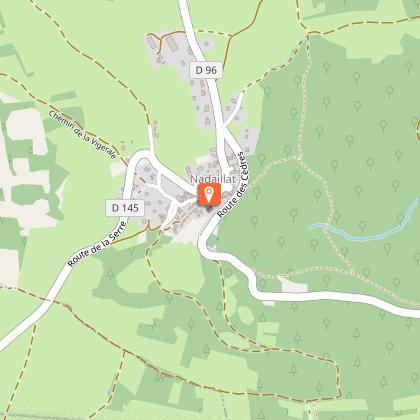
Église Notre-Dame-de-l’Assomption de Nadaillat dates back to the 19th century. It was built thanks to the efforts of the inhabitants. Under the Ancien-Régime, the territory of Nadaillat was under the control of the parish of Chanonat, whose communalist priests came to celebrate mass and administer the sacraments. Pastoral visits confirmed that the building was in good condition and indicated that it was vaulted. After the French Revolution and the Concordat in 1801, the Église de Nadaillat became attached to the Église Saint-Genès at Saint-Genès-Champanelle. Mass was celebrated there only sporadically on certain religious holidays. In 1838, the inhabitants fought tooth and nail to have their church one again part of the parish, as a chapel of ease to Église Saint-Genès in Saint-Genès-Champanelle. A new building was put up to replace the former church. The parishioners financed the project and helped with the work. The church was consecrated in 1842 by Monseigneur Féron, bishop of Clermont, and dedicated to Notre-Dame-de-l’Assomption. The bell tower completed the church after 1852. The church’s architect is not known, and its style is neo-Gothic with bay frames, buttresses and a bell tower made from Volvic stone. The façade is set off by two buttresses framing the entrance and two niches. Above the niches, partly erased inscriptions give the date of 1842 on the right and “Hoc potuit pietas vici” (Here piety triumphed). A triangular pediment crowns the façade, providing a hint of neo-Classicism.

Rue de l'église Nadaillat 63122 Saint-Genès-Champanelle
Show
Saint-Saturnin village
3.1 km

Saint-Saturnin village

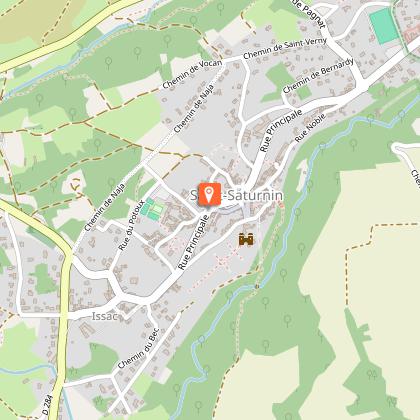
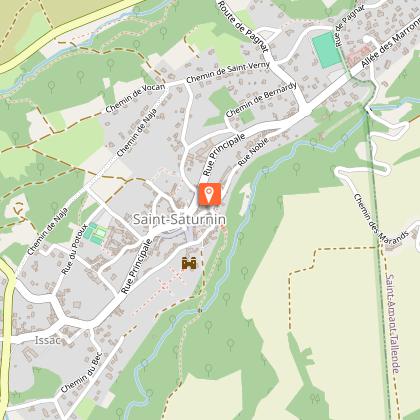
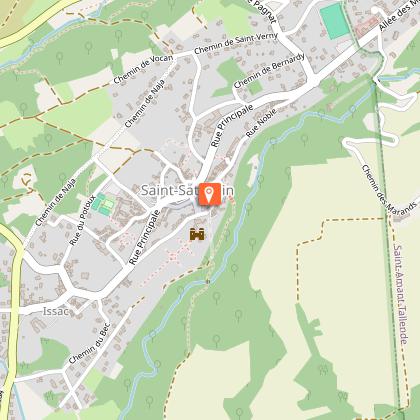
Built on a basalt mound, Saint-Saturnin, formerly the residence of the barons of la Tour d'Auvergne, is listed as one of the Plus Beaux Villages de France, and owes its appeal to the use of arkose and volcanic stone in its buildings. Down its steep and narrow alleyways are homes dating back to the Renaissance alongside winemakers’ homes, wash-houses, fountains and little, shady squares. We recommend that you should go down the Chemin des Lavoirs to see the Gorges de la Monne below the village. And in the holiday season, there are theme-based guided tours and “Les énigmes au clair de lune” moonlight tours. Strolling through Saint-Saturnin is a real pleasure. Numerous signposts around the village give you an insight into its history and monuments. Set on a lava flow overlooking the Monne gorges to the south and the Veyre valley to the north, Saint-Saturnin is surrounded on three sides by the hills of the Parc Régional des Volcans d'Auvergne. It is dominated by a spectacular, harmonious pairing of arkose and volcanic stone: the church, one of the five major Romanesque churches in Auvergne, and the château, built in the 13th century by the de La Tour d'Auvergne family. As you stroll along its steep, narrow streets, you'll see Renaissance dwellings mixed with winegrowers' houses, washhouses, fountains and shady squares. Don't forget to take the "chemin des lavoirs" to discover the Gorges de la Monne below the village.

63450 Saint-Saturnin
Show
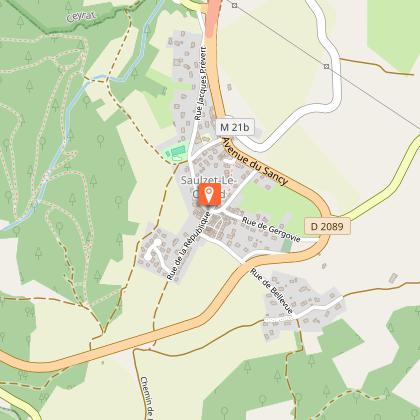
Fontaine-Lavoir in Saulzet-le-Chaud
3.4 km

Fontaine-Lavoir in Saulzet-le-Chaud

The metropolitan area of Clermont Auvergne features a number of fountains, for drinking or for washing. The fountain at Saulzet-le-Chaud is special in that it also features a cross with the original dedications. 97 fountains are spread throughout the Clermont Auvergne metropolitan area, including around twenty in Romagnat. The fountain is for both drinking and washing, as we see here. The washing basin is located downstream of the fountain in order not to pollute the water intended as drinking water for inhabitants and animals. Before the washing basins were built, residents of Romagnat washed their laundry in the La Gazelle stream where they set up small dams. The places most frequented in Romagnat were le Clos (close to the cemetery), le Moulin (at the bottom of the street of the same name) and further back at La Gazelle, where chemin de Clémensat cut across the stream. There was no bridge and people crossed on foot across large flat stones. In 1832, washing basins were created to use the overflow from fountains supplied by the fissures of the springs at La Gazelle. Made from Volvic stone, the fountain and the washing basin on this square are embellished with a cross. Its design is classical, with Christ and the Virgin Mary and the infant in her arms at the crossroads. On the side of the Virgin Mary we read “MA Montrez-vous notre mère” and on the side of Christ we read “IHS signe du salut”. These dedications are original and for now are unique in the region. Fifteen other crosses can also be found at Romagnat.

Place de la Fontaine 63540 Romagnat
Show
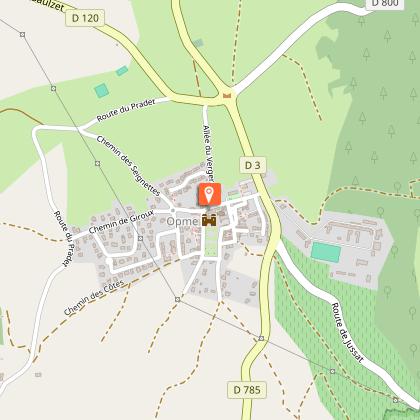
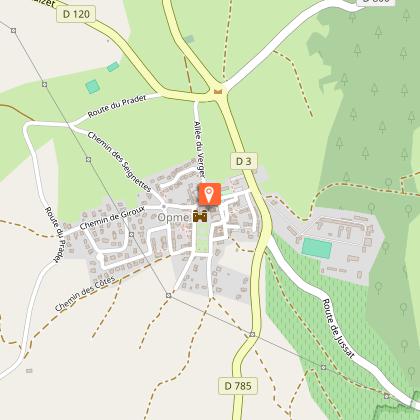
Saint-Bonnet Church in Opme
3.5 km

Saint-Bonnet Church in Opme

. Initially a castle chapel, Église Saint-Bonnet dates back to the 12th century. It has undergone several changes.It is protected as a Historic Monument. Built in the early 12th century, Église Saint-Bonnet at Opme was first the château’s chapel. It housed the sepulchres of the lords from its origins. Guillaume V of Montrognon was the first person to be buried there. The parish of Opme was created in 1401. It was separate from that of Romagnat until the French Revolution. The lord appointed the priest. Although the building is difficult to date, we can see that the church features a Romanesque nave and transept, revamped in the 13th and 18th centuries. The door on the western façade, leading directly to the château’s courtyard, was walled in the 17th century. The door features a semi-circular arch with keystones alternating in lava stone and arkose. The three-section choir was rebuilt in either the 17th or the 19th century, according to the Gothic layouts of the Middle Ages. It is framed by two chapels. In the 17th century, a new main door was created on the northern side to open the church towards the village. It retains its original leaves. On top of the church sits a bell-gable through which the bells are visible. The church was listed on the historic monuments registry in 1959. Several items of its interior furnishings are also listed, such as the altarpiece and altar of the Virgin Mary, statues of Saint Roch, Saint Bartholomew, adoring angels and stalls. The church was restored in 2023.

4 Rue Maréchal de Lattre de Tassigny 63540 Romagnat
Show
Ceyrat Gorge
4.9 km

Ceyrat Gorge

Hollowed out of a granite plateau by the river Artière, the Ceyrat caves house a remarkable range of plants and wildlife typical of rocky environments. The Artière is a small river with two branches. One of them originates at the north of Saint-Genès-Champenelle near to Puy de Chatrat at 900 m altitude, and is called Ruisseau de Saint-Genès. The other one, at Manson is called Artière de Boisséjour. These two branches meet at Beaumont, in the Parc du Stade, then the Artière crosses Aubière and Aulnat, bypassing Puy de Crouël in Clermont-Ferrand, and flows into the river Allier at Les Martres-d’Artière. The Gorges de Ceyrat are part of the Ruisseau de Saint-Genès valley, carved out of the eastern edge of a granite plateau south-west of Clermont-Ferrand. The Gorges de Ceyrat are recognised as a natural wildlife and nature preserve (ZNIEFF certification). The plant life is typical of rocky environments and particularly damp cliffs, in a cold micro-climate. Plant life includes a great variety of mosses and lichens, Asplenium foreziense, a protected fern species that clings to cliffs and rocks, the Martagon lily and the early spider-orchid, which spread on chalk grassland. Among the birds we note a species in decline due to semi-open environments: the Eurasian wryneck. Two species on the regional endangered butterfly list also live on the site: the Poplar admiral, a forest species, and the Chequered blue, which lives in rocky areas. A marked hiking trail lets visitors discover the Gorges de Ceyrat. Along this trail you will discover the Dolmen de Samson archaeological site, as well as a small waterfall.

26 avenue de la Libération 63122 Ceyrat
Show

Where to eat in CAMPING NATURISTE

See more suggestions
The dining spots in CAMPING NATURISTE have surprises in store.
See more suggestions

Where to sleep in CAMPING NATURISTE

See more suggestions
Explore accommodation options in CAMPING NATURISTE.
See more suggestions
Caution!
We have no information on the difficulty of this circuit. You may encounter some surprises along the way. Before you go, please feel free to inquire more and take all necessary precautions. Have a good trip! 🌳🥾