Tours
Activities
Places of interest
Where to eat
Where to sleep

Discover Beauregard-l'eveque, Puy-de-Dôme, Auvergne

Are you in charge of the destination?
Welcome to Beauregard-l'eveque, nestled in the heart of Puy-de-Dôme in Auvergne. This charming village offers a plethora of activities and sites to explore. Start your visit with a stroll through its picturesque streets, where traditional Auvergne architecture will captivate you. Nature enthusiasts will find numerous hiking trails surrounding Beauregard-l'eveque, providing breathtaking views of th...See more

Walking around Beauregard-l'eveque

See more suggestions
Hikes for all levels in Beauregard-l'eveque.
See more suggestions
GTMC-VTT - Stage 12 - Clermont-Fd > Volvic
16 km

GTMC-VTT - Stage 12 - Clermont-Fd > Volvic

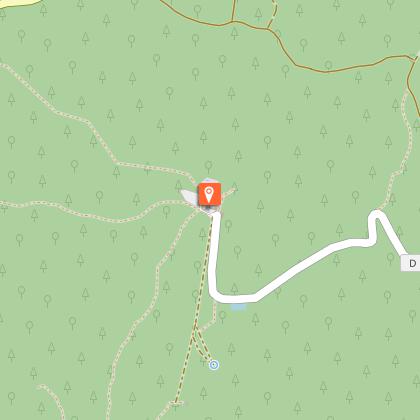
The GTMC-VTT, from Clermont-Ferrand to Volvic. The GTMC mountain bike route continues from Clermont-Ferrand (historic start of the GTMC mountain bike race) to Volvic. From Clermont-Ferrand, the historic departure point for the GTMC mountain bike race, you gradually gain altitude as you head towards the Chaîne des Puys and its 80 volcanoes. Under the gaze of the impressive Puy de Dôme, you'll discover a variety of landscapes, from a 2,000-year-old town to sunny hillsides planted with fruit trees and vines. The route ends in chestnut woods and volcanic cheires, with their chaotic vegetation and morphology. All along the way, the mountain biker's attention is irresistibly drawn to the volcanoes. Volvic, famous for its water and volcanic stone, is the finishing point of this stage. Departure is from Clermont Ferrand railway station. We climb gently up to Place Delille, which we cross before plunging down in front of a large secondary school to follow a long straight line. From set of traffic lights to set of traffic lights, the MTB GTMC takes us to the tarmac slope leading to the Col de Bancillon (alt. 551m). A short but steep descent on a farm track takes us to the Blanzat sports complex. We have to find a passageway to cross it and then climb back up to Blanzat on tarmac. Superb trails through fruit groves and meadows to the village of Malauzat. From Malauzat, we climb through a chestnut grove that takes us right up close to the Chaîne des Puys. Playful, relatively easy trails.

2 h
20 km
Medium
40 Avenue de l'Union Soviétique 63000 Clermont-Ferrand
Show

What to do in Beauregard-l'eveque

See more suggestions
Organize your days in Beauregard-l'eveque with bookable activities for the whole family.
See more suggestions
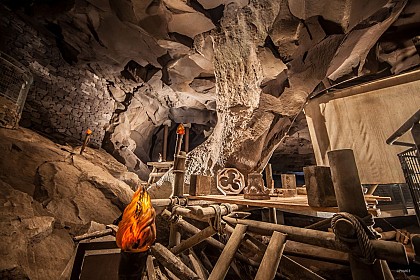
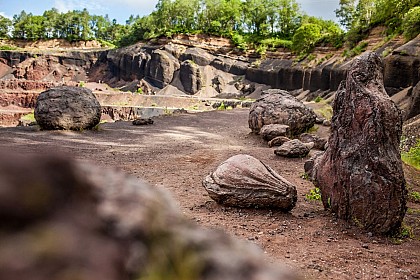
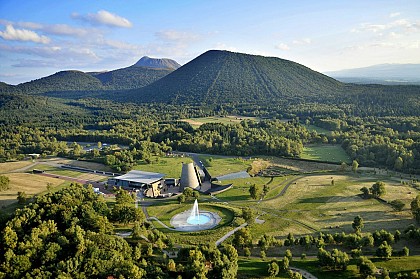
Lemptégy Volcano
27 km

Lemptégy Volcano

Explore the heart of a real volcano... Located at the center of the tectonic "Chaîne des Puys - Faille de Limagne" UNESCO World Heritage Site, we offer you the unique and unusual opportunity to discover the inside of a 100% natural volcano. Discover the secrets of volcanology with a 2h30 interactive tour of the Lemptégy volcano, comprising 5 stages: - The "volcano and men" tour: this fun, interactive introduction to the visit will familiarize you with the volcano and give you a better understanding of its metamorphosis. A 30-minute self-guided tour. - Guided exploration of the volcano's anatomy: meet your guide on foot or by train. He'll share all his geological and volcanological knowledge with you: bombs, volcanic chimneys, lava flows... and you'll leave with scoria (solidified lava). A wealth of information to help you better understand the landscape around you. - L'âme de Lemptégy": an unusual journey into the site's industrial past, with a visit to the old pozzolan extraction machines once used by quarrymen. - The immersive "Volcano 'Express" attraction: this sensory and emotional experience reveals all the secrets behind the formation of the Chaîne des Puys and the Faille de Limagne. What if the fault were to reopen... Will you reach your destination? - The dynamic 4D film "Aux Origines": enjoy an unprecedented flight over the volcanoes of Auvergne and relive the history of the volcano as if you were there, from its eruptions to the present day. While you're there, treat yourself to a gourmet break at the Volcan de Lemptégy restaurant. The chef offers traditional regional dishes (sausage/aligot, truffade, petit salé...). You can also stroll through the new boutique and discover a wide range of regional products, souvenirs, books... LE REVEIL DU VOLCAN" NIGHT TOUR: a breathtaking nocturnal experience! Entering at night, you'll be propelled into the heart of the Lemptégy Volcano for an extraordinary experience. Along the way, you'll plunge into an erupting volcano and discover magical creatures. A new world to discover and a new way to experience Volcan de Lemptégy. 1.5 km on foot. Prices and schedule: see website. IN JULY AND AUGUST

31 route des Puys Les Maisons Rouges 63230 Saint-Ours
Book from 0 €Book
Show

What to visit in Beauregard-l'eveque

See more suggestions
Take a boat tour around Beauregard-l'eveque.
See more suggestions
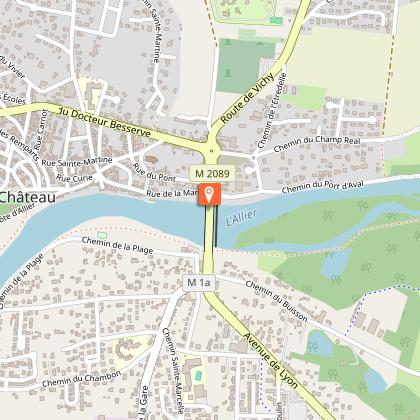
The bridge
3.6 km

The bridge

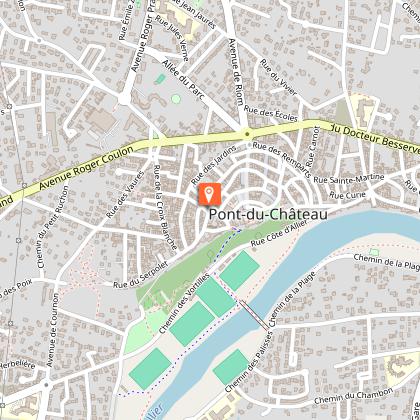
At Pont-du-Château, several different bridges have crossed the river Allier, but did not withstand the river floods. The present-day bridge is from the 18th century. Criss-crossed by a multitude of waterways, the Clermont Auvergne metropolitan area retains many bridges, some of them dating back to Antiquity, such as the Beneilh bridge at Aubière. At Pont-du-Château, it is said that Caesar’s troops crossed the Allier river on foot to reach the Sarliève plain and the Gergovie plateau in the year 52 BCE. Over the centuries, several bridges were built but none survived the river floods. A wooden bridge existed in 1566 when Charles IX took it with his mother Catherine de Medici after dining at the château with Charlotte de Vienne, lady-in-waiting and governess to the royal children. The bridge disappeared in 1586 in the flood that also destroyed the Chapelle de la Recluse. After the bridge was destroyed, the Allier river had to be crossed by boat. The present-day bridge was built at the request of Monsieur de Regemortes, the King’s engineer and designer of the bridge bearing his name at Moulins. He gave the plans to architect François-Charles Dijon (1705-1785), who built it between 1765 and 1773. The bridges were preceded by a wooden dam that cut across the river to bring up its level, supply the mills and facilitate fishing, over which the King had a monopoly. Colbert, Louis XIV’s Secretary of State, ordered that the river Allier be navigable from Brioude to Pont-du-Château, with the need to open the dyke for boats to pass. The dyke was finally destroyed in 1792. Two fish passes allowing salmon in the Allier to pass were built in 2013 at the foot of the bridge.

63430 Pont-du-Château
Show
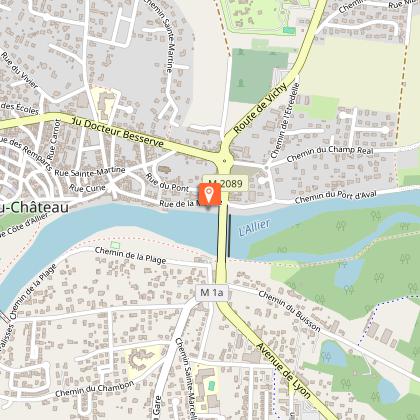
Port d'Amont
3.7 km

Port d'Amont

The Port d’Amont is the last port to have been built that is still visible at Pont-du-Château. It bears witness to the former importance of river trade on the Allier. The source of the River Allier (425 km) is in Lozère, and it flows into the River Loire at the Bec d’Allier near Nevers. The River Allier provided a route to Nantes and later to Paris via the Briare Canal (1642). From the early modern period until the 19th century, Pont-du-Château was a major river trading town on the Allier, with its sailors’ neighbourhood known as 'Little Marseille'. The town boasted five ports: la Vortille, les Palisses, des Bouères, la Borde Saint-Aventin and d’Amont. The last of these, built between 1835 and 1838, is the only one still standing. River traffic was intense, with 1,334 boats recorded in 1749 and 1,694 in 1750. Two types of vessel were used: rafts made from 5 to 15 fir trees, and 'sapinières' — small, disposable boats measuring 17 to 23 metres in length, built from around 10 fir trees. They could carry up to 20 tonnes of goods, including coal, wine, Volvic stone, paper, wood and hemp to Paris or Nantes. Once they reached their destination, the sapinières were dismantled and sold as timber for heating or construction. The sailors would return on foot, their anchor on their shoulder, while the wealthier among them settled in Paris as 'bougnats', Auvergne specialists in 'wine, wood and coal'. By the late 19th century, the arrival of the railway marked the end of waterborne trade. Today the river is used by leisure boats, and its banks have been redeveloped with greenways and parks. The Musée de la Batellerie, on Place de l’Aire, retraces this history.

Rue de la Marine 63430 Pont-du-Château
Show
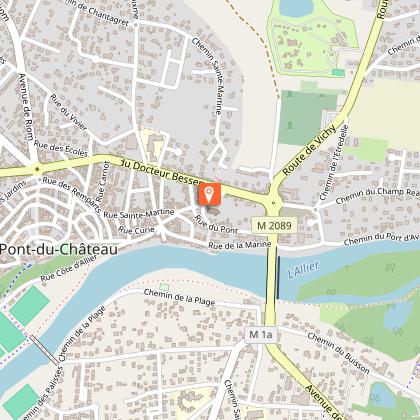
Half-timbered houses
4.3 km

Half-timbered houses

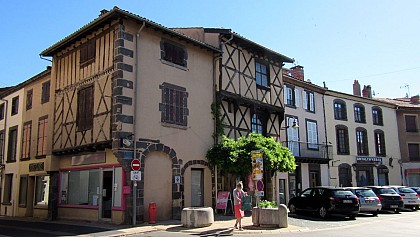
Since the earthquakes in the 15th century, timber-framed houses have become rare in the metropolitan area of Clermont Auvergne. In Pont-du-Château, three of these houses can still be seen and are protected as Historic Monuments. Timber-framed houses are rare in the Clermont Auvergne metropolitan area. Most of them did not survive the earthquakes of 1477 and 1490. Following this destruction, it became common from the early 16th century onwards to build houses using Volvic stone. At numbers 2 and 14 rue de l’Hôtel-de-Ville, and 1 place de la Liberté, three of these houses can still be seen. They are three storeys high. The ground floor, made from Volvic stone, provides a solid base for the building and houses the boutique, which features a basket-handle arch. The upper floors, separated by plate beams, include a framework of vertical timber beams arranged in the form of a Saint Andrew’s cross, with windows set into them. The spaces between the timber beams are filled with either hollow-core slab (light masonry made from stone, brick and limestone) or wattle and daub (earth and straw). The floors are built with a corbelled structure, overhanging the street to save space in the tight confines of medieval towns. At 14 rue de l’Hôtel-de-Ville, the timber-framed house has retained its fire-resistant stone wall, located to the right of its façade, which provides protection from fire spreading from the neighbouring house. These houses have been listed as Historic Monuments since 1962 and 1963. A few other timber-framed houses can be seen in Montferrand, such as the monumental apothecary's house at the corner of rue Jules Guesde and rue de la Rodade.

Place de la Liberté 63430 Pont-du-Château
Show
Château-Mairie de Pont-du-Château
4.3 km

Château-Mairie de Pont-du-Château

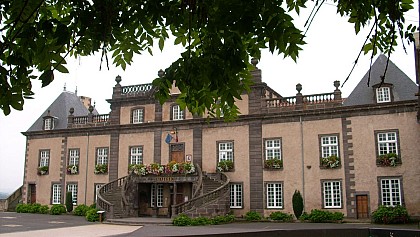
The Pont-du-Château town hall is housed in a 17th-century château that retains elements of the original façade and interior décor. At Pont-du-Château, the former feudal château was partly destroyed by fire in 1580 during a plague epidemic. A new château was rebuilt in the 17th century for Guillaume de Montboissier-Beaufort-Canillac (1600–1664), Lieutenant General of the Army, Maréchal de Camp, Seneschal of Auvergne, and Counsellor of State. The château was later remodelled in the 18th century by Philippe-Claude de Montboissier-Beaufort-Canillac (1715–1797), who added two right-angled wings, one of which housed the stables. He also laid out a park to the north of the town. At the time of the French Revolution, all of this property was seized, and the municipality acquired both the château and the chapel, which was demolished in 1960. The main façade conceals a pre-existing building. Its central section draws attention with a horseshoe staircase made of Volvic stone, probably inspired by the staircase at the Château de Fontainebleau. This Italianate feature is enhanced by roof balustrades reminiscent of Versailles. The rear façade, dating from the 17th century, opens onto a terrace offering an unobstructed view of the River Allier and the surrounding countryside. The original interior décor has been preserved. In the coat of arms room, the French-style ceiling, painted in the 17th century, depicts the family tree of the Montboissier-Beaufort-Canillac lineage in the form of 87 coats of arms, among which are those of the two Popes from the family: Clement VI and Gregory XI. The parlour, now the marriage hall, was decorated in the 1760s in the neoclassical style, featuring wood panelling, overdoors representing the four seasons, a marble fireplace, and Versailles parquet flooring.

Place de l'Hôtel de Ville 63430 Pont-du-Château
Show
Remains of the fortified enclosure
4.3 km

Remains of the fortified enclosure

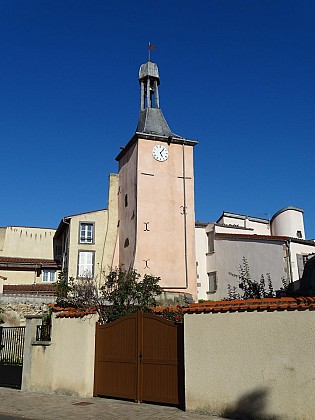
Pont-du-Château features the remains of fortified walls structured concentrically around the present-day château-town hall. In the 12th century, Pont-du-Château was the most important stronghold in Limagne. Suger, who accompanied King Louis VI 'the Fat' in Auvergne, referred to it as 'Castrum peroptimum' (a leading stronghold). Pont-du-Château, which belonged to Count Guillaume VI of Auvergne, was defeated by the King. In 1363, it was the first stronghold in Auvergne to be taken by the English. The town developed during the Middle Ages around its fortress, with its powerful square keep located on the site of the present-day château–town hall. The topography reveals a system of streets structured concentrically around the château, which sits on a promontory overlooking the Allier. Pierre Mondanel, a historian of the town, claimed he could trace the lines of the outer walls in the layout of the streets, comparing the design to the layers of an onion. The belfry (listed on the register of historic monuments in 1982) may have been a former tower in one of the town’s outer walls. Another tower, known as the Tour Cochon, located on rue des Remparts, is more definitively identified as part of the outer fortifications. The wall was protected by ditches, which were developed over the centuries. A city gate was likely located on rue de l’Hôtel-de-Ville, near rue des Remparts. In 1954, the municipality acquired a collection of 37 remarkable plans of the town. Commissioned in 1758 by Philippe-Claude de Montboissier-Beaufort-Canillac, they were executed by Gilbert Baudusson, his son Côme-Damien, and Jacques-Antoine Dulaure (1755–1835), surveyors. The latter was also a geographer, historian, and future deputy. He wrote the book 'Description des principaux lieux de France' (Description of the Main Sites in France) in 1789, of which Book 5 is dedicated to Auvergne.

Place de l'Hôtel de Ville 63430 Pont-du-Château
Show
Saint-Etienne Church
9.2 km

Saint-Etienne Church

In the 19th century, Église Saint-Étienne replaced an older church from the 12th century. It adopted a neo-Roman style. The present-day church is built on the site of an older church from the 12th century. This old Romanesque-style single-nave church was extended in 1685 (south side) then in the 18th century (north side) to respond to the population increase. From the time of the French Revolution, the building experienced a number of damaging incidents, with burned altars and a partly destroyed bell. In 1865, civil and religious authorities agreed to build a new, larger church on the same site. They called on the architect Agis-Léon Ledru (1816-1885), second Prix de Rome in 1844, the architect of the Royat and La Bourboule spa resorts. The new church, consecrated in 1870, is neo-Romanesque in style with semi-circular aches and barrel vault. Its construction led to the demolition of part of the former village fort. The church’s northern gate features a reclaimed sculpted tympanum, sadly hammered, depicting a Piéta (15th century). In the church’s apse, a stone from the fort’s postern is sealed into the wall. It depicts the Christogramme, formed by a monogram of Christ IHS: Iesus Hominum Salvator (Jesus saviour of men). In the 20th century some renovations were carried out, including refurbishment of the choir (1958), the transept (1959) and finishing of the aisle (1963). The church was fully restored in 1998.

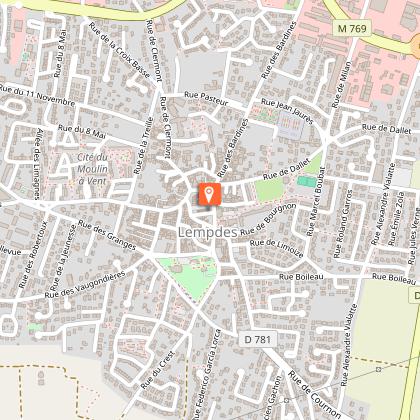
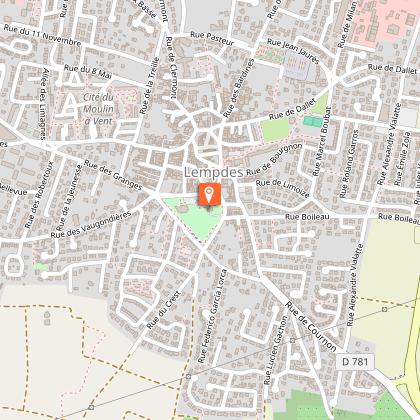
Rue René Marssin 63370 Lempdes
Show

Where to eat in Beauregard-l'eveque

See more suggestions
The restaurants of Beauregard-l'eveque await you.
See more suggestions

Where to sleep in Beauregard-l'eveque

See more suggestions
Enjoy your stay with accommodations in Beauregard-l'eveque.
See more suggestions
Caution!
We have no information on the difficulty of this circuit. You may encounter some surprises along the way. Before you go, please feel free to inquire more and take all necessary precautions. Have a good trip! 🌳🥾