Tours
Activities
Places of interest
Where to eat
Where to sleep

Discover Vernines, Puy-de-Dôme: a gem in Auvergne

Are you in charge of the destination?
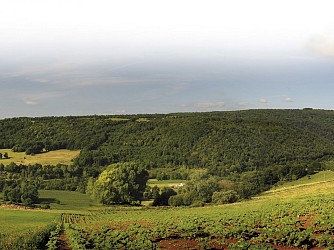
Nestled in the heart of the Auvergne region, Vernines in the Puy-de-Dôme is an ideal destination for nature lovers and culture enthusiasts. Surrounded by the magnificent volcanic landscapes of the Auvergne Volcanoes Regional Nature Park, this charming village offers a variety of activities for everyone.\n\nEmbark on a hike along the many marked trails surrounding Vernines. Follow picturesque paths...See more

Walking around Vernines

See more suggestions
Hiking routes in Vernines.
See more suggestions

What to do in Vernines

See more suggestions
Relax and have fun with the available activities in Vernines.
See more suggestions
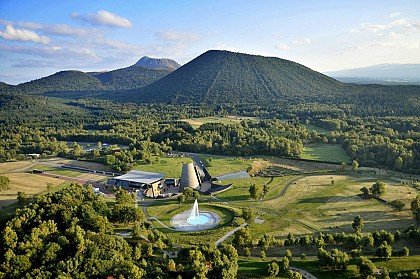
Lemptégy Volcano
17 km

Lemptégy Volcano

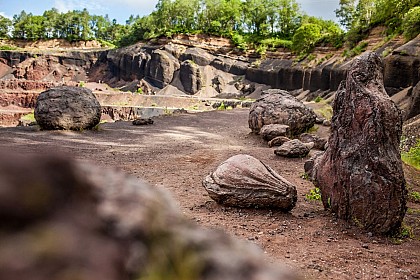
Explore the heart of a real volcano... Located at the center of the tectonic "Chaîne des Puys - Faille de Limagne" UNESCO World Heritage Site, we offer you the unique and unusual opportunity to discover the inside of a 100% natural volcano. Discover the secrets of volcanology with a 2h30 interactive tour of the Lemptégy volcano, comprising 5 stages: - The "volcano and men" tour: this fun, interactive introduction to the visit will familiarize you with the volcano and give you a better understanding of its metamorphosis. A 30-minute self-guided tour. - Guided exploration of the volcano's anatomy: meet your guide on foot or by train. He'll share all his geological and volcanological knowledge with you: bombs, volcanic chimneys, lava flows... and you'll leave with scoria (solidified lava). A wealth of information to help you better understand the landscape around you. - L'âme de Lemptégy": an unusual journey into the site's industrial past, with a visit to the old pozzolan extraction machines once used by quarrymen. - The immersive "Volcano 'Express" attraction: this sensory and emotional experience reveals all the secrets behind the formation of the Chaîne des Puys and the Faille de Limagne. What if the fault were to reopen... Will you reach your destination? - The dynamic 4D film "Aux Origines": enjoy an unprecedented flight over the volcanoes of Auvergne and relive the history of the volcano as if you were there, from its eruptions to the present day. While you're there, treat yourself to a gourmet break at the Volcan de Lemptégy restaurant. The chef offers traditional regional dishes (sausage/aligot, truffade, petit salé...). You can also stroll through the new boutique and discover a wide range of regional products, souvenirs, books... LE REVEIL DU VOLCAN" NIGHT TOUR: a breathtaking nocturnal experience! Entering at night, you'll be propelled into the heart of the Lemptégy Volcano for an extraordinary experience. Along the way, you'll plunge into an erupting volcano and discover magical creatures. A new world to discover and a new way to experience Volcan de Lemptégy. 1.5 km on foot. Prices and schedule: see website. IN JULY AND AUGUST

31 route des Puys Les Maisons Rouges 63230 Saint-Ours
Book from 0 €Book
Show

What to visit in Vernines

See more suggestions
Engage in outdoor activities in Vernines.
See more suggestions
Saint-Nicolas Church
11 km

Saint-Nicolas Church

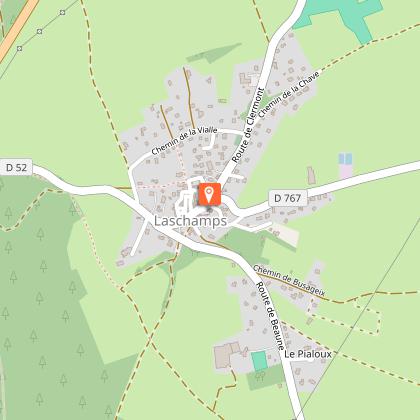
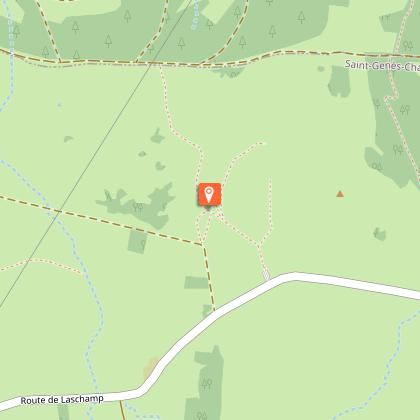
Laschamps retains a 12th century Romanesque-style church, Église Saint-Nicolas, close to the remains of a public space. Prior to the French Revolution, the parish of Laschamps was under the control of the Abbaye de Beaumont, whose abbess appointed the priest. After the Revolution, when the parishes were being rearranged by the Concordat, the Prefect wanted to eliminate the Laschamps chapel of ease in 1806 but the Bishop had it maintained as an independent parish of Saint-Genès-Champanelle. Built from arkose in Romanesque style, Église Saint-Nicolas dates from the 12th century. With a Latin cross floor plan, it features a single smooth barrel-vaulted nave. The entire transept is also barrel-vaulted, including on its crossing, which makes a very original combination. The choir apse features a decor with five arches with columns and capital with leaf designs. On the western façade, the rose window dates back to the 19th century. Today the church serves as a departure point for the walk to Notre-Name d’Orcival, an important pilgrimage site. The remains of a public space can be seen downhill from the church: an area in the village centre with a bakehouse, wash house, drinking fountain, well and blacksmith’s shop. Today only the bakehouse, the wash house and the drinking fountain remain. Opposite the church, a monument with an unusual form, which gave its name to the “place du Bonnet”, was built to commemorate the great fire of 17 September 1865, which ravaged multiple residences, killing 4 people and injuring 3.

Place du Bonnet Laschamps 63122 Saint-Genès-Champanelle
Show
Church of Notre-Dame de l'Assomption
12 km

Church of Notre-Dame de l'Assomption

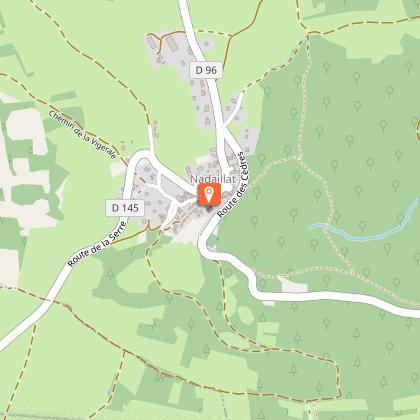
Église Notre-Dame-de-l’Assomption de Nadaillat dates back to the 19th century. It was built thanks to the efforts of the inhabitants. Under the Ancien-Régime, the territory of Nadaillat was under the control of the parish of Chanonat, whose communalist priests came to celebrate mass and administer the sacraments. Pastoral visits confirmed that the building was in good condition and indicated that it was vaulted. After the French Revolution and the Concordat in 1801, the Église de Nadaillat became attached to the Église Saint-Genès at Saint-Genès-Champanelle. Mass was celebrated there only sporadically on certain religious holidays. In 1838, the inhabitants fought tooth and nail to have their church one again part of the parish, as a chapel of ease to Église Saint-Genès in Saint-Genès-Champanelle. A new building was put up to replace the former church. The parishioners financed the project and helped with the work. The church was consecrated in 1842 by Monseigneur Féron, bishop of Clermont, and dedicated to Notre-Dame-de-l’Assomption. The bell tower completed the church after 1852. The church’s architect is not known, and its style is neo-Gothic with bay frames, buttresses and a bell tower made from Volvic stone. The façade is set off by two buttresses framing the entrance and two niches. Above the niches, partly erased inscriptions give the date of 1842 on the right and “Hoc potuit pietas vici” (Here piety triumphed). A triangular pediment crowns the façade, providing a hint of neo-Classicism.

Rue de l'église Nadaillat 63122 Saint-Genès-Champanelle
Show
Saint-Aubin chapel
13 km

Saint-Aubin chapel

Inaugurated in 1954, the Chapelle Saint-Aubin houses a spring whose water is thought to have many virtues. During World War II (1939-1945), the inhabitants of Manson, fearing for their village, promised to build a chapel if their village was spared. Their wish was granted and the work began in 1952, on the site of an older building of which only vestiges of the foundations remained in the early 20th century. The new chapel was inaugurated in 1954. The villagers took the statue of Saint Aubin there from the church in Manson. The statue was then placed in a niche above the outlet of the spring known as “Chabana” or “Chabanat”, which flows inside the chapel. Its water is thought to have many virtues, including the ability to cure eye diseases. A legend recounts that thieves entering the chapel to steal the offerings suddenly went blind. They didn’t recover their sight until they had repented. This is thought to be the origin of the old French adage “Saint Aubin gives sight and takes it away”. The spring water, downhill from the chapel, supplies a drinking trough with several vats for migrating cattle herds. The frescoes inside the chapel were created by André Siramy in 1954. They illustrate the legends related to this site. Beneath the vault, an archangel endows Saint Aubin with miraculous powers. On the left the saint is curing the blind. On the right he is freeing prisoners, reminding us that the men of Manson, imprisoned during World War II, returned safe and sound. The original frescoes were damaged by humidity and renovated between 2013 and 2015.

Route départementale D 767 Laschamps 63122 Saint-Genès-Champanelle
Show
Remains of the Temple of Mercury
13 km

Remains of the Temple of Mercury

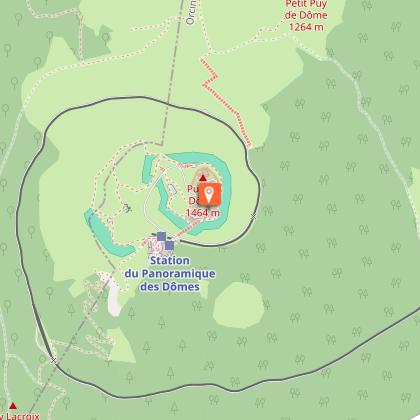
At the summit of the Puy de Dôme, visitors can discover the remains of one of the largest mountain sanctuaries of the Roman Empire, built in the middle of the 2nd century AD: the Temple of Mercury. Unearthed at the end of the 19th century, the remains of the Temple of Mercury are difficult to read at the beginning of the 21st century. Following a programmed excavation campaign, a project to restore and enhance the sanctuary of Mercury has been launched by the Département and the State. Today, the remains of the Temple of Mercury give only a limited idea of the sanctuary's monumentality. In ancient times, the southern flank of the summit of the Puy de Dôme was the site of a complex system of processional walkways leading the faithful to the entrance of the temple. Access was gained from the Col de Ceyssat settlement, located at the highest point of Agrippa's road. So, in the 2nd century, the largest mountain temple in Roman Gaul stood at the summit of the Puy de Dôme! Mainly dedicated to Mercury, this large terraced sanctuary was a major pilgrimage site. The temple was therefore built around 2,000 years ago, in a period known as "Gallo-Roman", almost two centuries after the Roman conquest of Gaul. Mercury seems to have been appreciated by the Arvernes, and was one of the most venerated gods, both god of trade and protector of travelers. His attributes include small wings, a purse and a caduceus. The construction of this temple at the summit of the Puy de Dôme was no accident. From an ideal vantage point overlooking the capital of the city of Augustonemetum - today's Clermont-Ferrand - the sanctuary was in plain sight.

Sommet du puy de Dôme 63870 Orcines
Show
Gonod Chapel or the tomb of Thèdes
14 km

Gonod Chapel or the tomb of Thèdes

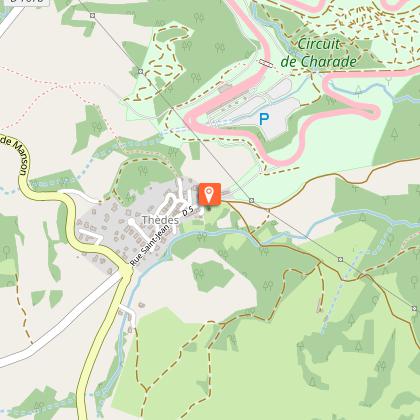
The tomb of Thèdes is a funeral chapel with an original structure designed for Benoit Gonod and his wife in the 19th century. At the age of just 23, Benoît Gonod (1792-1849) was appointed Professor of Rhetoric in 1815, at the Collège Royal de Clermont-Ferrand. Very well-read and a great philosopher, he joined the Académie de Clermont-Ferrand in 1824. In 1826 he was appointed librarian of the city by the mayor, Antoine Blatin. In 1832, Gonod collaborated with André-Marie Ampère (1775-1836), the famous physicist whose name is given to a unit of measurement. Gonod invented the first stenotype in 1827, a machine that transcribes speech in phonetic script. He was a collector and built a personal library that enhances Clermont Ferrand’s municipal collections through a donation by his widow in 1850. Gonod owned a summer residence at Thèdes and had this tomb built for himself and his wife in the middle of the 19th century. The chapel’s circular layout is unique in the region, and is covered by a flagstone dome around which runs a sentry walk boasting a panoramic view of the village, the Circuit de Charade car-racing track and the Limagne plain. The three levels, the crypt, nave and attic, are connected by an interior staircase. The arch of the entrance features the sculpted initials of Benoît Gonod and his wife, as well as the following inscription translated from the Latin: “Quiconque aura prié dans ce lieu, réponds-lui de ta demeure” [Whoever prays in this place, answer him from your dwelling]. And above it, around the rose window: “La bénédiction de Dieu soit sur nous et sur le fruit de la terre” [May the blessing of God be upon us and upon the fruit of the earth]. The nave features an altar and a stained-glass window (1992) dedicated to Saint John the Baptist, patron saint of the village. In 1943, Pauline de Varenne, the heir, donated the chapel to the diocese of Clermont-Ferrand. In 1983, Monseigneur Dardel passed it on to the municipality, which renovated it.

Rue Saint-Jean Thèdes 63122 Saint-Genès-Champanelle
Show

Where to eat in Vernines

See more suggestions
Restaurants in Vernines are ready to welcome you.
See more suggestions

Where to sleep in Vernines

See more suggestions
Find the perfect lodging for your visit to Vernines.
See more suggestions
Caution!
We have no information on the difficulty of this circuit. You may encounter some surprises along the way. Before you go, please feel free to inquire more and take all necessary precautions. Have a good trip! 🌳🥾