Tours
Activities
Places of interest
Where to eat
Where to sleep

Discover Kyriad Clermont Sud La Pardieu and Surroundings

Are you the owner?
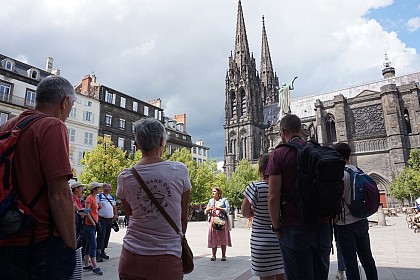
Welcome to Kyriad Clermont Sud La Pardieu, your ideal starting point for exploring the beauties of Clermont-Ferrand and its surroundings. Located in the Puy-de-Dôme, in the Auvergne region, this dynamic city offers a rich cultural and natural heritage to discover. Stroll through the narrow streets of Clermont-Ferrand's historic center and admire the Notre-Dame-de-l'Assomption Cathedral, a masterpi...See more

Walking around KYRIAD CLERMONT SUD LA PARDIEU

See more suggestions
Enjoy pleasant walks in KYRIAD CLERMONT SUD LA PARDIEU.
See more suggestions
GTMC-VTT - Stage 12 - Clermont-Fd > Volvic
3.9 km

GTMC-VTT - Stage 12 - Clermont-Fd > Volvic

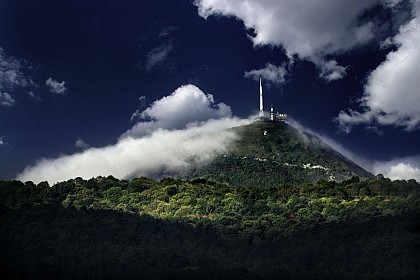
The GTMC-VTT, from Clermont-Ferrand to Volvic. The GTMC mountain bike route continues from Clermont-Ferrand (historic start of the GTMC mountain bike race) to Volvic. From Clermont-Ferrand, the historic departure point for the GTMC mountain bike race, you gradually gain altitude as you head towards the Chaîne des Puys and its 80 volcanoes. Under the gaze of the impressive Puy de Dôme, you'll discover a variety of landscapes, from a 2,000-year-old town to sunny hillsides planted with fruit trees and vines. The route ends in chestnut woods and volcanic cheires, with their chaotic vegetation and morphology. All along the way, the mountain biker's attention is irresistibly drawn to the volcanoes. Volvic, famous for its water and volcanic stone, is the finishing point of this stage. Departure is from Clermont Ferrand railway station. We climb gently up to Place Delille, which we cross before plunging down in front of a large secondary school to follow a long straight line. From set of traffic lights to set of traffic lights, the MTB GTMC takes us to the tarmac slope leading to the Col de Bancillon (alt. 551m). A short but steep descent on a farm track takes us to the Blanzat sports complex. We have to find a passageway to cross it and then climb back up to Blanzat on tarmac. Superb trails through fruit groves and meadows to the village of Malauzat. From Malauzat, we climb through a chestnut grove that takes us right up close to the Chaîne des Puys. Playful, relatively easy trails.

2 h
20 km
Medium
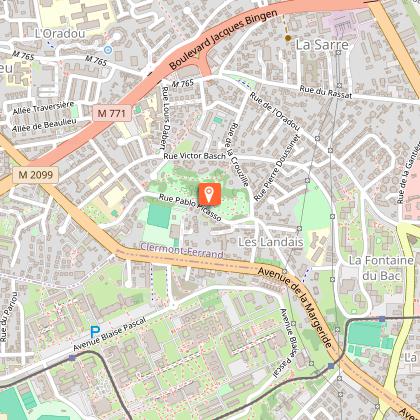
40 Avenue de l'Union Soviétique 63000 Clermont-Ferrand
Show

What to do in KYRIAD CLERMONT SUD LA PARDIEU

See more suggestions
Explore KYRIAD CLERMONT SUD LA PARDIEU through its many bookable activities.
See more suggestions
Lemptégy Volcano
16 km

Lemptégy Volcano

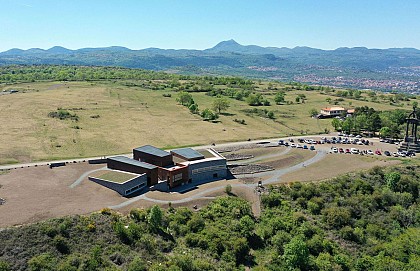
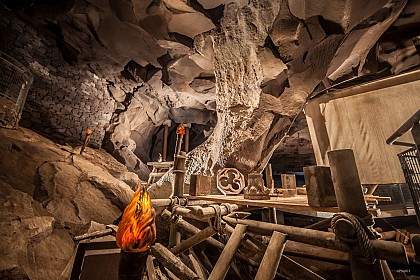
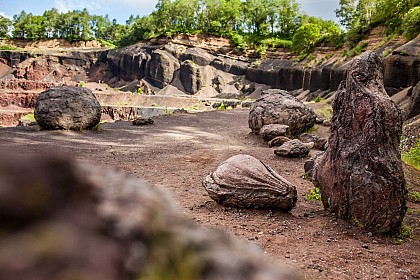
Explore the heart of a real volcano... Located at the center of the tectonic "Chaîne des Puys - Faille de Limagne" UNESCO World Heritage Site, we offer you the unique and unusual opportunity to discover the inside of a 100% natural volcano. Discover the secrets of volcanology with a 2h30 interactive tour of the Lemptégy volcano, comprising 5 stages: - The "volcano and men" tour: this fun, interactive introduction to the visit will familiarize you with the volcano and give you a better understanding of its metamorphosis. A 30-minute self-guided tour. - Guided exploration of the volcano's anatomy: meet your guide on foot or by train. He'll share all his geological and volcanological knowledge with you: bombs, volcanic chimneys, lava flows... and you'll leave with scoria (solidified lava). A wealth of information to help you better understand the landscape around you. - L'âme de Lemptégy": an unusual journey into the site's industrial past, with a visit to the old pozzolan extraction machines once used by quarrymen. - The immersive "Volcano 'Express" attraction: this sensory and emotional experience reveals all the secrets behind the formation of the Chaîne des Puys and the Faille de Limagne. What if the fault were to reopen... Will you reach your destination? - The dynamic 4D film "Aux Origines": enjoy an unprecedented flight over the volcanoes of Auvergne and relive the history of the volcano as if you were there, from its eruptions to the present day. While you're there, treat yourself to a gourmet break at the Volcan de Lemptégy restaurant. The chef offers traditional regional dishes (sausage/aligot, truffade, petit salé...). You can also stroll through the new boutique and discover a wide range of regional products, souvenirs, books... LE REVEIL DU VOLCAN" NIGHT TOUR: a breathtaking nocturnal experience! Entering at night, you'll be propelled into the heart of the Lemptégy Volcano for an extraordinary experience. Along the way, you'll plunge into an erupting volcano and discover magical creatures. A new world to discover and a new way to experience Volcan de Lemptégy. 1.5 km on foot. Prices and schedule: see website. IN JULY AND AUGUST

31 route des Puys Les Maisons Rouges 63230 Saint-Ours
Book from 0 €Book
Show

What to visit in KYRIAD CLERMONT SUD LA PARDIEU

See more suggestions
Attend shows and concerts in KYRIAD CLERMONT SUD LA PARDIEU.
See more suggestions
Tonne of Vines
2.1 km

Tonne of Vines

The “tonne” is the local name for this small building built in the middle of the vineyard and used for the vine growing business.Often built on a traditional model, some of them nonetheless have original features. The “tonne de vigne” is the local name for this small building built in the middle of the vineyard, formerly used for storing tools and as a shelter during the harvest. The tonne could also accommodate a vat room for storage and fermentation of the freshly crushed grape must. Certain tonnes were re-purposed to be used as dovecotes. The tonne de vigne often follows the same model: a square construction with a single-pitch lean-to roof, covered with hollow terracotta tiles. Some original tonnes deviated from this model. For example, the Chareiron tonne in Châteaugay was built from stone and in the form of a cone. The same is true for the tonne close to Rue des Torts, in Pérignat-lès-Sarliève, with a hip roof covered with slate and enhanced with a terrace opening up onto the vines. Some municipalities restore these tonnes that are often left derelict, such as Cournon-d’Auvergne, which has restored this tonne and Romagnat which has implemented a shared vineyard at Puy de Chomontel. Private initiatives have also been taken to preserve these buildings, particularly on Puy de Montaudoux in Ceyrat. Musée de la vigne et du vin, 24 avenue Jean Noëllet in Aubière, recounts the history of the vineyards of Basse-Auvergne and its expertise, from planting to the winemaking process.

Chemin de Montferrand 63800 Cournon-d'Auvergne
Show
Campus des Cézeaux
2.3 km

Campus des Cézeaux

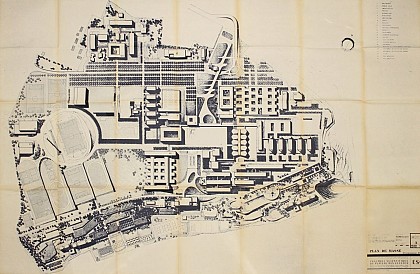
Designed at the end of the 1960s, the Cézeaux campus has rewritten its history since the 1980s, placing emphasis on contemporary architecture. The Cézeaux campus is situated on a basalt plateau today surrounded by the town. It was designed in the late 1960s by the architect Eugène Beaudoin (1898-1983) in charge of the university development of Clermont. The project included teaching buildings, a library, a restaurant and student housing. The historic architects are Daniel Badani, Jean-Louis Douat, Antoine Espinasse, Paul Lanquette and Pierre Roux-Dorlut. At this time the campus was built on the principle of architectural and functional austerity according to a rational plan and a system of work industrialisation. A factory for prefabrication of the construction materials was set up on site. The campus has sculptures corresponding to the development of the site in the 1970s. A few examples: La dématérialisation (1972) by Francis Pellerin (1915-1988), Murs-Fontaines (1972) by Ervin Patkaï (1937-1985), and Silhouettes formant un réceptacle à l’enseignement dispensé par la Connaissance (1978) by Michell. Since the 1980s, the campus has rewritten its history, placing emphasis on contemporary architecture: Polytech (architects Bresson, Ondet, Berthon and Collet); the Laboratoire de Physique Corpusculaire (Paris-based architects Brenac and Gonzalez); The Institut National de Recherche en Sciences et Technologies pour l’Environnement et l’Agriculture (IRSTEA, architect Hauvette and Atelier 4) with its plant-based shell made from maple trees; the Institut Français de Mécanique Avancée (IFMA, architects Ameil and Jalicon) which proposes a shape evocative of the world of industry; the Laboratoire Magmas et Volcans (architecture firm Groupe 6, Hallé) with unstable volumes like moving magma.

Avenue des Landais 63170 Aubière
Show
Les coteaux secs de Cournon-d'Auvergne
2.5 km

Les coteaux secs de Cournon-d'Auvergne

A protected site, the dry hillsides of Cournon d'Auvergne formed by the Vaugondières plateau and the summit of the puy d'Anzelle are home to a remarkable ecosystem resulting from a long agricultural history and a sheltered microclimate. To the north of Cournon-d'Auvergne, the Vaugondières plateau and the summit of the puy d'Anzelle constitute a natural area of around 50 hectares protected by an arrêté préfectoral de protection de biotope since 1992, and included in the Natura 2000 network. This network expresses the European Union's desire to preserve natural or semi-natural sites of great heritage value, due to the exceptional flora and fauna they contain. The site's rich animal and plant life is the result of a long agricultural history and a sheltered microclimate. The site is monitored and managed by the French League for the Protection of Birds. A special agricultural history At the end of the 19th century, the plateau was covered in vines. Phylloxera and mildew forced farmers to uproot the vines. The vines gave way to lawns grazed by sheep. A fauna and flora characteristic of dry grasslands then developed. Maintained by sheep until 1960, today's dry grasslands are preserved by man to prevent the colonization of shrubs and undergrowth. A little corner of Provence in Cournon-d'Auvergne The area enjoys a sheltered microclimate due to the Foehn effect. Clouds are held back by the relief of the Sancy and Puys massifs, so rainfall is low, but is also rapidly absorbed by the marl-limestone soil. This, combined with the south-facing slopes, creates a warmer climate. As a result, the flora and fauna are typical of Mediterranean regions. Nearly 270 species of flowers have been recorded, some of them protected for their rarity. 54 species of butterflies and nearly 30 nesting birds have also been inventoried.

Carrefour Anne-Marie Menut 63800 Cournon-d'Auvergne
Show
Maison vigneronne - Second model
2.6 km

Maison vigneronne - Second model

The winemaker’s house is testimony to a previously prosperous business : vine growing From the second half of the 19th century, it changed to reflect the economic and social success of wine makers. The winemaker’s house is testimony to a previously prosperous business in Aubière and on all the hillsides of Limagne from the Middle Ages to the 19th century: vine growing The region has two types of winemaker houses. The first type is the traditional winemaker house located in the village centre. A narrow construction, it houses both the business premises and the living quarters: a vat room for pressing, fermentation and conservation of wine on the ground floor, a single room for living on the first floor, accessible via an outside staircase, and an attic beneath the roof. The second type of house was developed in the second half of the 19th century, at the height of vine growing. It reflected the economic and social success of the winemaker. These houses, a series of which can be found on Rue Chambon, are more imposing and generally have an extra floor for living quarters. They use Volvic stone for the window and door frames, storey separation panels, cornices and corner quoins. They have balconies with guardrails in metalwork or cast iron. They also have courtyards and technical buildings that give the residence a certain professional dimension, focused on the exclusive and important business of wine production. Musée de la vigne et du vin, 24 avenue Jean Noëllet in Aubière, recounts the history of the vineyards of Basse-Auvergne and its expertise, from planting to the winemaking process.

Rue Pasteur 63170 Aubière
Show
Large cellars
2.6 km

Large cellars

With over 900 caves, Aubière bears traces of a vine growing business that was once significant in the region. These caves fashioned outside the village were perfectly suited to storing wine. Aubière has more than 900 caves, over an area of 3 hectares, intended mainly for storing wine. They are located outside the village due to the closeness of the water table which prevents them from being built beneath the houses. They are hollowed out on hillsides, the door placed downstream, with variable depth of several metres in order to reduce staircases and handling operations. They are vaulted to withstand the weight of the earth covering them. Buried in this way, they maintain a constant cool temperature of 10° C and high humidity, which is favourable to wine making. The caves are ventilated by a ventilation duct with an outlet at the surface. After the arrival of phylloxera in the late 19th century, the wine growing business shrank drastically and many caves were reconverted for cheese ripening, including for Saint-Nectaire. At the peak of the district is a cinder block edifice, the former Savaron cheese dairy housing an extensive network, over several levels, created by connecting former caves. Enthusiasts from the ASCA association for saving the Aubière caves have been working for several years now to protect them. Aubière has two other cave sites: Caves de la Croix de l’arbre, Rue Pasteur under Plateau des Cézeaux, and the Petites Caves, Rue de Pérignat, also under Puy d’Aubière. The Musée de la vigne et du vin (wine museum), 24 avenue Jean Noëllet in Aubière, recounts the history of vineyards in Basse-Auvergne and their expertise, from planting to the wine making process.

Rue Adèle 63170 Aubière
Show
Place des Ramacles
2.7 km

Place des Ramacles

The Place des Ramacles owes its name to a story dating back to the Middle Ages until the 19th century, from the era of fiefdoms to the peak of vine growing. Aubière used to be divided into two fiefdoms, one belonging to the counts of Auvergne and the other to the bishop. The village fort outer wall, identifiable on the land register, encompassed the château and the church. Its remains are still visible: at the end of Rue Voltaire (Porte des Ramacles), Place des Ramacles (ditches), Place du Roudet (wall), and a very strange alleyway known as “manhole” which joins Rue Voltaire via Impasse Beauvert. The property of the lord of the manor, the Ramacles were a vast and humid plateau planted with willow trees, alders or poplars, between the outer wall and the Artière. Once a year, the Baron of Aubière authorised the residents to do “remailles”, meaning to cut all the branches of the willow or alder trees. “Remaille” led to remacle(s), then ramacles, hence Place des Ramacles. The houses, built against the ruins on the north face of the Place des Ramacles, had no outlet on the square. In the early 19th century, for more direct access to their vat rooms and caves, winemakers opened their houses onto the south by building several staircase bridges. They were built without municipal authorisation, above the reach of the stream, used as a washing station, running along the walls. Through legal means, in 1819 the owners obtained the right to keep these bridges, “provided they maintained the washing stones for public service and permitted and facilitated at all times their use through convenient surroundings.” They were later named “ramaclés”. Only four of them remain today. A commemorative fountain can be found: la fontaine de l’amitié (1969), in tribute to the Americans who came from the 55th artillery regiment to the town, in 1918 (sculptors: Fernand Auteroche and René Fontanel).

place des ramacles 63170 Aubière
Show
Château-Mairie de Pérignat-lès-Sarliève
2.7 km

Château-Mairie de Pérignat-lès-Sarliève

The Pérignat-lès-Sarliève town hall is located in a château whose origins date back to medieval times. Nearby is a former 11th century chapel. In the Middle Ages, the château belonged to the lords of Pérignat, but changed hands several times over the centuries, and in 1609 became the property of Guy Durant, tax collector in Clermont. His coat of arms can be seen above the main door to the château. His descendants remained owners of the château until 1940. The château, its out-buildings and the park were acquired by the municipality in 1953. The town hall moved there in 1976. The château’s keep dates back to the Middle Ages. Its extensions date back to the Renaissance and the 17th century. The château features two right-angled corps de logis. In the corner, a stairway tower leads to the various floors. The watchtowers initially placed at the corners of the building are indicative of the size of the château before it was extended. They also indicate the defensive nature of the medieval château, as do the embrasures either side of the door to the courtyard. Nearby, the former chapel dates back to the 11th century. The facing building was constructed on an elongated layout comprising a nave and a choir with a semi-circular apse. In Romanesque style, the side walls and the upper part of the belfry are interspersed with arched bay windows. After the construction of Église Saint-Michel (1869-1870), the former chapel was decommissioned and housed the town hall from 1870 to the early 20th century. It then became a support structure for local associations.

Place Dorier 63170 Pérignat-lès-Sarliève
Show
Clermont-Ferrand station
3.9 km

Clermont-Ferrand station

Completed in 1945, the Clermont-Ferrand train station is an example of modernist architecture. It has Architecture Contemporaine Remarquable (remarkable contemporary architecture) status. The first train station in Clermont-Ferrand was inaugurated in 1855 for goods transport and passenger travel. An entire new neighbourhood was created to the east of the historic centre of Clermont-Ferrand and urban planning created wide avenues leading to the station. A new parish (Saint Joseph), businesses and hotels completed the development. But the only parts remaining of this first station are the side lodges. The present-day station was completed in 1945. It was the SNCF architect-engineer Paul Peirani who designed it, based on the model for the station at Le Havre (1929-1931) by architect Henri Pacon. The building is an example of modernist architecture with wide bay windows for maximum lighting in the entrance lobby, refined and simple lines, and an emphasis on light. The entrance lobby is decorated with enamelled lava stone by Jean Jaffeux. The clock tower is a recurring feature in train station architecture, since it is a symbol of punctuality and speed. The Clermont-Ferrand train station was awarded “Architecture Contemporaine Remarquable” (remarkable contemporary architecture) status in 2023. Since thermal spa resorts were becoming popular in the 19th century, it became important to establish train connections with them. Royat was connected from 1886 after the construction of a huge viaduct in 1881. Previously, spa visitors left the train at Clermont-Ferrand and finished their journey by horse and carriage. This is what Napoleon III did when he visited Clermont-Ferrand and Royat in 1862.

40, avenue de l'Union Soviétique 63000 Clermont-Ferrand
Show
Lycée Jeanne d'Arc
4.1 km

Lycée Jeanne d'Arc

Designed at the dawn of the 20th century, the Jeanne-d’Arc high school is the first high school for girls in Clermont-Ferrand. The building makes the very most of the land layout, and features an eclectic style with a blend of influences. Jeanne-d’Arc high school is one of the finest examples of school construction from the Third Republic, an achievement of architect Jean-Joseph Teillard (1854-1915). Construction began in 1896 and was completed in 1899 in the new neighbourhood created when the Clermont-Ferrand’s train station was opened in 1855. First of all, it housed the girls whose education had been entrusted to nuns until 1880. The high school had a U-shaped layout surrounding an interior courtyard closed by a gate that used to overlook the terrace gardens. The rational layout of the buildings depends on their intended destination (administration, student buildings, etc.) and their use (classrooms, dormitories, etc.). Its style is eclectic, its influences include Romanesque (semi-circular arches), Regionalist (materials), Byzantine (minaret) and Nordic (stepped gable). Its materials come in varied shapes and colours: brick, glazed brick, limestone for the supports, glazed terracotta for the decorative features and cast iron. Above the entrance door, on the Avenue de Grande-Bretagne side, the bust of Joan-of-Arc is the work of sculptor Henri Gourgouillon (1858-1902). To the west is the former Petit Lycée for boys, an annex of Blaise-Pascal high school. It has been an integral part of Jeanne-d'Arc high school since 1950. In neo-Classical style, it is the last work of the architect François-Louis Jarrier, built between 1878 and 1880. Its H-shaped layout gives a façade on three levels, with an additional central wing housing the chapel. The walls are made from coated quarry stone and the corner quoins and window frames from Volvic stone. It is an example of a school built just before the Ferry laws in France (establishing free education then mandatory and secular education). It is inspired by a model evocative of the former Collège de l’Oratoire in Riom (17th century).

Avenue Carnot 63000 Clermont-Ferrand
Show
Saint-Rustique Church
4.2 km

Saint-Rustique Church

The present-day Église Saint-Rustique is a 19th century church built on the foundations of a much older building. It is decorated with mural paintings. The current church was built in 1838 on the bases of a former church, whose presence could be traced back to the 5th century, since Saint Rusticus, priest of Aulnat, who became the eighth bishop of Clermont, was buried there in 446. An 18th century shrine containing the remains of Saint Rusticus is displayed on the altar of the south aisle. In the 19th century, the inhabitants of Aulnat called upon Aymon Mallay (1805-1883), departmental architect for the Puy-de-Dôme region, to proceed with the reconstruction of the building which was in disrepair and had become too small. He had previously worked on several other religious buildings in the Auvergne region, including the cathedral and Notre-Dame-du-Port in Clermont-Ferrand. The Roman choir was preserved with its two capitals, and to preserve harmony, Mallay proposed a neo-Roman project (1837) with buttresses, semi-circular arch openings and a barrel-vaulted nave. The octagonal bell tower was built in around 1840 and its steeple was redone in 1900. In 1889 the choir was decorated with a mural painted by the artist Maurizio Belli, representing the Trinity. The Chapel of the Virgin was adorned with a mural by the painter Louis Dussour (1905-1986), former Director of the École des Beaux-Arts in Nice. It represented the litanies of the Virgin Mary, her prayers. The stained-glass windows are the work of the master-glassmaker Raphaël Lardeur (1890-1967). The city features other neo-Roman religious buildings such as Église Saint-Étienne de Lempdes.

Rue du Commerce 63510 Aulnat
Show

Where to eat in KYRIAD CLERMONT SUD LA PARDIEU

See more suggestions
A wide selection of restaurants awaits you in KYRIAD CLERMONT SUD LA PARDIEU.
See more suggestions
Where to sleep in KYRIAD CLERMONT SUD LA PARDIEU

See more suggestions
Find lodging to suit your needs in KYRIAD CLERMONT SUD LA PARDIEU.
See more suggestions
Caution!
We have no information on the difficulty of this circuit. You may encounter some surprises along the way. Before you go, please feel free to inquire more and take all necessary precautions. Have a good trip! 🌳🥾