Tours
Activities
Places of interest
Where to eat
Where to sleep

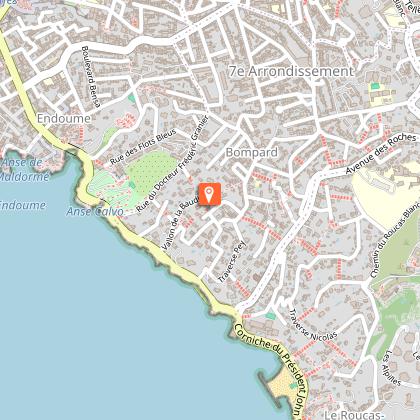
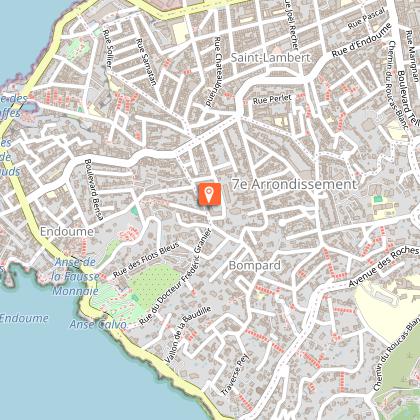
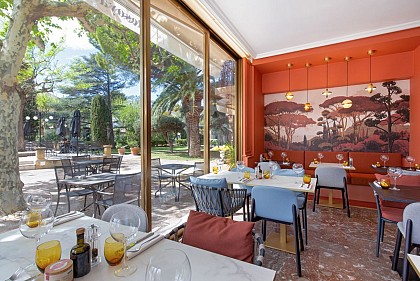
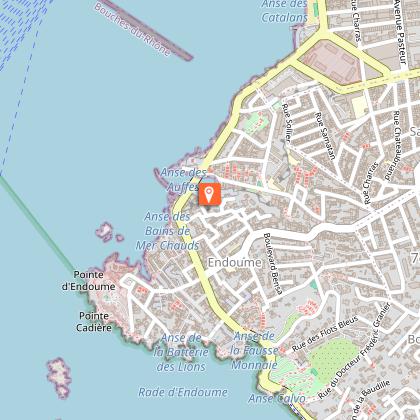
Discover Marseille from HOTEL RESTAURANT LE RHUL

Are you the owner?
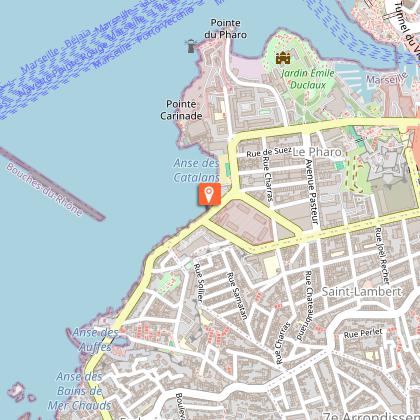
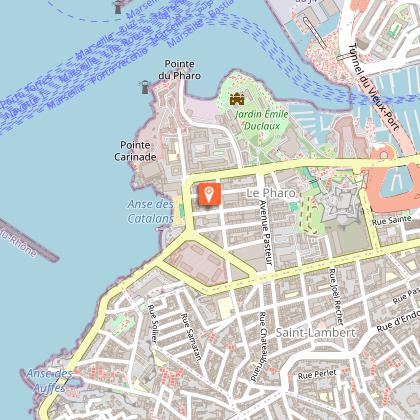
Welcome to HOTEL RESTAURANT LE RHUL, your perfect starting point to explore the enchanting 7th arrondissement of Marseille and its surroundings. Begin your journey with a visit to the famous Vieux-Port, the true heartbeat of the city, where you can admire fishing boats and savor fresh seafood. Just a short walk away, the historic Panier district will captivate you with its picturesque alleys and a...See more

Walking around HOTEL RESTAURANT LE RHUL

See more suggestions
Embark on a hike in HOTEL RESTAURANT LE RHUL.
See more suggestions
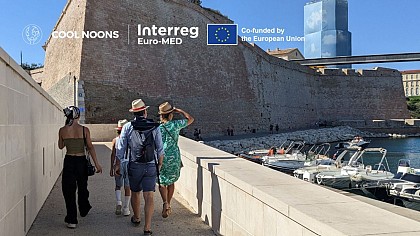
Cool Noons" freshness trail: a getaway in Endoume
1.2 km

Cool Noons" freshness trail: a getaway in Endoume

This route, devised as part of the European Cool Noons project, is divided into 2 distinct sequences. An easy one along the Corniche Kennedy to discover Malmousque and the Parc Valmer. A sporty one to explore Endoume. The main aim of the Cool Noons project, part of the European Interreg Euro-MED program on sustainable tourism, is to improve the visiting experience for tourists and residents of Mediterranean urban areas during the hottest hours. By the summer of 2024, it had already suggested itineraries favoring shaded or ventilated streets, as well as cool spots offering refreshment areas close to free drinking water points. This urban hike starts at Plage des Catalans. It is divided into two distinct sequences. The first is an easy seaside section along the Corniche Kennedy, taking in the Malmousque peninsula and the Villa Valmer park. A second, more athletic sequence explores the heights of the Endoume district. Both can be done as a loop or separately, depending on your mood, your walking ability and the weather. The Corniche Kennedy is well served by RTM bus line 83, whose air-conditioned vehicles make it easy to reach either the Old Port or the Rond-Point du Prado, even in the hottest weather. The starting point is the Plage des Catalans (1), dominated by the Lazaret tower. This beach is ideal for a refreshing swim. Its waters are also home to the Musée Subaquatique de Marseille (2), which can be explored with a few swims and a simple mask and snorkel. The route follows the Corniche John Fitzgerald Kennedy to reach the Malmousque district. After 700 meters, you'll reach the square du lieutenant Danjaume, home to the monument to the dead of the Armée d'Orient (3) and of distant lands. A bridge takes you over the small port of the vallon des Auffes (4). Continue on to Place Paul Ricard, a tribute to the entrepreneur and father of the famous aniseed drink (always drink in moderation). You'll also find a wall made famous at one time by the portrait of footballer Zinédine Zidane. Today, you can admire a fresco by street artist Mahn Moix, dedicated to the SOS Méditerranée association. It depicts a lifeguard scanning the sea with a pair of binoculars. At 108 de la Corniche Kennedy, turn right to take the stairs down to rue Malmousque. Continue straight ahead until you reach the small port of Malmousque (5). Turn left into rue Va à la Calanque and then left again into traverse Montplaisir, which leads to rue Boudouresque and a vintage façade protected by an awning. At the next crossroads, turn left to stay on rue Boudouresque and join rue de la Douane. Turn right, then left at the next intersection. You've reached the Malmousque plateau (6). In the distance, you can see the Marseille islands. Turn right along a military field. This is the Foreign Legion convalescent and leave center. You'll come to a landscaped promontory lined with tamarisk and a pine tree. Take advantage of the low wall to sit for a moment in the shade and admire the view of the sea, the islet of Gaby, the Château d'If and the Frioul archipelago. In the distance, straight ahead, the Marseilleveyre massif, Maïre Island and Tiboulen de Maïre. To the left of the candelabra, descend the small staircase onto a small section of the customs path. Go up rue Notre-Dame des Grâces and turn right onto rue de la Douane. You'll pass the Endoume marine station and its oceanology center (7). A new staircase takes you to the cove of the batterie des Lions. On a peninsula overlooking the sea, admire the Petite Ourse villa (8). Continue along the seafront path to reach Anse de Maldormé (9). You'll pass some of Marseille's finest mansions. Continue until you reach the parking lot entrance to Le Petit Nice, the five-star establishment of 3-Michelin-star chef Gérald Passédat. On the right, a staircase leads back to the seafront, bypassing the luxury establishment. The large, flat rocks are popular with bathers, especially on mistral-force days. Pass under the Fausse Monnaie bridge and discover the port of the same name. (10) Follow the stairs on your left, which will take you up to the Corniche Kennedy. Continue along the Corniche. You'll pass the famous Marégraphe (11). Shortly afterwards, a crosswalk allows you to cross the road before reaching the entrance to the Villa Valmer park (12). This concludes the first part of our tour of the Endoume and Malmousque coastal districts. The Villa Valmer park is a lovely wooded area, ideal for a moment's rest. It features picnic tables, fountains and amenities. Walk up the central driveway and turn right. Walk between pines and oaks to reach the exit onto rue du Docteur Frédéric Granier. Continue until you reach impasse Arnaud Bompard on your right. A few meters further on, you'll see a commemorative plaque dedicated to "radiophonic" resistance fighters. Retrace your steps to continue around the park of the large Montvert residence. At the end, turn left along Rue des Flots Bleus. Despite the high fences, you can still see the sea in the distance. Turn right onto chemin du pont, which refers to the Fausse Monnaie bridge on the Corniche. At the next intersection, do the same and branch off into the Targuist traverse. The Pont de la Fausse Monnaie and the steps can be seen. This is a beautiful green space, the Théâtre Silvain (13). In fine weather, this municipal facility offers a varied and popular program of shows. Pass the boulodrome Targuist, which is once again an open space for pétanque players. Shortly afterwards, turn right into rue Papon, which continues into impasse Fouque. The cypress avenue will be your ally. As you go up the alley, admire the view of the Basilica of Notre-Dame de la Garde, which can be seen in the distance between the houses. The houses often look alike and are characteristic of the "3 fenêtres marseillais" style. This is a typical downtown construction, particularly common from the 17th century to the early 20th century. The apartments, spread over several floors, have three windows opening onto both the street and the interior courtyard, and floors supported by wooden beams set into the party walls perpendicular to the street, as the facades are not load-bearing. Take rue du Docteur Granier to reach rue d'Endoume and turn right. You'll soon arrive at Place Saint-Eugène, the heart of Endoume village(14). From rue du vallon des Auffes, turn into rue Robert et Fénelon Guidicelli. Robert was a young resistance fighter murdered by the Gestapo in Lyon on August 9, 1944. He was 33 years old. A plaque honors his memory. Next up is the "A la bonne Fama" house of the headless woman. It was common practice in the past to represent "fame" in this way. Fama" means "good reputation" in Latin, as an explanatory sign indicates. Continue on to the Samatan plateau, a former fishing district. From Rue Sollier, you can admire the Corniche and seafront below. Rue du Four à Chaux and Rue Paul Codaccioni take you off the plateau. At number 71 rue Charras, turn right down the stairs that provide a pedestrian-only shortcut to rue de Nice. This leads to the shady Place du 4 septembre. September 4, 1870, marks the deposition of Emperor Napoleon III and the proclamation of the Third Republic. The walk ends on Avenue de la Corse, which takes you back to the starting point at Plage des Catalans. But before you finish, you'll pass a large building, the Saint-Georges, a housing unit (15) and the Audéoud barracks (16).

3 h
5.7 km
Medium
4 rue des Catalans 13007 Marseille
Show
Hiking from Notre Dame de la Garde, to Roucas Blanc and Corniche
1.5 km

Hiking from Notre Dame de la Garde, to Roucas Blanc and Corniche

After visiting Notre-Dame de la Garde, explore the Roucas Blanc. This district, a real maze of narrow streets, can only be visited on foot and offers magnificent views of the city. The Roucas Blanc hill was also a place of free expression for 19th-century Marseilles Rocailleurs: craftsmen, masons and ornamental designers, some of whom were quite singular. Their creations can be found in the dreamy gardens of the neighborhood's opulent homes. Via uphill crossings and sloping alleyways, you'll reach Corniche Kennedy and Plage du Prophète. Its fine sand and turquoise waters are the perfect reward after a fairly strenuous walk. This really is the most stunning urban stroll, so we invite you to look at your surroundings with curiosity and care. At the foot of Notre-Dame de la Garde, as you look out towards the sea, there's a staircase leading down that you have to take. This is the Montée du Commandant Valentin and the start of the itinerary (1). Go down to the first crossroads with a house, where you turn left, the start of the traverse du Génie. A blue mark indicates the way. Then turn left on a path that slaloms between the agaves, the Chemin du Bois Sacré (2), which joins the street of the same name, which continues on the Chemin du Roucas Blanc down to the Place du Terrail (3). Turn right onto Avenue des Roches (4 and 5) to number 77b. Here, on your left, a staircase leads to rue Colline Chanot, which you must take up to the junction with traverse de Roux, on your left. At the next intersection, turn right into rue Emile Duployé to number 45. On your left, you'll find a steep, narrow staircase to climb: montée des Croquants (6), which leads to chemin du Souvenir. Catch your breath and follow it to the right (7). The path ends in front of the gate of the Buenos-Ayres villa, and you descend a staircase to the right which joins the Nicolas traverse. Take a few steps to the right to admire a tower (a dovecote?) and, above all, the Villa Maraveyre, whose slate roof contrasts with the tiles more typical of our region. Continue along the Nicolas traverse to the Napoule staircase on the left. Admire the rockwork (8) that replaces the classic white-edged blue street name signs (9) and (10). Descend the staircase until you can turn right up the montée de la Rotonde. Admire the view of the Mediterranean through the large rockwork portholes cut into the cement and complete your itinerary, which leads to the Corniche, opposite the Plage du Prophète (11). From the Corniche Kennedy, a bus line takes you to either the Rond-Point du Prado or the Vieux-Port.

45 min
1.9 km
Easy
Départ Notre-Dame de la Garde 13006 Marseille
Show
A stroll through Marseille's new districts
1.9 km

A stroll through Marseille's new districts

Discover the many emblematic architectural elements that shape today's urban panorama, particularly in the Joliette district. (1) The esplanade, which marks the starting point, takes its name from a former port area that housed the J4 hangar. Today it is home to the Mucem (2) and the Villa Méditerranée, two museum spaces inaugurated in 2013 when the city was European Capital of Culture. Since June 2022, the Villa Méditerranée (4) has housed a reproduction of the Cosquer cave, a prehistoric site found at a depth of 37 meters by a local diver, Henri Cosquer. A third site completes the cultural offering: the Musée Regards de Provence (8), a former 20th-century sanitary locker. Then we arrive at the monumental Cathedral de la Major (9). Below it are the Voûtes, a real link between the old town, the Panier district and the new waterfront, where you'll find places to relax and shop. Continuing on, the urban stroll leads to the historic Docks building (21) and the Terrasses du Port shopping center (14). Level 2 of this shopping mall boasts a 260-metre-long terrace offering a panoramic 180-degree view of the sea. The itinerary continues towards Cepac Silo (15), a former grain silo transformed into a concert hall. Step inside to admire the udder room. Continue along the CMA-CGM tower (145 m high) (16) to the Archives Départementales (18). The FRAC (24), with its pixelated glass facade reminiscent of a Paco Rabanne dress with sequins, when in fact it's more a question of opening up the structure to a space of subdued light in the Japanese tradition, brings this urban ramble to a close.

2 h
3.7 km
Very easy
Le point de départ de cette balade urbaine est situé devant l'entrée principale du Mucem Esplanade J4, au bout de la promenade Robert Laffont 13002 Marseille
Show
Cool Noons" freshness trail: historic downtown route
2 km

Cool Noons" freshness trail: historic downtown route

This urban walk, conceived as part of the European Cool Noons project, starts on the Mucem forecourt. It takes you to the Palais Longchamp and its monumental fountain. The Cool Noons project is a European project under the Interreg Euro-MED program (sustainable tourism), the main aim of which is to improve the visitor experience for tourists and residents of Mediterranean urban areas during the hottest hours of the day. By summer 2024, the project aims to offer routes that, wherever possible, include passages through shaded and/or ventilated streets, through existing cool spots where it is possible to refresh oneself, and close to free drinking water points. From the Mucem (1), walk along the Promenade Robert Laffont around the Villa Méditerranée (2). Then skirt Fort Saint-Jean (3) along the seafront and Promenade Louis Brauquier until you reach two twin buildings, the former sanitary lockers (4). Here you can choose between two routes to reach point number 5, the bell tower of Notre Dame des Accoules. * Follow the Quai du Port, taking advantage of the shade provided by the arches of the Pouillon buildings, which will protect you from the sun until you reach the Hôtel de Ville. At number 68, turn left up Rue de la Prison. You'll pass the diamond house and the back of the Pavillon Daviel. You come out on rue Caisserie, facing a large plane tree at the foot of the Accoules. * Or cross Quai du Port and walk up Avenue de Saint-Jean, which joins Rue Caisserie. After 400 meters and a few minutes' walk, you'll also reach the large plane tree in front of Les Accoules. After passing the steeple of the Notre Dame des Accoules church (5), take a break in the shade of other plane trees to admire the various buildings: the former Palais de Justice (6), the former Hôtel Dieu transformed into a luxury hotel, the Bargemon esplanade (7) and, in the distance, the Old Port with the city's emblematic symbol: Notre-Dame de la Garde. Return to the Grand' rue, where you'll pass one of the city's oldest buildings: the Hôtel de Cabre (8). Continue straight on, crossing Rue de la République to reach the entrance to the ancient port (9). Two options: * Turn left around the ancient port, aka the Jardin des Vestiges, or * Turn right through the air-conditioned shopping mall of the Centre-Bourse [open Monday to Saturday, 10am to 7.30pm] to reach the Cours Belsunce (10). From Cours Belsunce, head towards La Canebière (11) to turn into Rue des Récolettes, which continues into Rue d'Aubagne. You'll pass through the colorful Noailles shopping district. At the end of rue d'Aubagne, take the large staircase on your left, which leads to Cours Julien (12), a large, lively square planted with ponds. You'll then arrive in the festive La Plaine district, and take a section of Place Jean-Jaurès (13). Turn left into rue Curiol, then rue de la Bibliothèque, and right into the very pleasant rue Sénac de Meilhan, which has little traffic and is planted with trees and shrubs by local residents. At the bottom of the street, you'll reach the upper part of the Canebière. You'll pass the book milestone that pays tribute to the giraffe Zarafa, who arrived in Marseille, France, by boat and then made her way to Paris by walking with her friendly guardians! After all, it was a royal gift. Then there's the bandstand (14), the Monument aux Mobiles, which pays tribute to the soldiers who died in the 1870 war. And at the very end of the Canebière, you'll find yourself facing the church of Saint-Vincent de Paul (15), nicknamed "les Réformés". Follow the tramway as it winds around the Danaïdes fountain (16) and up the majestic avenue of plane trees on boulevard Longchamp. To round off this urban stroll, discover the Palais Longchamp (17), its museums and tree-lined park, built to celebrate the arrival of the waters of the Durance in Marseille.

2 h
5 km
Very easy
Mucem 7 Promenade Robert Laffont 13002 Marseille
Show
Walk in the footsteps of La Joliette's maritime history
2.1 km

Walk in the footsteps of La Joliette's maritime history

A walk that takes you back to the splendid period of the trading port and the heyday of shipping and travel. The opening up of maritime routes dates back to the 17th century, under the impetus of Colbert, Louis XIV's powerful minister. By the 19th century, commercial traffic was on the rise. From the 1840s onwards, this led to the creation of the port of La Joliette. Marseille forged links with the biggest ports in Europe and the world: Barcelona, Algiers, Naples, Rome, Valletta, Istanbul... The construction of the Suez Canal in 1859 also facilitated travel on the route to India. Thanks to this 6-stop tour, immerse yourself in the sumptuous period of the commercial port and the heyday of sea travel: The starting point is in front of the Regards de Provence museum, which houses the former maritime sanitary station (1) built by Fernand Pouillon. All passengers arriving by sea had to pass through a "disinfection" stage, via the oven room, directly accessible from the museum entrance. Then it's on to the Major vaults (2), which once housed warehouses. These vaults came into being with the construction of the new Major, the only cathedral built in France in the 19th century. The foundation stone was laid in September 1852, at a time when Marseille was experiencing economic, social and demographic growth, and was adorned with a number of important buildings: Palais de la Bourse (1834), Notre Dame de la Garde (1853), Docks de la Joliette (1858), Préfecture (1860), rue de la République (1860), Palais Longchamp (1862). At the fountain and double-flight staircase by Auguste Ottin, cross the street to the "bleu de Chine" statue by artist Bruno Catalano (3). Through this traveler, the artist pays homage to all the workers and dockers of the port of Marseille, as well as to all those who have restarted their lives on these quays. Continue straight ahead along the renovated facades of the Quai de la Joliette. You have to imagine that here, in the 19th century, there was the sea. All this space was reclaimed from the water thanks to embankments. Marseille had only one major port: the Vieux-Port. At the corner of Quai de la Joliette and Boulevard des Dames stands the "Castel Héritage" building (4). Built in the early 20th century by architect Gaston Castel in the art nouveau style, the building housed the Compagnie Générale Transatlantique (CGT) agency. The Compagnie des Messageries Maritimes, a prestigious French shipping company founded in 1851 and independent until 1977, was founded by a man from Marseilles. It then merged with Compagnie Générale Transatlantique to form Compagnie Générale Maritime. In 1999, following the privatization of CMA, the group became CMA CGM. Today, the building houses luxury accommodation, offices and shops. The façade along Boulevard des Dames, at the corner of the quay, is original. Return to Place de la Joliette and the Docks building (5). These are former warehouses comparable to those in London. Enter and cross the various atriums, until you reach the Place du Port. Take entrance D to exit the building and reach the port terraces, opposite on the seafront. Enter the shopping mall and go straight up to level 2. A beautiful terrace equipped with chairs and deckchairs (6) offers a sublime view of the ferries, ships, islands and harbor. This is how the tour ends.

1.1 km
Very easy
Allée Regards de Provence Rue Vaudoyer 13002 Marseille
Show
Old town stroll: focus on the Panier district
2.2 km

Old town stroll: focus on the Panier district

Stroll to discover the monuments and must-see sites in the heart of Marseille's Old Town, the Panier district. This walk begins in front of the Town Hall (1). Turn left around the building into Rue de la Prison. At the end of the street, take the stairs that lead to the Maison Diamantée (2). Cross the Place Bargemon towards the bust of the Massaliote Euthymènes, famous navigator and explorer, and turn left along the restaurant terraces. Before the staircase, turn right through an archway and cross Place Victor Gélu straight ahead into Rue Bonneterie. At the corner you reach the Hôtel de Cabre (3) and turn left into the Grand' Rue. You'll pass the bust of Honoré Daumier, a famous 19th-century Marseilles artist whose works were intended to comment on the social and political life of his day. Enjoy the view of the Hôtel Dieu (4) on your right and Place Bargemon on your left, with Notre Dame de la Garde in the background. You will also pass in front of the Daviel Pavilion (5), today an annex of the Hôtel de Ville. Jacques Daviel was King Louis XIV's surgeon. He was a famous ophthalmologist because he was the first to perform a cataract operation in 1745. Pass the Accoules church and bell tower on your right (6), then climb the Montée des Accoules flight of stairs on your right (7). At number 23 Montée des Accoules (8), fork right and continue up the stairs to Place des Moulins (9). Pass under the plane trees and at the end, go down the stairs of the rue des Moulins. Turn right into Rue des Moulins and the first left into Rue Puis Saint-Antoine and Traverse Saint-Antoine. Stairs lead up to Place de Lorette. Turn left onto rue de Lorette, which goes slightly uphill and continues into rue du Petit Puits. Follow the signs to the Vieille Charité. When you are in front of the main entrance of this former hospice (10), go under the plane trees that adorn the Place des Pistoles (11). At the end of the square, go up Rue du Panier for a few metres, then turn right into Rue du Refuge, which leads to another part of Montée des Accoules. In front of the old building of the communal school of the girls, take on the right and at the end the stairs which make you arrive on the Place de Lenche. Cross the square to the statue of Henri Tasso, a former socialist mayor of Marseille between 1935 and 1939. It was during his term of office that the terrible fire at Galeries Lafayette on La Canebière took place, claiming 73 victims on October 28, 1938. Since then, the municipal fire department has been disbanded and replaced by a military battalion of marine firefighters. Walk along rue Saint-Laurent on the right until you reach the square in front of the Saint-Laurent church (12) and the belvedere where the statue of the teddy bear trainer stands. Enjoy the view of Fort St Jean (13), Tour du Fanal (13), Fort Saint-Nicolas (14) and the Old Port as a whole. From here, you have two options: - Take the Jean-Paul Chaix-Kohler staircase down to the Old Port and back to Hôtel de Ville (750 meters, 9-minute walk). - Walk around the Saint-Laurent church and down the esplanade de la Tourette to reach the parvis des Cathédrales de la Major (POI) (500 meters, 5-minute walk).

2 h
1.9 km
Easy
66 Quai du Port Hôtel de Ville 13002 Marseille
Show
Stroll from the Old Port to the Florence Arthaud nautical stadium
2.3 km

Stroll from the Old Port to the Florence Arthaud nautical stadium

This urban walk begins on the Quai des Belges under the shade of the Old Port. It takes you to the Olympic marina, now the Florence Arthaud nautical stadium. Leaving Norman Foster's shade on the Old Port (1), walk along the Quai de Rive-Neuve. Turn left into rue Fortia, cross Cours Estienne d'Orves, a large Italian-style square (2), then join rue Emile Pollak to Cours Pierre Puget, skirting the Palais de Justice (3). Turn right up Cours Pierre Puget and pause in front of the entrance to the Colline Puget garden (4). Follow the winding path through the park until you reach the Sépia restaurant. On the left, there's an exit over a small bridge and a staircase leading to rue des Lices. As its name suggests, this is an ancient rampart wall that marked the boundary of the city of Marseille in the 17th century. Cross the small square planted with magnolias and a palm tree to reach rue d'Endoume. Join the grand avenue de la Corse, where hackberry and plane trees provide shade until you reach the junction with the Place du 4 septembre, its hackberry trees and avenue Pasteur. Rue Girardin, which joins the end of Avenue de la Corse, leads to Plage des Catalans (5), dominated by the Lazaret tower. This beach is ideal for a refreshing swim. Its waters are also home to the Musée Subaquatique de Marseille (6), which can be explored by simply taking a few dips in the water with a mask and snorkel. Then, for almost 5 km, the route follows a structuring coastal axis that links districts such as the Vieux-Port, Les Catalans and Malmousque along the seafront. The route follows a single artery all the way to the Olympic Marina: the famous Corniche Kennedy (7), where you'll find, in order : - The Monument de l'Armée aux Morts de l'Armée d'Orient (8) - Vallon des Auffes (9) - Le Marégraphe (10) - Villa Valmer Park (11 and 12) - La Plage du Prophète (13) - Memorial des rapatriés aka, l'hélice de César (14) - The nautical stadium (ex Olympic marina) (15) And let's not forget the many "follies" - villas and bastides built in the mid-19th century that dominate the Corniche from the hills of the Bompard and Roucas Blanc districts. We've already mentioned Villa Valmer, where the architect drew inspiration from the Renaissance style. This style is also to be found at Château Berger (now Promicea), which bears some similarities (albeit on a much smaller scale) to the Château de Chambord, with its slate roof and bell towers. But there are others to be found behind the vegetation.

2 h
6.9 km
Very easy
Quai des Belges 13001 Marseille
Show
Marseille – Ride Along the Southern Coast, Parks & Châteaux
2.3 km

Marseille – Ride Along the Southern Coast, Parks & Châteaux

✨ In a nutshell: this itinerary combines historical heritage (Pharo, Borély, Pastré), spectacular coastal landscapes (Corniche, Prado, Goudes), and the authentic soul of Marseille in its fishing villages. A perfect day to experience the essence of southern Marseille, blending culture, nature, and the Mediterranean. ➡️ This route takes you directly to the southern part of the city. For a deeper discovery of Marseille’s historic center, another itinerary is available (Mucem, Panier, Pharo, Malmousque, Vallon des Auffes, Prophet’s Beach, and Notre-Dame de la Garde). 🔧 Practical information before you go Start: Indigo Parking – Centre Bourse Duration: 5 to 8 hours (depending on visits, swimming stops, picnic breaks) Distance: about 37 km Bring along: Water, sunscreen, sunglasses, swimsuit, comfortable shoes Difficulty: Easy (a few climbs but mostly flat along the sea) 🗺️ Step-by-step itinerary Centre-Bourse → Vieux-Port Right from the start, cycle through the vibrant heart of Marseille. The Vieux-Port, cradle of the city, offers a unique atmosphere of fishermen, boats, and lively terraces. 👉 For the curious: a short detour to the Palais du Pharo rewards you with an exceptional panoramic view of the Vieux-Port, Notre-Dame de la Garde, and Fort Saint-Jean. Corniche Kennedy Ride along the legendary Corniche Kennedy, an urban balcony suspended above the Mediterranean. From here, enjoy breathtaking views of Château d’If and the Frioul Islands. 📍 Don’t miss the Marégraphe, a historic monument that has measured sea levels since 1883. The Prado Beaches Time for a swim at Prado, a wide stretch of sandy beaches loved by families and athletes alike. A true seaside atmosphere! Borély Park & Château Borély Enter the greenery of Borély Park, one of Marseille’s most beautiful gardens. The 18th-century Château Borély, listed as a Historic Monument, is now home to the Museum of Decorative Arts, Faience, and Fashion. Pastré Park & Château Pastré Wilder and more hilly, Pastré Park is perfect for a picnic break. Here you’ll find bastides and ruins of the Pastré estate, reminders of Marseille’s 19th-century bourgeois past. La Pointe Rouge → Montredon → La Madrague The ride continues along the seafront: Pointe Rouge: a lively beach, hub for water sports. Montredon & La Madrague: smaller coves with a charming fishing village feel. Les Goudes, the “end of the world” village Arrive at the picturesque village of Les Goudes, with its tightly packed cabanons, white limestone rocks, and breathtaking panoramas. This true “end of the world” marks the gateway to the Calanques National Park. 🎯 From here, you can set out on a hike to the calanques of Morgiou or Sormiou, Mediterranean gems of unspoiled beauty. Return to the Vieux-Port Head back along the same route. The scenery takes on a completely new perspective: the coast, the city, and the sea reveal different lights and contrasts. ✨ Magical moment: at the end of the day, the sunset behind the Frioul Islands with its orange glow over the city offers an unforgettable spectacle by bike.

37 km
Very easy
Show

What to do in HOTEL RESTAURANT LE RHUL

See more suggestions
Plan a perfect day in HOTEL RESTAURANT LE RHUL with our bookable activities.
See more suggestions
Mme Lamazere
741 m

Mme Lamazere

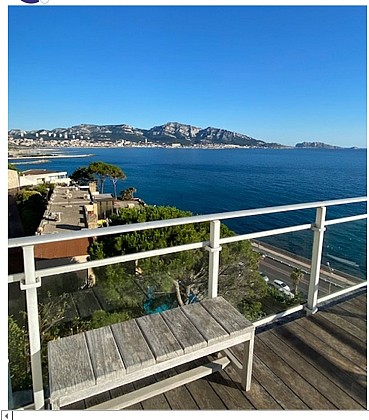
Haven of peace, the two guest rooms are located in a charming house rehabilitated by an architect. Located in the Bompard Roucas Blanc district, above the Corniche, 500 meters from the Prophète beach and 5 minutes by car from the Old Port and 17 minutes by foot, it has a magnificent view of the sea, and a garden with a heated swimming pool in season. The first room, Bougainville, of 30 m2 is on the garden level and can accommodate 4 people (one double bed and two single beds), has a beautiful sea view through the trees. It has a four-poster bed, an antique chest of drawers and is equipped with two basins, a bathtub and a separate shower, a fridge, a coffee maker and a kettle.The price of the Bougainville room for 2 persons is 90EUR out of season (from October 15 to April 30). In high season it is 125EUR, breakfast included. The second room, Zapotille, has a double bed, a small rosewood table, a shower and a sink, and a private outdoor patio. Both rooms are equipped with a fridge. Adjacent to the Zapotille room, the Luna room can accommodate an additional adult or two children. 74EUR for the Zapotille room in low season and 85EUR in high season, breakfast included. Breakfast can be served on the terrace, with a panoramic view of the sea. A space in the garage is available for the Bougainville room. English and Spanish spoken fluently, Wifi access, bus stop n°61 Fédéli at 3 minutes walk and shops nearby.

Habitation Bougainville 102 Chemin Du Vallon de l'Oriol 13007 Marseille
Book from 0 €Book
Show

What to visit in HOTEL RESTAURANT LE RHUL

See more suggestions
Visit the historical sites of HOTEL RESTAURANT LE RHUL.
See more suggestions
Parc Valmer: Marseille's Hidden Balcony by the Sea
79 m

Parc Valmer: Marseille's Hidden Balcony by the Sea

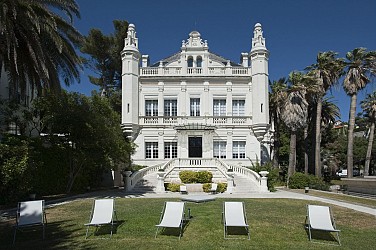
🌴 Parc Valmer: Marseille's Hidden Balcony by the Sea Just after the iconic Pont de la Fausse-Monnaie on the Corniche Kennedy, a little gem reveals itself to those who take the time to look up: Parc Valmer. Perched on a natural promontory, this 1.6-hectare park offers sweeping views over the Bay of Marseille, the Frioul Islands, and the legendary Château d’If. It’s a picture-perfect panorama — but in real life, with the song of cicadas as your soundtrack. 🏰 A villa-château born from a wave... At the heart of the park stands the grand Villa Valmer, built in the late 19th century by Charles Gonnelle, a wealthy trader from Salon-de-Provence. Originally named “Vague à la mer” (“Wave to the Sea”), the name was eventually shortened to Valmer, a poetic contraction that reflects its oceanfront location. With its elegant proportions and striking silhouette, the villa looks more like a small château than a mere seaside residence. 🌿 A blend of exotic flair and Mediterranean soul The park is a beautifully designed green space, showcasing the 19th-century passion for lush, ornamental gardens. As you follow the winding paths, you’ll pass through a delightful mix of local and exotic flora: 🌴 Exotic species: trachycarpus palms, washingtonias, phoenix canariensis, butias... evoking faraway lands and adventurous journeys. 🌳 Native trees: Aleppo pines, green oaks, olive trees, pistachio trees, arbutus — a true taste of the Provençal garrigue. 💐 The flowerbeds burst with color thanks to lavender, dimorphothecas, lantanas, agatheas, ice plants, and arctotis. Look closely at the artificial rockwork — a charming 19th-century landscaping technique, with faux boulders sculpted in cement and softened by cascading greenery. 📍 Guide’s tip This park is a hidden treasure, often overlooked by traditional tourist routes — which makes it a peaceful haven even in summer. Come in the late afternoon, when the light turns golden: the islands appear to float in the air. You might think you're in Rio... but better, because this is Massilia ❤️

Corniche Président John Fitzgerald Kennedy 13007 Marseille
Show
Valmer Park
117 m

Valmer Park

At the bend in the Corniche, a promontory overlooking the harbor of Marseille and its islands is home to the Villa Valmer and its lush 1.6 hectare park. In some squares, the playgrounds can still be used but are under the responsibility of parents who must ensure that health regulations are respected, including physical distance. At the bend in the Corniche (after the Fausse-Monnaie bridge), a promontory overlooking the harbor of Marseille and its islands is home to the Villa Valmer and its lush park. Its proportions and architecture make this villa look more like a small castle. It was built at the end of the last century by a rich merchant from Salone, Charles Gonnelle. The villa originally bore the name "Vague à la mer" (Wave to the sea) which was later changed to Valmer. The alley, which winds towards one of the most beautiful viewpoints of the city, twists and turns in the heart of an exotic vegetation (palms: trachicarpus fortuneï excelsa, chamaerops humilis, washingtonias filifera, phoenix canariensis, buttias capitatia) and endemic of a rare beauty. Among these species, we find native tree species (olive trees, Aleppo pines, holm oaks, pistachio trees, mastic trees, arbutus) and perennials in cascades: dimorphotecas, lantanas agathaea, carpobrutus, lavender, arctotis. In the style of the 19th century rock gardeners, a rock garden follows the slope of the slopes. Fake stone, fake rocks with strange round shapes are sculpted in the cement and softened by harmonious compositions of perennials.

271 Corniche John Fitzerald Kennedy 13007 Marseille
Show
The Marégraphe of Marseille – where France begins... vertically!
157 m

The Marégraphe of Marseille – where France begins... vertically!

🌊 The Marégraphe of Marseille – where France begins... vertically! Tucked away discreetly by the sea, near the Corniche and the entrance to the Pointe Rouge port, lies a scientific gem that almost no one notices. And yet... this quiet little spot determines the altitude zero for all of mainland France. Yes, really — every mountain, every valley, every hill you’ve ever hiked in France is measured from here! 📍 So, what exactly is a marégraphe?It’s a super-precise instrument that measures sea level changes. The Marseille marégraphe, operational since 1883, is a masterpiece of 19th-century engineering. It uses a stilling well connected to the sea, where a needle traces the sea’s rise and fall on a rotating drum. No satellites, no GPS back then — just pure mechanical precision! 🧪 Why Marseille?Because the coastline here is rock-solid, not eroded by big rivers, and geologically stable — perfect for long-term sea level observations. From 1885 to 1897, engineers meticulously recorded sea levels every day for 12 years. The average of those readings became France’s official “zero level” for altitude measurements. So when you read that Mont Blanc is 4,807 meters high — those meters start right here, at the Marseille marégraphe. Mind-blowing, right? 🧠 Nerdy (and awesome) side note:The marégraphe building is a modest little stone pavilion, listed as a historic monument since 2002. But here’s the best part: it’s still operating! Its data is now used to monitor climate change and rising sea levels — science at its best, straight from Massilia! If you ever stroll down the Corniche, take a moment to stop and look at this humble building. It quietly keeps track of the world’s greatest force — the sea — and underpins all of France’s altitudes. Now that’s what we call a hidden hero!

251 Corniche Président John Fitzgerald Kennedy 13007 Marseille
Show
The Tide Gauge
163 m

The Tide Gauge

The Marseille tide gauge belongs to the French government and is managed by the Institut national de l'information géographique et forestière (IGN). It is both a historic monument and a modern sea-level observatory: it's quite rare to have both qualities in the same place. This historic monument was built at the end of the 19th century to fix the origin of continental French altitudes (altitude 0). This was achieved by means of a device of which only one remains in the world today. Today, the main scientific interest of the Marseille tide gauge is to help monitor, understand and anticipate one of the many effects of climate change due to human activity: the increasingly rapid rise in mean sea level. The tide gauge is not currently open to the public, as it has not yet been classified as an establishment open to the public (ERP). It is for this legal reason that the IGN has decided, in 2021, 2022 and 2023, to open it to the public ONLY for the Heritage Days (2 days). Our association's intention is to open more often. We are currently applying for the tide gauge to be classified as an establishment open to the public (ERP). Les amis du marégraphe de Marseille" association While we await a visit, we have a number of ways of making the historical, scientific, cultural, environmental and societal assets of the tide gauge better known, for example : - an increasingly rich website - an Instagram account - a Facebook account - a soap opera about the history of the tide gauge

174 Corniche John Fitzerald Kennedy 13007 Marseille
Show
Swimming in Marseille - Anse de Maldormé
229 m

Swimming in Marseille - Anse de Maldormé

Anse de Maldormé! Now you’re tapping into the real deal — authentic, discreet, secret Marseille... a little slice of paradise hidden between Malmousque and Corniche Kennedy. It’s a tiny urban cove, but with an almost island-like vibe. Come on, I’ll take you there… 📍 Where is Anse de Maldormé? Anse de Maldormé is tucked away between Vallon des Auffes and Malmousque, just below the famous Corniche Kennedy in Marseille’s 7th arrondissement. It’s easy to miss from the street — access is via a hidden staircase that slips between stone walls and down toward the sea. It’s one of those places only locals or in-the-know visitors tend to find. 🌊 Why is it special? The water is crystal clear and turns a perfect turquoise on calm days. There’s no sand — just flat rocks, stone steps, and little ledges to sunbathe on. It’s quiet, even in summer — especially in the early morning or on weekdays. You get a stunning panoramic view of the Frioul Islands and Château d’If, especially at sunset. Pure magic! 🐙 A fun anecdote: the name “Maldormé” “Maldormé” literally means “badly slept” in French. Why such a name? A few theories: Fishermen used to sleep here under the stars, but between the wind, the waves, and the mosquitoes… they didn’t sleep very well. It may have been a hiding spot for smugglers, who were always on edge — not the best conditions for a good night’s sleep! Local legend even says it was the lover’s corner, where young couples snuck away from watchful eyes... with emotions too high to get any rest. Only in Marseille, right? 😄 ⚠️ What to know before you go 🩴 Water shoes or sandals are highly recommended — the rocks can be slippery. ☀️ No natural shade — bring a hat or parasol if you're planning to stay. 🧺 No food, no bathrooms, no lifeguards — come prepared. 📸 Bring a charged phone or camera — it’s incredibly photogenic.

12 Anse de Maldorme 13007 Marseille
Show
Port of Malmousque
464 m

Port of Malmousque

🌊 The Port of Malmousque – Marseille’s Hidden Gem A little slice of paradise tucked away among the rocks of Marseille’s 7th arrondissement, in the charming Endoume district. Just steps from the city’s hustle and bustle, yet it feels like you’ve escaped to a tiny fishing village… without ever leaving Marseille! 🐚 The Anse de Malmousque This quiet little cove stands out thanks to its uniqueness. There’s no sand here—just a concrete pontoon, sun-warmed rocks, and deep blue water. Swimming is possible, but be cautious! The water gets deep quickly, making it unsuitable for young children or inexperienced swimmers. Access is only on foot, by weaving your way through a maze of narrow streets. From the cove, you can spot the eerie silhouette of Île des Pendus (“Island of the Hanged”), named after a bloody episode in 1423 when King Alfonso V of Aragon had a dozen Marseille notables hanged there for siding with Louis III. A chilling name that adds mystery to the place. 🧓 A Bit of History Originally, Malmousque was a traditional fishing port, with a friendly, typically Marseillais atmosphere. As early as 1610, a “chemin de Mélamousque” (Malmousque path) appears in historical records. The name “Malmousque” likely comes from the Provençal mau musc, meaning “bad smell,” referring to rotting seaweed left in the sun. Thankfully, those days are gone—today, the air smells of salt, grilled fish, and blooming bougainvillea. Until the late 19th century, the cove remained wild and hard to access. It wasn’t until new homes were built nearby that locals returned. Today, it’s one of Marseille’s favorite swimming spots (especially off-season for more peace) and the sunsets are simply stunning. 🏘️ The Malmousque Neighborhood An authentic slice of Marseille. The houses are brightly colored and covered in lush vegetation, giving the area the look of a quaint Provençal village. Narrow alleys, sleepy cats, and hidden stairways lead straight down to the sea. Strolling through the neighborhood, you’ll find breathtaking views of the islands of Endoume, Gaby, and the whole Marseille bay. Restaurants, cafés, scenic walks, little bridges and secret coves… Malmousque hides treasures around every corner. It’s the perfect place for a picnic or a photo break, far from the tourist crowds. ⚓ The Port of Malmousque Tiny but full of charm, the port has just 55 moorings and is managed by the Société Nautique des Goélands. You’ll often see local fishermen or Marseillais regulars relaxing on the rocks. Follow the concrete path and you’ll stumble upon one of the most stunning houses in all of Marseille: Les Bains de Mer Chauds, a beautifully restored former thalassotherapy center. A real hidden gem! 🛶 Getting There 🚶 On foot only! You’ll need to make your way through narrow lanes from Chemin du Génie or the Corniche Kennedy. 🚗 A few parking spots (in high demand!) are available near the Bains Militaires. 🚌 Bus 83 stops at “Fausse-Monnaie”—from there, it’s just a 5 to 10-minute walk. 💡 NAVIA Tip: It’s also a perfect stop during an electric bike ride (especially if you’re pedaling up from the Vallon des Auffes 😅). ❤️ Why You Shouldn’t Miss Malmousque Because it’s 100% Marseille, no frills, just soul. Because it looks like a postcard, with views of Château d’If and the Frioul Islands. Because it’s the locals’ favorite spot to sunbathe, dive, and daydream by the sea.

24 Rue Malmousque 13007 Marseille
Show
The Vallon des Auffes
595 m

The Vallon des Auffes

🎣 Vallon des Auffes – A Hidden Gem of Marseille 🌿 A Story Woven with Ropes and Tradition Tucked between the Corniche Kennedy and the turquoise waters of the Mediterranean, Vallon des Auffes is a tiny fishing port with a name as poetic as its scenery. The word “Auffes” comes from auffa, a local grass once used to make ropes and fishing nets. Since the 19th century, this charming cove has been home to fishing families living in colorful little houses called cabanons. Their iconic wooden boats, the "pointus", still bob gently in the harbor—classic Provençal silhouettes that seem drawn straight from a painting. 🏗️ Stone Arches and a Monument to Memory The Vallon is crowned by a graceful stone bridge built in the 19th century, under the direction of Jean François Mayor de Montricher, the same engineer behind the Roquefavour aqueduct. The bridge spans 60 meters, with three arches each 17 meters high, and was built at the same time as the legendary Corniche Kennedy. At the entrance to the Vallon, perched above on the esplanade, stands a powerful monument: a 5-meter tall statue symbolizing Victory, dedicated to the soldiers of the Army of the Orient and distant lands. Inaugurated in 1927 by French President Gaston Doumergue, it was declared a historic monument in 2009—a quiet but moving tribute few tourists know about. 🏖️ A Natural Pool… No Chlorine Needed! There’s no sandy beach here—but what you get is even better. Just beneath the arches lies a beloved local secret: "la piscine du Vallon" (“the Vallon swimming pool”). Families and early risers love this crystal-clear spot for a refreshing dip. Looking for something quieter? Climb the nearby rocks to find deeper water and a perfect sunbathing hideout—just keep in mind: there’s no lifeguard on duty. 🍽️ A Feast for the Eyes and the Taste Buds This tiny harbor has a big reputation when it comes to food and ambiance. From casual bites to fine dining, here’s a sample menu of what awaits: Chez Jeannot: A family-friendly pizzeria with sea views and that easygoing Marseille vibe. Chez Fonfon: Legendary. Their bouillabaisse is a masterpiece, maybe the best in town. L’Épuisette: Michelin-starred, with waves crashing below your table—fine dining for true seafood lovers. Viaghji di Fonfon: The perfect terrace for a sunset drink and Mediterranean tapas. L’Avant-Cour: And when it’s sea urchin season, this spot hosts traditional “oursinades”—fresh, briny, and unforgettable. 🚲 Ride There with NAVIA By bike, it’s one of the most beautiful stops in Marseille. From the Old Port or the Pharo, just follow the Corniche seaside road—the salty breeze in your face, stunning views all the way. Park your bike nearby, walk down the old stone steps, and take a moment to breathe, wander, and marvel. This is Marseille at its most magical.

130 Impasse Michel 13007 Marseille
Show

Where to eat in HOTEL RESTAURANT LE RHUL

See more suggestions
Explore the best dining spots in HOTEL RESTAURANT LE RHUL.
See more suggestions

Where to sleep in HOTEL RESTAURANT LE RHUL

See more suggestions
Find the perfect lodging for your visit to HOTEL RESTAURANT LE RHUL.
See more suggestions
Caution!
We have no information on the difficulty of this circuit. You may encounter some surprises along the way. Before you go, please feel free to inquire more and take all necessary precautions. Have a good trip! 🌳🥾