Alert

Alerts

To see around
See more
Open
Close
Show
Show
Show
Show
Show
Show
Show
Show
Show
Show
Show

Oups... It would appear that Cirkwi does not have permission to use your location.

Presentation
Description
Map
Steps
Points of interest
Ratings and reviews
See around

Marseille – Ride Along the Southern Coast, Parks & Châteaux
Marseille – Ride Along the Southern Coast, Parks & Châteaux

Description

In a nutshell: this itinerary combines historical heritage (Pharo, Borély, Pastré), spectacular coastal landscapes (Corniche, Prado, Goudes), and the authentic soul of Marseille in its fishing villages. A perfect day to experience the essence of southern Marseille, blending culture, nature, and the Mediterranean.
➡️ This route takes you directly to the southern part of the city. For a deeper discovery of Marseille’s historic center, another itinerary is available (Mucem, Panier, Pharo, Malmousque, Vallon des Auffes, Prophet’s Beach, and Notre-Dame de la Garde).

🔧 Practical information before you go

  • Start: Indigo Parking – Centre Bourse

  • Duration: 5 to 8 hours (depending on visits, swimming stops, picnic breaks)

  • Distance: about 37 km

  • Bring along: Water, sunscreen, sunglasses, swimsuit, comfortable shoes

  • Difficulty: Easy (a few climbs but mostly flat along the sea)

🗺️ Step-by-step itinerary

Centre-Bourse → Vieux-Port
Right from the start, cycle through the vibrant heart of Marseille. The Vieux-Port, cradle of the city, offers a unique atmosphere of fishermen, boats, and lively terraces.
👉 For the curious: a short detour to the Palais du Pharo rewards you with an exceptional panoramic view of the Vieux-Port, Notre-Dame de la Garde, and Fort Saint-Jean.

Corniche Kennedy
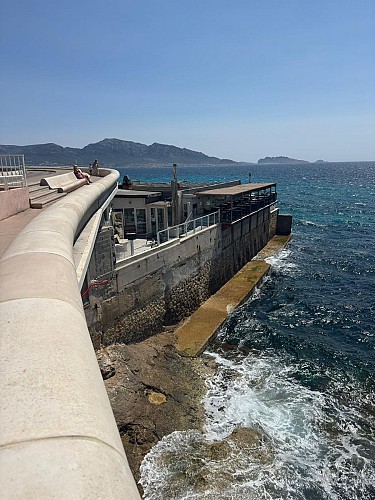
Ride along the legendary Corniche Kennedy, an urban balcony suspended above the Mediterranean. From here, enjoy breathtaking views of Château d’If and the Frioul Islands.
📍 Don’t miss the Marégraphe, a historic monument that has measured sea levels since 1883.

The Prado Beaches
Time for a swim at Prado, a wide stretch of sandy beaches loved by families and athletes alike. A true seaside atmosphere!

Borély Park & Château Borély
Enter the greenery of Borély Park, one of Marseille’s most beautiful gardens. The 18th-century Château Borély, listed as a Historic Monument, is now home to the Museum of Decorative Arts, Faience, and Fashion.

Pastré Park & Château Pastré
Wilder and more hilly, Pastré Park is perfect for a picnic break. Here you’ll find bastides and ruins of the Pastré estate, reminders of Marseille’s 19th-century bourgeois past.

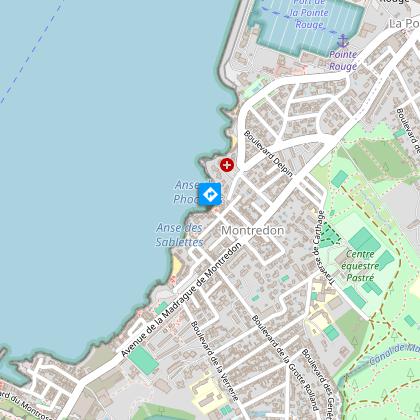
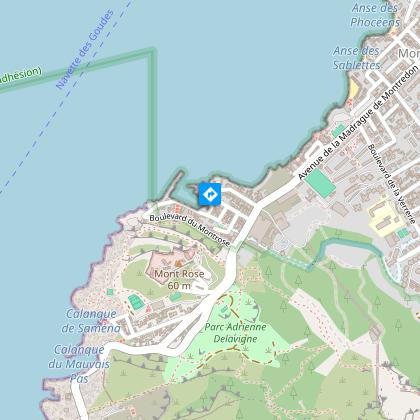
La Pointe Rouge → Montredon → La Madrague
The ride continues along the seafront:

  • Pointe Rouge: a lively beach, hub for water sports.

  • Montredon & La Madrague: smaller coves with a charming fishing village feel.

Les Goudes, the “end of the world” village
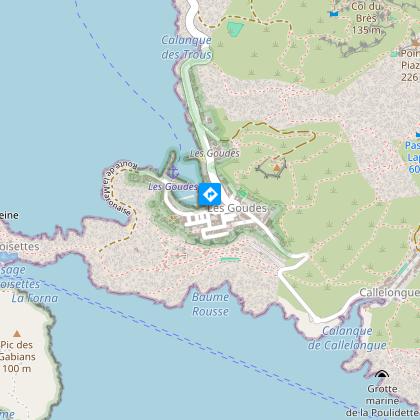
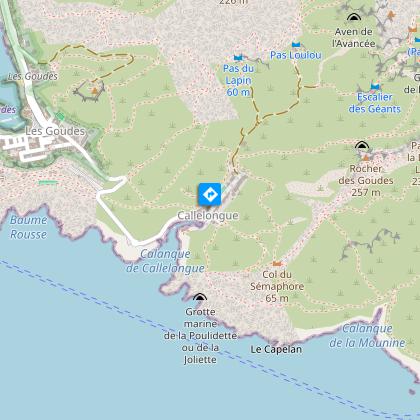
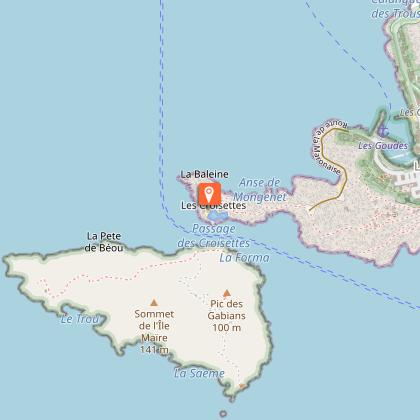
Arrive at the picturesque village of Les Goudes, with its tightly packed cabanons, white limestone rocks, and breathtaking panoramas. This true “end of the world” marks the gateway to the Calanques National Park.
🎯 From here, you can set out on a hike to the calanques of Morgiou or Sormiou, Mediterranean gems of unspoiled beauty.

Return to the Vieux-Port
Head back along the same route. The scenery takes on a completely new perspective: the coast, the city, and the sea reveal different lights and contrasts.
Magical moment: at the end of the day, the sunset behind the Frioul Islands with its orange glow over the city offers an unforgettable spectacle by bike.

Technical Information

Racing biking
Difficulty
Very easy
Dist.
37 km
Show more

Altimetric profile

Starting point

13001
Lat : 43.29506Lng : 5.37396

Points of interest

image du object

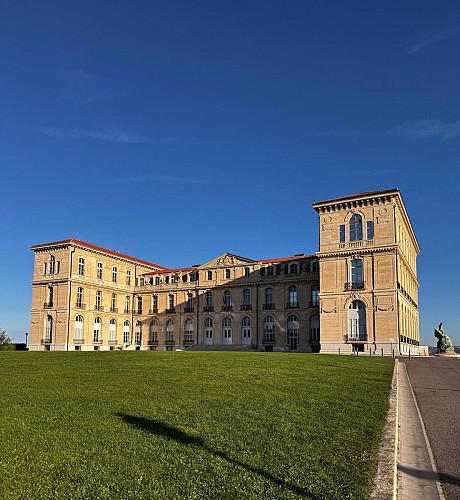
🚲 This stop is brought to you by NAVIA Mobility Explore Marseille differently — on an electric bike — with cultural routes and guided stops like this one.With Navia, discovery is effortless… and freedom is just a pedal away. 🏰 The Palais du Pharo – An Imperial Dream by the Sea 👑 A Palace Born from an Emperor’s Whim It all began in 1852, when Prince-President Louis-Napoléon Bonaparte visited Marseille. Standing before the city’s glistening harbor, he declared his wish for a residence “with its feet in the water.” The city, eager to please, gifted him the Pharo plateau in 1855 — a rocky promontory overlooking the sea. 🧱 The first stone was laid on August 15, 1858, the Emperor’s birthday. The architect? Lefuel, the same man who would later complete parts of the Louvre and the Tuileries. But fate had other plans. The Second Empire collapsed in 1870 before the palace was ever furnished. Angry crowds destroyed the imperial emblems on the gates. Napoléon III never set foot inside. The Empire was over; the Republic had arrived. 🏛 A Stunning Monument with Many Lives After Napoléon III’s death in 1873, his wife, Empress Eugénie, reclaimed the palace after a long legal dispute with the city. In a final gesture, she donated it to Marseille, and that’s when its second life began: the Pharo became a medical stronghold. ⚕️ A Century of Tropical Medicine In 1904, it was transformed into the School of Application for Colonial Troop Medical Services, later known simply as the École du Pharo. For over 100 years — until 2013 — the school trained more than 8,000 doctors, pharmacists, and researchers to practice tropical medicine across the French overseas territories. It was the only military institute in Europe specializing in this field. 🔬 Notable figures include: Colonel Eugène Jamot, who helped eradicate sleeping sickness in Africa. Dr. Paul-Louis Simond, who discovered rat fleas transmit the plague. Professor Charles Livon, a key director of the school. Émile Duclaux, who succeeded Pasteur and lends his name to the nearby park. 📍 The Pharo Today By the 1990s, the palace needed a new purpose. In 1997, it opened as a major conference and convention center. And in 2013, after a €12 million renovation, it was expanded with 12 new meeting rooms, a panoramic 300-seat auditorium, and a massive terrace restaurant for 1,000 guests — all with breathtaking sea views. The two historic buildings flanking the entrance to Parc Émile Duclaux now house key offices of Aix-Marseille University. The central lawn features the monumental art installation “Désordre” by Bernar Venet: 84 massive, rusted steel arcs forming a striking visual counterpoint to the palace’s classic lines. 🌿 The Perfect Urban Escape The Pharo gardens are one of Marseille’s best-kept secrets: Watch ferries leave for Corsica. Enjoy a seaside picnic with unbeatable views. Snap one of the most iconic photos of Marseille: the Vieux-Port, Mucem, Fort Saint-Jean, and La Major Cathedral all in one shot. 🧭 How to Get There Walking: 10 minutes from the Old Port. Cycling: Ideal via the coastal Corniche (especially with NAVIA bikes 😉). Public Transport: Bus 83 – “Pharo Catalans” stop. Free public access to the gardens year-round. 📍 Address: 58 Boulevard Charles Livon, 13007 Marseille 🗝️ Final Fun Fact The name “Pharo” doesn’t come from phare (lighthouse), but from the old Provençal word farot, referring to the original rocky hill where a medieval watchtower once stood — visible on maps as early as the 14th century.

58 Boulevard Charles Livon 13007 Marseille
- Navia Mobility -
Consulter
image du object

The Marseille Transporter Bridge

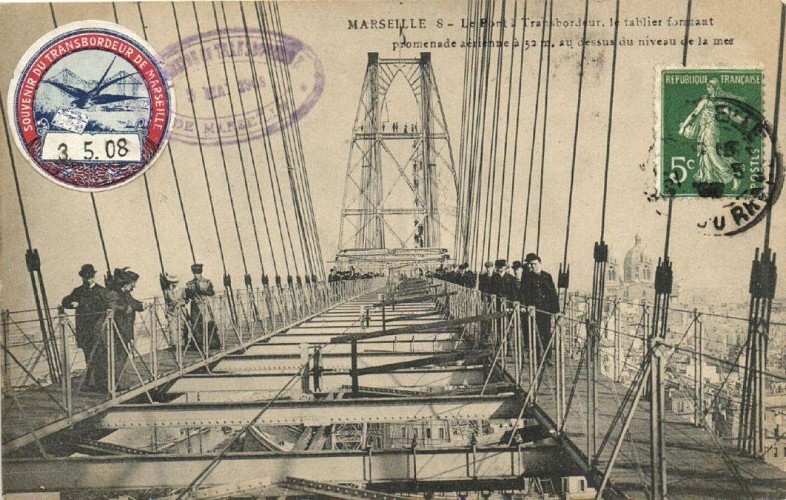
🚲 This tour is brought to you by NAVIA Mobility Discover Marseille differently — on an electric bike — with cultural routes and guided stops like this one.Navia means freedom to explore, effortlessly… and in style. 🏗️ The Marseille Transporter Bridge Dates: 1905 – 1944Reading time: 2 minutesLocation: Entrance to the Old Port, near Fort Saint-Jean 🧭 Why stop here? Once upon a time, right where you stand, a giant of steel stretched across the sky — as mythical to the people of Marseille as the Eiffel Tower is to Parisians.Its purpose? To let people cross the Old Port without blocking boat traffic.A technical marvel… with a poetic soul. 🛠️ A bridge like no other Two towers, each 86.6 meters high, standing like sentinels at the harbor entrance A suspended deck hanging 52 meters above the sea A 20-ton gondola that glided from one side to the other in just 90 seconds, carrying up to 200 passengers and vehicles! 🧠 NAVIA Anecdote:The bravest could ride an elevator (yes, in 1907!) to a panoramic viewing platform — complete with a seafood restaurant.Stunning views, bouillabaisse on the menu… and seagulls for company. 💣 A dramatic end In August 1944, during the Liberation of Marseille, German troops blew up the northern tower to block access to the port.The second tower stood until 1945… when 400 kg of explosives finished the job. 🎨 A modern art icon The bridge inspired photographers of the Bauhaus movement, like László Moholy-Nagy and Germaine Krull, captivated by its futuristic design.It even graced the cover of an architectural book in 1928! 👀 What remains today Only one solitary structure remains, near Fort Saint-Jean.Keep an eye out: it still seems to be waiting for its long-lost twin to return... 🔮 And tomorrow? Since 2008, several projects have dreamed of rebuilding the transporter bridge just as it was.A nod to the past, and a bold step toward the future…One day, Marseille may again see this skyborne marvel return. 📍 NAVIA Tip 💡 Stop here, snap a photo of the last standing tower, and imagine a steel silhouette gliding over the water, between sky and sea…That’s also part of the spirit of Massilia

26 Quai de Rive Neuve 13007 Marseille
- Navia Mobility -
Consulter
image du object

The Citadel of Marseille — Fort Saint-Nicolas

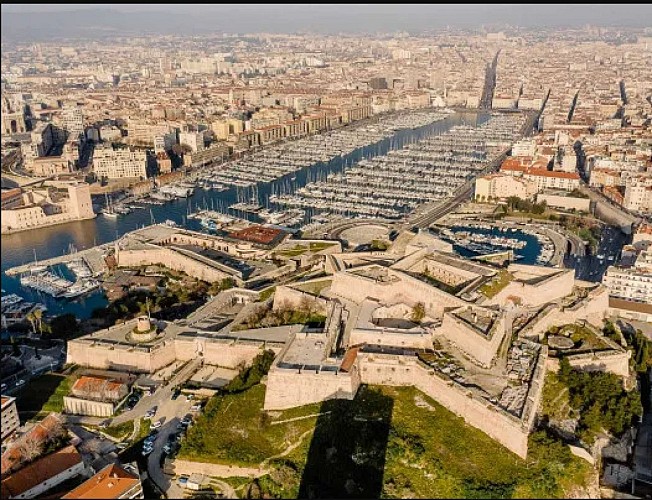
🏰 The Citadel of Marseille — Fort Saint-Nicolas A symbol of royal authority, military history, and ecological renewal ⚓ A fortress built to keep Marseille in check Perched over 50 meters above the waters of the Old Port, Fort Saint-Nicolas was never just a defensive stronghold facing the sea. Its true purpose? To watch over the city itself. In 1660, a young Louis XIV sought to impose his authority on Marseille—a famously unruly and independent-minded city. Rather than negotiate, he sent an army to encircle it and ordered the construction of not one but two monumental forts at the entrance of the harbor: an expanded Fort Saint-Jean to the north, and a brand-new citadel on the southern promontory of Saint-Nicolas. Thus began an ambitious military—and deeply political—project. 🛡 An architecture designed as a warning Under the direction of royal engineer Louis-Nicolas de Clerville, the fortress was built in just four years. The chosen site was strategic: a rocky promontory with a freshwater spring and an abandoned medieval chapel. From there, one could dominate the city while controlling the harbor. The message was unmistakable: Marseille must remain loyal to the Crown. The citadel followed the star-shaped bastioned design typical of 17th-century fortifications, with a double perimeter wall, sharp bastions, ditches, and redans. Built from warm pink stone, the fortress appears to grow naturally from the cliff, like an armored outcrop overlooking the sea and the city. 🏗 A self-sufficient military world More than just a stronghold, the Citadel was a fully autonomous complex, with: troop quarters, underground tunnels and storage rooms, cisterns, wells, and powder magazines, a windmill, bakery, chapel, and even gardens tucked into its flanks. The underground galleries allowed discreet movement and protected supplies. The fortress could withstand a siege without external support. 🧨 The Revolution: destruction in the name of freedom By 1790, the tide was turning. Revolutionary fervor swept through Marseille. After capturing the nearby Notre-Dame de la Garde, a revolutionary militia demanded the surrender of the Citadel. The garrison mutinied, and the fort was handed over to the people. Seen as Marseille’s own version of the Bastille, the upper portion of the fortress was partially torn down by its citizens—especially the sections that had once aimed their cannons directly at the town. ⚔ The 19th century: modernization, division… and a road through the middle During the 19th century, Fort Saint-Nicolas was partially rebuilt and modernized to adapt to new artillery technology. But in 1862, a bold urban planning decision split the citadel in two: a new boulevard was carved straight through its heart, linking the Old Port with the emerging Catalans district. The two halves were renamed: Fort d’Entrecasteaux (the upper section), after the explorer, Fort Ganteaume (the lower section), after a former naval prefect. 🕳 A prison and witness to the 20th century’s darkest chapters Over time, the fort became a military prison, housing courtrooms and cells. During WWII, it held political prisoners—among them Jean Giono, Jean Zay, and Habib Bourguiba, future President of Tunisia. Under Nazi occupation, the fortress was fortified and integrated into the “Southern Wall” of Mediterranean defenses. Anti-aircraft platforms and bunkers were built, and underground tunnels connected the fort to the port. During the Liberation of Marseille in August 1944, the fort’s guns turned against the city before it was retaken by Moroccan troops. It was a dramatic final act in the fort’s military life. 🌿 From military relic to ecological and cultural beacon In 1969, the entire complex was listed as a Historic Monument, but it remained closed to the public for decades. Since the early 2000s, the fort has entered a new chapter, led by ACTA VISTA, a heritage preservation association that trains young people in traditional construction techniques. In 2021, a major milestone was reached: the City of Marseille granted a 40-year lease to the Groupe SOS Culture, with the goal of gradually reopening and rehabilitating the site as a living cultural and social venue. 🌱 A living heritage, from stone to soil What makes the Citadel unique today is its holistic vision of restoration. Not only are the ramparts being preserved, but so too are the natural ecosystems surrounding them. The former military glacis on the north and west slopes, once left bare for defensive reasons, have become sanctuaries for native flora and fauna from the Calanques. However, decades of military use left the soil polluted with heavy metals. Since 2022, the Citadel has partnered with the Population Environment Development Lab at Aix-Marseille University and ecologist Isabelle Lafont-Schwobb to implement nature-based solutions like bioremediation—using plants and natural processes to heal the land. The gardens themselves are carefully designed to: respect the historic viewlines, support climate adaptation, detoxify the soil, and remain accessible and educational for the public. It’s a landscape of resilience and education, where nature, heritage, and science meet. 🧱 Restoration with respect Led by heritage architects Philippe Matonti and Isabelle Guérin, the restoration embraces traditional materials and local resources (stone, lime, sand, timber), while minimizing energy consumption. Every intervention follows the logic of reuse, minimal impact, and long-term durability. Rather than rebuilding a postcard version of the past, the goal is to honor the site’s layered history—and ensure its transmission to future generations. 🎯 In short Once a symbol of royal control, then a silent witness to revolt, war, and imprisonment, the Citadel of Marseille is now coming back to life. No longer closed off, it opens its gates to culture, nature, and the people of the city. It stands not as a monument to power—but as a place of memory, learning, and renewal.

- Navia Mobility -
Consulter
image du object

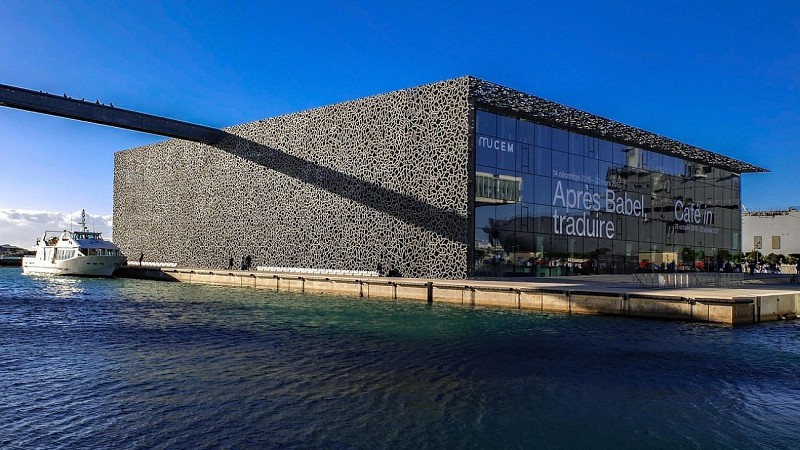
J4, Mucem & Coster , Fort Saint Jean

🌍 J4 ESPLANADE: MEMORY BY THE SEA Welcome to the J4, a unique place where the history of Marseille, bold contemporary architecture, and the origins of humanity converge... right by the sea! Here, in a single glance, you can travel from the Paleolithic era to the digital age — without ever getting off your bike. Let us show you around. 🌺 GISÈLE HALIMI ESPLANADE (formerly J4) – A QUAY TURNED SYMBOL "It's not every day that an old industrial quay becomes a place of remembrance, culture, and struggle. And yet... welcome to the Gisèle Halimi Esplanade, where Marseille tells stories of sea, power, art, and freedom." ⚓ Origins: A Quay Carved from the Sea The J4 quay was built in the 19th century, when Marseille became a maritime giant. It was part of a larger industrial system with piers J1 through J4. The iconic Hangar J4 stood here, amid cranes, barrels, and shipping noise. But this spot's story goes further back. In the 15th century, the Tower of King René — still visible today within Fort Saint-Jean — was connected to Saint-Laurent hill. In the 17th century, military engineer Vauban had a trench dug to isolate the fort from the city, which later became a canal linking the Old Port and the Joliette district. 🧐 Urban trivia: That canal (Canal Saint-Jean) was filled in 1937 to create what is now Quai de la Tourette. In the 21st century, part of it re-emerged as two new sea darses. 🚧 From Cranes to Culture: A Total Transformation Until 1997, the J4 was a closed port area. When the hangar was demolished, the city decided to return the sea to its people. For over a decade, the J4 became a public events space — home to circuses, festivals, concerts... No museum, but full of life. The real turning point came in 2013, when Marseille became the European Capital of Culture. 🏠 A Monumental Cultural Project Between 2013 and 2014, everything changed: The Mucem (Museum of European and Mediterranean Civilisations) opened, suspended above the sea. The Villa Méditerranée was built nearby, its cantilevered design imagined by Stefano Boeri. Fort Saint-Jean was restored and connected via pedestrian footbridges. Two darses (inlets) were dug, reconnecting the fort to the sea. An underground car park was created, discreetly hidden to preserve the view. The large open esplanade was landscaped — like a stage between city, sea, and heritage. Everything was designed to preserve the viewline between the sea, the Frioul islands, and the cathedral of La Major. ⛵ The Darses: Where Water Takes Back Its Place Two L-shaped basins ("darses") were created at the fort's edge. West Darse Welcomes tall ships, navy vessels, floating exhibitions Hosts regattas, ceremonial launches, and nautical events Depth: 4 meters East Darse Showcases Marseille’s traditional boats: barquettes, pointus, and water-based performances (jousts, floating concerts) Depth: 3 meters, perfect for light heritage craft Offers a stunning view beneath the Mucem footbridge, where sea meets concrete and sky 💡 Did you know? Floating stage shows have been hosted right here. Even radio-controlled sailboats have sailed these waters! 📍 From Robert Laffont to Gisèle Halimi In 2014, the space was named Promenade Robert Laffont, after the Marseille-born publisher. But on November 23, 2024, it was renamed Esplanade Gisèle Halimi, in the presence of her granddaughter Maud Halimi and many other engaged women. 🕊 Gisèle Halimi was a lawyer, feminist activist, and political icon. She fought against injustice her whole life: from defending abortion rights at the Bobigny trial, to exposing torture in Algeria, to defending rape victims. Her name now graces a place of emancipation, facing the sea and steeped in history. 🗺 A CROSSING BETWEEN PAST, SEA, AND STRUGGLE The Gisèle Halimi Esplanade is a place of passage and remembrance: Between the Old Port and Marseille's Grand Port Maritime Between royal fortresses, civic ideals, and bold modernity Between stone and concrete, sailboats and cycling paths 🎓 Guide’s tip: Sit on the stone ledge, watch the Major sparkle, children play, boats drift... and imagine the centuries of stories this place has seen. 🏫 FORT SAINT-JEAN – THE FORTRESS THAT WATCHED THE CITY "If you look closely, you’ll notice: the fort’s cannons don’t point to the sea... but toward Marseille. Yes. Louis XIV built this fort not to defend the city, but to keep it in check!" ✨ The Backstory In 1655, Marseille was rich, proud, and a bit too independent for King Louis XIV’s liking. He sent troops and came himself in 1660. The message was clear: the Crown rules here. He ordered the construction of two forts to guard the port: Fort Saint-Jean (north) Fort Saint-Nicolas (south) 🧹 Historical note: During construction, locals wondered why the cannons aimed inward. The governor reportedly replied, “Not to defend the city from enemies, but to remind it to behave.” ⛪ But the Fort Is Even Older Long before Louis XIV, this site hosted a 12th-century Hospitalier commandery: chapel, hospital, commander’s palace, and the now-iconic Tower of King René. 🔍 Archaeology secret: Excavations uncovered traces of Greek settlement here from the 6th century BCE — some of the earliest stones of ancient Massalia! 💣 The Fort Through the Ages Used as a military post Became a prison during the French Revolution In WWII, German troops stored munitions there In August 1944, an explosion destroyed much of it Restored from the 1970s to the early 2000s; now part of the Mucem complex 🎒 What You Can See Today The fort is open to the public — and it’s free! Lower level: Square Tower of King René Saint-Jean Chapel Officer’s Gallery DRASSM HQ (underwater archaeology) Upper level: Walkable ramparts & panoramic footbridges Round Fanal Tower Ruins of old barracks Mediterranean garden (figs, lavender, rosemary...) 📸 Photo tip: Come in late afternoon. The golden stone, sea shadows, and gulls’ cries... Marseille is pure poetry at sunset. ❤️ WHY THIS PLACE IS SO UNIQUE Because in one single spot, you can: Walk a former industrial quay Visit a world-class museum about Mediterranean cultures Explore a prehistoric underwater cave (virtually) Gaze at the sea, hear the wind, and feel Marseille pulse beneath your feet  

2 Boulevard Jacques Saadé 13002 Marseille
- Navia Mobility -
Consulter
image du object

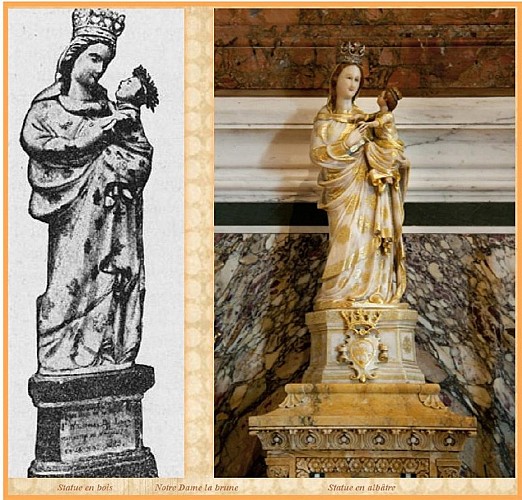
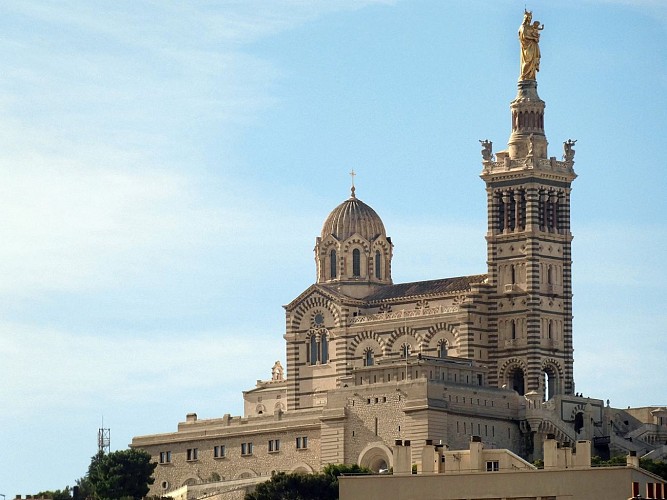
 Notre-Dame de la Garde - "La Bonne Mère"

🚲 This guide is brought to you by NAVIA Mobility Explore Marseille differently — by electric bike — following cultural routes with guided stops like this one. 🕊️ Notre-Dame de la GardeThe “Good Mother” — the beating heart of Marseille 📍 Why go up to Notre-Dame de la Garde? You simply can’t miss her. Whether you're at the Old Port, on the Corniche, or wandering through the Panier district, she’s always there — standing tall, watching over the city from her hilltop perch. In Marseille, we don’t say "I'm going to Notre-Dame."We say "I'm going up to the Bonne Mère" — because it's a climb toward a haven, a promise, a light. Visible from almost anywhere in the city, the basilica offers an unforgettable 360° panorama of Marseille, the sea, the Calanques, the Frioul Islands... and beyond. It connects you to the soul of the city. 🧱 One hill, three vocations Standing at 154 meters, the hill of La Garde has served three main purposes over the centuries: A watchtower since ancient times, to scan the sea for ships and threats. A military stronghold, with a fort ordered by King Francis I in 1524 — still visible today. A place of prayer and pilgrimage. Since 1214, sailors have lit candles here before setting out to sea. 🏛️ A Romanesque-Byzantine gem The current basilica was built between 1853 and 1864, based on plans by Henri-Jacques Espérandieu, a young Protestant architect — proof that Marseille has always favored talent over dogma. You’ll be enchanted by its Roman-Byzantine style: majestic domes, over 1,200 m² of gold mosaics, colorful marbles and finely carved columns, and the gilded Virgin statue that shines over the city. 🌟 The Virgin on the bell tower: a golden beacon Height: 11.20 m Weight: 9.8 tons Material: copper, covered in gold leaf Installed in: 1870, atop a 41-meter bell tower Hollow inside, the statue once had a spiral staircase leading up into her head for maintenance.Currently under restoration until October 2025, her symbolism — that of a watchful mother protecting her people — remains as radiant as ever. 🛤️ The forgotten funicular From 1892 to 1967, a funicular connected Cours Pierre Puget to the basilica. Nicknamed “the Good Mother’s train”, it brought visitors to the top in just five minutes. Though it was dismantled due to lack of profitability, its memory lives on in the hearts of the Marseillais.Sharp-eyed visitors can still spot traces of its existence today. 👀 Must-sees during your visit 🧭 Location ⭐ What to expect The Crypt A peaceful, solemn space carved into the rock Upper Basilica A dazzling burst of light, gold, and devotion Mosaics A masterpiece of color, worthy of Ravenna Ex-votos A touching gallery of hopes and life stories The Forecourt A breathtaking panoramic view over Marseille   🕓 Useful Info ⏰ Open daily: 7 AM – 6 PM (winter) / 7 AM – 7 PM (summer) 🎟️ Free admission 🕊️ Silence and respectful clothing required 🛒 Gift shop, candles, and museum on site ⚠️ The bell tower statue is under restoration until October 2025 📹 3D virtual tour available

3 Montée de la Bonne Mère 13006 Marseille
- Navia Mobility -
Consulter
image du object

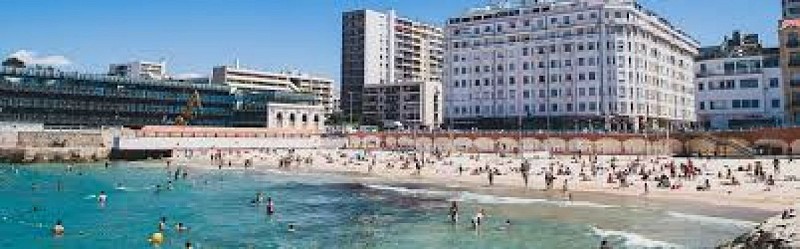
Plage des Catalans

🌊 Plage des Catalans 7th arrondissement – Marseille 📍 A sandy beach in the heart of the city Plage des Catalans is the closest beach to downtown Marseille, just five minutes from the Vieux-Port and located at the beginning of the Corniche. Easily accessible and beloved by locals, it’s one of the city’s most iconic beaches. Fine sand, turquoise water, and a true Marseillaise atmosphere. But behind its lively beach vibe lies a rich history shaped by medicine, fishing, class divides, and culture. 🕰️ From quarantine hospital to popular beach: 500 years of history ✝️ It all started with a lazaretto... Before becoming a beach, the Anse des Catalans was home to the Old Saint-Lambert Infirmaries, established in 1558. The site served as a quarantine hospital where incoming sailors and goods were held to prevent plague outbreaks. A complex of buildings was erected, including a chapel, medical wards, and a fortified wall. In 1627, it became an official lazaretto—a key element of Marseille’s public health defenses. In 1663, the site was sold to the Crown for 62,000 livres and converted into a military hospital for the French Navy. Eventually, it was abandoned. ⚓ Fun fact: A 16th-century square watchtower, a remnant of the old lazaretto, still stands at the edge of the beach today—often overlooked by visitors. 🎣 Then came… the Catalans After the Great Plague of 1720, a group of Catalan fishermen settled in the bay and developed a small but thriving fishing port. Tensions soon arose with the Marseille-based fishermen from the Prud’homie of Saint-Jean. In 1735, the rivalry turned violent—boats and nets were burned. Legal battles followed, but the Catalans remained. Over time, they were joined by Neapolitan fishermen, forming a vibrant coastal community. By 1790, the fleet numbered 75 boats and 400 fishermen. 📖 The beach in popular culture 📝 In The Count of Monte Cristo, Mercedes—the fiancée of Edmond Dantès—is said to come from the Anse des Catalans, depicted as a quaint fishing village. A place forever tied to Marseille’s literary lore. 🧜 From sea baths to muscle beach: a layered history In the 19th century, Marseille aimed to transform the bay into a fashionable seaside resort, especially with the nearby imperial residence at the Palais du Pharo. A casino was even planned—but never built. Instead, Plage des Catalans became home to wooden piers, bathing cabins, diving platforms, showers, and space for gymnastics and rowing. Later, in the 1920s, the beach gained fame as a haven for bodybuilders and gymnasts, complete with rings and pull-up bars. But access to the beach was highly segregated: “Grand Bains” for the wealthy, “Petits Bains” for the working class, men and women separated by a no-man’s-land of sand, with beach cabins, wooden paths, and amenities reserved only for the privileged. In short: a mirror of Europe’s rigid social and gender divides at the time. 🏖️ Today: a beach for everyone Since becoming public in 2001, the beach has been open year-round from 8 a.m. to 8 p.m., and often extended until 10 p.m. in summer. It features: lifeguard supervision, showers and toilets, a refreshment kiosk, two public beach volleyball courts, and even a free beach library operated by Emmaüs. In 2021, it became home to the Marseille Underwater Museum, an underwater sculpture park accessible just a few strokes from the shore. ⚠️ In peak season, access is limited to 1,000 people to avoid overcrowding—after multiple incidents in the past, including temporary closures in 2013. 🏗️ Olympic ambitions As part of the 2024 Olympic Games preparations, a €11.2 million redevelopment project was launched by architect Yann Pluskwa. It includes: restoring the old lazaretto, opening up the arcades, building a beach volleyball stadium, and creating new shaded spaces and walkways. Plage des Catalans is entering a new era, blending heritage, recreation, and sustainable urban planning.

3 Rue des Catalans 13007 Marseille
- Navia Mobility -
Consulter
image du object

The Vallon des Auffes

🎣 Vallon des Auffes – A Hidden Gem of Marseille 🌿 A Story Woven with Ropes and Tradition Tucked between the Corniche Kennedy and the turquoise waters of the Mediterranean, Vallon des Auffes is a tiny fishing port with a name as poetic as its scenery. The word “Auffes” comes from auffa, a local grass once used to make ropes and fishing nets. Since the 19th century, this charming cove has been home to fishing families living in colorful little houses called cabanons. Their iconic wooden boats, the "pointus", still bob gently in the harbor—classic Provençal silhouettes that seem drawn straight from a painting. 🏗️ Stone Arches and a Monument to Memory The Vallon is crowned by a graceful stone bridge built in the 19th century, under the direction of Jean François Mayor de Montricher, the same engineer behind the Roquefavour aqueduct. The bridge spans 60 meters, with three arches each 17 meters high, and was built at the same time as the legendary Corniche Kennedy. At the entrance to the Vallon, perched above on the esplanade, stands a powerful monument: a 5-meter tall statue symbolizing Victory, dedicated to the soldiers of the Army of the Orient and distant lands. Inaugurated in 1927 by French President Gaston Doumergue, it was declared a historic monument in 2009—a quiet but moving tribute few tourists know about. 🏖️ A Natural Pool… No Chlorine Needed! There’s no sandy beach here—but what you get is even better. Just beneath the arches lies a beloved local secret: "la piscine du Vallon" (“the Vallon swimming pool”). Families and early risers love this crystal-clear spot for a refreshing dip. Looking for something quieter? Climb the nearby rocks to find deeper water and a perfect sunbathing hideout—just keep in mind: there’s no lifeguard on duty. 🍽️ A Feast for the Eyes and the Taste Buds This tiny harbor has a big reputation when it comes to food and ambiance. From casual bites to fine dining, here’s a sample menu of what awaits: Chez Jeannot: A family-friendly pizzeria with sea views and that easygoing Marseille vibe. Chez Fonfon: Legendary. Their bouillabaisse is a masterpiece, maybe the best in town. L’Épuisette: Michelin-starred, with waves crashing below your table—fine dining for true seafood lovers. Viaghji di Fonfon: The perfect terrace for a sunset drink and Mediterranean tapas. L’Avant-Cour: And when it’s sea urchin season, this spot hosts traditional “oursinades”—fresh, briny, and unforgettable. 🚲 Ride There with NAVIA By bike, it’s one of the most beautiful stops in Marseille. From the Old Port or the Pharo, just follow the Corniche seaside road—the salty breeze in your face, stunning views all the way. Park your bike nearby, walk down the old stone steps, and take a moment to breathe, wander, and marvel. This is Marseille at its most magical.

130 Impasse Michel 13007 Marseille
- Navia Mobility -
Consulter
image du object

Port of Malmousque

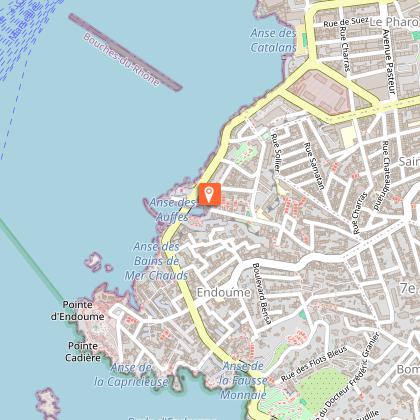
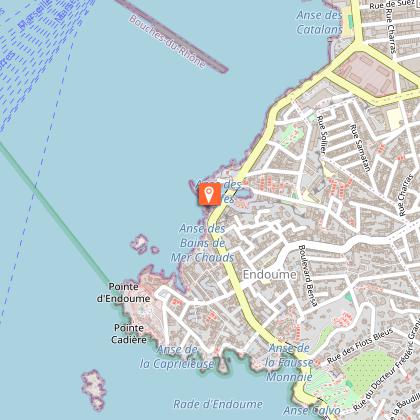
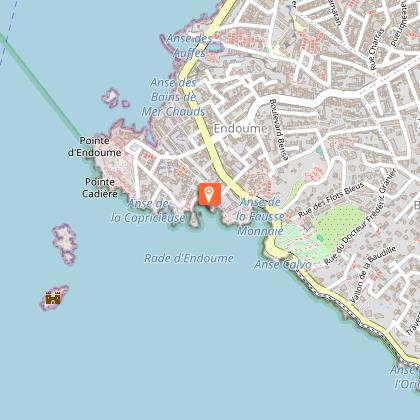
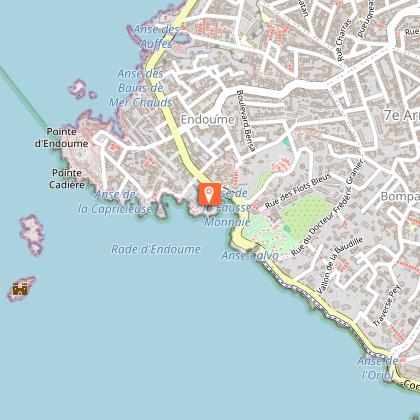
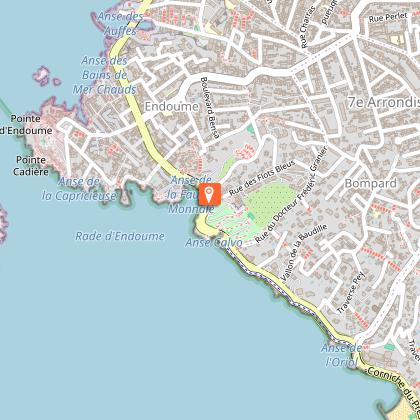
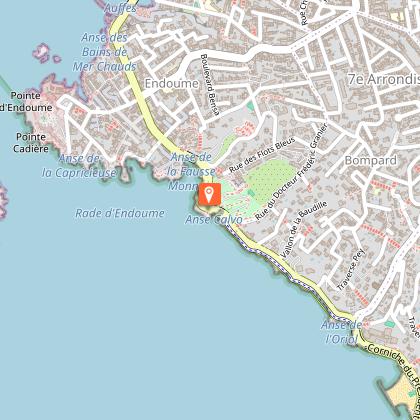
🌊 The Port of Malmousque – Marseille’s Hidden Gem A little slice of paradise tucked away among the rocks of Marseille’s 7th arrondissement, in the charming Endoume district. Just steps from the city’s hustle and bustle, yet it feels like you’ve escaped to a tiny fishing village… without ever leaving Marseille! 🐚 The Anse de Malmousque This quiet little cove stands out thanks to its uniqueness. There’s no sand here—just a concrete pontoon, sun-warmed rocks, and deep blue water. Swimming is possible, but be cautious! The water gets deep quickly, making it unsuitable for young children or inexperienced swimmers. Access is only on foot, by weaving your way through a maze of narrow streets. From the cove, you can spot the eerie silhouette of Île des Pendus (“Island of the Hanged”), named after a bloody episode in 1423 when King Alfonso V of Aragon had a dozen Marseille notables hanged there for siding with Louis III. A chilling name that adds mystery to the place. 🧓 A Bit of History Originally, Malmousque was a traditional fishing port, with a friendly, typically Marseillais atmosphere. As early as 1610, a “chemin de Mélamousque” (Malmousque path) appears in historical records. The name “Malmousque” likely comes from the Provençal mau musc, meaning “bad smell,” referring to rotting seaweed left in the sun. Thankfully, those days are gone—today, the air smells of salt, grilled fish, and blooming bougainvillea. Until the late 19th century, the cove remained wild and hard to access. It wasn’t until new homes were built nearby that locals returned. Today, it’s one of Marseille’s favorite swimming spots (especially off-season for more peace) and the sunsets are simply stunning. 🏘️ The Malmousque Neighborhood An authentic slice of Marseille. The houses are brightly colored and covered in lush vegetation, giving the area the look of a quaint Provençal village. Narrow alleys, sleepy cats, and hidden stairways lead straight down to the sea. Strolling through the neighborhood, you’ll find breathtaking views of the islands of Endoume, Gaby, and the whole Marseille bay. Restaurants, cafés, scenic walks, little bridges and secret coves… Malmousque hides treasures around every corner. It’s the perfect place for a picnic or a photo break, far from the tourist crowds. ⚓ The Port of Malmousque Tiny but full of charm, the port has just 55 moorings and is managed by the Société Nautique des Goélands. You’ll often see local fishermen or Marseillais regulars relaxing on the rocks. Follow the concrete path and you’ll stumble upon one of the most stunning houses in all of Marseille: Les Bains de Mer Chauds, a beautifully restored former thalassotherapy center. A real hidden gem! 🛶 Getting There 🚶 On foot only! You’ll need to make your way through narrow lanes from Chemin du Génie or the Corniche Kennedy.🚗 A few parking spots (in high demand!) are available near the Bains Militaires.🚌 Bus 83 stops at “Fausse-Monnaie”—from there, it’s just a 5 to 10-minute walk.💡 NAVIA Tip: It’s also a perfect stop during an electric bike ride (especially if you’re pedaling up from the Vallon des Auffes 😅). ❤️ Why You Shouldn’t Miss Malmousque Because it’s 100% Marseille, no frills, just soul. Because it looks like a postcard, with views of Château d’If and the Frioul Islands. Because it’s the locals’ favorite spot to sunbathe, dive, and daydream by the sea.

24 Rue Malmousque 13007 Marseille
- Navia Mobility -
Consulter
image du object

Swimming in Marseille - The Beach at Pointe d’Endoume

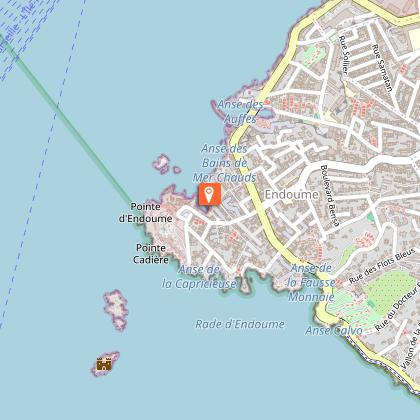
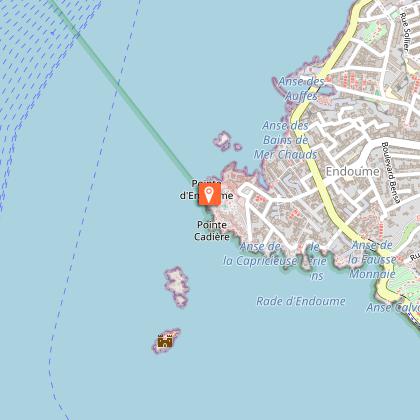
🌊 The Beach at Pointe d’Endoume! This is one of those hidden gems only real Marseillais know about — and even then, not all of them! A quiet, almost secret little spot, far from the crowds of Prado or Catalans. 📍 So, where exactly is it? Pointe d’Endoume is located in the 7th district of Marseille, between Corniche Kennedy and the little cove of Maldormé, just a stone’s throw from the Vallon des Auffes and Saint-Victor Abbey. It’s a preserved, peaceful place, nestled in the heart of the Endoume neighborhood, with a village feel in the middle of the city. 🏖️ A beach unlike any other Here, no white sand or tropical vibes — instead, you’ll find sun-warmed flat rocks, stone steps that descend into turquoise water, and little nooks perfect for laying out your towel, old-school style. Locals love this spot for: diving straight off the rocks, swimming in crystal-clear water, watching the sunset over the Frioul islands, pastis in hand 🍹. 🐙 100% Marseillais atmosphere You’ll hear the local accent all around, the old-timers swimming at 7 a.m. sharp, teens doing flips off the rocks… and if you’re lucky, you might even spot a shy octopus hiding in the cracks. Want a fun fact? Just next door was a tiny cove called “the Well of Love”, once frequented by couples looking for a bit of privacy... 👀 🪖 Marseille’s most unusual beach entrance: through the Foreign Legion! Yep, to get to the Pointe d’Endoume beach, you need to follow a small hidden path… right alongside a military base!You’ll walk under the rehabilitation center of the French Foreign Legion, where injured legionnaires recover. While they’re doing push-ups in the sun, you’re heading down toward the sea, the rocks, and pure tranquility. 👉 Striking contrast: military discipline up above, dolce vita Marseille-style down below. 🧭 How to get there? 🚲 By bike: a gorgeous ride from the Old Port (perfect with a NAVIA bike 😉), 🚌 By bus: line 83, stop Endoume or Bompard, 🚶‍♀️ On foot: strolling through the charming backstreets of Endoume. ⚠️ Guide’s tips: Come early in the morning or late in the afternoon to have the spot to yourself, Bring water shoes or grippy sandals, the rocks can be slippery, And don’t forget your mask and snorkel — the marine life here is like a mini natural aquarium 🐠.

28 Chemin du Génie 13007 Marseille
- Navia Mobility -
Consulter
image du object

Swimming in Marseille - Anse de Maldormé

Anse de Maldormé!Now you’re tapping into the real deal — authentic, discreet, secret Marseille... a little slice of paradise hidden between Malmousque and Corniche Kennedy. It’s a tiny urban cove, but with an almost island-like vibe.Come on, I’ll take you there… 📍 Where is Anse de Maldormé? Anse de Maldormé is tucked away between Vallon des Auffes and Malmousque, just below the famous Corniche Kennedy in Marseille’s 7th arrondissement. It’s easy to miss from the street — access is via a hidden staircase that slips between stone walls and down toward the sea. It’s one of those places only locals or in-the-know visitors tend to find. 🌊 Why is it special? The water is crystal clear and turns a perfect turquoise on calm days. There’s no sand — just flat rocks, stone steps, and little ledges to sunbathe on. It’s quiet, even in summer — especially in the early morning or on weekdays. You get a stunning panoramic view of the Frioul Islands and Château d’If, especially at sunset. Pure magic! 🐙 A fun anecdote: the name “Maldormé” “Maldormé” literally means “badly slept” in French. Why such a name? A few theories: Fishermen used to sleep here under the stars, but between the wind, the waves, and the mosquitoes… they didn’t sleep very well. It may have been a hiding spot for smugglers, who were always on edge — not the best conditions for a good night’s sleep! Local legend even says it was the lover’s corner, where young couples snuck away from watchful eyes... with emotions too high to get any rest. Only in Marseille, right? 😄 ⚠️ What to know before you go 🩴 Water shoes or sandals are highly recommended — the rocks can be slippery. ☀️ No natural shade — bring a hat or parasol if you're planning to stay. 🧺 No food, no bathrooms, no lifeguards — come prepared. 📸 Bring a charged phone or camera — it’s incredibly photogenic.

12 Anse de Maldorme 13007 Marseille
- Navia Mobility -
Consulter
image du object

Parc Valmer: Marseille's Hidden Balcony by the Sea

🌴 Parc Valmer: Marseille's Hidden Balcony by the Sea Just after the iconic Pont de la Fausse-Monnaie on the Corniche Kennedy, a little gem reveals itself to those who take the time to look up: Parc Valmer. Perched on a natural promontory, this 1.6-hectare park offers sweeping views over the Bay of Marseille, the Frioul Islands, and the legendary Château d’If. It’s a picture-perfect panorama — but in real life, with the song of cicadas as your soundtrack. 🏰 A villa-château born from a wave... At the heart of the park stands the grand Villa Valmer, built in the late 19th century by Charles Gonnelle, a wealthy trader from Salon-de-Provence. Originally named “Vague à la mer” (“Wave to the Sea”), the name was eventually shortened to Valmer, a poetic contraction that reflects its oceanfront location. With its elegant proportions and striking silhouette, the villa looks more like a small château than a mere seaside residence. 🌿 A blend of exotic flair and Mediterranean soul The park is a beautifully designed green space, showcasing the 19th-century passion for lush, ornamental gardens. As you follow the winding paths, you’ll pass through a delightful mix of local and exotic flora: 🌴 Exotic species: trachycarpus palms, washingtonias, phoenix canariensis, butias... evoking faraway lands and adventurous journeys.🌳 Native trees: Aleppo pines, green oaks, olive trees, pistachio trees, arbutus — a true taste of the Provençal garrigue. 💐 The flowerbeds burst with color thanks to lavender, dimorphothecas, lantanas, agatheas, ice plants, and arctotis. Look closely at the artificial rockwork — a charming 19th-century landscaping technique, with faux boulders sculpted in cement and softened by cascading greenery. 📍 Guide’s tip This park is a hidden treasure, often overlooked by traditional tourist routes — which makes it a peaceful haven even in summer. Come in the late afternoon, when the light turns golden: the islands appear to float in the air. You might think you're in Rio... but better, because this is Massilia ❤️

Corniche Président John Fitzgerald Kennedy 13007 Marseille
- Navia Mobility -
Consulter
image du object

The Marégraphe of Marseille – where France begins... vertically!

🌊 The Marégraphe of Marseille – where France begins... vertically! Tucked away discreetly by the sea, near the Corniche and the entrance to the Pointe Rouge port, lies a scientific gem that almost no one notices. And yet... this quiet little spot determines the altitude zero for all of mainland France. Yes, really — every mountain, every valley, every hill you’ve ever hiked in France is measured from here! 📍 So, what exactly is a marégraphe?It’s a super-precise instrument that measures sea level changes. The Marseille marégraphe, operational since 1883, is a masterpiece of 19th-century engineering. It uses a stilling well connected to the sea, where a needle traces the sea’s rise and fall on a rotating drum. No satellites, no GPS back then — just pure mechanical precision! 🧪 Why Marseille?Because the coastline here is rock-solid, not eroded by big rivers, and geologically stable — perfect for long-term sea level observations. From 1885 to 1897, engineers meticulously recorded sea levels every day for 12 years. The average of those readings became France’s official “zero level” for altitude measurements. So when you read that Mont Blanc is 4,807 meters high — those meters start right here, at the Marseille marégraphe. Mind-blowing, right? 🧠 Nerdy (and awesome) side note:The marégraphe building is a modest little stone pavilion, listed as a historic monument since 2002. But here’s the best part: it’s still operating! Its data is now used to monitor climate change and rising sea levels — science at its best, straight from Massilia! If you ever stroll down the Corniche, take a moment to stop and look at this humble building. It quietly keeps track of the world’s greatest force — the sea — and underpins all of France’s altitudes. Now that’s what we call a hidden hero!

251 Corniche Président John Fitzgerald Kennedy 13007 Marseille
- Navia Mobility -
Consulter

Data author

Image Navia Mobility
proposed by Navia Mobility
rue de la reine Elisabeth 13001 Marseille France

Ratings and reviews

To see around
See more
Open
Close
Show
Show
Show
Show
Show
Show
Show
Show
Show
Show
Show
Caution!
We have no information on the difficulty of this circuit. You may encounter some surprises along the way. Before you go, please feel free to inquire more and take all necessary precautions. Have a good trip! 🌳🥾