Tours
Activities
Places of interest
Where to eat
Where to sleep

Explore the charms of Martigues at Camping Marius

Are you the owner?
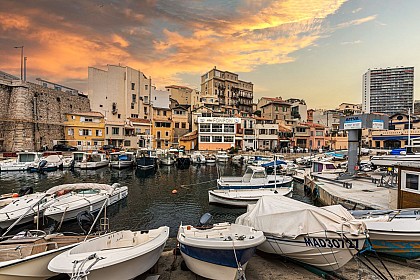
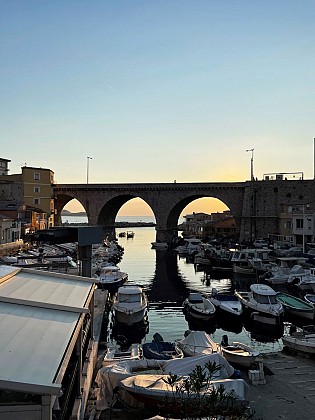
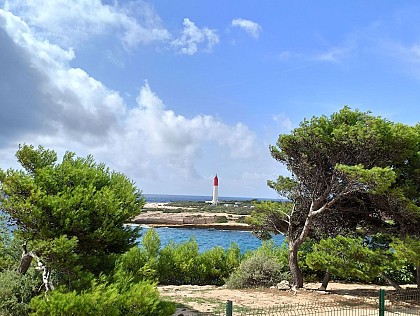
Nicknamed the Venice of Provence, Martigues is a gem waiting to be discovered during your stay at Camping Marius. Stroll through the picturesque streets of the city center and admire the charming canals that give it its unique charm. The nearby sandy beaches invite you to relax and enjoy water sports like diving, paddleboarding, and sailing. For nature lovers, the Marine Park of the Côte Bleue off...See more

Walking around CAMPING MARIUS

See more suggestions
Discover the trails of CAMPING MARIUS.
See more suggestions
The local Boumandariel circular route
1.4 km

The local Boumandariel circular route

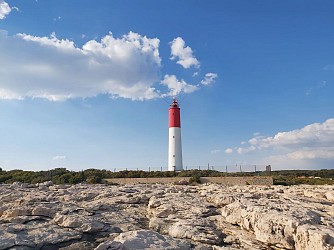
This trail will allow you to discover the tremendous diversity of marine and terrestrial vegetation. You too will fall in love with this deluge of colors and scents. The local Boumandariel circular route, 5 km 500 metres in length, covers the southern coastal section of the Martigues commune. It is ideal for discovering the exceptional natural flora and fauna. In detail: River bed, reed bed and Boumandariel marsh Reed beds are relatively simple ecosystems, consisting mainly of a single plant species - the common reed (Phragmites australis) which is a perennial grass. The roots and rhizomes dig down to 80cm in flooded soil or sodden soil. They grow in a range of different aquatic environments such as shallow marshes, around ponds and on the banks of canals and rivers. Despite having little floral interest, reeds are very important for the conservation of animal species, some of which are completely dependent on this environment. As a result of their role as a shelter to fauna, particularly birds and invertebrates, reeds are very precious to the environment. They are considered to be a crucial habitat for the biodiversity, particularly for water birds. Species which are vulnerable and rare in Europe such as certain herons, ducks, birds of prey and passerines reproduce in reed beds. They also provide an interface with the aquatic environment for other species seeking protection in wetlands for their perches, such as dormitories for swallows and starlings. Reed beds also play a role in the natural infrastructure: they protect banks from erosion and help to purify the air by absorbing nutriments (phosphates and nitrates), oxygenating and stabilising heavy metals.

3 h
5.7 km
Very easy
Parking de Boumandariel La Couronne 13500 Martigues
Show
The great Côte Bleue trail
1.7 km

The great Côte Bleue trail

The 62 km long Grand Sentier de la Côte Bleue can be covered in 3 to 4 days of walking. From station to station, explore the hiking trails located on the Mediterranean coast. From Carro / La Couronne (Martigues) to Ensuès-la-Redonne. Marked trails between Martigues and Ensuès-la-Redonne of 2 to 12 kilometers which form a large loop along the Mediterranean coast. It consists of 17 interior loops, 2 to 12km long and with different elevations. These walking routes are accessible for the most part from the stations of Niolon, Ensuès-la-Redonne, Carry-le-Rouet, Sausset-les-Pins and la Couronne. The commune of Martigues includes 5 local loops between 4 and 24 kilometers which will allow you to learn more about the history of the coastline, notably the presence of military remains. Discover exceptional landscapes that are wild, natural and industrial depending on the choice of route. • Martigues - Large Cap Couronne loop. Departure from Gare de la Couronne. 24km. - Botanical loop of the Carro plain. Departure from the Arnettes car park. 4km. - Boumandariel local loop. Departure from Boumandariel parking lot. 5.5km. - La Couronne stone quarries loop. Departure from the Ragues car park. 12km. - Military remains loop. Departure from Cavalas path. 10km. The commune of Sausset-les-Pins includes 4 local loops which combine hills and old village. In particular, you can enjoy the reed bed and the botanical trail, renowned for their tourist character. Walk the corniche and enjoy the horizon before you with a breathtaking view of the Marseille islands. • Sausset-les-Pins - Sea and Hill Valestéloué loop. Departure Tourist Office. 6.5km. - Grand Vallat Littoral loop. Departure Tourist Office. 5km. - Sea and Pinede Valapoux loop. Departure Tourist Office. 10.5km. - Botanical Reed Garden Trail Loop. Departure RD49 towards La Crown, reedbed car park. 2.3km. The commune of Carry-le-Rouet includes 5 local loops which alternate between valleys and hills but also between creeks and coves. You will be charmed by the Calanque des Eaux Salées and its railway viaduct through which the Côte Bleue train passes. • Carry-le-Rouet - Loop Between Sea and Hill. Departure from SNCF station. 12km. - Loop Le Tour du Romaron. Departure Tourist Office. 8km. - Le Vallon de Jaume loop via the Caves. Departure Tourist Office. 10km. - La Calanque des Eaux Salées loop. Departure from Rouet beach. 4km. - Notre Dame du Rouet loop via the plain. Departure from Rouet beach. 12.4km. The commune of Ensuès-la-Redonne includes 3 local loops in the heart of the forest massif and 5 coves which enhance the coastline. Enjoy a breathtaking view of the Marseille harbor. • Ensuès-la-Redonne - Niolon Fort loop. Departure from Niolon station. 6km. - Bourgailles Caucarières loop. Departure from Bourgailles parking lot. 4km. - Calanques loop. Departure from the Ensuès-la-Redonne station car park. 6.5km. This diversity of routes makes it possible to appeal to all types of public: families as well as experienced hikers. Part of this trail was impacted by the fire of August 4, 2020, however it remains passable.

62 km
Hard
Le Grand Vallat Route de la Couronne 13500 Martigues
Show
In the footsteps of Marie-Madeleine
1.7 km

In the footsteps of Marie-Madeleine

Between hiking and pilgrimage, discover major places and sites of Christianity as well as the exceptional landscapes that the saint crossed during her preaching in Provence. During these two tours, discover places steeped in history, trodden in the footsteps of Mary Magdalene. In the city center of Martigues, in the Ile district, the church of Marie-Madeleine imposes its style. Marie-Madeleine was one of the disciples who washed up on the beach of Sainte-Croix following a storm at sea. They then left with the idea of evangelizing Provence. Sainte-Croix then became a renowned place of pilgrimage. From Saintes-Maries-de-la-Mer, you will reach Martigues to visit the church of Mary Magdalene and continue your epic journey to Sainte-Croix. Stages 3 and 4 are part of the spiritual pilgrimage route from Les Saintes-Maries-de-la-Mer to Saint-Maximin—a 237 km journey spanning ten stages. - Stage 3: From Fos-sur-Mer to Martigues. 24.6 km, 6 hours of walking, 455 m elevation gain, 460 m elevation loss. Difficulty level: Moderate/Easy. Follow the "GR® de Pays 2013" trail (Marseille Provence Métropole) to the shores of the Étang de Berre lagoon. Stroll along Figuerolles Beach before heading into the center of Martigues. Enter the heart of Martigues, a town that seems to float on the water. Visit the Church of Sainte-Marie-Madeleine in the "Île" (Island) district. Long known to locals as "The Cathedral," this is the town's most imposing church; a fine example of Provençal Baroque architecture and decoration with Italian influences, it has been listed as a Historical Monument since 1947. - Stage 4: From Martigues to Carry-le-Rouet. 27.6 km, 9 hours of walking, 643 m elevation gain, 630 m elevation loss. Difficulty level: Moderate/Easy. After exploring Martigues, cross the inland countryside before reaching the coast. A stage that lets you enjoy the fresh sea air. Take a well-deserved, refreshing break at Sainte-Croix Beach. Admire the Sainte-Croix Chapel, built in the 17th century; directly opposite it stand the ruins of the original 12th-century chapel.

47 km
Easy
13500 Martigues
Show

What to do in CAMPING MARIUS

See more suggestions
Choose from a variety of activities in CAMPING MARIUS and book your favorites.
See more suggestions
Rand'eau douce in Martigues
7.8 km

Rand'eau douce in Martigues

Discover Martigues, nicknamed "the Venice of Provence", on an 6 km hike on the fascinating theme of fresh water. Far from the salt waters that surround the city, this walk immerses you in its hydraulic past. Accompanied by a passionate guide, you will explore the picturesque alleys and hidden treasures of the city. Each stage of this guided hike will allow you to understand the importance of fresh water in the daily life of the Martigues people, a precious resource that has shaped the identity of this Mediterranean city. You will learn that the inhabitants of each district had their own source of drinking water supplied by the Martigues Canal, which has now disappeared. Did you know that the fountain located on Place Mirabeau was moved from Cours du 4 Septembre in Jonquières by the Jourdan family following the extension of their hotel "La Goutte d'Or"? That the entrance to Martigues began at the intersection of Avenue Frédérique Mistral and that part of the Jonquières district was nothing but marshland? That buildings that are still in use were once used as cisterns, that when you look up you will see now-forgotten ramparts and that old wells can be found in the heart of the gardens of recent buildings? Under the commentary of Bernard, president of the Randonnée Ski Découverte (RSD) association, you will take a new look at the architectural heritage of Martigues. The past has left traces that we do not notice on a daily basis. Take advantage of this unusual stroll in the city center to combine business with pleasure.

Quai des Anglais L'île 13500 Martigues
Book from 5 EURBook
Show

What to visit in CAMPING MARIUS

See more suggestions
Engage in outdoor activities in CAMPING MARIUS.
See more suggestions
Sainte-Croix Beach
565 m

Sainte-Croix Beach

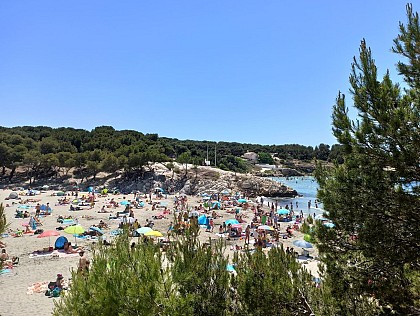
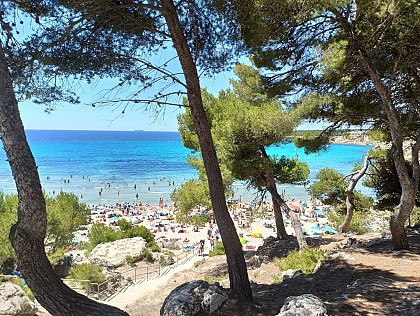
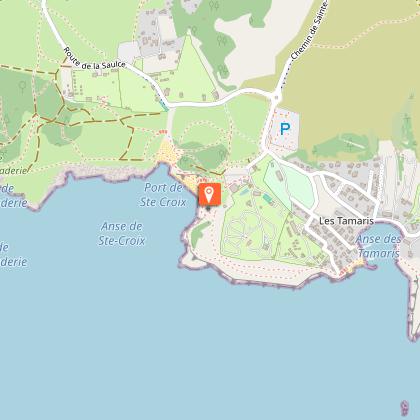
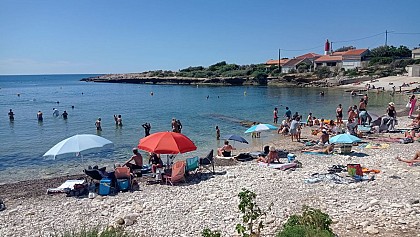
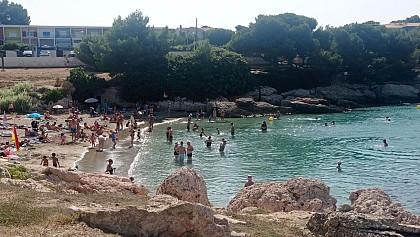
Sandy beach of 100 m on 40 m. It is crossed by the coastal path, which includes didactic panels (geology, Chapel of the Holy Cross). Accommodation and restaurants nearby. Located on the magnificent Côte Bleue, Sainte-Croix Beach in Martigues captivates with its exceptional natural setting and rich heritage. Bordered by majestic cliffs that lend it a romantic and intimate atmosphere, this fine sand beach offers a truly picture-postcard setting, bathed in the generous sunshine of the South of France. Its main attraction? Crystal-clear water with turquoise reflections, ideal for swimming or relaxing. In season, the beach is supervised, making it a perfect spot for families seeking tranquility and safety. Just a few steps from the shore, the seabed holds some wonderful surprises for snorkeling enthusiasts. Overlooking the beach, the Sainte-Croix Chapel invites contemplation. Steeped in history, it is said to be linked to Mary Magdalene's visit to Provence, adding a touch of mystery and spirituality to the site. It also offers a remarkable view of the Mediterranean. For hikers, several marked trails run along the hills and nearby coves, offering breathtaking panoramic views of the coast. Between tranquility, nature, and Mediterranean landscapes, Sainte-Croix Beach is a place where relaxation, wild beauty, and discovery blend together. Easy to access, equipped seasonally, and boasting authentic charm, Sainte-Croix Beach is a must-see in Martigues, ideal for a getaway in the sun. Sainte-Croix Beach is supervised from May 29 to June 1, as well as on Wednesdays, June 18 and 25, and weekends in June, from 11 a.m. to 7 p.m. The beach will also be supervised during the week of June 30 to July 4, from 11 a.m. to 7 p.m., before being supervised all summer until August 31, from 10 a.m. to 7 p.m. September 6 and 7 will also be supervised from 10 a.m. to 7 p.m. Guide dogs are welcome. Showers are not accessible during drought restrictions.

7 Route de la Saulce 13500 Martigues
Show
Church of Saint John the Baptist of La Couronne
1.2 km

Church of Saint John the Baptist of La Couronne

Built in 1669 in the village of quarrymen, At the corner of the bell tower, the artisans have engraved their signatures. Inside: the showcase of quarry tools. Built starting in March 1669 in the heart of the coastal village of La Couronne, the Church of the Stone Masons (*Église des Traceurs de Pierre*) stands as a testament to the exceptional craftsmanship of builders from a bygone era. Designed by master masons from Tarascon, it is unique for being constructed entirely from the famous limestone quarried locally in La Couronne. It is a picturesque and authentic heritage site well worth discovering during your getaway to the Côte Bleue! Since the Middle Ages, a village occupied the place called La Couronne Vieille, on the coast, not far from stone quarries where many fishermen went to stock up. We find it named for the first time in an act of the middle of the fourteenth century. Its inhabitants were parishioners of l̂e Saint-Geniez. In the 17th century, the stonemasons gathered in a brotherhood, placed under the name of the Nativity of Notre Dame. A primitive chapel once existed, it was dedicated to Our Lady of Hope. Right next to the chapel lived a Hermit who provided divine worship. From 1584 to 1669, the population of La Couronne will increase considerably, mainly through activities related to the exploitation of the quarries of the Crown. It was at this time that the church was built by the master masons of Tarascon (Jean Jouve, Claude Gouverne, Accurse Comte et Philippe Abeille). The bell tower will be built later and blessed on May 10, 1859 by Monsignor Chalandou, Archbishop of Aix-en-Provence. The bell tower was raised by the generosity of the inhabitants and mainly that of the quarrymen whose testimony can be found on each of the marked stones. Today, the parish of Saint-Jean-Baptiste de La Couronne still exists, but La Couronne has become a district of Martigues.

Place des traceurs de pierres La Couronne 13500 Martigues
Show
Beach of the Verdon
1.4 km

Beach of the Verdon

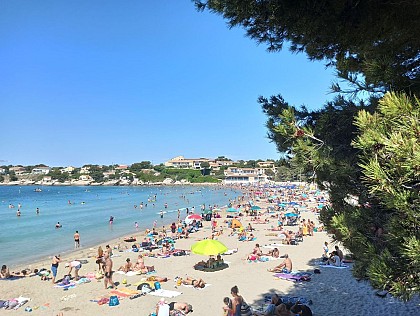
Verdon beach is a beautiful beach of 300m, made of sand and therefore very popular with the inhabitants of Martigues. Protected by a large cove which shelters it from the wind, it has all the necessary facilities for coming with the family. Located in La Couronne, in the town of Martigues, Verdon Beach is the largest fine sand beach on the Côte Bleue. A truly vibrant postcard, it immediately captivates with its turquoise water, wide stretches of golden sand, and lively, family-friendly atmosphere. With its exceptional natural setting, this beach is the perfect place to fully enjoy the Mediterranean sun. Everything here has been designed for your comfort: the beach is equipped with bars and restaurants, perfect for a refreshing break or lunch overlooking the sea. Restrooms, showers, and lifeguard stations are also available to ensure a relaxing day. During the summer season, the beach is supervised, making it an ideal place for families. Activities abound: head out on the water with pedal boats with slides or paddleboards for a gliding session against the sparkling sea. Looking to relax? Head to the private area, where you can rent deckchairs and umbrellas to enjoy the sun in complete peace. Sports enthusiasts are not left out: a beach volleyball court is available for friendly games with your feet in the sand. Whether you come with family, friends, or as a couple, Verdon Beach offers a complete seaside experience, combining relaxation, water sports, and a warm atmosphere. Easily accessible, with ample parking nearby, Verdon Beach is the unmissable summer spot on the Côte Bleue. A place where nature, comfort, and pleasure blend together, for unforgettable days by the Mediterranean. Swimming aids for people with disabilities: - The Tiralo is not a boat but a swimming aid used with a companion. It allows you to swim without leaving the chair. - The Hippocampe: a multi-activity, all-terrain, floating chair. It allows users to move along the sand all the way to the sea, enter the water, and leave the chair while swimming. The equipment is available from July 4th to August 31st, every day (including public holidays), from 10:00 a.m. to 6:00 p.m. Registration is recommended at least 24 hours in advance by calling +33 4 86 64 19 91. The beach is supervised on the weekends of May 14-17, May 23-25, June 6-7, June 13-14, June 20-21, and June 27-28, from 10:00 AM to 6:30 PM. Every day from July 4 to August 31 inclusive, from 10:00 AM to 6:30 PM.

Chemin de la Douane La Couronne 13500 Martigues
Show
Les carrières de Baou Tailla
1.9 km

Les carrières de Baou Tailla

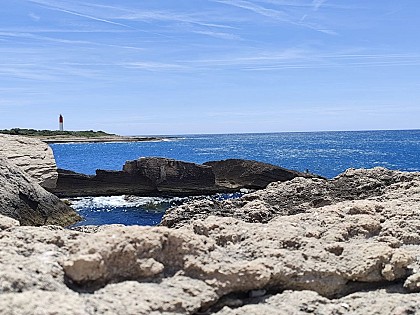
Located at the extreme south-west of La Nerthe peninsula, the shelly limestone quarries (tender pink rock) in La Couronne are well known for having provided stone for Marseille constructions at different times. Baou Tailla means hewn cliff. The activity of quarrymen marked the landscape around the village of La Couronne and Carro, the small port from where materials were sent to Marseille for constructions like the Vieille Charité and the town hall. From Antiquity to the middle of the 19th century, passing through Roman and medieval times, the Martegal coast gave birth to dynasties of quarrymen. The rock there is softer than its neighbors of Cassis or Niolon. From the 4th century BC. J-C, the Greeks exploited this limestone, (shelly limestone substrate of the Miocene which is between 25 and 16 million years old), in order to build the first ramparts of Marseille. The master stone tracers formed a brotherhood called "Brotherhood of Our Lady of the Nativity", under the leadership of the village priest. Statutory rules defined the rights and duties of each, creating solidarity between the different teams of tailors. An account book was kept, listing the members of the Brotherhood, from 1788 to 1884. It reveals that their number was stable: between 75 and 85. The hard work involved in working with stone requires very precise techniques, which have evolved little since Antiquity. Using a "squad" (a tool that serves as both a pickaxe, an ax, and a hammer and weighs about 5kg), the quarryman begins by clearing the site he is going to carve. Then, it slices vertically around the piece to be extracted, standing on the block for more precision. It is a job that can take between 2 and 5 days depending on the hardness of the stone. The next step is to dig the corners: this is a delicate step because a wrong maneuver can crack the block. To detach it from the rock, iron plates are wedged on the sides, then the block is lifted using pliers. The last stage is the aquérissage (summary equalization of the blocks), consisting in removing the irregularities and preparing them for transport. Each team engraves a sign in the stone they cut to recognize it. We can also observe these signs on some walls of the church of La Couronne. The blocks were then embarked on boats, moored to mounds carved into the rocks.

17 à 21 Corniche De Baou Tailla 13500 Martigues
Show

Where to eat in CAMPING MARIUS

See more suggestions
Savor culinary specialties in CAMPING MARIUS.
See more suggestions
Where to sleep in CAMPING MARIUS

See more suggestions
Find lodging to suit your needs in CAMPING MARIUS.
See more suggestions
Le Petit Nice - Passedat
24 km

Le Petit Nice - Passedat

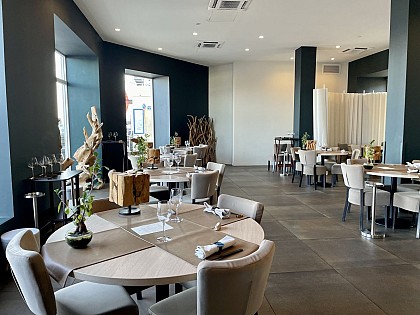
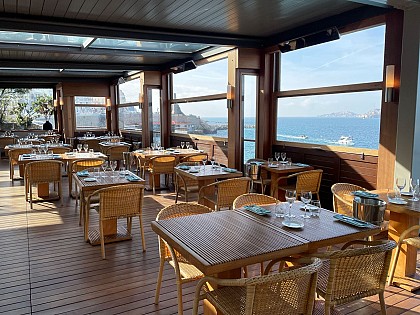
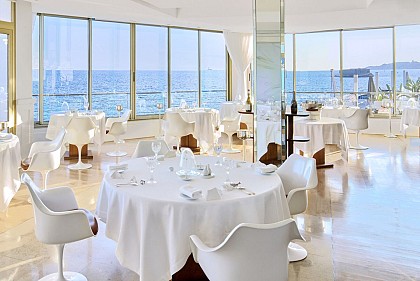
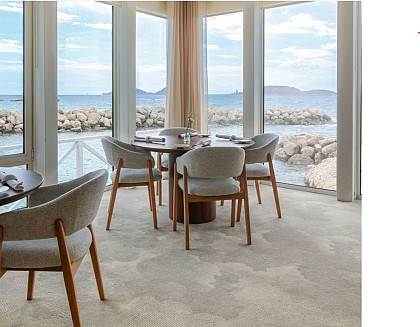
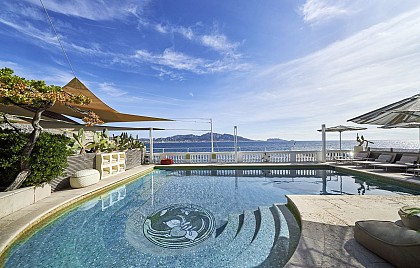
Perched between the sky and the sea, as if suspended in balance, Le Petit Nice is a seaside inn where guests can stay and enjoy exceptional cuisine. It is a 5-star hotel on the Marseille waterfront and the only Relais & Châteaux hotel in Provence with a sea view. Its restaurant is a three-Michelin-star fine-dining restaurant with sea views, recognized by the Michelin Guide. Overlooking the sea and facing the horizon, Le Petit Nice, a century-old establishment, is also a hotel with 19 spacious rooms featuring contemporary décor, all offering views of the many harmonies of the Mediterranean. The 1917, a wellness area, an outdoor swimming pool, and a private dock providing access to the sea complete the hotel’s facilities. As for Gérald Passedat’s cuisine, it is deeply connected to his love of the Mediterranean. It offers bold marine flavors, vibrant and subtle tastes, and invites guests to discover more than sixty-five different varieties of fish throughout the year. Deeply rooted in Marseille, his cuisine is complemented by produce from the surrounding countryside and vegetables that tell the story of Provence. For those passionate about physical activities, Marseille is full of treasures to discover. For anyone who loves the water, diving in the world-famous Calanques is a must — and they can also be explored by climbing! The outdoor swimming pool is heated during the summer season.

17 rue des Braves Anse de Maldormé Corniche John Fitzgerald Kennedy 13007 Marseille
Show
Caution!
We have no information on the difficulty of this circuit. You may encounter some surprises along the way. Before you go, please feel free to inquire more and take all necessary precautions. Have a good trip! 🌳🥾