Tours
Activities
Places of interest
Where to eat
Where to sleep

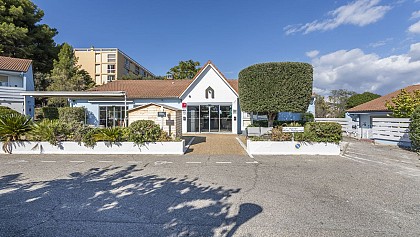
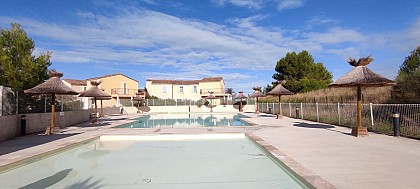
Camping La Verdiere: Discover Septemes-les-vallons Surroundings

Are you the owner?
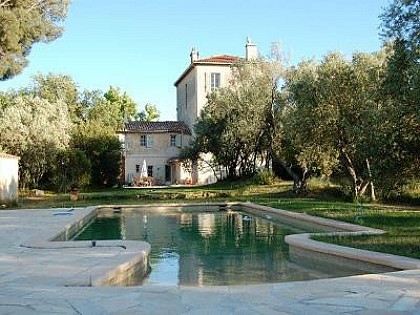
Nestled in the heart of the stunning Provence-Alpes-Côte d'Azur, Septemes-les-vallons unlocks a rich variety of activities waiting to be explored. Camping La Verdiere is the perfect starting point to uncover this multifaceted region. Wander along picturesque trails that wind through hills and forests, ideal for invigorating hikes and bike rides. Embark on an adventure to the Sainte-Baume Regional ...See more

Walking around CAMPING LA VERDIERE

See more suggestions
Discover the trails of CAMPING LA VERDIERE.
See more suggestions
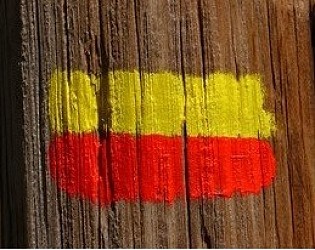
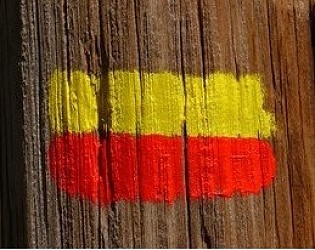
Nerthe hill discovery hike
6.2 km

Nerthe hill discovery hike

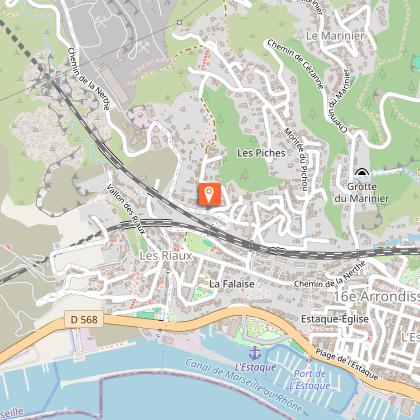
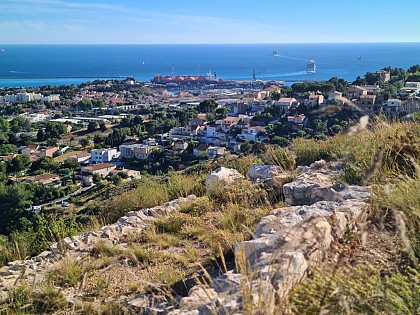
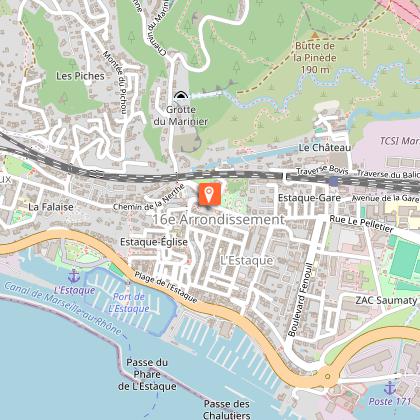
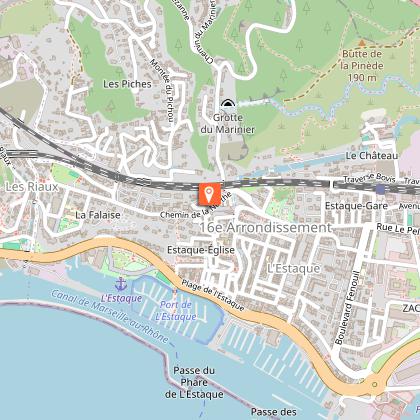
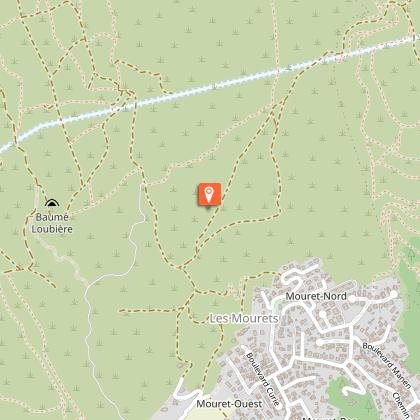
Between the Etang de Berre and the Estaccian seaside, here we are in the Nerthe hills above Marseille. A hike that takes in the heights of the village of l'Estaque, the hamlet of La Nerthe, the Galline chapel and photogenic industrial remains. Although access by car is possible along the 3-kilometre-long Chemin de la Nerthe, parking spaces are scarce, isolated and unsupervised. So it's best to take the RTM 36 bus, which drops you off at the "La Nerthe" terminus, and to consider the start of the walk up the Chemin de la Nerthe as a good warm-up before reaching the starting point of the itinerary. The actual starting point is in front of the chapel of Notre-Dame de la Nerthe (la Galline) (1). The chapel is dominated by several sections of wall, reminiscent of the (ruined) Château de la Nerthe, built in medieval times. Further along, on the right, you'll see the last farm in the area. Continuing along the main road, you pass an anti-tank wall built in 1943 by the Germans to protect access to the nearby quarries. After a handsome manor house and garden (2), the remains of two cement pillars (3), framing a passageway, are revealed in the greenery. This is the entrance to Domaine de Cossimont. Take the tarmac road to the right. Pass the main entrance to the Lafarge quarries. From here, it's a 15-minute walk to the Cossimont ruins. The industrial remains of La Nerthe and the Cossimont estate All around you, a garrigue landscape, and on the left you'll probably see a short brick chimney (4). After a slight climb along an olive grove, you'll see the ruins of the Domaine de Cossimont (5) on your left as you round a bend. Follow this path, regularly used by the Rove goats! In fact, very close to the ruins, you'll have a view of the land of one of the last goatherds. Leave the estate under the plane trees (there's a well on the right), then take the path to the left, which runs alongside a tiled wall. Go past the remains of a masonry entrance fence, leaving the lone cypress tree on your left, and take the narrow path upwards (6). On your right are the remains of a sheepfold. Follow the path up and then down to a DFCI track. At a bend in the road, take a small path that climbs up on the left (a shortcut) to rejoin the DFCI track a little further on. On the left, pass a square building. Enjoy the view over the hills, olive groves, harbor and the large commercial port of Marseille. The highest point is a large round median (7). Cross it and follow a small path along a ridge and down to a DFCI track. At a hairpin bend (8), go straight ahead on a narrow path that leads back to the Chemin de la Nerthe and the Chapelle de la Galline, passing the remains of an old German bunker.

4 h
11 km
Medium
32 boulevard Raymond Fillat Terminus de la ligne RTM 36 " la Nerthe" 13016 Marseille
Show

What to do in CAMPING LA VERDIERE

See more suggestions
Experience unique moments with the bookable activities in CAMPING LA VERDIERE.
See more suggestions

What to visit in CAMPING LA VERDIERE

See more suggestions
Walk along the picturesque streets of CAMPING LA VERDIERE.
See more suggestions
Oppidum de Verduron
4.1 km

Oppidum de Verduron

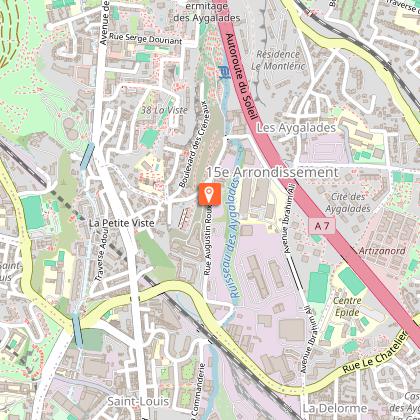
The Verduron oppidum preserves the remains of a Celtic village. It is one of two Celtic-Ligurian sites in the town, the other being at Saint-Marcel to the east. The area around the site was affected by a fire in July 2025. The oppidum is located 9 kilometers from Marseille, in the 15th arrondissement. Established on the southern slopes of the Nerthe chain overlooking the harbor, it is now owned by the City of Marseille and protected as a Historic Monument. The site was discovered and excavated between 1905 and 1911 by Marseille sculptor St. Clastrier, and between 1999 and 2011 by researchers from the CNRS and the University of Strasbourg. Le Verduron or "Pain de Sucre" is a small perched settlement, surrounded by a 0.80 to 1 metre wide enclosure wall dominated by a "tower" defending the site. The main entrance was at the bottom, to the south-east. Around forty terraced rooms abutted the rampart, organized in islets around the streets and alleys that served them. They are grouped together in orthonormal islets. The Gallic settlement, covering an area of around 1,250 square meters, had a very short lifespan, in the second half of the 3rd century BC. It was, in fact, besieged and violently destroyed around 200 BC. The finds from the St. Clastrier excavations are held in the archaeological repository of the Musée d'Histoire de Marseille. Its study shows that the majority of ceramics, representing 85% of the ware, is unturned and of local origin, while imported turned ceramics account for only 12% (light paste Massaliète ceramics). Black-glazed ceramics enable us to refine the absolute chronology of the duration of occupation in the second half of the 3rd century BC. Source: City of Marseille website

Boulevard Du Pain de Sucre Verduron 13015 Marseille
Show
Emmanuel Vitria Park
5.6 km

Emmanuel Vitria Park

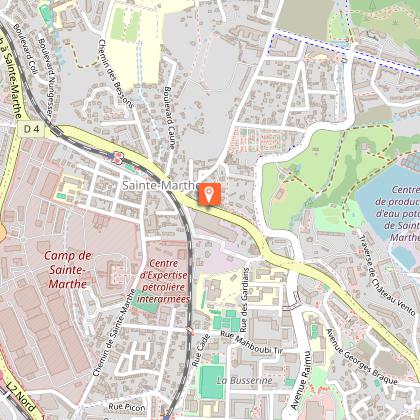
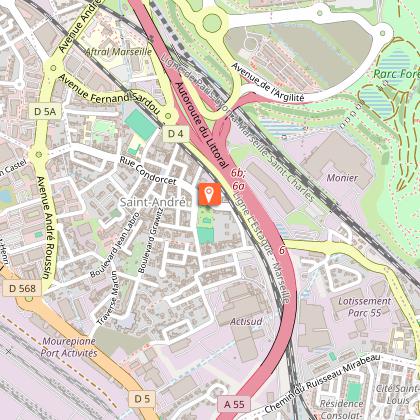
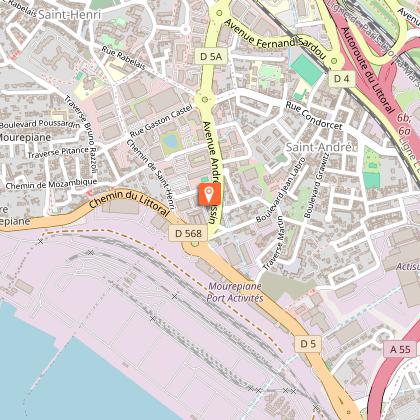
Children, teenagers, families, bowlers, the Emmanuel Vitria park welcomes you in the Saint-André district. In some squares, the playgrounds can still be used but are under the responsibility of parents who must ensure that health regulations are respected, including physical distance. Children, teenagers, families, bowlers, the Emmanuel Vitria park welcomes you in the Saint-André district. After the earthworks, planting and embellishment, the new park spreads over 3 large restanques on 7500m2. The upper restanque is a children's garden. Easily accessible on foot, closer to the nursery school on Rue du Boisseau and to the heart of the village of St-André, it offers a shaded and protected play area for the little ones. Safety and the preservation of play areas reflect the desire to guarantee a good cohabitation between families, young people and other users. A sports and recreational area has replaced the wasteland. Its creation offers two new entrances on the Pas de Faon Boulevard. A 365m2 mini multi-sports field allows teenagers to practice basketball and soccer. The game is safe thanks to the 80 m. fence around the field. Below the garden, the large St-André bowling green is very popular with local residents. The retaining wall, the pergola and the bleachers have been rehabilitated and made safe according to current standards. complete roadwork on bd Pas de Faon and Condorcet. A pedestrian pathway facilitates and secures access to the school on Rue Boisseau. Ten parking spaces, including one for people with reduced mobility, have been created with protective posts and railings, under an alley shaded by large hackberry trees.

17 rue Condorcet 13016 Marseille
Show
L'Estaque and its painters
5.9 km

L'Estaque and its painters

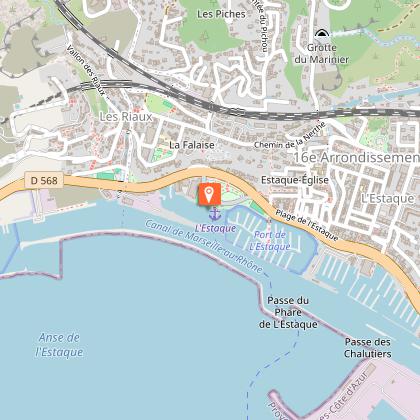
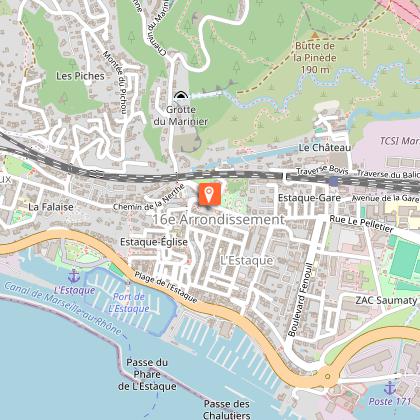
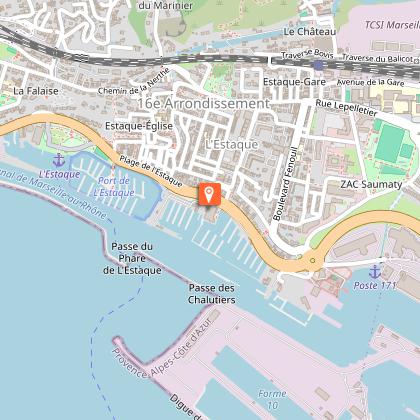
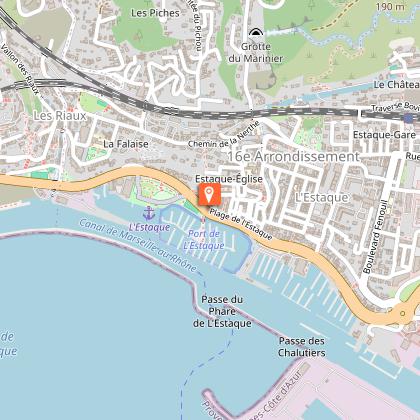
In the extreme north of Marseille, nestled at the foot of the Nerthe mountain range which protects it from the mistral wind, the small port of Estaque (attache, in Provencal), remains one of the most picturesque districts of the city. In the northernmost part of Marseille, nestling at the foot of the Nerthe massif, the little port of Estaque (meaning attachment in Provençal) is still one of the most picturesque districts of the city. Its development over the centuries has been closely associated with the traditional tile-making industry. At the beginning of the 20th century, people would come to L'Estaque to try sea urchins, bouillabaisse, panisses and sardines in hotels and restaurants built on the water's edge. Bastides, seaside villas (Château Fallet, Villa la Palestine, etc.) veritable architectural follies, etc. started to spring up next to the traditional small houses belonging to the workers from the nearby tile factories and cement works. For art enthusiasts, Estaque is above all one of the key locations in the birth of modern painting. From Collioure to Menton, just to consider the Mediterranean coast, there are plenty of places that have attracted great painters. However are there many places that can boast to have been frequented over a period of sixty years (1860-1920) by ten or so renowned artists? The name of L'Estaque is associated with impressionism, fauvism, cubism: these three periods that to a great extent determined the nature of painting in our time. Although Cézanne and Braque are the two major figures, we should not forget painters such as Derain, Dufy, Marquet, Friesz, Macke, Renoir, Guigou and Monticelli. Most of them painted dozens of canvasses at Estaque. An unusual destiny indeed for this village, which can firstly be explained by its situation: it offers an exceptional view point, where the panorama of the bay of Marseille is often very striking. The explanation for the painters' inspiration can also be found in the large number of different subjects, and in the variety of shapes and colours, all concentrated in a relatively small space: the horizontal sea, the vertical factory chimneys, the curves of the hills and the arches of the viaducts, the play of ochres and reds responding to the intensity of the myriad of greens and blues. A walking tour presents the history of this colourful working-class district with a strong character, little different nowadays from the village the painters knew and loved. Many of the themes are still here. To see them you just need to know how to look. Starting from the harbour jetty, take the painters' path, and after this walk lasting roughly two hours you will understand why these artists were so attracted to these sites. Eight enamelled lava information panels are positioned at various points of the walk.

13016 Marseille
Show

Where to eat in CAMPING LA VERDIERE

See more suggestions
Explore the best dining spots in CAMPING LA VERDIERE.
See more suggestions
Where to sleep in CAMPING LA VERDIERE

See more suggestions
Book a pleasant stay in CAMPING LA VERDIERE.
See more suggestions
Caution!
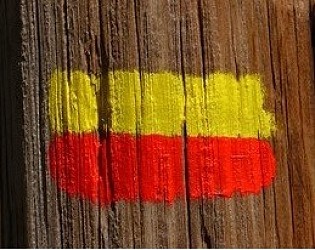
We have no information on the difficulty of this circuit. You may encounter some surprises along the way. Before you go, please feel free to inquire more and take all necessary precautions. Have a good trip! 🌳🥾