Tours
Activities
Places of interest
Where to eat
Where to sleep

Experience Auvergne’s Wonders at HOTEL IBIS STYLES BREZET AEROPORT

Are you the owner?
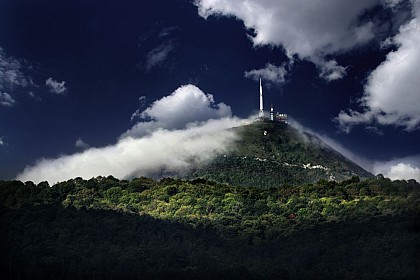
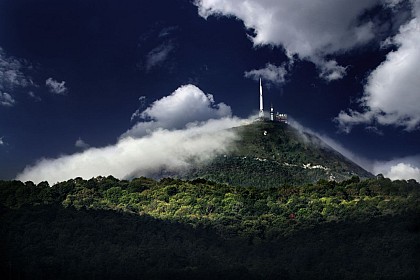
Located in Clermont-Ferrand, at the heart of Puy-de-Dôme, HOTEL IBIS STYLES BREZET AEROPORT is the perfect starting point for exploring the wonders of Auvergne. The region is teeming with captivating natural and cultural attractions.

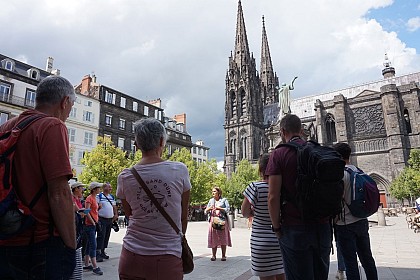
Begin your stay with a visit to the Notre-Dame-de-l'Assomption Cathedral, a black gothic masterpiece, before strolling through the cobblestone streets of the histori...
See more

Walking around HOTEL IBIS STYLES BREZET AEROPORT

See more suggestions
Accessible hikes near HOTEL IBIS STYLES BREZET AEROPORT.
See more suggestions
GTMC-VTT - Stage 12 - Clermont-Fd > Volvic
3.2 km

GTMC-VTT - Stage 12 - Clermont-Fd > Volvic

The GTMC-VTT, from Clermont-Ferrand to Volvic. The GTMC mountain bike route continues from Clermont-Ferrand (historic start of the GTMC mountain bike race) to Volvic. From Clermont-Ferrand, the historic departure point for the GTMC mountain bike race, you gradually gain altitude as you head towards the Chaîne des Puys and its 80 volcanoes. Under the gaze of the impressive Puy de Dôme, you'll discover a variety of landscapes, from a 2,000-year-old town to sunny hillsides planted with fruit trees and vines. The route ends in chestnut woods and volcanic cheires, with their chaotic vegetation and morphology. All along the way, the mountain biker's attention is irresistibly drawn to the volcanoes. Volvic, famous for its water and volcanic stone, is the finishing point of this stage. Departure is from Clermont Ferrand railway station. We climb gently up to Place Delille, which we cross before plunging down in front of a large secondary school to follow a long straight line. From set of traffic lights to set of traffic lights, the MTB GTMC takes us to the tarmac slope leading to the Col de Bancillon (alt. 551m). A short but steep descent on a farm track takes us to the Blanzat sports complex. We have to find a passageway to cross it and then climb back up to Blanzat on tarmac. Superb trails through fruit groves and meadows to the village of Malauzat. From Malauzat, we climb through a chestnut grove that takes us right up close to the Chaîne des Puys. Playful, relatively easy trails.

2 h
20 km
Medium
40 Avenue de l'Union Soviétique 63000 Clermont-Ferrand
Show
Hike : From Clermont Cathedral to Vulcania
4.3 km

Hike : From Clermont Cathedral to Vulcania

A superb walking challenge linking the historic centre of Clermont-Ferrand to Vulcania Park! A gradual climb from the Clermont-Ferrand basin up to the Plateau des Dômes and the volcanoes, with an easy return journey by shuttle or bus. A long, gradual walking route from the historic centre of Clermont-Ferrand to the volcanoes of Vulcania Connecting the historic centre of Clermont-Ferrand to Vulcania Park in a single day’s walk: this is the exciting itinerary offered by this online route. Starting at the foot of the black-lava cathedral, the trail invites you on a journey that offers a genuine transition from the hustle and bustle of the city to the vast, wild open spaces of the Chaîne des Puys, a major tectonic site and UNESCO World Heritage Site. Highlights of the route: • A gradual, panoramic ascent: Climb gently out of the Clermont basin via Durtol, before reaching the Plateau des Dômes and the volcanic landscapes. • A convenient return option: Enjoy a guaranteed return journey by special coach from Vulcania back to the Clermont-Ferrand conurbation (depending on the season and school holidays). • Option to walk in the opposite direction: The route can also be walked downhill from Vulcania to Clermont-Ferrand for a gentler experience. You won't have time to visit Vulcania this time, but during school vacations a bus will be waiting from the parking lot to take you back to town. Departure: Clermont-Ferrand Cathedral, Place de la Victoire, direction "Durtol" / Durtol, direction "Vulcania". Alternatively, take the special bus from Clermont or Royat up to Vulcania and walk back down. Special Clermont-Vulcania-Clermont bus from 01/07 to 31/08, then on request during the spring and autumn vacations 48 hours in advance. Difficulties : This route involves a steady climb throughout the first section. Make sure you wear good walking shoes, take plenty of water with you, and check the shuttle bus return times carefully before setting off.

6 h
19 km
Place de la Victoire 63000 Clermont-Ferrand
Show
Hike : From Clermont Cathedral to the summit of the Puy-de-Dôme
4.3 km

Hike : From Clermont Cathedral to the summit of the Puy-de-Dôme

An iconic route linking the historic centre of Clermont-Ferrand to the summit of the Puy de Dôme! A major walking route rising from the lava fields near the cathedral to the summit of the Auvergne volcanoes, ideal for sustainable transport. A legendary long-distance walking route stretching from the heart of Clermont-Ferrand to the giant of the Dômes Setting off from Place de la Victoire at the foot of the Volvic stone cathedral, this hike offers a true continental adventure: linking the city to the summit of the Puy de Dôme, the highest point of the Chaîne des Puys tectonic region (a UNESCO World Heritage Site). This route allows you to witness the gradual transformation of the landscapes, from urban alleyways to volcanic mountain pastures. Highlights of the route: • A car-free adventure: Accessible directly via Clermont-Ferrand’s public transport network, this route is perfect for fans of eco-friendly hiking. • A spectacular finale: After crossing the plateau, the final ascent to the summit is rewarded with a breathtaking 360° view across the whole of Auvergne. • Flexible return options: You can either take the rack railway (Panoramique des Dômes) back down to the Maison de Site to catch the shuttle buses to Clermont-Ferrand, or walk back. Starting point: Clermont Cathedral, Place de la Victoire, towards ‘Chamalières’ / Square de Verdun, Chamalières / spa district, Royat. From the summit of the Puy-de-Dôme, take the rack railway (fee applies) back down to the Maison du Site, then return to the city centre on the P36 bus Difficulty: The total elevation gain between Place de Jaude and the summit of the Puy-de-Dôme. This route involves a significant elevation gain. A good level of fitness and suitable kit (hiking boots, warm/windproof clothing for the summit) are essential.

5 h
15 km
9 Place de la Victoire 63000 Clermont-Ferrand
Show
Mountain Bike Trail: Between the Banks of the Allier and the Limagne Hills | Lempdes
4.7 km

Mountain Bike Trail: Between the Banks of the Allier and the Limagne Hills | Lempdes

Starting in Lempdes, this smooth and accessible mountain bike trail connects the banks of the Allier River to the hills of the Limagne region. It’s an ideal route for mountain bikes or e-mountain bikes, winding through plains, farm roads, and offering panoramic views of the surrounding volcanic peaks. A smooth and varied mountain bike loop between the cool banks of the Allier and the Limagne Plain Starting from the parking lot at Lempdes Town Hall, the mountain bike version of the “Between the Banks of the Allier and the Limagne Hills” circuit offers a beautiful, smooth ride just outside the Clermont-Ferrand metropolitan area. With its smooth terrain, the route combines the pleasure of riding along the river with the exploration of farm trails in the Limagne basin. Highlights of the mountain bike route: • A very accessible terrain: Smooth trails, wide paths, and very gentle elevation changes that are perfect for a family mountain bike outing or a ride on an e-MTB. • Varied scenery: Ride along the wild meanders of the Allier River before reaching the open spaces of the plain. • Panoramic views: Enjoy beautiful vistas of the Puy d’Anzelle, the Puy de Bane, and the entire volcanic landscape that frames the city. Practical Information & Technical Profile: • Start/Finish: Town Hall Parking Lot (Rue Saint-Verny - 63370 Lempdes) • Bike Types: Mountain Bike / E-Mountain Bike / Gravel Bike / Sturdy Hybrid Bike • Markings: Yellow circles in both directions • Public Transportation Access: T2C bus (line E4, “Mairie de Lempdes” stop) Wearing a helmet is recommended for everyone. Be careful on the shared-use sections along the Allier River and adjust your speed at intersections with farm roads.

2 h
12 km
Easy
Rue Saint-Verny Parking de la Mairie 63370 Lempdes
Show

What to do in HOTEL IBIS STYLES BREZET AEROPORT

See more suggestions
Book your activities in HOTEL IBIS STYLES BREZET AEROPORT now and get ready for adventure.
See more suggestions
Castle of La Batisse
11 km

Castle of La Batisse

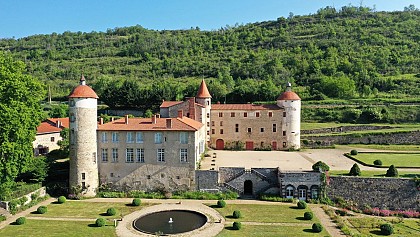
Château de la Batisse, located in Chanonat, is classified as a Historic Monument, as is the entire estate, and is surrounded by a garden that has been awarded the "Jardin Remarquable" label. Originally built in the 13th century as a defensive tower, the Château de La Batisse became a fortified castle in the 14th century. In the 18th century, it was transformed into a true pleasure estate, which is admired today for its rich history, its remarkable architecture, and its gardens—unique in the Auvergne region. Open year-round, the castle hosts both private and professional events, all while coming alive with an inspiring cultural program. Unique exhibitions, exceptional events, and timeless experiences make the site a space for creativity and cultural transmission. Contemporary art, historical reenactments, performances, concerts, and immersive evenings invite visitors to rediscover the château in a new light. Whether you’re a history buff, an art lover, or simply curious, everyone can enjoy unique experiences in the heart of this place steeped in history. Events From June 20 to August 30, 2026, set amid 19 hectares of nature and gardens designated as “Jardin Remarquable” (Remarkable Garden) and traversed by the Auzon River, the estate offers visitors a true respite of freshness and discovery. Shady woods, French-style gardens, waterfalls, orchards, a maze, wooden play structures, and art installations punctuate the visitor experience: Gallery of Auvergne portraits in the maze — Denis Pourcher Lava stone sculptures integrated into the gardens — Thierry Courtadon Floral sculptures in the Roseraie pond — Alexis Boyer “In Search of the Enlightenment”: busts of great philosophers hidden in the grove along the Allée des Cascades Summer 2026 Program Music Festival – June 20, 2026: storytelling during siesta time in the orchard, a costumed procession in the style of Napoleon III, and a free festive evening at the Moulin du Château starting at 6:30 p.m. (in partnership with Auzon Collectif), featuring concerts by local artists, food, and a friendly atmosphere. Concert Evening – July 13: concert featuring Les Frères Maulus followed by a barbecue. Guided Tours of the Château: starting July 8, Wednesdays and Sundays at 3:00 p.m. Napoleon III-themed costumed processions (afternoon): June 20, July 8, August 9 Storytelling tours (afternoon): July 8, August 5 “The Musketeers & Milady” event (July 15–August 13, every Wednesday): performances and fencing workshops.

Route de Varennes 63450 Chanonat
Book from 0 EURBook
Show
Lemptégy Volcano
15 km

Lemptégy Volcano

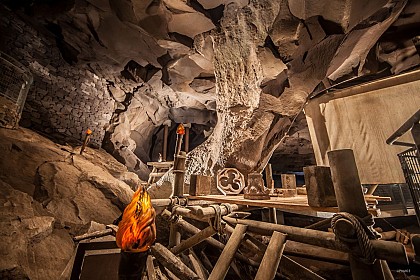
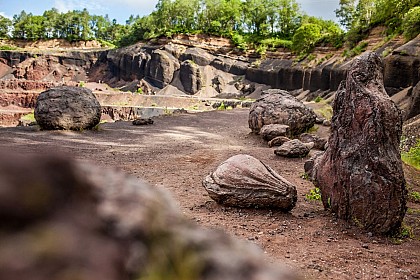
Explore the heart of a real volcano... Located at the center of the tectonic "Chaîne des Puys - Faille de Limagne" UNESCO World Heritage Site, we offer you the unique and unusual opportunity to discover the inside of a 100% natural volcano. Discover the secrets of volcanology with a 2h30 interactive tour of the Lemptégy volcano, comprising 5 stages: - The "volcano and men" tour: this fun, interactive introduction to the visit will familiarize you with the volcano and help you better understand its metamorphosis. A 30-minute self-guided tour. - Guided exploration of the volcano's anatomy: meet your guide on foot or by train. You'll learn all about the volcano's geology and volcanology: bombs, volcanic chimneys, lava flows... and leave with scoria (solidified lava). A wealth of information to help you better understand the landscape around you. - L'âme de Lemptégy": an unusual journey into the site's industrial past, with a visit to the old pozzolan extraction machines once used by quarrymen. - The immersive "Volcano 'Express" attraction: this sensory and emotional experience reveals all the secrets behind the formation of the Chaîne des Puys and the Faille de Limagne. What if the fault were to reopen... Will you reach your destination? - The dynamic 4D film "Aux Origines": enjoy an unprecedented flight over the volcanoes of Auvergne and relive the history of the volcano as if you were there, from its eruptions to the present day. While you're there, treat yourself to a gourmet break at the Volcan de Lemptégy restaurant. The chef offers traditional regional dishes (sausage/aligot, truffade, petit salé...). You can also stroll through the new boutique and discover a wide range of regional products, souvenirs, books... LE REVEIL DU VOLCAN" NIGHT TOUR: a breathtaking nocturnal experience! When you enter the site at night, you'll be propelled into the heart of the Lemptégy Volcano for an extraordinary experience. Along the way, you'll plunge into an erupting volcano and discover magical creatures. A new world to discover and a new way to experience the Volcan de Lemptégy. 1.5 km on foot. Prices and schedule: see website. Only in July and August, according to the Volcano calendar.

31 route des Puys Les Maisons Rouges 63230 Saint-Ours
Book from 0 €Book
Show

What to visit in HOTEL IBIS STYLES BREZET AEROPORT

See more suggestions
Shop in the boutiques of HOTEL IBIS STYLES BREZET AEROPORT.
See more suggestions
Saint-Rustique Church
2.1 km

Saint-Rustique Church

The present-day Église Saint-Rustique is a 19th century church built on the foundations of a much older building. It is decorated with mural paintings. The current church was built in 1838 on the bases of a former church, whose presence could be traced back to the 5th century, since Saint Rusticus, priest of Aulnat, who became the eighth bishop of Clermont, was buried there in 446. An 18th century shrine containing the remains of Saint Rusticus is displayed on the altar of the south aisle. In the 19th century, the inhabitants of Aulnat called upon Aymon Mallay (1805-1883), departmental architect for the Puy-de-Dôme region, to proceed with the reconstruction of the building which was in disrepair and had become too small. He had previously worked on several other religious buildings in the Auvergne region, including the cathedral and Notre-Dame-du-Port in Clermont-Ferrand. The Roman choir was preserved with its two capitals, and to preserve harmony, Mallay proposed a neo-Roman project (1837) with buttresses, semi-circular arch openings and a barrel-vaulted nave. The octagonal bell tower was built in around 1840 and its steeple was redone in 1900. In 1889 the choir was decorated with a mural painted by the artist Maurizio Belli, representing the Trinity. The Chapel of the Virgin was adorned with a mural by the painter Louis Dussour (1905-1986), former Director of the École des Beaux-Arts in Nice. It represented the litanies of the Virgin Mary, her prayers. The stained-glass windows are the work of the master-glassmaker Raphaël Lardeur (1890-1967). The city features other neo-Roman religious buildings such as Église Saint-Étienne de Lempdes.

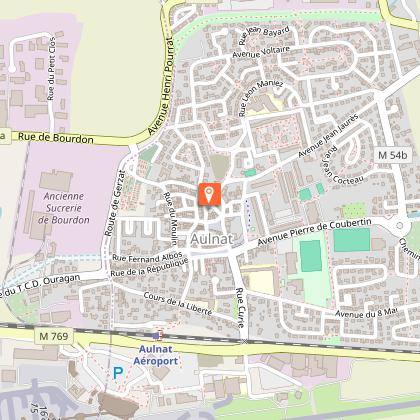
Rue du Commerce 63510 Aulnat
Show
Roger Quilliot Art Museum
2.1 km

Roger Quilliot Art Museum

MARQ Auvergne Métropole is housed in a former Ursuline convent. Its luminous architectural and museographic redesign from the 1990s is a showcase for high-quality heritage works, exhibitions and cultural activities for all. The Musée des Beaux-Arts, located in Clermont-Ferrand, boasts a vast collection of paintings, sculptures and decorative arts, spanning from the medieval period to the 20th century. With over 750 works on display, the museum presents a chronological and educational tour that highlights artistic developments. Medieval collections The museum exhibits unique pieces of Romanesque and Gothic art from Auvergne, including the Virgins in Majesty, a rare 13th-century painting (the Frise des abbés d'Ennezat) and the Savaron casket. Masterpieces also include Léonard Sarson's Athena, a Volvic stone sculpture emblematic of the Auvergne Renaissance. 17th and 18th centuries Among the major works, MARQ presents a group of portraits, such as Philippe de Champaigne's Vincent Voiture, as well as a remarkable series of 12 large decorative paintings illustrating Ariosto's Roland Furieux. The collection also includes works by Jacques Blanchard, and objets d'art such as 17th-century cabinets and Clermont-Ferrand earthenware. 19th century Neoclassicism and Auvergne landscapes are represented by artists such as Thomas Degeorge, Théodore Rousseau, Camille Corot and Victor Charreton. The museum also exhibits Orientalist works by Prosper Marilhat and Jean-Victor Schnetz, as well as historical paintings by Théodore Chassériau and Frédéric Auguste Bartholdi. Portrait lovers will appreciate artists such as Géricault and Rodin. 20th century The tour continues with works from the 1920s-1960s, featuring figurative painters such as Marie Laurencin, Bernard Buffet and Jean Fautrier. In addition, the museum will soon house the textile collections currently housed at the Musée Bargoin. Come and discover the Musée d'Art Roger-Quilliot's must-see works in an exceptional setting, open to art enthusiasts from all walks of life.

Place Louis-Deteix Quartier Historique de Montferrand 63000 Clermont-Ferrand
Show
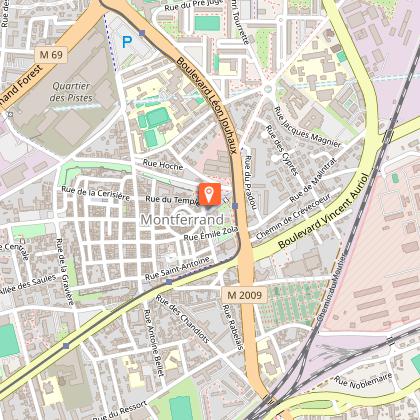
Medieval district of Montferrand
2.1 km

Medieval district of Montferrand

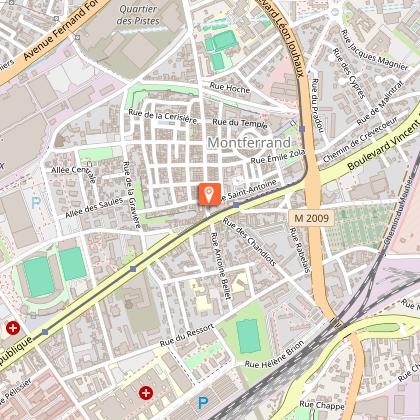
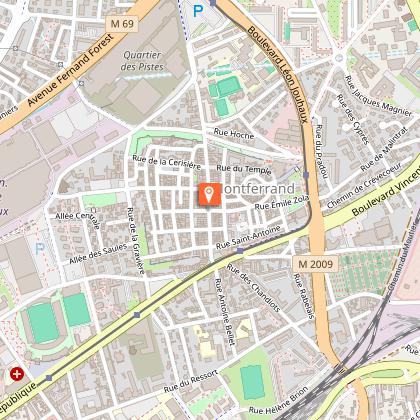
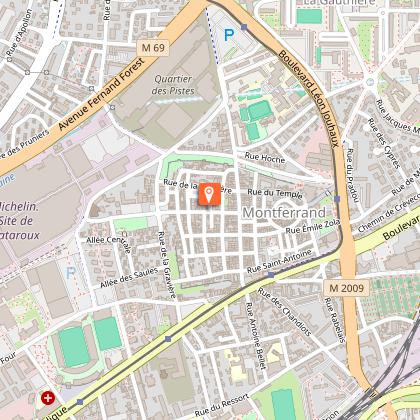
Discover the historic center of Montferrand in Clermont-Ferrand, one of Auvergne's most remarkable medieval and Renaissance ensembles. Stroll through its unique checkerboard layout, its lava stone mansions and its secrets of history. Located northeast of Clermont-Ferrand, in the Puy-de-Dôme département, Montferrand's historic center is one of the richest and best-preserved medieval and Renaissance urban ensembles in the Auvergne-Rhône-Alpes region. Founded ex nihilo around 1120 by Count Guillaume VI of Auvergne to compete with the episcopal city of Clermont, Montferrand was an autonomous free town, and in the 12th century was granted the oldest charter of franchises in the region. It became a royal city in 1292 under Philippe le Bel, and was home to important administrative and judicial institutions (Bailliage royal, Cour des Aides) before its definitive union with Clermont in 1731. A rare urban feature for its time, the district is laid out according to an orthogonal Hippodamian (checkerboard) plan, inherited from its Count's creation. The two main axes meet at the Carrefour des Taules, the historic heart of the town. The built heritage is characterized by the extensive use of lava stone (andesite). The protected area is home to numerous 15th and 16th-century townhouses with loggias, mullioned windows and spiral staircases hidden in inner courtyards, such as the Maison de l'Apothicaire and the Hôtel d'Albiat. The circular Place Marcel Sembat is one of the town's most remarkable buildings, forming the former footprint of the château des Comtes d'Auvergne. The church of Notre-Dame de la Prospérité, a jewel of Southern Gothic, is renowned for its sculpted details and acoustic quality. Remains of the fortifications (Porte Bise, Tour d'entrée de l'eau) bear witness to the old defensive walls. The district is also home to the MARQ (Musée d'Art Roger-Quilliot), housed in a former Ursuline convent, and is in the immediate vicinity of the Aventure Michelin site. A pedestrian heritage trail lined with information terminals allows visitors to discover local history on their own (average duration: 1h30). A traditional market is held every Friday morning on the Place de la Roddade.

Place Louis Deteix 63000 Clermont-Ferrand
Show
Former Ursuline convent in Montferrand
2.1 km

Former Ursuline convent in Montferrand

From Ursuline convent to museum, Montferrand's former monastic complex has passed through the centuries, successively housing nuns, a seminary, a military hospital and, since 1999, the Musée d'Art Roger-Quilliot. The Order of Saint Ursula, or the Ursulines, is a female monastic order dedicated to the education of young girls, founded in Italy in the mid-16th century. The Ursulines arrived in Montferrand in 1637 and settled in former medieval buildings. In 1673 they planned extensive renovations for a new convent, including a cloister, dormitories for the pupils, a refectory, and cells for the nuns. The first stone of the chapel was laid in 1702. During the French Revolution the nuns left the premises. In the 19th century the site was occupied by the grand seminary, which in turn moved out in 1905. During the First World War (1914–1918) the buildings were converted into a military hospital. The last occupants were the Mobile Guard, who remained until 1982, before the City of Clermont-Ferrand acquired the property in 1984. In 1992 the southern part of the convent was converted into housing, now known as the Musée Residence. The northern part was renovated to house the city’s fine-arts collections. In 1999 the museum was renamed the Musée d’Art Roger-Quilliot, in tribute to the city’s mayor from 1973 to 1997. Today, visitors can still see the 17th-century gate of the Cour des Aides (the former civil and criminal tax court), as well as the 18th-century chapel and cloister—located within the residence—both listed as Historic Monuments.

Rue du Temple Montferrand 63000 Clermont-Ferrand
Show
Place de la Fontaine, Montferrand
2.2 km

Place de la Fontaine, Montferrand

Located at the southern entrance to the medieval town, Place de la Fontaine recalls the arrival of running water in Montferrand in the 17th century. A place of passage, it was also the stage for the famous “White Mules” cavalcade in 1814. This square now forms the main entrance to the medieval town. It lies just south of the former Porte de l’Hôpital, which opened onto the road to Languedoc. The adjoining city hall incorporates an interior courtyard framed by galleries over porticoes, a remnant of the former 18th-century hospital. Until the mid-17th century Montferrand drew its water only from the River Tiretaine and a few wells. In 1650 the Lion Fountain was built here, though it was later moved twice and now stands at the corner of Rue Kléber and Rue Saint-Antoine. The present fountain dates from 1836. In the early 17th century a decision was taken to replace the winding path between Montferrand and Clermont with a straight route. The line of this “great path” was finally fixed in 1630 by the Decree of Troyes, which united Montferrand with its rival Clermont. First known as the “Avenue Royale”, the Clermont-Ferrand road was renamed “Avenue de la République” during the French Revolution. This avenue was the scene of a procession that earned the people of Montferrand their nickname “White Mules”. The episode dates back to 1814, when the Duchess of Angoulême—eldest daughter of Louis XVI and Marie-Antoinette, and niece of Louis XVIII—visited Clermont-Ferrand. Arriving from Paris, the royal procession passed through Montferrand on its way to Clermont. At Place des Cordeliers, 80 young men dressed in white unharnessed the horses and drew the carriage themselves, to loud applause. Spectators along the route marvelled at the sight and cried out: “Here come the White Mules!”

Place de la Fontaine Montferrand 63100 Clermont-Ferrand
Show
Place de la Rodade, Montferrand
2.2 km

Place de la Rodade, Montferrand

Located at the southern entrance to the medieval town, Place de la Fontaine recalls the arrival of running water in Montferrand in the 17th century. A place of passage, it was also the stage for the famous “White Mules” cavalcade in 1814. This square now forms the main entrance to the medieval town. It lies just south of the former Porte de l’Hôpital, which opened onto the road to Languedoc. The adjoining city hall incorporates an interior courtyard framed by galleries over porticoes, a remnant of the former 18th-century hospital. Until the mid-17th century Montferrand drew its water only from the River Tiretaine and a few wells. In 1650 the Lion Fountain was built here, though it was later moved twice and now stands at the corner of Rue Kléber and Rue Saint-Antoine. The present fountain dates from 1836. In the early 17th century a decision was taken to replace the winding path between Montferrand and Clermont with a straight route. The line of this “great path” was finally fixed in 1630 by the Decree of Troyes, which united Montferrand with its rival Clermont. First known as the “Avenue Royale”, the Clermont-Ferrand road was renamed “Avenue de la République” during the French Revolution. This avenue was the scene of a procession that earned the people of Montferrand their nickname “White Mules”. The episode dates back to 1814, when the Duchess of Angoulême—eldest daughter of Louis XVI and Marie-Antoinette, and niece of Louis XVIII—visited Clermont-Ferrand. Arriving from Paris, the royal procession passed through Montferrand on its way to Clermont. At Place des Cordeliers, 80 young men dressed in white unharnessed the horses and drew the carriage themselves, to loud applause. Spectators along the route marvelled at the sight and cried out: “Here come the White Mules!”

Place de la Rodade Montferrand 63100 Clermont-Ferrand
Show
Notre-Dame-de-Prospérité church in Montferrand
2.3 km

Notre-Dame-de-Prospérité church in Montferrand

Built of Volvic stone in the Southern GBuilt in the 14th century in response to insecurity, the Church of Notre-Dame-de-Prospérité embodies the Languedoc Gothic style. It houses precious furnishings from Montferrand’s former convents. This church stands on the site of the former chapel of the Counts of Auvergne’s castle. In the 12th and 13th centuries the residents of Montferrand had to leave the fortified enclosure to attend services at the Saint-Robert monastery, south of the town walls. During the Hundred Years’ War (1337–1453) the threat of attack prompted the inhabitants to build a place of worship within the walls. Constructed entirely of Volvic stone, the church was begun in the 1340s, but progress was slow because the town’s finances had been depleted by the pillaging of Montferrand in 1388. The northern tower, started in 1472, was completed in 1566 with the addition of the belfry. The southern tower, built in the early 16th century, was demolished during the French Revolution. The people of Montferrand chose the Languedoc Gothic style, reflecting their attachment to southern France. The single nave is encircled by fifteen chapels and illuminated by 19th-century stained-glass windows, notably those produced in the workshop of Étienne-Hormidas Thévenot. To channel rainwater from the terraces, numerous gargoyles were sculpted around the exterior. Among them are fish, wild animals, birds, sighthounds, as well as human and fantastical figures. The chapels contain woodwork confiscated from Montferrand’s convents (Cordeliers, Ursulines, and Visitandines) and installed here after the French Revolution. The church also preserves a Romanesque stone Virgin and a large 17th-century wooden crucifix.

6 rue Notre-Dame Montferrand 63100 Clermont-Ferrand
Show
Private mansions in Montferrand
2.3 km

Private mansions in Montferrand

Les hôtels particuliers de Montferrand, bâtis aux 15e et 16e siècles, témoignent de la prospérité des notables locaux. Derrière leurs sobres façades de pierre de Volvic, cours, galeries et tours révèlent une architecture raffinée et emblématique. The franchise charter granted to Montferrand in 1196 defined the layout of the town: a grid of streets, plots of identical dimensions, and the requirement that each house present a façade on the street. Along today’s Rue Jules-Guesde stood the properties of notable Montferrand families—true dynasties of judicial officials, merchants, and noble bankers. Built in the late 15th or 16th century on the foundations of medieval houses, these residences illustrate Montferrand’s golden age. Typically rectangular in plan, each plot is occupied by two distinct buildings: one at the front and another at the rear. Between them lies a private interior courtyard. The two structures are linked by a series of stacked galleries on one side of the courtyard. Access to the upper floors is provided by a spiral staircase housed in a tower at one end of the galleries. Facing the street, these residences display a narrow façade, usually between five and eight metres wide. Constructed of Volvic stone, the façades are decorated in an understated style. The galleries and staircase towers, however, boast the richest ornamentation, with heraldic sculptures, mythological scenes, and personalised motifs depicting the owners and their families.

Rue Jules Guesde Montferrand 63000 Clermont-Ferrand
Show
Royal bailiwick of Montferrand
2.4 km

Royal bailiwick of Montferrand

Once the residence of the Duke of Berry, Montferrand’s royal bailiwick became a major judicial centre in the 15th century. Transformed over time, it went on to house the town hall, a Jesuit college, and later the church of Saint Peter. Montferrand belonged to the Counts of Auvergne from its founding around 1120. In 1292, however, Count Louis de Beaujeu, facing financial ruin, sold the town to King Philip IV of France (Philip the Fair). In 1360 King John II of France (John the Good) granted Montferrand to his son Jean, Duke of Berry, who had this private residence built before his death in 1416. In 1425 the king established a royal bailiwick in Montferrand—an administrative and judicial district of the crown. The bailiff managed the king’s property, collected fees and taxes, and administered justice on the sovereign’s behalf. The bailiwick moved into the Duke of Berry’s former residence to accommodate the many men of law required by the new royal jurisdiction. The commercial role of the early town was soon complemented by significant judicial activity, which encouraged the construction of private residences for the wealthy bourgeoisie and the nobility of the robe. In 1556 Catherine de’ Medici transferred the royal bailiwick from Montferrand to Clermont. The buildings then became a townhouse, with part of the property rented to private individuals. In 1634 the new Jesuit college occupied the site until 1663, when it too moved to Clermont. The municipality regained ownership of the former bailiwick residence and rented part of it for housing, while the other part—the former college church—became a parish church dedicated to Saint Peter.

Place Polly Montferrand 63000 Clermont-Ferrand
Show

Where to eat in HOTEL IBIS STYLES BREZET AEROPORT

See more suggestions
A wide selection of restaurants awaits you in HOTEL IBIS STYLES BREZET AEROPORT.
See more suggestions

Where to sleep in HOTEL IBIS STYLES BREZET AEROPORT

See more suggestions
Find the perfect lodging for your visit to HOTEL IBIS STYLES BREZET AEROPORT.
See more suggestions
Caution!
We have no information on the difficulty of this circuit. You may encounter some surprises along the way. Before you go, please feel free to inquire more and take all necessary precautions. Have a good trip! 🌳🥾