Tours
Activities
Places of interest
Where to eat
Where to sleep

Explore Saint-maurice, Val-de-Marne from HOTEL KYRIAD PARIS EST BOIS DE VINCENNES

Are you the owner?
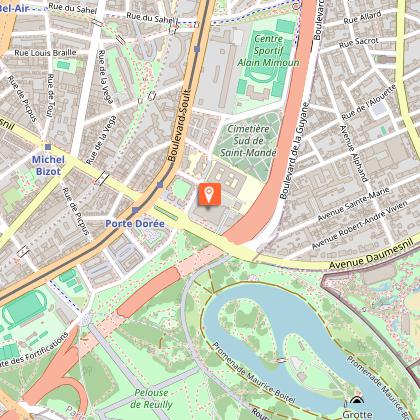
Located in Saint-Maurice, Val-de-Marne, HOTEL KYRIAD PARIS EST BOIS DE VINCENNES is perfectly situated to experience the rich array of attractions and activities the area has to offer. Take advantage of your stay to explore the Bois de Vincennes, the green lung of eastern Paris. This vast natural area provides ample opportunities for walking, picnicking, and relaxing by the Daumesnil Lake. Nearby...See more

Walking around HOTEL KYRIAD PARIS EST BOIS DE VINCENNES

See more suggestions
Take a walk around HOTEL KYRIAD PARIS EST BOIS DE VINCENNES.
See more suggestions
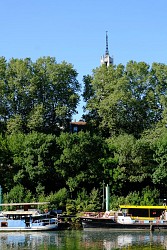
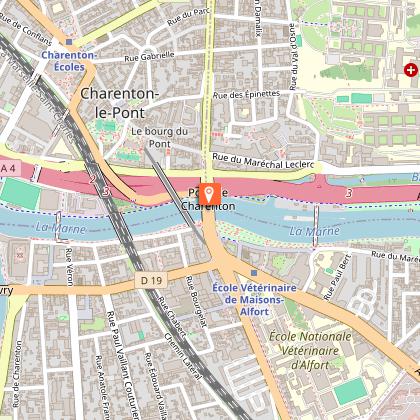
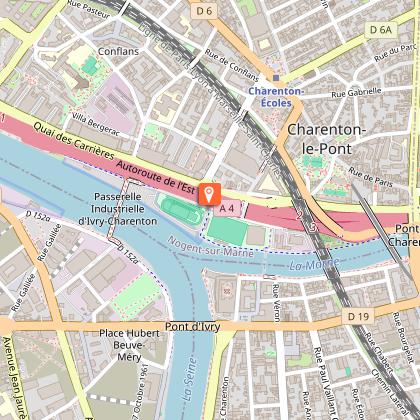
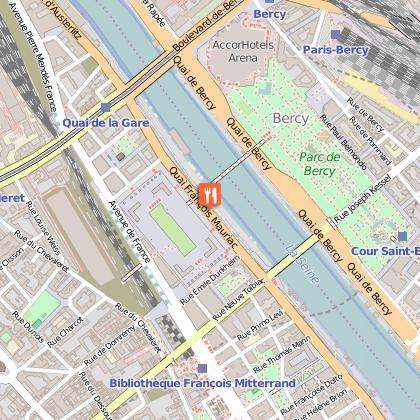
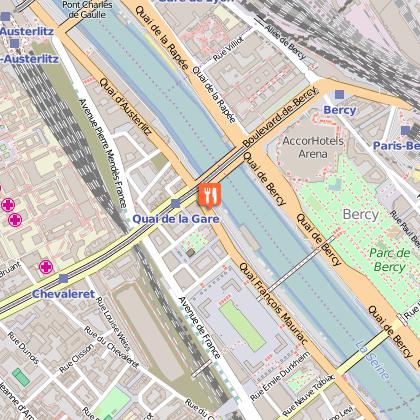
Navigation on the Seine in Paris
2.8 km

Navigation on the Seine in Paris

In Paris, its length occupies about 13 km, with a depth varying between 3,40 and 5,70 m. Its width varies, it, from 30 to 200 m. The normal restraint of the reach of Paris, that is the height of the surface with regard to the sea level, is 26,72 m2. In Paris, the Seine is crossed by thirty seven bridges among which four accessible footbridges only to the pedestrians. History The Seine favored, from the middle of the IXth century, the Norman invasions. In March 845, for example, the Normans who went back up the Seine since its mouth, arrive to Paris which they plunder. They withdraw only against a ransom of 7000 pounds of money. Other assaults will follow during a half a century approximately. In 1170, the corporation of the " traders of the water " receives from king Louis VII the monopoly of the business on the Seine. On their seal represents the nave which is still in the coat of arms of the city of Paris. August 9th, 1803, experiment of Robert Fulton's steamer on the Seine. The first wash-sheds are anchored in the Seine in 1851 and quickly reach hundred. The arrival of the tap water in the Parisian buildings pulls their progressive disappearance until 1937. During the war of 1870, the Parisians, besieged by the Prussians and without communications with the outside, try to receive from the mail locked into metallic balls, said " balls of Moulins ", launched upstream to the capital. None was however taken in in Paris. Drink the water of the Seine The Parisians drank some water of the Seine always, but from the roman time of waters of source of better quality are brought in Paris. We shall note however in 1605 the installation of a pump on the New bridge, said by the Samaritan, who will work until 1813. Also, that of the bridge Notre-Dame worked from 1673 till 1858. The water carriers, the corporation mentioned from 1292, brought at home the water drawn from the Seine or taken in the public fountains, and disappeared only at the end of the XIXth century. Today, the Seine in Paris does not supply any more strictly speaking drinking water to the Parisians, because used waters of surface result from Evry and from Orly, far upstream. Floods The floods of the Seine are an integral part of the history of Paris. It seems good that the first mention of a floods is the one of the Roman emperor Julien during winter 358-359. The columnist Grégoire De Tours told then that of the 582. The floods were often fatal in the bridges of Paris. So, in 1280, a floods of the river take the Big Bridge. In December, 1296, a new floods of an exceptional scale take all the bridges of Paris (which in the time supported houses). The most important floods of the Parisian history, known with a sufficient certainty, are the one of 1658. But the most present historic floods still in the memory of the Parisians are the one of 1910 which lasted nine days, from 20 till 28 January 1910. On January 21st, it achieved certain places about 9,50 m. Numerous postcards showed the devastation, such the accesses of the station Saint-Lazare completely under waters.

12 km
Very easy
75012 Paris
Show

What to do in HOTEL KYRIAD PARIS EST BOIS DE VINCENNES

See more suggestions
Explore HOTEL KYRIAD PARIS EST BOIS DE VINCENNES through its many bookable activities.
See more suggestions
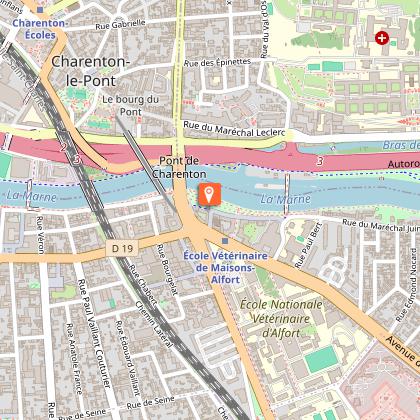
Excursion to Reims in the Champagne Region
3 km

Excursion to Reims in the Champagne Region

Also known as "Coronation City", the town of Reims has a rich cultural and gastronomic heritage. Reims played a significant role in the history of the French monarchy, but it's also renowned for its exceptional wines and champagnes.  ALSO KNOWN AS "CORONATION CITY", THE TOWN OF REIMS HAS A RICH CULTURAL AND GASTRONOMIC HERITAGE. Reims played a significant role in the history of the French monarchy, and it's also renowned for its exceptional wines and champagnes. This excursion gives you the chance to sample unique flavors whilst you soak in the region's historic charm! Your day trip to the Champagne region starts in Paris, where you will board a coach for Reims. Upon arrival, you will be taken on a tour of the famous 13th-century Gothic cathedral, which hosted the coronations of many French kings, including Louis IX and Charles VII. Next, you will be treated to a champagne tasting session at the Mumm champagne cellar (replaced by Taittinger Cellar on Mondays). After an independent lunch, you will take to the road again and travel through the vineyards of Reims Mountain. Your final stop will be Epernay, site of the champagne cellar of Moët & Chandon, the world-famous Maison de Champagne founded in 1743. You will have the chance  to see the cellars and of course to taste their prestigious champagne for yourself! Alcohol abuse is dangerous for your health. Please drink responsibly

Place des Vins 75012 Paris
Book from 170 EURBook
Show

What to visit in HOTEL KYRIAD PARIS EST BOIS DE VINCENNES

See more suggestions
Experience the annual festivals of HOTEL KYRIAD PARIS EST BOIS DE VINCENNES.
See more suggestions
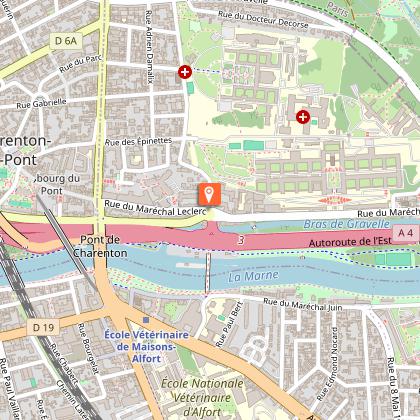
Commemorative Plaque Marking the Site of the Charenton Temple
175 m

Commemorative Plaque Marking the Site of the Charenton Temple

A plaque in Saint-Maurice marks the site of the Charenton Temple, which was built following the proclamation of the Edict of Nantes in 1598 and whose construction began in 1607. The Edict of Nantes granted freedom of worship but prohibited the construction of Protestant temples within five leagues (just over 15 kilometers) of a bishop’s seat. As a result, the first places of worship for Parisian Protestants were established in Grigny, and later in Ablon. However, the distance proved burdensome, prompting numerous complaints from the Reformed community. In response, Henry IV authorized the construction of a temple on the territory of what is now the commune of Saint-Maurice, then part of the parish of Charenton-Saint-Maurice. The first building was designed by architect Jacques Androuet du Cerceau, but it was ransacked as early as 1615 and then set on fire in 1621. Louis XIII permitted its reconstruction, which was carried out under the direction of Salomon de Brosse, architect of the Luxembourg Palace in Paris. Completed in 1624, it was a particularly large structure, capable of accommodating up to 4,000 worshippers. The Charenton Temple was ultimately destroyed in 1685, in just five days, following the revocation of the Edict of Nantes. In 1700, the land was sold to the Benedictine nuns of the Val d’Osne, who established a convent there. Though the convent was dismantled during the French Revolution, its memory endures in the name of the street that now leads from the Plateau district to the Marne River. Two hundred years later, in 1890, a new temple was built in the nearby commune of Charenton-le-Pont.

Coin de la rue du Val d'Osne et de la rue du Général-Leclerc 94410 Saint-Maurice
Show
Saint-André church
447 m

Saint-André church

Built in 1924 in a Romano-Byzantine style, the Church of Saint-André stands as both a testament to the development of the Plateau neighborhood in which it is located, and a poignant reminder of the First World War. Until its construction, the town had only the Church of Saint-Maurice, located on the Grande Rue at the foot of the slope leading up to the Bois de Vincennes. However, as the town expanded over the course of the 19th century, this old place of worship proved too small and too far from the newly built homes. In 1912, Abbé Bressange, parish priest of Saint-Maurice, noted that residents of the Plateau had taken to attending services in the church of Charenton-le-Pont, but appeared willing to help finance a new building. It was ultimately in the aftermath of the First World War that the current sanctuary was erected. Mr. André Lemoine, who had served as the parish organist for forty years, and his wife, donated the land and financed the construction to honor the memory of their son, who was killed in action on December 17, 1914, at the age of 28. He is buried in a vault beneath the altar, later joined by the remains of his parents. Designed by architect Jacquemin, the church was built in just one year using a concrete structure clad in brick, in a style combining Romanesque and Byzantine influences, which was common in churches built during the interwar period. The bell tower, however, was not completed until 1931. In the years that followed, other families connected to Saint-Maurice donated stained glass windows commemorating the deaths of their loved ones, further strengthening the bond between the church and the memory of the Great War.

22 avenue de Verdun 94410 Saint-Maurice
Show
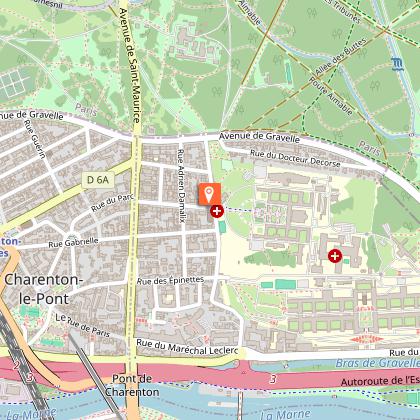
Former national asylum for convalescents at Saint-Maurice
453 m

Former national asylum for convalescents at Saint-Maurice

Currently part of the Paris-Est Val de Marne Hospitals, the former Imperial, and later National, Convalescent Home stands as a symbol of the thinking around the design of healthcare institutions in the second half of the 19th century. The construction of the Imperial Convalescent Home of Saint-Maurice was initiated by Napoleon III in response to a longstanding concern: caring for the sick or injured who had recovered enough to leave the hospital, yet were still unable to support themselves. Various attempts to establish such a facility around Paris had been made since the 17th century. Under the Second Empire, the rapid growth of the Parisian population and the scale of construction work in the capital—along with the resulting number of workplace accidents among construction workers—made the issue even more pressing. Napoleon thus decided to create a convalescent home. Just over 16 hectares were allocated from the Bois de Vincennes, which at the time belonged to the crown estate. The term asile (asylum) was chosen to designate the new institution—a word which, at that time, was not associated with psychiatry or even strictly with the medical world. Construction took place between 1855 and 1857. Around a central courtyard, architect Laval designed a facility that was neither a hospice nor a prison, with a strong emphasis on hygiene and the comfort of its residents: all rooms faced south, and unlike the standard hospital practice of the time, no large dormitories were built. The site itself was chosen for its healthful qualities: located on the edge of the Bois de Vincennes, in a largely rural commune, on an elevated plateau that ensured good air circulation. To preserve this environment, any type of construction that might disturb the residents was prohibited in the surrounding area. The “treatment” consisted mainly of rest in the open air, far from the city, combined with a healthy and plentiful diet. Verlaine, who stayed there three times, particularly praised the quality of the desserts. Renamed the National Convalescent Home of Saint-Maurice in 1900, the institution gradually developed a specialization in rehabilitative care. After an initial merger with the nearby Esquirol Hospital, it is now part of the Paris-Est Val de Marne Hospitals, following its integration with the Les Murets Hospital Center in La Queue-en-Brie.

14-16 rue du Val d'Osne 94410 Saint-Maurice
Show

Where to eat in HOTEL KYRIAD PARIS EST BOIS DE VINCENNES

See more suggestions
Restaurants in HOTEL KYRIAD PARIS EST BOIS DE VINCENNES offer a variety of cuisines.
See more suggestions

Where to sleep in HOTEL KYRIAD PARIS EST BOIS DE VINCENNES

See more suggestions
Find a comfortable stay in HOTEL KYRIAD PARIS EST BOIS DE VINCENNES.
See more suggestions
Caution!
We have no information on the difficulty of this circuit. You may encounter some surprises along the way. Before you go, please feel free to inquire more and take all necessary precautions. Have a good trip! 🌳🥾