Alert

Alerts

To see around
See more
Open
Close
Show
Show
Show
Show
Show
Show
Show
Show
Show
Show
Show

Oups... It would appear that Cirkwi does not have permission to use your location.

Presentation
Description
Map
Points of interest
Ratings and reviews
See around

Route: from the Château de Vincennes to the banks of the Marne at Maisons-Alfort

Route: from the Château de Vincennes to the banks of the Marne at Maisons-Alfort

Description

From the Château de Vincennes, take a walk through the Bois to the banks of the Marne at Maisons-Alfort, combining nature and heritage.

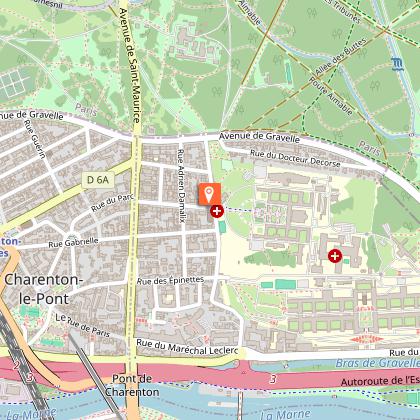
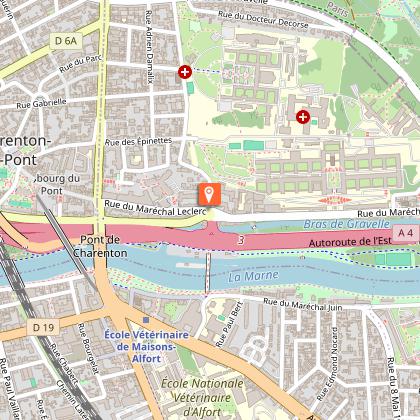
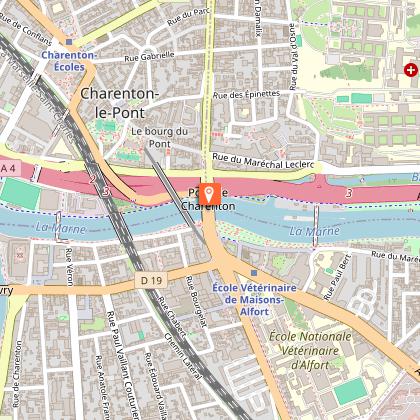
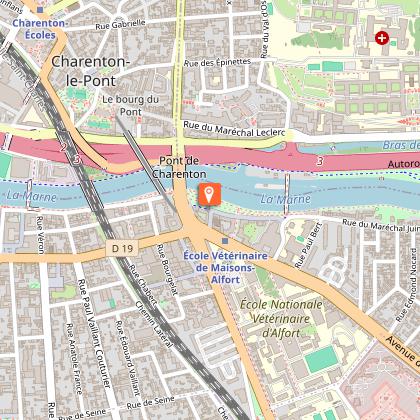
On the way, take a deep breath of nature as you stroll through the largest green space in Paris, before discovering the streets of Saint-Maurice and their middle-class villas and buildings, often featuring Art Nouveau architecture. Finally, after crossing the Charenton bridge, you'll reach the landscaped banks of the Marne at Maisons-Alfort. From here, you can head back to Paris on metro line 8, or continue your journey along the Marne on the Promenade Paul Cezanne.
Enjoy your visit!

Technical Information

Walking
Difficulty
Very easy
Dist.
4.7 km
Show more

Altimetric profile

Starting point

94300   Vincennes
Lat : 48.844649Lng : 2.434962

Points of interest

image du object

The Château de Vincennes

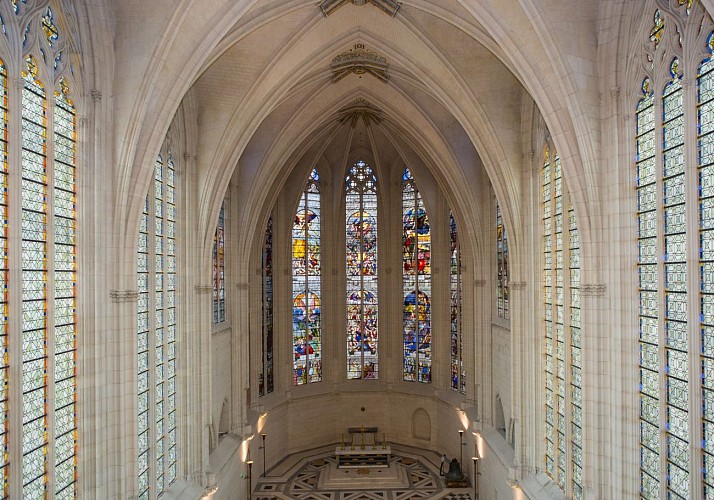
The Château de Vincennes is a must-see in the Paris region. Discover a landmark of French history at the gateway to Paris, on the edge of the Bois de Vincennes.The history of the Château de Vincennes begins in the 12th century, when King Louis VII ordered the construction of a hunting lodge in the forest of Vincennes. Under Louis IX (also known as Saint Louis), the site became an official royal residence. By the 14th century, the château took on the appearance we recognize today. King Charles V transformed the modest lodge into a formidable fortress, surrounded by massive walls and towers, and dominated by a 52-metre (170-foot) keep — now considered the tallest medieval fortified structure in Europe. He also commissioned the construction of the Sainte-Chapelle of Vincennes in 1379, though it would not be completed until 1552, during the reign of Henry II. In the 17th century, architect Louis Le Vau—who also worked on Versailles—built the elegant King’s and Queen’s pavilions in a classical style for the young Louis XIV, his mother, and Cardinal Mazarin. When the royal court moved permanently to Versailles in 1682, Vincennes lost its status as a royal residence. The keep (donjon), which had already served as a prison since the 16th century, took on this role more fully in the 18th century. Among its most famous prisoners were Diderot, Latude, Mirabeau, and the infamous Marquis de Sade. Over the following decades, various manufactories — porcelain, faience, and armaments — occupied the site. By the end of the 18th century, the château had fallen into disrepair, until the establishment of the Paris Arsenal in 1796 saved it from ruin. This new military function, however, led to major transformations: the manor of Saint Louis was demolished, some towers were levelled, and casemates were added. Vincennes became home to one of the largest military garrisons in the Paris region. Designated a historic monument in 1913, the Château de Vincennes still reflects this dual heritage. Today, the Ministry of Culture, through the Centre des Monuments Nationaux, manages the Sainte-Chapelle and the keep, both open to the public. The Ministry of Defence oversees the rest of the site, housing the Historical Service of the French Armed Forces, which includes libraries and archives accessible to visitors and researchers alike.

Avenue de Paris Tour du Village (entrée principale du Château) 94300 Vincennes
- Paris Est Marne Bois Tourisme -
Consulter
image du object

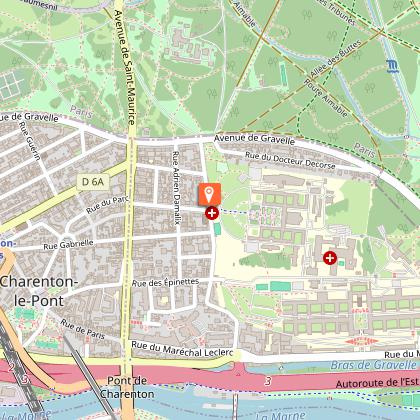
Former national asylum for convalescents at Saint-Maurice

Currently part of the Paris-Est Val de Marne Hospitals, the former Imperial, and later National, Convalescent Home stands as a symbol of the thinking around the design of healthcare institutions in the second half of the 19th century.The construction of the Imperial Convalescent Home of Saint-Maurice was initiated by Napoleon III in response to a longstanding concern: caring for the sick or injured who had recovered enough to leave the hospital, yet were still unable to support themselves. Various attempts to establish such a facility around Paris had been made since the 17th century. Under the Second Empire, the rapid growth of the Parisian population and the scale of construction work in the capital—along with the resulting number of workplace accidents among construction workers—made the issue even more pressing. Napoleon thus decided to create a convalescent home. Just over 16 hectares were allocated from the Bois de Vincennes, which at the time belonged to the crown estate. The term asile (asylum) was chosen to designate the new institution—a word which, at that time, was not associated with psychiatry or even strictly with the medical world. Construction took place between 1855 and 1857. Around a central courtyard, architect Laval designed a facility that was neither a hospice nor a prison, with a strong emphasis on hygiene and the comfort of its residents: all rooms faced south, and unlike the standard hospital practice of the time, no large dormitories were built. The site itself was chosen for its healthful qualities: located on the edge of the Bois de Vincennes, in a largely rural commune, on an elevated plateau that ensured good air circulation. To preserve this environment, any type of construction that might disturb the residents was prohibited in the surrounding area. The “treatment” consisted mainly of rest in the open air, far from the city, combined with a healthy and plentiful diet. Verlaine, who stayed there three times, particularly praised the quality of the desserts. Renamed the National Convalescent Home of Saint-Maurice in 1900, the institution gradually developed a specialization in rehabilitative care. After an initial merger with the nearby Esquirol Hospital, it is now part of the Paris-Est Val de Marne Hospitals, following its integration with the Les Murets Hospital Center in La Queue-en-Brie.

14-16 rue du Val d'Osne 94410 Saint-Maurice
- Paris Est Marne Bois Tourisme -
Consulter
image du object

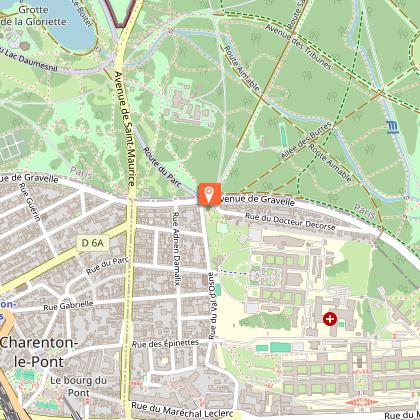
Saint-André church

Built in 1924 in a Romano-Byzantine style, the Church of Saint-André stands as both a testament to the development of the Plateau neighborhood in which it is located, and a poignant reminder of the First World War.Until its construction, the town had only the Church of Saint-Maurice, located on the Grande Rue at the foot of the slope leading up to the Bois de Vincennes. However, as the town expanded over the course of the 19th century, this old place of worship proved too small and too far from the newly built homes. In 1912, Abbé Bressange, parish priest of Saint-Maurice, noted that residents of the Plateau had taken to attending services in the church of Charenton-le-Pont, but appeared willing to help finance a new building. It was ultimately in the aftermath of the First World War that the current sanctuary was erected. Mr. André Lemoine, who had served as the parish organist for forty years, and his wife, donated the land and financed the construction to honor the memory of their son, who was killed in action on December 17, 1914, at the age of 28. He is buried in a vault beneath the altar, later joined by the remains of his parents. Designed by architect Jacquemin, the church was built in just one year using a concrete structure clad in brick, in a style combining Romanesque and Byzantine influences, which was common in churches built during the interwar period. The bell tower, however, was not completed until 1931. In the years that followed, other families connected to Saint-Maurice donated stained glass windows commemorating the deaths of their loved ones, further strengthening the bond between the church and the memory of the Great War.

22 avenue de Verdun 94410 Saint-Maurice
- Paris Est Marne Bois Tourisme -
Consulter
image du object

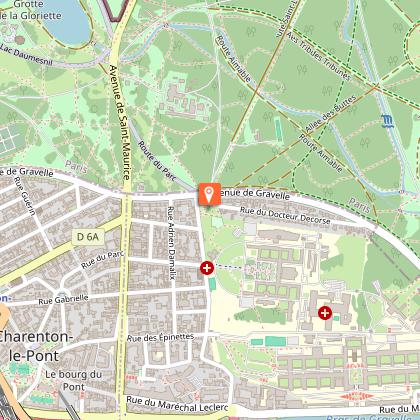
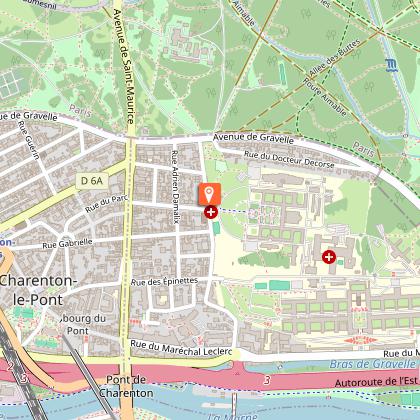
Commemorative Plaque Marking the Site of the Charenton Temple

A plaque in Saint-Maurice marks the site of the Charenton Temple, which was built following the proclamation of the Edict of Nantes in 1598 and whose construction began in 1607.The Edict of Nantes granted freedom of worship but prohibited the construction of Protestant temples within five leagues (just over 15 kilometers) of a bishop’s seat. As a result, the first places of worship for Parisian Protestants were established in Grigny, and later in Ablon. However, the distance proved burdensome, prompting numerous complaints from the Reformed community. In response, Henry IV authorized the construction of a temple on the territory of what is now the commune of Saint-Maurice, then part of the parish of Charenton-Saint-Maurice. The first building was designed by architect Jacques Androuet du Cerceau, but it was ransacked as early as 1615 and then set on fire in 1621. Louis XIII permitted its reconstruction, which was carried out under the direction of Salomon de Brosse, architect of the Luxembourg Palace in Paris. Completed in 1624, it was a particularly large structure, capable of accommodating up to 4,000 worshippers. The Charenton Temple was ultimately destroyed in 1685, in just five days, following the revocation of the Edict of Nantes. In 1700, the land was sold to the Benedictine nuns of the Val d’Osne, who established a convent there. Though the convent was dismantled during the French Revolution, its memory endures in the name of the street that now leads from the Plateau district to the Marne River. Two hundred years later, in 1890, a new temple was built in the nearby commune of Charenton-le-Pont.

Coin de la rue du Val d'Osne et de la rue du Général-Leclerc 94410 Saint-Maurice
- Paris Est Marne Bois Tourisme -
Consulter

Additional information

Updated by

Etablissement Public territorial Paris Est Marne et Bois - 29/07/2025
www.tourisme-vincennes-marnebois.fr
Report a problem

Open period

All year round daily.

Contact

Phone : 01 85 44 01 78

Email : tourisme@pemb.fr

Type of land

Hard coating (tar, cement, flooring)
Ground

Animals

Yes

Data author

28 avenue de Paris 94300 Vincennes France

Ratings and reviews

To see around
See more
Open
Close
Show
Show
Show
Show
Show
Show
Show
Show
Show
Show
Show
Caution!
We have no information on the difficulty of this circuit. You may encounter some surprises along the way. Before you go, please feel free to inquire more and take all necessary precautions. Have a good trip! 🌳🥾