Tours
Activities
Places of interest
Where to eat
Where to sleep

Discover Le Parc des Grand Clos at Asnieres-sur-oise

Are you the owner?
Welcome to Asnieres-sur-oise, a true haven of peace nestled in Val-d'Oise, Ile de France. From Le Parc des Grand Clos, dive into a universe full of discoveries and varied activities. Nature enthusiasts can explore the surrounding forests on hikes or bike rides, while history buffs will be amazed by the Royaumont Abbey, a former Cistercian monastery famous for its gothic architecture.
Families will...
See more

What to do in LE PARC DES GRAND CLOS

See more suggestions
Book your activities in LE PARC DES GRAND CLOS and experience memorable moments.
See more suggestions
Royaumont - abbey & fondation
871 m

Royaumont - abbey & fondation

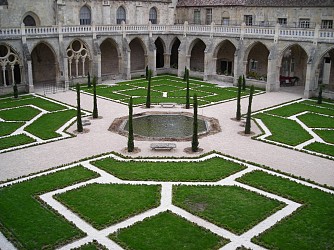
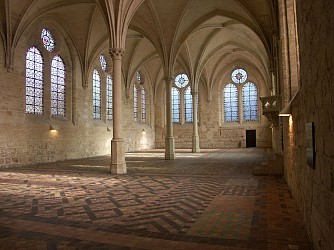
In 1228, Saint Louis and his mother Blanche de Castille established the Abbey of Royaumont, today still the largest Cistercian abbey of Ile-de-France. Listed as a historical monument, the abbey has one of the most beautiful examples of Gothic refectory in France. The 7 hectares park, crossed by canals, is labelled "Remarkable garden" by the French Minister of Culture. It has conserved some of its medieval features and today has three gardens: an experimental vegetable garden, opened in 2014, a medieval inspiration garden, and the garden of the monastery transformed into a ravishing French garden in 1912. The abbey is open every day, from 10 am to 6 pm (5:30 pm between November and March). Royaumont Abbey also offers guided visits, heritage and garden activities for children and families every Sunday throughout the year, and holds a music and dance Festival every year in September and October. In 1228, Saint Louis and his mother Blanche de Castille established the Abbey of Royaumont, today still the largest Cistercian abbey of Ile-de-France. Listed as a historical monument, the abbey has one of the most beautiful examples of Gothic refectory in France. The 7 hectares park, crossed by canals, is labelled "Remarkable garden" by the French Minister of Culture. It has conserved some of its medieval features and today has three gardens: an experimental vegetable garden, opened in 2014, a medieval inspiration garden, and the garden of the monastery transformed into a ravishing French garden in 1912. The abbey is open every day, from 10 am to 6 pm (5:30 pm between November and March). Royaumont Abbey also offers guided visits, heritage and garden activities for children and families every Sunday throughout the year, and holds a music and dance Festival every year in September and October.

3 Jard de l’abbaye de Royaumont 95270 Asnières-sur-Oise
Book from 0 EURBook
Show
Eglise Saint-Acceul
14 km

Eglise Saint-Acceul

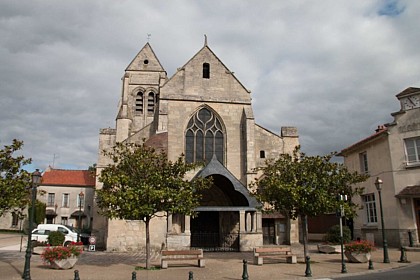
An architectural and artistic gem of the Renaissance, the Church of Saint-Acceul is listed as a historic monument. This church is the only one in France to bear this name, and it is the only church in the Val-d’Oise to still have its original stained-glass windows. Listed as a historic monument, this church is the only one in France to bear this name, which remains a mystery, even though it is often associated with Saint-Andéol, the evangelizer of Languedoc, who was martyred in the 3rd century. Saint-Acceul is depicted on the church’s façade holding a saw (Saint-Andéol’s skull was sawed off by the Romans). An architectural and artistic gem of the Renaissance, the Church of Saint-Acceul in Ecouen is a major tourist attraction for the town. Construction of the Saint-Acceul Church began in 1536 under the direction of Constable Anne de Montmorency (builder of the Château d’Ecouen), who wished to make this imposing monument a symbol of the Montmorency family’s status and power. The choir was completed in 1545. The building underwent numerous modifications thereafter: the nave was constructed in the early 18th century and the façade in the mid-19th century. The combination of these various periods, each with its own artistic and architectural style, gives the church its unique character; it is also known for its stained-glass windows. Inside, visitors can see the altar and its imposing painting—a copy of Raphael’s “Transfiguration”—as well as an organ. The bell tower contains three bells, the largest of which—weighing over 1,400 kg—bears the coat of arms of Anne de Montmorency. The other two bells weigh 850 kg and 600 kg, respectively. The architect, Jean Bullant, is said to have been buried in the church. The main feature of the church in Ecouen lies in its stained-glass windows, which have survived intact since the Renaissance. Indeed, in many churches from that era, the stained-glass windows were shattered during wars, broken by accident, or even stolen. The stained-glass windows in those churches are therefore later reproductions, sometimes with dull colors. In contrast, the rich stained-glass windows of Ecouen, dating from the 16th century (the period when the castle was built), hold many surprises for visitors... The ten stained-glass windows, funded by the Montmorency family, are believed to have been created between 1544 and 1587. They depict not only the powerful family but also the Passion of Christ, incorporating more contemporary themes (as the period marked the outbreak of the Wars of Religion).

2 Rue Jean Bullant 95440 Écouen
Book from 0 EURBook
Show
Behind-the-Scenes Guided Tour of the Stade de France
24 km

Behind-the-Scenes Guided Tour of the Stade de France

Stade de France opens its doors for an exclusive tour! Discover places usually closed to the public and share the emotion of football that fills the site!  THE STADE DE FRANCE OPENS ITS DOORS FOR AN EXCLUSIVE TOUR! DISCOVER PLACES USUALLY CLOSED TO THE PUBLIC AND TASTE THE FOOTBALL FEVER THAT FILLS THE SITE! The tour starts with a visit to the fan terraces, from which you can admire a stunning panoramic view of the site, before your guide takes you to look at the private boxes. As a truly privileged visitor, you will then be shown around the locker rooms, used by some of the world's the greatest players, before walking through the famous tunnel that leads onto the pitch.  Your guide will tell you all kinds of facts and stories about this emblematic stadium, its history in its architecture, including the many celebrities who have walked the turf. Because this stadium is not only about football. As the largest sports and cultural complex in France, the Stade de France hosts a diverse range of sporting events but also stages concerts by some of the world’s most famous musicians. The Rolling Stones, U2, Beyonce and Rihanna have all ignited the stage and crowds during spectacular large-scale shows held at the stadium! Your tour comes to an end at the Museum of the Stade de France, where you will be free to browse the exhibits at your own pace. Discover archives and mock-ups of the stadium, but also guitars and autographed football shirts... All of the objects that bear witness to the legendary character of the site! Book now to take advantage of this exclusive tour that will delight young and old alike!  

Stade de France 93200 Saint Denis
Book from 16 EURBook
Show

What to visit in LE PARC DES GRAND CLOS

See more suggestions
Enjoy the green spaces of LE PARC DES GRAND CLOS.
See more suggestions
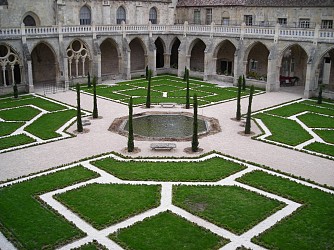
Royaumont - abbey & fondation
871 m

Royaumont - abbey & fondation

In 1228, Saint Louis and his mother Blanche de Castille established the Abbey of Royaumont, today still the largest Cistercian abbey of Ile-de-France. Listed as a historical monument, the abbey has one of the most beautiful examples of Gothic refectory in France. The 7 hectares park, crossed by canals, is labelled "Remarkable garden" by the French Minister of Culture. It has conserved some of its medieval features and today has three gardens: an experimental vegetable garden, opened in 2014, a medieval inspiration garden, and the garden of the monastery transformed into a ravishing French garden in 1912. The abbey is open every day, from 10 am to 6 pm (5:30 pm between November and March). Royaumont Abbey also offers guided visits, heritage and garden activities for children and families every Sunday throughout the year, and holds a music and dance Festival every year in September and October. In 1228, Saint Louis and his mother Blanche de Castille established the Abbey of Royaumont, today still the largest Cistercian abbey of Ile-de-France. Listed as a historical monument, the abbey has one of the most beautiful examples of Gothic refectory in France. The 7 hectares park, crossed by canals, is labelled "Remarkable garden" by the French Minister of Culture. It has conserved some of its medieval features and today has three gardens: an experimental vegetable garden, opened in 2014, a medieval inspiration garden, and the garden of the monastery transformed into a ravishing French garden in 1912. The abbey is open every day, from 10 am to 6 pm (5:30 pm between November and March). Royaumont Abbey also offers guided visits, heritage and garden activities for children and families every Sunday throughout the year, and holds a music and dance Festival every year in September and October.

3 Jard de l’abbaye de Royaumont 95270 Asnières-sur-Oise
Book from 0 EURBook
Show
Eglise Saint-Acceul
14 km

Eglise Saint-Acceul

An architectural and artistic gem of the Renaissance, the Church of Saint-Acceul is listed as a historic monument. This church is the only one in France to bear this name, and it is the only church in the Val-d’Oise to still have its original stained-glass windows. Listed as a historic monument, this church is the only one in France to bear this name, which remains a mystery, even though it is often associated with Saint-Andéol, the evangelizer of Languedoc, who was martyred in the 3rd century. Saint-Acceul is depicted on the church’s façade holding a saw (Saint-Andéol’s skull was sawed off by the Romans). An architectural and artistic gem of the Renaissance, the Church of Saint-Acceul in Ecouen is a major tourist attraction for the town. Construction of the Saint-Acceul Church began in 1536 under the direction of Constable Anne de Montmorency (builder of the Château d’Ecouen), who wished to make this imposing monument a symbol of the Montmorency family’s status and power. The choir was completed in 1545. The building underwent numerous modifications thereafter: the nave was constructed in the early 18th century and the façade in the mid-19th century. The combination of these various periods, each with its own artistic and architectural style, gives the church its unique character; it is also known for its stained-glass windows. Inside, visitors can see the altar and its imposing painting—a copy of Raphael’s “Transfiguration”—as well as an organ. The bell tower contains three bells, the largest of which—weighing over 1,400 kg—bears the coat of arms of Anne de Montmorency. The other two bells weigh 850 kg and 600 kg, respectively. The architect, Jean Bullant, is said to have been buried in the church. The main feature of the church in Ecouen lies in its stained-glass windows, which have survived intact since the Renaissance. Indeed, in many churches from that era, the stained-glass windows were shattered during wars, broken by accident, or even stolen. The stained-glass windows in those churches are therefore later reproductions, sometimes with dull colors. In contrast, the rich stained-glass windows of Ecouen, dating from the 16th century (the period when the castle was built), hold many surprises for visitors... The ten stained-glass windows, funded by the Montmorency family, are believed to have been created between 1544 and 1587. They depict not only the powerful family but also the Passion of Christ, incorporating more contemporary themes (as the period marked the outbreak of the Wars of Religion).

2 Rue Jean Bullant 95440 Écouen
Book from 0 EURBook
Show
Ecouen Castle Park
14 km

Ecouen Castle Park

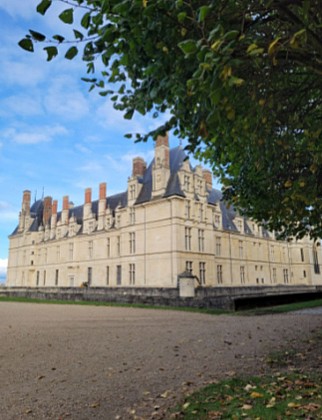
Set within the 104-hectare Écouen Forest, a 19-hectare enclosed estate surrounds this château. Serving as a natural barrier between a highly urban environment and the Plaine de France, this park offers a constantly changing view of nature throughout the seasons. The Château d'Écouen, which today houses the collections of the National Museum of the Renaissance, is a landmark of the French Renaissance. Built for Constable Anne de Montmorency by the finest artists between 1538 and 1555, it is situated on a promontory overlooking the entire plain of France. A forest borders it, crisscrossed by beautiful paths that were once the scene of numerous hunts. According to engravings by Androuet Du Cerceau, we know that a garden featuring sixteen enclosed squares had been planned at the castle’s entrance, but it appears that the earthwork required for its construction was never carried out, and only a niche at the base of one of the bastions still bears witness to this original design. Similarly, a grotto adorned with splendid plant and animal motifs had been commissioned around 1556 from Bernard Palissy, the most famous ceramist of the time, but the constable’s death in 1567 prevented the project from being completed, and it was for Catherine de’ Medici at the Tuileries that this grotto was eventually finished. In 1696, the château passed into the hands of the Condé family. Jules Hardouin-Mansart then transformed the landscape by creating an esplanade at the rear of the château, on which he laid out three parterres with simple geometric designs. These flowerbeds extend into the forest via a long green avenue lined with trees and groves to the south and a “grand tapis” to the north, in the style of the one at Versailles. The forest itself was enhanced with new paths and roundabouts from which other paths radiated outward. In 1805, Napoleon decided to establish the first boarding school for young women of the Legion of Honor in the château. A perimeter wall then enclosed the estate. In 1810, the Prince of Beauharnais presented his sister, Queen Hortense—patron of the institution—with a fountain at the far end of the park, on the presumed site of an old fountain known as the Fontaine Madame. When the museum was established here in 1977, it was decided to restore the estate to its original appearance. Although the “carpet” has been irrevocably truncated due to urbanization, the rest of the flowerbeds and paths have been restored. A gate was added to the perimeter wall in 1995 to restore the view intended by Mansart. Only the Hortense Fountain has not yet been restored, which, we hope, will happen soon!

Rue Jean Bullant 95440 Écouen
Show
National Renaissance Museum - Écouen Castle
14 km

National Renaissance Museum - Écouen Castle

We owe the Château d'Écouen to Duke Anne de Montmorency. Since 1977, it has housed the National Renaissance Museum. The collections include an exceptional selection of decorative arts, paintings, and sculptures from the 15th to the 17th centuries. The collections of the National Renaissance Museum showcase true treasures of European decorative arts: furniture, gold and silverware, painted enamels, majolica, tapestries... An architectural gem of the French Renaissance and the only museum in France entirely dedicated to this period, its mission is to shed light on all aspects of the era—history, art history, and civilization—for the widest possible audience. Numerous temporary exhibitions punctuate the cultural season. In addition, you can discover the tapestries depicting the story of David and Bathsheba, which have remained intact over the years. N.B. Starting in late January 2023, *La Tenture de David et Bethsabée*, the museum’s masterpiece, will be taken down to make way for *La Tenture des Valois*, on loan from the Uffizi Gallery in Florence for the exhibition on Antoine Caron. Our ten tapestries will then remain in storage until the courtyard renovations are completed in 2027. N.B. Certain galleries will be closed (sculptures, Madeleine’s Chamber, Abigail’s Chamber, the Gallery of Psyche, the King’s Study, and the King’s Bedroom) from March 7 to April 3, 2023* due to the installation of the exhibition “Antoine Caron (1521–1599): The Theater of History” *The reduced admission rate will apply during this period.

Rue Jean Bullant 95440 Écouen
Show

Where to eat in LE PARC DES GRAND CLOS

See more suggestions
Restaurants in LE PARC DES GRAND CLOS will captivate you.
See more suggestions

Where to sleep in LE PARC DES GRAND CLOS

See more suggestions
Choose a comfortable accommodation in LE PARC DES GRAND CLOS.
See more suggestions
Bergerie Vacation Rentals
23 km

Bergerie Vacation Rentals

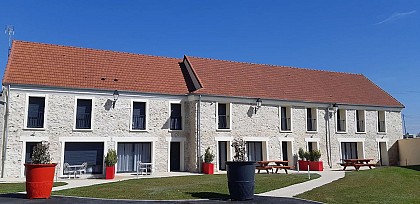
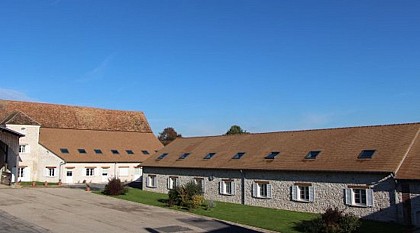
Just outside Paris… Located in a charming village in the heart of the Plaine de France, the Domaine de la Bergerie is at the center of the region’s economic and tourist activity. It consists of 8 vacation rentals that can accommodate 2 to 6 people. Located in the northern part of the Île-de-France region, the Bergerie vacation rentals enjoy an ideal location: situated at the heart of both national and international economic activity, with the Paris Nord Villepinte and Le Bourget exhibition centers just a few kilometers away, and Roissy Charles-de-Gaulle International Airport, less than 40 km from downtown Paris, yet also close to tourist attractions, including numerous amusement parks and cultural sites. The Bergerie vacation rentals offer professionals the best alternative to traditional hotels—a smart and welcoming option. Thanks to its location, the Bergerie vacation rentals are particularly well-suited to accommodate exhibitors and visitors to trade shows in the region, trade show setup crews, as well as visitors to local businesses. The Bergerie vacation rentals offer business travelers the comfort of home while helping them save on lodging and dining costs. It’s also an ideal location for families looking to spend a few days just 16 km from Le Parc Astérix amusement park, 45 km from Disneyland Paris, and 40 km from downtown Paris. Their location also makes it easy to visit major sites of French culture and history, such as the Château de Chantilly and the town of Meaux (less than 30 km away), or the Château de Vaux-le-Vicomte and Barbizon (less than 90 km away). Visitors can enjoy themselves and spend quality time together in the cozy setting of the vacation rentals.

19, rue de Paris 77230 Villeneuve-sous-Dammartin
Show
Caution!
We have no information on the difficulty of this circuit. You may encounter some surprises along the way. Before you go, please feel free to inquire more and take all necessary precautions. Have a good trip! 🌳🥾