Tours
Activities
Places of interest
Where to eat
Where to sleep

Camping La Rivière Dorée: Discover Bagneaux-sur-Loing

Are you the owner?
Welcome to Camping La Rivière Dorée, your gateway to exploring the wonders of Bagneaux-sur-Loing and the Seine-et-Marne region! Nestled in the heart of Ile-de-France, our campsite is perfectly situated for nature and culture enthusiasts alike. Bagneaux-sur-Loing is a charming village rich in historical and cultural heritage. Stroll through its streets and discover the 12th-century Saint-Martin Chu...See more

Walking around CAMPING LA RIVIERE DOREE

See more suggestions
Family walks around CAMPING LA RIVIERE DOREE.
See more suggestions
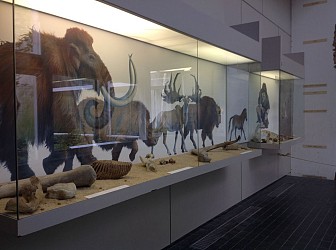
Nemours sightseeing tour
2.8 km

Nemours sightseeing tour

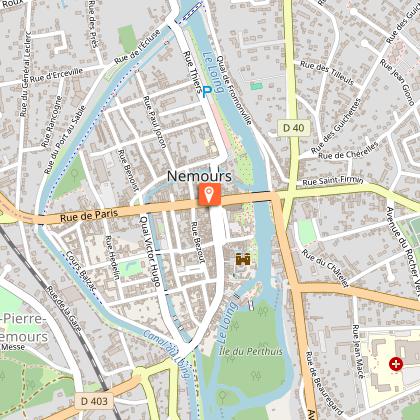
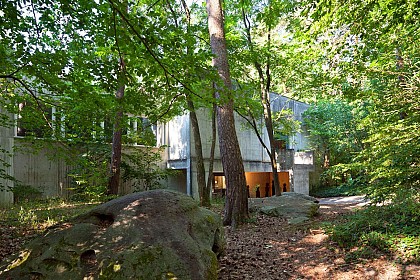
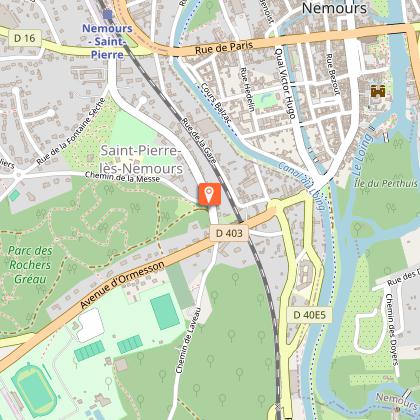
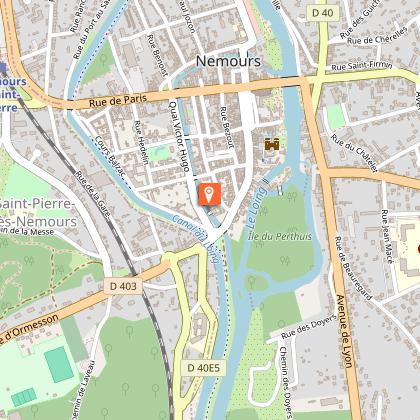
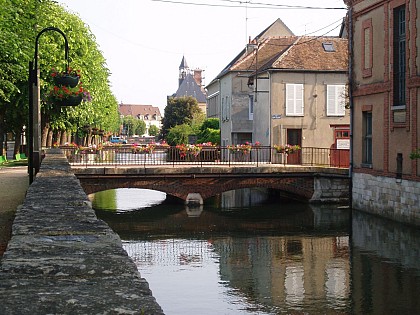
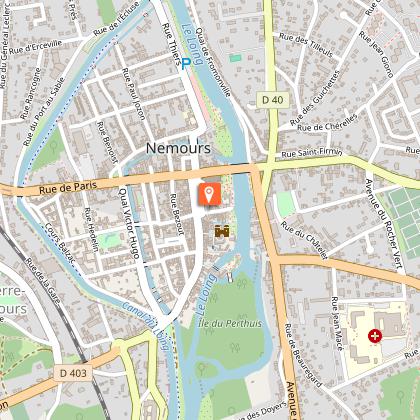
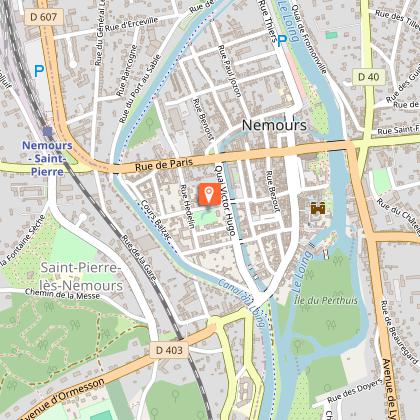
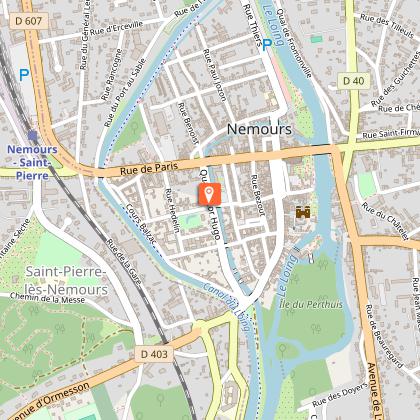
This charming medieval city surrounded by the waters of the Loing invites the walker to wander through its historic center. Nemours has a rich and varied cultural and natural heritage. 1) Start your tour at the castle (rue Gautier 1er) : Built in the 12th century, during Gautier 1er reign, the castle is made up of a quadrangular dwelling, that has circular surrounding towers, with rare and narrow windows. Until 1655, the square tower was crowned with a belfry holding the alarm bell. The outbuildings, stables, stores and the seigneurialChapel Notre-Dame were bundled at the feet of the castle,surrounding today’s second court. The porch and the steps arefrom 17th century. At that time, the castle was used as a jus-tice’s audience hall and jail. During the French Revolution, the castle became a possession of the city. At the beginning of the 20th century the sculptor J.C Sanson proposed to install a museum there. It is now the setting for 2 exhibitions per year, showing its own collections of art pieces. 2) Continue through the alley leading to the courtyard of the castle, from the banks of the Loing, you discover the mills of Nemours : The many mills from the middle age havedisapeared. This one is the last survivor, hereplaces the ancient seigneurial mills. Theunexploited building was bought by the cityin 2014. 3) Take the covered walkway, you arrive at the intersection of Place Jean Jaurès and Rue Gautier 1er. Continue to the right on rue Sanson, go past place Dupont de Nemours and cross the bridge of the river des petitis-fossés, you are on place Victor Hugo. You discover « Petits Fossés » bridges : Rebuilt in the 19th century, the bridges span “les Petits Fossés” river and lead to the city center. -“Red Bridge” replaces the old bridge painted in red. -“Mirabeau Bridge” is placed at the location of the religious’ bridge. It was used by nuns going from the convent to their enclosure. -“Paris’s street Bridge” replaces the formerly door called “du Petit Pont”, entrance of the city. 4) Go along the river of Petits-fossés, along the quai Victor Hugo. You will see Mill Wheel : This wheel belonged to a mill dating from the 19th century. It was used to grind the barley of the brew-ery established in the former convent of the Frères Récollets. Today, the convent shelters a fashion house called ATELIER EMELIA, who creates wedding dresses. 5) Continue along the river petitis-fossés, along the quai Victor Hugo, at N°41 you discover Intercommunal Union and Guédu Park : This 18th century town house in a nice park was owned by the last descendants of Hedelin’s family. Also, it was the City Hall from 1954 to 1985. 6) Continue along the Quai Victor Hugo, at the end of this road is the City Hall : This stone and brick building built in the 17th cen-tury by the royal architect Jules Hardouin-Mansart was a former convent of the congregation Notre-Dame. Until 1977 it was the hospital and then it became the city hall. 7) Continue to the square next to the City hall, rue de Paris. Admire the Fountain of Chaintréauville’s water : Situated in the city hall garden, it is a mas-terpiece of the sculptor from Nemours, J.C Sanson. He gave it to the city in 1901. It is a representation of the source of Chaintréauville offering water to Nemours inhabitants. 8) Take the rue de Paris, at N°5 is the restaurant : The Ecu de France. This hostel could be one of the oldest in France. It was marked by a sign showing the official « écu » of France. Victor Hugo stayed here in 1844, when he was travelling. 9) You will see the cannon ball : Cannon ball from one of Napoleon’s battles in 1814, it is situated at the corner of Paris street and Dr Du-mée street. 10) Rendez-vous then place de la République, N°33 : A town house from the 17th century formerly named «Hôtel des Princes» is hiding behind the doorway. On the way to the coronation of Napoléon in 1804, Pope Pie VII, stopped in Nemours and received the contemporary leaders in this house. 11) On the other side of the square, look at the N° 28 Place de la République : This stone, wood and cement building from the 17th century shows how wealthy the con-temporary owner were. 12) Next to this building, you can visit the church of Saint Jean-Baptiste : The church was founded during the reign of Gautier 1er in 1170, in order to receive a relic of St Jean-Baptiste, brought from Sébaste. The tower porch is the oldest part of the building (12th century). Fol-lowing a fire, it was rebuilt during the 16th century and devoted in 1595. The stained-glass windows and the interior fittings are dating from the 19th century. Next to the church, you will see the Bridge : Built by the engineer Boistard, the bridge replaces the former one destroyed by 1770 flood. It was inaugurated in 1804 by Pope Pie VII, on his way to the coronation of Napoléon. 13) Leaving the church and the Grand Pont, continue on rue du Prieuré. Adjoining the church, you will see the Priory : Built around 1300, it was dedicated to the clergymen of Sébaste. The actuel presbytary was built in 1675. It became property of the city in 1824. 14) At the corner of rue du Prieuré and rue Gaston Darley, you will discover the N°16 Gaston Darley street : This house made of stones and wood from the 17th century has a projecting staircase. The ground floor was used as a shop and the upper floors as a dwelling. Perfectly restaured, it sheltered the Tourist Office during 10 years, until 2016. 15) Continue to the end of Rue Gaston Darley. You arrive in front of Art Room – 2 Gaston Darley street : The architect Antoine (cf : Hôtel des Monnaies in Paris) designed this building in the 17th century. It has a pediment facade in classic style. It was formerly a performance hall, then a school, before it became the City Library. 16) You finish the course on the lawn of the castle.

1 h
1.6 km
28 28 rue Gautier 1er 77140 Nemours
Show

What to do in CAMPING LA RIVIERE DOREE

See more suggestions
Explore the bookable activity options in CAMPING LA RIVIERE DOREE for all tastes and ages.
See more suggestions
Palace of Fontainebleau
18 km

Palace of Fontainebleau

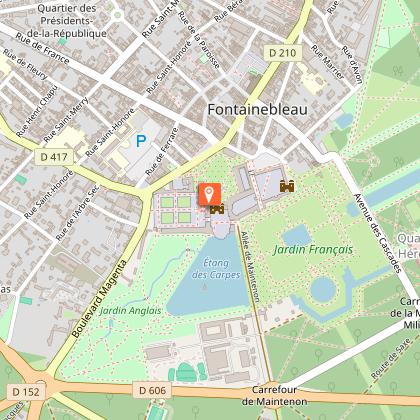
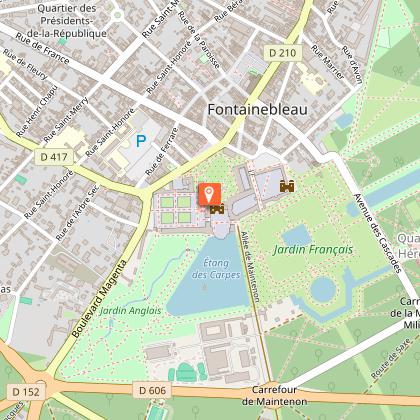
The Château de Fontainebleau is a big part of French history! This vast building, in both classical and Renaissance style, is not only famous for witnessing Napoleon's imperial adventure. From the royal charter of 1137 to the fall of the Second Empire in 1870, the Palace of Fontainebleau saw the lives of the greatest French sovereigns from day to day. The original medieval fortress was replaced by a Renaissance palace under the guiding hand of Francois I. At that time, two Italian artists, Primaticcio and Il Rosso vied in talent and founded the first School of Fontainebleau. The Galerie François I, which leads from the royal apartments to the chapel of the Convent of the Holy Trinity, is most original with its décor of frescoes, stucco and carved wood in praise of François I. The Ballroom was completed at the time of the last Valois kings, under Primaticcio’s direction. With Henri IV, the new Bourbon dynasty took over the palace, and built new rooms with interior decoration placed in the hands of the artists of the second School of Fontainebleau. Louis XIII completed the work started by his father. Under the Sun King Fontainebleau continued to be the royal family home, and the Grand Dauphin was born there in 1661. The king’s nieces were married from Fontainebleau, and the Edict of Nantes was revoked there in 1685. Louis XV and Louis XVI would spend the autumn there and initiated new, large scale building works and interior doing-ups. After the French Revolution, Napoleon I found the palace completely emptied of its furniture but intact. He undertook to refurnish the apartments and brought the palace back to its former glory as the home of the sovereign. Napoleon Bonaparte spent his last days there before his abdication in 1814 and departure for the Elba. Louis-Philippe was the first sovereign to order a complete restoration of Fontainebleau. The restoration of the Empire in 1852 gave renewed importance to the palace, and Napoleon III became strongly attached to this home, staying there regularly with his court. Housed in the Louis XV wing, the Napoleon I museum is dedicated to the Emperor and his family, with a large collection of objects from his everyday life, weapons used in military campaigns and gifts he received. The Chinese museum, created by Empress Eugenie, displays works of art from the Far East. The Jeu de Paume court, thought to be the oldest of the three surviving in France, is open to the public with demonstrations and introductory games. Le Nôtre's French gardens, the Queen’s English garden with its Fountain of Diana, the hedge maze and the Cour des Adieux are open to the public all year round. Boat excursions on the Etang aux Carpes or horse-drawn carriage rides are available. The Domain of the Fontainebleau Palace is inscribed at the UNESCO Humanity World Heritage. There is a little train going around the gardens during the touristic season.

Place du Général de Gaulle 77300 Fontainebleau
Book from 0 €Book
Show

IGN cards

2417OTR - FORÊT DE FONTAINEBLEAU RESISTANTE FORET DES TROIS PIGNONS
Editor : IGN
Collection : TOP 25 RÉSISTANTE
Scale : 1:25 000
17.20€
2417OT - FORÊT DE FONTAINEBLEAU FORÊT DES TROIS PIGNONS
Editor : IGN
Collection : TOP 25 ET SÉRIE BLEUE
Scale : 1:25 000
13.90€
2418SB - CHÂTEAU-LANDON CORBEILLES
Editor : IGN
Collection : TOP 25 ET SÉRIE BLEUE
Scale : 1:25 000
13.90€
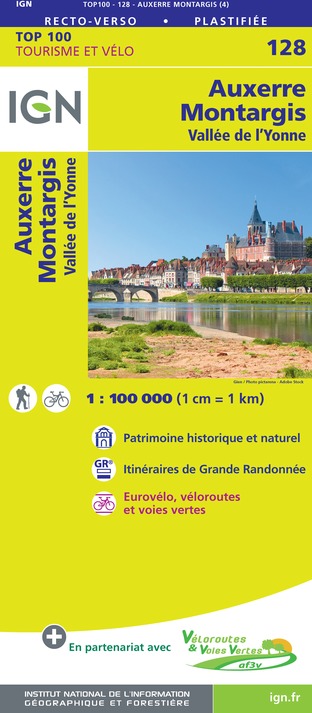
128 AUXERRE MONTARGIS VALLÉE DE L'YONNE
Editor : IGN
Collection : TOP 100
Scale : 1:100 000
8.40€
119 PARIS SENS PNR DU GÂTINAIS FRANÇAIS
Editor : IGN
Collection : TOP 100
Scale : 1:100 000
8.40€
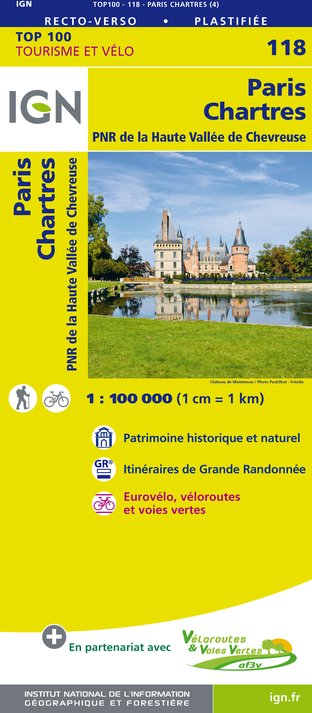
118 PARIS CHARTRES PNR DE LA HAUTE VALLÉE DE CHEVREUSE
Editor : IGN
Collection : TOP 100
Scale : 1:100 000
8.40€
D77 SEINE-ET-MARNE
Editor : IGN
Collection : CARTES DÉPARTEMENTALES IGN
Scale : 1:150 000
5.90€
D41-45 LOIR-ET-CHER LOIRET
Editor : IGN
Collection : CARTES DÉPARTEMENTALES IGN
Scale : 1:150 000
5.90€
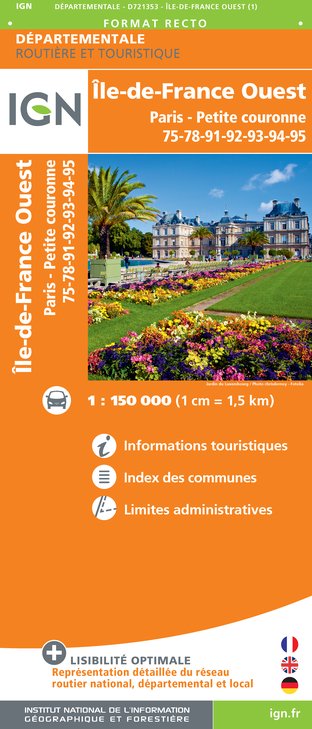
D75-95 ÎLE-DE-FRANCE OUEST
Editor : IGN
Collection : CARTES DÉPARTEMENTALES IGN
Scale : 1:150 000
5.90€
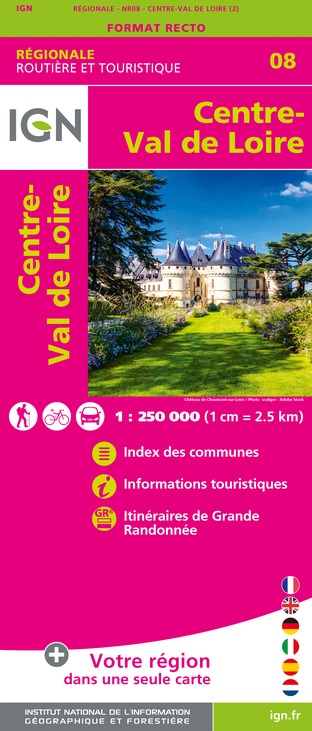
NR08 CENTRE-VAL DE LOIRE
Editor : IGN
Collection : CARTES RÉGIONALES IGN
Scale : 1:250 000
6.80€
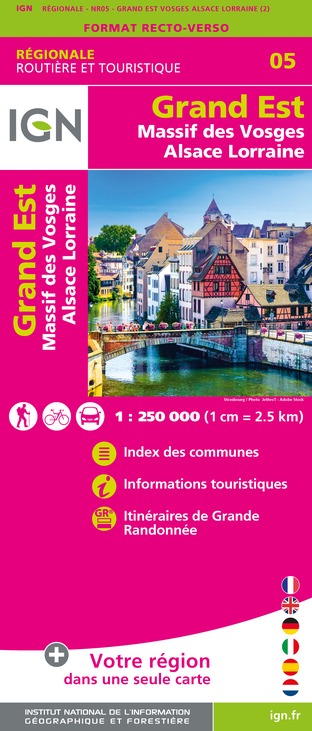
NR05 GRAND EST RECTO/VERSO MASSIF DES VOSGES ALSACE LORRAINE
Editor : IGN
Collection : CARTES RÉGIONALES IGN
Scale : 1:250 000
6.80€
NR03 ÍLE DE FRANCE
Editor : IGN
Collection : CARTES RÉGIONALES IGN
Scale : 1:250 000
6.80€
NR04 - GRAND EST RECTO/VERSO ARDENNE CHAMPAGNE
Editor : IGN
Collection : CARTES RÉGIONALES IGN
Scale : 1:250 000
6.80€
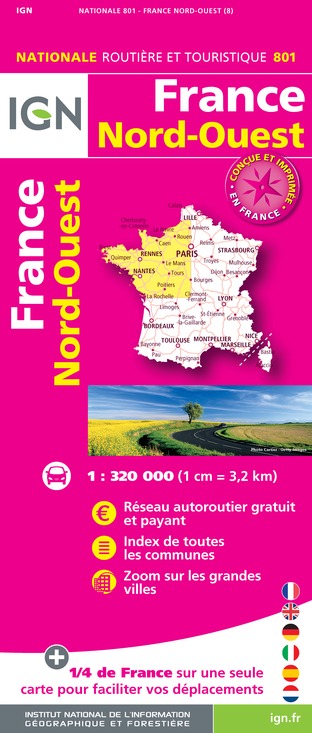
801 FRANCE NORD OUEST
Editor : IGN
Collection : CARTES NATIONALES IGN
Scale : 1:320 000
6.10€
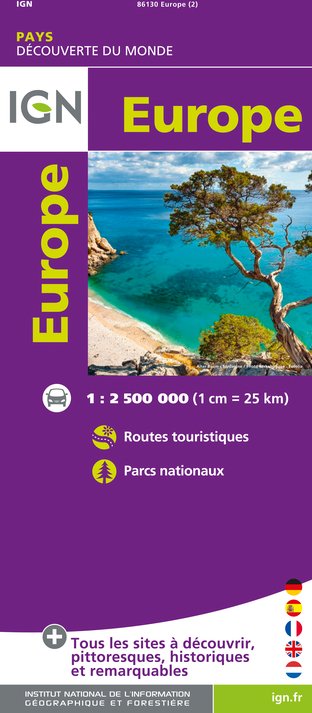
EUROPE
Editor : IGN
Collection : DÉCOUVERTE DES PAYS DU MONDE IGN
Scale : 1:2 500 000
7.00€

What to visit in CAMPING LA RIVIERE DOREE

See more suggestions
Stroll through the historic districts of CAMPING LA RIVIERE DOREE.
See more suggestions
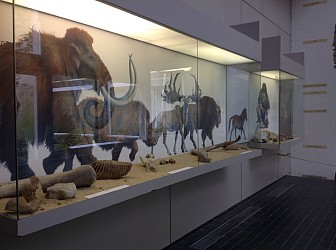
Where to eat in CAMPING LA RIVIERE DOREE

See more suggestions
Come and taste typical dishes of CAMPING LA RIVIERE DOREE.
See more suggestions
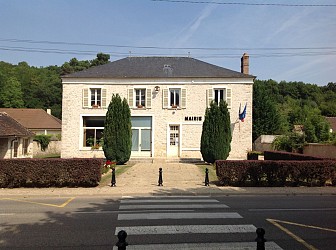
Where to sleep in CAMPING LA RIVIERE DOREE

See more suggestions
Discover available accommodations around CAMPING LA RIVIERE DOREE.
See more suggestions
Caution!
We have no information on the difficulty of this circuit. You may encounter some surprises along the way. Before you go, please feel free to inquire more and take all necessary precautions. Have a good trip! 🌳🥾