Alert
Alerts
Nemours sightseeing tour

Description
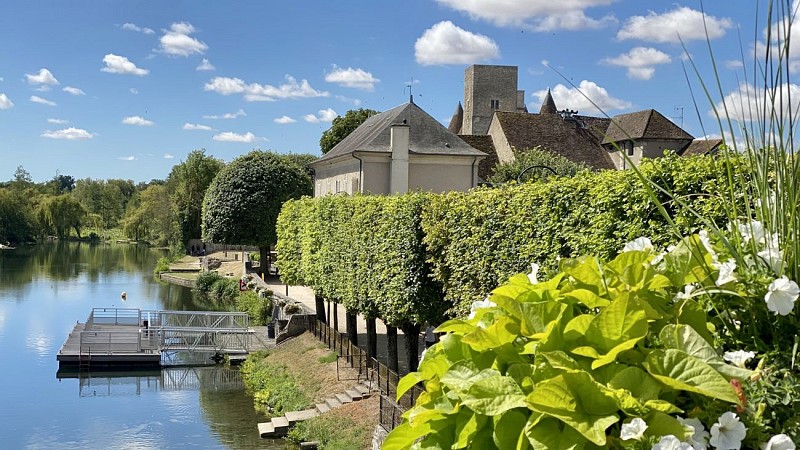
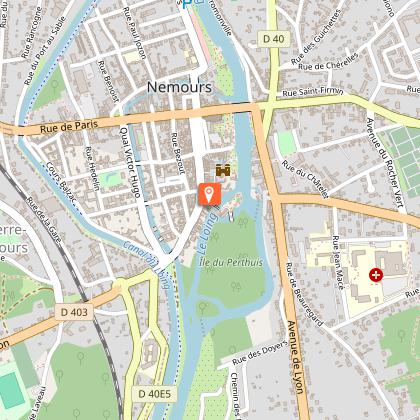
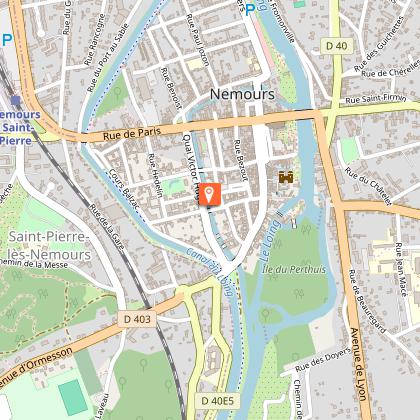
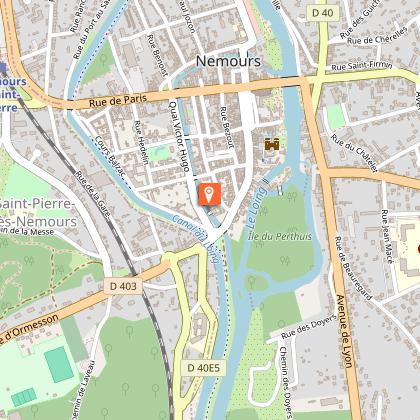
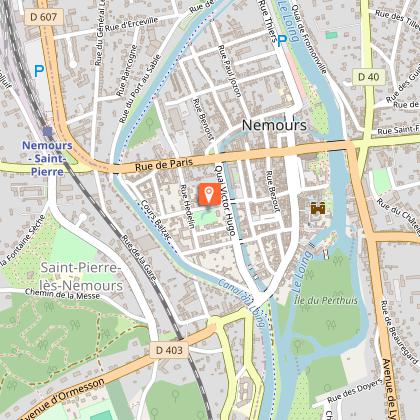
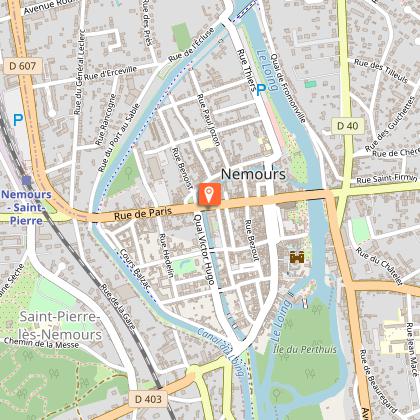
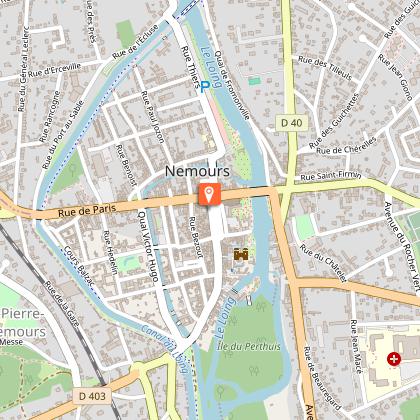
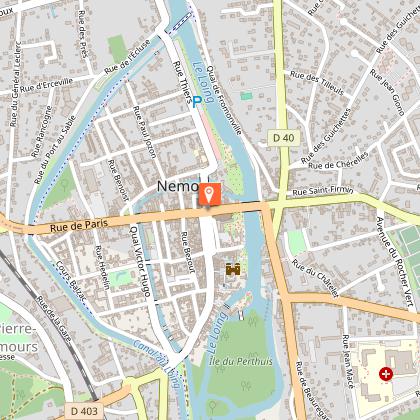
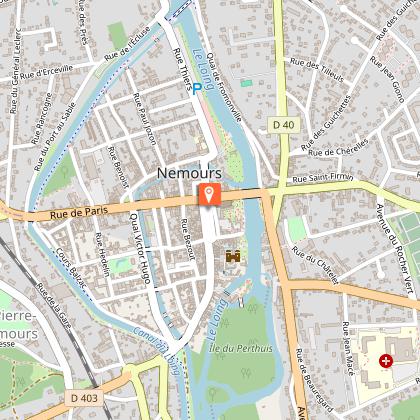
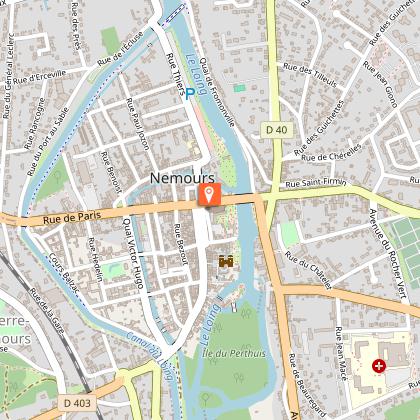
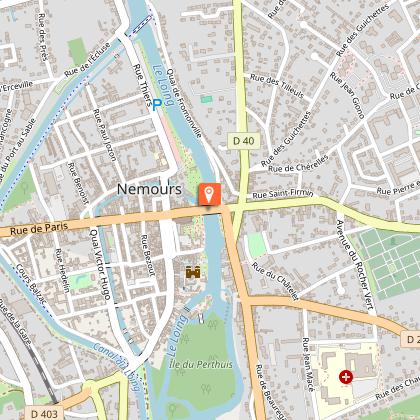
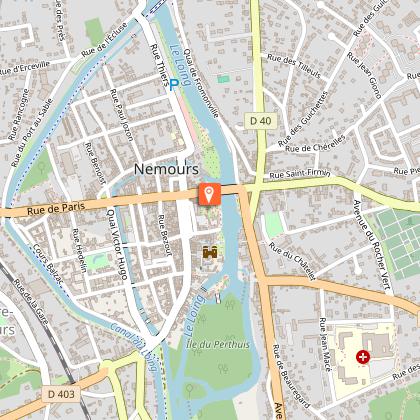
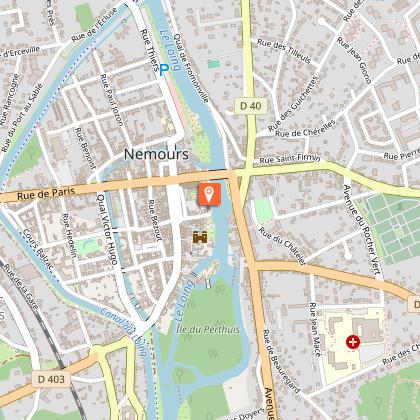
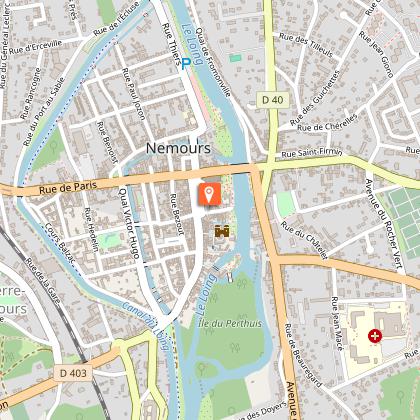
This charming medieval city surrounded by the waters of the Loing invites the walker to wander through its historic center. Nemours has a rich and varied cultural and natural heritage.
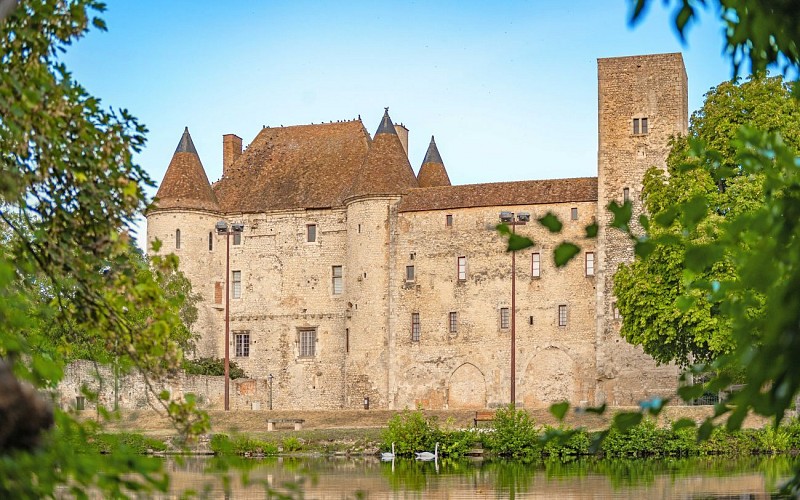
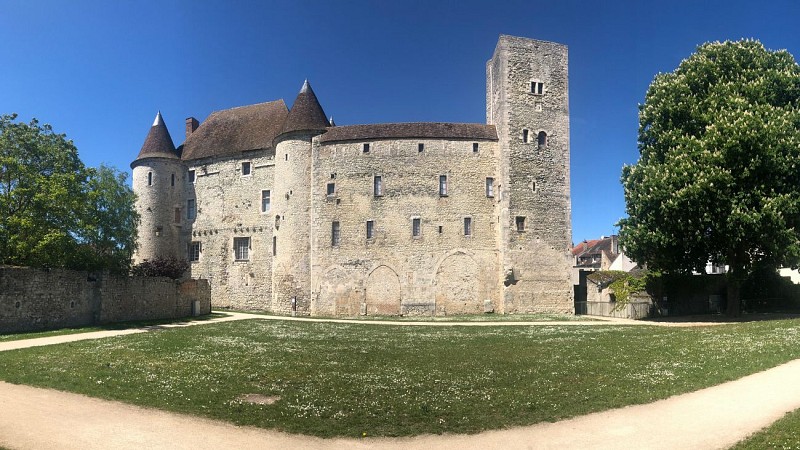
1) Start your tour at the castle (rue Gautier 1er) : Built in the 12th century, during Gautier 1er reign, the castle is made up of a quadrangular dwelling, that has circular surrounding towers, with rare and narrow windows. Until 1655, the square tower was crowned with a belfry holding the alarm bell. The outbuildings, stables, stores and the seigneurialChapel Notre-Dame were bundled at the feet of the castle,surrounding today’s second court. The porch and the steps arefrom 17th century. At that time, the castle was used as a jus-tice’s audience hall and jail. During the French Revolution, the castle became a possession of the city. At the beginning of the 20th century the sculptor J.C Sanson proposed to install a museum there. It is now the setting for 2 exhibitions per year, showing its own collections of art pieces.
2) Continue through the alley leading to the courtyard of the castle, from the banks of the Loing, you discover the mills of Nemours : The many mills from the middle age havedisapeared. This one is the last survivor, hereplaces the ancient seigneurial mills. Theunexploited building was bought by the cityin 2014.
3) Take the covered walkway, you arrive at the intersection of Place Jean Jaurès and Rue Gautier 1er. Continue to the right on rue Sanson, go past place Dupont de Nemours and cross the bridge of the river des petitis-fossés, you are on place Victor Hugo. You discover « Petits Fossés » bridges : Rebuilt in the 19th century, the bridges span “les Petits Fossés” river and lead to the city center. -“Red Bridge” replaces the old bridge painted in red. -“Mirabeau Bridge” is placed at the location of the religious’ bridge. It was used by nuns going from the convent to their enclosure. -“Paris’s street Bridge” replaces the formerly door called “du Petit Pont”, entrance of the city.
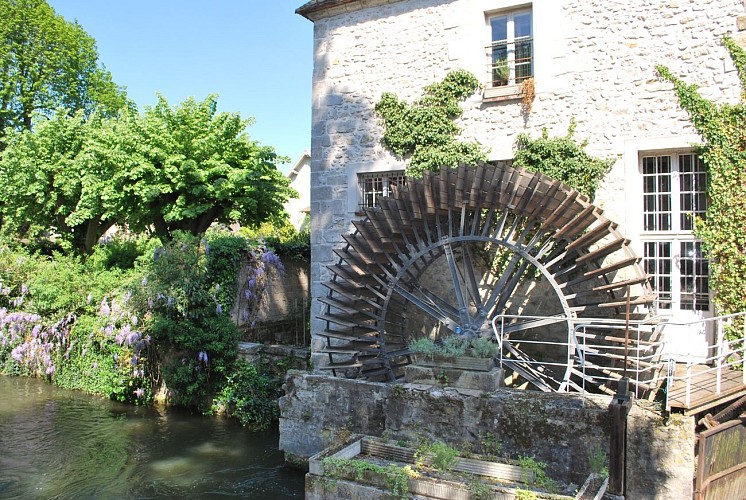
4) Go along the river of Petits-fossés, along the quai Victor Hugo. You will see Mill Wheel : This wheel belonged to a mill dating from the 19th century. It was used to grind the barley of the brew-ery established in the former convent of the Frères Récollets. Today, the convent shelters a fashion house called ATELIER EMELIA, who creates wedding dresses.
5) Continue along the river petitis-fossés, along the quai Victor Hugo, at N°41 you discover Intercommunal Union and Guédu Park : This 18th century town house in a nice park was owned by the last descendants of Hedelin’s family. Also, it was the City Hall from 1954 to 1985.
6) Continue along the Quai Victor Hugo, at the end of this road is the City Hall : This stone and brick building built in the 17th cen-tury by the royal architect Jules Hardouin-Mansart was a former convent of the congregation Notre-Dame. Until 1977 it was the hospital and then it became the city hall.
7) Continue to the square next to the City hall, rue de Paris. Admire the Fountain of Chaintréauville’s water : Situated in the city hall garden, it is a mas-terpiece of the sculptor from Nemours, J.C Sanson. He gave it to the city in 1901. It is a representation of the source of Chaintréauville offering water to Nemours inhabitants.
8) Take the rue de Paris, at N°5 is the restaurant : The Ecu de France. This hostel could be one of the oldest in France. It was marked by a sign showing the official « écu » of France. Victor Hugo stayed here in 1844, when he was travelling.
9) You will see the cannon ball : Cannon ball from one of Napoleon’s battles in 1814, it is situated at the corner of Paris street and Dr Du-mée street.
10) Rendez-vous then place de la République, N°33 : A town house from the 17th century formerly named «Hôtel des Princes» is hiding behind the doorway. On the way to the coronation of Napoléon in 1804, Pope Pie VII, stopped in Nemours and received the contemporary leaders in this house.
11) On the other side of the square, look at the N° 28 Place de la République : This stone, wood and cement building from the 17th century shows how wealthy the con-temporary owner were.
12) Next to this building, you can visit the church of Saint Jean-Baptiste : The church was founded during the reign of Gautier 1er in 1170, in order to receive a relic of St Jean-Baptiste, brought from Sébaste. The tower porch is the oldest part of the building (12th century). Fol-lowing a fire, it was rebuilt during the 16th century and devoted in 1595. The stained-glass windows and the interior fittings are dating from the 19th century.
Next to the church, you will see the Bridge : Built by the engineer Boistard, the bridge replaces the former one destroyed by 1770 flood. It was inaugurated in 1804 by Pope Pie VII, on his way to the coronation of Napoléon.
13) Leaving the church and the Grand Pont, continue on rue du Prieuré. Adjoining the church, you will see the Priory : Built around 1300, it was dedicated to the clergymen of Sébaste. The actuel presbytary was built in 1675. It became property of the city in 1824.
14) At the corner of rue du Prieuré and rue Gaston Darley, you will discover the N°16 Gaston Darley street : This house made of stones and wood from the 17th century has a projecting staircase. The ground floor was used as a shop and the upper floors as a dwelling. Perfectly restaured, it sheltered the Tourist Office during 10 years, until 2016.
15) Continue to the end of Rue Gaston Darley. You arrive in front of Art Room – 2 Gaston Darley street : The architect Antoine (cf : Hôtel des Monnaies in Paris) designed this building in the 17th century. It has a pediment facade in classic style. It was formerly a performance hall, then a school, before it became the City Library.
16) You finish the course on the lawn of the castle.
Technical Information
Altimetric profile
Starting point
Points of interest
Additional information
Updated by
Office de Tourisme du Pays de Nemours - 30/09/2026
www.tourisme-paysdenemours.fr/
Report a problem
Environments
Close to a motorway
Town location
Station district
Close to a public transportation
Close to GR footpath
In the historic centre
Cycling itinerary less than 1 km away
Distinctions
Scandibérique
Open period
All year round daily.
Contact
Phone : 01 64 28 03 95
Email : info@tourisme-paysdenemours.fr
Website : https://www.tourisme-paysdenemours.fr/
Type of land
Hard coating (tar, cement, flooring)
Animals
Yes
Data author

The Cirkwi brief
Embark on an enchanting stroll through the heart of Nemours, a medieval treasure nestled by the serene waters of the Loing. This captivating itinerary, curated by the Office of Tourism of Pays de Nemours, invites you to explore a rich tapestry of cultural and natural heritage. Imagine wandering through the cobblestone streets, each corner telling tales of ancient times, and where the magnificent Château Musée stands as a testament to the town's storied past. Let this guide inspire you to delve into the charm and history of Nemours, where every step echoes with the whispers of bygone eras.
Brief Technical Itinerary Overview
This walking tour stretches approximately 1.627km, with minimal elevation changes—ranging from 59 to 64 meters above sea level. The total positive elevation gained is around 8 to 9 meters, making this route accessible for individuals of all fitness levels. Crafted meticulously by the Office of Tourism of Pays de Nemours, the journey is designed for leisurely exploration, offering a blend of historical immersion and scenic beauty. This overview aims at providing enthusiasts with the necessary technical insight for a comfortable and informed visit.
Seasonal Tips for Nemours Visitors
To optimize your visit to Nemours, consider the seasons. Spring and autumn are splendid, offering mild weather and fewer crowds, perfect for leisurely exploring the Château Musée and its surroundings. Summer, while busier, bathes the town in stunning sunlight, ideal for picturesque strolls. Winter has its own charm, though it's advisable to dress warmly. Regardless of the season, always check the museum's opening hours and any event schedules to enhance your experience. Comfortable walking shoes are a must since the cobblestone paths can be uneven.
Nemours: A Historical Tapestry Unraveled
Nestled in the Île-de-France region, Nemours boasts a rich historical mosaic. This medieval citadel, against the backdrop of the serene Loing River, holds centuries of stories within its walls. The Château Musée, a monument steeped in the annals of French nobility, offers a gateway to the past, showcasing the town’s importance through the ages. Nemours' contribution to French culture and history, particularly through its artistic heritage preserved in the museum, highlights the profound connection between the town and the broader tapestry of French history.
Understanding Nemours' Weather Patterns
Nemours experiences a temperate climate, with distinct seasons offering varied experiences for visitors. The best times to explore this charming town are late spring through early autumn, when the weather is generally mild, and the risk of rain is lower. July and August can be warmer, making early morning or late afternoon explorations ideal. The winters are cold, but with less tourist traffic, offering a unique perspective of the town’s historic sites under a serene blanket of snow. Always check the forecast before your visit to ensure a pleasant experience.