Alert

Alerts

To see around
See more
Open
Close
Show
Show
Show
Show
Show
Show
Show
Show
Show
Show
Show

Oups... It would appear that Cirkwi does not have permission to use your location.

Presentation
Description
Map
Points of interest
Ratings and reviews
See around

Bubry - Around the town

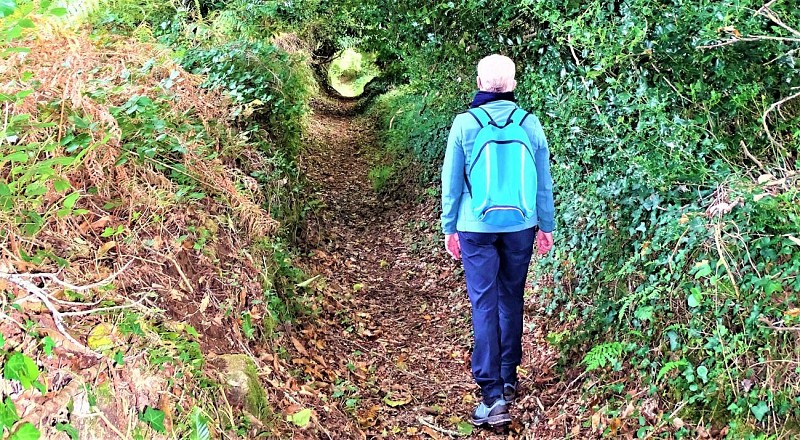
In the hollow paths
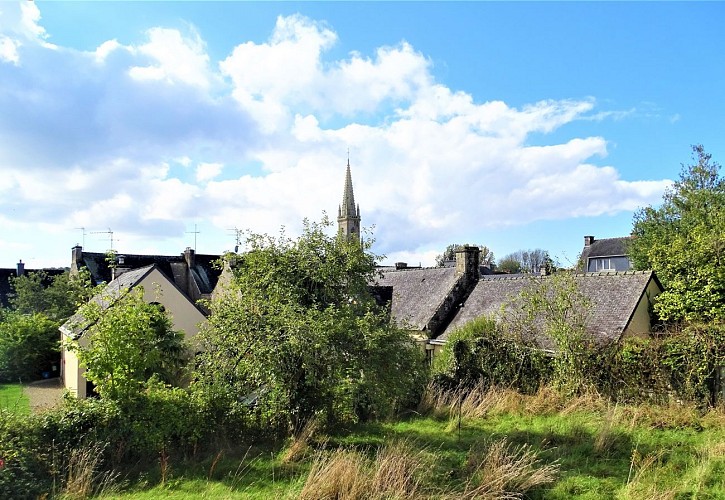
The town of Bubry
The Brandifrout towards Coëtdiquel
Credit : Lorient Agglomération

Description

Starting point: Car park at the village hall

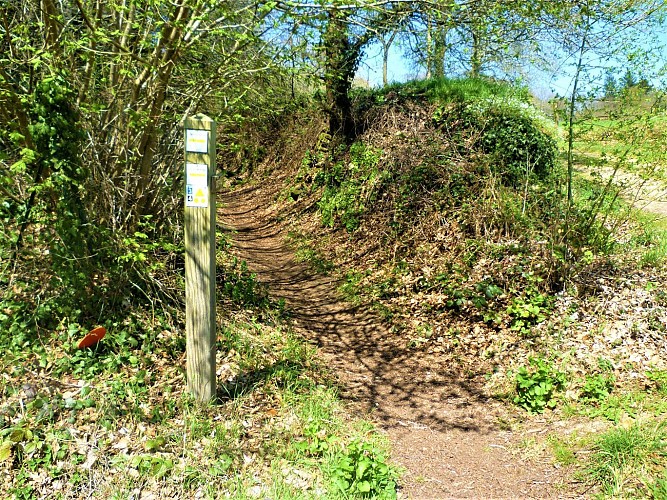
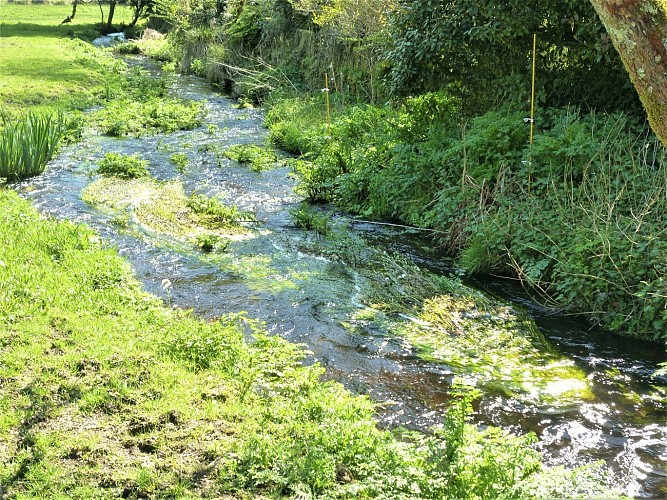
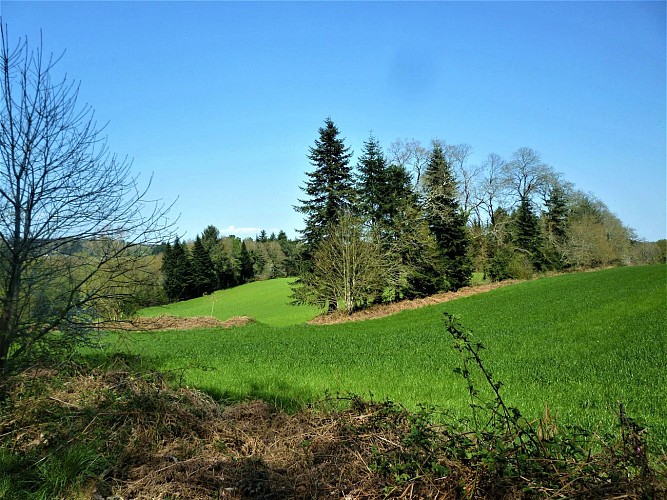
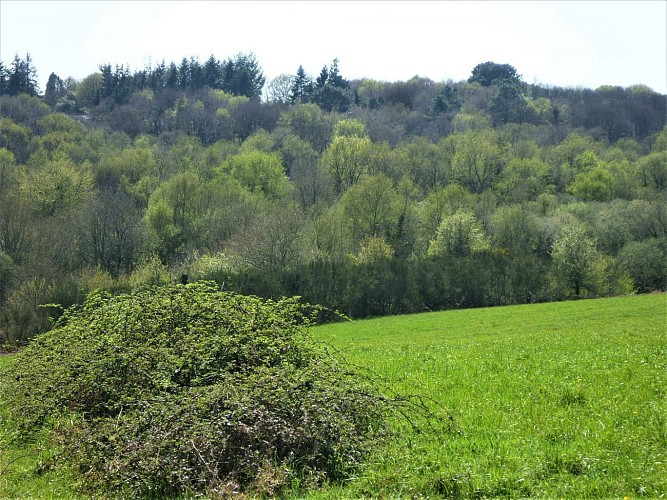
Take a stroll around and through the village of Bubry, along sunken paths and through woods. This walk offers beautiful views of the surrounding countryside and reveals the village's religious heritage, with its church and presbytery, Sainte-Hélène chapel, fountain and washhouses.

You are walking in natural, private sites. Remain on the marked paths, respect nature, infrastructures and cultivated areas. For your comfort and safety, wear suitable hiking clothing.

"Certain allergenic species may be present along hiking trails, such as grasses, birch, alder, mugwort, ragweed, and olive trees. To plan your outings, you can consult the pollen monitoring data for the Lorient Agglomeration area and the recommended precautions to take via this link: https://www.lorient-agglo.bzh/actus/suivi-des-pollens/ "

Technical Information

Walking
Difficulty
Easy
Duration
1h45mn (1d)
Dist.
5.8 km
Show more

Altimetric profile

Starting point

9002 Rue Poulna , 56310   Bubry
Lat : 47.9635Lng : -3.17657

Points of interest

image du object

Sainte-Hélène chapel

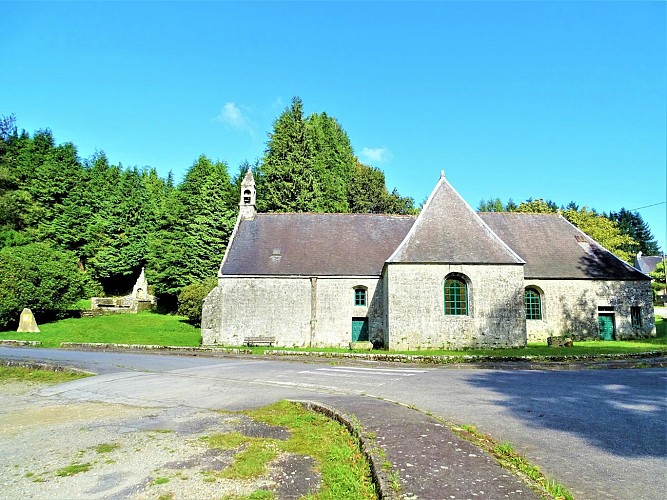
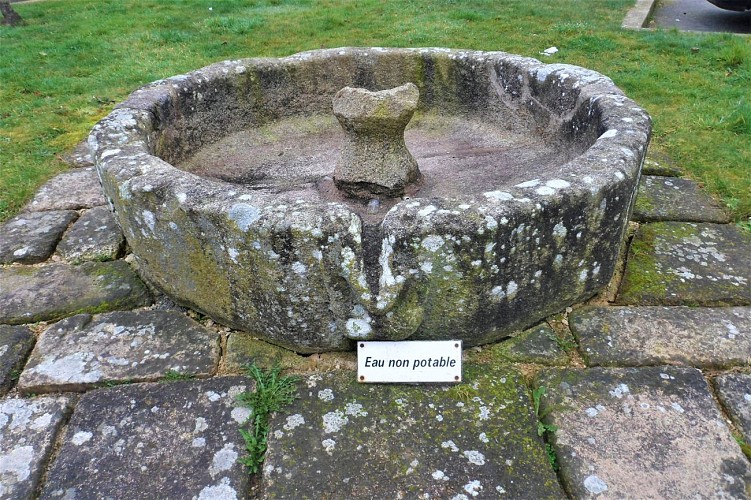
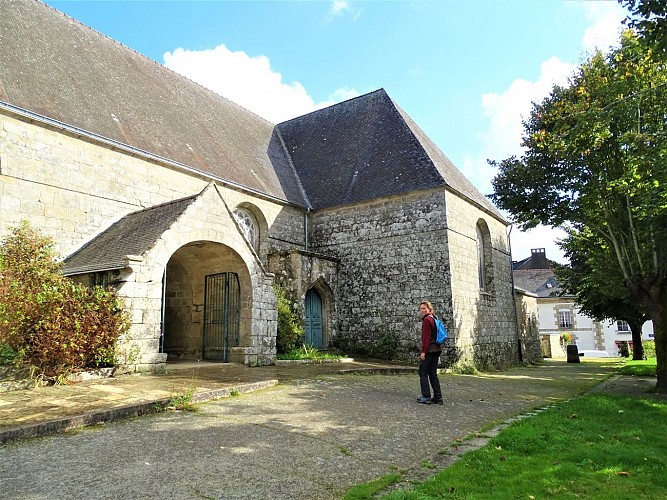
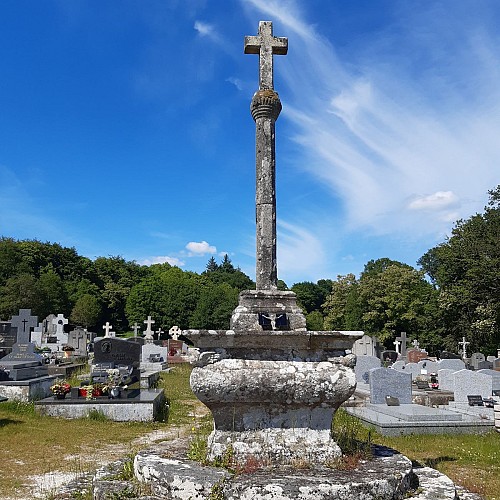
Built in 1737, St. Hélène's chapel was in very poor condition after the French Revolution and was partially repaired in 1810 before being completely rebuilt in 1839. With a Latin cross floor plan, built of granite with ashlar and rubble stone, it features a distinctive west portal framed by two buttresses and topped by a bell tower which can be accessed by an external staircase. Inside, the furnishings date mainly from the second half of the 19th century, in particular the choir screen, the two altars and the statuary, mainly in polychrome plaster. In addition to several Virgins with Child, there are three representations of the patron saint, two of which date from the 18th century. The most recent is displayed in a niche in the upper part of the apse wall. The oldest once stood above the fountain.  Sainte-Hélène’s fountain nearby is topped by a niche and a cross framed by two pinnacles. Its paved enclosure, surrounded by low walls with stone benches, is accessible by steps and, on the chapel side, by a stile, the upright stone that once barred access to roaming animals. Water from the fountain flows into a small circular basin, then into a rectangular one, before feeding the washhouse below. A second washhouse to the west completes the ensemble. Washerwomen used to gather here to wash their clothes, as old postcards show. The pardon on the 4th Sunday in July consists of a church service and a friendly gathering. As you leave the site, you'll see a cross on your right, that once stood next to the church and was moved here during urbanization work. On your left is the former Sainte-Hélène school, now converted into housing.

6471 Rue des Horizons 56310 Bubry
- Lorient Agglomération -
Consulter
image du object

Bubry presbytery

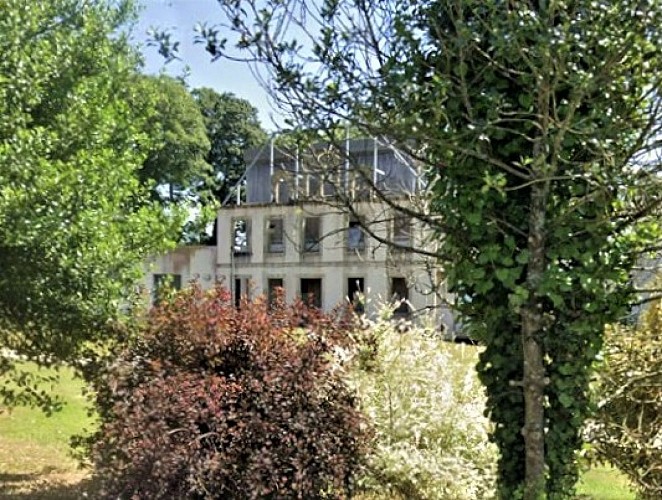
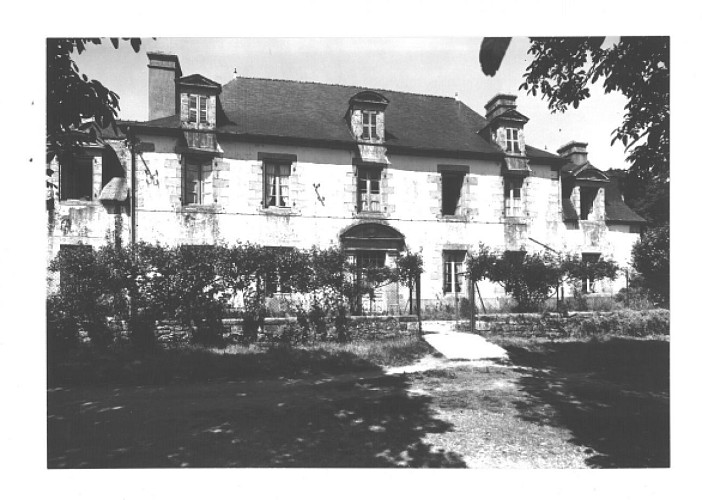
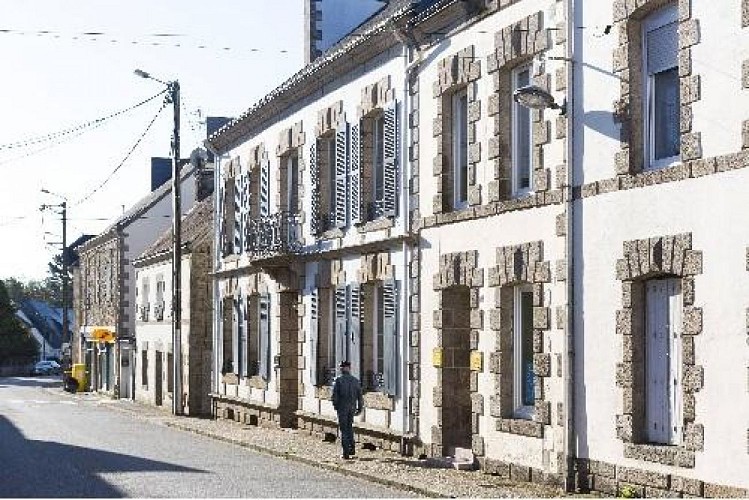
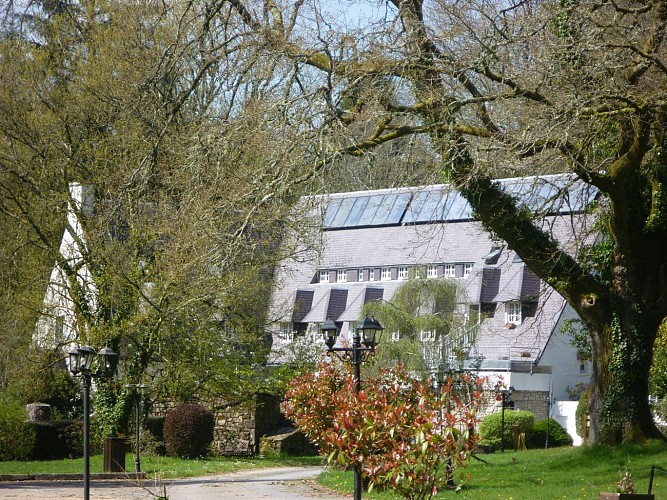
Take a moment to rest in the garden and listen to the history of the presbytery. It was built in the first quarter of the 18th century, as can be seen by the date 1702 engraved on the central dormer. Rectangular, in rendered rubble stone and granite ashlar, the building comprises a central section and two side wings with seven bays, topped by three dormer windows. The central door opens onto a corridor leading to two large rooms on the ground floor and a beautiful central stone staircase leading to the first floor.  The numerous rooms were used by the rector, his vicar and their servants. Some will remember their catechism sessions in the vast but very cold ground-floor room, where a Christmas tree with a large candle at its base was the only decoration. Partly restored, the building is still occupied by the parish priest of Bubry. The presbytery, surrounded by high walls, still has its former gardens to the east. Divided in the 19th century into six rectangular plots separated by paths, the "priest’s garden", consisting of a vegetable garden and an orchard, ensured that the priest and his entourage were self-sufficient. In the courtyard in front of the house, the stable, the cowshed, the cart shed and a beautifully constructed well, completed the ensemble. Today it houses the canteen and media library. Residents still remember the priests who lived here, such as the Abbé Audo, who wrote a book entitled “Histoire du Vieux Bubry” in 1981. But not many know that in 1833 and 1834, Hélène Jégado, Brittany's best-known poisoner and one of history's greatest serial killers, worked here. Over an 18-year period in the mid-19th century, she poisoned some sixty people. She was tried in Rennes in 1851 and executed on 26th February 1852. She used herbs and poisons that the trial judges found difficult to identify. Her victims suffered from colic and vomiting, sometimes fatal, after drinking her herbal teas and soups. Hélène Jégado, first worked at the Guern presbytery where seven people died during her time there. She then entered the service of the Bubry parish priest M. Lorho in 1833 as a cook. She joined her aunt Marie-Jeanne Liscoët, who was also a cook. During her time in Bubry, five people fell ill and three died: Jeanne-Marie Lorho, sister of the parish priest, Jeanne-Marie Kerfontain, niece of the parish priest, and Marie-Jeanne Liscoët, his aunt. She claimed a fourth victim in June 1836, in the person of Mr. Keraly. He was convalescing in his château in Kernivinen, and his daughters hired Hélène Jégado in Pontivy to look after him. After her arrival, his condition worsened. In June, he returned to his home in Hennebont, where he died.

2 Rue Sainte-Hélène 56310 Bubry
- Lorient Agglomération -
Consulter
image du object

The church of Saint-Pierre-Saint-Paul

Up until the French Revolution, the village had two churches, Notre-Dame des Neiges and Sainte-Véronique. Now in ruins, their stones were used to build the new Saint-Paul Saint-Pierre church between 1804 and 1806. The date 1804 was engraved on a cornice stone on the baptismal font to the north, on the south wall of the nave and on the coat of arms in the secondary porch to the south.  With a Latin cross plan and granite ashlars, a south porch was added in 1814 and a bell tower-porch dominating the town with its neo-Gothic spire was added in 1895. The bell tower was showing signs of weakness by 1864, so the bells were housed in a hut near the sacristy until a new bell tower was built. The walled complex, accessible from the west via two staircases, housed the cemetery, a calvary and an ossuary to the south-west. This was destroyed when the cemetery was moved to the west of the village at the end of the 19th century. Inside, the building still has its furniture from the 19th century, with the exception of two wooden reliquaries which are from the 18th century. Only the two wooden statues of St. Peter and St. Paul appear to be contemporary with the church's reconstruction in 1804. The nine stained glass windows were created by the Gesta workshop in Toulouse in the last quarter of the 19th century. As you walk around the building, don't miss the sculpted base stones of the south and north ramps on either side of the bell tower, and to the south, the war memorial, in memory of the victims of the wars of the 20th siècle. Near the sacristy, you can also see a Gallic stele dating from the 6th to 5th centuries BC. Once a sign of a cremation cemetery, it was relocated to near the church and Christianized. Both sides are decorated with crosses pattées and the flattened top features nine cupules. It came with another hemispherical stele that disappeared when the cemetery was reorganized.

1 Place de l'Église 56310 Bubry
- Lorient Agglomération -
Consulter

Ratings and reviews

To see around
See more
Open
Close
Show
Show
Show
Show
Show
Show
Show
Show
Show
Show
Show
Caution!
We have no information on the difficulty of this circuit. You may encounter some surprises along the way. Before you go, please feel free to inquire more and take all necessary precautions. Have a good trip! 🌳🥾