Tours
Activities
Places of interest
Where to eat
Where to sleep

Discover Ensues-la-redonne and its regional treasures

Are you in charge of the destination?
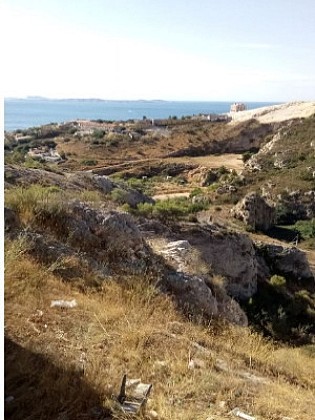
Nestled in the heart of the stunning Provence-Alpes-Côte d'Azur region, Ensues-la-redonne in the Bouches-du-Rhône offers an authentic and natural immersion. Expect secret coves and pristine beaches like the Vesse and Figuières calanques. Don your hiking shoes and explore the Douaniers trail, offering breathtaking panoramas of the Mediterranean.

History and culture enthusiasts will love a visit ...
See more

Walking around Ensues-la-redonne

See more suggestions
Hiking routes in Ensues-la-redonne.
See more suggestions
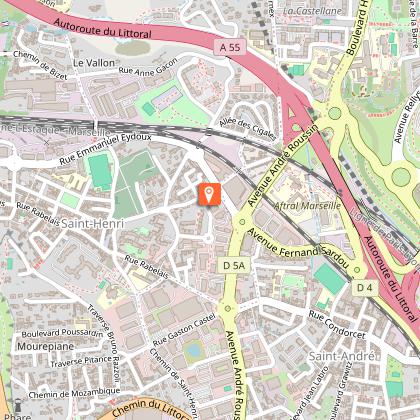
Côte Bleue : Carry-le-Rouet : Calanque et collines
4.5 km

Côte Bleue : Carry-le-Rouet : Calanque et collines

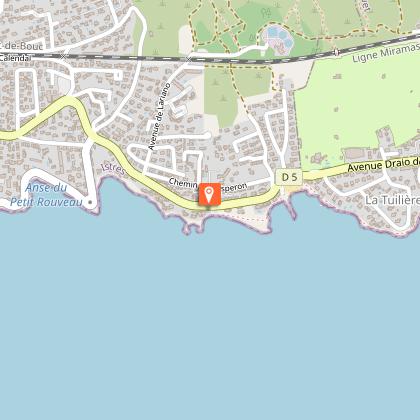
This moderate hike (12km, 4h) takes in the hills behind the famous seaside resort of Carry-le-Rouet: the Estaque chain. This easy trail alternates between valley-bottom paths and wide tracks. Following a fire some 30 years ago, a low scrubland of kermes oak, rockrose, valerian and fragrant rosemary has developed on this white limestone rock, affording fine views of the Mediterranean Sea. On the way back, take the "sentier du lézard" (lizard trail), a path in the Côte Bleue regional marine park, lined with ten commentary boards on the flora and fauna of the seaside. Walk down Avenue Pierre Semard for around 200 m, then turn right into Rue des Ecoles, crossing a small white bridge. At the bottom of the street, turn right onto chemin du Jas Vieux, which you will follow to its end. Go through a barrier and enter the cylindrical tunnel under the D9 Côte Bleue expressway. At the old quarry, go straight on up the path lined with rockroses, valerian, kermes oaks and rosemary. It winds through a valley that was ravaged by fire 30 years ago. On the ground, notice the ruts made by cartwheels, evidence of an industrial past (transporting large blocks of stone). Entering the hill Leave the yellow trail and continue along the path on the right, which follows another valley. Then take the 2nd path on the left (between 2 rows of pine trees). It bends to the left, reaches a small pass and then joins the blue ridge path. View of the sea and the village of Ensuès-la-Redonne. Follow the ridge in a flat N-W direction. Pass under the high-voltage power line (to the right of a pylon). You come to a crossroads (stele of Marcel le chasseur and rusty old fence). Turn left onto a wide dirt track (yellow and blue). After a pylon, take the right-hand track, which continues flat on the Chemin de Valprête. Follow the small yellow gas line poles for 20 minutes, until you come to a rusty cistern. At the crossroads of the rusty cistern and 4 paths, take the small path furthest to the left at the corner of a beautiful pine tree, which descends for 25 minutes into a stony, pine-wooded valley. It joins a path coming from the left. Continue straight downhill (blue line). Then pass under another cylindrical tunnel of the Côte Bleue D9 expressway (be careful, it can be wet and very slippery!), skirt it on the left for 100m, then turn right on a good path due south. You'll come to a dirt track on the left, which runs along a telephone line (wooden poles). Stay on this main track until you reach a fork, where you'll see 2 telephone masts. At the fork, in sight of the 2 telephone masts, follow the wooden telephone poles to the right along a wide blue track below. Follow the Club Canin Saussétois. Cross the tarmac road and level crossing. Continue on Avenue de Lariano, Sausset-les-Pins commune, which joins the seafront and the GR, which you follow to the left on Avenue de l'Europe D5 as far as the Carry-le-Rouet entrance sign. Leave the D5 at the Carry-le-Rouet entrance sign and the plage des Baumettes. Still on the GR, follow the coastal path along the "piste du Lézard", which runs pleasantly alongside the sea to the port of Carry. This educational trail, part of the Côte Bleue regional marine park, features 10 information points on a variety of themes (aquatic flora and fauna, plants, shrubs, erosion, fossils, cicadas and green lizards), and is sure to amaze you! Magnificent views over the Côte Bleue to Marseille. After the pretty little red-and-white lighthouse and the inviting sandy coves perfect for swimming, arrive at the port of Carry via the Quai Malleville and walk past the Casino Municipal. Turn left onto Avenue Aristide Briand and pass the Espace Fernandel cinema. Take the yellow route along the boulodrome to the railway station.

4 h
12 km
Easy
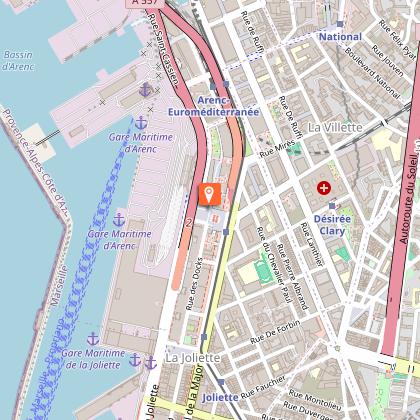
Parking de la gare 13620 Carry-le-Rouet
Show

What to do in Ensues-la-redonne

See more suggestions
Enjoy the activities available in Ensues-la-redonne for moments of relaxation and fun.
See more suggestions
Rand'eau douce in Martigues
13 km

Rand'eau douce in Martigues

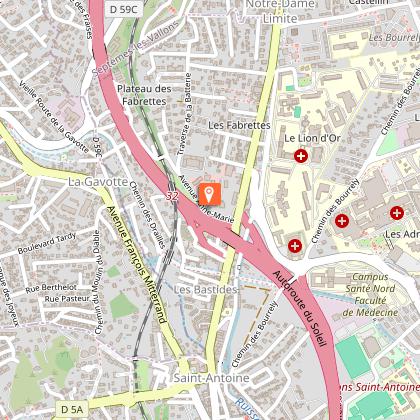
Discover Martigues, nicknamed "the Venice of Provence", on an 6 km hike on the fascinating theme of fresh water. Far from the salt waters that surround the city, this walk immerses you in its hydraulic past. Accompanied by a passionate guide, you will explore the picturesque alleys and hidden treasures of the city. Each stage of this guided hike will allow you to understand the importance of fresh water in the daily life of the Martigues people, a precious resource that has shaped the identity of this Mediterranean city. You will learn that the inhabitants of each district had their own source of drinking water supplied by the Martigues Canal, which has now disappeared. Did you know that the fountain located on Place Mirabeau was moved from Cours du 4 Septembre in Jonquières by the Jourdan family following the extension of their hotel "La Goutte d'Or"? That the entrance to Martigues began at the intersection of Avenue Frédérique Mistral and that part of the Jonquières district was nothing but marshland? That buildings that are still in use were once used as cisterns, that when you look up you will see now-forgotten ramparts and that old wells can be found in the heart of the gardens of recent buildings? Under the commentary of Bernard, president of the Randonnée Ski Découverte (RSD) association, you will take a new look at the architectural heritage of Martigues. The past has left traces that we do not notice on a daily basis. Take advantage of this unusual stroll in the city center to combine business with pleasure.

Quai des Anglais L'île 13500 Martigues
Book from 0 €Book
Show

What to visit in Ensues-la-redonne

See more suggestions
Discover the local markets of Ensues-la-redonne.
See more suggestions
The Blue Coast and the Estaque Hills
6.6 km

The Blue Coast and the Estaque Hills

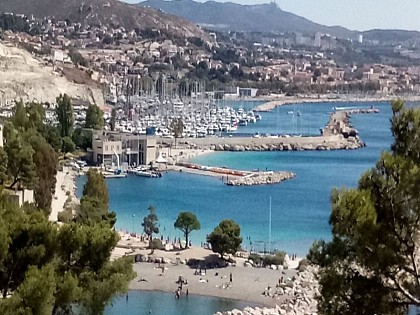
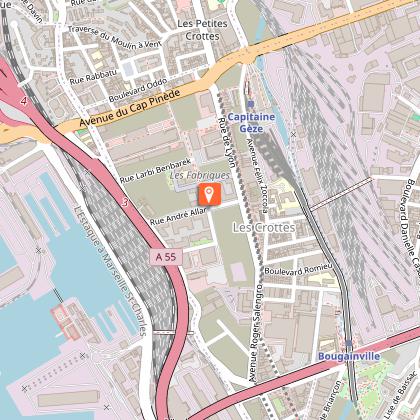
The Cote Bleue has a limestone and indented coastline that stretches over some thirty kilometres between Martigues and Marseille. The Côte Bleue (Blue Coast) is a jagged limestone coastline that stretches for 30 kilometres between Martigues and Marseille. It is a succession of calanques (coves), little creeks and beaches nestling against the Estaque Hills One side of this chain encloses the Bay of Marseille on the north-west and, at the same time, its other side protects the basin of Berre Lagoon. It is a limestone arc of wild landscape, cut into by narrow winding vales at medium altitudes (180 - 280 m). The hills drop sharply into the sea along most of the coast; sometimes fishermens hamlets and weekend cabins cling to the steep crags. In the western part, the chain softens into plateaux and there are fine sandy beaches. A regional marine park was created in 1983 on the initiative of four local councils. It includes a 70 hectares conservation area off the coast from Sausset, and a peripheral area of 3,000 hectares that includes the entire coastline of the Blue Coast. There are splendid views from the coastal railway, which was built at the start of the century with several viaducts and tunnels. The best way to explore this coastline by car is to take the roads that go around little pleasure ports, skim the cliffs and wind through the rocky vales and the pinewoods. There are many suitable places for taking casual walks or longer hikes. A footpath called the "Customs officers’ footpath" is being built along the coastline. There is an abrupt descent into the calanque of La Redonne and then acrobatic paths lead to the calanques of Figuières and Méjean. A little further on are Madrague-de-Gignac and Niolon, a small village hanging on the rocky slopes at the end of the calanque of the same name, flanked by a 19th century fort with its cannons, where there is a very active diving centre. Bare and windswept Cap Couronne has a magnificent panorama of the coast and the Bay of Marseille.

13620 Carry-le-Rouet
Show
L'Estaque and its painters
9.1 km

L'Estaque and its painters

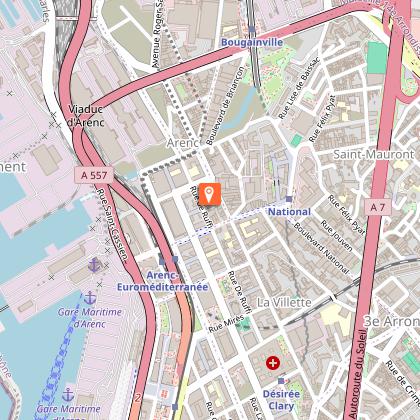
In the extreme north of Marseille, nestled at the foot of the Nerthe mountain range which protects it from the mistral wind, the small port of Estaque (attache, in Provencal), remains one of the most picturesque districts of the city. In the northernmost part of Marseille, nestling at the foot of the Nerthe massif, the little port of Estaque (meaning attachment in Provençal) is still one of the most picturesque districts of the city. Its development over the centuries has been closely associated with the traditional tile-making industry. At the beginning of the 20th century, people would come to L'Estaque to try sea urchins, bouillabaisse, panisses and sardines in hotels and restaurants built on the water's edge. Bastides, seaside villas (Château Fallet, Villa la Palestine, etc.) veritable architectural follies, etc. started to spring up next to the traditional small houses belonging to the workers from the nearby tile factories and cement works. For art enthusiasts, Estaque is above all one of the key locations in the birth of modern painting. From Collioure to Menton, just to consider the Mediterranean coast, there are plenty of places that have attracted great painters. However are there many places that can boast to have been frequented over a period of sixty years (1860-1920) by ten or so renowned artists? The name of L'Estaque is associated with impressionism, fauvism, cubism: these three periods that to a great extent determined the nature of painting in our time. Although Cézanne and Braque are the two major figures, we should not forget painters such as Derain, Dufy, Marquet, Friesz, Macke, Renoir, Guigou and Monticelli. Most of them painted dozens of canvasses at Estaque. An unusual destiny indeed for this village, which can firstly be explained by its situation: it offers an exceptional view point, where the panorama of the bay of Marseille is often very striking. The explanation for the painters' inspiration can also be found in the large number of different subjects, and in the variety of shapes and colours, all concentrated in a relatively small space: the horizontal sea, the vertical factory chimneys, the curves of the hills and the arches of the viaducts, the play of ochres and reds responding to the intensity of the myriad of greens and blues. A walking tour presents the history of this colourful working-class district with a strong character, little different nowadays from the village the painters knew and loved. Many of the themes are still here. To see them you just need to know how to look. Starting from the harbour jetty, take the painters' path, and after this walk lasting roughly two hours you will understand why these artists were so attracted to these sites. Eight enamelled lava information panels are positioned at various points of the walk.

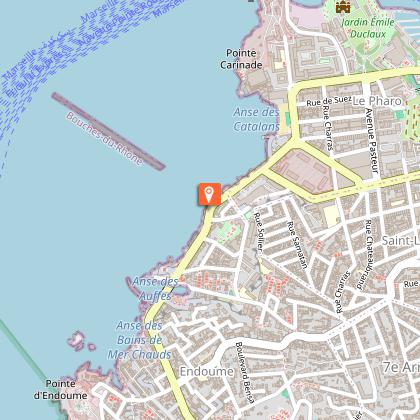
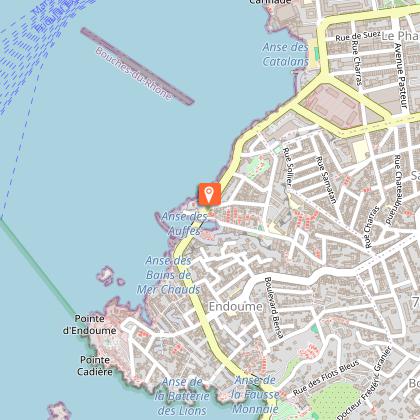
13016 Marseille
Show

Where to eat in Ensues-la-redonne

See more suggestions
Establishments in Ensues-la-redonne offer dishes for all tastes.
See more suggestions

Where to sleep in Ensues-la-redonne

See more suggestions
Discover popular accommodations in Ensues-la-redonne.
See more suggestions
Caution!
We have no information on the difficulty of this circuit. You may encounter some surprises along the way. Before you go, please feel free to inquire more and take all necessary precautions. Have a good trip! 🌳🥾