Tours
Activities
Places of interest
Where to eat
Where to sleep

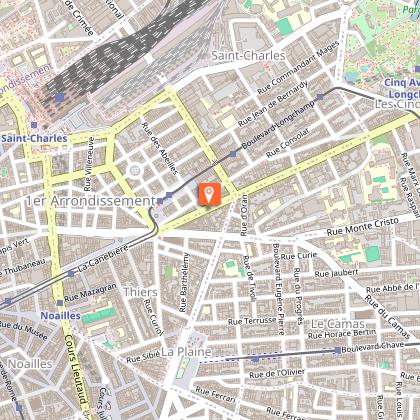
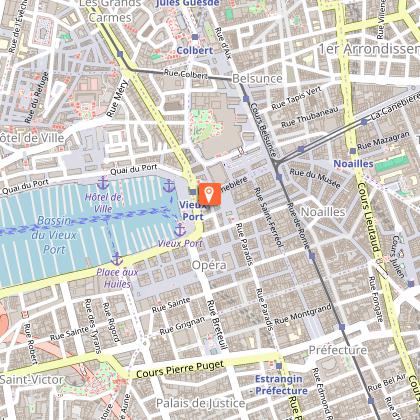
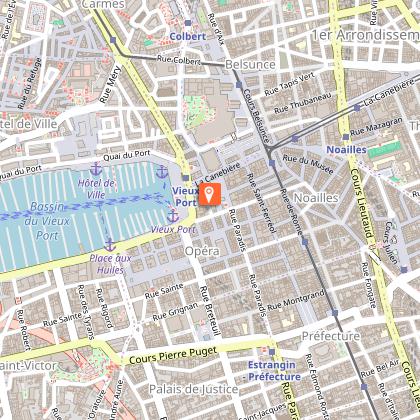
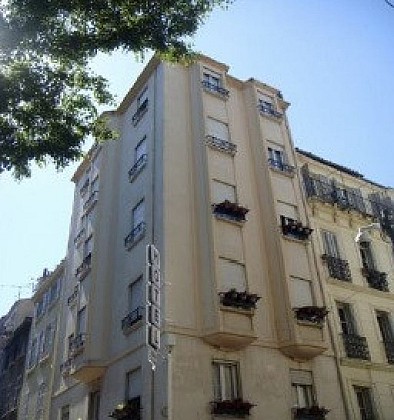
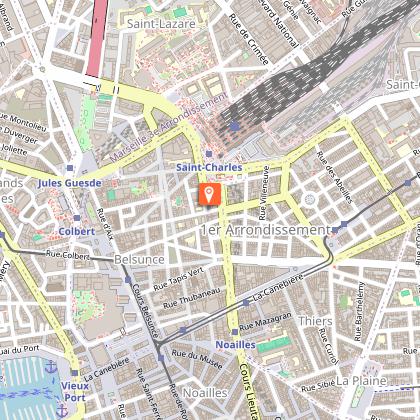
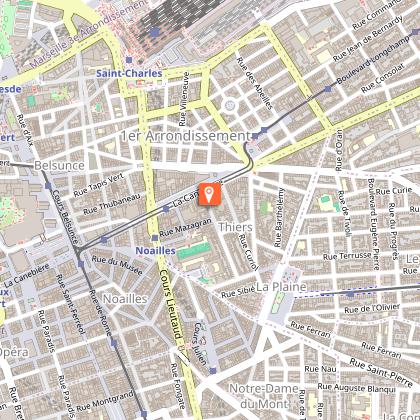
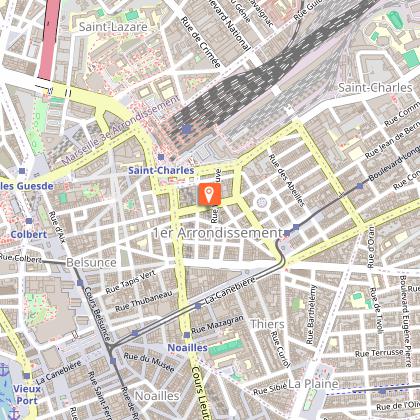
Discover Marseille at HOTEL VICTORY

Are you the owner?
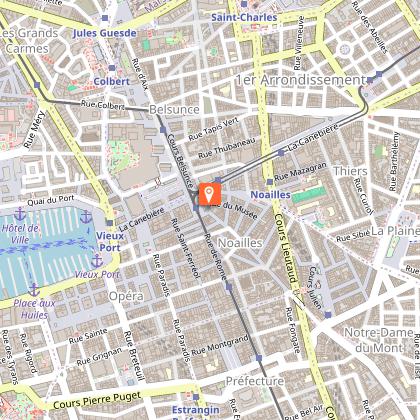
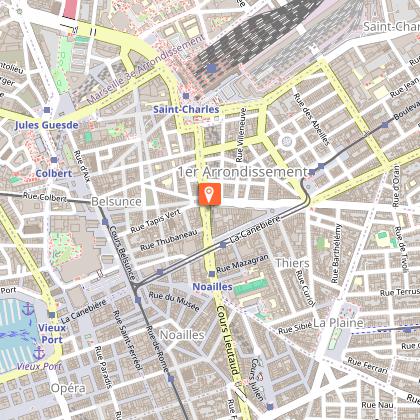
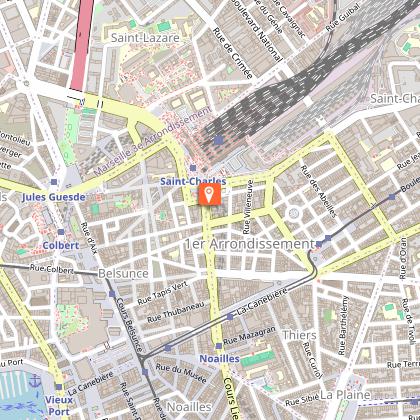
Welcome to Marseille's first arrondissement, a vibrant and historic district full of Mediterranean charm. During your stay at HOTEL VICTORY, explore local cultural treasures such as the Old Port, just a few minutes' walk away, where you can admire traditional fishing boats and savor fresh seafood. Don't miss the lively fish market with its vibrant colors. Nearby, the Panier district will welcome y...See more

Walking around HOTEL VICTORY

See more suggestions
Discover the trails of HOTEL VICTORY.
See more suggestions
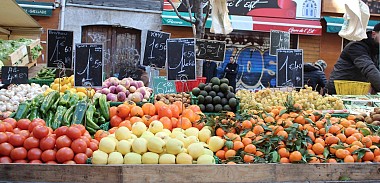
A stroll through the Noailles district
357 m

A stroll through the Noailles district

Take a free tour of the Noailles district, also known as the belly of Marseille. Noailles is made up of narrow streets where Marseillais come to stock up on spices, condiments, flavors and fragrances of all kinds! You'll find ingredients from all over the world. Exoticism guaranteed. The discovery of the Noailles district begins on the Cours Saint-Louis (2), Marseille's "ground zero". Since 1927, it's here, precisely at the corner of the Canebière and Cours Belsunce, that the numbering of buildings along all the city's streets has been determined. It's also kilometer zero for measuring the distance between Marseille and other French cities. Cours Saint-Louis extends into rue de Rome. Turn left into rue Méolan, where you'll find the famous shop founded by Père Blaize (3). At the end of the street, turn right onto rue d'Aubagne. At the next street, turn right again onto rue Vacon. On your left is rue Halle Delacroix, with its outstanding exotic goods merchants, such as Tam-Ky. Cross the square to reach rue Rouvière and continue up it to the left. Turn left down rue d'Aubagne to the crossroads with rue Longue des Capucins. This is where you'll find Saladin's cave of 1,000 spices (5). Continue straight on to the district's only fishmonger, du Lamparo, at the corner of Marché des Capucins and Marché de Noailles. Turn left down Rue des Feuillants onto La Canebière (1). Walk down the Canebière, then turn left into rue des Récolettes, where you'll discover another of the city's outstanding shops: the "Empereur" hardware store (8). Take time to explore this store, which is approaching 100 years of existence. There's a beautiful section of antique toys upstairs. As you leave the store, the neon sign of the Cours Saint-Louis pharmacy will lead you back to the starting point of this tour.

45 min
1 km
Very easy
Le point de départ de cette visite en boucle, se trouve sur le Cours Saint-Louis Cours Saint-Louis 13001 Marseille
Show
A stroll through the Saint-Charles district
427 m

A stroll through the Saint-Charles district

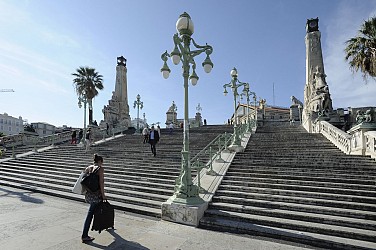
Follow this short stroll to discover the Saint Charles neighbourhood. When one mentions the name Saint-Charles, the SNCF station (1) is the first thing that comes to mind. Indeed, it stands out for several reasons. But it is also a neighborhood that has been transforming for several years and is becoming an university hub that we will introduce to you. We suggest arriving at Saint-Charles by metro and crossing the hall to reach Narvik Square (where the current drop-off point for motorists is located). On your left, first notice a stele (2). If you look further to the left, there is a large 15-story building in yellow/beige. In front of it stands the Golden Virgin (3). Cross the square to access the station's "masterpiece": its staircase and panoramic view of part of the city (4). Admire the sweeping view of Boulevard d'Athènes, the street art mural (5), and Notre-Dame de la Garde Basilica. Walk along the other side of the station to reach stairs that lead to Boulevard Maurice Bourdet. Cross and descend Boulevard Charles Nédélec. At the third intersection, turn right onto Rue Joseph Biaggi where you'll find the Bourse de Travail (6). Continue straight and skirt around the EMD Management School. Go up Rue Frédéric Ozanam until you reach Avenue du Général Leclerc, which you descend on the left. On the other side of the boulevard, you'll see the Saint-Charles campus, the original university site. Notably, there is a large rectangular peristyle building (7). Then you pass by a stele dedicated to General Leclerc (8). A flight of stairs takes you to the foot of the Toyoko Inn hotel (9). Enter on the left into Porte d'Aix Park (10). Follow the central path to reach the forecourt of the Arc de Triomphe (11). As you can see, this area designed by Euroméditerranée has undergone a major transformation over the past decade. Until recently, the A7 motorway divided the neighborhood in two, as it ended at the triumphal arch. The area is transforming with the construction of new student residences, numerous schools, the consolidation of three universities (specifically, the faculties of architecture, landscape, and urban planning), the creation of an inter-university library, and most importantly, the addition of a major asset: the inauguration of a brand new park in the heart of the city. The Saint-Charles district now positions itself as an urban campus. For more information: www.euromediterranee.fr In line with the Arc de Triomphe, cross Boulevard Charles Nédelec. In front of you, Rue d'Aix descends, which changes names several times over more than 6 kilometers, to reach the Mazargues district. It is one of the main north-south axes of the city. Sharpen your gaze, you should at least see the column of the fountain in Place Castellane, located 2 kilometers away. Finish your visit at the forecourt of the Regional Hotel, Place Gilberto Bosques. The Regional Council consists of two buildings that were built between 1984 and 1991 in the Butte des Carmes district. The forecourt of the Regional Hotel houses 3 remarkable elements (12).

1.7 km
Very easy
Square Narvik, gare Saint-Charles 13001 Marseille
Show
Stroll along the south shore of the Old Port
469 m

Stroll along the south shore of the Old Port

This easy walking tour combines beautiful facades along the streets with panoramic views and grand monuments. The route is suitable for strollers. * The itinerary begins on the Canebière, a mythical and historic artery, lined with majestic facades, which in its heyday was home to grand hotels and the most beautiful cafés in Marseille. At number 9 is the Palais de la Bourse, the chamber of commerce and industry. Rue Beauvau leads to the Opera House. It was partially destroyed by fire in 1919, hence its Art Deco facade. At the back of the building. * Turn right onto rue Francis Davso which leads to the Cours Estienne d'Orves. A real city within the city, the Arcenaulx were the former warehouses of the arsenal of the royal galleys at the time of Louis XIV. Today, this Italian-style square is an attractive district with its cafés, restaurants and artists' galleries. * Parallel to this is the Rue Sainte, which leads to the Abbaye Saint-Victor, join it. Stop at the Four des Navettes, the oldest bakery in Marseille (1781) where you can taste the navettes, a dry orange blossom cookie typical of Marseille and very popular with gourmets. To the right of the Bertie Albrecht square, enjoy the panoramic view of the Old Port and the old city. * Then head for Fort Saint-Nicolas (17th century), the work of the Chevalier de Clerville. During the construction of the Palais du Pharo, the fort was cut in two, in order to create an access road and that is why today, Fort Saint-Nicolas is composed of Fort d'Entrecasteaux for the upper part and Fort Ganteaume for the lower part. * When you arrive in front of the gates of the Palais du Pharo, cross the public garden which offers other magnificent views of Marseille.

45 min
2.5 km
Very easy
11 La Canebière 13001 Marseille
Show
A stroll through 19th-century Marseille
473 m

A stroll through 19th-century Marseille

This urban walk starts on the Canebière: it will lead you to the Palais Longchamp and its monumental fountain. The route follows the Cours Saint Louis, the "Petit Cours" which takes its name from Louis d'Anjou. This is where the first santon fair was held in 1803. Then we enter the Noailles district. In a colorful effervescence, dive into the Mediterranean cultures and discover the different stalls. Once you have crossed the boulevard Garibaldi, you reach the rue du Théâtre Français. Italian style theater and baptized for a time "French theater" to mark its vocation dedicated to the French literature. Then you reach the upper part of the Canebière again. There we find a self-service book terminal in the shape of a giraffe to pay homage to the famous Zarafa, evoked in the urban stroll that leads to the Prefecture and the Monument aux Mobiles which celebrates the soldiers of the Garde Mobile of the Franco-Prussian war of 1870. At the very end of the Canebière, you find yourself facing the Saint-Vincent de Paul church, nicknamed "les Réformés" because it is located on the site of the chapel of the Augustins Réformés. Its 2 spires rise 70 meters above the Canebière. As you walk up the majestic avenue of plane trees on boulevard Longchamp, you will see on your right the mansion that houses the Grobet-Labadie museum. To end this urban stroll, you can discover the Palais Longchamp which was built to celebrate the arrival of the waters of the Durance in Marseille. Discover also its museums and its English garden.

1 h
2.1 km
Very easy
Départ Office Métropolitain de Tourisme et des Congrès 11 La Canebière 13001 Marseille
Show
A stroll through the Réformés district
478 m

A stroll through the Réformés district

This itinerary lets you explore the Réformés district on foot, ideally located in Marseille's 1st arrondissement. Come and discover the many architectural curiosities hidden within. In the Réformés district, you'll have to look up to see the sights we're about to show you. The starting point for this walk is opposite the Eglise des Réformés (1), built in neo-Gothic style. Although its spires rise to a height of 75 meters, it holds no special place in the hearts of Marseillais. Walk up the Cours Franklin Roosevelt until you come to the Maison Castel (2). Retrace your steps and turn right into rue Saint-Savournin. Cross Boulevard de la Libération and continue straight ahead on Rue Bernex. When you reach boulevard Longchamp, walk a few meters down the boulevard to stop briefly at number 18. This is where you'll come across the first high relief dedicated to the Virgin Mary (3). Cross Boulevard Longchamp and take Boulevard National almost opposite to reach the building at number 9 (4). Continue along rue de la Rotonde, which runs along the north side of the Picon factory. Number 63 is the birthplace of Gaby Deslys, the internationally-renowned (in her day) singer and music-hall star who owned a sublime "folie" on the Corniche, the Villa Gaby (285 Corniche Kennedy). Admire the decorative elements of the entrance porch at number 16, headquarters of the "Les Excursionnistes de Marseille" association (5). A few more steps and you'll arrive at Place Alexandre Labadie (6). Turn right into Rue des Héros and follow it all the way up. At the far right, you'll see a large statue of a golden Virgin (7). Staying on the sidewalk on the Virgin's side, walk down Boulevard de la Liberté, looking up to admire the richly-decorated façade with its expressive faces and cat's mouths. The entrance, at number 46, is also adorned with two atlatls. However, we can't tell you the name of the architect. It's not known. At 23 rue de la Grande Armée, you'll discover a Greek Orthodox church (8). Then you reach Square Stalingrad, where you'll find a beautiful Art Nouveau fountain, the Danaïdes fountain (9). This square is particularly pleasant, as it is well shaded. Go downhill a little further and take the allée Gambetta. Three points of interest stand side by side: The Monument des Mobiles (10), the Byzantine building (11) and the Zarafa giraffe (12). The stroll ends on the upper part of the Canebière, renowned for its cultural and leisure establishments: the Artplexe cinema (13), with its rooftop café-restaurant, the Théâtre de l'Odéon (14) and the Théâtre du Gymnase (15).

2 km
Very easy
2 Cours Franklin Roosevelt 13001 Marseille
Show
Marseille Between Sea and Landmarks: An Unforgettable Bike Ride
542 m

Marseille Between Sea and Landmarks: An Unforgettable Bike Ride

🔧 Practical Info Before You Go : Start: Indigo Parking – Centre Bourse Duration: 1h30 (non-stop, without visits, swims, or breaks) up to 5 hours if taking your time Distance: 18 km Bring: Water, sunscreen, sunglasses, swimsuit !!   🗺️ Step-by-Step Itinerary : Start from Indigo Parking – Centre Bourse, right in the city center. A few turns of the pedals take you down to the waterfront and the striking Mucem and Cosquer Cave exhibit on J4 Esplanade, a wide open space facing the Frioul Islands. Continue up toward the imposing Cathedral of La Major, then wander through the colorful alleyways of Le Panier, the oldest and most picturesque district in Marseille. Cruise down to the Ombrière by Norman Foster, the mirrored canopy that hovers above the Old Port, then cross over to reach the elegant Palais du Pharo, offering a superb view over the harbor. Ride along the sea to the Plage des Catalans, then head to the charming Vallon des Auffes, a tiny traditional fishing port carved into the coastline. Keep going through Malmousque, then Maldormé, and skirt the Anse de la Fausse Monnaie — peaceful coves with crystal-clear water. Pedal up through Parc Valmer, then take on the iconic Corniche Kennedy, a scenic balcony overlooking the Mediterranean, lined with villas, carved stone walls, and sweeping sea views. Take a refreshing break at the Plage du Prophète, one of Marseille’s most popular beaches: shallow water, a relaxed family vibe, and perfect for a quick dip. Then comes the climb to Notre-Dame-de-la-Garde, affectionately called La Bonne Mère. It’s the steepest part of the route — but also the most rewarding. From the esplanade, the 360° view over the city, islands, port and sea is truly breathtaking. Descend through Parc Puget, a quiet green escape, before stopping at the historic Abbaye Saint-Victor, a powerful monument to 15 centuries of Christian presence. Finally, wrap up your journey at the Citadel (Fort Saint-Nicolas). Entry is free, and a small hidden bar at the top offers a stunning view over the Old Port — the perfect place for one last drink to celebrate your ride. 🌇 Don’t Miss: One Last Drink with a View Over the Old Port Climb up to the Citadel (free access) and grab a seat at the small bar perched on top. The view is incredible, the vibe is peaceful… A perfect ending to your Marseille cycling adventure.

4 h
24 km
Easy
28 Rue Reine Elisabeth 13001 Marseille
Show
Marseille – Ride Along the Southern Coast, Parks & Châteaux
682 m

Marseille – Ride Along the Southern Coast, Parks & Châteaux

✨ In a nutshell: this itinerary combines historical heritage (Pharo, Borély, Pastré), spectacular coastal landscapes (Corniche, Prado, Goudes), and the authentic soul of Marseille in its fishing villages. A perfect day to experience the essence of southern Marseille, blending culture, nature, and the Mediterranean. ➡️ This route takes you directly to the southern part of the city. For a deeper discovery of Marseille’s historic center, another itinerary is available (Mucem, Panier, Pharo, Malmousque, Vallon des Auffes, Prophet’s Beach, and Notre-Dame de la Garde). 🔧 Practical information before you go Start: Indigo Parking – Centre Bourse Duration: 5 to 8 hours (depending on visits, swimming stops, picnic breaks) Distance: about 37 km Bring along: Water, sunscreen, sunglasses, swimsuit, comfortable shoes Difficulty: Easy (a few climbs but mostly flat along the sea) 🗺️ Step-by-step itinerary Centre-Bourse → Vieux-Port Right from the start, cycle through the vibrant heart of Marseille. The Vieux-Port, cradle of the city, offers a unique atmosphere of fishermen, boats, and lively terraces. 👉 For the curious: a short detour to the Palais du Pharo rewards you with an exceptional panoramic view of the Vieux-Port, Notre-Dame de la Garde, and Fort Saint-Jean. Corniche Kennedy Ride along the legendary Corniche Kennedy, an urban balcony suspended above the Mediterranean. From here, enjoy breathtaking views of Château d’If and the Frioul Islands. 📍 Don’t miss the Marégraphe, a historic monument that has measured sea levels since 1883. The Prado Beaches Time for a swim at Prado, a wide stretch of sandy beaches loved by families and athletes alike. A true seaside atmosphere! Borély Park & Château Borély Enter the greenery of Borély Park, one of Marseille’s most beautiful gardens. The 18th-century Château Borély, listed as a Historic Monument, is now home to the Museum of Decorative Arts, Faience, and Fashion. Pastré Park & Château Pastré Wilder and more hilly, Pastré Park is perfect for a picnic break. Here you’ll find bastides and ruins of the Pastré estate, reminders of Marseille’s 19th-century bourgeois past. La Pointe Rouge → Montredon → La Madrague The ride continues along the seafront: Pointe Rouge: a lively beach, hub for water sports. Montredon & La Madrague: smaller coves with a charming fishing village feel. Les Goudes, the “end of the world” village Arrive at the picturesque village of Les Goudes, with its tightly packed cabanons, white limestone rocks, and breathtaking panoramas. This true “end of the world” marks the gateway to the Calanques National Park. 🎯 From here, you can set out on a hike to the calanques of Morgiou or Sormiou, Mediterranean gems of unspoiled beauty. Return to the Vieux-Port Head back along the same route. The scenery takes on a completely new perspective: the coast, the city, and the sea reveal different lights and contrasts. ✨ Magical moment: at the end of the day, the sunset behind the Frioul Islands with its orange glow over the city offers an unforgettable spectacle by bike.

37 km
Very easy
Show

What to do in HOTEL VICTORY

See more suggestions
Enjoy the activities available in HOTEL VICTORY for moments of relaxation and fun.
See more suggestions
Hotel Amista
349 m

Hotel Amista

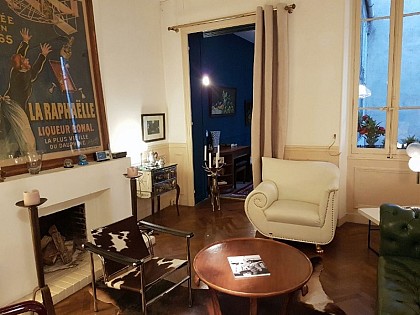
Amista? That's the new name of the former Hôtel Saint-Louis, now completely redesigned in a modern version by Ginto. Enter Marseille's Vieux-Port district, a stone's throw from the quays, otherwise known as the Noailles neighborhood. Contrasting, creative. Just a stone's throw from the Vieux Port and the legendary Canebière in the ancient city of Marseille. As you turn down a narrow street, the magnificent facade of our 3-star hotel catches your eye. Adorned with lion heads, gargoyles and wrought-iron balconies, our Amista hotel tells the story of an exceptional historical past. While inside, the soul of a beautiful Provencal house welcomes you, in a setting that blends old-world charm with contemporary decor. Welcome to Ginto, in a chic and elegant neighborhood home. A 24-room hotel designed as an upscale travel home. The luxury of palatial bedding, Dorothée Delaye's decor, pieces found on our travels and the pleasure of feeling at home in an intimate, unpretentious setting. Everything here invites you to a warm and authentic experience. In the heart of Marseille's old town, l'Amista immerses you in a world where the local environment embodies the culture, conviviality and authenticity of the city. Hôtel Amista also features a bar-restaurant named "Louison" in reference to the Saint-Louis district. Inspired by the old apothecary counters, it was designed in collaboration with the gastronomic collective The Small Group in a bistro spirit. "Louison" is open from morning to night every day of the week, with a short menu featuring "international classics revisited with a Mediterranean twist": Caesar salad, house burger, seafood chowder (Irish fish soup), roast chicken.....

2 Rue Des Récolettes 13001 Marseille
Book from 0 €Book
Show
Marseilles Pass: Museums, Activities, Transport All Inclusive
473 m

Marseilles Pass: Museums, Activities, Transport All Inclusive

Discover all the must see places in Marseilles with this all inclusive pass. Enjoy free entry to a number of museums and attractions, as well as all public transport in Marseilles! Take advantage of discounts on a number of activities! MAKE THE MOST OF YOUR STAY IN MARSEILLES WITH THIS ALL INCLUSIVE PASS! For a period of 24, 48 or even 72 consecutive hours, enjoy free entry to more than 10 museums and free access to all public transport in Marseilles. Take advantage of discounts on numerous tours and museums with this pass! In addition, the Marseilles Pass will enable you to jump the queues. MUSEUMS: MuCEM (Museum of European and Mediterranean Civilisations) Museum of African, South Seas and American Indian Arts Mediterranean Archeology Museum Maritime and Commercial Museum Cantini Museum Roman Docks Museum Natural History Museum Marseilles Local History Museum Grobet-Labadié Museum Muesum of Decorative Arts and Fashion – Borély History Museum MAC Contemporary Gallery TRIPS AND TOURS: Whether you’re with your family or friends, you will enjoy all the city tours included in the pass: Château d’If, small tourist train (with queue jump, during crowded periods), boat tour, etc. PUBLIC TRANSPORT: Use your ticket included in the Marseilles Pass and start to explore the city. Free and unlimited access to all types of public transport (bus, tramways, city shuttles and metros) for the whole duration of your pass. DISCOUNTS AND FREEBIES: Make the most of a number of discounts, freebies and free samples in some of the best restaurants and cafés, as well as in certain shops and attractions. You will be fascinated by the wealth and activities on offer in the magnificent city of Marseilles! Discover all the secrets of the Phocaean city!  

rue de La Canebière 13001 Marseille
Book from 27 EURBook
Show

What to visit in HOTEL VICTORY

See more suggestions
Visit the historical sites of HOTEL VICTORY.
See more suggestions

La Canebière
194 m

La Canebière

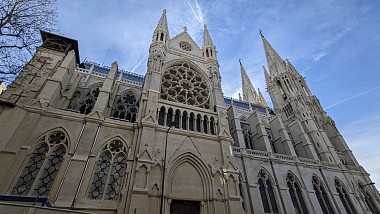
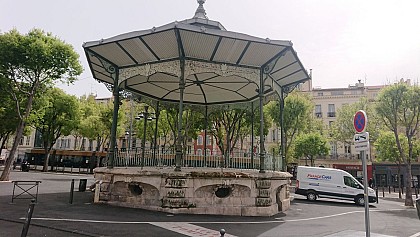
The Canebière was built in 1666 when Louis XIV gave instructions for the city to be increased in size. The name comes from the Provençal "Canebe" (hemp) and is a reminder of the rope-makers that lived in Marseille from the Middles Ages onwards. Only when the Grand Arsenal (shipbuilding dock) was demolished at the end of the 18th Century was the Canebière extended down to the port and fine buildings put up. A little further on was the narrow Noailles street and beyond it, outside the walls, lay the Allées de Meilhan that provided the people of Marseille with a tree-lined walk that took them past open-air cafés and dance-halls. The Canebière was only officially extended from the Old Port to the Réformés church in 1928, thus including Noailles street and the allées de Meilhan. The Second Empire (1852-1870) and colonial expansion were responsible for major changes in the city: new thoroughfares were opened, elegant buildings were constructed and a new port built. The Canebière enjoyed its heyday during the Third Republic (1871-1940) when intense intellectual and business activity was omnipresent in the cafés, high-class hotels and shops. The Canebière became known throughout the world and was very quickly adopted as the symbol of Marseille and its port. Certain buildings are now classified as National Heritage Sites. The larger hotels and cafés on the Canebière closed after the French colonies gained their independence. The Canebière has recently become central to a number of long-term rehabilitation projects for the city centre and is to some extent reliving its past glory with the marseillais, as the town's inhabitants are known, enthusiastically opening new hotels and shops. The turkish cafe One of the first cafés set up on the Canebière is the café alla turca, from 1850 an inevitable passage for travellers to the Orient. An oriental lounge openend onto to the street Prince de Beauvau. A monumental fountain, topped by a four-faced clock, sat imposingly in the centre of the main hall, that gave onto the Canebière. It symbolized the open relationship of Marseille with other cultures and showed the Turkish, Chinese, Arabic and European time. Its sumptuous décor and its atmosphere were often evoked in literature. The café alla turca disappeaed just after the first world war. The Beauvau street, which bears the name of a governor of Provence, was opened in 1785 on the land of the Arsenal des Galères (galley arsenal). It was one of the first streets of Marseille made with pavements. Please note Hôtel Beauvau at no. 4 where Lamartine stayed in 1832 as well as Georges Sand and Frédéric Chopin in 1835. The Opera House The inhabitants of Marseille have always been theatre and opera fans. Several theatres were in fact built in various parts of the city to meet this local demand. But they had to wait for the sale of the land of the Arsenal des Galères in 1781 to allow the construction of the Grand Théâtre (one of the clauses of the bill of sale stipulated the obligation to construct an opera on the principle of perpetuity). The whole of the land was sold by the Ministère de la Marine to the city who sold it three years later to a company run by Rapalli from Genoa. He started constructing blocks of flats which resulted in extraordinary price explosions. The whole quarter is then organized around this vast plot of land and the streets are dedicated to theatre and music (Corneille, Molière, Lulli, etc) as well as to the high representatives of royalty in Provence. The Grand Théâtre, opened in 1787, was the work of the architect Benard. He designed it in a neo-classical style as a temple of music and dance. In 1919, a fire completely destroyed the theatre and the stage only the main walls, the Ionic colonnade and the main front in freestone were saved. The arcitect Gaston Castel, associated with Raymond Ebrard, was chosen to rebuild the Opera from 1921 to 1924 in art deco style. It was the idea of Castel to open this building site to a large number of creative artists and technicians of all areas : painting, sculpture, mosaic and wrought iron. On the front can be seen the four allegories of Sartorius as well as the phrase written on the upper cornice : « Art receives beauty from Aphrodite, rhythm from Apollo, balance from Pallas and owes movement and life to Dionysos ». Inside, in the theatre, please note the stage setting « La naissance de la Beauté » by Antoine Bourdelle, in red stucco on a gold background in the main foyer, two superb Sèvres vases especially designed for this vast space and the ceiling decoration by Carrera illustrating the myth of Orpheus and Eurydice in bright colours. The originality of the building lies in the successful mixture of 18th century neo-classical style and 20th century art deco style. Hôtel du Louvre et de la Paix. One of the finest realizations is without doubt the former Hotel du Louvre et de la Paix of the architect Pot, today occupied by the C&A store. The front offers a monumental entrance to visitors framed by four opulent caryatids representing the four continents (Europe, Asia, America and Africa). This luxury category hotel had 250 rooms, 20 salons and 2 restaurant rooms. It was open until 1941, when it was requisitioned and bought by the French Navy, then occupied by the German Kriegsmarine. After the war, the Navy returned, installed offices and used the reception rooms for official events and the officer s mess up to 1977. The decoration had remained the same since the Second Empire. In 1980, after 3 years of neglect and damage, the building was sold. The architects only kept the fronts, the stairs and and the two salons which were listed as historic buildings. In 1984, the C&A store opened. Inside, on the left, the stairs can still be seen and at the back of the store ordinary doors hide these two magnificents salons, representing the luxurious era of the Hôtel du Louvre et de la Paix. Projects are currently being studied to try to restore and give new life to this place, a symbol of the commercial power of Marseille in the 19th century. As indicated by a plaque on the front, the first film show of the Lumière brothers in Marseille, "the arrival at La Ciotat railway station", took place in this hotel in 1896. L’hôtel de Noailles. It was designed by the architect Berengier in 1865. This very fine building, much more sober than the Hotel du Louvre et de la Paix, has a central front topped by a triangular pediment. The front shows an alternate rhythm of triangular and curved pediments. It used to be a very luxurious hotel and until 1979, very important persons, artists or politicians, stayed at the Noailles. All hotels of Rue Noailles were so famous that a special daily column was dedicated to them in the newspaper. Today the Noailles building has been transformed into office premises, but it still remains a prestige address. Les allées de Meilhan. The Allées de Meilhan are the last part of our Canebière. The expansion of 1666 planned to create a public esplanade outside the city walls. This work was only finished in 1775 thanks to the Provence Intendant, Sénac de Meilhan. This avenue was famous for its open-air cafés where young people came to enjoy themselves and to dance. The style of the buildings is very different from La Canebière and Rue Noailles most of them are from the end of the 18th century. Here the Marseille "three-window" type can be found, like on Boulevard Longchamp further along. Every year between 1886 and 2005, the " santons fair " takes place on this part of La Canebière. Since 2005, the " santons fair " is based on the Cours d'Estienne d'Orves. The music pavilion. The iron music pavilion replaced a older wooden pavilion in 1911. A Wallace fountain, which can also be found in the Parc Longchamp, was installed here in the 1930s. The monument aux Mobilisés. The Monument aux Mobilisés was erected here in 1894 to commemorate the soldiers of Marseille who fell in the 1870 war. You can see "France Armée" and at her feet the valiant soldiers. The Monument aux Mobilisés is the departure point for demonstrations which go down La Canebière towards the Old Port, and then often continue towards the Town Hall or the Prefecture according to the nature of the grievances! But here processions also start, for 14 July or for the carnival when the heros of the day proudly rejoice on La Canebière, applauded by the crowd which is always ready to celebrate. Saint Paul-Saint Vincent church, The Réformés In the 14th century, the hermits of Saint Augustinian established themselves on the site of the Saint Ferréol church, situated on the Old Port. In the 16th century, their cult was reorganized and the Augustinians Déchaux built another monastery above La Canebière. During the Revolution, the monks were dispersed. In 1803, a new parish was created in this quarter because of its increasing population. A priest of the Mission, a congregation founded in 1625 by Saint Vincent de Paul became the first priest of this quarter. The construction of the new church in a neo-gothic style followed the plan of the architect Reybaud. The church was consecrated in 1888. In 1989, the ASPRA association was created to save the building. Finally, in 1998,a set of four bells was placed in one of the two spires. Their height, 69 metres above the floor of the crypta, gives some idea of the imposing dimensions of the church. Inside, you can see the stained-glass windows by Didron, which evoke the main scenes of the bible and the saints of Provence, the baptismal fonts, the main altar of marble, lapis-lazuli, onyx, gilt bronze with enamels, the pulpit of sculptured wood, the marble altar made in 1999 from the former communion table and the Christ of the Holy Shroud of the Marseille sculptor Botinelly.

13001 Marseille
Show

Where to eat in HOTEL VICTORY

See more suggestions
The restaurants of HOTEL VICTORY await you.
See more suggestions

Where to sleep in HOTEL VICTORY

See more suggestions
Choose from a variety of lodgings in HOTEL VICTORY.
See more suggestions
Caution!
We have no information on the difficulty of this circuit. You may encounter some surprises along the way. Before you go, please feel free to inquire more and take all necessary precautions. Have a good trip! 🌳🥾