Tours
Activities
Places of interest
Where to eat
Where to sleep

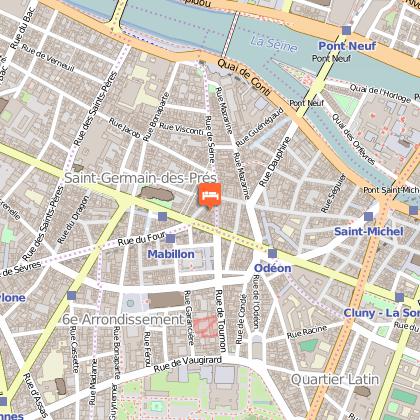
Explore Paris-6e-arrondissement from our hotel

Are you the owner?
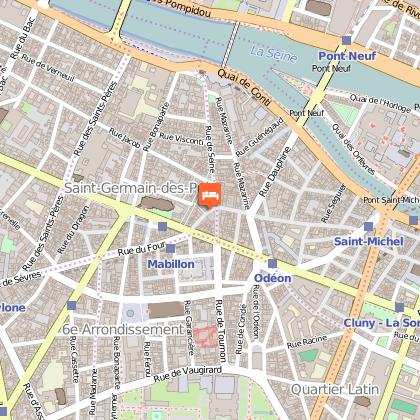
Welcome to the heart of Paris-6e-arrondissement, a neighborhood brimming with history, culture, and charm. From your stay, embark on a journey to discover the Luxembourg Gardens, a peaceful oasis of greenery where you can stroll among sculptures and centuries-old trees. Make a stop at the iconic Café de Flore or Les Deux Magots to taste the literary atmosphere that inspired many famous writers. Do...See more

Walking around SIEM

See more suggestions
Hikes for all levels in SIEM.
See more suggestions

What to do in SIEM

See more suggestions
Explore the many bookable activities in SIEM and make the most of every moment.
See more suggestions
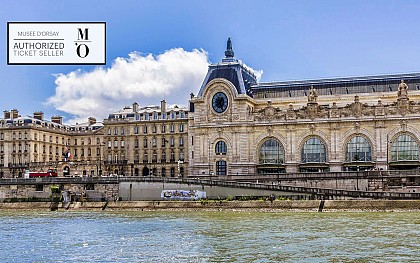
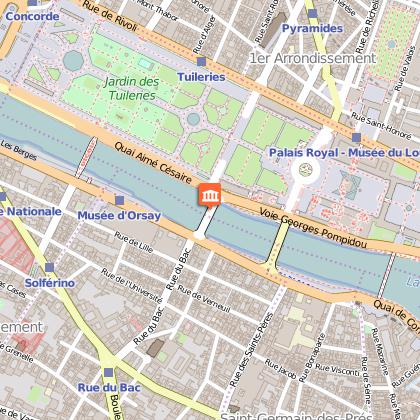
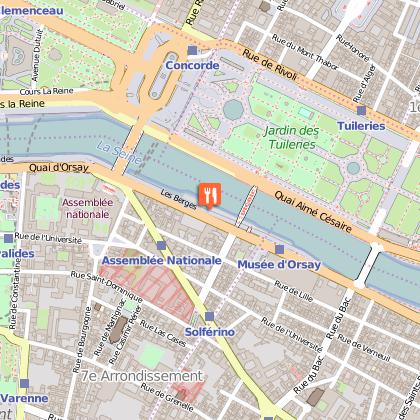
Dedicated Entrance Ticket to Orsay Museum
905 m

Dedicated Entrance Ticket to Orsay Museum

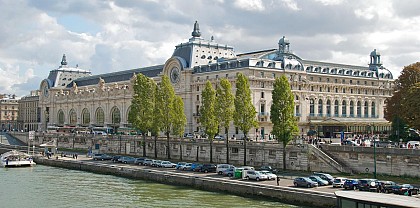
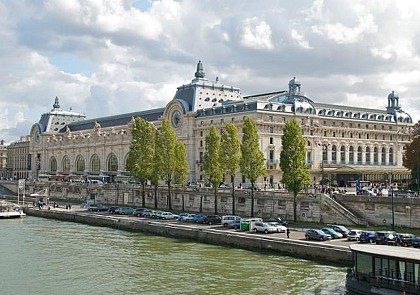
ArrayWhat to Expect Established in 1986, the Orsay Museum is one of the newest museums in Paris but also one of the most important. It is an institution that houses paintings from one of the most influential periods of French Art - the Impressionist and Post-Impressionist eras of the late 19th Century. At the Orsay Museum, you will not only see famous paintings but also have the chance to catch sweeping views of Paris from its top floor. The Orsay Museum is situated at the heart of Paris, right next to the Seine and is located opposite the famous Tuileries Gardens. Once you walk into the building, you will be in the company of some of the greatest French artists and their works. You will be able to admire masterpieces from artists such as Paul Cezanne, Frederic Bazille, Edgar Degas, Edouard Manet, Claude Monet, Auguste Renoir and Alfred Sisley. Once inside, you are free to explore the museum as you like. The exhibitions are arranged in a chronological manner, with early 19th century sculptures and classical paintings on the ground floor, leading up to the Impressionist paintings on the second and top floor. Most of the highlights of the Orsay Museum are on the top floor. Sights Covered Bal du Moulin de la Galette, Pierre-Auguste Renoir | Dinner at the Ball, Edgar Degas | Luncheon on the Grass, Edouard Manet | Starry Night, Vincent van Gogh | Bazille’s Studio, Frederic Bazille | The Cardplayers, Paul Cézanne | The Circus, Georges Seurat

Musée d'Orsay, 1 Rue de la Légion d'Honneur, 75007 Paris, 75007 Paris
Book from 14 EURBook
Show

What to visit in SIEM

See more suggestions
Relax in the parks of SIEM.
See more suggestions
Pont Royal
890 m

Pont Royal

The Pont Royal is a bridge crossing the river Seine in Paris. It is the third oldest bridge in Paris, after the Pont Neuf and the Pont Marie. Located near the metro station: Tuileries LocationThe Pont Royal links the Right Bank by the Pavillon de Flore with the Left Bank of Paris between rue du Bac and the rue de Beaune. The bridge is constructed with five elliptical arches en plein cintre. A hydrographic ladder, indicating floods' highest level in Paris, is visible on the last pier nearest each bank. History In 1632, the entrepreneur Pierre Pidou directed the construction of a wooden toll-bridge which would be called Pont Sainte-Anne (in deference to Anne of Austria) or Pont Rouge (due to its color). It was designed to replace the Tuileries ferry upon which the rue du Bac (bac meaning ferry in French) owes its name. The ferry had been offering crossings since 1550. Fragile, this bridge of fifteen arches would be repaired for the first time in 1649, completely redone two years later, burnt in 1654, flooded in 1656, completely rebuilt in 1660, propped up in 1673 and finally carried away by a flood in February 1684. Madame de Sévigné reported that this last incident caused the loss of eight of the bridge's arches. It was finally reconstructed between October 25, 1685, and June 13, 1689, this time with stone, receiving complete financing from the king Louis XIV; it was the king who gave it the name Pont Royal. Louvois director of the Bâtiments du Roi, charged Jacques Gabriel, Jules Hardouin-Mansart and François Romain with the construction project. In the 18th century, the bridge was a popular meeting place for various festivities and celebrations. At the time of the French Revolution, in the period following the fall of the monarchy on 10 August 1792 and the beginning of the First French Empire in 1804 - the name of Pont Royal was changed to Pont National. During that period, General Napoléon Bonaparte (future Napoléon I, Emperor of the French) had cannons installed on the bridge in order to protect the Convention Nationale and the Committee of Public Safety, housed in the Tuileries Palace.During the First French Empire (1804-1814), Napoléon I renamed the bridge the Pont des Tuileries, a name that was kept until the Restoration in 1814 when Louis XVIII gave back to the bridge its royal name. The bridge underwent a last reconstruction in 1850. In 1939, it was classified as a monument historique under the same bill as the Pont Neuf and the Pont Marie.In 2005, the Pont Royal was illuminated by lights at night as one of the Paris Olympic Bid highlights. Source : Wikipédia – Reproduction of extracts of original text. Creative Commons Attribution-ShareAlike License. Photo : Wikimédia Commons

Pont Royal 75001 Paris
Show

Where to eat in SIEM

See more suggestions
Discover the local flavors of SIEM.
See more suggestions

Where to sleep in SIEM

See more suggestions
Enjoy your stay with accommodations in SIEM.
See more suggestions
Caution!
We have no information on the difficulty of this circuit. You may encounter some surprises along the way. Before you go, please feel free to inquire more and take all necessary precautions. Have a good trip! 🌳🥾