Tours
Activities
Places of interest
Where to eat
Where to sleep

Discover the gems around Hotel FE in Villiers-le-bel

Are you the owner?
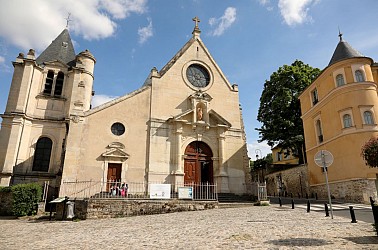
Welcome to the page that guides you through the wonders surrounding Villiers-le-bel, Val-d'Oise, Ile de France. From history, nature to culture, your stay will be rich in discoveries. Begin your exploration with a visit to the elegant Saint-Didier Church, an architectural gem from the 13th century.
For nature enthusiasts, the Parc des Sports et de Loisirs de Villiers-le-Bel offers picturesque tr...
See more

Walking around HOTEL FE

See more suggestions
Family walks around HOTEL FE.
See more suggestions
Painters' Trail
2.1 km

Painters' Trail

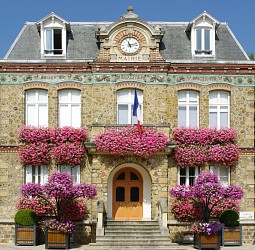
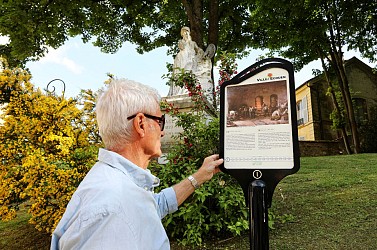
Discover Écouen through the painters who worked in this town during the 19th century. Along the route, you’ll find explanations on display stands. The first lectern (Lectern No. 1), by Paul Soyer (1823–1903), is located behind the tourist information desk. On the right, at the corner of Rue Emmanuel Duverger, is the double lectern (Lectern No. 2): A postcard of the “A la descente du bois” inn shows us an inn that existed in the early 20th century. Place Levachet, lectern No. 2bis: Auguste Schenck (1821–1900). Above the square, display case No. 3—dedicated to Emmanuel Duverger (1821–1898) and André Dargelas (1828–1906)—invites visitors to discover the beautiful house with its imposing glass roof, behind which Théophile-Emmanuel Duverger painted many of his works. A few steps further on, at No. 10 Rue Jacques Yvon, lived Félix Gardon (lectern No. 4: Félix Gardon (1852–1921)). Lectern No. 5, the home of Charles-Edouard Frère, awaits you there (Place du Souvenir Français). The next display stand (No. 5 Bis), “Chappe’s Telegraph,” is located on the same square. As you walk down to the end of this street, you’ll find display stand No. 6, “Buried in Écouen,” at the entrance to the cemetery. On the right, across from the Sainte-Thérèse School, you’ll find display case No. 7: Pierre Edouard Frère (1819–1886). On the right, discover display case No. 8: Postcard of the Hôtel du Nord. Display case No. 9: Postcard of the Hôtel du Commerce, Rue Georges Joyeux. Walking back up Rue du Maréchal Leclerc to the right at the traffic light, you’ll find display case 9bis: Léon Dansaert (1830–1909). Parking lot on rue Colette Rousset: Lutrin No. 10, a postcard of the Abreuvoir, and across the street, Lutrin No. 11, Paul Seignac (1826–1904). At the back of the parking lot: lectern No. 12, Jules Paulin Lorillon (1836–1912). Leaving the park through the gate at the top right, you’ll find lectern No. 13, the House of Michel Arnoux. For the more adventurous, we invite you to walk down Rue de la Grande Fontaine and Rue du Four Gaudon to No. 3 to reach display case No. 13 Bis, dedicated to Jean-Baptiste Corot (1796–1875). At No. 10 Rue Paul Lorillon, a display stand (No. 14, Pierre Edouard Frère (1819–1886)) features a painting by Pierre Edouard Frère. At Place de la Mairie, display stand No. 15 features a postcard of the Hôtel de la Mairie. In front of City Hall, the last display stand (No. 16: Charles d’Entraygues (1850–1929)) is located to the left of City Hall, at the entrance to the path leading up to the castle.

2 h
3 km
Easy
1 place de l'Eglise Manoir des Tourelles 95440 Écouen
Show

What to do in HOTEL FE

See more suggestions
Discover surprising activities in HOTEL FE and book the ones you like.
See more suggestions
Eglise Saint-Acceul
2.1 km

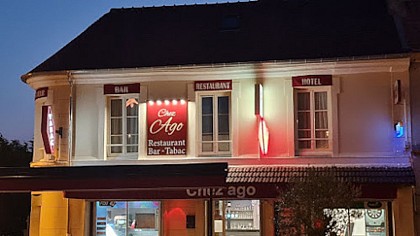
Eglise Saint-Acceul

An architectural and artistic gem of the Renaissance, the Church of Saint-Acceul is listed as a historic monument. This church is the only one in France to bear this name, and it is the only church in the Val-d’Oise to still have its original stained-glass windows. Listed as a historic monument, this church is the only one in France to bear this name, which remains a mystery, even though it is often associated with Saint-Andéol, the evangelizer of Languedoc, who was martyred in the 3rd century. Saint-Acceul is depicted on the church’s façade holding a saw (Saint-Andéol’s skull was sawed off by the Romans). An architectural and artistic gem of the Renaissance, the Church of Saint-Acceul in Ecouen is a major tourist attraction for the town. Construction of the Saint-Acceul Church began in 1536 under the direction of Constable Anne de Montmorency (builder of the Château d’Ecouen), who wished to make this imposing monument a symbol of the Montmorency family’s status and power. The choir was completed in 1545. The building underwent numerous modifications thereafter: the nave was constructed in the early 18th century and the façade in the mid-19th century. The combination of these various periods, each with its own artistic and architectural style, gives the church its unique character; it is also known for its stained-glass windows. Inside, visitors can see the altar and its imposing painting—a copy of Raphael’s “Transfiguration”—as well as an organ. The bell tower contains three bells, the largest of which—weighing over 1,400 kg—bears the coat of arms of Anne de Montmorency. The other two bells weigh 850 kg and 600 kg, respectively. The architect, Jean Bullant, is said to have been buried in the church. The main feature of the church in Ecouen lies in its stained-glass windows, which have survived intact since the Renaissance. Indeed, in many churches from that era, the stained-glass windows were shattered during wars, broken by accident, or even stolen. The stained-glass windows in those churches are therefore later reproductions, sometimes with dull colors. In contrast, the rich stained-glass windows of Ecouen, dating from the 16th century (the period when the castle was built), hold many surprises for visitors... The ten stained-glass windows, funded by the Montmorency family, are believed to have been created between 1544 and 1587. They depict not only the powerful family but also the Passion of Christ, incorporating more contemporary themes (as the period marked the outbreak of the Wars of Religion).

2 Rue Jean Bullant 95440 Écouen
Book from 0 EURBook
Show
Behind-the-Scenes Guided Tour of the Stade de France
8.8 km

Behind-the-Scenes Guided Tour of the Stade de France

Stade de France opens its doors for an exclusive tour! Discover places usually closed to the public and share the emotion of football that fills the site!  THE STADE DE FRANCE OPENS ITS DOORS FOR AN EXCLUSIVE TOUR! DISCOVER PLACES USUALLY CLOSED TO THE PUBLIC AND TASTE THE FOOTBALL FEVER THAT FILLS THE SITE! The tour starts with a visit to the fan terraces, from which you can admire a stunning panoramic view of the site, before your guide takes you to look at the private boxes. As a truly privileged visitor, you will then be shown around the locker rooms, used by some of the world's the greatest players, before walking through the famous tunnel that leads onto the pitch.  Your guide will tell you all kinds of facts and stories about this emblematic stadium, its history in its architecture, including the many celebrities who have walked the turf. Because this stadium is not only about football. As the largest sports and cultural complex in France, the Stade de France hosts a diverse range of sporting events but also stages concerts by some of the world’s most famous musicians. The Rolling Stones, U2, Beyonce and Rihanna have all ignited the stage and crowds during spectacular large-scale shows held at the stadium! Your tour comes to an end at the Museum of the Stade de France, where you will be free to browse the exhibits at your own pace. Discover archives and mock-ups of the stadium, but also guitars and autographed football shirts... All of the objects that bear witness to the legendary character of the site! Book now to take advantage of this exclusive tour that will delight young and old alike!  

Stade de France 93200 Saint Denis
Book from 16 EURBook
Show
The New Spirit of Monmartre
13 km

The New Spirit of Monmartre

Welcome to Montmartre! Discover the unique atmosphere of the most lively neighbourhood in Paris. Travel through time thanks to a guided tour lead by a group of actors, magicians, acrobats and singers! ENJOY A UNIQUE EXPERIENCE IN THE HEART OF MONTMARTRE, AN ANIMATED AREA THAT'S RICH IN HISTORICAL AND CULTURAL INTRIGUE. Take a 90-minute ‘show tour’ hosted by a group of actors, magicians, acrobats and singers! Your tour begins at Square Nadar where your theatrical guide, the famous Jean-Jacques de la Tour, will take a photograph of you. Strangely, the photo also shows a female spirit, but who is she? Follow your guide and the clues to find out! Investigate the “Belle Gabrielle” mystery in the heart of the Montmarte neighbourhood. Your journey will reveal all about the history, the legends and rumours behind the famous Butte de Montmartre. You will also cross paths with a full cast of Belle Epoque characters: an urchin, the painter Amedeo Modigliani in action, a pickpocket known as Luigi le Dandy, Valentin the Boneless, Lolo the donkey painter of Father Frédé, and Madrano the circus acrobat juggler…. All these interesting characters will help to advance the investigation by revealing interesting information on the Belle Gabrielle, before ending the tour with a song! Take advantage of a unique tour informing you on the history of Montmartre through song and dance! Fun and laughter are guaranteed!

Square Nadar 75018 Paris
Book from 27 EURBook
Show
The Moulin Rouge: 9pm Show – With Champagne
14 km

The Moulin Rouge: 9pm Show – With Champagne

Book a ticket for the one and only Moulin Rouge to see the world's most famous cabaret. Be enchanted by the glamour of this legendary nightspot, its décor, the costumes, and of course the elegant dancers. SPEND A CHARMING EVENING AT THE MOULIN ROUGE CABARET IN PARIS! Book a ticket for the one-and-only Moulin Rouge to see the world's most famous cabaret. Be enchanted by the glamour of this legendary nightspot, its décor, the costumes and of course the elegant dancers. Welcome to the Moulin Rouge, a timeless symbol of Parisian nightlife located in the heart of lively, festive Montmartre. Bought by Charles Zidler and Joseph Oller in 1889, the Moulin Rouge has played host to countless concerts and balls, and was the first venue to stage a revue show, earning itself a reputation for extravagant evenings, famous attractions and scandalous happenings. The most legendary event was undoubtedly the Bal des Quat'z'Arts, when the beautiful Mona stepped on stage with her large feathers to perform the first ever striptease show... From then on, a stream of cabaret personalities have left their mark on the Moulin Rouge, including La Goulue ('The Glutton' – so-called because she finished people's drinks), La Grille d'Egout ('The Drain', because of the gaps between her teeth), Mistinguett, and also famous stars such as Maurice Chevalier, Jean Gabin, Liza Minelli, Frank Sinatra, Elton John and many more. Alcohol abuse carries health risks. Always drink responsibly

Book from 122 EURBook
Show
Dinner and Moulin Rouge Show – With Champagne
14 km

Dinner and Moulin Rouge Show – With Champagne

Have dinner at the Moulin Rouge, followed by the famous cabaret show. Visit the home of Parisian nightlife, the Moulin Rouge, made famous by artists such as Henri de Toulouse Lautrec... BOOK A TABLE FOR DINNER AND A SHOW AT THE ONE AND ONLY MOULIN ROUGE TO SEE THE LATEST PRODUCTION FROM THE LEGENDARY CABARET HALL.  Visit  the Moulin Rouge, a symbol of Parisian nightlife made famous by artists such as Henri de Toulouse Lautrec, who immortalized the cabaret's colourful sets and dancers. The Moulin Rouge is synonymous with the neighbourhood of Montmartre, both having a reputation as a lively nightlife. Since 1889, when the cabaret was taken over by Charles Zidler and Joseph Ollier, the venue has hosted the most extravagant evenings in town, put on the most famous attractions, concerts and balls – many of which were considered highly scandalous – as well as the very first revue shows. One of the most memorable events was undoubtedly the Bal des Quat'z'Arts, at which the beautiful Mona performed the first ever striptease act, which featured large feathers and was set to very slow music... Discover French cuisine at this world-famous cabaret where a team of 120 maître d's and waiting staff are on-hand to provide excellent service. For the dinner, a variety of typical French dishes are proposed, to enjoy with a glass of champagne and orchestral music. Select your dishes à la carte from a choice of three set menus (see below for details), which all include half a bottle of champagne per person. Dinner will be served at 7pm; the show begins at 9pm. Alcohol abuse is dangerous for your health. Please drink responsibly

Boulevard de Clichy 75018 Paris
Book from 190 EURBook
Show

What to visit in HOTEL FE

See more suggestions
Explore the cultural heritage of HOTEL FE.
See more suggestions
Saint-Didier Church
813 m

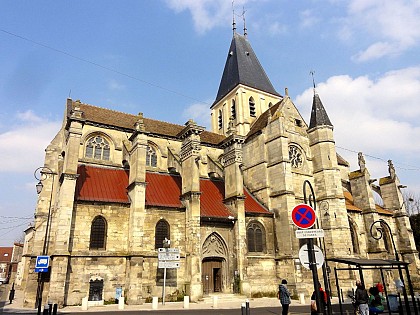
Saint-Didier Church

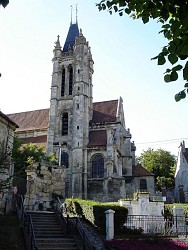
The Church of Saint-Didier was formerly dedicated to Saint Éterne. With the exception of two walls and the south transept, which date back to the first quarter of the 13th century, the building dates primarily from the last quarter of the 15th century and the second half of the 16th century. The present church was built in the 13th century to replace an earlier structure first mentioned in a document from 1124, which at that time was under the jurisdiction of the Abbey of Saint-Victor in Paris. Oriented regularly, it follows a cruciform plan, with a nave flanked by two aisles; a non-projecting transept; a central bell tower rising above the crossing of the transept; and a two-bay choir with a flat apse, flanked by two side aisles. Both the nave and the choir are elevated and significantly taller than the side aisles, allowing for additional light through high windows. The side walls of the nave and choir are reinforced by flying buttresses that extend from the buttresses of the side aisles. The south transept is flanked on the right by a round stair turret providing access to the attic, which also serves as a buttress. The bell tower, dating from the third quarter of the 16th century, features flat buttresses and two ogival sound-breaking windows on each side; it is architecturally very simple. From the 13th century, the western façade remains, notably featuring a triplet of three ogival windows above the portal, framed by slender columns and adorned with toruses; the nave with its side aisles, as well as the transept. However, they bear traces of a raising that took place at the same time as the construction of the bell tower, between 1546 and 1579, which resulted in their buttresses being adorned with carved ornamentation in the Renaissance style. This Renaissance-era work is attributed to the architect Jean Bullant. The choir and its side aisles date from the period between 1486 and 1498. Its buttresses are already similar in shape to those built later on the west side, but they feature a significantly less elaborate Flamboyant style decoration. The church is immortalized in a 1909 painting by Maurice Utrillo. The original organ, installed in 1664, underwent numerous alterations during the 18th century. It retains 98% of its original pipes and was designated a historic monument in 1939. After several years of restoration, the church reopened in January 2011.

1 rue Gambetta 95400 Villiers-le-Bel
Show
National Renaissance Museum - Écouen Castle
2.1 km

National Renaissance Museum - Écouen Castle

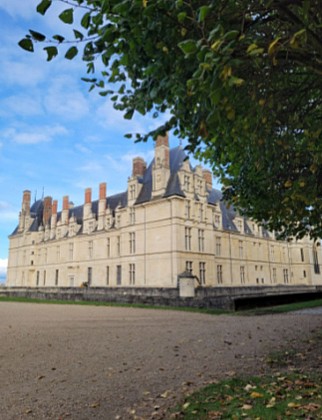
We owe the Château d'Écouen to Duke Anne de Montmorency. Since 1977, it has housed the National Renaissance Museum. The collections include an exceptional selection of decorative arts, paintings, and sculptures from the 15th to the 17th centuries. The collections of the National Renaissance Museum showcase true treasures of European decorative arts: furniture, gold and silverware, painted enamels, majolica, tapestries... An architectural gem of the French Renaissance and the only museum in France entirely dedicated to this period, its mission is to shed light on all aspects of the era—history, art history, and civilization—for the widest possible audience. Numerous temporary exhibitions punctuate the cultural season. In addition, you can discover the tapestries depicting the story of David and Bathsheba, which have remained intact over the years. N.B. Starting in late January 2023, *La Tenture de David et Bethsabée*, the museum’s masterpiece, will be taken down to make way for *La Tenture des Valois*, on loan from the Uffizi Gallery in Florence for the exhibition on Antoine Caron. Our ten tapestries will then remain in storage until the courtyard renovations are completed in 2027. N.B. Certain galleries will be closed (sculptures, Madeleine’s Chamber, Abigail’s Chamber, the Gallery of Psyche, the King’s Study, and the King’s Bedroom) from March 7 to April 3, 2023* due to the installation of the exhibition “Antoine Caron (1521–1599): The Theater of History” *The reduced admission rate will apply during this period.

Rue Jean Bullant 95440 Écouen
Show
Eglise Saint-Acceul
2.1 km

Eglise Saint-Acceul

An architectural and artistic gem of the Renaissance, the Church of Saint-Acceul is listed as a historic monument. This church is the only one in France to bear this name, and it is the only church in the Val-d’Oise to still have its original stained-glass windows. Listed as a historic monument, this church is the only one in France to bear this name, which remains a mystery, even though it is often associated with Saint-Andéol, the evangelizer of Languedoc, who was martyred in the 3rd century. Saint-Acceul is depicted on the church’s façade holding a saw (Saint-Andéol’s skull was sawed off by the Romans). An architectural and artistic gem of the Renaissance, the Church of Saint-Acceul in Ecouen is a major tourist attraction for the town. Construction of the Saint-Acceul Church began in 1536 under the direction of Constable Anne de Montmorency (builder of the Château d’Ecouen), who wished to make this imposing monument a symbol of the Montmorency family’s status and power. The choir was completed in 1545. The building underwent numerous modifications thereafter: the nave was constructed in the early 18th century and the façade in the mid-19th century. The combination of these various periods, each with its own artistic and architectural style, gives the church its unique character; it is also known for its stained-glass windows. Inside, visitors can see the altar and its imposing painting—a copy of Raphael’s “Transfiguration”—as well as an organ. The bell tower contains three bells, the largest of which—weighing over 1,400 kg—bears the coat of arms of Anne de Montmorency. The other two bells weigh 850 kg and 600 kg, respectively. The architect, Jean Bullant, is said to have been buried in the church. The main feature of the church in Ecouen lies in its stained-glass windows, which have survived intact since the Renaissance. Indeed, in many churches from that era, the stained-glass windows were shattered during wars, broken by accident, or even stolen. The stained-glass windows in those churches are therefore later reproductions, sometimes with dull colors. In contrast, the rich stained-glass windows of Ecouen, dating from the 16th century (the period when the castle was built), hold many surprises for visitors... The ten stained-glass windows, funded by the Montmorency family, are believed to have been created between 1544 and 1587. They depict not only the powerful family but also the Passion of Christ, incorporating more contemporary themes (as the period marked the outbreak of the Wars of Religion).

2 Rue Jean Bullant 95440 Écouen
Book from 0 EURBook
Show
Ecouen Castle Park
2.3 km

Ecouen Castle Park

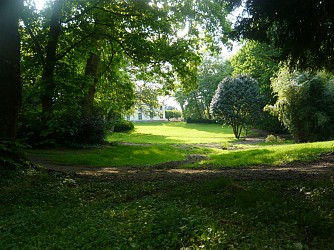
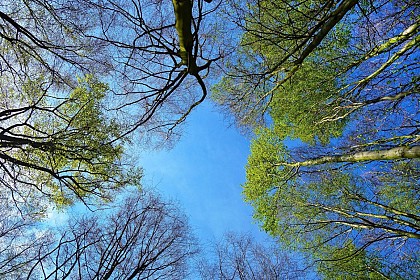
Set within the 104-hectare Écouen Forest, a 19-hectare enclosed estate surrounds this château. Serving as a natural barrier between a highly urban environment and the Plaine de France, this park offers a constantly changing view of nature throughout the seasons. The Château d'Écouen, which today houses the collections of the National Museum of the Renaissance, is a landmark of the French Renaissance. Built for Constable Anne de Montmorency by the finest artists between 1538 and 1555, it is situated on a promontory overlooking the entire plain of France. A forest borders it, crisscrossed by beautiful paths that were once the scene of numerous hunts. According to engravings by Androuet Du Cerceau, we know that a garden featuring sixteen enclosed squares had been planned at the castle’s entrance, but it appears that the earthwork required for its construction was never carried out, and only a niche at the base of one of the bastions still bears witness to this original design. Similarly, a grotto adorned with splendid plant and animal motifs had been commissioned around 1556 from Bernard Palissy, the most famous ceramist of the time, but the constable’s death in 1567 prevented the project from being completed, and it was for Catherine de’ Medici at the Tuileries that this grotto was eventually finished. In 1696, the château passed into the hands of the Condé family. Jules Hardouin-Mansart then transformed the landscape by creating an esplanade at the rear of the château, on which he laid out three parterres with simple geometric designs. These flowerbeds extend into the forest via a long green avenue lined with trees and groves to the south and a “grand tapis” to the north, in the style of the one at Versailles. The forest itself was enhanced with new paths and roundabouts from which other paths radiated outward. In 1805, Napoleon decided to establish the first boarding school for young women of the Legion of Honor in the château. A perimeter wall then enclosed the estate. In 1810, the Prince of Beauharnais presented his sister, Queen Hortense—patron of the institution—with a fountain at the far end of the park, on the presumed site of an old fountain known as the Fontaine Madame. When the museum was established here in 1977, it was decided to restore the estate to its original appearance. Although the “carpet” has been irrevocably truncated due to urbanization, the rest of the flowerbeds and paths have been restored. A gate was added to the perimeter wall in 1995 to restore the view intended by Mansart. Only the Hortense Fountain has not yet been restored, which, we hope, will happen soon!

Rue Jean Bullant 95440 Écouen
Show

Where to eat in HOTEL FE

See more suggestions
Chefs in HOTEL FE will delight you.
See more suggestions

Where to sleep in HOTEL FE

See more suggestions
Choose from a variety of lodgings in HOTEL FE.
See more suggestions
Caution!
We have no information on the difficulty of this circuit. You may encounter some surprises along the way. Before you go, please feel free to inquire more and take all necessary precautions. Have a good trip! 🌳🥾