Alert
Alerts
Painters' Trail


Description
Discover Écouen through the painters who worked in this town during the 19th century. Along the route, you’ll find explanations on display stands.
The first lectern (Lectern No. 1), by Paul Soyer (1823–1903), is located behind the tourist information desk.
On the right, at the corner of Rue Emmanuel Duverger, is the double lectern (Lectern No. 2): A postcard of the “A la descente du bois” inn shows us an inn that existed in the early 20th century.
Place Levachet, lectern No. 2bis: Auguste Schenck (1821–1900).
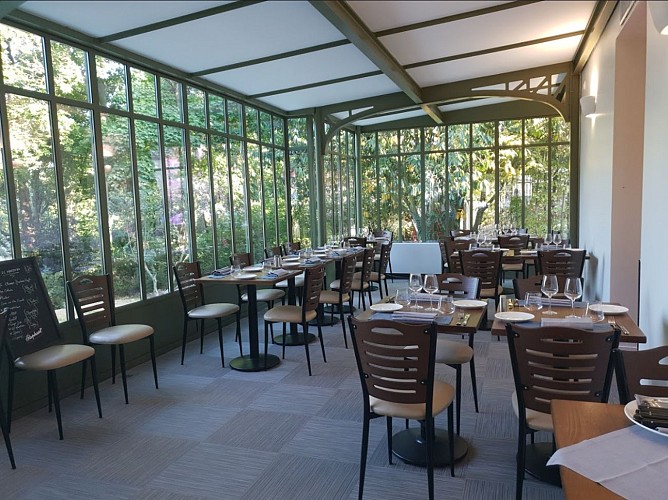
Above the square, display case No. 3—dedicated to Emmanuel Duverger (1821–1898) and André Dargelas (1828–1906)—invites visitors to discover the beautiful house with its imposing glass roof, behind which Théophile-Emmanuel Duverger painted many of his works.
A few steps further on, at No. 10 Rue Jacques Yvon, lived Félix Gardon (lectern No. 4: Félix Gardon (1852–1921)).
Lectern No. 5, the home of Charles-Edouard Frère, awaits you there (Place du Souvenir Français).
The next display stand (No. 5 Bis), “Chappe’s Telegraph,” is located on the same square.
As you walk down to the end of this street, you’ll find display stand No. 6, “Buried in Écouen,” at the entrance to the cemetery.
On the right, across from the Sainte-Thérèse School, you’ll find display case No. 7: Pierre Edouard Frère (1819–1886).
On the right, discover display case No. 8: Postcard of the Hôtel du Nord.
Display case No. 9: Postcard of the Hôtel du Commerce, Rue Georges Joyeux.
Walking back up Rue du Maréchal Leclerc to the right at the traffic light, you’ll find display case 9bis: Léon Dansaert (1830–1909).
Parking lot on rue Colette Rousset: Lutrin No. 10, a postcard of the Abreuvoir, and across the street, Lutrin No. 11, Paul Seignac (1826–1904).
At the back of the parking lot: lectern No. 12, Jules Paulin Lorillon (1836–1912).
Leaving the park through the gate at the top right, you’ll find lectern No. 13, the House of Michel Arnoux.
For the more adventurous, we invite you to walk down Rue de la Grande Fontaine and Rue du Four Gaudon to No. 3 to reach display case No. 13 Bis, dedicated to Jean-Baptiste Corot (1796–1875).
At No. 10 Rue Paul Lorillon, a display stand (No. 14, Pierre Edouard Frère (1819–1886)) features a painting by Pierre Edouard Frère.
At Place de la Mairie, display stand No. 15 features a postcard of the Hôtel de la Mairie.
In front of City Hall, the last display stand (No. 16: Charles d’Entraygues (1850–1929)) is located to the left of City Hall, at the entrance to the path leading up to the castle.
Technical Information
Altimetric profile
Starting point
Points of interest


Additional information
Environments
Town location
In centre of town
Updated by
Office de Tourisme Grand Roissy - 04/11/2026
www.grand-roissy-tourisme.com/
Report a problem
Open period
All year round daily.
Contact
Phone : +33 (0)1 39 90 85 32
Email : contact@grand-roissy-tourisme.com
Type of land
Hard coating (tar, cement, flooring)
Guidebook with maps/step-by-step
Start at the tourist information office.
Turn right onto Rue Jean Bullant. Go up the stairs on the right to enter the garden behind the tourist information office. Return to Rue Jean Bullant and continue to the right until you reach the small Place Levachet.
Go down the stairs and head up the street on the right. Continue a short distance further on the right until you reach the corner of Rue Emmanuel Duverger.
Continue on Rue de Jacques Yvon, then walk along the woods until you reach the intersection.
Take the path leading down toward the cemetery entrance.
Turn left onto Rue de Paris and continue to the Sainte-Thérèse School.
Walk down Rue de Paris and enter the city parking lot on the right. Pass the large Vygon building on your right and take the small path on the left that leads to the artisan workshops. Exit through the archway.
Turn left and head toward Rue Georges Joyeux.
At the traffic light, turn right onto Rue du Maréchal Leclerc.
Return to Rue Georges Joyeux on the left, where you’ll find many shops. About 100 meters further up, turn right onto Rue Colette Rousset and walk down to the parking lot.
Enter the park through the open gate at the far end of the parking lot.
Exit the park through the gate at the top right.
For the more adventurous, we invite you to walk down Rue de la Grande Fontaine and Rue du Four Gaudon to No. 3 to reach Lectern No. 13 Bis.
To finish the route, head back up the streets you previously walked down and turn left onto Rue Paul Lorillon toward the church.
Walk back up to Place de la Mairie.
Data author

The Cirkwi brief
Discover a journey through Écouen that brings the 19th-century painters who once graced this commune back to life. Wander where they found inspiration and left their mark. Behind the enriching façade of tourism and quaint charm, lies an artist's trail, meticulously curated by the Office de Tourisme Grand Roissy. This route isn't just a walk; it's an exploration of history, art, and the undying influence of creators who painted their narratives into the fabric of Écouen. Feel the brushes of Paul Soyer, Emmanuel Duverger, and others as you step into a world where art and history blend seamlessly, enriching every visitor's experience with stories told through paint.
Elevation and Distance Breakdown
Covering a total of 3 kilometers, this path takes you through varying elevations from a minimum of 101 meters to a peak of 146 meters. The journey offers a positive elevation gain of 4047 meters, presenting a moderate challenge suitable for enthusiasts seeking more than a casual stroll. Its layout demands a blend of endurance and curiosity as it unfolds the rich tapestry of Écouen's artistic legacy. This technical outline underscores the physical demands and the rewarding experience of tracing the steps of historical figures across a beautifully varied landscape.
Seasonal Tips for Journey Goers
Embarking on this artistic voyage through Écouen, it's wise to prepare for all seasons. In spring and fall, embrace layers and waterproof footwear to navigate the unpredictable weather and occasionally damp pathways. Summers offer the perfect backdrop for expansive exploration; however, ample sun protection and hydration are essential. Winters, while chilly, highlight the rustic charm of Écouen's landscapes, though it's crucial to wear thermal clothing and tread cautiously on potentially icy paths. Always respect local guidelines and remain mindful of your surroundings for a safe and enlightening experience.
Écouen: A Cultural Haven
Écouen, nestled in the heart of France, boasts a profound historical and cultural significance that spans centuries. Its origins, deep rooted in history, have fostered a rich tapestry of art, architecture, and legacy. The commune's strategic placement in the Île-de-France region augments its allure, connecting it to broader narratives of French culture and history. Renowned for its castle, now the National Renaissance Museum, Écouen also cherishes its intimate connection with the 19th-century school of painters, an era that significantly shaped its cultural landscape. This intertwining of history, art, and locality positions Écouen as a unique destination for those seeking to immerse themselves in France's cultural richness.
Weather Insights for the Artistic Trail
Écouen graces the Île-de-France with a temperate climate characterized by mild winters and warm summers. Spring and autumn paint the landscape with pleasant temperatures and a spectrum of colors, ideal for exploring outdoor trails. Visitors seeking the best weather conditions for their journey through Écouen's artistic legacy should aim for late spring through early autumn. These months offer a comfortable climate, fewer rain showers, and ample daylight to fully appreciate the heritage sites and panoramic views the trail encompasses. Winter explorers can also find serenity in quieter paths, albeit with colder temperatures and shortened daylight.