Tours
Activities
Places of interest
Where to eat
Where to sleep

Discover Unforgettable Moments at HOTEL POPALP, Huez

Are you the owner?
Welcome to Huez, in the heart of the Isère region of Rhône-Alpes! At HOTEL POPALP, you are ideally positioned to explore a wide range of local activities and attractions. Begin your adventures with a trip to the famous Alpe d'Huez, renowned for its stunning ski slopes and breathtaking views. In summer, turn your stay into a sporting escape with spectacular hikes on the surrounding mountain trails,...See more

Walking around HOTEL POPALP

See more suggestions
Walks and discoveries in HOTEL POPALP.
See more suggestions
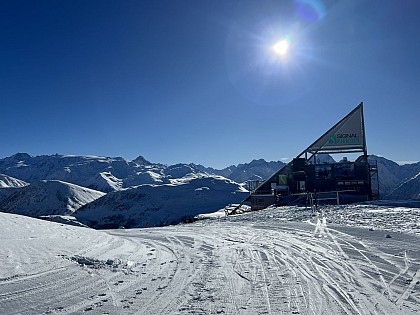
Around the Signal de l'Homme by e-bike
51 m

Around the Signal de l'Homme by e-bike

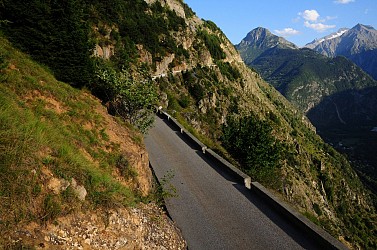
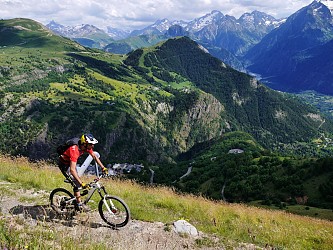
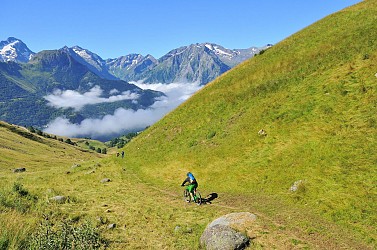
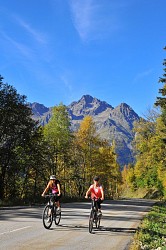
This lovely loop starting from Alpe d'Huez takes you onto the south-facing side of Auris with lovely views over the Meije from the Col de Cluy. The ride around the Signal de l'Homme gives you a 360° panoramic view over the valley. ROUTE Starting from the centre of the resort, ride up to the Altiport and follow signs for the Col de Sarenne. At the Pont de Sarenne bridge, turn down to the right into the Gorges de Sarenne and a little further on, turn left towards the Col de Cluy. At the Col de Cluy, you have two options; either stay on the track to La Chapelle Saint Giraud, or else take the path to the right, which is a little trickier, but which also comes out at the chapel. Ride along the road to Auris and then take the track up to the right of the resort to the Col de Maronne. Continue along the track to the right all the way around the Signal de l'Homme and ride back to the Col de Cluy. Go down into the Gorges de Sarenne and turn left on the track to Huez. Once back on the road in the village, ride back up to Alpe d'Huez on the paved road. PRACTICAL INFO Recharging: in restaurants in Auris and Huez. Refreshments and restaurants during the ride: Bar and restaurants in Auris. Bar and restaurants in Huez. DON'T MISS The Chapelle Saint Giraud in Auris and the atmosphere and narrow streets of Huez. The Musée d'Huez et de l'Oisans museum. The Palais des Sports. Summer market: Friday mornings in Alpe d'Huez in front of the Tourist Office.

32 km
1341 Rte d'Huez 38750 Alpe d'Huez
Show
Ours forest via Combe du Bras
710 m

Ours forest via Combe du Bras

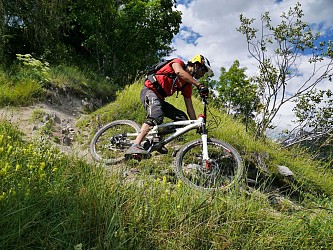
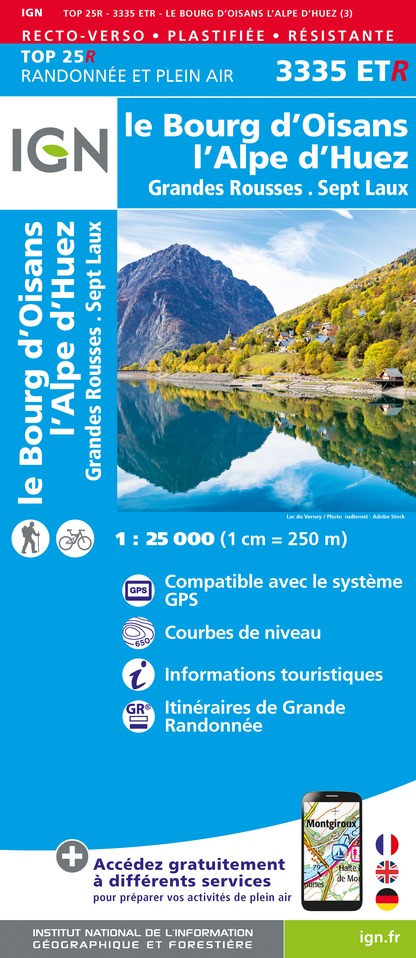
This great enduro route is perfect for experienced bikers. It’s one of the rare tracks that leads down to Bourg-d’Oisans from Alpe d’Huez. Route in the “MTB in Oisans” guide (Oisans Tourisme) Departure : Alpe d' Huez, 1850 m Arrival: Allemond or Le Bourg-d'Oisans, 720 m Length: 2 hours Distance: 17 km Highest point: 1 850 m Lowest point: 720 m Total height gain: 146 m Total height loss: - 1280 m Technique: 4/4 Endurance: 2/4 Map: Top 25 Bourg d'Oisans et l'Alpe d'Huez 3335 ET ROUTE > This route is signposted by the FFC [EN6]. > In Alpe d’Huez, ride up to the top of the resort, to the «Rond point des Pistes» roundabout and then onto the «Chemin Panoramique» that goes around the Grande Sure. > Follow the panoramic path to a viewpoint table, where you can take a minute to admire the view, before switching into descent mode. > Set off into the Combe du Bras, following the path straight down into the forest (not going up to the right). The upper part of the Combe du Bras features rather slippery soil bends. Lower down, the terrain becomes stony and more technical. > This path brings you down to the Huez – Villard-Reculas tarmac road, which you take to the right for 3km to Villard-Reculas. The «Pas de la Confession» road daringly overhangs the entire Le Bourg-d’Oisans plain with superb viewpoints. Ride through Villard-Reculas. When you get to a car park, take the grassy path at the end to the left. > The path into the Forêt de l’Ours starts below the war memorial, in a field where there are sometimes livestock. Take care, as «speed bumps» have been installed as far as the beginning of the wood. > Once in the woodland, the path is fast until a small footbridge. Just afterwards, go straight on at the switchback, following the signs [EN 6]. The first part has lovely banked switchbacks and then after a traverse, you get to the more technical section called ‘La Fontaine de l’Ours’. > After this exciting section, you arrive directly in the Bourg-d’Oisans plain, close to the hamlet of Le Raffour. From here, you can either go straight on to Allemond, or turn left to Le Bourg-d’Oisans.

2 h
17 km
Hard
106 Place du Cognet 38750 Alpe d'Huez
Show
The Combes track
771 m

The Combes track

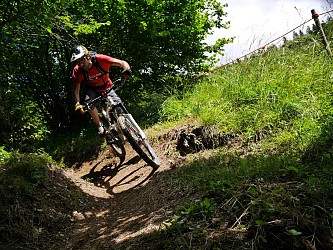
This a varied route through pasture and woodland, descending gradually into the Eau d’Olle Valley. It switches between short descents and uphill sections, without any major technical difficulties, although a good level of fitness is required. Route in the “MTB in Oisans” guide (Oisans Tourisme) Departure: Alpe d'Huez ("Rond point des pistes" roundabout), 1 850 m Arrival: Le Bourg-d'Oisans, 720 m Time: 3 1/2 hours Distance: 33 km Highest point: 1 850 m Lowest point: 712 m Total ascent: 583 m Total descent: -1 718 m Technique: 2/4 Endurance: 3/4 Map: Top 25 Bourg d'Oisans et l'Alpe d'Huez 3335 ET ROUTE > The route follows the FFC signposting [XC 6] as far as Oz. > Ride up to the very top of the resort, to the «Rond point des pistes» roundabout and on to the «Chemin panoramique » (on the left of the «Le Signal» chairlift), which goes round the Grande Sûre. > Follow this panoramic and the Combe du Bras path. The first part is on earth switchbacks, whereas, lower down, the path becomes stonier and more technical. > When you arrive at the Huez - Villard-Reculas road, turn right for 3km to Villard-Reculas. > Just before entering Villard-Reculas, follow the [XC 6] until Pré Reynaud. > At Pré Reynaud, turn left to Le Bessay. After crossing the ‘Pont du Gay’ bridge, go through Le Faubourg, with its old mountain barns. > From Le Bessay, ride up the road for about 500m to the hairpin bend and take the ‘Chemin de la Rompure’ towards Enversin-d’Oz. > In L’Enversin, turn down to the left, riding below the village. Around the last houses, don’t miss the small path down to the left, signposted Pourchery. > In Pourchery, after the chalet called «Maitreya», turn left towards the Lac du Verney, following the FFC signs (XC 7). The path cuts across the road on several occasions. Cross the hamlet of Le Verney, then the Eau d’Olle river via the Himalayan footbridge and ride along the side of the lake back to Allemond. > It’s now a 10 km flat ride back to Bourg-d’Oisans. One option is to follow the dyke, via Le Raffour. Or to go back to Alpe d'Huez in the summer, cross over the dam to Allemond to take the cable car up to Oz and then to Alpe d'Huez. Remember that you need a ticket to take the cable car.

4 h
33 km
Medium
621 parking de la place du Cognet 38750 Alpe d'Huez
Show
Le Boulangeard
770 m

Le Boulangeard

A "special enduro" ride, this route starts in pastureland and ends at Allemond at the Lac du Verney (1350 m of height loss). Although not very technical, it can be very fast for experienced riders and good practice for the less experienced. Route in the “MTB in Oisans” guide (Oisans Tourisme) Departure: Alpe d'Huez, 1 850 m Arrival: Le Bourg-d'Oisans, 720 m Time: 2 hours Distance: 19 km Highest point: 1 995 m Lowest point: 712 m Total ascent: + 220 m Total descent: - 1 350 m Technique: 3/4 Endurance: 2/4 Map: Top 25 Bourg d'Oisans et l'Alpe d'Huez 3335 ET ROUTE > Starting at the «Rond Point des Pistes» roundabout in Alpe d’Huez, follow the Route des Lacs road up to the Col du Poutran. At La Fontaine du Poutran, take the track on the left (signposted «EN3»). > Once at the Crête de la Sure (1995 m), you are at the highest point of the route. The path goes down to the right, crossing pastureland before passing under avalanche shelters and then winding its way along the edge of a forest. This section can be very fast for skillful riders and is a good exercise for those with less experience. > Lower down, the path suddenly becomes calmer and you arrive at the Sardonne/Oz junction. Carry straight on towards Oz. This is a small, transverse path that then turns into an off-road vehicle track. Stay on this track for just under 1 km until you get to a right-hand bend. At this bend, follow the path going off to the left towards “Pré Raynaud”. This section, which is also part of the Megavalanche, is quite fast and technical. > After this somewhat intense section, you arrive on an off-road vehicle track. Carry on down it, past the hairpin bend and just 10 m further on, the Chemin du Boulangeard goes off to the right (signposted “EN 4”). You are now getting to the serious part, with technical switchbacks and some fine banked bends that follow one after the other until you reach the road leading to Le Boulangeard. > Once on the road, turn right for 100 m and then take the first path down on the left. After a few bends and some wooden steps, you join the road to Allemond and the Lac du Verney. Carry straight on to Bourg-d’Oisans via le Raffour and then the track alongside the Romanche river. Or to go back to Alpe d'Huez in the summer, cross over the dam to Allemond to take the cable car up to Oz and then to Alpe d'Huez. Remember that you need a ticket to take the cable car.

2 h
19 km
Medium
621 Avenue du Rif Nel 38114 Oz-en-Oisans
Show

What to do in HOTEL POPALP

See more suggestions
Exciting adventures await you in HOTEL POPALP, book now.
See more suggestions
Espace Alpe d'Huez
970 m

Espace Alpe d'Huez

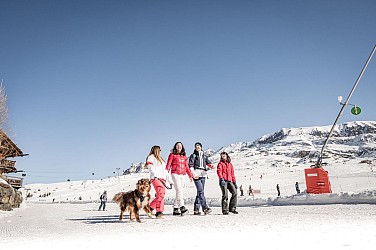
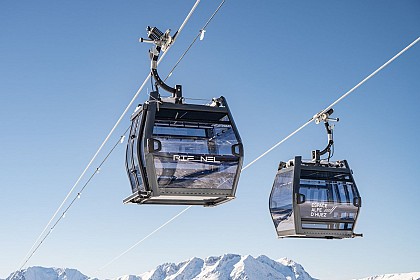
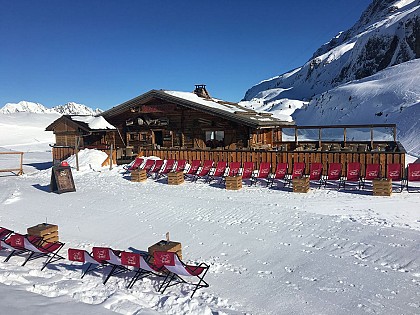
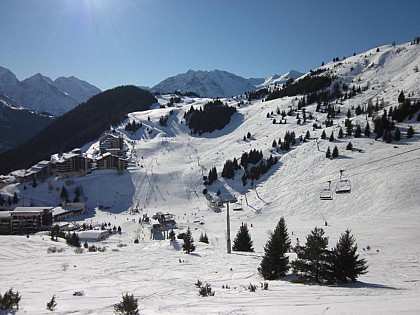
Just 1h30 from Grenoble, in the heart of Isère, Alpe d'Huez is one of the largest mountain playgrounds in the Auvergne-Rhône-Alpes region. This complete and varied ski area welcomes families and keen skiers alike! With 250 km of slopes, there's something for everyone: Beginners: dedicated areas, wide, safe runs for safe learning. Intermediates: varied itineraries, long descents and progressive slopes. Experts: technical trails, steep ascents and challenging sectors to push yourself. The ski area links five complementary resorts, offering a diversity of atmospheres and panoramas to discover throughout your stay: Alpe d'Huez: the beating heart of the resort, with direct access to the main sectors and services. Auris-en-Oisans: family atmosphere and soothing surroundings. Oz 3300: authenticity, quick access to the high peaks and Pic Blanc. Vaujany: mountain charm, modernity and family-friendly facilities. Villard-Reculas: natural skiing, intimate area and exceptional panoramas. The resort's assets 3,330 m altitude Pic Blanc, Sarenne glacier and breathtaking panoramic views. 250 km of runs - 111 trails A complete universe for all levels. A snow guarantee 67 lifts, 1,053 snow guns and 27 snow ploughs. 300 days of sunshine a year South-facing for bright skiing. Iconic slopes & easy access to the summits The resort is home to some legendary runs, including : La Sarenne, Europe's longest black run (16 km). The Tunnel, a unique technical challenge after its emblematic underground passage. Thanks to a modern network of lifts, access to the summits is fluid, fast and comfortable. The resort continues to evolve with Altitude 3300, a major project to optimize the high-altitude experience. More than just skiing: experiences to live At Alpe d'Huez, you can discover the mountain in all its forms: Sensations: Mountain Kart, rail tobogganing, fun zones and Snowparks. Nature: dog sledding, snowshoeing, Nordic itineraries. Family: beginners' areas, snow play areas, adapted courses. A multitude of activities designed to vary the pleasures and share unique moments, both on and off the slopes.

131 rue du Pic Blanc 38750 Alpe d'Huez
Book from 0 EURBook
Show
Cross-Country Ski Domain in Auris-en-Oisans
1.7 km

Cross-Country Ski Domain in Auris-en-Oisans

Situated at an altitude of 1,600 meters, the small Aurienchon Nordic ski area offers a friendly experience, away from the crowds, while enjoying exceptional panoramic views of the high peaks, including the Meije. The Auris-en-Oisans Nordic ski area is divided into 2 sectors, for 2 ambiances: → COL DE MARONNE / ROCHETTE SECTOR This sector comprises 2 runs. - A round trip from the resort to the Col de Maronne. Types of use: cross-country skiing (classic and skating) and snowshoeing. - An 8 km loop, called the Loop de la Rochette, starting from the resort. Types of activity: cross-country skiing (classic and skating), snowshoeing and dog sledding. Atmosphere: vast expanses of snow face the Alpe d'Huez resort and the peaks of the Grandes Rousses massif, including the Pic Blanc. Then the view opens out onto the Taillefer massif, and finally the Écrins. A little piece of Alaska in the Alps. Reminder: snowshoe hikers, please respect the dedicated areas. Cross-country trails are strictly reserved for skiers, who must be given priority (so that they can keep up their skiing pace). → PIÉGUT FOREST SECTOR Consisting of a single 4 km run, this trail starts at the resort. Type of activity: snowshoeing. Atmosphere: the trail winds its way through one of Europe's tallest and most beautiful spruce forests. The play of light between the snow-laden branches, the animal tracks and the peaks revealed along the way will transport you to the far north. A must-see in Auris-en-Oisans! Reminder: snowshoe hikers, please respect the designated areas. Priority must be given to skiers (so that they can keep their own pace).

38142 Auris-en-Oisans
Book from 8 EURBook
Show

What to visit in HOTEL POPALP

See more suggestions
Stroll through the historic districts of HOTEL POPALP.
See more suggestions
Alpe d'Huez Museum of History and Archaeology
405 m

Alpe d'Huez Museum of History and Archaeology

Listed among the “Musées de France” since 2003 and affiliated with the municipal archaeological site of Brandes-en-Oisans, the Alpe d’Huez Museum of History and Archaeology traces the long history of the village of Huez and its mountain pasture, from the Middle Ages to the present day. Having been awarded the "Musée de France" designation in 2003 by the Ministry of Culture, the Musée de l’Alpe d’Huez has featured two new exhibits since December 2022: the permanent exhibitions “The Spectacle of the Mountains” and “Brandes and the Gold Rush of the 12th and 13th Centuries.” You can also explore the section dedicated to World War II through the exhibition “Summer 1944: The Maquis of Oisans.” 3 PERMANENT EXHIBITIONS: “THE SPECTACLE OF THE MOUNTAINS,” “BRANDES AND THE GOLD RUSH OF THE 12TH AND 13TH CENTURIES,” “SUMMER 1944: THE MAQUIS OF OISANS” THE SPECTACLE OF THE MOUNTAINS This long-term exhibition traces the transformation of alpine chalets (now the Vieil Alpe neighborhood) into family-friendly hotels that, beginning in the 1970s and 1980s, formed an internationally renowned tourist resort perched at an altitude of 1,850 meters. Featuring four “kiosks” (immersive cubes) richly illustrated with photographs chronicling the periods 1923–1939, 1945–1973, 1974–1989, 1990–2022, this chronology reveals to visitors the spectacular evolution of Alpe d’Huez through its pioneers (the Moulin, Chaix, Chalvin, and Collomb families, as well as figures such as Maurice Rajon, Jean Pomagalski, Joseph Paganon, etc.), the heyday of traditional hospitality between the 1930s and 1960s, sporting events such as the Tour de France (which first reached Alpe d’Huez in 1952 with Fausto Coppi’s victory; with Dutch, Spanish, French, and British victories in the following decades), new snow and winter sports such as snowboarding in the 1980s, summer skiing on the Sarenne slope and glacier starting in the 1960s, as well as numerous events like the Tomorrowland Winter electronic music festival (since 2019). In addition, urban development—characterized by diverse and multifaceted architecture—is highlighted through an interactive touchscreen (featuring historical and 3D models of the resort’s neighborhoods) and an interactive kiosk that spotlights several key figures associated with this growth. The built heritage (hotels, ski lifts, public buildings, the Rif Nel and Neiges d’Or apartment complexes, Notre-Dame des Neiges Church (1969), International Style buildings such as the Daria I Nor Hotel (2019), Neo-Savoyard chalets, etc.) in Alpe d’Huez is showcased here, as are upcoming real estate projects. Finally, film screenings from the National Audiovisual Institute (leisure activities in the 1950s, the role of real estate developers in the 1970s, the inauguration of the Olympic bobsled track (Grenoble Winter Olympics in February 1968), the conquest and inauguration of the Pic Blanc (3,330 m above sea level) in 1963) will capture the attention of young and old alike. BRANDES AND THE RUSH FOR MONEY IN THE 12TH AND 13TH CENTURIES As you explore the resort and the Alpe d’Huez plateau, who would believe that in the Middle Ages, a community consisting of male mining specialists, women, and children (who crushed the ore), settled on the plateau in Brandes, at the foot of the Saint-Nicolas rock, extracting silver ore from the ground at an altitude of 1,800 meters, as well as around Lac Blanc (2,700 meters)? Yet, from the 12th to the 14th centuries, the inhabitants of Brandes (a site that constituted the medieval mining settlement and the highest human settlement in Europe for that period) lived there year-round (between 200 and 250 people), despite harsh weather conditions from October through April. This history of mining techniques (specifically, the development of the pre-industrial era in Western and continental Europe) and human settlement was revealed by systematic archaeological excavations conducted beginning in 1977 by archaeologist Marie-Christine Bailly-Maître (former curator of the Huizat Museum) and her teams, which included speleologists, scientists, archaeology students, and volunteers. The discoveries made during the excavations—including mining techniques, the production of silver powder, Brandes’s finished product used to mint the coins of the Dauphin (lord of the Dauphiné), religious practices and daily life, and the construction of a watchtower with unique architecture, a “shell-keep”) led to the creation of the “Maison du Patrimoine” in 1982, centered around its archaeological collection, which became the “Musée d’Huez et de l’Oisans” and then the “Alpe d’Huez Museum of History and Archaeology” in 2023. Formerly housed in the “Hôtel des Lacs,” this museum, heritage, and cultural institution has occupied the first floor of the AgorAlp (formerly the “Alpe d’Huez Sports and Convention Center”) since 2012. A new exhibition design showcasing the archaeological collection remains on display and contextualizes the artifacts found both above and below ground through several models and a wealth of illustrations. The archaeological site is open from April through October (toward the clay pigeon shooting range or near the Sarenne Pass road); explore its illustrated educational panels and audio-guided commentary via the PILGRIMZ web app (free download and account). SUMMER 1944. THE OISANS MAQUIS Let us also not forget the history of the Oisans Maquis during World War II. While the mountains may seem like a place untouched by the fighting between draft dodgers from the Compulsory Labor Service (STO) and German soldiers, events—sometimes tragic, often heroic—took place in the Grandes Rousses massif and throughout the Oisans region more broadly. Alpe d’Huez hosted a military hospital for the French Forces of the Interior (the FFI, opponents of the German occupation), notably in Huez and later at the Chalet du Signal, an annex of the “Grand Hôtel” in Alpe d’Huez. Faced with the advance of the enemy army and its determination to control the Oisans region and destroy its resistance movement (following the Nazis’ victorious capture of the Vercors in July 1944), Dr. Tissot, a surgeon, ordered the evacuation of the wounded being treated in this small building in mid-August 1944. Thus began a slow and arduous climb for the patients (some in critical condition) and the medical staff up to the heights of Alpette and the slopes of the Grandes Rousses, for those who were able-bodied. This group received welcome and life-saving assistance from the crew of a B-24 Liberator bomber—“11 Americans who fell from the sky” (an expression coined by Pierre Montaz, a member of the Resistance at Alpe d’Huez): The crash of their plane—following a bombing campaign on Munich (Germany)—near Gap, in Prunières, prompted them to cross the Oisans region in late July 1944. Having learned in Le Bourg-d’Oisans of the existence of the military hospital at Alpe d’Huez, they provided invaluable assistance to the retreating FFI. Protecting the evacuation of the wounded (some of whom were taken to the Fare refuge at an altitude of 2,600 meters), the armed Oisans resistance fighters fought a fierce battle on the heights of the Alpette against a division of German Alpine hunters; They emerged victorious on August 14, 1944, suffering no casualties. Relive this significant historical event in the French Resistance in the mountains through richly illustrated educational panels and artifacts from the collection of the Musée de l’Alpe d’Huez, also on loan from the Association of Friends and Descendants of the Oisans Maquis. LEARN MORE ABOUT THESE 3 EXHIBITS Quick Museum Tour: Discover the museum’s artifacts in a new way! Three artifacts will be examined and placed in their historical and geographical contexts. Every Wednesday during French school breaks, from 4:30 p.m. to 4:45 p.m. — FREE — from December 2026 to April 2027; register at the museum or by calling 04 76 11 21 74 CULTURAL PROGRAM Museum Late-Night Events (FREE, registration recommended at the Museum; held from 8:00 PM to 10:00 PM) are offered during the winter season; discover the heritage of the town of Huez-Alpe d’Huez, as well as screenings on environmental, historical, and artistic topics, among others. For more information, call 04 76 11 21 74 or email accueil.musee@mairie-alpedhuez.fr CULTURAL AND GUIDED TOURS IN THE RESORT => Guided tour of Pic Blanc, with its exceptional panoramic views at an altitude of 3,330 meters, and a visit to the Ice Cave (10:00 a.m.–12:30 p.m.) Upon arrival at the cable car station, the cultural services guide will cover several topics: the Michelin Green Guide 3-star panorama, the history of the resort and skiing, information on geology, the landscape, fauna, flora, glaciers, and the history of the Alpe d’Huez resort… No walking required; maximum of 20 people per tour (access via the Pic Blanc cable car). Tuesdays and Thursdays mornings, from 10:00 a.m. to 12:30 p.m. How to get there: Meet in front of the indoor ticket counters for the Pic Blanc gondola (formerly DMC, at the top of the resort, at an altitude of 1,850 m, on the right 150 m past the Pistes roundabout (at the end of Avenue du Rif Nel); Pay by credit card at the SATA ticket office and meet Frédérik Tane, cultural guide and facilitator, in the same room at 9:45 a.m.) Tour prices: Contact the SATA Museum (04 76 11 21 74) (04 76 80 30 30) Registration is required at the Alpe d’Huez Museum: 04 76 11 21 74 or accueil.musee@mairie-alpedhuez.fr; limited availability => During the winter season, another guided tour is offered by the Huez-Alpe d'Huez Cultural Department; register at the Museum (by email or phone at accueil.musee@mairie-alpedhuez.fr or 04 76 11 21 74; €5 or €3; 04 76 11 21 74): a tour of the Notre-Dame des Neiges Church, a remarkable religious and cultural landmark known for its wooden architecture, the multicolored Arcabas stained-glass windows depicting the Gospel according to Saint Mark, and the Raphaël organ; its history is closely tied to the development of the ski resort and the Tour de France cycling race. The church is one of the buildings designated as “20th-Century Heritage” by the Isère department. Organ concerts are held during the season on Thursday evenings (information available at the Museum). THE MUSEUM’S ART AND TEMPORARY EXHIBITIONS In the Anne Auvergne Hall (1st floor of AgorAlp, across from the Museum), take advantage of the spacious room and its beautiful lighting to explore exhibitions of watercolors, paintings, sculptures, prints, digital art, photographs, and more throughout the winter. Opening receptions followed by a reception are held in the company of the artists during the winter season. FREE ADMISSION; exhibitions from December 2026 to April 2027 CREATIVE WORKSHOPS WITH THE ARTISTS for children and adults, introducing the techniques featured in the exhibitions; €5 or €3 per person; for more information, contact the museum (in person or by phone at 04 76 11 21 74)

AgorAlp 70 avenue de Brandes 1er étage 38750 Alpe d'Huez
Show
Dans les rues d'Huez village
1.1 km

Dans les rues d'Huez village

Huez is the original village of the Alpe d'Huez ski resort. In the past, villagers used to go up to the plateau to live with their herds in summer. Today, Huez is appreciated for its charm and traditional atmosphere. Take a stroll through the village of Huez and you'll see a number of renovated old mountain farms, as well as the Huez "Château". In the center of the village of Huez, on an eminence, a fortified house still stands today, with a quadrangular main building served on four levels by a spiral staircase in a square turret. This fortified house, also known as the château, is completely absent from the texts. We don't know when it was built, the name of the family who owned it, or what assets and revenues were attached to it. The we do know is that Huez was the seat of an important mistralie (mistral: tax collector in the Middle Ages). The village has preserved its old washhouses: 2 date from 1733 and one from 1806. Built out of necessity, they are above all functional, with very simple architecture. All covered, they were originally built using local materials such as stone and slate. Until the early 20th century, laundry was done twice a year, in May and early autumn: sheets, linen shirts, towels and handkerchiefs, accumulated over six or seven months, were soaped and scrubbed, then placed in a vat and covered with a sheet filled with wood ash. Boiling water is repeatedly poured over the ashes. The next day, the women go to the washhouse with wooden paddles, brushes and soap. They carry special buckets made on site by Elie Arnol. Meeting at the washhouse, if only to fetch water, is a privileged moment of exchange between villagers.

Le village 38750 Huez
Show
Brandes Archaeological Site
1.7 km

Brandes Archaeological Site

Medieval archaeological site classified as Historic Monuments (since 1993). Village of silver miners, from the 12th to the 14th centuries. Free access with explanatory panels. Guided tours organized by the Cultural Service of the municipality of Huez. This is Europe's highest permanent medieval village (altitude 1800 m.) dating from the 11th-14th centuries. This occupation is linked to the exploitation of a silver mine. The exceptional archaeological site of Brandes includes the ruins of the former parish church of Saint-Nicolas, the fortification (or "shell keep") of the Dauphin's representative, the remains of the miners' village with its dwellings, and the area of the ore washing workshops (silver-lead sulfide). The lord of the Dauphiné owned part of this mining operation, which he used to make his own silver coins. The Brandes mines were exploited from the 11th century until their closure for technical reasons in 1339. The village community, open to the surrounding regions (as evidenced by coins found on the site from Vienne, Lyon, Provence, Burgundy etc.), numbered around 200 individuals, including women and children. The archaeological site has been listed as a Monument Historique since 1993. The Groupement d'Etude des Mines Anciennes (GEMA) scientifically promotes this unique site. Huez town council's cultural department offers guided tours twice a week during the summer. Meet at the signpost between the golf course and the tennis courts (Bergers district). This 1h30 tour can be complemented by a visit to the Musée d'Huez et de l'Oisans (Palais des Sports, 70 avenue de Brandes), where major artefacts (mining tools, coins, handicrafts, lighters, cutlery, belt buckles, chess pieces, etc.) from archaeological excavations are kept. These have been taking place regularly since 1977. The archaeological site also features educational panels to help visitors better understand the medieval layout of the mine "carreau" and the main activity that took place there, that of extracting silver ore from beneath the mountain. Climb up the Saint-Nicolas rock face to the Dauphin fortress for an exceptional 360° view of the Brandes plateau, the village of Huez and the Sarenne gorges. To the east of the archaeological site, you'll discover a rich natural environment, a wetland towards the Col de Sarenne. After the Brandes archaeological site, visit the Alpe d'Huez Museum of History and Archaeology (AgorAlp - 1st floor, 70 avenue de Brandes).

Site de Brandes. RDV devant le panneau du musée situé entre le golf et les terrains de tennis 38750 Alpe d'Huez
Show

Where to eat in HOTEL POPALP

See more suggestions
The flavors of HOTEL POPALP await you.
See more suggestions

Where to sleep in HOTEL POPALP

See more suggestions
Find an ideal lodging in HOTEL POPALP.
See more suggestions
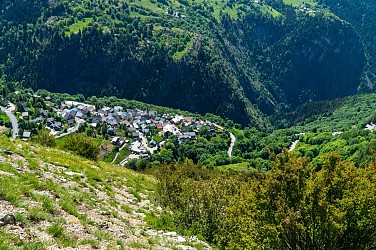
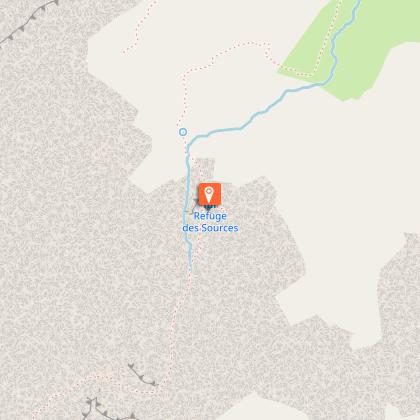
Refuge des Sources (non garded hut)
11 km

Refuge des Sources (non garded hut)

Located at 2,268 m, this small unguarded refuge with no water, electricity or toilet is a call to adventure! Facing due south, it is located in the Écrins National Park, on the path leading to the Rochail summit. PRESENTATION Perched at an altitude of 2,268 meters, the Refuge des Sources is a small, unguarded 20 m² hut nestled in the Ecrins National Park, in the commune of Villard-Notre-Dame. Approximately 3 hours' walk from the village, it overlooks the Vallon torrent and offers a breathtaking view of the Oisans. This communal refuge, with its rustic authenticity, is an ideal stopover for backpackers or mountain lovers in search of adventure. CAPACITY AND FACILITIES Rustic in character, this small communal hut offers the most rudimentary comforts. It comprises 6 mattresses, blankets, a table and benches. Capacity: 6 people Equipment available: 6 mattresses with blankets, a table, benches and stools, basic kitchen utensils. NO RUNNING WATER, ELECTRICITY OR TOILETS Note: the wood-burning stove is out of order and the use of fire is strictly forbidden inside. A guestbook is at your disposal. You can write about your race, your night, your experience! ACCESS Access to the refuge des Sources is on foot only. Length of ascent from Villard-Notre-Dame: approx. 3 h (allow 4 h with a loaded rucksack) Ascent from Villard-Notre-Dame: approx. 800 m Type of trail: typical Oisans mountain trail, with no switchbacks, requiring good physical condition. BOOKING ESSENTIAL: refugedessources.jimdofree.com/réservation/

38520 Villard-Notre-Dame
Show
Refuge de la Pra
12 km

Refuge de la Pra

At 2100 meters, the refuge of La Pra, close to the many clear lakes of the Massif Belledonne, will delight anglers, hikers and families. La Pra is also a wonderful pasture where you can encounter marmots, wild sheep and ibex. The refuge is a stopover on the GR 738 from Chamrousse. The surrounding peaks are often accessible in summer, either on footpaths or "off-track" for those who prefer less frequented areas (Vaudaine, Doménon, Croix de Belledonne sectors), as soon as the snow has disappeared. You are entering a Natura 2000 protected area where swimming in rivers and lakes is strictly prohibited. From the Pré Raymond parking lot, take the forest road, then a path to the left (south-east). A few hairpin bends bring you to an almost level path leading out of the forest. Cross the stream before reaching the dam and Lac du Crozet. Follow the path along the lake and up the Vallon de Mercier to the Col de la Pra. At the col, turn right (south) and descend to the refuge, 5 minutes from the col de la Pra. From Chamrousse, from the parking lot at the foot of the Grande Aiguille, follow the GR de Pays, then pass between the lakes (GR 738). Climb slightly before descending into the combe de l'Echaillon. Turn left onto the path leading to the Oursière waterfalls, then right onto the path leading to Lac David. Climb up to Lac Léama, then on to Lac Longet and Lac Claret. Climb up to the refuge. From the Recoin de Chamrousse, take the GR 738 to Lac Robert. Then follow the same route as the Croix de Chamrousse.

38420 Revel
Book from 0.8 EURBook
Show
Caution!
We have no information on the difficulty of this circuit. You may encounter some surprises along the way. Before you go, please feel free to inquire more and take all necessary precautions. Have a good trip! 🌳🥾