Tours
Activities
Places of interest
Where to eat
Where to sleep

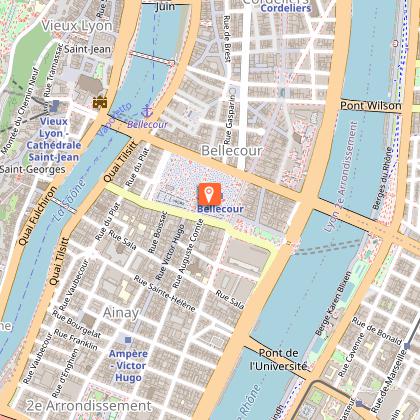
Lyon--2e--arrondissement, Rhône, Rhône-Alpes

Are you in charge of the destination?
Lyon's 2nd arrondissement, nestled in the Rhône-Alpes region, is a vibrant and historic district sure to captivate visitors. Flanked by the majestic Rhône and Saône rivers, this arrondissement is the beating heart of the city, offering a unique blend of cultural, historical, and modern attractions. Start your exploration at Place Bellecour, one of the largest squares in Europe, and meander through...See more

Walking around Lyon--2e--arrondissement

See more suggestions
Stroll through the walking routes of Lyon--2e--arrondissement.
See more suggestions
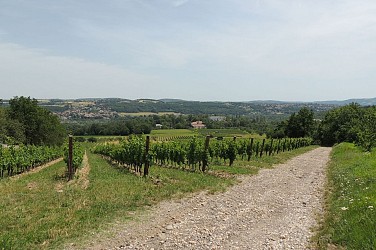
The Balmes Viennoises
20 km

The Balmes Viennoises

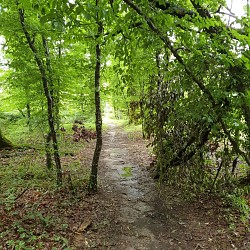
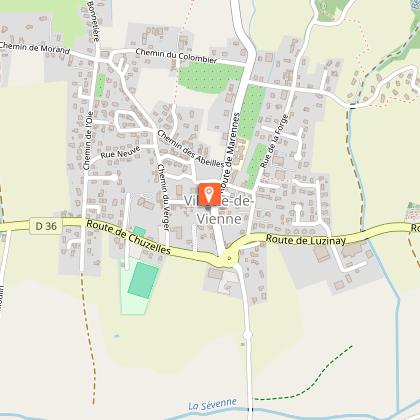
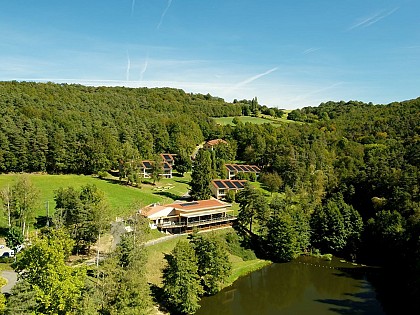
Circuit that lets you discover the château and medieval chapel of Illins, as well as the "Colombier" pear brandy distillery, while offering views of the Alps and Mont Blanc. DETAILED ITINERARY 1 - START - Villette-de-Vienne - From the start sign, turn left onto Rue des Serventières. - At the Villette de Vienne signpost, follow the signs for Chuzelle on the left until you reach Cugnet, then continue left until you reach the Morand signpost. 2 - TOWARDS BONNETIÈRE - Turn right towards Bonnetière. - At the Chemin des Vignes junction, take the path on the left until you reach a road. - Follow the road on the left to the Bonnetière signpost, then continue right to the Taillis de Mure signpost. 3 - TOWARDS MARENNES - Continue straight ahead on the track towards Marennes, cross the D150A and take the track opposite. - When you reach a small road, turn left, pass the Bois des Fauries signpost and continue to the Le Coin signpost. 4 - BOIS DE THOLOMÉ AND LA PLATIÈRE - Turn right towards Bois de Tholomé, pass the signpost and continue towards La Platière. - Pass through the houses, turn left then right at the crossroads. 5 - VILLENEUVE AND ILLINS - In Villeneuve, cross the hamlet in a straight line, then turn right into the cul-de-sac. - At the Illins signpost, continue right towards Villette de Vienne. - Cross the hamlet on the left, then turn right at the chapel. 6 - CHÂTEAU D'ILLINS & RETURN - Follow the road to the château farm on the hillside. - Take the track on the left, pass in front of the Château d'Illins, then descend to the Les Brigands signpost. - Continue to the Cugnet signpost and return to the starting point via the same route.

4 h
13 km
Easy
38200 Villette-de-Vienne
Show

What to do in Lyon--2e--arrondissement

See more suggestions
Book your activities in Lyon--2e--arrondissement now and get ready for adventure.
See more suggestions
Guided Tour by Electric Bike with Food Tasting
898 m

Guided Tour by Electric Bike with Food Tasting

Discover the Canuts' area of Lyon as well as its city centre. Your guide will tell you all about these historic neighbourhoods, then treat you to some local specialities. Your electric bike will make this city tour completely effortless! THIS PLEASANT BIKE RIDE THROUGH LYON IS A PERFECT CHANCE TO DISCOVER WHERE THE CANUT SILK WORKERS LIVED! Along with your guide you will effortlessly cycle up the Croix-Rousse hill on your electric bike. Once you reach the top, you will be able to enjoy breathtaking panoramic views over the city. Pedal a little further to come across the famous traboules, the secret passages that were historically used by the silk workers (canuts) to get to the centre of Lyon.  Throughout the tour your guide will tell you all about the unusual history of this neighbourhood which was the stage of several historical strikes held by the silk workers. Having explored the Croix-Rousse hill, you will head back towards Vieux Lyon, where you will be able to admire the typical Lyonnais architecture, before reaching the Presqu'île. Your tour will end along the banks of the Rhône, a calm and peaceful area where you can admire Lyon's barges and the Presqu'île. Let yourself be swept away by the historic charm of the Gauls' capital city! During this two-and-a-half-hour tour you will also get to sample some delicious local specialities! Make the most of this bike tour through the heart of Lyon to discover the history of the city while tasting some of its famous local specialities!

Book from 50 EURBook
Show
The Church "Saint-Clair"
11 km

The Church "Saint-Clair"

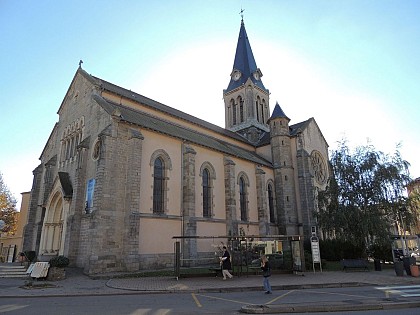
This church (19th century) is the most beautiful monument of the artistic heritage of Brignais. You can notice the bell, the organ, the woodword and the stain-glass windows. This church is the most beautiful monument of the artistic heritage of Brignais. Dedicated to Saint-Clair (590-660), patron saint of the blind and partially sighted persons, its first foundations dated from 1859. It was built on the place of the former feudal church and of the former cemetery. This church was built thanks to public subscriptions and town funds. The architect, Claire Tisseur, born in Sainte-Foy-lès-Lyon (writer of the "Littré de la Grand'Côte"*, and more famous, in France, under its pseudonym Nizier du Puitspelu.) and the abbot Rival, priest of the parish, presided the building of the monument. Thanks to its architecture and its furnishing, the monument forms a remarkable unity of ogival style of the 13th century, modernized in the 20th century. The woodwork (the pulpit, the confessionals and the stalls of the choir) is realised by sculptor Aubert from Lyon. The bell, dated from 1492, was listed in the "Inventaire des Monuments Historiques", on 27th November 1905. The organ was built by organ makers of the Jura mountains, Hartmann and Deloye, for the Benedictine community of Pradines (near the town of Roanne) in 1972. As it was for sale, the association "Les Amis de l'Orgue de Brignais", helped by the town hall, bought it in 1955. The size of the organ is fairly important (20 timbers). It integrates harmoniously the west transept of the church due to its dimensions. The organ builder, Hervé Clénet (from "Bectave-Aguin" - Gers department) and his assistant Jean Boissonade (from "Séverac l'Eglise" - Aveyron department), restaured the organ. The assembling, after restauration, was made by Jean Boissonade, helped by Maurice Crouzet and Jean-Marie Royet, from Brignais. The stain-glass windows : the five large stained-glass windows of the choir and the eight smaller windows of the lateral chapels were made by Mr Mauvernay, a glass-worker for Saint-Galmier. One of the roses represents the virtues of the Virgin, the other, the virtues of Saint-Clair. The stained-glass windows of the lawer naves represent scenes of Christian life. The designs were made by the abbot Rival. * a famous book encyclopedia with many humorous and picturesque anecdotes, inspired by the true and viviacious spirit of Lyon and its people.

1 avenue de Verdun 69530 Brignais
Book from 0 €Book
Show

What to visit in Lyon--2e--arrondissement

See more suggestions
Attend events organized in Lyon--2e--arrondissement.
See more suggestions
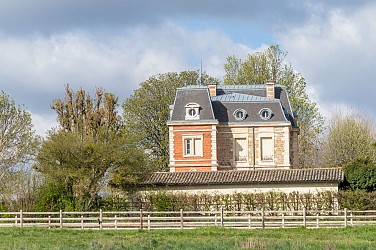
The Old Lyon district
848 m

The Old Lyon district

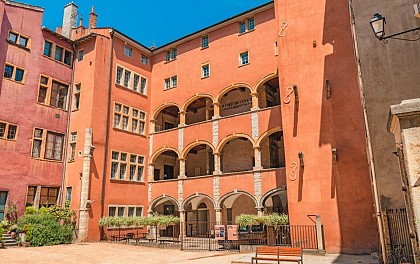
It is since 1964 the 1st conservation area of France and one of the vastest groups Renaissance of Europe, 24 ha. At the foot of the slopes of the hill of Fourvière since V °, there is of medieval period an archaeological garden towards the cathedral. During the Renaissance, its peak, neighborhoods are organized around three religious buildings: in the south, Saint George with the craftsmen; central location, Saint John, area of the upper clergy and aristocracy; in the north, Saint Paul district of the "bourgeoisie", financial and commercial center. Large families of Italian bankers and merchants have established themselves, by building sumptuous residences. In 1960, the Old Lyon was in a sad state. Many buildings were threatened and urban projects planned destruction and mutilation. Thanks to the action of the State ( André Malraux, Minister of Culture ), the association "Renaissance Vieux Lyon" and the City, Old Lyon was the first French Quarter "safeguarded area" in 1964. * Rue Saint Jean, 368 m long, and place Saint Jean 2548 m². * The House Turquet impasse Turquet in St-Georges, the oldest house in Lyon (1524), with wooden balconies * The Moorish House, in the corner of quai Fulchiron and avenue A. Max, the most recent of the Old Lyon, built in 1845 by Pierre Bossan. * A kernel without staircase, 10 rue Lainerie * Hotel Bullioud: in the courtyard, fallopian gallery of Philibert Delorme, 8 rue Juiverie * The Government House, 2 place du Gouvernement * Hotel Laurencin: spiral staircase, 24 rue St-Jean * Hotel Paterin or Maison Henri IV, 4 rue Juiverie * The House of Antoine Groslier of Servière, 11 rue Juiverie * The House Baronat, 22 ure Juiverie * The House of Chamarier: sink of Philibert Delorme, 37 rue St Jean * The Maison du Crible with the Tour Rose, 16 rue du Boeuf * The House Dugas or the House of the Lions, 23 rue Juiverie * La Maison Le Viste, 27 rue St Jean * The House of Mourguet, 2 place St Paul * The House Thomassin, 2 place du Change

69005 Lyon 5ème
Show
Lugdunum Roman Theatres of Lyon
941 m

Lugdunum Roman Theatres of Lyon

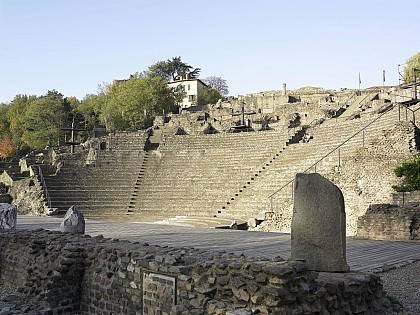
The place in which Lugdunum was founded in 43 BC by Munatius Plancus includes the Grand Théâtre (tragedies and comedies), the Odéon (music, reading), the foundations of a temple to Cybele and the remains of a hand-crafting area. Classified as a "Historical Monument" in 1905, this exceptional site gathers the remains of the Grand Theater and the Odéon, which can be visited all year round and free of charge. Once a place of entertainment and culture, they were transformed into quarries at the end of Antiquity. Many stones were moved to build Lyon below. It was not until the 20th century that theaters were rehabilitated and partially rebuilt. The Great Theatre, the oldest in France, built by Augustus in 15 BC and divided into 3 sections: the "cavea" (a vast shell with 25 stands leading to the pit) built on a gallery. In bad weather, a "velum" (awning) was stretched over the "cavea", tied to the backstage wall. The "cavea" had several "vomitorias" (doors leading to the stands). The "balteus" was the wall separating the Plebs from the Patricians. Finally, the semi-circular pit was the most ornate part with multi-coloured geometric patterns. This was where the choir, dancers and actors performed. It is 27 m in diameter. In the theatre's stands, blocks of white limestone give us an idea of what the monument originally looked like. The stage supported by a wall, the "pulpitum", has been fitted with floorboards to allow use of the theatre today. It is decorated with a few columns and the statue of a woman. Each column was there to commemorate an emperor, with his ashes stored in the base. The theatre was dedicated to tragedies and comedies. It could hold 4,700 people. It was extended under Hadrian's rule to 10,700 seats in 120 AD. The Odeon, the smaller theatre (3,000 seats) was for political or philosophical orators, music, poets and an intellectual elite. Odeons had a small seating capacity. The one in Lugdunum could only seat 2,500 people. It was built under Antoninus, Hadrian's successor in the mid-second century AD. The Odeon stood to the west against a 6 m thick wall, supporting the roof of the "cavea", 73 m in diameter, consisting of stands leading to a pit paved with geometric designs: diamonds, squares, rectangles, circles highlighted by strips. White, pink or beige marbles, blue or grey granite, green or red porphyry were brought from Italy, Greece or Egypt. Today, the two buildings host concerts, festivals, guided tours and other events. Every summer, the multidisciplinary festival Les Nuits de Fourvière takes place in the antic theatres.

6 rue de l'Antiquaille 69005 Lyon 5ème
Show

Where to eat in Lyon--2e--arrondissement

See more suggestions
The restaurants of Lyon--2e--arrondissement await you.
See more suggestions

Where to sleep in Lyon--2e--arrondissement

See more suggestions
Explore hostels and hotels in Lyon--2e--arrondissement.
See more suggestions
Le P'tit Clos de Choz
30 km

Le P'tit Clos de Choz

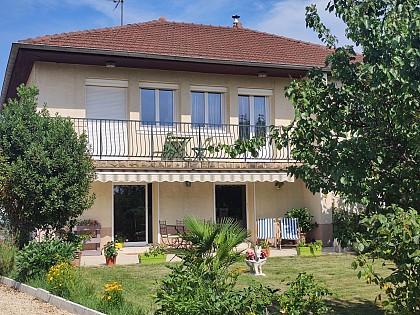
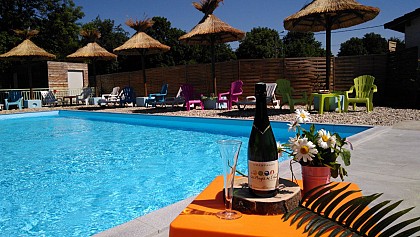
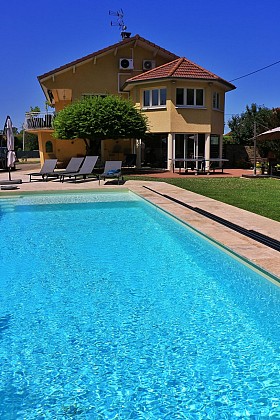
Located in Chozeau, near Crémieu and less than an hour from Lyon, this comfortable holiday cottage with a heated swimming pool, spa and wellness facilities welcomes you for a relaxing break, whether with friends or as a stopover on a cycling tour. Le P’tit Clos de Choz is a comfortable holiday cottage available by the night, ideal for a relaxing break as a couple, with friends or with family. Located on the ground floor of the owners’ house, this accommodation offers a warm and practical setting. It comprises two separate bedrooms, each with its own en-suite bathroom. The outdoor facilities are designed for relaxation and leisure. You can enjoy a swimming pool heated to 29°C (open from 1 April to 31 August), a wellness area with a spa and sauna (available all year round and on request in winter), as well as a gym. For leisure activities, the gîte offers a pétanque court and a badminton court, complemented by a fully equipped outdoor kitchen with professional-grade appliances. A barbecue is provided, and a fire pit area completes the facilities for cosy evenings. Located near the Balcons Greenway and the ViaRhôna cycle route, this Accueille Vélo-certified gîte also welcomes cycle tourists passing through the Balcons du Dauphiné. A range of dedicated services are available on site. Bed linen is provided, and for stays of two nights or more, bathrobes are provided for your comfort.

98 impasse de la Jalinière 38460 Chozeau
Book from 0 €Book
Show
Caution!
We have no information on the difficulty of this circuit. You may encounter some surprises along the way. Before you go, please feel free to inquire more and take all necessary precautions. Have a good trip! 🌳🥾