Tours
Activities
Places of interest
Where to eat
Where to sleep

Exciting Discoveries near New Hotel of Marseille SAS

Are you the owner?
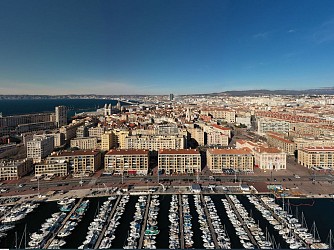
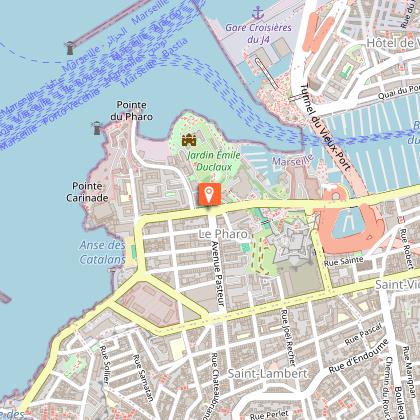
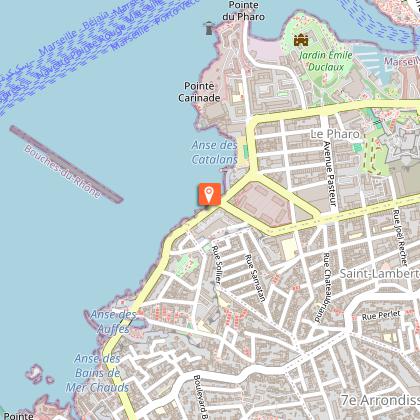
Welcome to our page guiding you through the myriad of attractions and activities accessible from the New Hotel of Marseille SAS, nestled in the heart of Marseille's 7th arrondissement, Bouches-du-Rhône, Provence-Alpes-Côte d'Azur. Whether you're a fan of culture, nature, or gastronomy, this region offers a host of unforgettable experiences. Discover the Old Port of Marseille, a historical symbol a...See more

Walking around NEW HOTEL OF MARSEILLE SAS

See more suggestions
Stroll through the walking routes of NEW HOTEL OF MARSEILLE SAS.
See more suggestions
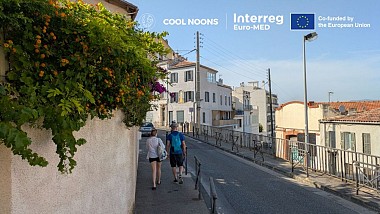
Cool Noons" freshness trail: a getaway in Endoume
194 m

Cool Noons" freshness trail: a getaway in Endoume

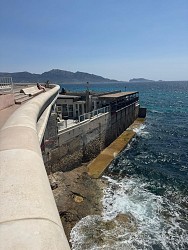
This route, devised as part of the European Cool Noons project, is divided into 2 distinct sequences. An easy one along the Corniche Kennedy to discover Malmousque and the Parc Valmer. A sporty one to explore Endoume. The main aim of the Cool Noons project, part of the European Interreg Euro-MED program on sustainable tourism, is to improve the visiting experience for tourists and residents of Mediterranean urban areas during the hottest hours. By the summer of 2024, it had already suggested itineraries favoring shaded or ventilated streets, as well as cool spots offering refreshment areas close to free drinking water points. This urban hike starts at Plage des Catalans. It is divided into two distinct sequences. The first is an easy seaside section along the Corniche Kennedy, taking in the Malmousque peninsula and the Villa Valmer park. A second, more athletic sequence explores the heights of the Endoume district. Both can be done as a loop or separately, depending on your mood, your walking ability and the weather. The Corniche Kennedy is well served by RTM bus line 83, whose air-conditioned vehicles make it easy to reach either the Old Port or the Rond-Point du Prado, even in the hottest weather. The starting point is the Plage des Catalans (1), dominated by the Lazaret tower. This beach is ideal for a refreshing swim. Its waters are also home to the Musée Subaquatique de Marseille (2), which can be explored with a few swims and a simple mask and snorkel. The route follows the Corniche John Fitzgerald Kennedy to reach the Malmousque district. After 700 meters, you'll reach the square du lieutenant Danjaume, home to the monument to the dead of the Armée d'Orient (3) and of distant lands. A bridge takes you over the small port of the vallon des Auffes (4). Continue on to Place Paul Ricard, a tribute to the entrepreneur and father of the famous aniseed drink (always drink in moderation). You'll also find a wall made famous at one time by the portrait of footballer Zinédine Zidane. Today, you can admire a fresco by street artist Mahn Moix, dedicated to the SOS Méditerranée association. It depicts a lifeguard scanning the sea with a pair of binoculars. At 108 de la Corniche Kennedy, turn right to take the stairs down to rue Malmousque. Continue straight ahead until you reach the small port of Malmousque (5). Turn left into rue Va à la Calanque and then left again into traverse Montplaisir, which leads to rue Boudouresque and a vintage façade protected by an awning. At the next crossroads, turn left to stay on rue Boudouresque and join rue de la Douane. Turn right, then left at the next intersection. You've reached the Malmousque plateau (6). In the distance, you can see the Marseille islands. Turn right along a military field. This is the Foreign Legion convalescent and leave center. You'll come to a landscaped promontory lined with tamarisk and a pine tree. Take advantage of the low wall to sit for a moment in the shade and admire the view of the sea, the islet of Gaby, the Château d'If and the Frioul archipelago. In the distance, straight ahead, the Marseilleveyre massif, Maïre Island and Tiboulen de Maïre. To the left of the candelabra, descend the small staircase onto a small section of the customs path. Go up rue Notre-Dame des Grâces and turn right onto rue de la Douane. You'll pass the Endoume marine station and its oceanology center (7). A new staircase takes you to the cove of the batterie des Lions. On a peninsula overlooking the sea, admire the Petite Ourse villa (8). Continue along the seafront path to reach Anse de Maldormé (9). You'll pass some of Marseille's finest mansions. Continue until you reach the parking lot entrance to Le Petit Nice, the five-star establishment of 3-Michelin-star chef Gérald Passédat. On the right, a staircase leads back to the seafront, bypassing the luxury establishment. The large, flat rocks are popular with bathers, especially on mistral-force days. Pass under the Fausse Monnaie bridge and discover the port of the same name. (10) Follow the stairs on your left, which will take you up to the Corniche Kennedy. Continue along the Corniche. You'll pass the famous Marégraphe (11). Shortly afterwards, a crosswalk allows you to cross the road before reaching the entrance to the Villa Valmer park (12). This concludes the first part of our tour of the Endoume and Malmousque coastal districts. The Villa Valmer park is a lovely wooded area, ideal for a moment's rest. It features picnic tables, fountains and amenities. Walk up the central driveway and turn right. Walk between pines and oaks to reach the exit onto rue du Docteur Frédéric Granier. Continue until you reach impasse Arnaud Bompard on your right. A few meters further on, you'll see a commemorative plaque dedicated to "radiophonic" resistance fighters. Retrace your steps to continue around the park of the large Montvert residence. At the end, turn left along Rue des Flots Bleus. Despite the high fences, you can still see the sea in the distance. Turn right onto chemin du pont, which refers to the Fausse Monnaie bridge on the Corniche. At the next intersection, do the same and branch off into the Targuist traverse. The Pont de la Fausse Monnaie and the steps can be seen. This is a beautiful green space, the Théâtre Silvain (13). In fine weather, this municipal facility offers a varied and popular program of shows. Pass the boulodrome Targuist, which is once again an open space for pétanque players. Shortly afterwards, turn right into rue Papon, which continues into impasse Fouque. The cypress avenue will be your ally. As you go up the alley, admire the view of the Basilica of Notre-Dame de la Garde, which can be seen in the distance between the houses. The houses often look alike and are characteristic of the "3 fenêtres marseillais" style. This is a typical downtown construction, particularly common from the 17th century to the early 20th century. The apartments, spread over several floors, have three windows opening onto both the street and the interior courtyard, and floors supported by wooden beams set into the party walls perpendicular to the street, as the facades are not load-bearing. Take rue du Docteur Granier to reach rue d'Endoume and turn right. You'll soon arrive at Place Saint-Eugène, the heart of Endoume village(14). From rue du vallon des Auffes, turn into rue Robert et Fénelon Guidicelli. Robert was a young resistance fighter murdered by the Gestapo in Lyon on August 9, 1944. He was 33 years old. A plaque honors his memory. Next up is the "A la bonne Fama" house of the headless woman. It was common practice in the past to represent "fame" in this way. Fama" means "good reputation" in Latin, as an explanatory sign indicates. Continue on to the Samatan plateau, a former fishing district. From Rue Sollier, you can admire the Corniche and seafront below. Rue du Four à Chaux and Rue Paul Codaccioni take you off the plateau. At number 71 rue Charras, turn right down the stairs that provide a pedestrian-only shortcut to rue de Nice. This leads to the shady Place du 4 septembre. September 4, 1870, marks the deposition of Emperor Napoleon III and the proclamation of the Third Republic. The walk ends on Avenue de la Corse, which takes you back to the starting point at Plage des Catalans. But before you finish, you'll pass a large building, the Saint-Georges, a housing unit (15) and the Audéoud barracks (16).

3 h
5.7 km
Medium
4 rue des Catalans 13007 Marseille
Show
A stroll through Marseille's new districts
600 m

A stroll through Marseille's new districts

Discover the many emblematic architectural elements that shape today's urban panorama, particularly in the Joliette district. (1) The esplanade, which marks the starting point, takes its name from a former port area that housed the J4 hangar. Today it is home to the Mucem (2) and the Villa Méditerranée, two museum spaces inaugurated in 2013 when the city was European Capital of Culture. Since June 2022, the Villa Méditerranée (4) has housed a reproduction of the Cosquer cave, a prehistoric site found at a depth of 37 meters by a local diver, Henri Cosquer. A third site completes the cultural offering: the Musée Regards de Provence (8), a former 20th-century sanitary locker. Then we arrive at the monumental Cathedral de la Major (9). Below it are the Voûtes, a real link between the old town, the Panier district and the new waterfront, where you'll find places to relax and shop. Continuing on, the urban stroll leads to the historic Docks building (21) and the Terrasses du Port shopping center (14). Level 2 of this shopping mall boasts a 260-metre-long terrace offering a panoramic 180-degree view of the sea. The itinerary continues towards Cepac Silo (15), a former grain silo transformed into a concert hall. Step inside to admire the udder room. Continue along the CMA-CGM tower (145 m high) (16) to the Archives Départementales (18). The FRAC (24), with its pixelated glass facade reminiscent of a Paco Rabanne dress with sequins, when in fact it's more a question of opening up the structure to a space of subdued light in the Japanese tradition, brings this urban ramble to a close.

2 h
3.7 km
Very easy
Le point de départ de cette balade urbaine est situé devant l'entrée principale du Mucem Esplanade J4, au bout de la promenade Robert Laffont 13002 Marseille
Show
Cool Noons" freshness trail: historic downtown route
647 m

Cool Noons" freshness trail: historic downtown route

This urban walk, conceived as part of the European Cool Noons project, starts on the Mucem forecourt. It takes you to the Palais Longchamp and its monumental fountain. The Cool Noons project is a European project under the Interreg Euro-MED program (sustainable tourism), the main aim of which is to improve the visitor experience for tourists and residents of Mediterranean urban areas during the hottest hours of the day. By summer 2024, the project aims to offer routes that, wherever possible, include passages through shaded and/or ventilated streets, through existing cool spots where it is possible to refresh oneself, and close to free drinking water points. From the Mucem (1), walk along the Promenade Robert Laffont around the Villa Méditerranée (2). Then skirt Fort Saint-Jean (3) along the seafront and Promenade Louis Brauquier until you reach two twin buildings, the former sanitary lockers (4). Here you can choose between two routes to reach point number 5, the bell tower of Notre Dame des Accoules. * Follow the Quai du Port, taking advantage of the shade provided by the arches of the Pouillon buildings, which will protect you from the sun until you reach the Hôtel de Ville. At number 68, turn left up Rue de la Prison. You'll pass the diamond house and the back of the Pavillon Daviel. You come out on rue Caisserie, facing a large plane tree at the foot of the Accoules. * Or cross Quai du Port and walk up Avenue de Saint-Jean, which joins Rue Caisserie. After 400 meters and a few minutes' walk, you'll also reach the large plane tree in front of Les Accoules. After passing the steeple of the Notre Dame des Accoules church (5), take a break in the shade of other plane trees to admire the various buildings: the former Palais de Justice (6), the former Hôtel Dieu transformed into a luxury hotel, the Bargemon esplanade (7) and, in the distance, the Old Port with the city's emblematic symbol: Notre-Dame de la Garde. Return to the Grand' rue, where you'll pass one of the city's oldest buildings: the Hôtel de Cabre (8). Continue straight on, crossing Rue de la République to reach the entrance to the ancient port (9). Two options: * Turn left around the ancient port, aka the Jardin des Vestiges, or * Turn right through the air-conditioned shopping mall of the Centre-Bourse [open Monday to Saturday, 10am to 7.30pm] to reach the Cours Belsunce (10). From Cours Belsunce, head towards La Canebière (11) to turn into Rue des Récolettes, which continues into Rue d'Aubagne. You'll pass through the colorful Noailles shopping district. At the end of rue d'Aubagne, take the large staircase on your left, which leads to Cours Julien (12), a large, lively square planted with ponds. You'll then arrive in the festive La Plaine district, and take a section of Place Jean-Jaurès (13). Turn left into rue Curiol, then rue de la Bibliothèque, and right into the very pleasant rue Sénac de Meilhan, which has little traffic and is planted with trees and shrubs by local residents. At the bottom of the street, you'll reach the upper part of the Canebière. You'll pass the book milestone that pays tribute to the giraffe Zarafa, who arrived in Marseille, France, by boat and then made her way to Paris by walking with her friendly guardians! After all, it was a royal gift. Then there's the bandstand (14), the Monument aux Mobiles, which pays tribute to the soldiers who died in the 1870 war. And at the very end of the Canebière, you'll find yourself facing the church of Saint-Vincent de Paul (15), nicknamed "les Réformés". Follow the tramway as it winds around the Danaïdes fountain (16) and up the majestic avenue of plane trees on boulevard Longchamp. To round off this urban stroll, discover the Palais Longchamp (17), its museums and tree-lined park, built to celebrate the arrival of the waters of the Durance in Marseille.

2 h
5 km
Very easy
Mucem 7 Promenade Robert Laffont 13002 Marseille
Show
Walk in the footsteps of La Joliette's maritime history
769 m

Walk in the footsteps of La Joliette's maritime history

A walk that takes you back to the splendid period of the trading port and the heyday of shipping and travel. The opening up of maritime routes dates back to the 17th century, under the impetus of Colbert, Louis XIV's powerful minister. By the 19th century, commercial traffic was on the rise. From the 1840s onwards, this led to the creation of the port of La Joliette. Marseille forged links with the biggest ports in Europe and the world: Barcelona, Algiers, Naples, Rome, Valletta, Istanbul... The construction of the Suez Canal in 1859 also facilitated travel on the route to India. Thanks to this 6-stop tour, immerse yourself in the sumptuous period of the commercial port and the heyday of sea travel: The starting point is in front of the Regards de Provence museum, which houses the former maritime sanitary station (1) built by Fernand Pouillon. All passengers arriving by sea had to pass through a "disinfection" stage, via the oven room, directly accessible from the museum entrance. Then it's on to the Major vaults (2), which once housed warehouses. These vaults came into being with the construction of the new Major, the only cathedral built in France in the 19th century. The foundation stone was laid in September 1852, at a time when Marseille was experiencing economic, social and demographic growth, and was adorned with a number of important buildings: Palais de la Bourse (1834), Notre Dame de la Garde (1853), Docks de la Joliette (1858), Préfecture (1860), rue de la République (1860), Palais Longchamp (1862). At the fountain and double-flight staircase by Auguste Ottin, cross the street to the "bleu de Chine" statue by artist Bruno Catalano (3). Through this traveler, the artist pays homage to all the workers and dockers of the port of Marseille, as well as to all those who have restarted their lives on these quays. Continue straight ahead along the renovated facades of the Quai de la Joliette. You have to imagine that here, in the 19th century, there was the sea. All this space was reclaimed from the water thanks to embankments. Marseille had only one major port: the Vieux-Port. At the corner of Quai de la Joliette and Boulevard des Dames stands the "Castel Héritage" building (4). Built in the early 20th century by architect Gaston Castel in the art nouveau style, the building housed the Compagnie Générale Transatlantique (CGT) agency. The Compagnie des Messageries Maritimes, a prestigious French shipping company founded in 1851 and independent until 1977, was founded by a man from Marseilles. It then merged with Compagnie Générale Transatlantique to form Compagnie Générale Maritime. In 1999, following the privatization of CMA, the group became CMA CGM. Today, the building houses luxury accommodation, offices and shops. The façade along Boulevard des Dames, at the corner of the quay, is original. Return to Place de la Joliette and the Docks building (5). These are former warehouses comparable to those in London. Enter and cross the various atriums, until you reach the Place du Port. Take entrance D to exit the building and reach the port terraces, opposite on the seafront. Enter the shopping mall and go straight up to level 2. A beautiful terrace equipped with chairs and deckchairs (6) offers a sublime view of the ferries, ships, islands and harbor. This is how the tour ends.

1.1 km
Very easy
Allée Regards de Provence Rue Vaudoyer 13002 Marseille
Show
Old town stroll: focus on the Panier district
1.1 km

Old town stroll: focus on the Panier district

Stroll to discover the monuments and must-see sites in the heart of Marseille's Old Town, the Panier district. This walk begins in front of the Town Hall (1). Turn left around the building into Rue de la Prison. At the end of the street, take the stairs that lead to the Maison Diamantée (2). Cross the Place Bargemon towards the bust of the Massaliote Euthymènes, famous navigator and explorer, and turn left along the restaurant terraces. Before the staircase, turn right through an archway and cross Place Victor Gélu straight ahead into Rue Bonneterie. At the corner you reach the Hôtel de Cabre (3) and turn left into the Grand' Rue. You'll pass the bust of Honoré Daumier, a famous 19th-century Marseilles artist whose works were intended to comment on the social and political life of his day. Enjoy the view of the Hôtel Dieu (4) on your right and Place Bargemon on your left, with Notre Dame de la Garde in the background. You will also pass in front of the Daviel Pavilion (5), today an annex of the Hôtel de Ville. Jacques Daviel was King Louis XIV's surgeon. He was a famous ophthalmologist because he was the first to perform a cataract operation in 1745. Pass the Accoules church and bell tower on your right (6), then climb the Montée des Accoules flight of stairs on your right (7). At number 23 Montée des Accoules (8), fork right and continue up the stairs to Place des Moulins (9). Pass under the plane trees and at the end, go down the stairs of the rue des Moulins. Turn right into Rue des Moulins and the first left into Rue Puis Saint-Antoine and Traverse Saint-Antoine. Stairs lead up to Place de Lorette. Turn left onto rue de Lorette, which goes slightly uphill and continues into rue du Petit Puits. Follow the signs to the Vieille Charité. When you are in front of the main entrance of this former hospice (10), go under the plane trees that adorn the Place des Pistoles (11). At the end of the square, go up Rue du Panier for a few metres, then turn right into Rue du Refuge, which leads to another part of Montée des Accoules. In front of the old building of the communal school of the girls, take on the right and at the end the stairs which make you arrive on the Place de Lenche. Cross the square to the statue of Henri Tasso, a former socialist mayor of Marseille between 1935 and 1939. It was during his term of office that the terrible fire at Galeries Lafayette on La Canebière took place, claiming 73 victims on October 28, 1938. Since then, the municipal fire department has been disbanded and replaced by a military battalion of marine firefighters. Walk along rue Saint-Laurent on the right until you reach the square in front of the Saint-Laurent church (12) and the belvedere where the statue of the teddy bear trainer stands. Enjoy the view of Fort St Jean (13), Tour du Fanal (13), Fort Saint-Nicolas (14) and the Old Port as a whole. From here, you have two options: - Take the Jean-Paul Chaix-Kohler staircase down to the Old Port and back to Hôtel de Ville (750 meters, 9-minute walk). - Walk around the Saint-Laurent church and down the esplanade de la Tourette to reach the parvis des Cathédrales de la Major (POI) (500 meters, 5-minute walk).

2 h
1.9 km
Easy
66 Quai du Port Hôtel de Ville 13002 Marseille
Show
Marseille – Ride Along the Southern Coast, Parks & Châteaux
1.4 km

Marseille – Ride Along the Southern Coast, Parks & Châteaux

✨ In a nutshell: this itinerary combines historical heritage (Pharo, Borély, Pastré), spectacular coastal landscapes (Corniche, Prado, Goudes), and the authentic soul of Marseille in its fishing villages. A perfect day to experience the essence of southern Marseille, blending culture, nature, and the Mediterranean. ➡️ This route takes you directly to the southern part of the city. For a deeper discovery of Marseille’s historic center, another itinerary is available (Mucem, Panier, Pharo, Malmousque, Vallon des Auffes, Prophet’s Beach, and Notre-Dame de la Garde). 🔧 Practical information before you go Start: Indigo Parking – Centre Bourse Duration: 5 to 8 hours (depending on visits, swimming stops, picnic breaks) Distance: about 37 km Bring along: Water, sunscreen, sunglasses, swimsuit, comfortable shoes Difficulty: Easy (a few climbs but mostly flat along the sea) 🗺️ Step-by-step itinerary Centre-Bourse → Vieux-Port Right from the start, cycle through the vibrant heart of Marseille. The Vieux-Port, cradle of the city, offers a unique atmosphere of fishermen, boats, and lively terraces. 👉 For the curious: a short detour to the Palais du Pharo rewards you with an exceptional panoramic view of the Vieux-Port, Notre-Dame de la Garde, and Fort Saint-Jean. Corniche Kennedy Ride along the legendary Corniche Kennedy, an urban balcony suspended above the Mediterranean. From here, enjoy breathtaking views of Château d’If and the Frioul Islands. 📍 Don’t miss the Marégraphe, a historic monument that has measured sea levels since 1883. The Prado Beaches Time for a swim at Prado, a wide stretch of sandy beaches loved by families and athletes alike. A true seaside atmosphere! Borély Park & Château Borély Enter the greenery of Borély Park, one of Marseille’s most beautiful gardens. The 18th-century Château Borély, listed as a Historic Monument, is now home to the Museum of Decorative Arts, Faience, and Fashion. Pastré Park & Château Pastré Wilder and more hilly, Pastré Park is perfect for a picnic break. Here you’ll find bastides and ruins of the Pastré estate, reminders of Marseille’s 19th-century bourgeois past. La Pointe Rouge → Montredon → La Madrague The ride continues along the seafront: Pointe Rouge: a lively beach, hub for water sports. Montredon & La Madrague: smaller coves with a charming fishing village feel. Les Goudes, the “end of the world” village Arrive at the picturesque village of Les Goudes, with its tightly packed cabanons, white limestone rocks, and breathtaking panoramas. This true “end of the world” marks the gateway to the Calanques National Park. 🎯 From here, you can set out on a hike to the calanques of Morgiou or Sormiou, Mediterranean gems of unspoiled beauty. Return to the Vieux-Port Head back along the same route. The scenery takes on a completely new perspective: the coast, the city, and the sea reveal different lights and contrasts. ✨ Magical moment: at the end of the day, the sunset behind the Frioul Islands with its orange glow over the city offers an unforgettable spectacle by bike.

37 km
Very easy
Show
Stroll from the Old Port to the Florence Arthaud nautical stadium
1.4 km

Stroll from the Old Port to the Florence Arthaud nautical stadium

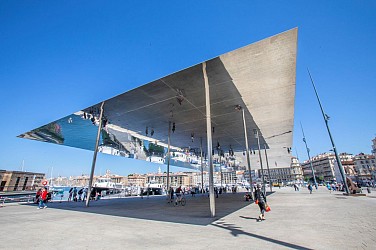
This urban walk begins on the Quai des Belges under the shade of the Old Port. It takes you to the Olympic marina, now the Florence Arthaud nautical stadium. Leaving Norman Foster's shade on the Old Port (1), walk along the Quai de Rive-Neuve. Turn left into rue Fortia, cross Cours Estienne d'Orves, a large Italian-style square (2), then join rue Emile Pollak to Cours Pierre Puget, skirting the Palais de Justice (3). Turn right up Cours Pierre Puget and pause in front of the entrance to the Colline Puget garden (4). Follow the winding path through the park until you reach the Sépia restaurant. On the left, there's an exit over a small bridge and a staircase leading to rue des Lices. As its name suggests, this is an ancient rampart wall that marked the boundary of the city of Marseille in the 17th century. Cross the small square planted with magnolias and a palm tree to reach rue d'Endoume. Join the grand avenue de la Corse, where hackberry and plane trees provide shade until you reach the junction with the Place du 4 septembre, its hackberry trees and avenue Pasteur. Rue Girardin, which joins the end of Avenue de la Corse, leads to Plage des Catalans (5), dominated by the Lazaret tower. This beach is ideal for a refreshing swim. Its waters are also home to the Musée Subaquatique de Marseille (6), which can be explored by simply taking a few dips in the water with a mask and snorkel. Then, for almost 5 km, the route follows a structuring coastal axis that links districts such as the Vieux-Port, Les Catalans and Malmousque along the seafront. The route follows a single artery all the way to the Olympic Marina: the famous Corniche Kennedy (7), where you'll find, in order : - The Monument de l'Armée aux Morts de l'Armée d'Orient (8) - Vallon des Auffes (9) - Le Marégraphe (10) - Villa Valmer Park (11 and 12) - La Plage du Prophète (13) - Memorial des rapatriés aka, l'hélice de César (14) - The nautical stadium (ex Olympic marina) (15) And let's not forget the many "follies" - villas and bastides built in the mid-19th century that dominate the Corniche from the hills of the Bompard and Roucas Blanc districts. We've already mentioned Villa Valmer, where the architect drew inspiration from the Renaissance style. This style is also to be found at Château Berger (now Promicea), which bears some similarities (albeit on a much smaller scale) to the Château de Chambord, with its slate roof and bell towers. But there are others to be found behind the vegetation.

2 h
6.9 km
Very easy
Quai des Belges 13001 Marseille
Show
Hiking from Notre Dame de la Garde, to Roucas Blanc and Corniche
1.4 km

Hiking from Notre Dame de la Garde, to Roucas Blanc and Corniche

After visiting Notre-Dame de la Garde, explore the Roucas Blanc. This district, a real maze of narrow streets, can only be visited on foot and offers magnificent views of the city. The Roucas Blanc hill was also a place of free expression for 19th-century Marseilles Rocailleurs: craftsmen, masons and ornamental designers, some of whom were quite singular. Their creations can be found in the dreamy gardens of the neighborhood's opulent homes. Via uphill crossings and sloping alleyways, you'll reach Corniche Kennedy and Plage du Prophète. Its fine sand and turquoise waters are the perfect reward after a fairly strenuous walk. This really is the most stunning urban stroll, so we invite you to look at your surroundings with curiosity and care. At the foot of Notre-Dame de la Garde, as you look out towards the sea, there's a staircase leading down that you have to take. This is the Montée du Commandant Valentin and the start of the itinerary (1). Go down to the first crossroads with a house, where you turn left, the start of the traverse du Génie. A blue mark indicates the way. Then turn left on a path that slaloms between the agaves, the Chemin du Bois Sacré (2), which joins the street of the same name, which continues on the Chemin du Roucas Blanc down to the Place du Terrail (3). Turn right onto Avenue des Roches (4 and 5) to number 77b. Here, on your left, a staircase leads to rue Colline Chanot, which you must take up to the junction with traverse de Roux, on your left. At the next intersection, turn right into rue Emile Duployé to number 45. On your left, you'll find a steep, narrow staircase to climb: montée des Croquants (6), which leads to chemin du Souvenir. Catch your breath and follow it to the right (7). The path ends in front of the gate of the Buenos-Ayres villa, and you descend a staircase to the right which joins the Nicolas traverse. Take a few steps to the right to admire a tower (a dovecote?) and, above all, the Villa Maraveyre, whose slate roof contrasts with the tiles more typical of our region. Continue along the Nicolas traverse to the Napoule staircase on the left. Admire the rockwork (8) that replaces the classic white-edged blue street name signs (9) and (10). Descend the staircase until you can turn right up the montée de la Rotonde. Admire the view of the Mediterranean through the large rockwork portholes cut into the cement and complete your itinerary, which leads to the Corniche, opposite the Plage du Prophète (11). From the Corniche Kennedy, a bus line takes you to either the Rond-Point du Prado or the Vieux-Port.

45 min
1.9 km
Easy
Départ Notre-Dame de la Garde 13006 Marseille
Show

What to do in NEW HOTEL OF MARSEILLE SAS

See more suggestions
Find bookable activities in NEW HOTEL OF MARSEILLE SAS for an unforgettable experience.
See more suggestions
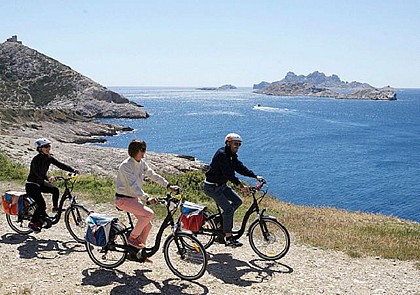
1-Day Cycling Excursion: Tour Marseilles and Swim in the Rocky Coves
780 m

1-Day Cycling Excursion: Tour Marseilles and Swim in the Rocky Coves

Enjoy a refreshing tour that starts in central Marseilles and takes you to the famous rocky coves on the coast. The itinerary includes sightseeing, swimming and eating traditional cuisine!  THIS 30KM BIKE TOUR TAKES IN THE MOST BEAUTIFUL BEACHES AND THE PRETTIEST ROCKY COVES AROUND MARSEILLES. The guided ride starts off with the incredible Abbey of Saint Victor, before cutting through the most picturesque neighborhoods of the Mediterranean city to reach Pharo Palace which looks out over the sea and consequently offers an exceptional view. Cycle on to the enchanting cottages, cafés and restaurants at the quaint port of Vallon des Auffes. The itinerary then takes the Corniche Kennedy coastal road past the magnificent beaches of Prado and the small fishing port of Madrague Montredon. Have lunch in a traditional restaurant on the port of Goudes (according to the schedule) before setting off again in the direction of the Cap Croisette islets located in the heart of the Riou Archipelago; a relaxing and exotic setting. Go for a swim in the rocky cove of Maronaise then visit the small port of Calanque de Callelongue with its charming landscape and crystal-clear waters. Finish your tour by cycling through the Borelli Park and admiring the famous Basilica Notre Dame de la Garde, also known as the Good Mother! This 1-day cycling excursion takes in the most beautiful sights in Marseilles and its beautiful rocky coves with a program that combines swimming, local cuisine and stunning views.

rue Plan Fourmiguier 13007 Marseille
Book from 76 EURBook
Show

What to visit in NEW HOTEL OF MARSEILLE SAS

See more suggestions
Engage in outdoor activities in NEW HOTEL OF MARSEILLE SAS.
See more suggestions
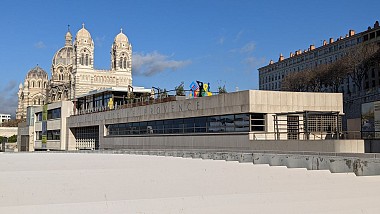
Pharo Palace
96 m

Pharo Palace

The promontory of the Pharo was once called the Tête de More. It was a rocky plateau on which only rushes and sea grass grew, and some taverns were installed there. The Pharo promontory was once called Tête de More, meaning Moorish Head. It was a rocky plateau on which only rushes and wild grasses grew, with a few "guinguettes" (small restaurants with music and dancing). Pharo was the name of the cove just to the west of the Tête de More. The “Farot” was a mound separating the cove from the open sea, and providing a look-out point, first mentioned in the 14th century. The residence was not much appreciated and the Emperor never actually used it. On the death of Napoleon III, the Empress Eugénie became the sole owner of the Pharo, and generously donated it to the city. In 1904 major changes were made to the Palais du Pharo to convert it into a medical school. The balance of the volumes was disrupted by raising the wings and the interior distribution was ruined. It was Prince-President Louis-Napoleon who decided to build an imperial residence in Marseille. During a visit in September 1852, he expressed the desire to have "a house at the water's edge". At the end of that year, he commissioned the architect Vaucher to find a site for his residence and draw up the plans. Then Napoleon III's architect Lefuel was put in charge of the project. For their part, the City authorities decided to donate the selected sites: La Réserve and the Pharo. Napoleon III accepted the donation "wishing in this way to convey to the City of Marseilles another expression of friendship and to further strengthen the bonds linking him to this great patriotic city". However, thanks to its exceptional location and the creation of a Conference Centre that receives up to 60,000 people a year, the former Imperial Residence is today a prestigious architectural complex, one of the finest in Europe. Tradition has been respected and the site protected, by integrating the new spaces into the Palais and creating underground conference rooms under the forecourt of the original building. The site comprises ceremonial rooms, a 1200 m2 exhibition hall, a 500 m2 restaurant and a 900-seat auditorium which can be adapted to accommodate conferences or seminars by means of a highly sophisticated system.

58 Boulevard Charles Livon 13007 Marseille
Show
Pharo-Emile Duclaux Garden
106 m

Pharo-Emile Duclaux Garden

The Jardin du Pharo or Émile-Duclaux, surrounds the Palais du Pharo. The 5.7 hectares offer a breathtaking view of the Old Port and the North coast of Marseille, the Mucem and the ballet of ferries leaving the port. A real invitation to travel... In some squares, the playgrounds can still be used but are under the responsibility of parents who must ensure that health regulations are respected, including physical distance. The Emile Duclaux garden, which surrounds the Palais du Pharo, is characterized by an unobstructed view of the Vieux-Port and the northern coast of Marseille. Paths along the edge of the cliffs allow walkers to discover astonishing viewpoints and the site is ideal for observing the ballet of ferries leaving the port, a real invitation to travel... During a stay in Marseille in 1852, Louis Napoleon was seduced by the site and expressed the wish to have a residence with his feet in the water. On August 15, 1858, the first stone of the Palais du Pharo was laid. A residence that neither the Prince, who became Napoleon III, nor the Empress were ever to live in. Bequeathed to the City of Marseille, the residence was transformed into a medical school in 1905. Later, the park was opened to the public and the Palais du Pharo became the home of various municipal services. Today, the Pharo is an international venue equipped with a 900-seat underground auditorium and a catering area for congresses, conferences and concerts. Above the auditorium, a vast lawn in front of the palace provides a good view and an attractive playground is a favorite place for children.

Boulevard Charles Livon 13007 Marseille
Show
Fort Saint Nicolas and Fort d'Entrecasteaux
250 m

Fort Saint Nicolas and Fort d'Entrecasteaux

The fort consists of Fort d'Entrecasteaux above and Fort Ganteaume below. Strategically located at the entrance to the Vieux Port, this fort was built under Louis XIV, who wanted to keep Marseille at bay in case of rebellion. The fort occupies a limestone spur between the port, Saint-Victor abbey and the Pharo. For a time, the construction enclosed the Saint-Nicolas chapel built in the Middle Ages, which was later destroyed. Built in 1660 by the Chevalier de Clerville, the double-enclosure system of ditches and bastions illustrates the need to adapt to the offensive capabilities of fire artillery. In addition to its defensive role, this work indirectly bears witness to the evolution of the art of warfare and weaponry. It is made up of two tiered complexes, the lower of which (Fort de Ganteaume), used as a farmyard overlooking the port, has been isolated since 1862 by the construction of the boulevard (now known as Charles Livon) during the construction of the Imperial Residence (le Pharo). This part belongs to the army. The high fort (Entrecasteaux) consists of two interlocking enclosures whose quadrangular plan clings to the escarpment. The quality of the masonry, in large sections of pink La Couronne limestone, and the way it is laid (bossed quoins and string courses creating arabesques of counter-curves on the slopes) combine to create an impression of serene power. The upper part of the fort, which has been under restoration for several years, is now open to visitors and managed by the Citadelle de Marseille. The fort was classified as a historical monument in 1969.

2 Boulevard Charles Livon 13001 Marseille
Show
Fort Saint Nicolas
356 m

Fort Saint Nicolas

Fort Saint-Nicolas in Marseille's 7th arrondissement is a military fort overlooking the Old Port. It has been listed as a historic monument since 1969. A vestige of the past and an integral part of Marseille's heritage, Fort Saint-Nicolas is a must-see site that still tells the story of the city behind its imposing stones. Construction Built on the orders of Louis XIV between 1660 and 1664 by the Chevalier de Clerville, Fort Saint-Nicolas was intended both to keep watch over the city and its hostile inhabitants, and to protect against attacks from the sea. The king was keen to build a citadel in the "cleanest" part of the city. Stones from the old Porte Royale and from Cap Couronne were used in its construction. Demolition and redevelopment During the French Revolution, the people of Marseilles, concerned about the threat posed by the fort, decided to demolish it. The National Assembly ordered the destruction to be halted, in order to preserve this defensive structure. Restoration work began, with the greyish stone contrasting with the pinkish stone used in the past. In 1860, when the Résidence impériale (Palais du Pharo) was built, Fort Saint-Nicolas was cut in two to allow automobile traffic on Boulevard Charles Livon, linking the Vieux-Port and the Pharo district. Today, still split in two, the fort comprises a seaward section, Fort Ganteaume, and a landward section, Fort d'Entrecasteaux. Functions In 1823, following the Duc d'Angoulême's expedition to Spain, many prisoners were confined to the fort. A few years later, in 1832, it was also used as a place of detention for sailors from the Duchess de Berry's ship. Fort Saint-Nicolas remained a prison until the end of the Second World War. Fort Ganteaume (on the seaward side of Fort Saint Nicolas) now houses the military circle and officers' mess. Fort d'Entrecasteaux - the Marseilles Citadel - (on the landward side of Fort Saint-Nicolas), meanwhile, has a section open to the public. La Citadelle de Marseille, a third-party heritage center for creativity and innovation Since 2021, the city of Marseille has entrusted the management of Fort Saint-Nicolas to the association "la Citadelle de Marseille". Its ambition is to restore and transform this defensive military fort into a place for living, sharing and culture;culture; a heritage third place for creations and innovations, and reconnect citizens to their history and heritage in a sustainable and inclusive approach. Admire the view, have a drink, embark on the fascinating history of this site and its restoration through tours and workshops, take an interest in the life of the soil and plant species, and experience cultural events in a unique setting in Marseille.

2 Boulevard Charles Livon Fort Saint-Nicolas 13007 Marseille
Show

Where to eat in NEW HOTEL OF MARSEILLE SAS

See more suggestions
Come and taste typical dishes of NEW HOTEL OF MARSEILLE SAS.
See more suggestions
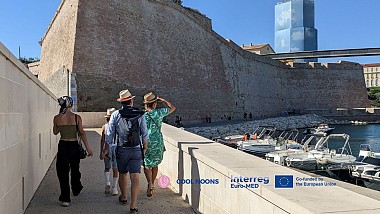
Where to sleep in NEW HOTEL OF MARSEILLE SAS

See more suggestions
Stay in unique accommodations in NEW HOTEL OF MARSEILLE SAS.
See more suggestions
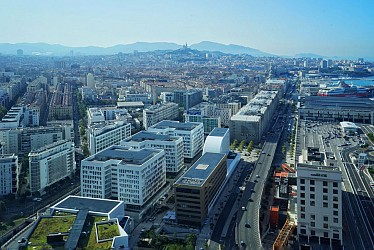
Sofitel Marseille Vieux-Port
284 m

Sofitel Marseille Vieux-Port

The Sofitel Marseille Vieux Port is an excellent stopover, offering a unique view of the Old Port and the city of Marseille. Nestled in the heart of a magnificent site, the bright, spacious rooms and suites are elegantly decorated, combining marine elements with the history of Marseille. Rooms feature bathrooms with hydromassage showers and/or double baths, safes, minibars, Bose stereo systems and free Wi-Fi access. Les Trois Forts, gourmet restaurant and panoramic terrace with chef Alexandre Augier. The Carré Bistromanie brasserie is a favorite meeting place for Marseillais, who gather here at all hours for a coffee or a light, delicate meal. Located on the 3rd floor of the hotel in a yachting atmosphere, the brasserie offers a splendid view of the Old Port. Continuous four-course service: breakfast, lunch, tea-time and dinner in the evening. The Dantès Skylounge Marseille, with its 150 m² terrace, offers you a moment out of time in a cosy, lounge atmosphere. This cocktail & champagne bar not only boasts a multi-flavored menu, but also the best view of Marseille, from the Mucem to the Bonne Mère. Sofitel Spa Enter 600 m2 of luxury and beauty, accessible to men and women alike. Discover three complementary areas dedicated to your wellbeing: the fitness lounge equipped with cardio-training equipment and the revolutionary Kinesis machine. Coaching and membership card. Treatment protocols developed by Carita and performed in our 4 "My Bed" by Sofitel 4 cabins. Relaxation bath, hammam and sauna. Numerous services are available to our guests, including: 7 reception rooms (430m²), Clé dOr concierge service, valets, hairdressing salon, limousine service, laundry. Since 2022, the Sofitel Marseille Vieux Port has been awarded the "Clef Verte" label, which implies the implementation of an environmental policy and a socially responsible approach: intelligent waste management, energy and water consumption control, active customer awareness...

36 Boulevard Charles Livon 13007 Marseille
Show
Caution!
We have no information on the difficulty of this circuit. You may encounter some surprises along the way. Before you go, please feel free to inquire more and take all necessary precautions. Have a good trip! 🌳🥾