Tours
Activities
Places of interest
Where to eat
Where to sleep

Camping Ile de Boulancourt: Nature and Adventure in Seine-et-Marne

Are you the owner?
Welcome to Boulancourt in Seine-et-Marne, where Camping Ile de Boulancourt offers a unique opportunity to immerse yourself in nature and enjoy local treasures. Nearby, you'll find a variety of activities for all tastes: explore the majestic Forest of Fontainebleau, renowned for its hiking trails and iconic climbing spots. If you are passionate about history, don't miss the medieval Château de Bout...See more

Walking around CAMPING ILE DE BOULANCOURT

See more suggestions
Hiking trails in the CAMPING ILE DE BOULANCOURT area.
See more suggestions
What to do in CAMPING ILE DE BOULANCOURT

See more suggestions
Enjoy unforgettable moments in CAMPING ILE DE BOULANCOURT by booking activities for everyone.
See more suggestions
Henson - Pays de Fontainebleau
23 km

Henson - Pays de Fontainebleau

Come and live the Henson adventure! From beginners to advanced riders, the Espace Equestre Henson - Pays de Fontainebleau offers you the opportunity to (re)discover the natural, cultural and historical heritage of the Fontainebleau region. A desire to share around horses and nature. The creation of this "Espace Equestre Henson", at the gates of the village of Barbizon, in Saint-Martin-en-Bière, by the Olympic rider Roger-Yves Bost and his wife Cyrille, is the story of a whole life based on a common passion: the horse. Settled for many years on the edge of the Fontainebleau forest with his family, Bosty has been able to build up a relationship of trust and complicity with his horses over time, training them for performance in view of major international competitions, while using this precious tool that is the forest: this stress-free environment, where the connection with the animal is multiplied, both horse and rider benefiting from a moment of osmosis. The dream of being able to share these unique moments with as many people as possible and this relationship with the plant and animal world became a reality thanks to a magnificent encounter: the meeting with the "Hensons", these rustic, versatile horses adapted to outdoor riding for all; the meeting with one of the founders of their breed, Dominique Cocquet and his team; but also the sharing of the same philosophy: the horse. An escape to places full of emotions Henson horses will take you on a journey of discovery of the exceptional natural, cultural and historical heritage of the Fontainebleau forest. A land of inspiration for 19th century painters, a hunting ground for the sovereigns who stayed at the sumptuous Château de Fontainebleau, this 22,000 hectare "Forêt d'Exception®" invites you to travel through the diversity of its landscapes. We offer you the chance to experience unique moments every day by reservation: discovery rides (3h) and passion rides (3h) for exceptional equestrian experiences. We also offer themed rides, please contact us for more information. Accompanied horse rides: structure adapted to riders with a beginner to advanced level (from 1m40 minimum). Welcome to Terre Henson, in the Pays de Fontainebleau!

Espace Equestre Henson 2 Chemin des Brulys 77630 Saint-Martin-en-Bière
Book from 0 €Book
Show
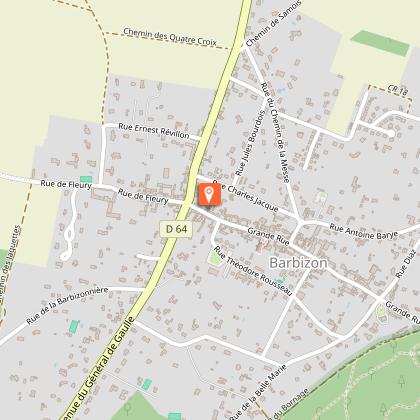
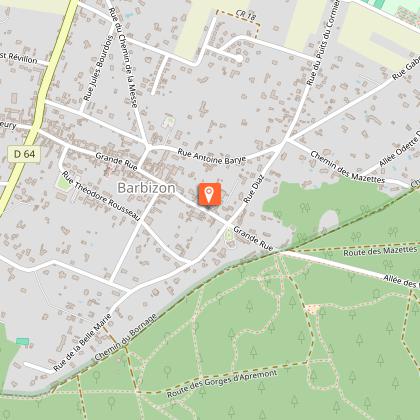
Barbizon school museum: the Ganne Inn
24 km

Barbizon school museum: the Ganne Inn

It is difficult to know precisely when the inn was built. Before 1820, the only inns in the region were at Chailly. Alfred Sensier, friend of Théodore Rousseau and a historian of Barbizon, gives the date of 1824. A return to the time of the painters of the forest of Fontainebleau. The museum of the school of Barbizon is spread over two sites : the Ganne Auberge and the Workshop-House of Theodore Rousseau. One is the principal historical way-points of the artists who came to work in the forest of Fontainebleau (1830-1875). The other is the Workshop where the famous landscape artist Theodore Rousseau lived from 1847 until his death in 1867. The Exhibition Rooms of the Auberge restore the friendly atmosphere so dear to the Peint'à Ganne, thanks to the furniture and decors and through a hundred different works (Jean-François Millet , Narcisse Diaz de la Peña , Constant Troyon , Rosa Bonheur...). Luck has had it that the newspaper “L’Illustration” published a full report in 1853, illustrated with engravings, showing the pictorial treasures hidden inside this modest inn, the major part of which has come miraculously down to us. The very serious Revue des Arts published in 1854 a guided tour of the three ground floor rooms and detailed the decorations. Has have helped us reconstruct the rooms at the inn at its most brilliant period. The painted furniture and panels and the way the rooms are presented are a good representation of the painters’ inn. The restoration of the upper floor started in 1990, has revealed decoration painted or drawn by the artists when staying in the rooms. Three exhibits show the work of the Barbizon School with landscape and animal themes. A very attractive audiovisual presentation takes you back to the time of the painters of the Barbizon School Leaving behind them Parisian studios and academicism, the "painted in Ganne" came together in the Auberge de Barbizon to paint "sur le motif" and for very bohemian parties.

92 Grande rue 77630 Barbizon
Book from 0 €Book
Show

What to visit in CAMPING ILE DE BOULANCOURT

See more suggestions
Taste the culinary specialties of CAMPING ILE DE BOULANCOURT.
See more suggestions
Basilica Saint Mathurin
12 km

Basilica Saint Mathurin

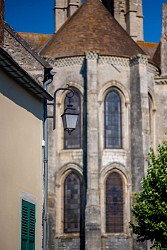
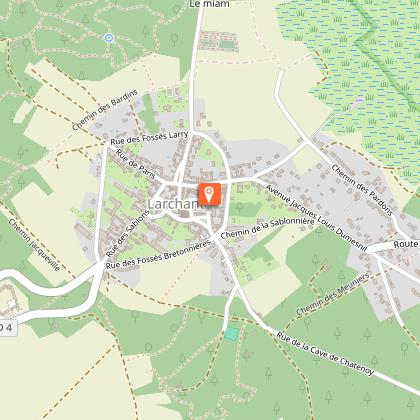
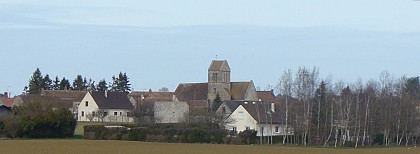
This famous place of pilgrimage celebrates the memory of Saint Mathurin, who was born here in the third century. His family was pagan, but when he converted to Christianity he instructed his parents and soon gained a great reputation of great saintliness. At that time it was rumoured that the Roman Emperor’s daughter Theodora was possessed of a devil that declared it would only leave her if Saint Mathurin intervened. The Saint was therefore ordered to go to Rome, where he healed the Emperor’s daughter but then died. His body was brought back and laid in a chapel at Larchant, where it was venerated by many visitors. Saint Mathurin was invoked for healing of the mad, and this pilgrimage became one of the most famous in France in the Middle Ages, especially as it was also on the road to Santiago de Compostela. Six kings of France made the pilgrimage to Larchant: Charles IV, Louis XI, Charles VIII, François I twice, Henri II and Henri III. Today’s pilgrimage takes place every year at Whitsuntide. The church as it is today was built from the twelfth to the sixteenth centuries. It had barely been completed when an extraordinary series of catastrophes befell it. It burned twice, struck by lightning in 1490 and again in 1568 during the Wars of Religion. Pillaging and hurricanes added to the list of its miseries, the ultimate disaster being the collapse of the tower in 1675. The Last Judgement door, with its vivid imagery dating from the thirteenth century, gives access to the ruined part of the nave. Access today is by the south door of the transept. Only the choir, the apse and the chapel of the Virgin have kept their roof vaults. The two levels of windows in the apse give it a harmony accentuated by the slim columns set out from the walls. The luminosity of this huge vessel as it must have been when the 46 windows lit it can easily be imagined.

Place du Pilori 77760 Larchant
Show
Saint-Martin Church
14 km

Saint-Martin Church

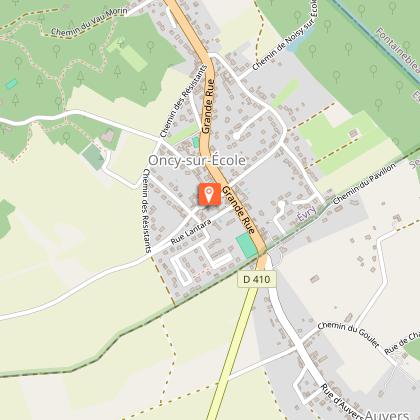
The church of Oncy was built during the 12th century and possesses a very rich heritage inside and outside that helps us to follow its history throughout ages. The church of Oncy-sur-École was built at the end of the 11th century and at the beginning of the 12th century, at the same time as the priory. It is mostly of Roman style, which is not very common in the Gâtinais. Its bell tower is standing on a wider span, which is quite rare too. The nave is newer and was built during the 15th century. The beautiful portal made of wood was also built at this time. The Renaissance style lock is still in perfect condition and can still be used. During some recent restorations, different old foundations were found. The bell tower is quite simple and two-sloped. The shape of the church is very original as the bell tower is way narrower than the span. On the South facade of the church, the traces of an old door can be seen. Inside, the traces of the now disappeared frame are clearly visible. This old door from the 11th century was opened once again during some works in 1965. During the restoration of the church in 2015, on the North side of it, some traces of an old dead’s portal was found. Indeed, between the 12th and 18th centuries, coffins had to leave the church by another door than the living. The church of Oncy has two litera funeris, one is red and the other is black. It is quite rare to see some in churches. In the past, those litera funeris were colourful lines painted in order to honour some important persons’ death inside of churches. The big painting in the apse was restored in 1965 and is a representation of Jesus surrounded by some symbols of the evangelists. The majority of the furniture is from the 17th century. Two statues are from the 13th century : Virgin Mary with Jesus and Sainte Anne which are both classified as part of the Monuments Historiques, like a painting of Saint-Sébastien and Sainte-Julienne. Two tombstones can be seen inside the church, one of them is supposed to be the grave of the legendary Father Soubise who created a French organization for craftsmen. The church of Oncy is dedicated to Saint-Martin de Tours (Saint Martin) also known under the name of Martin le Miséricordieux. He was from Szombathely (also known as Savaria during the Roman Empire) in Hungary and he is one of the most famous and prayed saints in the whole world. He is one of the secondary patron saints in France. He was born in a military family and despite his wish to be religious, Martin became a military. The most famous part of his legend is when one night, as a legionnaire near Amiens, he tore up his coat to give half of it to a frozen poor man. As a person who was part of the army, he was not allowed to become an ecclesiastical. However, the people of Tours wanted him as their bishop so they kidnapped him and named him as bishop without his consent. He founded several abbeys and parishes all along the Loire Valley. He died of old age near Tours and was buried at the place of the basilica Saint-Martin de Tours. A recreation of his sarcophagus can be seen in the crypt. SOURCE: Mairie de Oncy-sur-École, “Le Patrimoine Religieux de Milly-la-Forêt et de la Communauté de Communes des 2 Vallées” des Amis de Milly-en-Gâtinais et Environs, Parc Naturel Régional du Gâtinais Français

7 rue de l'Eglise 91490 Oncy-sur-École
Show
The Conservatory of medicinal plants
16 km

The Conservatory of medicinal plants

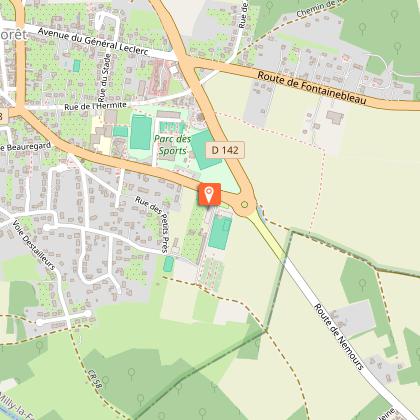
The Conservatoire National des Plantes à Parfums, Médicinales, Aromatiques et Industrielles (The National Conservatory of Plants), also called CNPMAI, of Milly-la-Forêt is an invitation to discover the relationship and interactions of the human being and nature. The Conservatoire National des Plantes à Parfums, Médicinales, Aromatiques et Industrielles (The National Conservatory of Plants) is a place where plants are kept, protected and studied. It is at the same time a tree nursery, a botanical garden, an agricultural center and an interpretation center. The sensory journey throughout the conservatory gathering more than 1500 different species of plants is completed with a museum's visit. It is located in an old plants' kiln and is now a space of playful and sensorial discoveries throughout the history of those plants, their origins, cultivation and use nowadays. A good way to learn and discover for families ! The Conservatory is here to manage, value and conserve the genetic resources of perfume, medicinal and aromatical plants in order to : - take part of the nature's saving - allow people to discover and learn about plants - teach people how to identify and use plants Do you want to develop your botanical knowledges ? Do you want to know how to collect and produce your own aromatical and medicinal plants ? Do you want to know how to use your plants in receipes, medicines and vegetable dyes ? Also, the Conservatory offers different kind of trainings of 1 or 2 days to learn and complete your own knowledge about plants.

Route de Nemours 91490 Milly-la-Forêt
Show
Eglise Notre Dame de l'Assomption à Milly-la-Forêt
16 km

Eglise Notre Dame de l'Assomption à Milly-la-Forêt

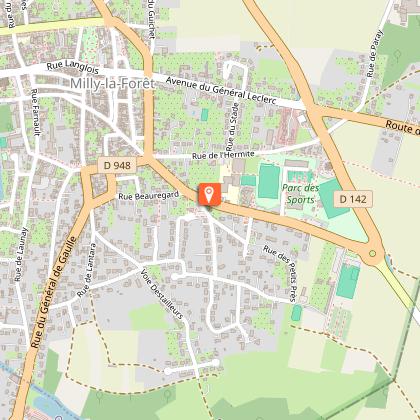
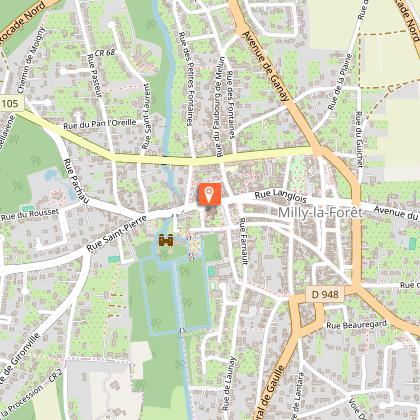
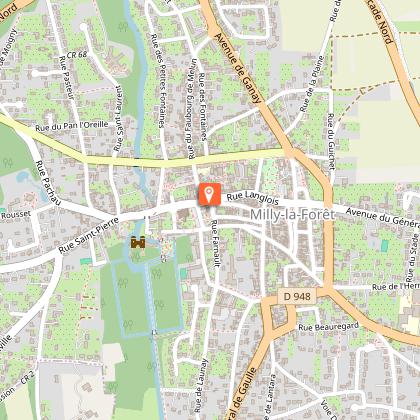
The church of Milly-la-Forêt was firstly founded during the 11th century. It was once the chapel of the castle de la Bonde before becoming the church of the city. Firstly, it was a chapel that was adjacent to the feudal castle during the 11th century. It became a collegiate church during the 12th century, was ruled by clerks and belonged to the diocese of Sens. The church became parochial during the 14th century. Sadly, it was damaged a lot and burnt by Englishmen, just like the whole city, during the Hundred Years War. Later, it was only rebuilt in 1485 in a Gothic style under the reign of Louis Malet de Graville, lord of Milly-la-Forêt. He was also very close to King Louis XI. He was also the one who managed to build the market hall and made numerous works onto the castle de la Bonde. In 1603, the chapel of Virgin Mary was built thanks to Renée d’Averton, the wife of a governor. The church was extended with the addition of a facade and an aisle. The vaults under the chapel were looted and the bones were spreaded during the French Revolution. The lower part of the 57 meters high bell tower was built during the 11th century. The higher part is of Gothic style. Onto one of the facades, a litura funeris can be seen. On its East side, we can still see the coat-of-arms of the admiral de Graville. It can also be seen on the keystones of two choir’s spans representing three metal clasps with golden buckles. The coat-of-arms of the family Vendôme and of the marquise de Lau can also be seen in the church. The portal’s arch was once the portal of the old church of Saint-Pierre in Milly and could have been installed here in 1633. Also, a walled door is located on the North facade of the church. It was once a deads’ portal. Until the French Revolution, during the burial's masses, the coffin had to leave the church by another portal than the living. The church has three bells. The oldest one is very big and called Marie-Jeanne-Marie and was blessed in 1703. The other bells are smaller and were installed during the 19th century. The old rooster that was at the top of the church was replaced a few years ago and had traces of the hectic past of the city. Indeed, the rooster had a bullet hole dating back from World War II. The entry is made by the Western portal from the 19th century and is partly made of pieces from an old portal from the 12th century. During the 19th century, some important work was made such as the paving of the church. Inside the building, numerous masterpieces are classified. The remains of Saint Wulfram, a symbol for Milly, can be seen in a reliquary from 1841. Wulfram was the son of Fulbert, a close acquaintance of King of Franks, and was known for giving his belongings to the abbey of Saint-Wandrille de Fontenelle and also for having evangelized Friesland (in the Netherlands). Several tombstones were lost during the restoration of the nave but some others can still be seen from important persons. Some of those tombstones are 1,90 meter high. A modern representation of Christ on the cross can be seen and was made by the artist Chomo who gave it to the church back in 1991. The finely detailed lectern was made during the 17th century. The church was classified as part of the Monuments Historiques in 1926. A cavalry from the 15th century was also classified at the same time. The church is dedicated to the Assumption of Virgin Mary. This event is also called Dormition and celebrates her ascending into heaven for Orthodox and Catholics. Mary was the mother of Jesus and is the patron saint of mothers. SOURCE: Mairie de Milly-la-Forêt, “Le Patrimoine Religieux de Milly-la-Forêt et de la Communauté de Communes des 2 Vallées” des Amis de Milly-en-Gâtinais et Environs, Parc Naturel Régional du Gâtinais Français

Rue Langlois 91490 Milly-la-Forêt
Show

Where to eat in CAMPING ILE DE BOULANCOURT

See more suggestions
Restaurants in CAMPING ILE DE BOULANCOURT offer a variety of cuisines.
See more suggestions

Where to sleep in CAMPING ILE DE BOULANCOURT

See more suggestions
Find an ideal lodging in CAMPING ILE DE BOULANCOURT.
See more suggestions
Gîte Apremont
24 km

Gîte Apremont

Located in the heart of the village of Barbizon, the cottage has been st up in an old Briarde farmhouse, the exposed stone walls and the contemporary decoration create a soothing atmosphere. The cottage is on one level with a small step at the entrance; the kitchen is fully equiped; the livig room/lounge is comfortable with sof and armchairs; the large bedroom has 2 single bed which can be aranged in a double one; a laundry room is avalaible. You have the courtyard where you can park your car. The courtyard allows you to have lunch in the shelter in case of rain ine the summer while enjoying the garden with a fis pond. Deckchairs, parasol, garden furniture and barbecue are at your disposal. Renowned village for its 19th century painters, Barbizon is on the edge of the forest of Fontainebleau; all the shops (bakery, grocery store, caterer, butcher...) as well as restaurants are nearby. You can visit the museums of the village, the galleries and painters'studio that line the main street. To walk in the forest, you have guides and IGN maps available ine the cottage. If you prefer discovering the forest on horseback or by a bike ride, companies in the village would offer adapted services to your desires. And the forest of Fontainebleau remains a privileged place for lovers of rock climbing. The Aprmeont gîte is ideallu located for a moment of relaxation or for practicing a sport. Denise, your host, welcomes you to this charming cottage in the old family farm.

66 Grande rue 77630 Barbizon
Book from 0 €Book
Show
Caution!
We have no information on the difficulty of this circuit. You may encounter some surprises along the way. Before you go, please feel free to inquire more and take all necessary precautions. Have a good trip! 🌳🥾