Tours
Activities
Places of interest
Where to eat
Where to sleep

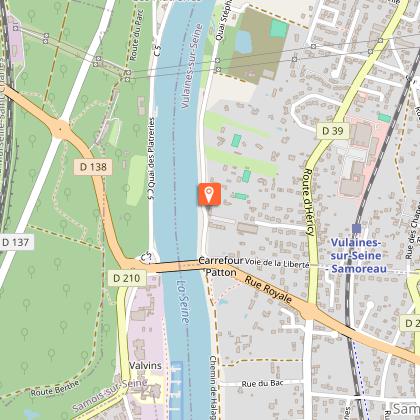
Communal campground in Samoreau: Nature and discoveries

Are you the owner?
Nestled in the heart of Seine-et-Marne, Samoreau offers an exceptional setting for outdoor and cultural enthusiasts. Nature lovers can start with a hike in the Fontainebleau forest, famous for its impressive rock formations and picturesque trails. History buffs will appreciate a visit to the Château de Fontainebleau, a gem of French heritage that boasts stunning gardens and rich architecture. The ...See more

Walking around TERRAIN DE CAMPING COMMUNAL

See more suggestions
Hikes for all levels in TERRAIN DE CAMPING COMMUNAL.
See more suggestions
La Mare Périlleuse
2.4 km

La Mare Périlleuse

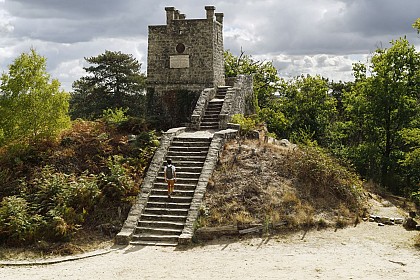
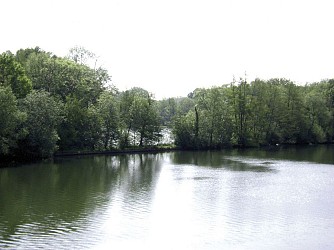
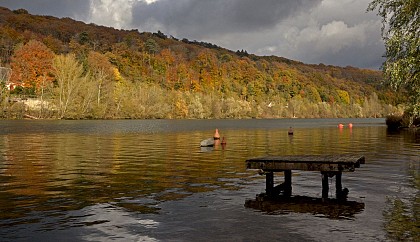
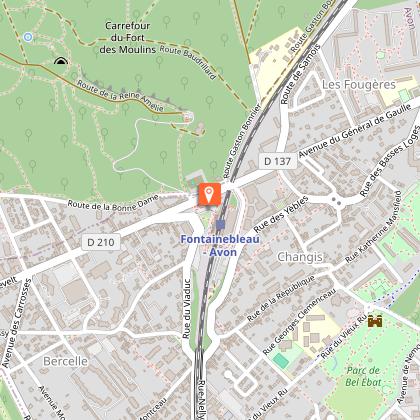
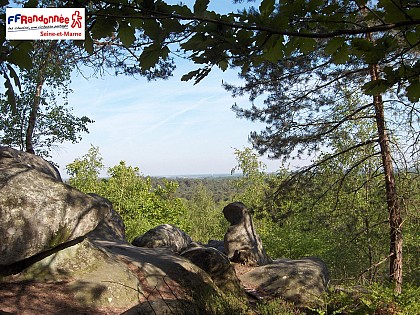
No doubt the writer Stéphane Mallarmé had already enjoyed this ride to the Mare Périlleuse, close to his domain... "Everything is pretty, a thousand greens and fragrant," he admired in the spring of 1896.Certified by FFRandonnée. Route description : 1. With your back to the train station, go straight ahead, then turn right and left. 2. Follow the Seine on your left for about 3 km. 3. Turn left after the campsite, then left into Rue de l’Église (barn of Dîmes, church), and right, into Rue Grande. It crosses the railway line and leads to Rue de Montmélian. Turn right, then left, then take the path on the right between houses and gardens. Enter the woods towards the high-voltage line. 4. At its level, go left for 300 meters, turn right below it and climb the rock of Samoreau. Leave two forest tracks on the left, then on the right. The path runs along a wall for 250 meters, crosses a path in a thalweg, returns to follow the wall for 1 km and leads to a picnic area. Cross the RD39 (caution !), take the forest road, the path to the right then the left. 5. Ignore the street on the right, the path on the right, another on the left, then another on the right. Keep left at the junction. At the crossroads, take the second path on the left. Cross the RD210 and continue onto a path. ➢ Access to Mare Périlleuse, 250 meters on the left. 6. Bear right. Take the second path on the right for 1 km, then take the Graville à l’Épinard road on the left. It bends right, then left. Leave the woods towards the farm ahead, go straight on, then turn left, then right onto the small farm road and cross the RD227. At the water tower, follow the RD110 to the left and take the path on the right. It crosses a street, and a track. At the cemetery, turn left. 7. Follow the RD107, go down the path on the left then rejoin the RD107 on the left. It crosses two bridges. 8. Climb the path on the left (no waymarking). 9. At the crossroads, on the edge of the woods, go straight downhill. Take the street on the left, then the one on the right, and cross the street of la Fontaine-de-Sault. Go left towards the church then right towards the Seine. Follow the river on your left for 750 meters. 10. On the left, following the route used to get there, reach the train station. Municipalities crossed : Champagne-sur-Seine, Féricy, Héricy and Samoreau Distance : 20.9 km – Duration : 5h00 – Marked trail : Yellow - Difficulty : Hard Access to the map : www.cirkwi.com/fr/circuit/282887-la-mare-perilleuse

5 h
21 km
Medium
Avenue Fernand Dalaine 77850 Héricy
Show

What to do in TERRAIN DE CAMPING COMMUNAL

See more suggestions
Enjoy the activities available in TERRAIN DE CAMPING COMMUNAL for moments of relaxation and fun.
See more suggestions
Palace of Fontainebleau
4.4 km

Palace of Fontainebleau

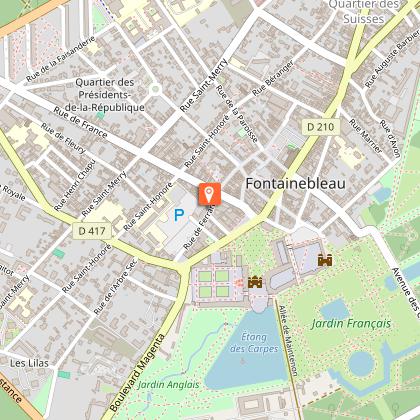
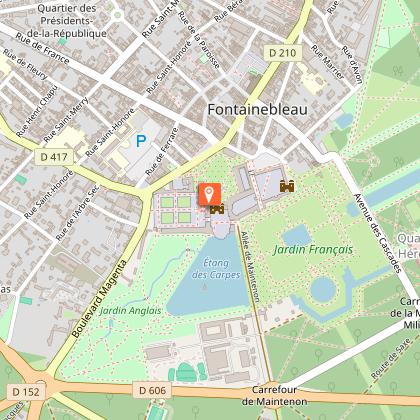
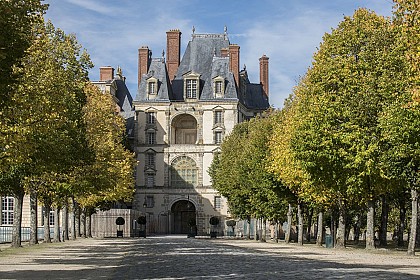
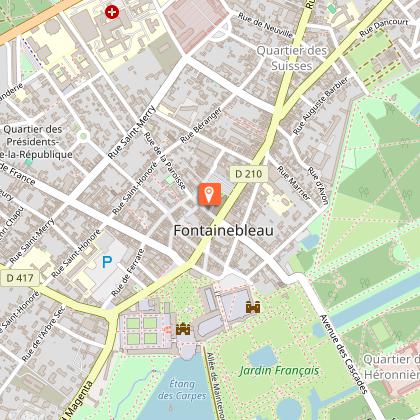
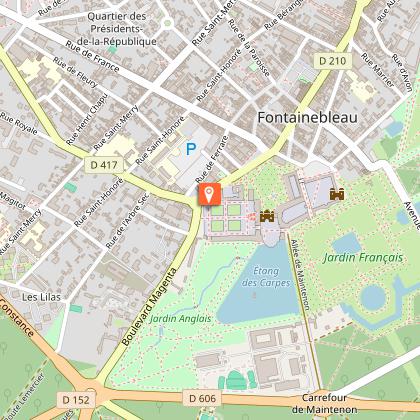
The Château de Fontainebleau is a big part of French history! This vast building, in both classical and Renaissance style, is not only famous for witnessing Napoleon's imperial adventure. From the royal charter of 1137 to the fall of the Second Empire in 1870, the Palace of Fontainebleau saw the lives of the greatest French sovereigns from day to day. The original medieval fortress was replaced by a Renaissance palace under the guiding hand of Francois I. At that time, two Italian artists, Primaticcio and Il Rosso vied in talent and founded the first School of Fontainebleau. The Galerie François I, which leads from the royal apartments to the chapel of the Convent of the Holy Trinity, is most original with its décor of frescoes, stucco and carved wood in praise of François I. The Ballroom was completed at the time of the last Valois kings, under Primaticcio’s direction. With Henri IV, the new Bourbon dynasty took over the palace, and built new rooms with interior decoration placed in the hands of the artists of the second School of Fontainebleau. Louis XIII completed the work started by his father. Under the Sun King Fontainebleau continued to be the royal family home, and the Grand Dauphin was born there in 1661. The king’s nieces were married from Fontainebleau, and the Edict of Nantes was revoked there in 1685. Louis XV and Louis XVI would spend the autumn there and initiated new, large scale building works and interior doing-ups. After the French Revolution, Napoleon I found the palace completely emptied of its furniture but intact. He undertook to refurnish the apartments and brought the palace back to its former glory as the home of the sovereign. Napoleon Bonaparte spent his last days there before his abdication in 1814 and departure for the Elba. Louis-Philippe was the first sovereign to order a complete restoration of Fontainebleau. The restoration of the Empire in 1852 gave renewed importance to the palace, and Napoleon III became strongly attached to this home, staying there regularly with his court. Housed in the Louis XV wing, the Napoleon I museum is dedicated to the Emperor and his family, with a large collection of objects from his everyday life, weapons used in military campaigns and gifts he received. The Chinese museum, created by Empress Eugenie, displays works of art from the Far East. The Jeu de Paume court, thought to be the oldest of the three surviving in France, is open to the public with demonstrations and introductory games. Le Nôtre's French gardens, the Queen’s English garden with its Fountain of Diana, the hedge maze and the Cour des Adieux are open to the public all year round. Boat excursions on the Etang aux Carpes or horse-drawn carriage rides are available. The Domain of the Fontainebleau Palace is inscribed at the UNESCO Humanity World Heritage. There is a little train going around the gardens during the touristic season.

Place du Général de Gaulle 77300 Fontainebleau
Book from 0 €Book
Show

IGN cards

2417OTR - FORÊT DE FONTAINEBLEAU RESISTANTE FORET DES TROIS PIGNONS
Editor : IGN
Collection : TOP 25 RÉSISTANTE
Scale : 1:25 000
17.20€
2517SB - MONTEREAU-FAULT-YONNE MORET-SUR-LOING
Editor : IGN
Collection : TOP 25 ET SÉRIE BLEUE
Scale : 1:25 000
13.90€
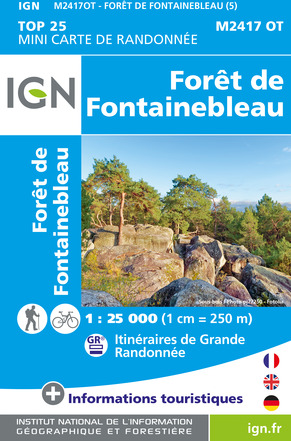
2417OT - FORÊT DE FONTAINEBLEAU FORÊT DES TROIS PIGNONS
Editor : IGN
Collection : TOP 25 ET SÉRIE BLEUE
Scale : 1:25 000
13.90€
M2417OT - FORÊT DE FONTAINEBLEAU
Editor : IGN
Collection : MINI TOP 25
Scale : 1:25 000
8.80€
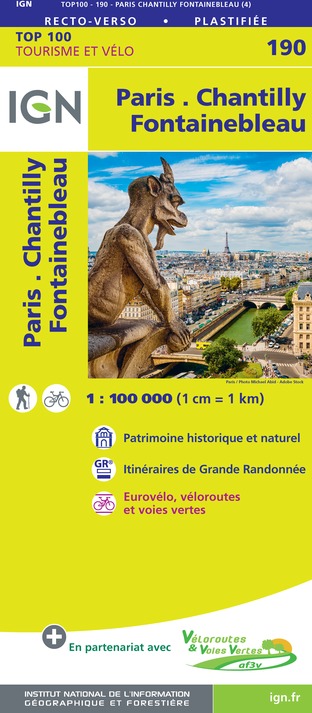
190 PARIS CHANTILLY FONTAINEBLEAU
Editor : IGN
Collection : TOP 100
Scale : 1:100 000
8.40€
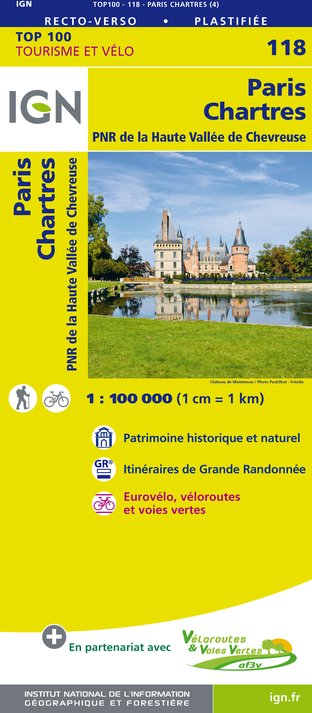
118 PARIS CHARTRES PNR DE LA HAUTE VALLÉE DE CHEVREUSE
Editor : IGN
Collection : TOP 100
Scale : 1:100 000
8.40€
119 PARIS SENS PNR DU GÂTINAIS FRANÇAIS
Editor : IGN
Collection : TOP 100
Scale : 1:100 000
8.40€
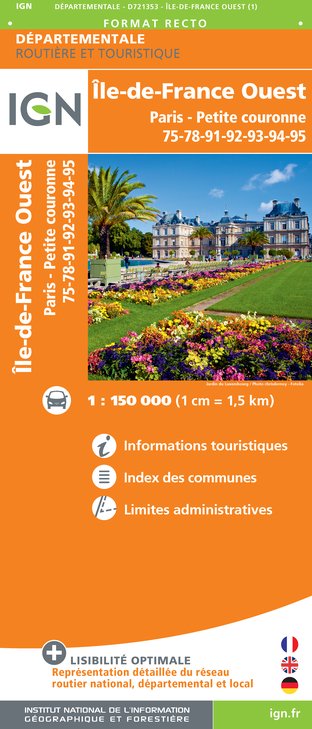
D75-95 ÎLE-DE-FRANCE OUEST
Editor : IGN
Collection : CARTES DÉPARTEMENTALES IGN
Scale : 1:150 000
5.90€
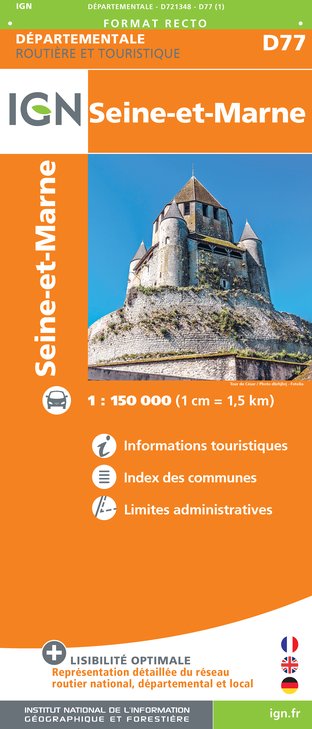
D77 SEINE-ET-MARNE
D77 SEINE-ET-MARNE
Editor : IGN
Collection : CARTES DÉPARTEMENTALES IGN
Scale : 1:150 000
5.90€
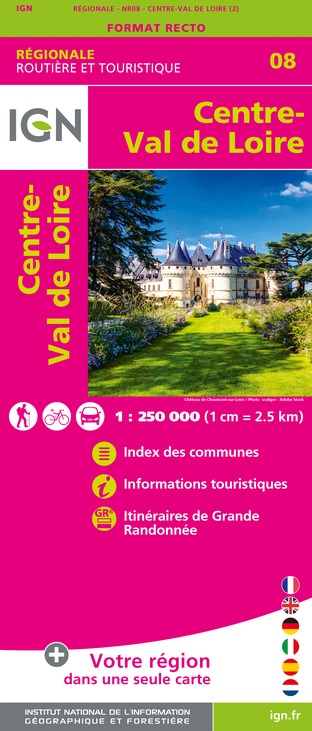
NR08 CENTRE-VAL DE LOIRE
Editor : IGN
Collection : CARTES RÉGIONALES IGN
Scale : 1:250 000
6.80€
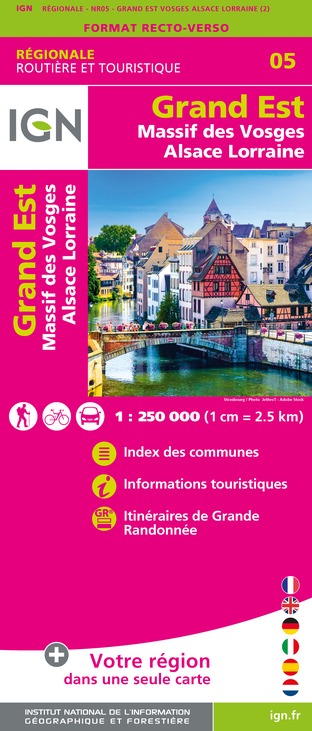
NR05 GRAND EST  RECTO/VERSO MASSIF DES VOSGES  ALSACE  LORRAINE
NR05 GRAND EST RECTO/VERSO MASSIF DES VOSGES ALSACE LORRAINE
Editor : IGN
Collection : CARTES RÉGIONALES IGN
Scale : 1:250 000
6.80€
NR04 -  GRAND EST  RECTO/VERSO ARDENNE  CHAMPAGNE
NR04 - GRAND EST RECTO/VERSO ARDENNE CHAMPAGNE
Editor : IGN
Collection : CARTES RÉGIONALES IGN
Scale : 1:250 000
6.80€
NR03 ÍLE DE FRANCE
NR03 ÍLE DE FRANCE
Editor : IGN
Collection : CARTES RÉGIONALES IGN
Scale : 1:250 000
6.80€
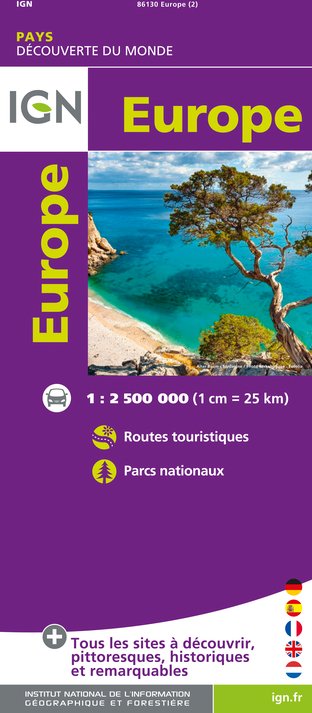
EUROPE
EUROPE
Editor : IGN
Collection : DÉCOUVERTE DES PAYS DU MONDE IGN
Scale : 1:2 500 000
7.00€

What to visit in TERRAIN DE CAMPING COMMUNAL

See more suggestions
Admire the unique architecture of TERRAIN DE CAMPING COMMUNAL.
See more suggestions
Palace of Fontainebleau
4.4 km

Palace of Fontainebleau

The Château de Fontainebleau is a big part of French history! This vast building, in both classical and Renaissance style, is not only famous for witnessing Napoleon's imperial adventure. From the royal charter of 1137 to the fall of the Second Empire in 1870, the Palace of Fontainebleau saw the lives of the greatest French sovereigns from day to day. The original medieval fortress was replaced by a Renaissance palace under the guiding hand of Francois I. At that time, two Italian artists, Primaticcio and Il Rosso vied in talent and founded the first School of Fontainebleau. The Galerie François I, which leads from the royal apartments to the chapel of the Convent of the Holy Trinity, is most original with its décor of frescoes, stucco and carved wood in praise of François I. The Ballroom was completed at the time of the last Valois kings, under Primaticcio’s direction. With Henri IV, the new Bourbon dynasty took over the palace, and built new rooms with interior decoration placed in the hands of the artists of the second School of Fontainebleau. Louis XIII completed the work started by his father. Under the Sun King Fontainebleau continued to be the royal family home, and the Grand Dauphin was born there in 1661. The king’s nieces were married from Fontainebleau, and the Edict of Nantes was revoked there in 1685. Louis XV and Louis XVI would spend the autumn there and initiated new, large scale building works and interior doing-ups. After the French Revolution, Napoleon I found the palace completely emptied of its furniture but intact. He undertook to refurnish the apartments and brought the palace back to its former glory as the home of the sovereign. Napoleon Bonaparte spent his last days there before his abdication in 1814 and departure for the Elba. Louis-Philippe was the first sovereign to order a complete restoration of Fontainebleau. The restoration of the Empire in 1852 gave renewed importance to the palace, and Napoleon III became strongly attached to this home, staying there regularly with his court. Housed in the Louis XV wing, the Napoleon I museum is dedicated to the Emperor and his family, with a large collection of objects from his everyday life, weapons used in military campaigns and gifts he received. The Chinese museum, created by Empress Eugenie, displays works of art from the Far East. The Jeu de Paume court, thought to be the oldest of the three surviving in France, is open to the public with demonstrations and introductory games. Le Nôtre's French gardens, the Queen’s English garden with its Fountain of Diana, the hedge maze and the Cour des Adieux are open to the public all year round. Boat excursions on the Etang aux Carpes or horse-drawn carriage rides are available. The Domain of the Fontainebleau Palace is inscribed at the UNESCO Humanity World Heritage. There is a little train going around the gardens during the touristic season.

Place du Général de Gaulle 77300 Fontainebleau
Book from 0 €Book
Show
Fontainebleau palace gardens
4.5 km

Fontainebleau palace gardens

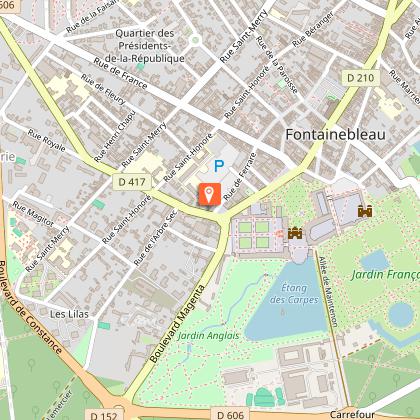
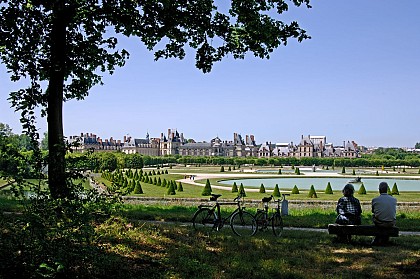
In the 130 hectacres of garden , you can see the evolution of the art of the garden illustrated by the Great Flowerbed ("Grand Parterre") , French-style garden designed by Le Notre, the Carp Pond, the English garden, created under the first Empire, the Garden of Diana ("La jardin de Diane"), the Park , the 1200m canal ... Remarkable trees, Diana's Fountain, the Park, exotic essences, the English river ... These royal and imperial gardens are witnesses to the evolution of taste since the 16th until the 19th century in terms of landscaping. The Renaissance gardens created for Francis Ist and Henry IVth were mainly based upon a system of draining canals which started from the different wells and the carp pond and lead to the great canal. The Grand Parterre (Huge flowerbed) was created later in a very humid part situated between the carp pond and the canal. Under the reign of Louis XIVth, this "parterre" (the biggest one in Europe) will adopt a very classical appearance du to André Le Nôtre who conceived a real perspective leading from the pond to the canal with the fountain of "Tibre" in the centre of the parterre. This royal parterre reaches from the Maintenon alley to the cascades, from the ballroom and the quarter Henry IVth to the side perspective of "Saut du Loup" (the wolf hop). The Diana Garden is the former garden of the Queen. Its name comes from the fountain (17th century) which occupies its centre. This garden is limited by the "Galerie des Cerfs" built under Henry IVth (Deer Gallery), the small apartments (Louis XVIth), the Trinity Chapel, the Real Tennis court and separated from the town by a wall with some openings. The English garden was created in its present shape under the reign of Napoleon Ist. It is organised around an artificial romantic creek. Its valley like landscape integrates some sculptures and rare species of trees and plants. The carp pond, which dates back to the Middle Ages, is bordering this garden. In the centre of the pond the architect Louis Le Vau constructed a romantic pavilion under Louis XIVth (1662).

Place du Général de Gaulle 77300 Fontainebleau
Show
Domaine de la Salle
5.6 km

Domaine de la Salle

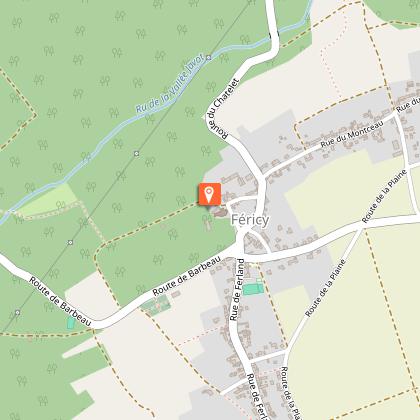
The Domaine de la Salle, in Féricy, brings together a manor house, several buildings, a 9 hectare plot of land and magnificent trees in the park open to the public. The history of the Domaine de la Salle is closely linked to that of the village of Féricy. The history of the Domain begins around 50 BC with the occupation of the Domain by its first owner Fericius or Fericiacus, who is said to have given his name to the village. Around 481, the Domain became the prerogative of the Frankish Kings and was entrusted to a vassal, taking the name of Domaine de la Salle. Pépin le Bref then gave the Domain to the Abbey of Saint-Denis, a donation confirmed in 775 by his son Charlemagne. In 1380, the Domain was sold to the Sainte-Chapelle by Pierre Despoix and Isabelle d'Auxy, his wife. In 1532, by the wish of the Canon of the Chapel, Jehan Parent, it became a parish church. In 1791, Regnaud sold the Domain to Louis Marie Pomponne Pinson de Ménerville, the king’s counsellor. The latter, having emigrated to Brussels during the Terror, returned to France in 1799 and then acquired the presbytery adjoining the church in 1835 and incorporated it into the outbuildings' courtyard. It is to him that we owe the current appearance of the Domaine de la Salle. In 1838 he built the current mansion, a "neo-classical manor" type with 4 levels. Neglected, fallen into abandonment, the Domaine de la Salle could have ended up in ruins, but that was without counting on the determination of the municipality, which acquired the property in 2006 following the death, without an heir of the last owner, and the dedication of the many volunteers who work to bring it back to life. Despite a fire in 2012 that destroyed part of the Manor House, little by little the site is being restored, it is the subject of numerous projects and already hosts a variety of events. The Domaine de la Salle incorporates many heritage and landscape elements : a manor house commonly known as "le château", outbuildings, a pond, a washhouse, the famous Saint-Osmanne spring and a vast tree-filled park. Walkers are invited to discover the variety of fauna and flora throughout the seasons, while respecting the surroundings. Among the spectacular trees, one can note a cedar and a cypress that punctuate the large meadow, a Japanese pagoda tree, a grey poplar, a Virginia tulip tree, a giant sequoia, pedunculate oaks, hornbeams and a sycamore maple (listed as a "remarkable tree of Seine-et-Marne"). Along and to the north of the canal, one can identify a copper beech, bald cypresses, a honey locust, and Italian poplars.

1 rue de l'Église 77133 Féricy
Show

Where to eat in TERRAIN DE CAMPING COMMUNAL

See more suggestions
The cuisine of TERRAIN DE CAMPING COMMUNAL is a must-try.
See more suggestions

Where to sleep in TERRAIN DE CAMPING COMMUNAL

See more suggestions
Enjoy your stay with accommodations in TERRAIN DE CAMPING COMMUNAL.
See more suggestions
Hôtel Mercure Château de Fontainebleau
4.9 km

Hôtel Mercure Château de Fontainebleau

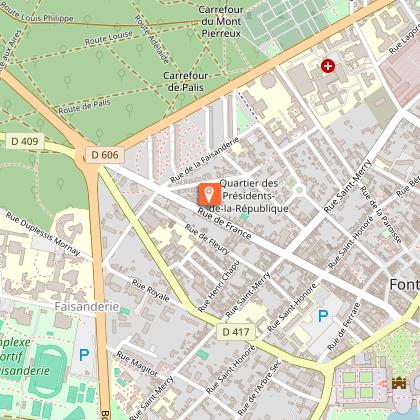
The Royal Mercury Hotel ("Le Mercure Royal") of Fontainebleau. A large private mansion, full of charm and refinement. Ideal for your stay, business or pleasure. 97 bedrooms and suites - Restaurant - Bar - Terrace - wooded park and private car park. 10 minutes walking to the Chateau, it has a perfect position in the quiet and near to the city center. Awarded the Green Key eco-label. HCome and enjoy an unforgettable weekend as a couple or with family in a country house in the heart of Fontainebleau. Of course, visit its must-see château, go climbing, or take a walk on foot or horseback through our ancient forest. Make our Country House your own by enjoying our musical evenings and a wide range of activities designed to help you unwind. Swimming pool, garden, tennis court — in our Country House, you’ll find outdoor activities to breathe, walk, and have fun, as well as indoor activities to play together, read, and learn to cook. There’s something for every taste and every age. The new identity of the Mercure Country House hotel has embraced the symbol of the horse, with a subtle, offbeat, and decidedly modern transformation, bringing a design-led, friendly, open, and warm atmosphere to the shared spaces. A hospitality concept that breaks with traditional codes and embodies a spirit of conviviality and sharing. More than just a hotel and restaurant, it’s a new place to live, relax, and connect... Escape every day in the restaurant. On Friday evenings, enjoy a musical “grazing” night for €25 per person (a cold buffet featuring local and seasonal products), including a glass of wine. A live concert is also आयोजित between 7:00 PM and 10:30 PM. Sleep in and take your time! Discover the restaurant at our Country House every Sunday from 11:30 AM to 2:30 PM (by reservation).

Show
Gîte Apremont
11 km

Gîte Apremont

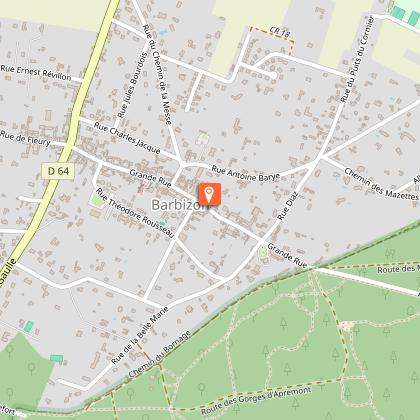
Located in the heart of the village of Barbizon, the cottage has been st up in an old Briarde farmhouse, the exposed stone walls and the contemporary decoration create a soothing atmosphere. The cottage is on one level with a small step at the entrance; the kitchen is fully equiped; the livig room/lounge is comfortable with sof and armchairs; the large bedroom has 2 single bed which can be aranged in a double one; a laundry room is avalaible. You have the courtyard where you can park your car. The courtyard allows you to have lunch in the shelter in case of rain ine the summer while enjoying the garden with a fis pond. Deckchairs, parasol, garden furniture and barbecue are at your disposal. Renowned village for its 19th century painters, Barbizon is on the edge of the forest of Fontainebleau; all the shops (bakery, grocery store, caterer, butcher...) as well as restaurants are nearby. You can visit the museums of the village, the galleries and painters'studio that line the main street. To walk in the forest, you have guides and IGN maps available ine the cottage. If you prefer discovering the forest on horseback or by a bike ride, companies in the village would offer adapted services to your desires. And the forest of Fontainebleau remains a privileged place for lovers of rock climbing. The Aprmeont gîte is ideallu located for a moment of relaxation or for practicing a sport. Denise, your host, welcomes you to this charming cottage in the old family farm.

66 Grande rue 77630 Barbizon
Book from 0 €Book
Show
Centre International de Séjour Le Rocheton
12 km

Centre International de Séjour Le Rocheton

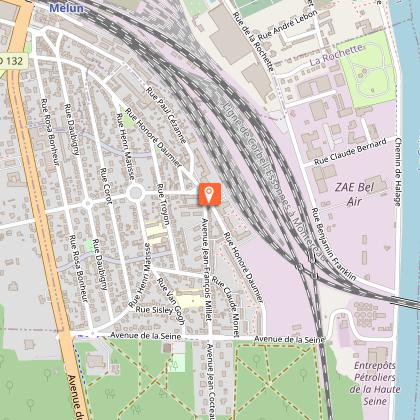
The centre is located in La Rochette, on the edge of the Fontainebleau forest and in the heart of a 10-hectare wooded park. Its green, peaceful setting and proximity to many sites of interest make Le Rocheton an ideal base for discovering the region. Whether you're on your own, with family, friends, an association, a school, a work group, a walker or a climber, whether you're coming as a neighbour or from another continent to relax or to work, the whole team at Le Rocheton is here to welcome you and to meet your needs. What's more, Le Rocheton is ideally located close to many sites of interest: exceptional residences, the Châteaux of Fontainebleau, Vaux le Vicomte and Blandy les Tours, the medieval town of Provins, museums, theme parks, etc. Activities : - A covered and fenced volleyball/tennis/archery pitch with a suitable synthetic surface - A city stadium (volleyball / mini football / badminton / handball / tennis / basketball) on an adapted synthetic surface - 4 squash courts are planned for 2017 in collaboration with the French Squash Federation. Services : - Tourist breaks (groups or individuals) - Educational breaks (with a tailor-made programme of activities) - Room hire for private events - Seminars and study days - BAFA training courses Whatever the nature of your project, the teams at Le Rocheton are here to help make it unforgettable. (Tourism & Handicap label since April 2019).

Rue de la Forêt 77000 La Rochette
Show
Caution!
We have no information on the difficulty of this circuit. You may encounter some surprises along the way. Before you go, please feel free to inquire more and take all necessary precautions. Have a good trip! 🌳🥾