Alert

Alerts

To see around
See more
Open
Close
Show
Show
Show
Show
Show
Show
Show
Show
Show
Show
Show

Oups... It would appear that Cirkwi does not have permission to use your location.

Presentation
Description
Map
Steps
Points of interest
Cirkwi brief's
Ratings and reviews
See around

From Fontainebleau to Barbizon, biking between the Seine and the forest

From Fontainebleau to Barbizon, biking between the Seine and the forest

Description

Cycling between the Seine River and the forest, to discover Fontainebleau and its majestic château, the painters’ village of Barbizon, and the magnificently flamboyant villas overlooking the Seine.
The ideal bike loop for a green weekend getaway.

This excursion invites cyclists to explore the exceptional Fontainebleau Forest, before leading pedallers to admire Fontainebleau Palace, French royal residence for several centuries. The itinerary then continues on to Barbizon, the beloved village of Impressionist landscape painters. Finally, the two-wheeled tour crosses the Bière Plain on its way to the picturesque Seine River Valley.

This itinerary is well suited to younger cyclists, although certain portions are not tarred/paved.

The perfect excursion for a 2-day cycling stay, with a stopover in Bois-le-Roi.

Technical Information

Racing biking
Difficulty
Not specified
Duration
5h (2d)
Dist.
43 km
Show more

Altimetric profile

Starting point

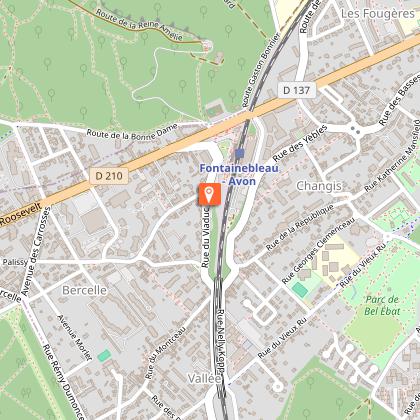
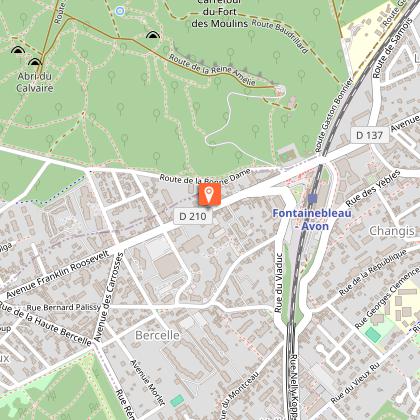
14 Gare de Fontainebleau Avon , 77210   Avon
Lat : 48.416572Lng : 2.726511

Steps

image du object
8

Vers Bois-le-Roi

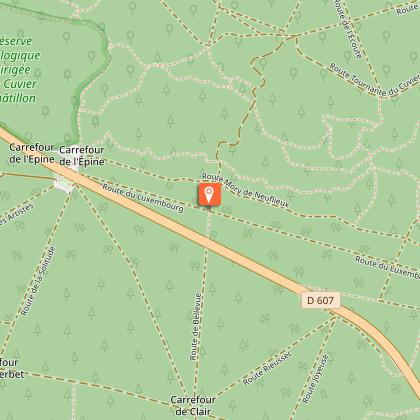
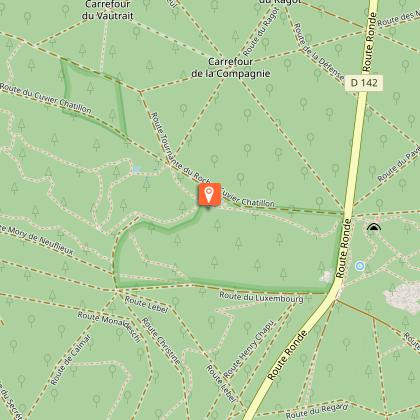
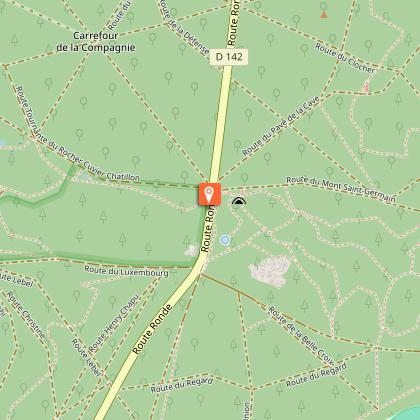
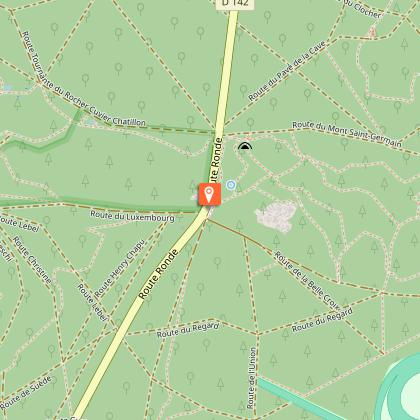
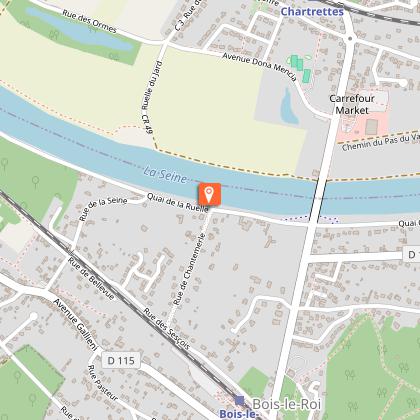
Vous débouchez sur un grand parking enherbé et ensablé. Traversez-le en diagonale pour rejoindre la Route du Luxembourg, une descente un peu raide sur une petite portion en gravillons.Si vous entendez le speaker de l’hippodrome, c’est que vous faites bonne route.Après l’hippodrome, en approchant d'une clairière, empruntez en bifurquant légèrement sur la gauche la Route du Sport, qui passe derrière un parking.Au bout de la route du Sport, prenez ensuite à droite la Route du Mont St Germain. Au bout de cette route, traversez de l’autre côté de la D606. Attention, soyez très prudent en traversant cette départementale très passagère.De l'autre côté de la route, poursuivez sur quelques mètres tout droit puis tournez à la 1ère à gauche sur la route de la Deuxième Tête qui vous mène, au bout, sur la route de la Butte St Louis. Au 1er carrefour, prenez à droite sur la route Victor où les coucous gris vous accompagneront. Au bout, prenez à gauche sur la route des Ventes Bouchard. Plus loin, tournez à la deuxième à droite sur la route des Larmières,. Vous débouchez sur l’ancienne route de Bourgogne, que vous traversez, avec prudence, sur le passage piétons. Poursuivez sur la piste cyclable sur la gauche pour rejoindre Bois le Roi.Au premier croisement, continuez tout droit sur la piste cyclable. Au rond-point, prenez à droite l’avenue de la Forêt. Continuez toujours tout droit dans cette rue jusqu’au passage sous la voie ferrée. Vous arrivez en gare de Bois-le-Roi. Passez sous le pont de la voie ferrée et tournez tout de suite à gauche sur la rue des Sesçois. Rejoignez les quais en prenant plus loin à droite après la gare par la rue Chantemerle. En bas de cette rue, prenez à droite pour la Seine. Au stop au niveau du pont sur la Seine, traversez avec prudence et continuez tout droit pour rejoindre le quai Olivier Metra.

- Seine et Marne Attractivité -
Consulter

Points of interest
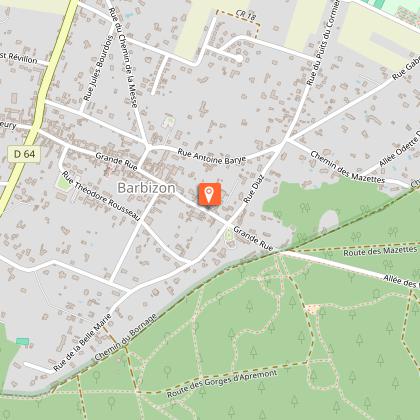
image du object

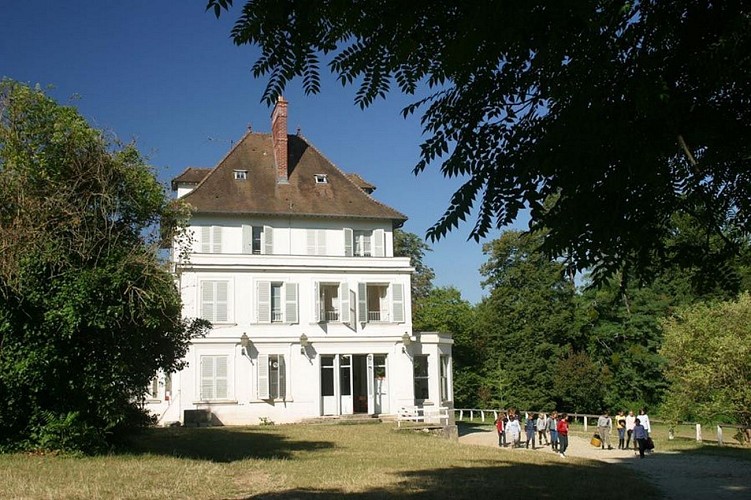
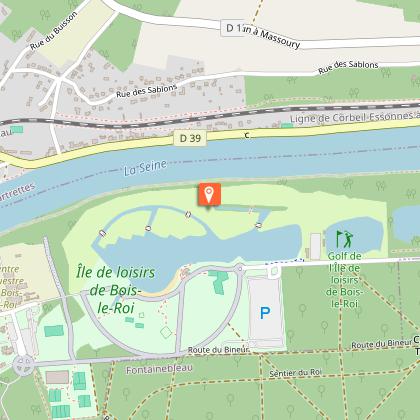
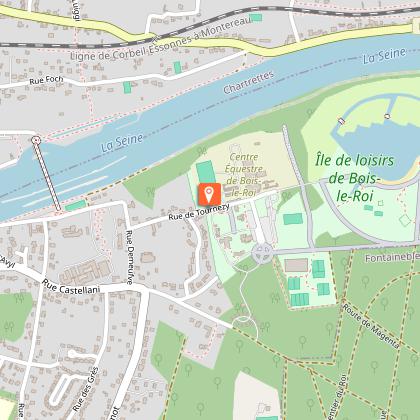
Centre d'hébergement de l'île de loisirs de Bois-le-Roi

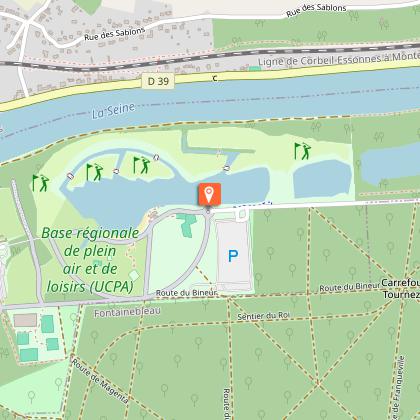
Le centre d'hébergement de l'île de loisirs de Bois-le-Roi dispose de 166 lits répartis en trois bâtiments et de 73 lits en roulottes. "Le château" - hébergement de groupes ou de stages sportifs de 44 places en chambres multiples. Labellisé "Accueil vélo"Cette ancienne demeure de la famille Félix Potin a du caractère. Sa façade nord donne vers la Seine et la grande carrière d'équitation. Le château comporte des chambres de 3 à 9 lits au rez-de-chaussée et au premier étage. Les sanitaires sont situés sur les paliers des chambres. Le rez-de-chaussée est complété par trois salles de 40 à 100 m² , dédiées aux scolaires, à la détente ou aux réunions. "La forêt" - hébergement de groupes ou de stages sportifs de 56 places en chambres multiples. Ce bâtiment est situé à proximité du restaurant, du côté de la forêt de Fontainebleau. Il comporte 8 chambres de 6 lits (2 lits à étage et 2 lits en mezzanine) et 4 chambres de 2 lits pour l'encadrement. Les salles de bain homme et femme comportent chacune 4 douches et 3 WC. Le + développement durable : l'eau chaude des sanitaires est obtenue à partir de panneaux solaires "Les abeilles" - hébergement de groupes ou de stages sportifs de 66 places en chambres multiples. Au rez-de-chaussée ce bâtiment comporte 14 chambres (1 de trois lits et 13 de 4 lits). Ces chambres proposent 2 ou 3 lits bas et 1 lit en mezzanine. Chaque chambre comporte une salle de bain avec douche et lavabo. Les WC sont répartis dans les couloirs. Au premier étage 1 chambre de 11 lits convient à l'accueil de groupes ou de randonneurs. Ce bâtiment comporte un hall avec espace muni d'une cheminée et une salle de réunion de 48 m².  

Rue de Tournezy 77590 Bois-le-Roi
- Fontainebleau Tourisme -
Consulter
image du object

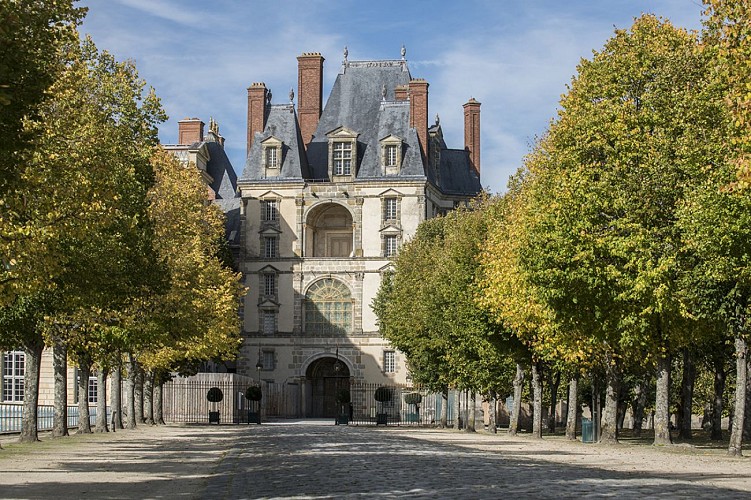
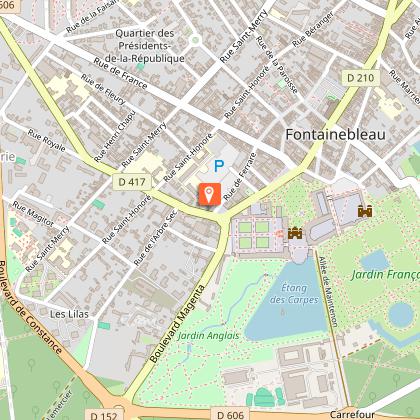
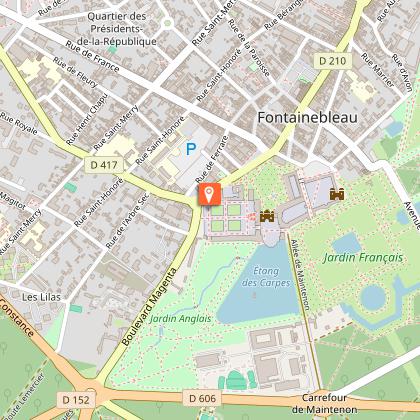
Palace of Fontainebleau

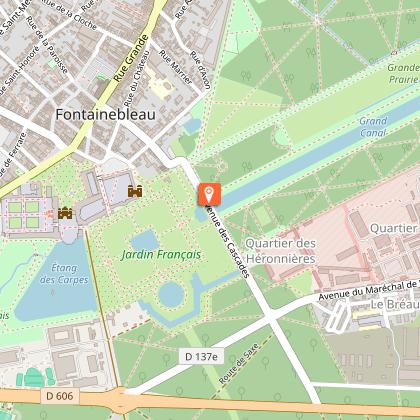
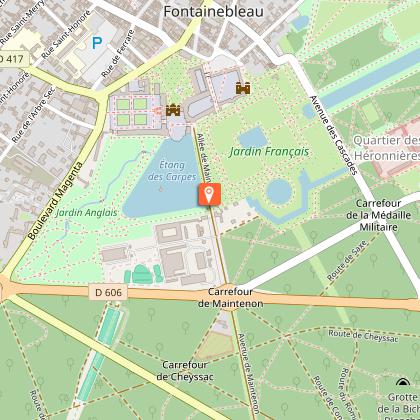
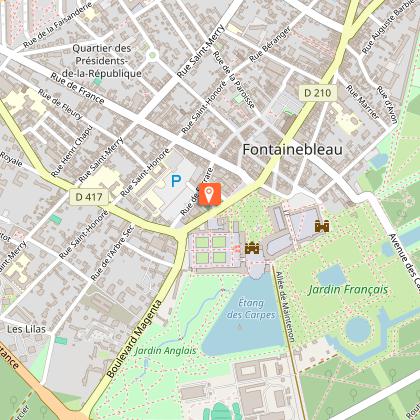
The Château de Fontainebleau is a big part of French history! This vast building, in both classical and Renaissance style, is not only famous for witnessing Napoleon's imperial adventure.From the royal charter of 1137 to the fall of the Second Empire in 1870, the Palace of Fontainebleau saw the lives of the greatest French sovereigns from day to day. The original medieval fortress was replaced by a Renaissance palace under the guiding hand of Francois I. At that time, two Italian artists, Primaticcio and Il Rosso vied in talent and founded the first School of Fontainebleau. The Galerie François I, which leads from the royal apartments to the chapel of the Convent of the Holy Trinity, is most original with its décor of frescoes, stucco and carved wood in praise of François I. The Ballroom was completed at the time of the last Valois kings, under Primaticcio’s direction. With Henri IV, the new Bourbon dynasty took over the palace, and built new rooms with interior decoration placed in the hands of the artists of the second School of Fontainebleau. Louis XIII completed the work started by his father. Under the Sun King Fontainebleau continued to be the royal family home, and the Grand Dauphin was born there in 1661. The king’s nieces were married from Fontainebleau, and the Edict of Nantes was revoked there in 1685. Louis XV and Louis XVI would spend the autumn there and initiated new, large scale building works and interior doing-ups. After the French Revolution, Napoleon I found the palace completely emptied of its furniture but intact. He undertook to refurnish the apartments and brought the palace back to its former glory as the home of the sovereign. Napoleon Bonaparte spent his last days there before his abdication in 1814 and departure for the Elba. Louis-Philippe was the first sovereign to order a complete restoration of Fontainebleau. The restoration of the Empire in 1852 gave renewed importance to the palace, and Napoleon III became strongly attached to this home, staying there regularly with his court. Housed in the Louis XV wing, the Napoleon I museum is dedicated to the Emperor and his family, with a large collection of objects from his everyday life, weapons used in military campaigns and gifts he received. The Chinese museum, created by Empress Eugenie, displays works of art from the Far East. The Jeu de Paume court, thought to be the oldest of the three surviving in France, is open to the public with demonstrations and introductory games. Le Nôtre's French gardens, the Queen’s English garden with its Fountain of Diana, the hedge maze and the Cour des Adieux are open to the public all year round. Boat excursions on the Etang aux Carpes or horse-drawn carriage rides are available. The Domain of the Fontainebleau Palace is inscribed at the UNESCO Humanity World Heritage. There is a little train going around the gardens during the touristic season.

Place du Général de Gaulle 77300 Fontainebleau
- Seine et Marne Attractivité -
Consulter
image du object

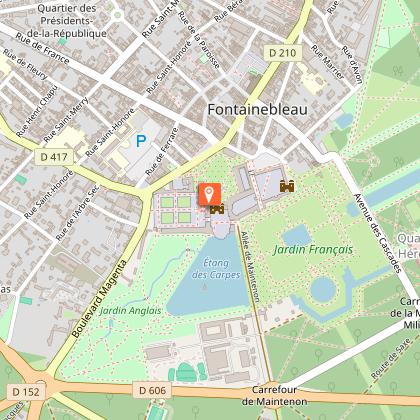
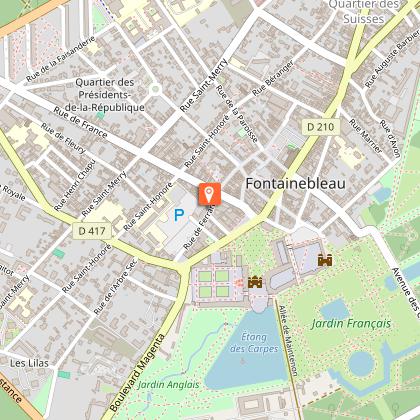
Fontainebleau palace gardens

In the 130 hectacres of garden , you can see the evolution of the art of the garden illustrated by the Great Flowerbed ("Grand Parterre") , French-style garden designed by Le Notre, the Carp Pond, the English garden, created under the first Empire, the Garden of Diana ("La jardin de Diane"), the Park , the 1200m canal ... Remarkable trees, Diana's Fountain, the Park, exotic essences, the English river ...These royal and imperial gardens are witnesses to the evolution of taste since the 16th until the 19th century in terms of landscaping. The Renaissance gardens created for Francis Ist and Henry IVth were mainly based upon a system of draining canals which started from the different wells and the carp pond and lead to the great canal. The Grand Parterre (Huge flowerbed) was created later in a very humid part situated between the carp pond and the canal. Under the reign of Louis XIVth, this "parterre" (the biggest one in Europe) will adopt a very classical appearance du to André Le Nôtre who conceived a real perspective leading from the pond to the canal with the fountain of "Tibre" in the centre of the parterre. This royal parterre reaches from the Maintenon alley to the cascades, from the ballroom and the quarter Henry IVth to the side perspective of "Saut du Loup" (the wolf hop). The Diana Garden is the former garden of the Queen. Its name comes from the fountain (17th century) which occupies its centre. This garden is limited by the "Galerie des Cerfs" built under Henry IVth (Deer Gallery), the small apartments (Louis XVIth), the Trinity Chapel, the Real Tennis court and separated from the town by a wall with some openings. The English garden was created in its present shape under the reign of Napoleon Ist. It is organised around an artificial romantic creek. Its valley like landscape integrates some sculptures and rare species of trees and plants. The carp pond, which dates back to the Middle Ages, is bordering this garden. In the centre of the pond the architect Louis Le Vau constructed a romantic pavilion under Louis XIVth (1662).

Place du Général de Gaulle 77300 Fontainebleau
- Fontainebleau Tourisme -
Consulter
image du object

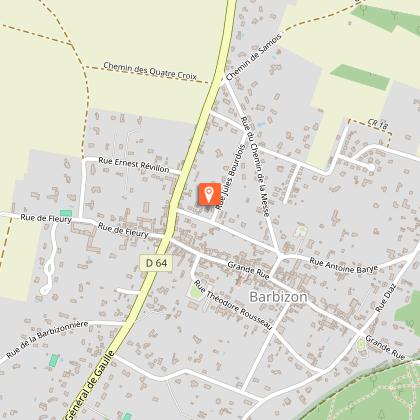
Barbizon school museum: the Ganne Inn

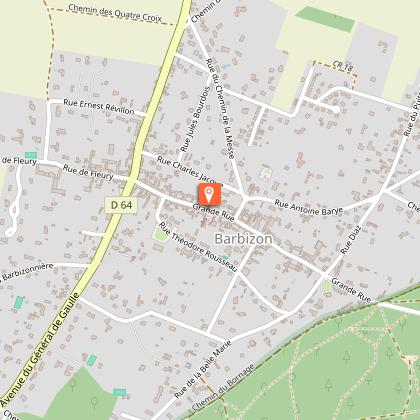
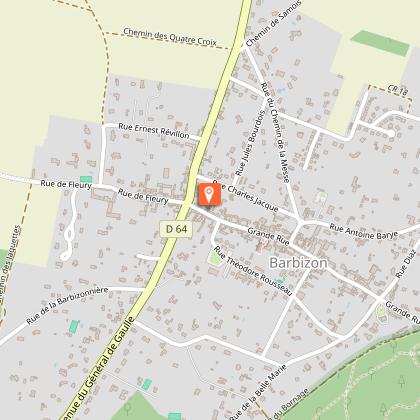
It is difficult to know precisely when the inn was built. Before 1820, the only inns in the region were at Chailly. Alfred Sensier, friend of Théodore Rousseau and a historian of Barbizon, gives the date of 1824.A return to the time of the painters of the forest of Fontainebleau. The museum of the school of Barbizon is spread over two sites : the Ganne Auberge and the Workshop-House of Theodore Rousseau. One is the principal historical way-points of the artists who came to work in the forest of Fontainebleau (1830-1875). The other is the Workshop where the famous landscape artist Theodore Rousseau lived from 1847 until his death in 1867. The Exhibition Rooms of the Auberge restore the friendly atmosphere so dear to the Peint'à Ganne, thanks to the furniture and decors and through a hundred different works (Jean-François Millet , Narcisse Diaz de la Peña , Constant Troyon , Rosa Bonheur...). Luck has had it that the newspaper “L’Illustration” published a full report in 1853, illustrated with engravings, showing the pictorial treasures hidden inside this modest inn, the major part of which has come miraculously down to us. The very serious Revue des Arts published in 1854 a guided tour of the three ground floor rooms and detailed the decorations. Has have helped us reconstruct the rooms at the inn at its most brilliant period. The painted furniture and panels and the way the rooms are presented are a good representation of the painters’ inn. The restoration of the upper floor started in 1990, has revealed decoration painted or drawn by the artists when staying in the rooms. Three exhibits show the work of the Barbizon School with landscape and animal themes. A very attractive audiovisual presentation takes you back to the time of the painters of the Barbizon School Leaving behind them Parisian studios and academicism, the "painted in Ganne" came together in the Auberge de Barbizon to paint "sur le motif" and for very bohemian parties.

92 Grande rue 77630 Barbizon
- Seine et Marne Attractivité -
Consulter

Additional information

Updated by

Seine et Marne Attractivité - 12/12/2025
www.tourisme-seine-et-marne.fr/
Report a problem

Tips

Safety instructions and good practices: - Respect the French highway code and remain vigilant on and near all roads, particularly at intersections and when crossing départementales (secondary roads) and passing over bridges. To that end, carefully read the guide provided for each itinerary. - Wear a properly fitting helmet. At night and in bad weather, wear a fluorescent vest with reflective bands and carry a proper torch/flashlight. - Restrictions for children under 12: make sure that the loop you want to follow is well suited to your children. - After every picnic, leave no trash behind, and respect the wild flora and fauna. - Prior to departure, make sure that your smartphone or tablet is sufficiently charged. Consider taking along a charger. - If you happen to notice any anomaly while following an itinerary, please don’t hesitate to write us! We value all such observations and remarks.

Open period

All year round.

Contact

Phone : 01 60 39 60 39

Email : info@attractivite77.fr

Website :
https://baladnature77.cirkwi.com/#!page=circuit&id=50739&langue=fr
https://www.tourisme-seine-et-marne.fr/

Facebook : https://www.facebook.com/77VivreEnGrand

Data author

Quartier Henri IV - Place d'Armes 77300 Fontainebleau France

The Cirkwi brief

Fontainebleau to Barbizon: A Stunning Cycling Journey

Embarking on a journey from the picturesque Gare de Fontainebleau Avon to the artistic village of Barbizon, this cycling route promises an unparalleled exploration of nature's beauty and historical grandeur. Crafted meticulously by Seine et Marne Attractivité, this path weaves through the majestic Fontainebleau forest, introduces cyclists to the architectural marvel of Fontainebleau Castle, and dives into the artistic heart of Barbizon, capturing the essence of the landscape that inspired countless painters. With the serene Seine river as your backdrop, this route is a testament to the enduring charm of the French countryside, offering a refreshing retreat from the hustle and bustle of city life.

Brief Technical Overview

This 43.3 km cycling journey traverses varying terrains, starting from an altitude of 139 meters and dipping to 42 meters at its lowest point. Cyclists should prepare for a cumulative positive altitude change of 413 meters. The path is not fully paved, presenting a mix of terrains that may challenge the unprepared rider. Given its partially unpaved tracks, it suits a range of bicycles, though road bikes might find it particularly challenging in certain sections. Remember, versatility and preparation are key for a smooth journey.

Seasonal Tips and Safety

Regardless of the season, safety and preparedness should never take a back seat. In spring and summer, lighter clothing and hydration are key, while autumn's changing colors provide a breathtaking backdrop, though potentially slippery paths. Winters can be harsh, making certain sections of the route more challenging. Year-round, helmets and reflective gear are non-negotiable for safety, while puncture kits and spare tubes are recommended to tackle any unexpected repairs. Always check the weather forecast and dress appropriately to maximize your enjoyment of this stunning route.

Historical Significance of the Route

Fontainebleau, with its rich tapestry of nature and architecture, plays a significant role in France's cultural and historical narrative. The iconic Château de Fontainebleau stands as a monument to French history, having been a residence for French monarchs from Louis VII to Napoleon III. Meanwhile, Barbizon, known widely as a hub for pre-modern painters, played a crucial role in the development of the Barbizon school of painting. This route offers not just a physical journey but a passage through time, echoing the steps and strokes of those who shaped French art and history.

Understanding the Climate for Travelers

Fontainebleau and Barbizon: Known for their temperate climate, these regions boast mild winters and pleasant summers. The best time to visit would be from late spring to early autumn (May-September), when the weather is most conducive to cycling. The region receives moderate rainfall year-round, so always be prepared with waterproof gear. Winter months, though colder, still offer a unique charm with quieter paths but require careful preparation for colder temperatures and potential frost.
Automatically generated.

Ratings and reviews

To see around
See more
Open
Close
Show
Show
Show
Show
Show
Show
Show
Show
Show
Show
Show
Caution!
We have no information on the difficulty of this circuit. You may encounter some surprises along the way. Before you go, please feel free to inquire more and take all necessary precautions. Have a good trip! 🌳🥾