Tours
Activities
Places of interest
Where to eat
Where to sleep

Captivating Moret-sur-loing, Seine-et-Marne exploration

Are you in charge of the destination?
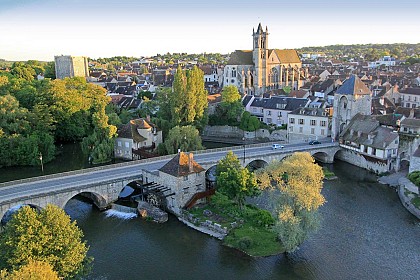
Nestled at the gateway to the Fontainebleau forest, Moret-sur-Loing, Seine-et-Marne, Ile de France, is a true gem for lovers of history, art, and nature. Walk along the banks of the Loing River and admire the ancient houses and mills, standing as witnesses to the city's rich medieval past. Art enthusiasts will surely appreciate the landscapes immortalized by Alfred Sisley, one of the great masters...See more

Walking around Moret-sur-loing

See more suggestions
Enjoy outdoor walks in Moret-sur-loing.
See more suggestions
What to do in Moret-sur-loing

See more suggestions
Explore the bookable activity options in Moret-sur-loing for all tastes and ages.
See more suggestions
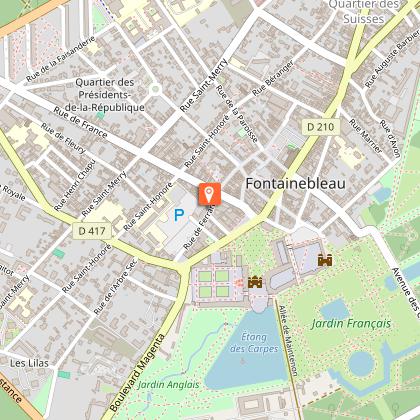
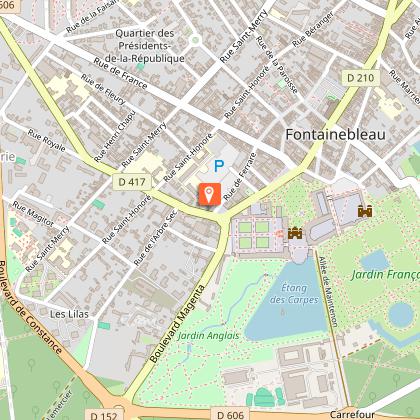
Palace of Fontainebleau
9.2 km

Palace of Fontainebleau

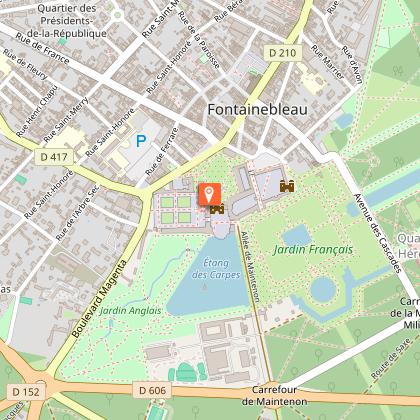
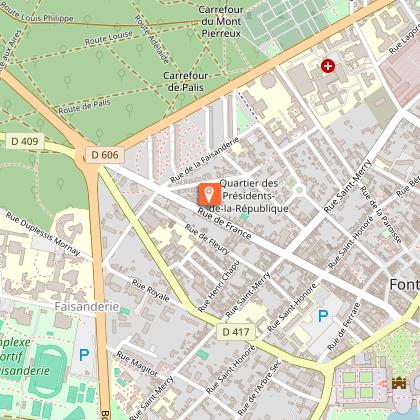
The Château de Fontainebleau is a big part of French history! This vast building, in both classical and Renaissance style, is not only famous for witnessing Napoleon's imperial adventure. From the royal charter of 1137 to the fall of the Second Empire in 1870, the Palace of Fontainebleau saw the lives of the greatest French sovereigns from day to day. The original medieval fortress was replaced by a Renaissance palace under the guiding hand of Francois I. At that time, two Italian artists, Primaticcio and Il Rosso vied in talent and founded the first School of Fontainebleau. The Galerie François I, which leads from the royal apartments to the chapel of the Convent of the Holy Trinity, is most original with its décor of frescoes, stucco and carved wood in praise of François I. The Ballroom was completed at the time of the last Valois kings, under Primaticcio’s direction. With Henri IV, the new Bourbon dynasty took over the palace, and built new rooms with interior decoration placed in the hands of the artists of the second School of Fontainebleau. Louis XIII completed the work started by his father. Under the Sun King Fontainebleau continued to be the royal family home, and the Grand Dauphin was born there in 1661. The king’s nieces were married from Fontainebleau, and the Edict of Nantes was revoked there in 1685. Louis XV and Louis XVI would spend the autumn there and initiated new, large scale building works and interior doing-ups. After the French Revolution, Napoleon I found the palace completely emptied of its furniture but intact. He undertook to refurnish the apartments and brought the palace back to its former glory as the home of the sovereign. Napoleon Bonaparte spent his last days there before his abdication in 1814 and departure for the Elba. Louis-Philippe was the first sovereign to order a complete restoration of Fontainebleau. The restoration of the Empire in 1852 gave renewed importance to the palace, and Napoleon III became strongly attached to this home, staying there regularly with his court. Housed in the Louis XV wing, the Napoleon I museum is dedicated to the Emperor and his family, with a large collection of objects from his everyday life, weapons used in military campaigns and gifts he received. The Chinese museum, created by Empress Eugenie, displays works of art from the Far East. The Jeu de Paume court, thought to be the oldest of the three surviving in France, is open to the public with demonstrations and introductory games. Le Nôtre's French gardens, the Queen’s English garden with its Fountain of Diana, the hedge maze and the Cour des Adieux are open to the public all year round. Boat excursions on the Etang aux Carpes or horse-drawn carriage rides are available. The Domain of the Fontainebleau Palace is inscribed at the UNESCO Humanity World Heritage. There is a little train going around the gardens during the touristic season.

Place du Général de Gaulle 77300 Fontainebleau
Book from 0 €Book
Show

What to visit in Moret-sur-loing

See more suggestions
Engage in outdoor activities in Moret-sur-loing.
See more suggestions
Moret-sur-Loing
22 m

Moret-sur-Loing

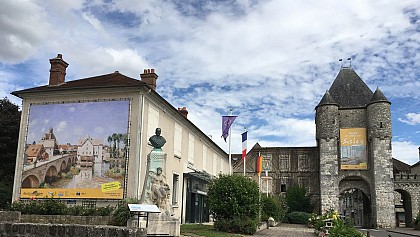
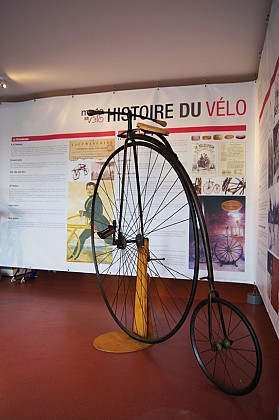
The Royal Square, the City Walls, the 12th century Keep are proud of their medieval origins and shape the architecture of the old city. Though most of the 1356 meters of walls and the twenty towers have disappeared over the years, the two gateways, Porte de Bourgogne and Porte de Samois, magnificently attest its medieval past. The majesty of the gates, the bridge and the banks of the River Loing as that of the Church Notre-Dame make Moret an exceptional site for history enthusiasts, dedicated walkers and painters. While strolling through the centre of town, you will discover superb Renaissance façades, the House of the Barley Sugar, a speciality of the nuns of Moret-sur-Loing since the 17th century or even the house and tomb of Alfred Sisley, the “Moret Impressionist”, who was the first to capture the majesty of light over the city. Numerous tourists come and see the sites painted by Sisley and these sites have been preserved: the Bridge over the Loing, immortalized by the painter ,the Church Notre Dame, the dominating Keep, the towpaths…To those who come from town or villages nearby, come and enjoy a guided tour and don’t hesitate to wander in the narrow streets or along the banks of the river, before enjoying a meal at one of the best restaurants in town. Enjoy rowing a boat or have a walk, canoe down the river, reach Moret by boat, arriving at the port of call. The “Point Sisley”, the Local Museum, the Bicycle Museum will welcome you. And don’t forget the Festivals! The heart of Moret keeps beating.

26 rue Grande Moret-sur-Loing 77250 Moret-Loing-et-Orvanne
Show
The Moret Barley sugar Museum
249 m

The Moret Barley sugar Museum

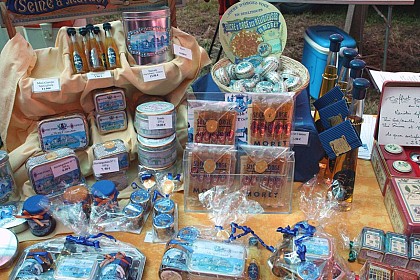
The Moret Nuns Barley Sugar has been well-known and appreciated for more than 300 years, It was originally made by the Benedictine nuns who, in 1638, founded a house in Moret, under the name of the Priory of Our Lady of Angels. This sweet, unique in its own way, was the delight of the most important people who carried of large quantities when the Court came to Moret. After having prospered under Louis XIV and gone through a period of glory until 1758, the monastery when through a number of ups and downs and disappeared in 1792. Production also stopped during the Revolution and even the secret recipe seemed to have disappeared forever, washed away with the nuns by the revolutionary tide. Luckily, after the bad days, a nun from the former Moret priory, Sister Felicity, came back with her secret to live in the Moret-sur-Loing region. Before dying, she confided the secret recipe to a faithful friend. Later, when other nuns came to live in Moret, the pious confident, in compliance with the recommendations of the deceased nun, lost no time in handing over the precious formula. In 1853, production started to grow again. At the beginning of the twentieth century, the nuns produced and sold their speciality in a corner of the Place Royale in front of the church. The nuns encountered all kinds of difficulties in the 1960’s. They had to stop production and leave Moret in 1972. In 1970, Sister Marie-André handed the secret of barley sugar to Mr. Jean Rousseau, confectioner. Thanks to the association “Produits et Terroir” this centuries-old speciality has been brought back to life and is being produced again. The Moret Nuns Barley Sugar museum in Moret-sur-Loing recounts the history and production of this delicious delicacy. Free tasting and on-site purchasing.

Rue du Pont Moulin Provencher Moret-sur-Loing 77250 Moret-Loing-et-Orvanne
Show
The Town Hall Museum
8.7 km

The Town Hall Museum

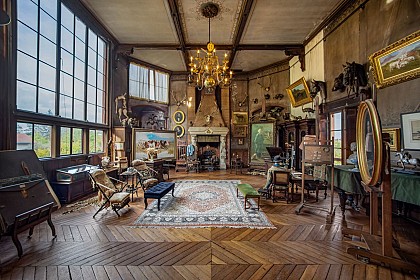
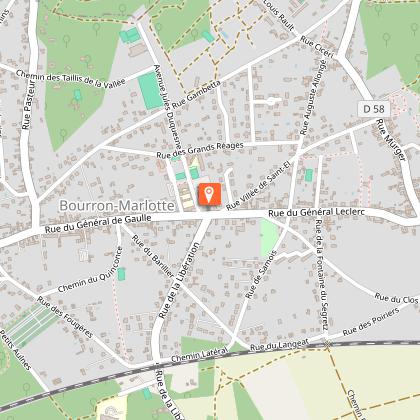
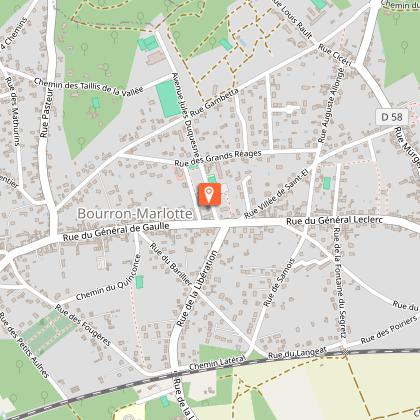
The Town Hall-Museum presents works by painters who lived in the village. Today, it has more than 200 works of art, paintings, engravings, lithographs, drawings and sculptures. In 1906, Charles Moreau-Vauthier, painter, artist, intellectual, creator of the famous association of the Friends of the Fontainebleau Forest, was at the origin of this museum. Writer and art critic, he proposed to all the artists to donate one or more art pieces to the town hall in order to create this museum. This happy custom is still respected today, which allows us to admire the works of contemporary artists. At the time, Bourron-Marlotte had the same artistic fever as Barbizon. We meet Auguste Renoir, who owns a house there, Sisley, who comes as a neighbour of Moret to paint the streets of Marlotte, It was also the time when an art earthenware factory was created, where the famous barbotines were made. We met Auguste Renoir and Sisley. Thus you will discover works by Auguste Allongé, Eugène Cicéri, Charles Delort, Arthur Héseltine or Armand Point. You will be able to discover very original paintings and sculptures. In the boardroom, a huge painting by Henri Lehmann (1814-1882 students of Ingres) entitled "The Daughter of Jephthah" is enthroned. It belonged to the Duke of Orléans and was classified as a historic monument in 2006 because of the importance of its testimony of religious history in the 19th century. Also worth mentioning superb art pieces by Armand Point ( " La fillette aux Liserons"), furniture....

Rue du Général de Gaulle 77780 Bourron-Marlotte
Show

Where to eat in Moret-sur-loing

See more suggestions
Experience Moret-sur-loing's gastronomy.
See more suggestions

Where to sleep in Moret-sur-loing

See more suggestions
Discover available accommodations around Moret-sur-loing.
See more suggestions
Gîte Apremont
18 km

Gîte Apremont

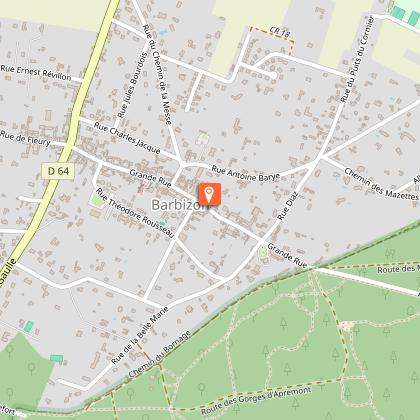
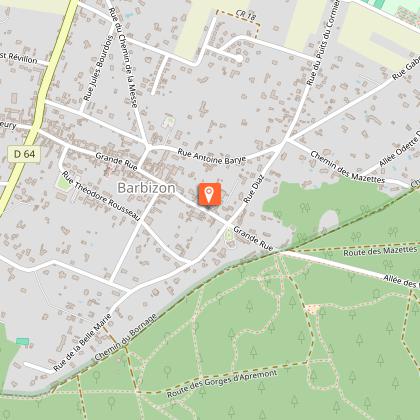
Located in the heart of the village of Barbizon, the cottage has been st up in an old Briarde farmhouse, the exposed stone walls and the contemporary decoration create a soothing atmosphere. The cottage is on one level with a small step at the entrance; the kitchen is fully equiped; the livig room/lounge is comfortable with sof and armchairs; the large bedroom has 2 single bed which can be aranged in a double one; a laundry room is avalaible. You have the courtyard where you can park your car. The courtyard allows you to have lunch in the shelter in case of rain ine the summer while enjoying the garden with a fis pond. Deckchairs, parasol, garden furniture and barbecue are at your disposal. Renowned village for its 19th century painters, Barbizon is on the edge of the forest of Fontainebleau; all the shops (bakery, grocery store, caterer, butcher...) as well as restaurants are nearby. You can visit the museums of the village, the galleries and painters'studio that line the main street. To walk in the forest, you have guides and IGN maps available ine the cottage. If you prefer discovering the forest on horseback or by a bike ride, companies in the village would offer adapted services to your desires. And the forest of Fontainebleau remains a privileged place for lovers of rock climbing. The Aprmeont gîte is ideallu located for a moment of relaxation or for practicing a sport. Denise, your host, welcomes you to this charming cottage in the old family farm.

66 Grande rue 77630 Barbizon
Book from 0 €Book
Show
Caution!
We have no information on the difficulty of this circuit. You may encounter some surprises along the way. Before you go, please feel free to inquire more and take all necessary precautions. Have a good trip! 🌳🥾