Tours
Activities
Places of interest
Where to eat
Where to sleep

Discovering Nougaroulet in the enchanting Gers

Are you in charge of the destination?
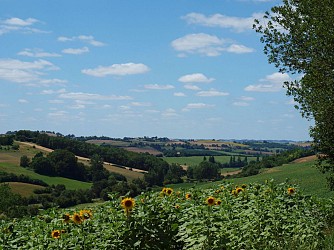
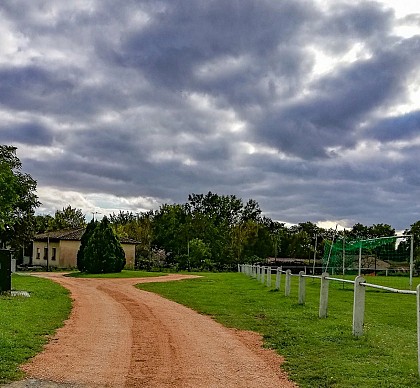
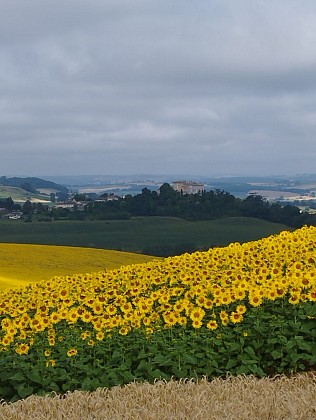
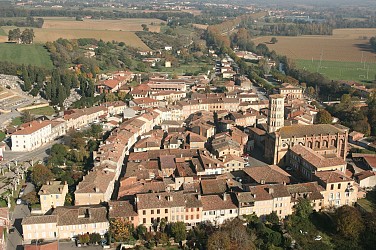
Nestled in the heart of Gers, Nougaroulet is a true gem of Southwestern France. Visitors can discover numerous local attractions that encapsulate the charm of this region. Begin your exploration with a peaceful walk through the stunning rolling landscapes of the Gers countryside. Be sure not to miss nearby quaint villages such as Lectoure and Fleurance, which reveal a rich historical and architect...See more

Walking around Nougaroulet

See more suggestions
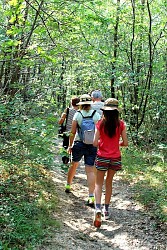
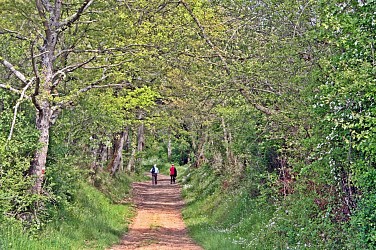
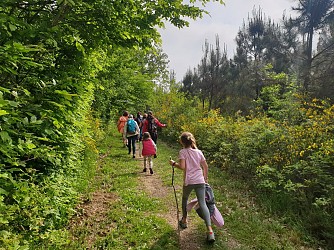
Embark on a hike in Nougaroulet.
See more suggestions
Sentier a p'Art
27 km

Sentier a p'Art

Works of art are installed in the middle of nature, on a hiking trail, for the pleasure of young and old curious. This walk invites you to take a close and artistic look at the natural environment. The artistic creation was entrusted to Coline Vergez, a local artist already well known in Simorre. His reflection on rural art and environmental concerns lead him to work with local artists and artisans for the realization of his 5 works and the signage of the course, using sustainable materials and/ or recovery. Collaborations: Jean-Michel Carcy, ironman of art in Seissan realized the arrows, Kriss Fabr'Hic, artisan of art recycler in Biran created the birds, Crhistophe Moine "Xof" recuperist diverter has realized the "Cycloraptosaurus", Aliénor Rajade glass artist in Simorre has realized "Insects in light", Jeff Cervera, cabinetmaker in Simorre has directed "La Pause des deux horizons", Stéphane Vincent carpenter of marine in Simorre, has realized "L'oeil du cocon", Juju and Dédé (MH Services) in l'Isle-en-Dodon have realized "The flight of flavors". A dossier "under the magnifying glass" gives you all the details about the artists, as well as the small exhibition presented in the tourist information office of Simorre. Discover or rediscover the p'Art trail with a series of audio guides. Along the trail, discover the explanations of Coline Vergez, the creator of the trail. Get on the trail using the materials available at the tourist information offices of Gimont and Simorre and flash the QR code of the document as you go. The audio files are also available for online listening on our website. Starting point at the car park of the railway in Simorre Distance: 4 km (walking time 1h-1h30) Detailed file on the Path to p'Art available at the Tourist Office Coteaux Arrats Gimone.

2 h
4 km
Very easy
Parking du Foirail 32420 Simorre
Show

What to do in Nougaroulet

See more suggestions
Book your activities in Nougaroulet now and get ready for adventure.
See more suggestions
What to visit in Nougaroulet

See more suggestions
Shop in the boutiques of Nougaroulet.
See more suggestions
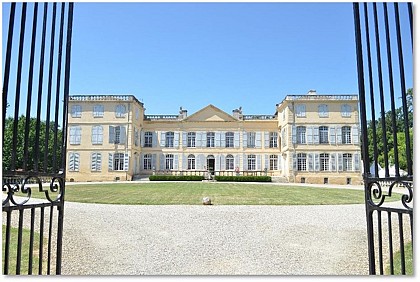
CHÂTEAU DE LARÉOLE
24 km

CHÂTEAU DE LARÉOLE

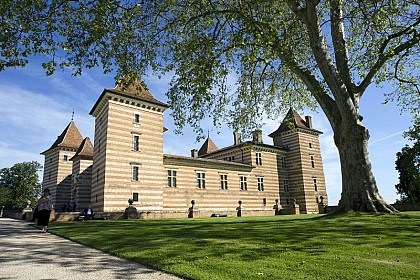
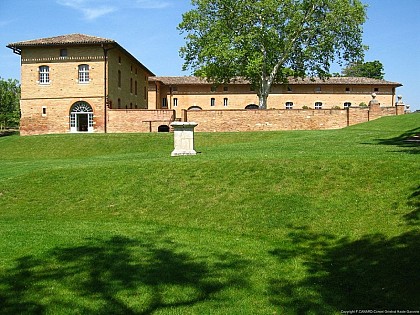
The General Council of Haute-Garonne acquired the castle in 1984. Through ambitious restoration, this heritage classified as a historical monument is now open to the public. From May to September, a number of services are offered to visitors : guided tours, contemporary art exhibitions, live shows. Guided tours are organised all year round, subject to booking, for adult leisure groups and school groups. Guided tours for adult groups, subject to booking and lasting approximately 1 hour 30 minutes, include a tour of the château from the kitchens up to the landing on the second floor of the main residence, as well as the French-style park. Guided group tours for school groups, by booking only and lasting a full day, include a tour of the château from the kitchens up to the landing on the second noble floor and the French-style park in the morning, followed by a treasure hunt in the afternoon. In 1579, Pierre de Cheverry, a prominent pastel merchant and a man of exceptional standing, commissioned the most renowned architect of the Toulouse Renaissance, Dominique Bachelier, to undertake the construction of the Château de Laréole. The construction of Laréole, as a holiday retreat, was completed in a very short space of time (barely three years), made possible by the owner’s considerable resources. The Château de Laréole has the austere appearance of a castle built during the Wars of Religion (moats, guardhouses, towers). Yet its defensive character is softened by a polychromatic mix of stone and brick, a distinctive feature of Laréole. Upon entering the courtyard, the fortress is completely forgotten. The understated décor and the covered walkway lend the whole complex a charm inherited from the Italian Renaissance. The true originality of Laréole’s architecture lies in this transition between the Middle Ages and the Renaissance, between fortification and a country retreat. The main building is a prime example of the architectural avant-garde of the period. Reflecting Cheverry’s taste for luxury, it features a modern layout combining a large reception hall with private apartments. Pierre de Cheverry wanted a building in the finest ‘French tradition’. The property remained in the Cheverry family until 1707, when a wealthy banker from Toulouse, Jean-Pierre Colomès, purchased it. He commissioned work to enhance the château (a grand staircase and galleries adorned with stucco work), but above all, he undertook the creation of a park covering more than 20 hectares, in the finest tradition of 18th-century gardens. This layout, based on the principle of ‘French-style gardens’, strikes a perfect balance between sweeping vistas, flowerbeds and wooded areas.

Place du Village 31480 LAREOLE
Show
PARC DU CHÂTEAU DE LARÉOLE
24 km

PARC DU CHÂTEAU DE LARÉOLE

At the foot of this Renaissance castle is a French-style garden of 20 hectares: green carpet lined with boxwood, a succession of terraces, alleys of lime trees. About twenty species of fruit trees and flowery meadows embellish the decor of this garden. Laid out in the 18th century by the Colomès family, Laréole Park was inspired by Le Nôtre’s recommendations. This French-style garden adheres to the following principles: sweeping vistas, flowerbeds, grassy terraces and wooded areas. The layout of this garden has been enhanced by decorative features, notably three statues by the sculptor Marc Arcis. A reconstruction of the park is now on display to the public through new plantings. The Château de Laréole Nature Reserve consists of a mosaic of habitats situated all around the Château de Laréole, which has been owned by the Departmental Council since 1984. The site’s ecological value lies in the diversity of its landscape features (woodlands, meadows, a lake, wetlands and buildings) and the presence of heritage species such as the Roman hyacinth and the loose-flowered orchid. Part of the site is listed in the departmental inventory of wetlands. Please note: Dogs are permitted in the park only if kept on a lead. All year round, you have free access to the castle grounds, as well as its park and 3 km hiking trail. Guided tours are organised by booking for adult and school groups (contact: 05 61 06 33 58 – chateaulareole@tourismehg.com)

31480 LAREOLE
Show
Village of Simorre
27 km

Village of Simorre

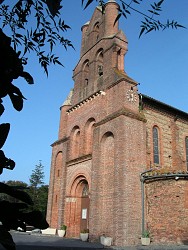
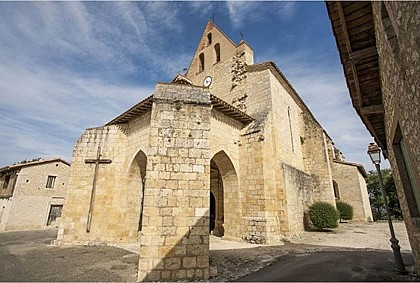
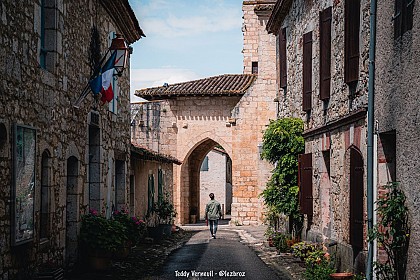
A charming village, with its fortified church, its old central market hall, its museum, its half-timbered and corbelled houses, its foirail and shady squares that invite you to visit. Simorre surprises and amazes. The atmosphere of this small village is pleasant, as well as the musical and convivial nights on the square in front of the Bouche à Oreille. A bit of History: The village with its picturesque alleys is particularly surprising for its impressive fortified church that rises between the roofs of houses and gives the impression of taking a journey into the heart of the Middle Ages. After a devastating fire in 1141, the village, formerly capital of Astarac, is rebuilt all around the abbey and the whole fortified in the 12th century. To resist the Count of Astarac, the abbots constantly improve their abbey which will be endowed with a cloister, an octagonal bell tower then extended to the west. The city of Siabais has 2 churches. The Abbey Church, architectural jewels: A masterpiece of brick lost in the Astarac of stone. Dedicated to Our Lady, it was erected on the site of the previous church which extended perhaps further towards the west because work carried out in 1900 brought to light the remains of construction in the extension of the current nave. Major restoration work was carried out between 1844 and 1858 under the direction of Viollet-le-Duc. The roof, which covered the walls was lowered so as to rest directly on the vaults and a crenellation was established around the building. The second church is that of Saint Valentin of Baillasbats. Baillasbats was an old commune which was attached to Siabais in 1838. It is dedicated to Saint Valentine, the patron of winemakers. It is a rural church, very little influenced by external artistic currents. It is built by builders with materials extracted on site. The economy of the parish was essentially based on the vine. In 1590 a vine is bequeathed to the brotherhood of Saint Valentine under the condition that the wine produced be drunk by its members on Saint Valentine’s Day. Following abuses that occurred during these wine-sharing transactions, the Archbishop of Auch decided in 1673 that the money derived from the product of the vine would be used for the maintenance of the vineyard. Another important religious monument, the chapel of Saintes. In 1680, there was a small church in Saintes. In 1793, the church and the chapel were destroyed. Faced with the growing influx of pilgrims coming from the valley of the Gimone, from Saint Bertrand du Comminges etc., it was decided to rebuild a chapel. In 1844, the new chapel is blessed. Around 1900, the church of Saintes and the adjoining presbytery were again destroyed. The chapel contains the tomb of Saint Cerat. Saint Cerat is one of the first apostles to have evangelized the country. Towards the end of his life, he retreats to a forest north of Sidéclarant. It is at this moment that miracles begin (miraculous cures, resurrection of a dead person,...). Saint Cerate died in Saintes. He was transported in a marble coffin to the church of Saint Andrew. This church was originally located at the cemetery of Siéchapper. She then fell into ruin. The monks therefore brought back the body of Saint Cerate to Saintes. It was placed near the fountain. The water passing through this relic becomes a remedy for the sick. Silows has a washhouse built in 1951 as a measure of health and progress. Until that date, laundry was done directly by the river on a washboard. The municipality has a rich natural heritage, with the presence of a Natura 2000 site "La vallée et coteaux de la Lauze" and 4 ZNIEFF, two type 2 and 2 type 1. "Siéchapper, slow and committed municipality! It belongs to the national label network Cittaslow"

32420 Simorre
Show
Notre-Dame Abbey Church
27 km

Notre-Dame Abbey Church

The Church of Simorre is a 14th-century abbey church built on a 5th-century oratory created by Cérats, who became the patron saint of Simorre. The History of the Abbey Church: Founded, according to tradition, in 507 by Clovis, the Benedictine abbey of Simorre was one of the most important in the region. The convent buildings, once attached to the north of the church, disappeared after being sold as national property during the French Revolution. At the end of the 13th century, a conflict between the Abbot of Simorre and the Count of Astarac, with the support of King Philip IV the Fair, enabled the church's reconstruction to be financed. Construction began around 1290, and the building was consecrated in 1309, which explains its remarkable architectural unity. Built primarily of brick, the church adopts a Latin cross plan, typical of Toulouse Gothic architecture, with a flat apse inspired by Cistercian architecture. Its finely sculpted Gothic stone portal is protected by a fortified porch, recalling the monument's defensive role in the Middle Ages. Inside, admire the octagonal vault surmounted by a lantern tower, the 14th-century murals in the former sacristy, the stained-glass windows dating from the 14th to the 19th centuries, and the choir stalls dating from the early 16th century. Classified as a Historical Monument in 1843, the abbey church was restored by the architect Eugène Viollet-le-Duc, who gave it its current fortified appearance. Restoration campaigns in the 20th century enhanced the brickwork and interior decorations. The stained-glass windows: The abbey church preserves a remarkable collection of stained-glass windows from the 14th to the 19th centuries. Nine windows, dating from 1357, depict, among other things, the Crucifixion, Saint Sernin, Benedictine monks, and Saint Louis. Their style, devoid of perspective, is comparable to that of the medieval stained-glass windows of Narbonne Cathedral. Other 15th-century stained-glass windows introduce perspective and warmer colors. They depict the martyrdom of Saint Catherine and Saint James as a pilgrim. At the beginning of the 16th century, Renaissance-style stained-glass windows appeared, representing Saint Cérats, the evangelizing bishop and patron saint of Simorre, as well as the Virgin and Child and Saint Dode, likely influenced by the workshops of Auch Cathedral. 19th-century stained-glass windows complete the ensemble. The choir stalls: The 38 choir stalls, dating from the early 16th century, are in the Flamboyant Gothic style, restrained and elegant. Donated by Bishop Jean Marre, a native of Simorre, they feature a rich sculpted program blending biblical scenes (Genesis, baptisms, martyrs) with more secular, sometimes humorous, motifs. The abbot's stall, adorned with an Annunciation scene, occupies the central position. The Sacrament Room: This 14th-century vaulted room housed the relics venerated by pilgrims. Its murals, rediscovered in 1964, depict, among others, Saint Benedict and Saint Scholastica, Saint Michael slaying the dragon, a Crucifixion, and Saint Sernin. The Crossing and Architectural Details: At the crossing of the nave and transept, an impressive octagonal dome illustrates Gothic craftsmanship and a spiritual symbolism evoking the ascent to the heavenly Jerusalem. On the walls, one can also see putlog holes, remnants of the scaffolding used during construction. The church is open during the day for self-guided visits. A descriptive document is available on site, as well as information panels installed inside the church. An audio tour is also available to visitors free of charge (press the button on the wall to the left upon entering)

32420 Simorre
Show

Where to eat in Nougaroulet

See more suggestions
Explore the culinary traditions of Nougaroulet.
See more suggestions
Where to sleep in Nougaroulet

See more suggestions
Enjoy your stay with accommodations in Nougaroulet.
See more suggestions
Caution!
We have no information on the difficulty of this circuit. You may encounter some surprises along the way. Before you go, please feel free to inquire more and take all necessary precautions. Have a good trip! 🌳🥾