Tours
Activities
Places of interest
Where to eat
Where to sleep

Discover Aurillac from CAMPING DE L'OMBRADE

Are you the owner?
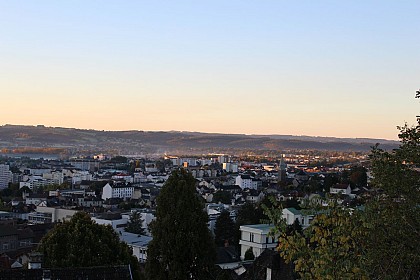
Welcome to CAMPING DE L'OMBRADE! From our ideal location in Aurillac, Cantal, Auvergne, embark on adventures and explore breathtaking natural sites and cultural gems.

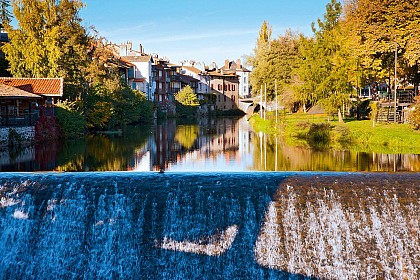
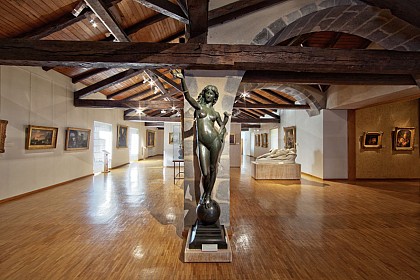
Start with a visit to the old town of Aurillac and be charmed by its picturesque streets and traditional houses. Visit the Museum of Art and Archaeology to dive into the local history. Don't miss Château Saint-Étienne for its panor...
See more

Walking around CAMPING DE L'OMBRADE

See more suggestions
Explore the natural surroundings of CAMPING DE L'OMBRADE.
See more suggestions
What to do in CAMPING DE L'OMBRADE

See more suggestions
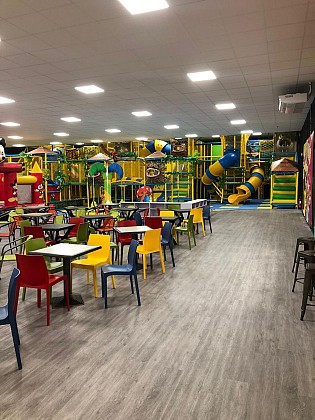
Organize your days in CAMPING DE L'OMBRADE with bookable activities for the whole family.
See more suggestions

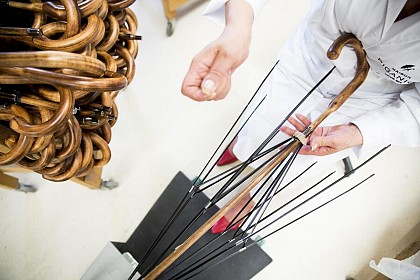
What to visit in CAMPING DE L'OMBRADE

See more suggestions
Learn the history of CAMPING DE L'OMBRADE through its museums.
See more suggestions
Freix-Anglards
11 km

Freix-Anglards

Freix-Anglards is a recent commune, created in 1839 at the expense of St-Cernin. With an altitude of between 591 and 842m, irrigated by the Soulane river. Freix-Anglards is a recent commune, created in 1839 at the expense of St-Cernin. With an altitude of between 591 and 842m, irrigated by the Soulane river, the area is volcanic to the north and east, making it ideal for arable farming and hay meadows. To the west, on the other hand, the land is mostly schist and covered in heather. Built on the western edge of the Ourzeau plateau, the village boasts some magnificently restored old houses, as well as a church with remarkable stained glass windows. Today, the commune has a population of 230, divided into 9 villages and 9 hamlets: Bassignac is a street/village situated on an outcrop, that dominates the surrounding area. It offers a wide range of accommodation, from the most basic houses to two fine gentry houses (the Magis and Meyniel houses dating from the early 19th century), as well as many middle-class houses. There are beautiful barns, chicken coops and wells. As is typical to the region, there is a mixture of flat and pointed roofs, with some having a strong taste for the pyramid shape. In the 19th century, the beautiful village of Bénaguet was hidden in groves of walnut, apple and other fruit trees and sheltered from the northerly winds by the edge of the plain, which is cut off almost sheer at the entrance to the village...

15310 Freix-Anglards
Show
Tournemire
14 km

Tournemire

South of Salers in the Doire valley, you will find “Tournemire”. Perched on the hillside and ranked as one of the Most Beautiful Villages in France, its name comes from a famous family Tournemire. The knight Rigaud de Tournemire is mentioned in a settlement dated from 1030. His brother, Pierre, a knight, participated in the Crusade of 1095 and preached in Clermont-Ferrand. Legend has it that when he came back from the Holy Land, he brought a thorn from Christ’s crown. Venerated as a miraculous object it is said that it cures eyesight troubles. It was kept within the Romanesque church of which the oldest parts date from the 12th century - its chapels, its keystones, its porch and sculptures are other remarkable elements to see. During the 12th century, the Tournemire family built a monumental castle the high tower of which included the present church in its surrounding wall. Unfortunately, the fortunes lost in the Crusades and the sharing of the seigniory between several co-lords progressively contributed to the decline of the Tournemire family. A bourgeois family from Aurillac, the Anjony (a derivation of the name Johanni), enriched by successfully trading in animal skins, became consuls of the town, bought lands from the Tournemires and built their own castle during the 15th century. A wedding sealed the alliance between the two families, one bringing a blazon (coat of arms) and the other bringing the finances. The honeymoon was short and the two families indulged in a ruthless battle using surrounding routes, paths, residences, the cemetery and even the church as a sparring ground. These quarrels persisted during the Religious wars and ended in 1623 with a duel between 3 Anjony and 3 Tournemire. A visit to the present 15th century castle will give you an insight into the turbulent history of this village and help you to speculate about what happened. Walking through the village, you will see numerous houses with monumental stones coming from the previous 12th century castle but nowadays we can only guess at the actual site. When you get near the church, follow the cave path where you will see notches for beams and fire place conduits in the rock- proof of an ancient building. Further into the caves, evidence shows that this is without doubt the oldest inhabited area of the village. You’ll see that the caves offered shelter for the herds and their fodder.

La croix des Croisades 15310 Tournemire
Show
Saint-Cernin
14 km

Saint-Cernin

Saint-Cernin enjoys the privilege of being not too far from urban life but with the genuine possibility of savouring the priceless pleasures of country life. Our village is the southern gateway to the Pays de Salers. Saint-Cernin is the first rural village encountered as you leave the Aurillac urban centre by the North. It enjoys the privilege of being not too far from urban life but with the genuine possibility of savouring the priceless pleasures of country life. The town's warm welcome and diversity of facilities are proof of its simplicity, increasing its appeal to city dwellers and tourists in search of authenticity. Saint-Cernin, built into the hillside, clings to the western flank of the Cantal volcano. From the Plateau, at the Croix de Saint-Pierre, the view of the Monts du Cantal is superb. The Saint-Cernin valley, carved out by the River Doire, marks the entrance to the Volcanic Natural Park. Picturesque hamlets dot the valley and surrounding plateaux. Saint-Cernin also boasts socio-educational and sports facilities, including a primary school and secondary school, over 25 associations and a rich cultural heritage. The church of Saint-Saturnin, with its 12th-century gable bell tower, features remarkable sculpted modillions and 15th-century wooden stalls from the church of Saint-Chamant. Admire the Château du Cambon, a former stronghold transformed into a pleasure residence, see the ruined 14th-century keep tower of Marze or the Château de Ragheaud, discover the 15th-century stone crosses at Saint-Martin-le-Valois... Saint-Cernin is also the birthplace of Henri Mondor, a member of the Académie Française and the Académie de Médecine, who laid down the modern rules of surgery. There were two churches, one at St Martin Valois and the other at St Cernin. In 2021, a heritage trail will trace its history from the 18th to the 20th century.

15310 Saint-Cernin
Show

Where to eat in CAMPING DE L'OMBRADE

See more suggestions
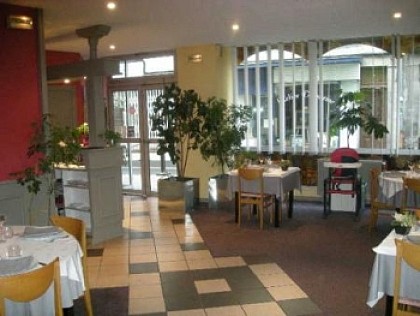
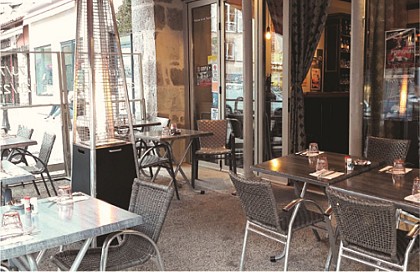
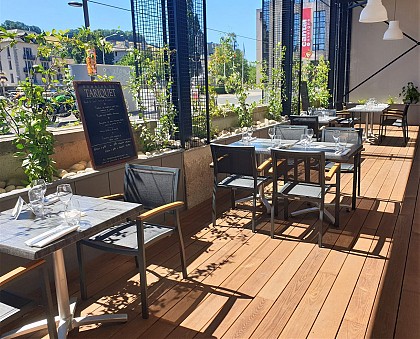
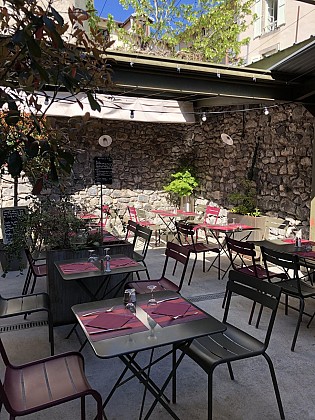
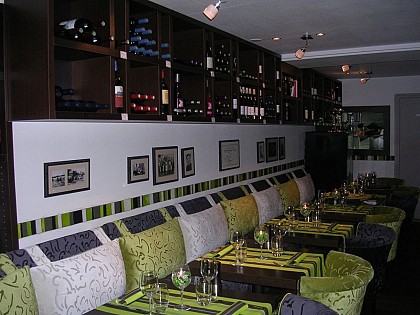
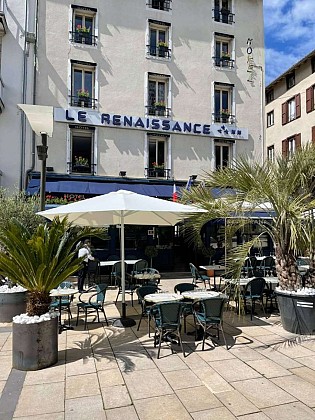
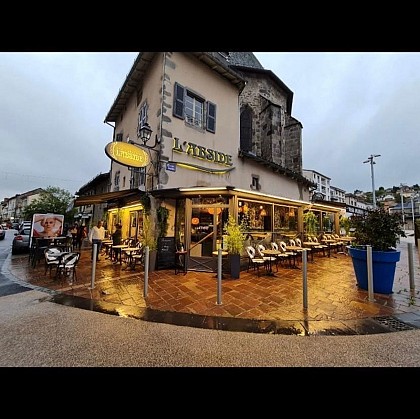
Restaurants in CAMPING DE L'OMBRADE offer a friendly atmosphere.
See more suggestions

Where to sleep in CAMPING DE L'OMBRADE

See more suggestions
Find an ideal lodging in CAMPING DE L'OMBRADE.
See more suggestions
Caution!
We have no information on the difficulty of this circuit. You may encounter some surprises along the way. Before you go, please feel free to inquire more and take all necessary precautions. Have a good trip! 🌳🥾