Tours
Activities
Places of interest
Where to eat
Where to sleep

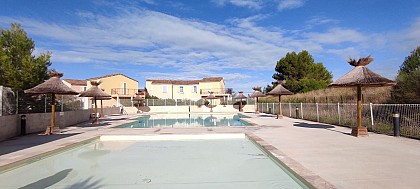
Explore Martigues' hidden gems at SEMOVIM Camping

Are you the owner?
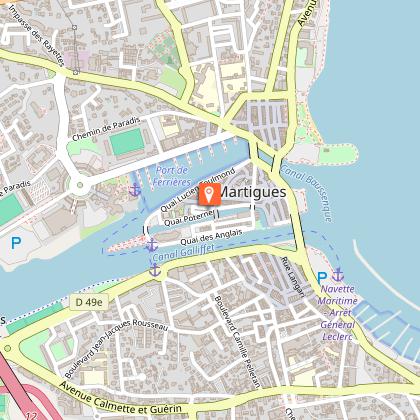
Welcome to Martigues, the 'Provençal Venice'! Step into a world of authentic charm and discover a multitude of captivating attractions during your stay at SEMOVIM Camping.

Wander through the picturesque streets and visit the Sainte-Madeleine Church. A must-do is the boat ride along the canals, offering breathtaking views of the colorful houses and elegant bridges and arches.

The beaches of t...
See more

Walking around SEMOVIM

See more suggestions
Explore the walking circuits of SEMOVIM.
See more suggestions
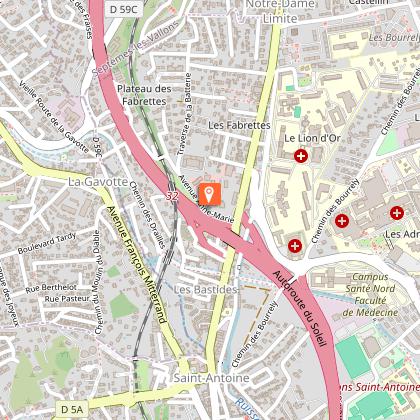
Sentier entre mer et étangs
931 m

Sentier entre mer et étangs

The Entre mer et Étang trail, open to the Mediterranean Sea, bordered by the hills and the banks of the Étang de Berre, at the gateway to the Camargue, is 38 km long. Eight walking and hiking loops within the path "between sea and pond" which alone constitutes a large local loop. In all, it's 90 kilometers that cross Martigues, Port-de-Bouc and Saint-Mitre-les-Remparts. Municipal or inter-municipal, these loops allow you to discover a contrasting and sometimes wild landscape, between nature and industries, between sea and ponds. This is an exceptional territory, that of the largest salt pond in Europe, the Etang de Berre, a UNESCO World Heritage candidate, but also that of the Etangs du Pourra, Citis, Engrenier, Lavalduc and of the Mediterranean Sea. It offers a unique biodiversity to discover and preserve. On the land side, we walk between the forest of Castillon, its Aleppo pines, its magnificent reed bed, where a beautiful diversity of flora and fauna develops, the large park of Figuerolles and its houses of rural life or the classified site of Saint-Blaise and its Gallic vestiges that take us back to the heart of our roots. Within this territory, industry is strongly represented. Petrochemicals, steel industry, port activities... you will discover a landscape of rare strength. When you cross the three municipalities, you can only be seized by this nature and these industries which rub shoulders, which collide. These routes are designed for family outings. They are also aimed at experienced hikers and walkers, not forgetting the paths accessible to people with reduced mobility. A larger loop offers a complete discovery in three stages crossing the three municipalities with a passage through the station of Port-de-Bouc for access by train. Appointment Between sea and ponds for the starting signal. All you have to do is bring a hat, a water bottle, a good pair of closed shoes and the territory is yours! The 8 inner loops from 4 to 14 km long and different elevations: - Forest of Castillon-ponds of Le Pourra and Engrenier. Length: 8 km, height difference 223 m, fairly easy level. Accessible to motor and auditory handicaps. - The peninsula - the coastal path. Length: 4 km, elevation 0 m, easy level. - Loop of Figuerolles. Length: 6 km, height difference 125 m, fairly easy level. - Big towers. Length: 6.5 km, height difference 189 m, fairly easy level. - Forest of Castillon and ponds of Saint-Blaise. Length: 7 km, height difference 146 m, fairly easy level. - From crepon to rocaladès. Length: 7 km, height difference 189 m, fairly easy level. - Caderaou's balcony. Length: 13.5 km, height difference 397 m, level not very difficult. - Between sea and ponds. Length: 38 km, elevation 640 m, fairly easy level. Departing from Port-de-Bouc station towards Massane.

38 km
Hard
Parking Place des Aires 13500 Martigues
Show

What to do in SEMOVIM

See more suggestions
Explore the bookable activity options in SEMOVIM for all tastes and ages.
See more suggestions
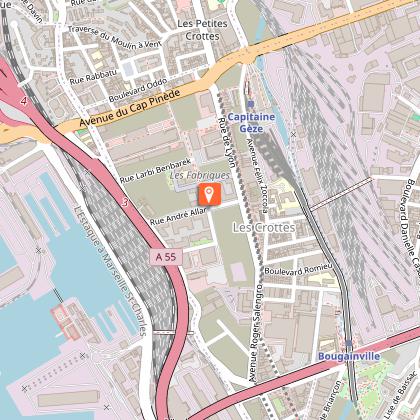
Rand'eau douce in Martigues
750 m

Rand'eau douce in Martigues

Discover Martigues, nicknamed "the Venice of Provence", on an 6 km hike on the fascinating theme of fresh water. Far from the salt waters that surround the city, this walk immerses you in its hydraulic past. Accompanied by a passionate guide, you will explore the picturesque alleys and hidden treasures of the city. Each stage of this guided hike will allow you to understand the importance of fresh water in the daily life of the Martigues people, a precious resource that has shaped the identity of this Mediterranean city. You will learn that the inhabitants of each district had their own source of drinking water supplied by the Martigues Canal, which has now disappeared. Did you know that the fountain located on Place Mirabeau was moved from Cours du 4 Septembre in Jonquières by the Jourdan family following the extension of their hotel "La Goutte d'Or"? That the entrance to Martigues began at the intersection of Avenue Frédérique Mistral and that part of the Jonquières district was nothing but marshland? That buildings that are still in use were once used as cisterns, that when you look up you will see now-forgotten ramparts and that old wells can be found in the heart of the gardens of recent buildings? Under the commentary of Bernard, president of the Randonnée Ski Découverte (RSD) association, you will take a new look at the architectural heritage of Martigues. The past has left traces that we do not notice on a daily basis. Take advantage of this unusual stroll in the city center to combine business with pleasure.

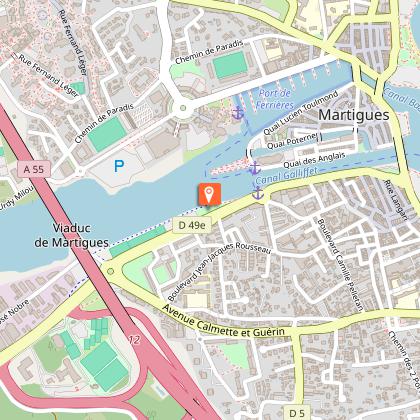
Quai des Anglais L'île 13500 Martigues
Book from 0 €Book
Show

What to visit in SEMOVIM

See more suggestions
Enjoy the green spaces of SEMOVIM.
See more suggestions
Peinture monumentale de Guillaume Bottazzi
480 m

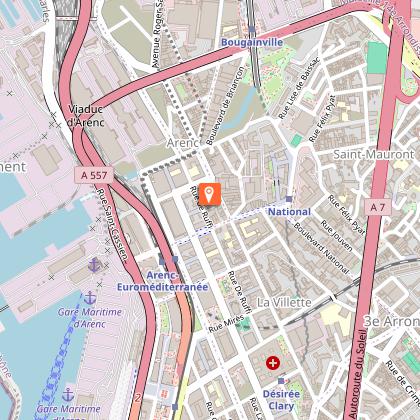
Peinture monumentale de Guillaume Bottazzi

This 80 m2 painting by the famous artist Guillaume Bottazzi is in the heart of the historical district. After a month of work in full view of the inhabitants of Martigues, Guillaume Bottazzi, French artist, unveils his work in the heart of the Ile district. It is on an 82 m² wall that the painter offers a free interpretation of a fresco 10 meters high by 8 meters wide (2018). A monumental and poetic painting, part of the martégal heritage and inspired by the maritime history of Martigues. A shades of blue that evoke Martigues, a fishing town. His signature ? The curves. These large color curves are said to reduce anxiety. The artist wanted to start with the idea of a form that awakens, referring to the comings and goings on the canal. Then, everyone is free to interpret it according to their sensitivity. Located on a facade in the Ile district, near the entrance to the port, this work is a real lighthouse which indicates the course to boats coming from the Mediterranean. The artist uses a 16th century oil on canvas technique. A superimposition of layers of paint using the glazing technique which allows the colors to be sublimated by playing on the transparencies. Guillaume Bottazzi also produced the largest painting in Japan. A permanent work of 900 m², a jewel of contemporary art on the island of Hokkaido. The artist also produced a work in Paris (La Défense) of 216 m² and a work in Brussels (Place Jourdan) of 112 m². The artist from Lyon has signed more than 65 projects in the public space, chaining gigantic murals in urban areas. Enjoy an outdoor cultural walk through 10 cities in France including Martigues, Marseille and Mandelieu-la-Napoule. An invitation to well-being through the works of Guillaume Bottazzi.

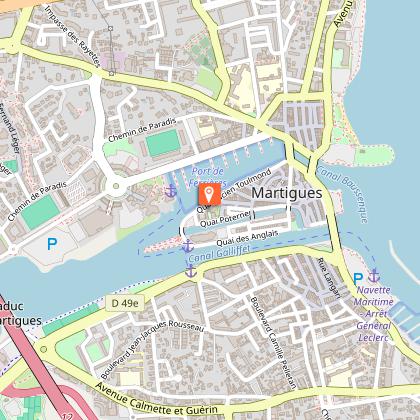
Quai Lucien Toulmond L'Île 13500 Martigues
Show
Maison à chapeau de gendarme
599 m

Maison à chapeau de gendarme

The house with a policeman's hat is recognizable by its Italian-style pediment. It is famous for having been the main set of the film "La Cuisine au Beurre" with Bourvil and Fernandel, shot in Martigues. The house in a gendarme's hat echoes a Baroque architecture that spread from Italy to the rest of Europe during the 18th century. This was built in the 17th century and is characterized by the shape of its "scalloped" gable and its wrought iron balcony. A large number of them would have been built by masons who came directly from Italy. Appreciated by painters and photographers, the facade of this house brings effects of movement and contrast with the aim of astonishing. A theatrical decor in front of which passers-by stop and which hides a sober architecture. In the Ile district, in the heart of Martigues, you can see that the Gendarme's hat house is open when you look at the canal from the Saint-Sébastien bridge. If we take the time to look at the layout of the streets, we will notice that they are stretched obliquely. This means that at the edge of the quay, this creates shifts at the level of the Quai Marceau, opposite the Impasse Poterne and opposite the rue de l'Hospice. For thirty years, the Island has been transformed but this house has kept the same character as before. It remains a strong image of Martigues. It housed an eel smokehouse on the ground floor for at least a hundred years. It was in 1963 that Gilles Grangier decided to settle there for the filming of the film "La Cuisine au Beurre" with Bourvil and Fernandel. The facade of the house in Gendarme's hat represents that of the restaurant in the film.

1 quai Poterne LÎle 13500 Martigues
Show
Prud'homie de Pêche
613 m

Prud'homie de Pêche

The Prud'homie de Pêche was built in 1930 and has since been the seat of the industrial tribunal of the maritime district of Martigues, an institution dating from the 15th century. It was in the 10th century that the first industrial tribunals appeared in Marseille. That of Martigues, founded in 1791, is one of the oldest. In 2003, it was also one of the most powerful since it had 600 maritime registrants. Over the centuries, fishing industrial tribunals have acquired real powers in the Mediterranean: jurisdictional, regulatory and disciplinary. Thus, in 1852, a legislative decree gave them the power to research and report fishing police violations. The Industrial Tribunal also arbitrates conflicts between fishermen. In addition to this police auxiliary power, the Industrial Tribunals manage on a daily basis, with a long-term vision, the available resources by establishing industrial tribunal regulations, voted by majority and which each fishing boss must respect. In this sense, the industrial tribunal has set up a training school: first aid, IT, accounting. Each industrial tribunal represents the fishermen in its territorial area to defend their interests with other industrial tribunals and the State. The jurisdiction of the Fishing Prud'homie covers the department of Bouches-du-Rhône (up to the mouth of the Rhône vive). In Martigues, it includes the village of Carro up to the mouth of Grand-Vallat, Boumandariel cove. Today, 7 industrial tribunals are registered in the industrial tribunal register. Its building has a beautiful neoclassical facade, decorated with a curious high relief of good quality, treated in the learned taste of 17th century sculpture. Similar to a Versailles trophy, fishing instruments and products would replace warrior equipment.

17 rue Eugène Pelletan L'Île 13500 Martigues
Show
Bronze statue, representing Fernandel and Bourvil
620 m

Bronze statue, representing Fernandel and Bourvil

Did you know that the cult film "La cuisine au beurre" was filmed in Martigues? You can observe an emblematic scene from the film thanks to this set of bronze statues representing the actors Bourvil and Fernandel. The scene shows Fernandel sitting in a restaurant with a glass in his hand and a bottle on the table. Opposite him, Bourvil is standing. He is wearing an apron and a chef's hat. The two men, facing each other, say their lines. We can then imagine the inevitable reply of this scene: "- And his bouillabaisse, do you know what his bouillabaisse was? - It was boxes. - Boxes? His bouillabaisse? Do you mean canned food? Be careful, sir, what you say, you are insulting him!" Around the table, three empty chairs are just waiting for you! Indeed, the sculptor Sébastien Langloÿs has left three chairs available for tourists and locals to sit on (photo opportunity required!). With over 6.3 million viewers, La cuisine au beurre is one of the biggest box office hits in French cinema. But this film by Gilles Grangier, with Fernandel and Bourvil, represents above all a part of the city's history, because it was filmed "in" Martigues, in 1963. In the background, the Maison en chapeau de gendarme, this 17th century building, marked by its scalloped gable and its wrought iron balcony, serves as a restaurant in the film. The same place where the emblematic scene that Sébastien Langloÿs reproduced takes place, the first chance meeting of Christiane's two husbands. Ten years after the sculpture of the fisherman and the rower installed in Ferrières, the city of Martigues asked the Toulouse sculptor Sébastien Langloÿs to create this second work.

Quai Aristide Briand L'île 13500 Martigues
Show
Musée Vitrine Archéologique
706 m

Musée Vitrine Archéologique

The archaeological showcase located on the square Maritima (district of the Island) is, on 80m2, a restitution in situ, on the remains of a primitive Gallic village (5th century before our era). The archaeological showcase restores, in the heart of the Island, a Gallic village from the 5th century BC, discovered during emergency excavations carried out in the 1980s under what is now Place Maritima. It reveals, in situ and at scale 1, two alleys, a small square and eight houses. Martigues was first an island, born 2500 years ago at the crossroads of land (between Arles and Marseille) and sea (the Caronte channel between the Etang de Berre and the sea). From 1978 to 2001, major excavations revealed the evolution of its topography and human occupation. Above all, they revealed the oldest occupation: two successive Gallic villages inhabited for three and a half centuries (mid-5th - late 2nd century BC). Exceptional burial conditions (destruction by the Greeks and then the Romans, fires and submersion of the remains) have left us some of the most evocative ruins of the Mediterranean Iron Age. Built on a site untouched by any occupation, the primitive settlement (until the beginning of the 2nd century BC) is the best known. With its rampart equipped with massive towers, it stretches over 80 meters, and is approximately 50 meters wide. Earth architecture, this standardized habitat with single-room houses, very narrow streets, is made up of walls of molded raw bricks or massive shaped earth, raised on bases of stones taken from the surrounding hills. They are protected by a coating of clayey earth. The floors of the houses are also covered in clay. The roofs are made of perishable materials: a wooden frame, then reeds and a thick layer of earth. These houses of 10 to 20 m² are the place for daily activities: preparation and cooking of meals, spinning, weaving, basketry, manufacturing of shaped pottery. The activity is concentrated towards the only source of light, the door, near which, in the street, the fireplace is established. To survive, we must preserve cereals, the basis of our diet, from one harvest to the next. For this, we use ceramic containers and above all overhead silos of raw earth in various shapes shaped on site in clay mixed with plants. Alongside these "stores", other raw earth objects serve various uses: grills and ovens for processing and cooking food, urns for intermediate storage, and numerous crowns stacked in homes, probable reserves of 'clay. In 2001, excavations under Rue de la République revealed that in the middle of the 4th century. av. BC, the habitat developed towards the East, outside the rampart, forming islands of dwellings separated by parallel streets, until the destruction of this first village. The objects and remains collected show that a Celtic population lived there living from agriculture, livestock breeding and fishing. It was very early receptive to Mediterranean cultural and technical contributions, such as viticulture and olive growing (from the 5th century BC) or the use of the potter's wheel or the practice of writing (end of the 3rd century). . before JC).

Place Maritima 13500 Martigues
Show
Eglise Sainte Marie-Madeleine
736 m

Eglise Sainte Marie-Madeleine

Long called "The Cathedral" by the martégaux, the most imposing of the town's churches characteristic of Provencal architecture and Baroque decor with an Italian influence has been classified as Historic Monuments since 1947. Built between 1670 and 1680, it testifies to the prosperity of the city in the 17th century and the attachment of the island's inhabitants who participated in its financing. The facade has two levels separated by a volumetric cornice with modillions. On the first level, a double colonnade frames the richly decorated wooden door, dominated by a Virgin and Child in a carved niche. The statue and the portal have been classified as a Historic Monument since 1908. The fluted columns and pilasters punctuate the facade and are topped with Corinthian capitals. The volumetric cornice decorated with modillions, rosettes and dentils, projecting to the right of the pilasters and columns, is interrupted by a broken pediment creating a play of light and shadow. The second level, more classic, is simply animated by bare pilasters and crowned by a triangular pediment whose sculpture dates from the 19th century. Inside the church, the spacious single nave with seven bays and a flat apse is covered with a compartmentalized wooden ceiling, designed to accommodate a painted decoration never before created. A volumetric cornice repeating the exterior decor runs along the walls. On the upper floor, very soberly decorated with pilasters and paneled capitals, large windows flood the church with light. In the choir, the high altar has a faux marble decoration and its gilding is similar to the altar of the Annonciade chapel. It welcomes the Blessed Sacrament. A large painting of the Crucifixion from the 19th century stands out in the canopy-shaped decor. The walnut pulpit was made by the master Martegal carpenter Etienne Darbon who donated it to the church in 1679. The gallery organ, built around 1850 by Prosper Antoine Moitessier, is located above the entrance porch of the church. The buffet, classified as a historic monument in 1908, is of Italian inspiration, the rich gold leaf ornaments incorporate decorative elements from the building. The instrumental part is in the French style of the time with 26 stops, spread over 2 keyboards as well as pedal boards and 1500 pipes. The brotherhoods commissioned altar paintings for their chapels and constituted an important clientele for the artists. Two works deserve particular attention: - “Martyrdom of Saint Catherine of Alexandria” by Jean Baptiste Daniel (around 1636-1720). This painting was transferred to the church in 1892 and classified in 1957. On the cut sides of the church choir, we find the aftermath of the martyrdom of the Saint. The low-angle treatment, the luminous contrasts and the attitudes accentuate the movement of the figures and give this work dynamism and power. - “Saint-Honoré, Saint-Antoine, Saint-Michel” created in 1694 by Michel Serre and commissioned by the rich brotherhood of bakers. The 15-year restoration campaign was awarded the heritage ribbon in 2000.

1 place Rouget de l'Isle L'île 13500 Martigues
Show

Where to eat in SEMOVIM

See more suggestions
The flavors of SEMOVIM await you.
See more suggestions

Where to sleep in SEMOVIM

See more suggestions
Book a pleasant stay in SEMOVIM.
See more suggestions
Caution!
We have no information on the difficulty of this circuit. You may encounter some surprises along the way. Before you go, please feel free to inquire more and take all necessary precautions. Have a good trip! 🌳🥾