Tours
Activities
Places of interest
Where to eat
Where to sleep

Discover the charm of Mezilles, Yonne, Burgundy

Are you in charge of the destination?
Mezilles, located in the heart of Yonne, Burgundy, is a destination brimming with treasures to discover. Start your day with a walk along the hiking trails that offer panoramic views of the Burgundy countryside. Nearby, visit the charming village of Saint-Fargeau with its impressive castle and renowned historical show. Nature lovers can enjoy a retreat in the Othe Forest, perfect for an outdoor es...See more
Walking around Mezilles

See more suggestions
Embark on a hike in Mezilles.
See more suggestions
Egreville - The "Bois de la Brandelle"
57 km

Egreville - The "Bois de la Brandelle"

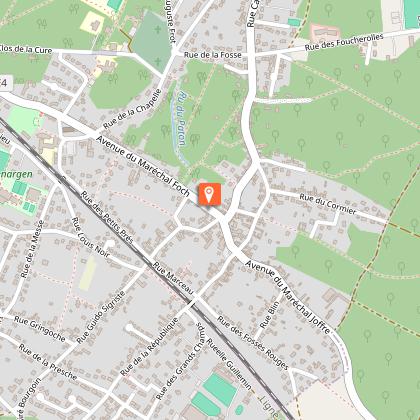
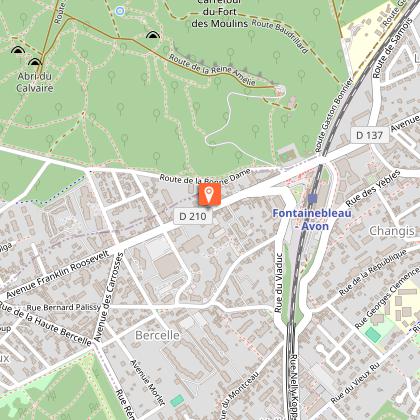
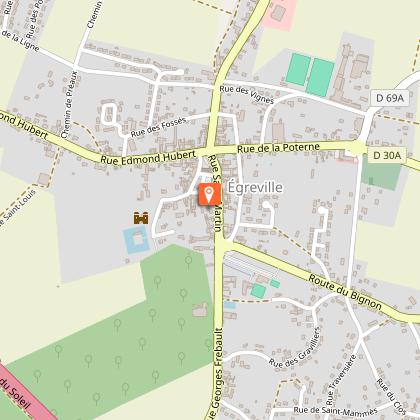
In the heart of a large agricultural region where this route discovers some aspects, Egreville presents a remarkable hall, as well as the castle where Jules Massenet lived and the Bourdelle Garden-Museum. This route is marked in yellow by the Coderando. 1 - Take the D 30 to the left (west) for 300 m, the road to the right, the street to the right for 100 m, then the road to the left, straight (old railway line) 2 - Take the road to the right (Bourdelle museum). It crosses, towards the east, Le Coudray then Les Murs. Cut the D 219 and continue on the opposite road for 500 m. Follow the road to the left and, after 800 m, the road to the right. 3 - Before the wood, take the road to the left and then the road to the left. At the crossroads, continue on the opposite road, cross the Chapelle-des-Tuilliers. The road veers to the right, along the edge. Leave her when she leaves for the path bordering the wood. Follow to the left the D 69a on 100m then the road to the right in the valley over 1,2 km. 4 - Continue to the right by the road that goes up the valley of Les Noues, first on the edge and then in the undergrowth. 5 - At the crossing on the edge, take the road to the right and enter the Brandelle wood. Pass in front of the cross of the Postman then at the second crossroads, turn left, right, and left. The path leaves the wood. After the Ferme du Cochon, continue straight on the small road, then on the road to the right. 6 - Before Le Ruth, take the straight road to the right (old railway track). It crosses the road, leads to Égreville. At the crossroads, take the road opposite, keep left, then follow the D 219 to the right to reach the starting point.

18 km
Medium
2 1 rue Saint Martin 77620 Égreville
Show

What to do in Mezilles

See more suggestions
Plan a perfect day in Mezilles with our bookable activities.
See more suggestions
Palace of Fontainebleau
86 km

Palace of Fontainebleau

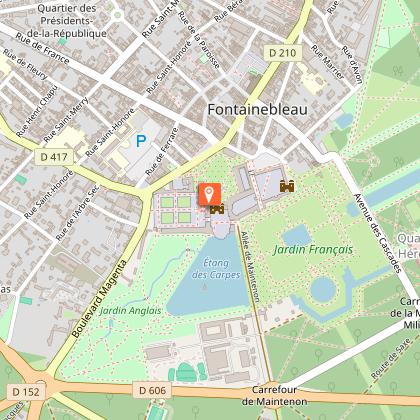
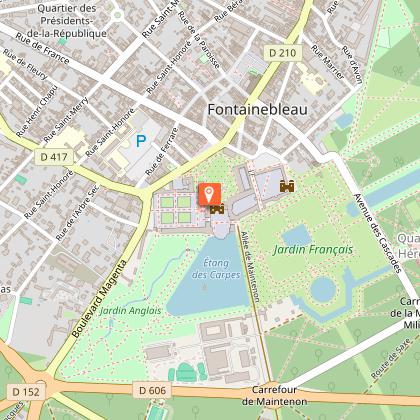
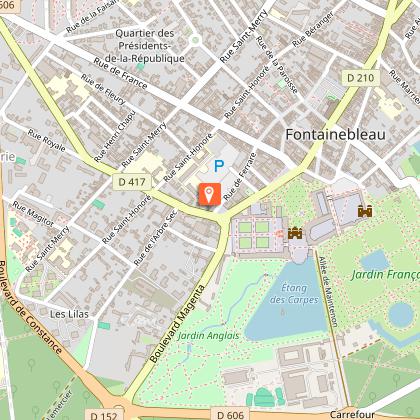
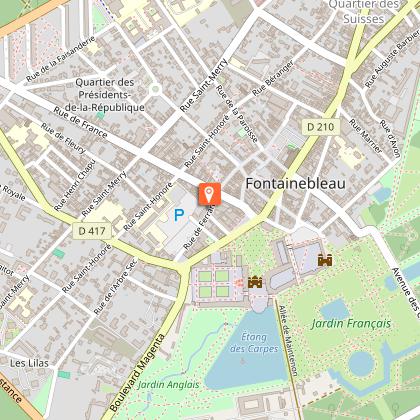
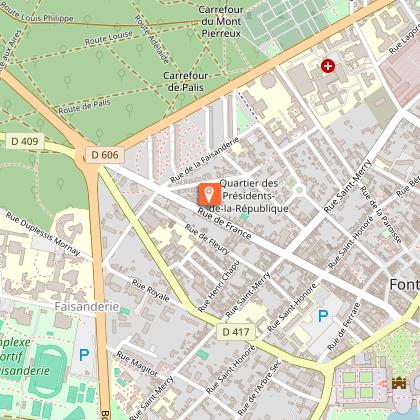
The Château de Fontainebleau is a big part of French history! This vast building, in both classical and Renaissance style, is not only famous for witnessing Napoleon's imperial adventure. From the royal charter of 1137 to the fall of the Second Empire in 1870, the Palace of Fontainebleau saw the lives of the greatest French sovereigns from day to day. The original medieval fortress was replaced by a Renaissance palace under the guiding hand of Francois I. At that time, two Italian artists, Primaticcio and Il Rosso vied in talent and founded the first School of Fontainebleau. The Galerie François I, which leads from the royal apartments to the chapel of the Convent of the Holy Trinity, is most original with its décor of frescoes, stucco and carved wood in praise of François I. The Ballroom was completed at the time of the last Valois kings, under Primaticcio’s direction. With Henri IV, the new Bourbon dynasty took over the palace, and built new rooms with interior decoration placed in the hands of the artists of the second School of Fontainebleau. Louis XIII completed the work started by his father. Under the Sun King Fontainebleau continued to be the royal family home, and the Grand Dauphin was born there in 1661. The king’s nieces were married from Fontainebleau, and the Edict of Nantes was revoked there in 1685. Louis XV and Louis XVI would spend the autumn there and initiated new, large scale building works and interior doing-ups. After the French Revolution, Napoleon I found the palace completely emptied of its furniture but intact. He undertook to refurnish the apartments and brought the palace back to its former glory as the home of the sovereign. Napoleon Bonaparte spent his last days there before his abdication in 1814 and departure for the Elba. Louis-Philippe was the first sovereign to order a complete restoration of Fontainebleau. The restoration of the Empire in 1852 gave renewed importance to the palace, and Napoleon III became strongly attached to this home, staying there regularly with his court. Housed in the Louis XV wing, the Napoleon I museum is dedicated to the Emperor and his family, with a large collection of objects from his everyday life, weapons used in military campaigns and gifts he received. The Chinese museum, created by Empress Eugenie, displays works of art from the Far East. The Jeu de Paume court, thought to be the oldest of the three surviving in France, is open to the public with demonstrations and introductory games. Le Nôtre's French gardens, the Queen’s English garden with its Fountain of Diana, the hedge maze and the Cour des Adieux are open to the public all year round. Boat excursions on the Etang aux Carpes or horse-drawn carriage rides are available. The Domain of the Fontainebleau Palace is inscribed at the UNESCO Humanity World Heritage. There is a little train going around the gardens during the touristic season.

Place du Général de Gaulle 77300 Fontainebleau
Book from 0 €Book
Show

What to visit in Mezilles

See more suggestions
Discover the local markets of Mezilles.
See more suggestions
Egreville
57 km

Egreville

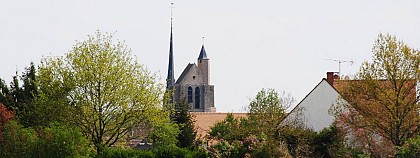
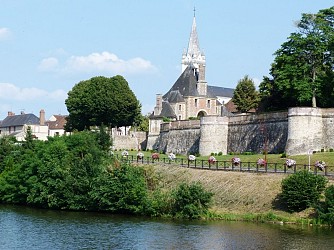
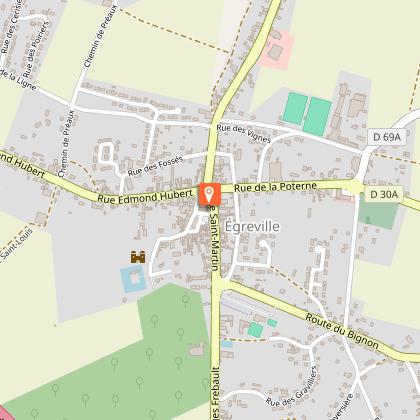
Located on the plateau overlooking the Loing valley, here is a charming village in the middle of the plains and woods. The village grew from the 4th century thanks to easily exploitable iron mines that allowed the development of a flourishing industry. Similarly, its location at the crossroads of several ancient Roman roads makes Egreville an important stop, especially thanks to its fairs and markets. But also, with the passage of the many pilgrims who criss-cross the region and find the cottage and the canopy. For this reason, the governor of Castle Landon acquired the estate at the beginning of the sixteenth century and became the first lord of Egreville. First, he built the first chapel of Saint-Martin and a castle around which the village developed. Then, on the order of Saint-Louis, the village was fortified in the 13th century. The village suffered some damage during the hundred-year war. Then, in the sixteenth century, François the first offers the fief to his mistress, Anne of Pisseleu, Duchess of Etampes. The latter, together with her heirs, undertook important restorations and constructions. They will also prosper the village. Witness to the importance of the markets in the villages of Gâtinais since the Middle Ages, Egreville forms a beautiful ensemble with its old houses massed around its hall of the sixteenth century and the large bell tower of its church which also has superb stained glass windows. Moreover, with its magnificent and robust framework and its sloping roof, the old hall surprises with its undeniable beauty. Every year, before the Christmas holidays, she comes to life with a major fat poultry fair.

1 rue Saint-Martin 77620 Égreville
Show
Garden Museum Antoine Bourdelle
59 km

Garden Museum Antoine Bourdelle

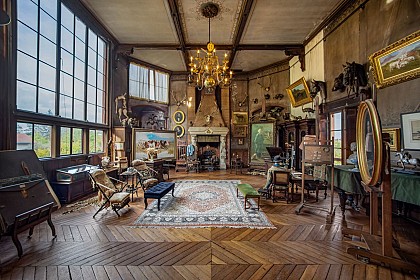
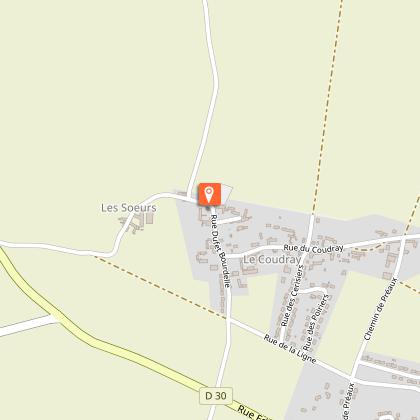
This open-air museum refurbished by the Departement Council is the setting for 56 bronze sculptures. The garden restoration was directed by the architect-landscaper, Françoise Phiquepal. The landscaping for the estate designed by Michel Dufet between 1966 and 1985 has been totally recreated under this restoration project. The paths and beds have been retraced accurately, terraces and borders have been consolidated, many trees and shrubs have been replaced to create a pleasing balance between the sculptures by Antoine Bourdelle (1861-1929) and the plantings that serve as a their showcase. The flowering of the beds will put the finishing touches on the rebirth of this magnificent garden in late Spring. These iridescent plants form the backdrop for the public to discover or rediscover the work of the sculptor, Antoine Bourdelle; Michel Dufet and the artist's daughter, Rhoda Bourdelle, have been seeking to make it known for many years. Have worked on creating the first Bourdelle museum in the sculptor's former studio in the Montparnasse district of Paris, they embarked on achieving a true open-air museum on the Egreville property. All the sculptures have been placed and set off by space, light and the colour of the surrounding plant life. The viewpoints on the works become some of the most spectacular, with the most sheltered locations reserved for the most intimate sculptures. All together they represent a varied route that is ideal for understanding the diversity of the sculptor's works, his most celebrated creations like Hercules the Archer, the Dying Centaur and the equestrian statue of General Alvear. Works from his youth still influenced by Rodin's artistry or moving portraits of his contemporaries and the masters he admired like Beethoven, Daumier and Carpeaux are also exhibited. Michel Dufet and his wife Rhodia, Antoine Bourdelle’s daughter, between 1966 and 1969, built the property of the Bourdelle Garden Museum in Egreville. They acquired several plots of land together making up close to 7,000 m2 and a selection of agricultural buildings standing on them. Immediately after the acquisition of the land in 1966, Michel Dufet started on laying out the garden and converting the buildings. Several old trees were kept in the garden, designed around a complex, very organised layout of lawns and beds bordered by neat box hedges, brightened up with annual or perennial plants with the dominant colours varying from season to season. Groups of conifers were planted to structure the space, whilst curtains of poplars or planted hedges screened off the vistas towards the outside. This creation inspired by traditional French-style parks and gardens from the art deco era appears to be the only work by Michel Dufet in this field. The garden is the setting for a collection of 56 bronze sculptures by Antoine Bourdelle, which were introduced gradually between 1967 and the early 1980s. They are original bronzes* (*Limited number of copies in bronze eight maximum + four non-commercial artist's copies), in the main created specially to be exhibited in this place. Although some bronzes were moved to make way for new works, it would appear that overall the position of each sculpture was decided very carefully, based more on the decorative impact of each bronze than with respect to a didactic presentation of Bourdelle's work. The majority of Bourdelle's major works can be found in the garden, including, to name just a few of the most famous, Hercules the Archer, the Dying Centaur, the bas relief of the Théâtre des Champs-Elysées and the equestrian statue of General Alvear, surrounded by his four allegorical figures. Michel Dufet and his wife Rhodia intended with this garden project to create an open-air counterpoint to the Bourdelle Museum in Paris that they themselves had crafted a few decades previously. Presenting the sculptures in the open air, in a strictly-ordered plant setting playing with colours and the organisation of space, is ideal for appreciating all the vigour of Bourdelle's art, which Michel Dufet wished to heighten with an original landscaping creation.

1 rue Dufet-Bourdelle Le Coudray 77620 Égreville
Show

Where to eat in Mezilles

See more suggestions
Restaurants in Mezilles offer a variety of cuisines.
See more suggestions
Where to sleep in Mezilles

See more suggestions
Enjoy our accommodation recommendations in Mezilles.
See more suggestions
Caution!
We have no information on the difficulty of this circuit. You may encounter some surprises along the way. Before you go, please feel free to inquire more and take all necessary precautions. Have a good trip! 🌳🥾