Tours
Activities
Places of interest
Where to eat
Where to sleep

Unveil Hidden Gems from Hôtel Ariane Fos

Are you the owner?
This page guides you through attractions and activities accessible from Fos-sur-mer, Bouches-du-Rhône, Provence-Alpes-Côte d'Azur, ideal for enriching your stay. Discover local sites, walking routes, and cultural specialties of the region. From exploring the beaches to historic sites such as Fort de Fos, and strolling through natural reserves, every moment in Fos-sur-Mer promises relaxation and ad...See more

Walking around HOTEL ARIANE FOS

See more suggestions
Walks and discoveries in HOTEL ARIANE FOS.
See more suggestions
In the footsteps of Marie-Madeleine - From Fos-sur-mer to Martigues
2.4 km

In the footsteps of Marie-Madeleine - From Fos-sur-mer to Martigues

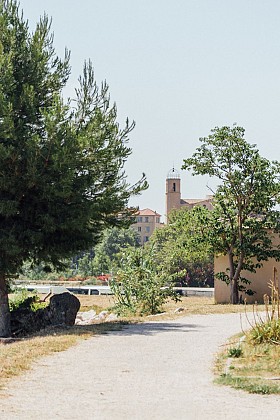
This is stage 03 of the itinerary "In the footsteps of Marie-Madeleine" dedicated to Sainte-Marie-Madeleine. The circuit will make you travel to discover the religious heritage of Martigues. Departing from the town of Fos-sur-Mer, you'll be near its canal lounge and will follow the canal to Port-de-Bouc. Charmed by the gentleness of the South of France, it's the perfect place to take a break on the beaches you'll pass. You'll also follow part of the GR®2013 hiking trail to reach Martigues. You'll be captivated by the Provençal beauty of this town perched on the water. The In the Footsteps of Mary Magdalene trail takes you north of Martigues. You'll cross the Grand Parc de Figuerolles to enter the Martigues region. You'll follow the banks of the Étang de Berre to reach the town center. Discover the ruins of Figuerolles, Figuerolles Beach, the Cercle de Voile (CVM) water sports center, and then the archaeological site of Tholon and its washhouse. Following the marked trail, you will pass through the Jardin de la Rode, the Jardin de Ferrières, and then the Place des Aires. You will then be in the city center of Martigues. If you feel like it, you can deviate from the trail before entering the gardens and climb the hill to the Chapel of Notre-Dame-des-Marins. It offers a beautiful panoramic view of the city. From the Place des Aires, cross one of Martigues' two blue bridges to reach the Ile district. Walk along the edge of the pond to cross the drawbridge and stop in the Jonquières district, which is the end point of this third stage of the In the Footsteps of Mary Magdalene in Provence trail. Here too, you can deviate from the recommended route to enter the Ile district and discover Martigues' most popular tourist attractions: the Church of Saint Mary Magdalene, the Miroir aux Oiseaux, the canals, and the colorful facades of Martigues. Marie-Madeleine's journey continues with stage 4 which takes over from the town centre of Martigues, heading towards Carry-le-Rouet.

19 km
Medium
13500 Martigues
Show

What to do in HOTEL ARIANE FOS

See more suggestions
Book your activities in HOTEL ARIANE FOS now and get ready for adventure.
See more suggestions
Rand'eau douce in Martigues
10 km

Rand'eau douce in Martigues

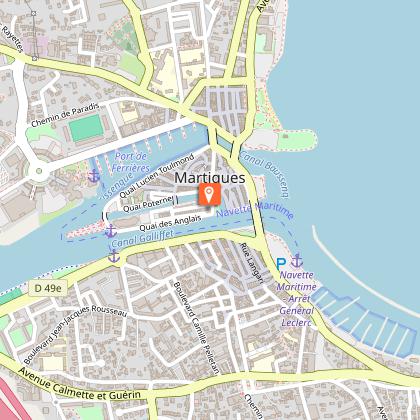
Discover Martigues, nicknamed "the Venice of Provence", on an 6 km hike on the fascinating theme of fresh water. Far from the salt waters that surround the city, this walk immerses you in its hydraulic past. Accompanied by a passionate guide, you will explore the picturesque alleys and hidden treasures of the city. Each stage of this guided hike will allow you to understand the importance of fresh water in the daily life of the Martigues people, a precious resource that has shaped the identity of this Mediterranean city. You will learn that the inhabitants of each district had their own source of drinking water supplied by the Martigues Canal, which has now disappeared. Did you know that the fountain located on Place Mirabeau was moved from Cours du 4 Septembre in Jonquières by the Jourdan family following the extension of their hotel "La Goutte d'Or"? That the entrance to Martigues began at the intersection of Avenue Frédérique Mistral and that part of the Jonquières district was nothing but marshland? That buildings that are still in use were once used as cisterns, that when you look up you will see now-forgotten ramparts and that old wells can be found in the heart of the gardens of recent buildings? Under the commentary of Bernard, president of the Randonnée Ski Découverte (RSD) association, you will take a new look at the architectural heritage of Martigues. The past has left traces that we do not notice on a daily basis. Take advantage of this unusual stroll in the city center to combine business with pleasure.

Quai des Anglais L'île 13500 Martigues
Book from 0 €Book
Show
The Alyscamps necropolis and Saint Honnorat church
35 km

The Alyscamps necropolis and Saint Honnorat church

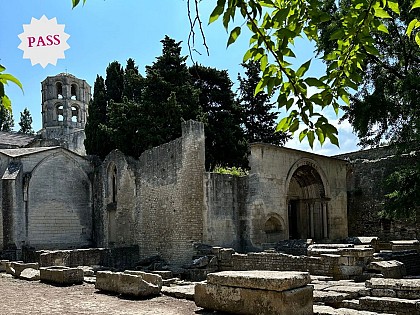
Les Alyscamps, a Christian necropolis listed as a UNESCO World Heritage Site, offers a walk lined with remarkable sarcophagi. At the heart of the site, the church of Saint-Honorat marks the starting point of the Chemin d'Arles to Compostelle. This emblematic site, immortalized by Vincent Van Gogh in his works, is a veritable treasure trove of Provence. With every step you take between the majestic rows of slender cypress trees, you'll feel the evocative power of this place steeped in history. Les Alyscamps is much more than just a Roman cemetery. History lovers will find an alley of sarcophagi and chapels. Pilgrims will find the starting point of the Chemin d'Arles (a UNESCO World Heritage site) to Santiago de Compostela. And everyone will find a haven of tranquillity, where time seems to stand still. At the very heart of the Alyscamps site is the church of Saint-Honorat, a jewel of medieval architecture that plays a key role for pilgrims. Dating back to the 12th century, this spiritual site marks the starting point of the Chemin d'Arles, one of France's main routes to Santiago de Compostela. With its carved portal and serene atmosphere, the church invites contemplation and is the perfect introduction to this historic and spiritual route. With Luma Arles and Frank Gehry's modern Tower in the background, Les Alyscamps is a testament to the link between past and present, a place where history, art and nature blend harmoniously. To visit this site is to immerse yourself in a unique experience, where the soul of the place is revealed to those who take the time to explore it. To make the most of your visit, we recommend purchasing a pass (available from our online ticketing service), which will enable you to visit the city's various museums and monuments more economically. Guided tours and cultural events take place during every school vacation. Please note that although most of the site is accessible to people with reduced mobility, some areas may be difficult to access.

Avenue Des Alyscamps 13200 Arles
Book from 0 €Book
Show

What to visit in HOTEL ARIANE FOS

See more suggestions
Visit the museums and galleries of HOTEL ARIANE FOS.
See more suggestions
The Romaniquette Beach
7.3 km

The Romaniquette Beach

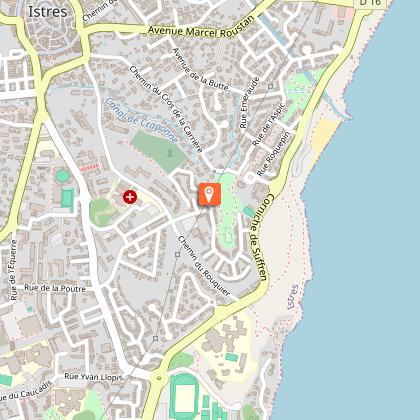
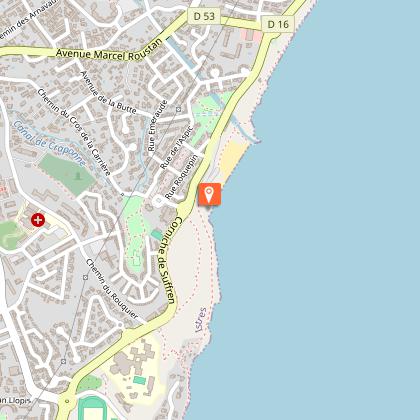
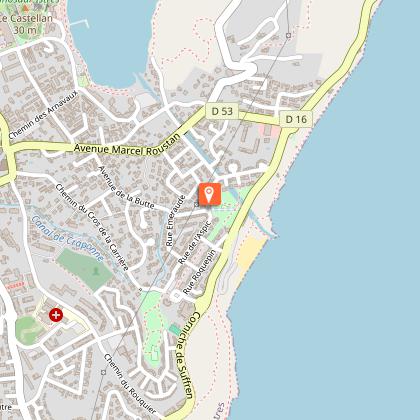
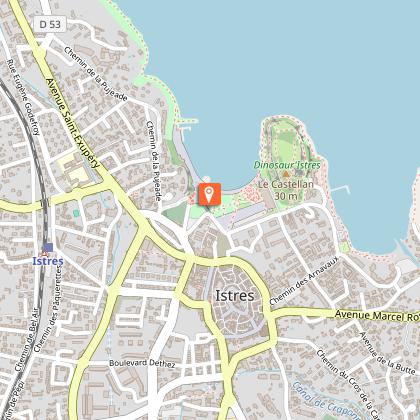
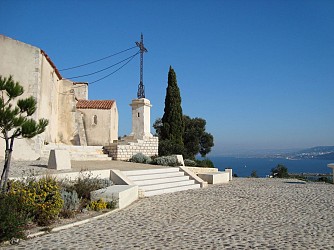
The large Romaniquette beach (7,300 m2), located to the east of the town, close to the historic center, is a summer paradise, thanks to the quality of its site, its panoramic view of the Etang de Berre and its easy access. The beach of Romaniquette (7,300 m2), located east of the city, near the historic centre, by the quality of its website, the panorama it offers on the etang de Berre and its easy access, is the beach become Istres. Its design enables a space equipped to host many holidaymakers and a diversified entertainment offer. Facilities - expansion of the beach - construction of a new access to the beach, securing the crossroads and strengthening of implementing traffic light signaling - Creation of parking of 50 parking spaces - Installation of an educational trail through the Reed bed for valuing wetlands - Creation of a picnic and playground area : bocce and Beach Volleyball - implementation of floating platforms anchored to 2.5 m deep for bathers - accessibility and parking for persons with disabilities - completion of a relief and self-contained sanitary opening to the public (supervised swimming) post from June to September a library is accessible on the Romaniquette beach. Boaters may have books for free, from a choice of 350 books. Novels, comics, publications, magazines, destined for 7 to 77 years old, were donated to the city of Istres by the lending library to 'feed' this beach library. Two agents, made available by the Office of tourism of Istres, are present from 11 h to 18 h (7 days) in July and August, in order to manage the library and help readers in their choice.

Corniche de Suffren - Plage de la Romaniquette 13800 Istres
Show
Fort de Bouc
7.5 km

Fort de Bouc

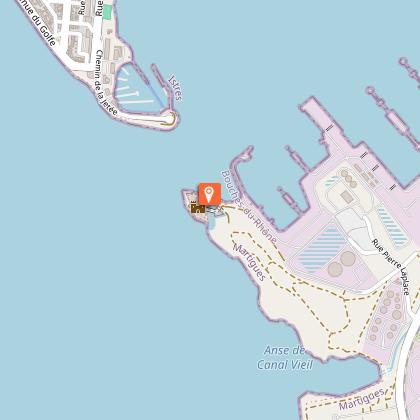
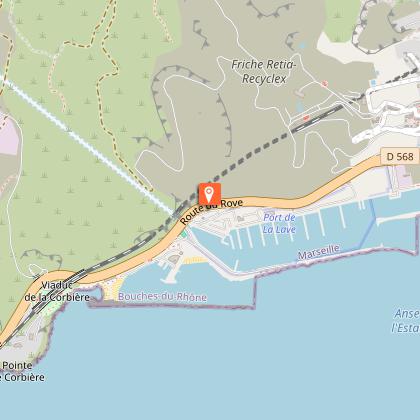
Since the Middle Ages, it has guarded this passage between the Gulf of Fos and the Etang de Berre. Due to its strategic position for maritime trade and control of the region, the Fort de Bouc had a dual function, both a defensive structure and a beacon. From the beginning of the Middle Ages, this area of the Caronte pond was hotly contested by the powers involved: the Count of Provence, the Archbishop of Arles, the Viscount of Marseille, the Porcellets and the cities of Marseille and from Arles. Depending on the alliances, it is the subject of transfers, exchanges and takeovers. The tower which currently remains dates from the end of the 12th century. It has long been given the name "castrum massiliense" (in Latin) and "castel marsilhes" (in Provençal): Marseille castle. At the end of the 12th century, Marseille asserted its power to the detriment of viscounts elsewhere. It protects its maritime commercial interests through a comprehensive coastal surveillance system. Bouc Island interests her but she is not the only one. The Count of Provence also asserted his authority and settled on the Island of Martigues in 1226. A century later, Queen Jeanne had all the rights she possessed over her subjects in the Viguerie of Aix and in particular those of the Island, Jonquières and Ferrières recognized. We learn that the Island of Bouc depends on the Island of Martigues, and therefore it belongs to the Count and the Countess. It is indeed the inhabitants of the Island who provide the men necessary for the fort's garrison. In 1444, there was only one medieval tower which was used by Charles of Anjou (lord of the place at that time) to secure Marseille. He then built the Tour de Bouc, in parallel with the Tour Saint-Jean in Marseille. This tower is 26 meters high. At its summit, the lighthouse offers a range of 25 kilometers. It was electrified in 1936, then automated in 1998. It became solar in 2019. In 1536, Andrea Doria attacked the sides of Provence. Fort de Bouc, defended by the martegales, held firm. Ensuring the mouth of the Etang de Caronte, the Etang de Berre and the Tour de Bouc during the Wars of Religion was one of the concerns of the King of France. Until 1652, the Tower was the subject of struggles (sieges, captures, etc.). It will also serve as a prison for high-ranking figures such as Laurent de Coriolis (President of the Parliament of Aix), opponent of Richelieu's policies. The Fort de Bouc prison had a regional reputation since people almost never left it. It was a state prison where the enemy was locked up without trial, by simple order of the King. Laurent de Coriolis was locked up there for 10 years and then died there in 1644. The Tour de Bouc will also take part in the coastal surveillance system in 1632. From the La Ciotat lighthouse, to the Tour de Bouc, each guard lit his fagot to signify that there were no invaders. If the enemy was spotted, the watchtower had to signal two fires and consecutively, all the other places had to do the same. The revolutionary period revived this tradition which made Fort de Bouc one of the privileged points for controlling the passage of enemy ships, most often English. In the 17th century, the Fort as a whole, the two bastions (one to the South and one to the North), the standing bridge and the half-moon were built. The Fort de Bouc will remain essentially the same on the outside but its interior arrangements will evolve over the centuries. Under the authority of the Government of Provence, in 1726, the Provençal coasts were divided into nine captaincies. La Tour de Bouc will occupy a key position there. Around forty men occupy the Fort permanently. There is notably a major - commander, a chaplain, a storekeeper, a surgeon - major as well as a company of Invalides. In times of war, the Fort can accommodate up to 100 people in different rooms: barracks, guardhouse, governor's quarters, officers' lodge, canteen, tower and chapel. You will be able to discover the complete history of Fort de Bouc and the use that was made of these places during the guided tours offered by the Martigues Tourist Office.

Chemin de la Jetée 13500 Martigues
Show

Where to eat in HOTEL ARIANE FOS

See more suggestions
The flavors of HOTEL ARIANE FOS await you.
See more suggestions

Where to sleep in HOTEL ARIANE FOS

See more suggestions
Stay at one of the many hotels in HOTEL ARIANE FOS.
See more suggestions
Caution!
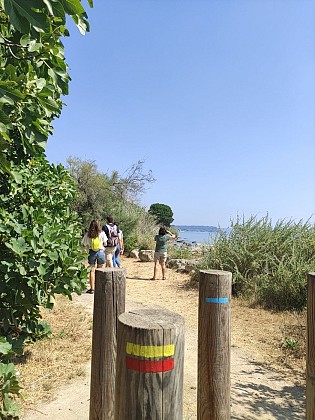
We have no information on the difficulty of this circuit. You may encounter some surprises along the way. Before you go, please feel free to inquire more and take all necessary precautions. Have a good trip! 🌳🥾