Tours
Activities
Places of interest
Where to eat
Where to sleep

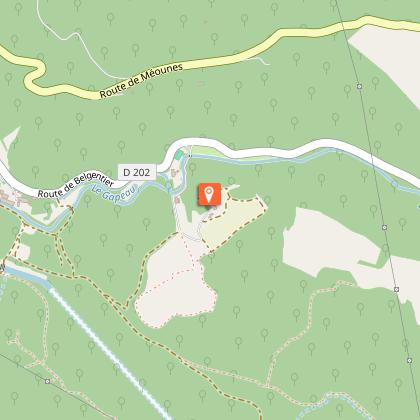
Camping La Pabourette at La Londe-les-Maures, Var

Are you the owner?
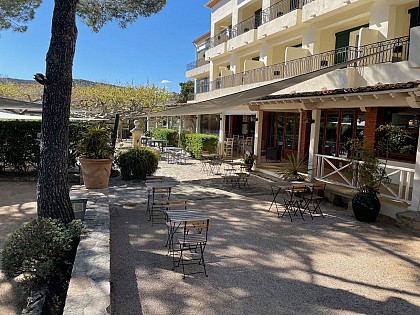
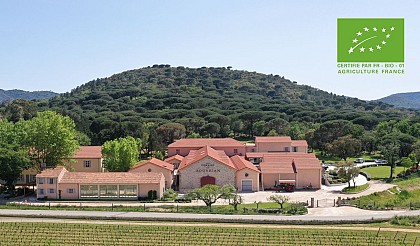
Welcome to Camping La Pabourette! Nestled in the beautiful region of Provence-Alpes-Côte d'Azur, our campsite is the perfect starting point to explore local wonders. Whether you're a nature lover, history enthusiast, or seeking relaxation, La Londe-les-Maures has something for everyone. Discover the authentic charm of the village with its Provençal markets, vineyards, and idyllic beaches such as P...See more

Walking around CAMPING LA PABOURETTE

See more suggestions
Enjoy outdoor walks in CAMPING LA PABOURETTE.
See more suggestions
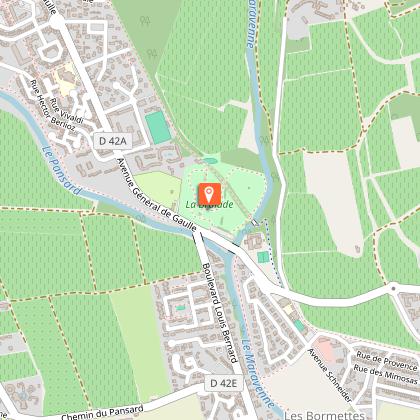
La Londe discovery tour - Between land and sea
2.5 km

La Londe discovery tour - Between land and sea

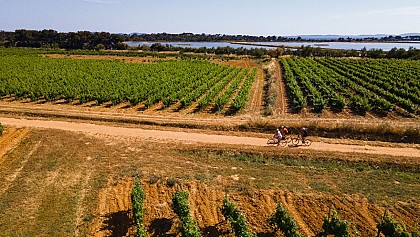
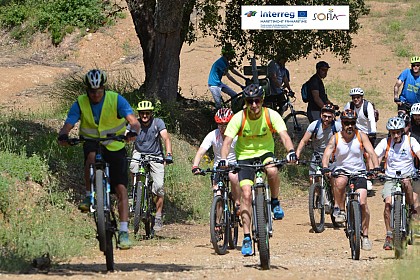
A walk between the village and the seaside along many vineyards. It can be used by all (mountain bikes, gravel bikes, VTC) and combines the Annamites promenade with the Garenne promenade. You will enjoy this complete tour of the commune thanks to the La Garenne and Annamites walks. You will also take part in the coastal cycle route. This easy walk will allow you to discover all the landscapes of La Londe: village, vineyards, hills, beaches and port. Ready? Then saddle up! Your walk starts in the town centre from Avenue Clémenceau, head west to pick up the coastal cycle route over 1 km. Arrive at the Garenne roundabout, cross the road to take the promenade of the same name. Head south towards the sea! You will then walk along the vineyards in the shade of the holm and cork oaks. You can then admire the view of the Vieux Salins d'Hyères and its pink flamingos. Pass along the campsites towards the Bastidon pine forest. There you are, the sea is there! Head east, towards the port and Miramar beach. A small diversions behind the Capitainerie (harbour office) allows you to cross to the other side of the Maravenne rainwater channel. Walk along the quay then follow the seafront to the Argentière pine forest. It's time to head back towards your starting point, via the Annamites promenade, which is particularly shaded under the pines! PRATICAL INFORMATION: - The Père Jacques-Hamel car park is located 150 m from your starting point. - The Annamites and Garenne promenades can be done individually in A/R. - Bring sun cream and water.

45 min
11 km
Very easy
3 Avenue Georges Clémenceau 83250 La Londe-les-Maures
Show
The Landing of Provence
3.3 km

The Landing of Provence

After the Armistice of June 1940, defeated, France collaborates with the Third Reich. Following the Allied landing in North Africa and the scuttling of the French fleet in the port of Toulon, in November 1942, General de GAULLE in 1943 tasked General GIRAUD, to reorganize in North Africa, a French army with American material support. The Allies imagine to fight the occupation troops by the North (Operation OVERLORD in Normandy) and the South (Operation DRAGOON in Provence). The coast of the Moors (la côte des Maures) appears then as the only place likely to escape the coastal batteries of the Toulon area. Two months after the landing of Normandy on the 6th of June of 1944, the Allies get the green light. On the night of August 14 to 15 in 1944, the African commandos, the first French soldiers on the soil of Provence, stormed Cape Negro, the naval assault group, the Esquirol point, the Canadians and American rangers the Golden Islands. American parachutists are dropped in the plain of Muy. On the morning of August 15th, American divisions land at Cavalaire; for eight days, those of the Army of Africa land in a continuous flow on the beaches of Cavalaire, Dramont, Nartelle to liberate the occupied towns and villages in Var. Go back in time and discover the town’s liberation’s highlights of Le Lavandou and Collobrières on August 15, 1944, Pierrefeu du Var and Bormes les Mimosas on the 16th, La Londe les Maures and Cuers on the 17th.

9 h
91 km
Medium
Avenue Henri Matisse 83250 La Londe-les-Maures
Show
The Gaoutabry dolmen
3.6 km

The Gaoutabry dolmen

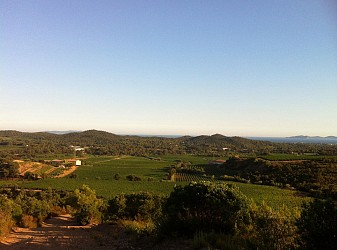
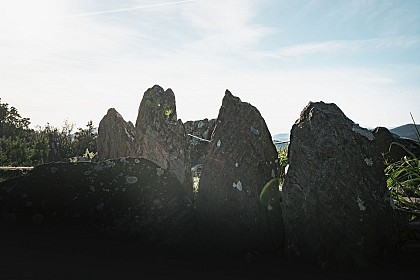
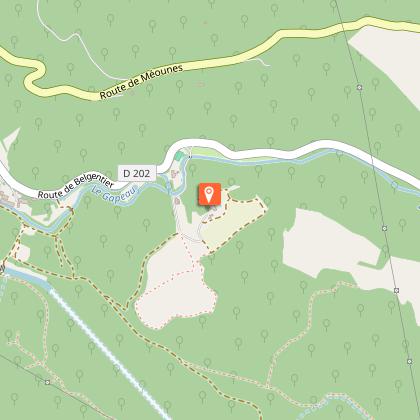
A walk in the heart of the Massif des Maures to discover the largest dolmen in the Var. This hike begins in the Pansard valley, an ideal starting point for exploring the natural and historical riches of the Maures massif. From the first climbs, you'll be immersed in typical Mediterranean vegetation, with arbutus, heather, rockrose and cork oak, typical of the maquis. The route takes you to the Gaoutabry dolmen, the largest megalith in the Var and an impressive testimony to prehistoric times. This listed site is surrounded by an enclosure, which you can cross to get a close-up view of the remains of this funerary structure. This walk will also take you through the vineyards and allow you to admire the pretty views over the sea, La Londe les Maures, the Salins d'Hyères and the Golden Islands. At the end of the route, the walk will take you to the hamlet of Notre-Dame-des-Maures. Did you know? The dolmen is a collective tomb dating from the Neolithic period and is listed as a Historic Monument. The presence of this structure suggests the past existence of a community with strong beliefs in the cult of the dead. PRACTICAL INFORMATION: - Depart from the Notre Dame des Maures piste car park on the Collobrières road (D88). ADVICE AND RECOMMENDATIONS: - Bring hiking boots or trainers, water, hat or cap. Always keep informed about the weather conditions. During the hunting season, stay on the marked trails. In the event of an emergency, call 112. From June to September, before driving in the Var mountain ranges, check the opening conditions on the fire risk map (updated at 5pm every day for the following day) or by calling the tourist office.

3 h
7.2 km
Very easy
D88 Route de Collobrières 83250 La Londe-les-Maures
Show
The Dolmen of Gaoutabry
3.6 km

The Dolmen of Gaoutabry

A mountain bike or gravel bike route in the heart of the Massif des Maures to discover the largest Dolmen in the Var. Take advantage of the panoramic views of the Maures massif and Notre Dame des Anges on the hillside as well as the Golden Islands and the Giens peninsula on the sea side. At the top of a small sunny hill this loop in the heart of the Maures massif will delight all nature lovers. Discover the secrets of the Dolmen de Gaoutabry, its magnificent panorama, and the very special vegetation of the Provençal maquis. Start from the free car park at the foot of the Notre Dame des Maures track. Take the DFCI track - Notre Dame Des Maures / Dolmen de Gaoutabry which rises slowly through the vineyards of the Maures. Follow the direction of the Dolmen and continue to the top of the hill to reach an open area. A little more effort and you will arrive at the prehistoric site from where you can observe the panorama of the Maures with, among other things, the relay at the top of Notre Dame des Anges, the Coudon, the Mont Faron. Once you have taken a short nature break, continue on a wider track, and after a few hundred metres, observe the panorama of the Iles d'Or and the Giens peninsula to the south and west. Continue your descent to reach the vineyards and olive groves. You will cross the hamlet of Notre Dame des Maures, then take a path along the vineyards that will lead you back to your starting point. PRACTICAL INFORMATION: - Bring sun cream and water. Regulated access: Traffic and parking of any motorised vehicle on the DFCI roads is prohibited all year round. From June to September, before driving in the Var massifs, check the opening conditions on the fire risk map (updated at 5pm every day for the following day) or by calling the tourist office.

45 min
7.4 km
Easy
1971 Route de Collobrières 83250 La Londe-les-Maures
Show
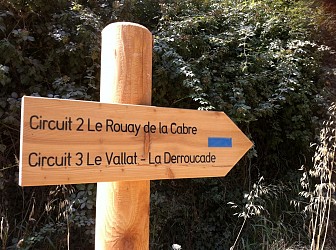
Tour 3: Once upon a time there were Trees, Plants and People
4.3 km

Tour 3: Once upon a time there were Trees, Plants and People

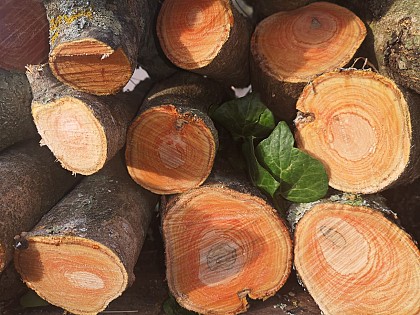
On this tour, you'll discover a heritage of remarkable trees, natural areas, parks and gardens, buildings and skills linked to the use of plants, revealing just a few facets of the relationship between plants and man. On this tour, you'll discover a heritage of remarkable trees, natural areas, parks and gardens, buildings and know-how linked to the use of plants, revealing just a few facets of the relationship between plants and mankind. At a time when everything moves so fast, it's important to remember that there is another kind of time. It's a time for slowness, seasons, patience and respect for the environment in the name of serene growth. This is the time of trees and plants Whether they are there by natural enchantment, or thanks to the hand of man, these living beings delight the eyes and awaken the hearts as a major element of local culture. While cherishing this resource, generations have managed to tame it, exploit it and develop their know-how. At the heart of France's leading forestry department, the communes of Méditerranée Porte des Maures are bursting with plant species. Remarkable trees and gardens, parks and natural areas, know-how and traditions, built heritage - these are just some of the things you can get to know. As a precious resource that is sometimes overlooked, a magical instrument for cleaning up pollution and the home of rich ecosystems, everyone today recognises the importance of preserving them. To better appreciate and protect these species, we need to recognise them. > Cuers Located at the western gateway to the crystalline Maures massif and the limestone massifs, and home to four Zones Naturelles d'Intérêt Écologique Faunistique et Floristique (Natural Areas of Ecological, Faunistic and Floristic Interest), Cuers has always been influenced by this plant environment. There is a strong link between its inhabitants, its topography and this highly varied vegetation. As far back as Antiquity, the Ligures set up their oppidum on the hills to protect themselves. Since then, the area's inhabitants have continued to live together in this way. The natural environment is conducive to a number of crops (cereals, tobacco, potatoes, hemp, flax, vines and olives) and gentle farming methods (bees, silkworms). Collobrières Nestling like a pearl in the heart of the crystalline Massif des Maures, the commune of Collobrières benefits from a mild Mediterranean climate, marked in particular by the presence of scrubland, cork oaks, hundred-year-old chestnut trees, arbutus and cades. The area around the village offers some remarkable walks, and is already revealing a wealth of biodiversity that will delight lovers of unspoilt nature, protected by a village that has been awarded 3 flowers under the "Villes et Villages Fleuris" (Towns and Villages in Bloom) label, as well as the "Village Nature 2 libellules - Territoire engagé pour la Nature" (Nature Village with 2 dragonflies - Territory committed to Nature) and "Villages de Caractère du Var" (Character Villages of the Var) labels. Pierrefeu-du-Var Due to its geographical location, Pierrefeu-du-Var benefits from a green setting that is ideal for hiking and discovering the flora and fauna of its waterways. Built on the first foothills of the Massif des Maures, it overlooks a vast, renowned wine-growing plain and wooded areas with typical Mediterranean scrubland vegetation, originally represented by white oak and cork oak. For many years, the link between nature and man has been an essential element in the economic development of the region, and this has been maintained to this day. > La Londe les Maures The part of the Maures massif that lies within the territory of Hyères was referred to as "forêts gastes" in the 17th century. The Norman origin of the name La Londe, "lund", means clearing, cleared forest. In order to exploit its resources and cultivate this land suitable for farming, man had to develop it. The first representatives of the commune, which was created in 1901, felt that "les Maures", which gained in value during the 19th century, deserved to add to its toponym. The latter is emblematic of the importance of the forest, which covers 75% of the territory, with wooded areas stretching right down to the seaside. > Bormes les Mimosas When you think of its name, you realise how important trees have always been to the village and its inhabitants. Bormes, classified as one of the "Most Beautiful Villages in France", is associated with an emblematic tree, the Mimosa, but its plant palette also includes remarkable trees and exotic species. In exchange for their care and respect, this forest and these trees have provided a living for entire families. At Bormes les Mimosas, mankind has come to realise that a close relationship with nature will bring him fulfilment, peace, fruitful exchanges and pleasures for the senses. Le Lavandou One flower, then two, then three... Le Lavandou's passion and the attentive care it lavishes on its environment and green spaces have gone to great lengths to create a bouquet of a thousand colours and a thousand scents... all the way to this coveted 4th flower, which honours the city of dolphins and whales with this exceptional label on the list of "Cities and Villages in Bloom in France". But as well as following the "Circuit des espaces fleuris" in the town centre, a visit to Le Lavandou also means taking a walk in the natural setting of the Saint-Clair terraces and discovering the many species in the resort.

6 h
208 km
Easy
775 Avenue de la Baie des Îles 83250 La Londe-les-Maures
Show

What to do in CAMPING LA PABOURETTE

See more suggestions
Enjoy unforgettable moments in CAMPING LA PABOURETTE by booking activities for everyone.
See more suggestions

What to visit in CAMPING LA PABOURETTE

See more suggestions
Visit the museums and galleries of CAMPING LA PABOURETTE.
See more suggestions
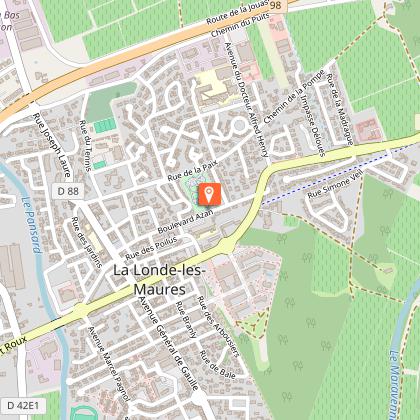
Stele of the Liberation
88 m

Stele of the Liberation

This stele was erected in 1970 by the association of the French Remembrance on the site of the first divisional cemetery created after the liberation of La Londe les Maures. On August 17th, 1944, the first American soldiers arrived by this road. They will be followed by the African commandos. An American destroyer tank was stopped by the German artillery in front of the castle of the Tour Saint Honoré. From the top of the destroyed turret, Sergeant Stanley BENDER fixed enemy shootings and attacked the bridge before liberating the village. This bridge now bears his name. The Marquis de LORDAT, who owned the land, acceded to the request of General Diégo BROSSET, who commanded the 1st DFL (1st Free French Division). He demanded to bury the 117 bodies out of the 298 officers, sub-officers and soldiers of his unit who had perished between La Londe and Le Pradet. The graves were maintained by the children of the Jean Jaurès school for many years after the end of the war. General de LATTRE de TASSIGNY, commander of the 1st French Army, Rhine and Danube, comes to pay tribute to the disappeared after the Liberation of Toulon. General O'DANIEL, commander of the 3rd American Infantry Division (3rd DI.U.S.), stopped there before visiting the huge field hospital installed on the VALROSE site. General de GAULLE came to pray there after the end of the War. He is welcomed by the mayor Mr. François de LEUSSE. This officer of the Foreign Legion integrated into the commandos of Africa under the name of Captain de Montgraham, landed on the beach of Le Canadel and liberated Cap Bénat and Fort de Brégançon. In November 1944, during the liberation of Belfort, at the head of the 3rd African Commando, he was one of the few survivors of this decimated unit at the Bois d'Arsot in Offemont where a crossroads bears his name. Most of the bodies of the soldiers of the 1st DFL were returned to their families after the opening of the national necropolis of BOULOURIS near Saint Raphael, inaugurated on August 15th, 1964 by General De Gaulle. On May 8th, 1981, the first flag was presented there to the French Remembrance local committee, created on May 2nd, 1980 on the initiative of M. PONEL, director of the Jean Jaurès school during the occupation and president of the French Remembrance of Hyères.

2020 Route de Saint Honoré 83250 La Londe-les-Maures
Show
Sergeant Stanley BENDER’s Bridge
996 m

Sergeant Stanley BENDER’s Bridge

3rd American Infantry Division - 3rd DIUS - Company E October 31, 1909 – June 22, 1994 The highest distinction of the United States of America "The Medal of Honor" was awarded to him in 1984 for the 40th anniversary of the landing in Provence. On August 17th, 1944 at La Londe les Maures (France), he performed an act of bravery. One says that he "deliberately advanced 40 metres in open ground, visible to German soldiers, under a rain of allied and enemy fires to a first machine gun, which he put out of action in a single, short burst. He opened a path up through the heart of the fighting zone despite the explosions of grenades, towards a second machine gun 25 metres away. While the two servants who operated it swept the area and fired two times in its direction, he bravely continued under fire and reached the top of the site, neutralizing the device. Instructing his men to occupy the holes left by shell fire, he travelled another 35 metres to kill a enemy sniper. He leads his group to the destruction of 8 enemy strong points. His boldness impressed the rest of the company so much that the men left their positions to charge, while screaming, to submerge the enemy’s roadblock and infiltrate the city. They destroyed two anti-tank guns in the process, killed 37 Germans and captured 26 others. He led his men through an attack that overwhelmed the enemy, destroyed a roadblock, took a town, seized the bridge over the Maravenne River and captured the sector command.” (The sector covered the area of Val Rose, Saint Honoré and la Pabourette) He will wait for the arrival of the US tanks with his section and on the morning of August 18th he will cross the liberated city. Sergeant Stanley BENDER died on June 22nd 1994 at the age of 85. He is buried in the High Lawn Cemetery (Town of Fayette) in West Virginia, United States (location "Section A - Lot 360). A bridge and a museum bearing his name are dedicated to him.

2083 Route de la Jouasse 83250 La Londe-les-Maures
Show
Eugene OSWALD's
2.4 km

Eugene OSWALD's

Eugène OSWALD, born on August 14th, 1925 in La Londe, is the son of Jacques OSWALD, a village doctor. In 1943, he fled and joined the famous and glorious maquis of Ain to escape the STO (compulsory labour service). On July 13th, 1944, he and three other Maquis men ambushed an enemy detachment from a hill. Spotted by the Nazis overlooking their position, they were shot on their legs and finished off on the spot. Eugène OSWALD and two of his comrades from Haute Savoie were killed. The fourth one from the Ain dragged himself to a nearby wood and survive his injuries. He described the scene he experienced after the massacre: "I see the Germans finishing off my comrades from the woods, then they rush to a nearby farm and fill it with straw and wood to set it on fire. At this moment the farmer walks towards the German officer holding a sheet of paper. The officer ordered his soldiers to remove the wood and decided to spare the farm. The paper attests that the husband who owns the farm is a prisoner of war in Germany where he is responsible for maintaining a German farm whose farmer is fighting in France. » A stele bearing the name of Eugène OSWALD (19 years old) and his two comrades is erected on the place where they died in the commune of SONGIEU in the Ain. Eugène OSWALD is buried in the family vault in the cemetery of La Londe les Maures, the nursery school and the street that leads to it both bear his name.

6 Rue Eugène Oswald 83250 La Londe-les-Maures
Show
Street panel for the 1st Free French Division in the Provence landing
2.7 km

Street panel for the 1st Free French Division in the Provence landing

On August 12th, 1944, the elements of this unit, invested with their victory at Bir Hakeim, waited in Taranto harbour on several ships and continued to train for a landing that everyone knew was close. On August 15th the maps of the Provence coast are distributed; On the morning of August 16th, the ship's radio announced the landing. The commandos have established themselves on the soil of Provence and an American airborne division occupies the Argens Valley. At 5pm, the French coasts appear. Men have been waiting for this moment for 4 years. Cavalaire Bay is identified. It is in the hands of Franco-American paratroopers since the day before, who cleaned the coast like the African commandos between Le Canadel and Le Lavandou. A Divisional surgical team (Spears) has been detached in the forward guard and is accompanying the commandos. General BROSSET commanding the Division landed with the 2nd Brigade. On August 17th, the entire Division landed and gathered at the Valmer Cross. On August 18th, it took the direction of Hyères, placed under the command of General de LARMINAT who also headed the 9th Colonial Infantry Division and a group of commandos and shock battalions. On August 19th, it crosses La Londe. The marine riflemen of the SAVARY squadron branch off towards Les Borrels and Le Pas du Cerf to regroup at Domaine de la Clapière. From there they took the road to Pierrefeu to ensure the link between the other elements of the 1st DFL and the 9th D.I.C. which had liberated Collobrières. Pierrefeu was liberated, the marine riflemen joined the Domaine de la Clapière while waiting for news about Mont Redon before liberating La Crau. The other units headed for Hyères to relay the African commandos chosen to seize Mount Coudon after the capture of the Mauvanne blockhouses. The German defence zones are the main goals. The Golf Hotel, Costebelle, Mont Fenouillet in Hyères, Mont Redon in La Crau, Le Pradet and the Thouar hill in La Garde are the bastions where heavy fighting will cause enormous losses to the Division (298 men lost their lives there, more than 300 were wounded) before entering Toulon. N/B: the names of 117 of them are inscribed in front of the French Remembrance Stele in the Saint Honoré district (D.559) towards Le Lavandou.

Avenue Georges Clemenceau 83250 La Londe-les-Maures
Show
Stele of the Martyrs of the Resistance
3 km

Stele of the Martyrs of the Resistance

Eugène OSWALD was born on August 14th, 1925 in La Londe. His father, Jacques, is the village doctor. To escape the STO (forced labour department) he fled and joined the famous and glorious maquis of Ain. During an ambush on the occupying army from the top of a hill, he and three other Maquis were spotted by the Nazis overlooking their position. The method to punish the Maquis is strictly respected. After shooting them in the legs, the Nazis rushed to finish them off. Eugène OSWALD and two of his comrades from Haute Savoie were killed. The fourth one from the Ain dragged himself to a nearby wood and survived his injuries. A stele bearing the name of Eugène OSWALD and his two comrades’ is erected on the place where they perished in the commune of SONGIEU (01). Shot dead on July 13th, 1944 he was to be 19 years old. Pierre RIVAULT was born on May 6th, 1920 in Tours. Worker at the Bormettes factory, he left the village by jumping out of a truck and joined the maquis to escape the STO (forced labour department). Taken prisoner by the Nazis with nine other FTPFs (Maverick and French partisan), he was tortured, horribly mutilated, then shot dead with his comrades on the banks of the Asse de Blieux, a small stream located at the place called La Tuilière in the commune of SENEZ in the Alpes de Haute Provence on July 20th, 1944 at the age of 24. His body, found in a mass grave, was not identified until 1945 and his name was transcribed into the civil status registers of this small town. A square in the Bormettes district bears his name. Louis BUSSONE was born on July 30th, 1919 in La Londe. Maverick and French partisan (F.T.P.F). On the announcement of the arrival of the American and French soldiers who had landed on August 15th, 1944 on the Provençal coast, he sabotaged the firing system of the Pont du Maravenne. He then attempted a new sabotage of the device that the German soldiers had installed to destroy the Pansard bridge during their withdrawal. Surprised by an enemy patrol, he was shot near the cooperative cellar on August 17th, 1944 at the age of 25, as the first American and French soldiers approached the village.

965 Avenue Albert Roux 83250 La Londe-les-Maures
Show

Where to eat in CAMPING LA PABOURETTE

See more suggestions
Explore the best dining spots in CAMPING LA PABOURETTE.
See more suggestions
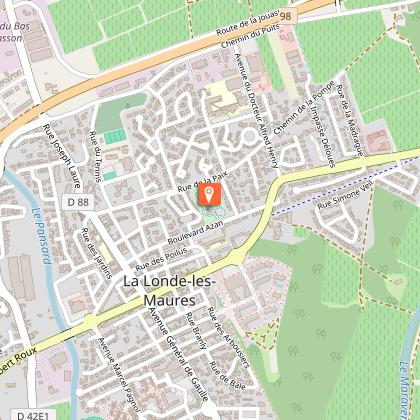
Where to sleep in CAMPING LA PABOURETTE

See more suggestions
Find a comfortable stay in CAMPING LA PABOURETTE.
See more suggestions
Caution!
We have no information on the difficulty of this circuit. You may encounter some surprises along the way. Before you go, please feel free to inquire more and take all necessary precautions. Have a good trip! 🌳🥾