Tours
Activities
Places of interest
Where to eat
Where to sleep

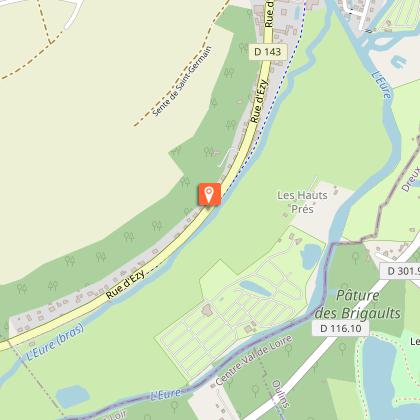
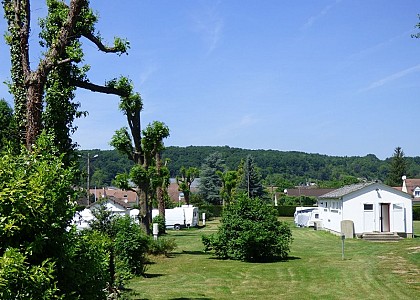
Explore Garancieres from the Château du Breuil campsite

Are you the owner?
Located in Garancières, Yvelines, in the heart of Île-de-France, the Château du Breuil campsite is the perfect starting point for discovering the region's charms. Nearby, you can explore the hiking trails in Rambouillet Forest, a true haven for nature and tranquility lovers. History enthusiasts will enjoy a short drive to the Palace of Versailles, a gem of French heritage. For families and friends...See more

Walking around CHATEAU DU BREUIL

See more suggestions
Explore the parks and paths of CHATEAU DU BREUIL.
See more suggestions
Exploring the village of Marly
25 km

Exploring the village of Marly

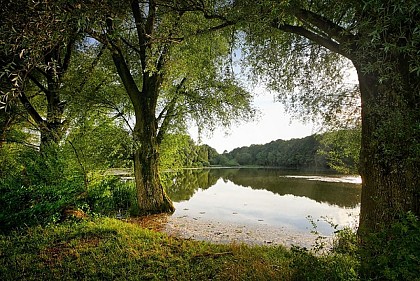
Marly le Roi owes its notoriety to Louis XIV who had his country residence built here. In the 19th century, artists came in search of tranquillity and inspiration. Nowadays, the village's picturesque little streets continue to attract and charm visitors! Departure point: Marly-le-Roi Information Point On Grande Rue, at No. 41: Until the 1970s, this beautiful property housed a hotel and restaurant, "Au Roi Soleil". Pierre Bourdan, a former presenter of France Libre for London radio, used to stay here, away from the hustle and bustle of Paris. At No. 46: Here once stood the Hôtel du Comte de Toulouse (named after the legitimate son of Louis XIV and Madame de Montespan). At No. 39: Refurbished shops from the 17th and 18th centuries. Shops and royal nurseries used to fill the area between Rue Madame and Avenue des Combattants. Rue de Madame recalls the memory of Princess Palatine, the second wife of Philippe d'Orléans, brother of Louis XIV. She enjoyed staying in Marly. At No. 6: This is the house where one of the greatest crooks of the 20th century, Alexandre Stavisky, was arrested in July 1926. Stage 1 - Place de la Vierge The square, once known as "carrefour d'en bas", was located in the heart of Marly village. The statue of the Virgin pays tribute to the village's Notre Dame church which was destroyed at the end of the 17th century. Opposite, stands the former dwelling of the Pourvoyeurs du Roy, which belongs to the royal palace. Nearby, at No. 5 Rue Pasteur: Maison de la Blanchisserie du Château, another royal outhouse. There is still a wash house here. Opening onto this square is the Lycée Louis de Broglie, built in 1990 on the site of a property where the great tragedian, Rachel,once lived. Stage 2 - Place du Chenil Part of this square was once occupied by the ancient cemetery of Marly le Bourg, previously surrounded by the Prieuré Saint Etienne, Notre Dame church and the Hôtel Dieu. It is lined with some old houses, one of which was a key establishment in French cuisine for many years: the Auberge du Vieux Marly, where owner André Guillot welcomed many famous people. Opposite the town hall, is an enamelled plate reproduction of a painting by Alfred Sisley, "Place du Chenil at Marley, snow effect". This reproduction is found on the "Chemin des Impressionnistes" which stretches across eight towns and villages in the Seine loop. Hôtel de Ville and Parc du Chenil. During his stays in Marly, Louis XIV spent a great deal of time hunting in the forest. After becoming Lord of Marly le Bourg in 1693, he established his kennels in the gardens of the former seigniorial dwelling, and the great hunter, Monsieur de la Rochefoucauld, stayed in the renovated dovecote. The current building has retained some of its 18th-century structure, including the overall framework and the mascarons of the façade. The municipality purchased the building in 1966 and it has housed the council offices since 1988. Stage 3 - Hôtel Couvé An 18th-century hôtel particulier with a wrought iron balcony supported by corbels, cartouches and mascarons. It was used as the town hall between 1846 and 1988. The lower building, with a pediment and clock, was built in 1894 to house the boys' school. Rue Champflour. In the Middle Ages, this street, then called Rue de l'Hôtel Dieu, connected Marly le Bourg to Marley le Chastel. At No. 1bis: Maison "Champflour", a vast property built in the 17th century for an old Marly family and of which only the communal areas remain. After renovation and conversion work, the house was occupied by Alexandre Dumas junior from 1884 until he died in 1895. Stage 4 - Eglise Saint-Vigor Adjoining the castrum, the original church dedicated to Saint-Vigor was built in the 11th century. By order of the king, it was replaced by the current church which was built by Jules-Hardouin Mansart and Robert de Cotte, and consecrated in 1689. This rural but royal church is dedicated to Saint-Vigor and Saint-Etienne. Its classical sobriety is remarkable. The entrance is on the left-hand side, opposite the presbytery. The church was lavishly endowed by Louis XIV who came several times to attend service or Te Deum mass. Some liturgical items and paintings have been deposited at the Musée-Promenade de Marly-le-Roi - Louveciennes. Place Victorien Sardou Domaine du Berduron. In the 17th century, the property belonged to Louis Blouin, the first valet de chambre of Louis XIV. Substantially transformed, it was acquired in 1863 by Victorien Sardou, who established an orange orchard there. Château des Délices. Built in the 18th and 19th centuries, behind the church. The estate was taken over in 1955 by the Drouot group and today houses the regional headquarters of Assurances Axa. A beautiful construction with glass features which fits perfectly with its surroundings. Stage 5 - La Grande Rue The backbone of the ancient village which leads to the park entrance. This fairly steep street (Louis XIV called it the "very steep mountain" and had it paved in 1690), is lined with typical houses that make up a beautiful uniformity. It was inhabited in the 17th and 18th centuries by the winegrowers, tradesmen and craftsmen who worked for the palace, as well as noblemen, bourgeois and "scoundrels" wanting to gamble at the palace "casino". Worth noting: the old tile roofs, the hipped dormer windows and the little niches in the façades, housing protective saints. Rue Coysevox, at No. 12: Pretty country house with a hipped dormer window via which grain was hoisted to the attic with the help of a pulley system fixed under the roof overhang. Grande Rue, at No. 18: an old canted house with wrought iron window supports and an interior staircase with railings. At No. 19/21: A classical 17th and 18th century mansion. At No. 23: Outhouses of the Hôtel du Duc de Gèsvres, who was a Paris governer, built of 18th-century ashlar. Vast carriage gate with mascaron and small timber balcony, 19th century. At No. 27: In the courtyard, a typical country house with a balcony and covered gallery, 16th and 17th centuries. At No. 52: House with 3 mascarons and 2 bull's eye windows (Hôtel de Toulouse outhouses). End point: Tourist Office

1 h
2.4 km
78160 Marly-le-Roi
Show
Historic houses of Saint-Germain-en-Laye
25 km

Historic houses of Saint-Germain-en-Laye

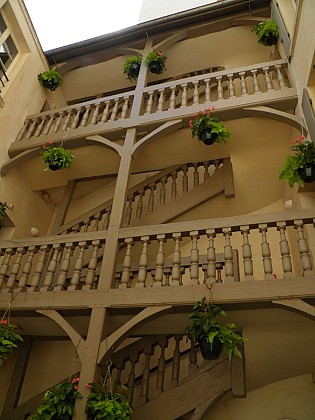
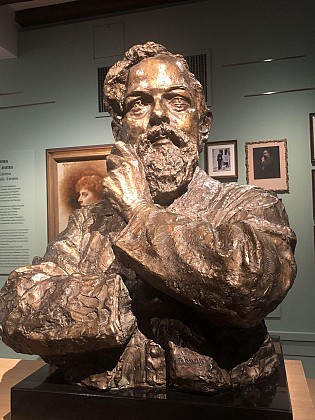
Saint-Germain-en-Laye is one of the most interesting historic towns of the Paris region. It has retained its urban fabric from the Middle Ages, as well as its pre-17th-century winding streets and cul-de-sacs. Starting point - Courtyard of the house where Claude Debussy was born No. 38 Rue au Pain In the courtyard, observe the beautiful stairway and wooden banisters, the only one remaining in Saint-Germain-en-Laye. It dates from the late 17th century. Take the steps up to the first floor. This is the Claude Debussy museum. The composer was born here on 22 August 1862. His parents lived in a modest ground-floor flat and ran an earthenware and porcelain shop. The upper floors were occupied by other families. Stage 1 - Rue de la Salle Thus named since 1640 in honour of the captains who governed the town, but also because it housed a hall (“salle”) where the residents would meet. - at no. 16: This is the oldest house in the town. Half-timbered, it is typical of the late Middle Ages. The façade has been restored. - at no. 18: Hôtel des Maréchaux de Villeroy. Owned by Nicolas de Neuville, governor under Louis XIV, and later by his son François, who was also a governor but under Louis XV. Stage 2 - Rue du Vieil Abreuvoir At the street entrance there was a large watering pond but it was demolished in the 18th century to make way for the “coche”, the public vehicle that was the ancestor of the “diligence” stagecoach. - at no. 24: Hôtel “de la Feuillade”. This mansion belonged to the Duc de la Feuillade. He was a great admirer of King Louis XIV, and erected a statue in his honour at Place des Victoires in Paris. - at no. 23: Hôtel de la Marquise de Maintenon. Mistress and, later, the second wife of Louis XIV, she purchased this mansion in 1680. The impressive wrought iron balcony dates back to 1880. - at no. 22: Hôtel de Montausier. Mansion owned by the Duc de Montausier, governor to Louis XIV’s eldest son. The future Maréchal Lyautey also lived here, from 1887 to 1891. He was just a Captain at the time. Stage 3 - Rue des Coches So named since 1700 because it was the departure point of the public “coche” stagecoaches travelling to neighbouring towns, including Paris and Versailles. - at no. 17: Hôtel de Guise: this private mansion was owned by Henri II de Lorraine, Duc de Guise and grandson of the “Balafré” (“slashed face”). Albert Alain, the famous organist from Saint-Germain-en-Laye, was also born here. Stage 4 - Rue des Vieilles Boucheries The street was named after the meat market that was here in the Middle Ages. The street was closed by a gate at night to dissuade thieves. Stage 5 - Cour Larcher Access to the courtyard is from Rue de Paris between nos. 40 and 42. It is named after Regnault Larcher, who was an archer for King Philippe Auguste who founded a “Maison Dieu” here. This little hospital sheltered the poor of Saint-Germain-en-Laye, as well as pilgrims and travellers. Stage 6 - Allée des Récollets A narrow passageway on the site of the ancient Recollects convent. The Recollects were part of the Franciscan order and were initially protected by Henri II and Catherine de Medicis Stage 7 - Rue Voltaire Named in honour of the philosopher of light who spent two months at Saint-Germain-en-Laye in 1729. - at nos. 2 to 6: Hôtel de Fieubet. Gaspard de Fieubet, advisor to King Louis XIV, acquired and embellished this mansion. It was reworked in the 19th century, unlike the one next to it (at no. 8) which has remained in its 18th century state. Stage 8 - Rue / Place Saint-Pierre - at no. 19: Hôtel de Folard, an 18th-century knight, soldier and military strategist. To the right of the door, a height marker decorated with the crown and royal cradle, indicates our altitude: 65.838 metres above the River Seine. At Place Saint-Pierre, the Colbert fountain originally faced the Château. It was restored, moved here and inaugurated in 1989. Stage 9 - Rue du Gast It has borne this name since 1700 in reference to a family of public figures, one of whom was a notary under Henri IV, another was a “garde manteau”, or forestry officer, under Louis XIV. - at no. 6, the façade features a little niche which shelters a statue of Saint Christopher. Opposite, through the wrought iron railings you can see the gardens of the Hôtel de Créquy, to which the entrance is located on Rue de Paris between nos. 10 and 12. Stage 10 - Rue du Vieux Marché The markets took place in this street from the moment they were initiated by François Premier in 1526. At the end of the 18th century, it was decided to move them to what is now Place du Marché Neuf, between Rue de Pologne and Rue de Poissy. Stage 11 - Rue des Louviers There are several theories as to where the term “louviers” comes from. It may be a deformation of the word “louvetier” meaning the officer serving as the Royal Wolfcatcher. Or, it may be a reference to the sheet merchants who came from the town of Louviers in Normandy. - at no. 15: The Institut Saint-Thomas-de-Villeneuve, the town’s oldest school, is still in use. - In the recess at no. 34, a niche shelters a statue of Saint Peter. Stage 12 - Rue des Ecuyers So-named since 1618, probably in reference to the numerous knights who lived in Saint-Germain-en-Laye along with their horsemen (“écuyers”). Opposite the school, you can see the coat of arms of Saint-Germain-en-Laye: a crib on a blue and gold background, with a fleur-de-lys. The inscription “5 septembre 1638” recalls the birth date of Louis XIV, who was born in our town. Stage 13 - Rue de la République - at no. 11: The chapel of the Institut Saint-Thomas-de-Villeneuve mentioned above (cf. Stage 12) features a peristyle built in 1788, with 4 Ionic columns. - nos. 24 and 26: Hôtel particulier of Henri d’Orléans, Duke of Longueville, whose second wife, Anne-Geneviève de Bourbon, sister of the Great Condé and the Prince of Conti, was renowned for her great beauty in the 17th century. The mansion was entirely reworked in the 19th century. - at no. 27: An 18th-century building that has remained intact since its construction. The small balconies are Louis XV. Stage 14 - Rue de Pontoise - at no. 16: Hôtel de Ville de Saint-Germain-en-Laye, established here in 1842 in the former Hôtel de la Rochefoucauld which dates from the 18th century. Stage 15 - Rue d’Alsace - at no. 11: Hôtel de Noailles. The sumptuous mansion of the three Dukes of Noailles, who were town governors until the French Revolution, was built by Jules Hardouin-Mansart. Mozart stayed here in 1778. Stage 16 - Rue Roger de Nézot Named after Roger de Nézot, who was a town councillor of Saint-Germain-en-Laye in the days of the Prussian occupation (1870-71). - at no. 9: Hôtel de Bontemps, who was Louis XIV’s first valet de chambre and confidant. Stage 17 - Place Charles de Gaulle You are standing opposite: • The Château-Vieux, which now houses the National Archaeology Museum. • The gardens of the National Domain. • Saint-Germain Church and its peristyle with 6 Ionic columns. Definitely worth a visit!

2 h
2.9 km
Very easy
38 au Pain Maison natale Claude-Debussy 78100 Saint-Germain-en-Laye
Show

What to do in CHATEAU DU BREUIL

See more suggestions
Enjoy the activities available in CHATEAU DU BREUIL for moments of relaxation and fun.
See more suggestions
The Petit Trianon
25 km

The Petit Trianon

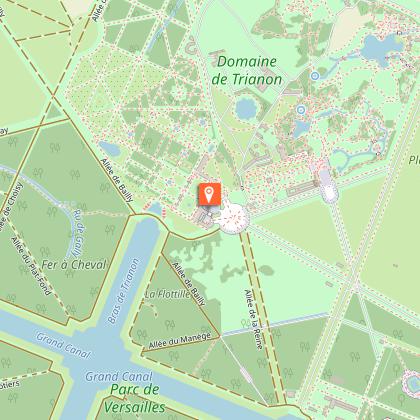
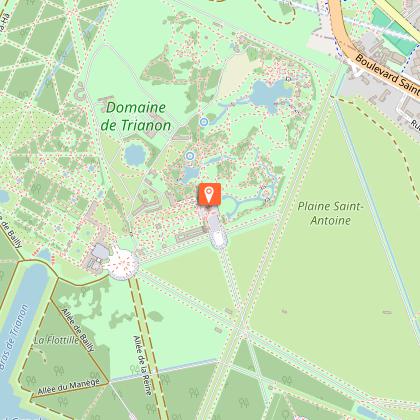
The Petit Trianon was built between 1763 and 1768 by the architect Gabriel, requested by Madame de Pompadour, mistress then friend of king Louis XV. Mme de Pompadour was the former mistress of the king but still his friend. She was the instigator of this little palace, built by Gabriel from 1763 to 1768 near the botanical gardens and the new menagerie to entertain him with one of his passions : sciences. To please the Marchioness, always aware of the last trend, the architect changed his rocky aesthetics to adopt pure lines and cubic shape. It was the latest architectural style, called “the Greek style”. It is not as simple as it looks like : each frontage is different, built to reply to its surrounding : the Courtyard, the French Garden and its lovely pavilion, the Botanical Garden and the Flower Garden. Even inside we find a modern style. The decoration of the Small Trianon is more simple than the rest of the estate. It is not about materials, you will notice the absence of gold for example, but more about the fineness and elegance of the sculptures dedicate, like the palace, to nature. Sadly, Mme de Pompadour died before the completion of the Palace in 1764. Nowadays it keeps the souvenir of an other inhabitant : Louis XVI made a gift of the Trianon Estate to his queen Marie-Antoinette in 1774. She lived there a distant life from the court, maybe too distant for some of the courtier.

Château de Versailles 78000 Versailles
Book from 0 €Book
Show
Palace of Versailles All Access Passport Entry with Audioguide
26 km

Palace of Versailles All Access Passport Entry with Audioguide

ArrayYour Experience Use Your Passport to Tour the Château de Versailles Your ticket gives you access to the most famous places within the royal estate including the Royal Palace, the Park, Gardens, Marie Antoinette’s Estate, and entry to any exhibitions on show at the time of your visit. If you plan to visit on a Friday, Saturday or Sunday, it’s worth paying the extra €8 for an upgraded Passport ticket, which includes access to the Musical Fountain and Garden shows. Learn About the French Monarchy with the Help of a Multilingual Audio Guide Upon entering the Palace, collect your complimentary audio guide from one of the two pick-up counters located on the ground floor, one at the entrance to the Apartment Ladies and the other at the entrance to the Gallery of Castles. Audio guides are available in 11 languages: Spanish, Chinese, English, French, German, Italian, Japanese, Korean, Polish, Portuguese and Russian. Begin your visit by exploring the ornate King and Queen's State Apartments. Learn about the French monarchy and peek into the private lives of the infamous King Louis XIV and Marie Antoinette. Next, make your way to the glittering Hall of Mirrors. Designed to protect the ornate walls and ceilings from smoke, the hall’s 357 mirrors were strategically placed to reflect the light of candles. With just a few flames, the reflection from so many mirrors was enough to light up the whole hall! Explore 250 Acres of Gorgeously Landscaped Lawns and Fountains After admiring the inside of the Palace, head outdoors and take in the grandeur of the estate’s impressive architecture. Stroll along the cobblestone grounds, through the beautiful French gardens, and pass by the gorgeous Versailles fountains. Next, stop by the Estate of Marie Antoinette and discover the life and antics of the Queen at the Petit Trianon. Walk around the Village of the Queen and English gardens, then see where Marie Antoinette built her own house, a Mill, a Preparation Dairy, a Cave, a Belvedere and the magnificent Temple of Love where lovers get engage. At the Carrosses Gallery, travel back in time as you explore carriages, coaches, sculptures and other artifacts left behind by the French Monarch. If you’re short on time and would prefer to skip the long lines, a Versailles skip-the-line entry ticket will allow you to save your time. If you’d like to maximize your time at the palace of Versailles and get a more in depth Castle experience, click here. Each year, it is estimated that approximately 5 million people visit the Palace of Versailles, and between 8 and 10 million people walk its gardens. A place of immense beauty, Versailles stands as a symbol of France’s monarchy and its glorious history.

Book from 20 EURBook
Show
Palace of Versailles Entry Ticket with Audioguide
26 km

Palace of Versailles Entry Ticket with Audioguide

ArrayWhat to Expect Begin your visit by exploring the ornate King and Queen's State Apartments. Learn about the French monarchy and peek into the private lives of the infamous King Louis XIV and Marie Antoinette. Next, make your way to the glittering Hall of Mirrors. Designed to protect the ornate walls and ceilings from smoke, the hall’s 357 mirrors were strategically placed to reflect the light of candles. With just a few flames, the reflection from so many mirrors was enough to light up the whole hall! After admiring the inside of the Palace, head outdoors and take in the grandeur of the estate’s impressive architecture. Stroll along the cobblestone grounds and pass by the gorgeous Versailles fountains. At the Carrosses Gallery, travel back in time as you explore carriages, coaches, sculptures and other artifacts left behind by the French Monarch. If you’re short on time or would prefer to skip the long entry lines, a Versailles skip-the-line entry ticket will allow you to save anywhere from 1-3 hours of waiting. If you happen to visit the Palace on a Tuesday, Saturday or Sunday, consider opting for a Versailles Passport ticket and catch one of the famous water fountain and musical shows. Each year, it is estimated that approximately 5 million people visit the Palace of Versailles, and between 8 and 10 million people walk its gardens. A place of immense beauty, Versailles stands as a symbol of France’s monarchy and its glorious history.

Book from 18 EURBook
Show
Palace of Versailles
26 km

Palace of Versailles

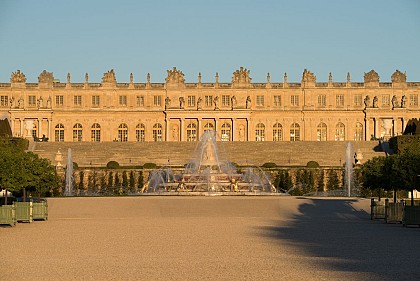
Listed as a World Heritage Site for 1979 years, the Château de Versailles is one of the finest achievements of 17th century French art. The Château and the Trianon estate are open every day except Monday. The Château opens at 9am, the Trianon estate only opens from 12pm. The Park and gardens are open every day and free of charge (access to the gardens is subject to a charge on the days of the Grandes Eaux Musicales and Nocturnes and during the Jardins Musicaux). Access to the Park only through the Queen's Gate (for pedestrians, cyclists and vehicles every day), through the Saint-Antoine Gate (for pedestrians and cyclists every day and for vehicles at weekends and public holidays) and through the Sailors' Gate (for pedestrians and cyclists every day) from 7am to 8.30pm, with the last access at 6.15pm in the high season and from 8am to 6pm in the low season The Hall of Mirrors, the King's Apartments, the Museum of French History: over the centuries, the Palace of Versailles, the seat of power until 1789, has never ceased to expand. At the beginning, it was only a modest castle built by Louis XIII for hunting. However, Louis XIV chose this site to build the palace we know today, a symbol of royal absolutism and the embodiment of French classical art. In the 1670s, Louis XIV had the Grand Apartments of the King and Queen fitted out. The most emblematic achievement of these spaces, places of parade and reception par excellence, remains the Hall of Mirrors designed by Mansart. In the following century, the extensions continued, notably with the construction of the Chapel and the Opera House. The Château now has 63,154 m2 divided into 2,300 rooms. Although the Château lost its vocation as the official seat of power in 1789, in the 19th century it had a new destiny: to become the Museum of the History of France, as desired by Louis-Philippe, who came to the throne in 1830. Many of the rooms in the Château then housed the new collections retracing the great events of French history, which were enriched until the beginning of the 20th century.

Château de Versailles Place d'armes 78000 Versailles
Book from 0 €Book
Show

What to visit in CHATEAU DU BREUIL

See more suggestions
Visit the museums and galleries of CHATEAU DU BREUIL.
See more suggestions
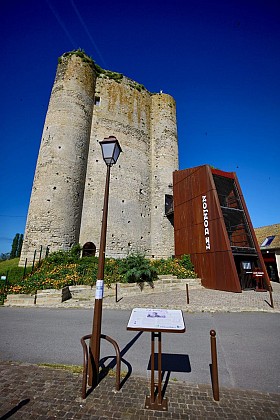
Le Donjon de Houdan
13 km

Le Donjon de Houdan

The Donjon de Houdan is a 12th-century tower commissioned by the Counts of Montfort. This historic monument is also a cultural venue, offering exhibitions, concerts... The Tower (commonly known as ‘Le Donjon’), built in the 12th century under the reign of the Counts of Montfort, and listed as a Historic Monument since 1889, was designed to watch out for enemies and defend the territory. But in reality, its main role was to act as a deterrent, as it was reputed to be impregnable. Built on the site of an ancient Merovingian necropolis, it originally consisted of an enclosure and a master tower. The enclosure, which has now disappeared, was fitted with a circular turret to defend the gateway. The access door -via a drawbridge-, initially situated 4 metres above ground level and then raised to 6 metres in the 15th century, was the only access to the large room on the 1st floor reserved for the military chief. Sometimes associated with the Duchy of Brittany and sometimes with the crown of France, Le Donjon was given by Louis XIV, with the county of Montfort, to the Duke of Luynes. The latter sold it in 1800 to an innkeeper from Houdan, citizen Leroy. Successively owned by various familie, the place was bequeathed by the latter to the town of Houdan in 1903. It presents traces of its history through its numerous graffiti, some dating from the 17th century. Used as a reserve, then as a prison and later a water tower, it underwent a certain number of changes in order to adapt to its new functions. The water tower, whose first metal tank was installed in 1880, was functional until the 1950s. In 1952, a new, more solid concrete tank was built. The tank is still present to this day, as well as part of the concrete uprights used to support it. Le Donjon consists of a tower 15 m in diameter and 25 m high, flanked by 4 turrets of the same height located at the four cardinal points. MONUMENTAL WORKS Like any historical monument requiring renovation, the work on the dungeon was difficult and complicated due to the historical, architectural aspect and the planning constraints of the monument. No less than 3 and a half years of work were necessary to allow the site to regain a second lease of life and to be able to welcome the many visitors, curious to discover or rediscover this flagship monument of the Houdan landscape. From now on, young and old will be able to explore the dungeon from bottom to top!

1 place de la Tour 78550 Houdan
Show

Where to eat in CHATEAU DU BREUIL

See more suggestions
Enjoy delicious dishes at CHATEAU DU BREUIL's restaurants.
See more suggestions

Where to sleep in CHATEAU DU BREUIL

See more suggestions
Stay in unique accommodations in CHATEAU DU BREUIL.
See more suggestions
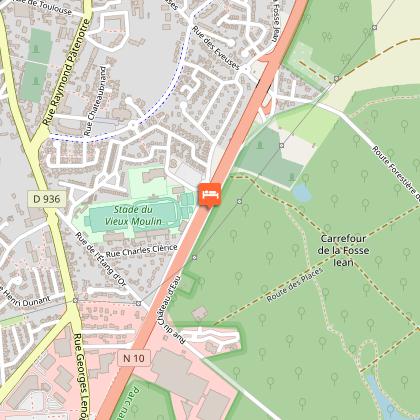
Campanile Montesson-Le Vésinet
30 km

Campanile Montesson-Le Vésinet

An entirely renovated Campanile hotel which invites you to enjoy the calm of this residential district of Montesson Located 15 km from Porte Maillot, our establishment offers a strategic position for business travellers in north-western Paris. Close to Saint-Germain en Laye, Le Vésinet, Port-Marly and Le Pecq, the hotel is easily accessible from the A86, A13 and A14 motorways. Le Vésinet-Le Pecq RER train station (line A serving La Défense and the centre of Paris) is a 15-minute walk away, Use your leisure time here to visit the Palace of Versailles or the Château de Maisons-Laffitte, both within easy reach of our hotel which proposes bright, modern 3-star rooms in Montesson. Our rooms are air-conditioned and sound-proofed and boast a contemporary style. Recently renovated in line with New Generation standards, they feature all the modern comforts needed for a restful stay. The hotel has 3 specially-adapted rooms to accommodate people with disabilities. To make your stay even more pleasant, you can also enjoy the television channels Canal + and Bein Sport, free of charge. We have a restaurant and terrace, as well as a secured indoor car park. In its lush green setting, our restaurant is open for breakfast, lunch and dinner. It is a modern, convivial venue that opens onto a shady terrace accommodating up to 35 people. Our chefs propose traditional French cuisine and seasonal dishes concocted from fresh ingredients. Our all-you-can-eat buffet menus for adults and children will satisfy every appetite,

9 Rue du Chant des Oiseaux 78360 Montesson
Show
Caution!
We have no information on the difficulty of this circuit. You may encounter some surprises along the way. Before you go, please feel free to inquire more and take all necessary precautions. Have a good trip! 🌳🥾