Tours
Activities
Places of interest
Where to eat
Where to sleep

Nature exploration at Camping Volvic

Are you the owner?
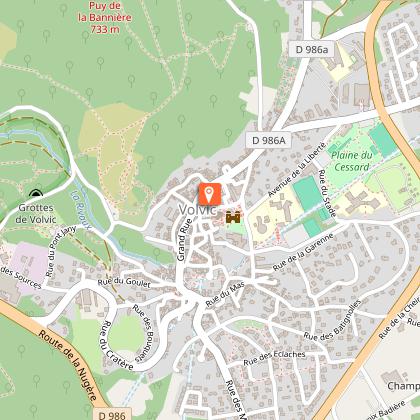
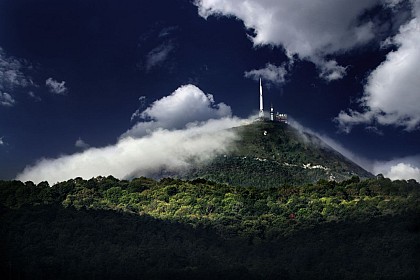
Welcome to Volvic, nestled in the heart of Puy-de-Dôme in Auvergne, a natural gem where volcanic landscapes and lush forests await your exploration. Enjoy breathtaking hikes in the Parc Naturel Régional des Volcans d'Auvergne, particularly the Puy de Dôme, which offers an incredible panoramic view. Don't miss the famous Volvic spring and its pure water, an educational visit for the whole family. V...See more

Walking around CAMPING VOLVIC

See more suggestions
Explore the parks and paths of CAMPING VOLVIC.
See more suggestions
What to do in CAMPING VOLVIC

See more suggestions
Exciting adventures await you in CAMPING VOLVIC, book now.
See more suggestions
Lemptégy Volcano
9.8 km

Lemptégy Volcano

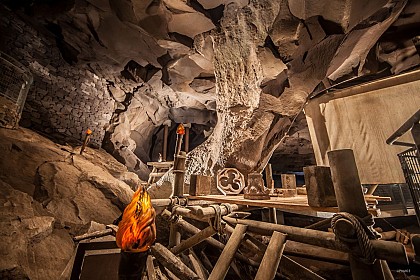
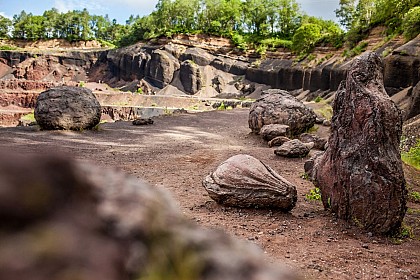
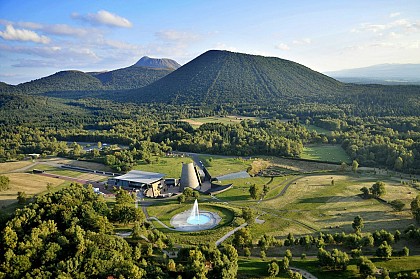
Explore the heart of a real volcano... Located at the center of the tectonic "Chaîne des Puys - Faille de Limagne" UNESCO World Heritage Site, we offer you the unique and unusual opportunity to discover the inside of a 100% natural volcano. Discover the secrets of volcanology with a 2h30 interactive tour of the Lemptégy volcano, comprising 5 stages: - The "volcano and men" tour: this fun, interactive introduction to the visit will familiarize you with the volcano and help you better understand its metamorphosis. A 30-minute self-guided tour. - Guided exploration of the volcano's anatomy: meet your guide on foot or by train. You'll learn all about the volcano's geology and volcanology: bombs, volcanic chimneys, lava flows... and leave with scoria (solidified lava). A wealth of information to help you better understand the landscape around you. - L'âme de Lemptégy": an unusual journey into the site's industrial past, with a visit to the old pozzolan extraction machines once used by quarrymen. - The immersive "Volcano 'Express" attraction: this sensory and emotional experience reveals all the secrets behind the formation of the Chaîne des Puys and the Faille de Limagne. What if the fault were to reopen... Will you reach your destination? - The dynamic 4D film "Aux Origines": enjoy an unprecedented flight over the volcanoes of Auvergne and relive the history of the volcano as if you were there, from its eruptions to the present day. While you're there, treat yourself to a gourmet break at the Volcan de Lemptégy restaurant. The chef offers traditional regional dishes (sausage/aligot, truffade, petit salé...). You can also stroll through the new boutique and discover a wide range of regional products, souvenirs, books... LE REVEIL DU VOLCAN" NIGHT TOUR: a breathtaking nocturnal experience! When you enter the site at night, you'll be propelled into the heart of the Lemptégy Volcano for an extraordinary experience. Along the way, you'll plunge into an erupting volcano and discover magical creatures. A new world to discover and a new way to experience the Volcan de Lemptégy. 1.5 km on foot. Prices and schedule: see website. Only in July and August, according to the Volcano calendar.

31 route des Puys Les Maisons Rouges 63230 Saint-Ours
Book from 0 €Book
Show

What to visit in CAMPING VOLVIC

See more suggestions
Engage in outdoor activities in CAMPING VOLVIC.
See more suggestions
Volvic Cemetery
526 m

Volvic Cemetery

Just a few years ago, a cemetery was a place for a family Sunday stroll. Today, it's a place we've moved away from, but which can still teach us many things. Discovering Volvic's funerary heritage. Visiting a village cemetery is like immersing yourself in the history of the commune and the region. Some graves tell a particular story, whether of a well-known or unknown person, a personal history that is often closely interwoven with the history of the commune. What's more, behind each grave is the work of a craftsman, a particular know-how, and this is especially true in Volvic. Originally, in Volvic as elsewhere, cemeteries were located in the village, around the three churches. The main cemetery was in front of the Saint Priest church, and was called the Peyley (the pillar). For reasons of hygiene, the Volvic municipality decided to build a new cemetery at Le Véry. Relocation and layout work began in 1806, and the cemetery was opened in 1811. In 1845, a system of concessions was introduced, which had the merit of launching the production of funerary monuments throughout France, and of course in Volvic. The Volvic School of Architecture had been founded in 1820 by Comte de Chabrol, Prefect of the Seine, whose father-in-law, Charles Lebrun, Duc de Plaisance, was buried at Père Lachaise in a Volvic stone tomb carved in Volvic. The establishment of the new cemetery coincided with the rise to prominence of a whole generation of newly-trained practitioners, most of whose worksites were opposite the cemetery. The family vault was an opportunity for the contractors to show off their skills, especially as the Volvicois preferred their final resting place to their home. The Volvic cemetery can therefore be considered an open-air catalog, and even, as Yves Connier has written, "a form of conservatory for 19th-century funerary art in the Lower Auvergne". The Volvic communal cemetery is divided into 4 sections, covering an area of 1,231 m². It comprises : - an old cemetery (1st cemetery) with 591 graves and mass graves, resembling a labyrinth - a 1st cemetery dating from 1942-43, with 149 graves and mass graves - a 3rd cemetery dating from 1965, with 141 graves, a communal ossuary and a 6-place depository - a 4th cemetery dating from 1977-78, with 452 burial plots, 2 columbariums with 12 spaces each, and a public cinerary area (Jardin du Souvenir). Many of the monuments in the first cemetery are masterpieces of funerary architecture, built in Volvic stone of course, with the exception of one. In the other cemeteries, you'll find tombs of a more modern design, either in Volvic stone or granite, typical of the evolution of funerary monuments. The visitor's eye is drawn to the monumental look of the row of tombs on the left in the main alley. According to Volvic sculptor Fernand Auteroche, this alignment is probably due to an architect who studied the layout and layout of the concessions in order to assert the horizontal, the symbol of rest and death. The vertical steles, on the other hand, convey the idea of elevation to the heavens. You'll notice their strong religious connotations and the precision with which the decor is crafted. It's fair to say that the people of Volvic took particular care with their final resting places. With the exception of the sculptor Pierre Boeuf's house at no. 52 rue de la Libération, whose facade is worth a look, and a few middle-class houses, Volvic's dwellings were largely unadorned and modest. Some remarkable tombs: The Legay-Chevalier vault (no. 43): Legay-Chevalier was a former student and teacher at the Volvic School of Architecture, an entrepreneur and sculptor, inventor of the first patented saw and of the movable crane known as the cheval de bois, and was behind the construction of the Riom/Volvic railroad and the discovery of the Volvic water spring. It is one of the main characters in the Grotte de la Pierre scenography. The statue of a weeping woman was added after his wife's death. The weeping woman theme can be found on several steles in different parts of the cemetery. The Macheboeuf family vault (no. 47): father a sculptor, son a doctor in Châtel-Guyon, grandson a member of the Institut Pasteur and the Académie de médecine. The latter gave his name to Place Macheboeuf, Grand'Rue. On a classical Greek-style base, the sculptor erected a pyramidal structure. The base features some of the sculptor's tools: sledgehammer, thickness compass, chisels. De La Vaissière vault (no. 56), former mayor of Volvic: neo-classical stele, set on a stone tablet, with the family coat of arms on the tympanum of the pediment. Conchon de Rochevert vault (no. 57), owner of Château de Bosredon and former mayor: Neboux tomb in neo-classical style. The buffer consists of a three-step staircase leading to the tombstone. The balustrade consists of quatrefoils set in squares adorned with pearls around the perimeter and foliage in the corners. At no. 99, one of the first enamelled lava stones: this huge column is adorned at the top with a Corinthian capital on which rests a funerary urn. Medallions on the shaft bear the names of deceased family members. On the supporting plinth is an enamelled lava signed by Gillet, an enameller and family friend of Volvic entrepreneur Legay-Chevalier, dated March 1877. It bears witness to the link between Volvic and the early days of enameling. Chapelle Chanteloube (n°505): neo-classical chapel with pyramidal roof. The top is crowned by a horizontal cornice decorated at its center with a water leaf. A magnificent wrought-iron gate closes the entrance. Tomb no. 179: the pediment is cut by two ogival arches resting on a cul-de-lampe decorated with foliage. A poppy flower occupies the central part. The acanthus capitals are of Corinthian influence. The letters are engraved on a square background, to catch the light. Tomb of sculptor Pierre BOEUF (no. 135): the only non-lava stele in the 1st cemetery, it bears witness to the artist's originality. Made of soft limestone, it has unfortunately not stood the test of time. Originally, it was topped by a small owl. The fine engraving of the skeleton is gradually fading, as is the inscription "Sous cette terre Pierre Boeuf sculpteur mort le 28 févier 1881 à l'âge de 73 ans". Vault no. 184: on this tomb, columns with Ionic baskets and crowns hanging from pegs are carved into the mass. The molded rampant cornices bear angels. The top is crowned with a quadrangular fleuron cross. A paschal lamb can be seen beneath the baldachin. The young Volvic resistance fighter Jean Lesme, known as Milamo, is buried here. The doors of the tombs are called tampons. Their creation was often entrusted to apprentices as a test of their skills. Text by Claire and Odette Agbessi, Volvic, Histoire et Patrimoine.

Rue de la Libération 63530 Volvic
Show
Sahut Museum
550 m

Sahut Museum

In the heart of the Bosredon estate, the Sahut Museum welcomes you to discover its remarkable collection and temporary exhibitions. In 1985, Marcel Sahut bequeathed some of his work. Hundreds of prints, drawings and paintings now make up the Sahut Museum's collection, including works by Rousseau, Ravier, Emile Bernard and Daumier. Since 2022, the museum has been enriched by a new section devoted to the arts of stone, and more particularly to the technique of enameling on lava. For 2025, two temporary exhibitions and a new hanging are proposed. Temporary exhibition "Les Jaffeux, a family of artists". Inspired by Francisque Jaffeux (1866 -1942), a talented amateur watercolorist, the Jaffeux family's passion for the arts and creativity has been passed down through the generations. From Charles (painter and aquafortist), Francisque's son, to Pierre (photographer) and Jean (lava enameller), Francisque's grandson, this exhibition presents three artistic paths born within the same family. Temporary exhibition "Contrasts One is born of water, the other of fire. One is light, the other dark. One comes from elsewhere, the other from here... Okinawan stone and Volvic stone, two very different materials, meet in the work of sculptor Yukichi Inoué. For the first time, the two periods of his work are brought together in a single exhibition, where contrasts are revealed. New exhibition from July 4 "De Mortelèque à Michelin, histoire du premier siècle de l'émaillage sur lave" (From Mortelèque to Michelin, the story of the first century of lava enameling) As part of a redevelopment project aimed at doubling the surface area of one room, the Sahut Museum is hosting a new exhibition devoted to one of its major themes: enameling on lava. The new display retraces the first hundred years of this technique, at the crossroads of fine art, architecture and industrial innovation, from the first known work, produced in 1827 by Mortelèque, to the approval of Michelin road signs in 1931.

2 rue des Ecoles 63530 Volvic
Show
Monumental statue Notre Dame de la Garde
908 m

Monumental statue Notre Dame de la Garde

Volvic stone statue, 5.50 meters high, overlooking the town of Volvic on the Puy de la Bannière, 733 meters above sea level, since 1861. A Way of the Cross leads to the Virgin. On her death, a resident of Volvic donated a certain sum of money to the parish so that a monument could be erected in honor of the Virgin. The idea of creating a monumental statue of the Virgin was born. At the time, the director of the École d'Architecture de Volvic, Brother Gamaleil, wanted his students to create an exceptional work of art to enhance the image of his establishment (founded in 1820 by the Comte de Chabrol, Seigneur de Tournoël). The school took charge of creating the statue. The sculpture was installed as close as possible to the sky, to keep a protective eye on the town. Made of Volvic stone, the statue's arms are outstretched to face the village, as a sign of protection. She wears a starry crown on her head; at her feet, she crushes the serpent, symbol of temptation. This sculpture is made of several drums (the name given to the elements that make up the shaft of a column or statue) for ease of transport and creation. The statue is 5.50 meters high, and the overall height is 9.56 meters. At the time, the altar was very simple. A special fardier pulled by a dozen oxen transported the 13-ton block of porchyre (magmatic rock with large feldspar crystals) from "le bout du monde" (Enval commune) to the construction site. The inscription on the block reads "Pour honorer Marie, ainsi que tout le monde, je vins péniblement ici du bout du Monde". This inscription testifies to the toil the workers had to endure to transport this block of stone. The rustic pedestal is made up of heaped rocks, between which are 4 slabs of Volvic stone engraved with quotations. Here is the inscription written by curé Berger: "If you are impious, still hope; If you are a sinner, pray to her and you will be forgiven; If you are afflicted, pray to her you will be filled; Mary my good mother, I entrust to you the care of my sheep". and 2 commemorative plaques (100th and 150th anniversaries). On July 21, 1861, a mass was celebrated at Saint Priest church by the parish priest. Monsignor Louis-Charles Ferron was present at the ceremony, which took place at the summit of the Bannière. 6,000 faithful attended the inauguration. Since then, the Notre Dame de la Garde pilgrimage has taken place on the last Sunday in May, attracting large numbers of pilgrims. In 1869, arcades from a Gothic chapel (adjacent to the now-destroyed 12th-century church of Saint Priest) were reused to house the altar. The keystone depicts the coat-of-arms of the chapel's founding family, the Delespins, seigneur du Vivet et de la Garenne, who lived in the 16th century. The Way of the Cross leading to Notre Dame de la Garde This calvary (a monument composed of one or two crosses, that of Jesus and the thieves crucified with him. The first calvaries appeared in the Middle Ages) was created in 1911 to replace the old one, which was too damaged. The crosses of the 14 stations were blessed and set in stone when the path was inaugurated. The first station is in rue de la Bannière. On this circuit, you can discover "La Grotte du Soldat". During the Napoleonic conquests, Volvic deserters from the great army hid here, hence the name. Inside, you can admire a statue of the Sleeping Christ, made of Volvic stone. The Saint Priest church features a stained-glass window in the south transept arm, painted between 1872 and 1875, depicting Notre Dame de la Garde. A replica of the statue is carried in procession to the top of the Bannière every May. Volvic's Portuguese community accompanies this procession with Our Lady of Fatima, located in the third chapel on the right as you enter the church. Stone-cutting techniques improved during the 13th century. This made it possible to work with hard stones such as Volvic stone. In the 19th century, many monuments to the Virgin Mary were built on the highest points of Auvergne towns and villages. There are many Vierges Noires (Black Virgins), painted and carved from cedar or olive wood, and presented as virgins in majesty. There are several explanations for this tradition: it recalls the ancient cults of the Celtic deities of stone and water, or a phrase from the Song of Songs: "I am black but I am beautiful, daughter of Jerusalem") in Auvergne, but despite the color of its stone, Notre Dame de la Garde is not part of this heritage. Research and writing: Association Volvic Histoire et Patrimoine

Puy de la Bannière 63530 Volvic
Show
Tounoël castle
1.5 km

Tounoël castle

Built on a rocky outcrop 600m above sea level, this 10th-century fortified castle and former military fortress dominates the Limagne plain. Château de Tournoël lies to the north-east of Puy de la Bannière. The foundations of this fortress extend over 75 meters in length and 25 meters in width. The first constructions of this fortified castle date back to the 9th and 10th centuries, the era of feudalism. It was then a military fortress. The square arkose keep, an essential defensive element, was protected by a double enclosure, with two watchtowers and battlements defending the entrance gate. The square tower was modified in the 15th century. Volvic lava was used for the restoration work. In this pre-Renaissance period, Volvic lava sculptures adorn the beautiful façade of the inner turret. Another jewel from this period is the tympanum in the chapel vestibule, depicting the Annunciation and perfectly preserved. In the corners of the vaulted ceiling of the large inner courtyard and the esplanade of the square keep, three magnificent sculptures catch the eye. The large keep dates from the Hundred Years' War. The circular tower is 30 meters high and 10.45 meters in diameter, with walls over 4 meters thick, and is surrounded by a gallery of machicolated battlements. From the 15th century onwards, richly ornamented residential buildings were built between the square tower and the great keep, lining the three sides of the large rectangular courtyard. The work was completed in the 16th century. In the past, two turrets adorned this unharmonious outcrop. Outside, a number of buildings are still more or less in ruins: - the Tour des Miches, also known as the "Tour de la garde", with its regular bossing to reveal the enemy's cannonballs - the grande Bailhe (courtyard) served as a refuge for Tournoël's vassals in times of unrest - the petite Bailhe (courtyard) sheltered the village's peasants in times of war - the Sainte-Foy chapel, now in ruins - the large stables, of which all that remains is an ogival tympanum in Volvic lava, showing Saint-Georges slaying the dragon. This fortified castle belonged to the Counts of Auvergne. In 1195, Count Gui II, owner of the fortress, came into conflict with his brother Robert, bishop of Clermont, who coveted the castle. In 1210, Gui II was abandoned by his English ally for lack of funds, and plundered Mozac Abbey. Philippe-Auguste, King of France, took advantage of the situation to inflict a serious defeat on the Count. He dispossessed him of his lands. Tournoël became a royal domain until 1306. From 1306 to 1346, Tournoël castle passed into the Maumont family thanks to an exchange with Philippe le Bel. From 1346 to 1509, the fortress belonged to the House of La Roche. During this period, the castle was embellished, but Tournoël was plagued by quarrels and legal proceedings. In the 16th century, Jean de Bourbon's hatred of the de La Roche led the chatelaine, Françoise de Talaru, the young widow of Jean de la Roche, to take legal action against Antoine, her co-tutor, led by Jean d'Albon. 1509-1575: in 1509, Françoise de Talaru's daughter Charlotte married Jean d'Albon de Saint-André. Very much in love with his wife, he continued to embellish Tournoël (Tour des Miches, fortified entrance gate, Renaissance gate). From 1509 to 1575, the d'Albon de Saint-André family ruled Tournoël. A great name, Marshal Jacques d'Albon Saint-André, Marshal of France, left only a very young daughter. From 1575 to 1647, the d'Apchon family occupied Tournoël castle. The Maréchal d'Albon left no male heirs, and the château passed to his sister Marguerite, widow of the Baron d'Apchon. 1575: Charles d'Apchon becomes owner of the château. 1579: Charles d'Apchon marries Lucrèce de Gadagne 1590: Charles is wounded by the Ligueurs and dies at Tournoël. 1594: During a truce, the Ligueurs take Tournoël by surprise. 1595: the château is taken over by royal troops; the estate is sold to Palamède de Boulhon, then bought back by Lucrèce de Gadagne. 1632: the château is abandoned by the d'Apchon family 1647: Guillaume d'Apchon's widow emptied Tournoël of all its furnishings; she bequeathed the castle walls to her youngest daughter Gabrielle, who married Charles de Montvallat. From 1647 to 1734, the Montvallats owned the château, but had to contend with debts, scandals, confiscations of property, restrictions on rights and more. 1692: death of Charles de Montvallat, his eldest son inherits Tournoël, but renounces the estate. Nevertheless, the youngest son, Pierre, kept Tournoël and at the same time inherited the Bosredons' hatred of Volvic. 1724: assassination of Pierre de Montvallat 1734 to 1766: de Montvallat's youngest daughter married Claude Joseph de Naucase in 1734. The de Naucase family inherited the château. The Naucase family leaves Tournoël in the care of an uncle, Jean de Montvallat, who entrusts it to farmers as a country estate. 1766: sale of the château by one of the Naucase damsels to Guillaume Chabrol, Seigneur de Chaméane, around "Commentaires et coutumes d'Auvergne". 1766 - 2000: Guillaume Chabrol is ennobled by Louis XV in 1767. From that day on, Tournoël has belonged to the prestigious Chabrol de Tournoël family, which included many illustrious men. In 2000, Tournoël was sold by the Chabrol heirs to Mr. Aguttes, who has since undertaken an exceptional restoration of the château in keeping with its original architecture. Research and writing: Association Volvic Histoire et Patrimoine

1 rue des Remparts 63530 Volvic
Show

Where to eat in CAMPING VOLVIC

See more suggestions
Restaurants in CAMPING VOLVIC will captivate you.
See more suggestions

Where to sleep in CAMPING VOLVIC

See more suggestions
Explore accommodation options in CAMPING VOLVIC.
See more suggestions
Caution!
We have no information on the difficulty of this circuit. You may encounter some surprises along the way. Before you go, please feel free to inquire more and take all necessary precautions. Have a good trip! 🌳🥾