Tours
Activities
Places of interest
Where to eat
Where to sleep

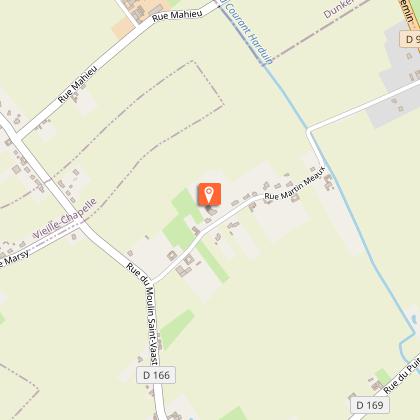
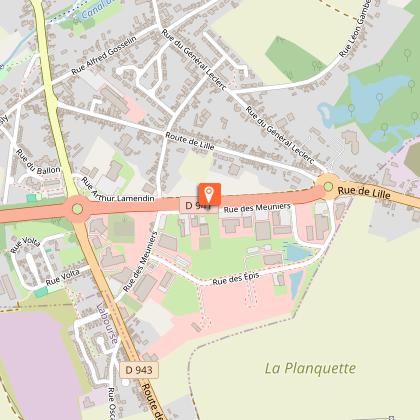
Bauvin, Nord, Nord-Pas-de-Calais

Are you in charge of the destination?
Welcome to Bauvin, a charming little town located in the Nord-Pas-de-Calais region. Nestled in the heart of this area, Bauvin stands out for its peaceful atmosphere and picturesque landscapes. Culture and history enthusiasts will be delighted to discover the Saint-Omer Church, an architectural gem dating back to the 14th century. Nature lovers can explore the Deûle Canal and enjoy beautiful walks ...See more

What to do in Bauvin

See more suggestions
Find the best activities in Bauvin and book easily online.
See more suggestions

What to visit in Bauvin

See more suggestions
Savor the local cuisine of Bauvin.
See more suggestions
Portuguese National Cemetery
11 km

Portuguese National Cemetery

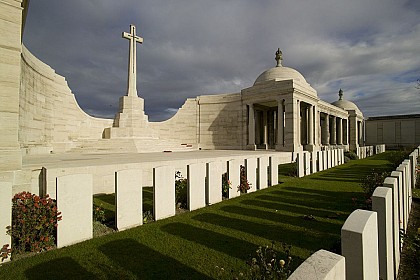
Close to the Neuve-Chapelle Indian Memorial stands a white walled cemetery with an imposing entrance: on one side of the thick wrought-iron gate stands the chapel dedicated to Our Lady of Fatima; on the other, the Portuguese National Cemetery of Richebourg which is the final resting place of 1,831 soldiers and the only place of remembrance to honour the Portuguese soldiers of the Great War. Abandoning neutrality in 1906, the young Portuguese Republic entered the war on the side of the Allies. The Portuguese Expeditionary Corps comprised up to 56,500 men and, under the command of the British Army, was assigned to the front in Flanders between the villages of Laventie and Festubert. The Portuguese Command took up quarters in Peylouse Manor in Saint-Venant. The sole place of remembrance for the Portuguese soldiers of the Great War Not only did the lusophone soldiers discover the damp and muddy reality of the trenches in Lys Valley, transport problems caused by a lack of available shipping from Portugal to the shores of France meant that officers were in short supply. On 9 April 1918 the German Army launched Operation Georgette in the Lys Valley in the hope of a decisive victory before the arrival of American reinforcements. In three successive waves, ten divisions overwhelmed the two Portuguese divisions which were incomplete, badly-organized and surprised in the process of being relieved. Portuguese losses amounted to 7,500 men on that day, and yet the next day, shoulder to shoulder with the Scottish, the survivors defended La Couture before eventually being forced to retreat. The Germans took Estaires, Armentières and Bailleul but failed to take Béthune and Hazebrouck. Operation Georgette was called off on 29 April. In honour of the soldiers who defended the village of La Couture, the French and Portuguese governments inaugurated a monument there in 1928. The startling frieze shows the ruins of a Gothic church and an allegory of the Portuguese Republic coming to the aid of one of its soldiers.

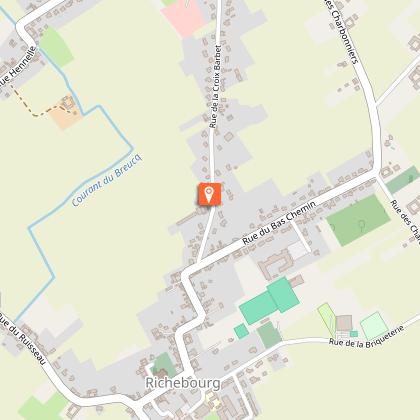
Route d'Estaires D948 62136 RICHEBOURG
Show
Dud Corner Cemetery and Loos Memorial
11 km

Dud Corner Cemetery and Loos Memorial

In 1914 Rudyard Kipling, author of The Jungle Book and winner of the Nobel Prize for literature in 1907, was a fervent advocate for British intervention in the European war. So much so that when his son John volunteered for service and was initially turned away for health reasons, Rudyard used his great influence to secure him a place in the Irish Guards. John Kipling's baptism of fire was in the Battle of Artois, opened by the Allies in September 1915. It was during the battle, on Gohelle Plain, that British forces used chlorine gas for the first time in reply to the German Army's use of chemical weapons at Ypres. The gas attack was initially a success but a change in the direction of the wind blew the gas towards the British lines and contributed greatly to the failure of the badly-prepared offensive. 'If any question why we died, tell them, because our fathers lied' In a single day of fighting the British Army recorded 8,500 casualties. In total 50,000 men were killed, wounded or lost in action. The names of 20,000 of these men can be seen today on the Loos Memorial which encircles Dud Corner Cemetery in Loos-en-Gohelle. One notable entry among these names is that of John Kipling who was killed in action on 27 September; he was 18 years old and his body was never identified. Rudyard Kipling never got over the loss of his son. He wrote shortly afterwards the poignant poem Have you news of my boy Jack? which reflects not only his distress but also the incertitude surrounding his only son's final resting place. An active member of the Imperial War Graves Commission, it was Kipling who suggested the beautiful phrase 'Known unto God' to be engraved on the tombs of Britain's unknown soldiers. Later he was to write in Epitaphs of the War the damning lines, 'If any question why we died, tell them, because our fathers lied.' The body of John 'Jack' Kipling was identified in 1992, three kilometres from Loos in the Saint-Mary ADS Cemetery near Haisnes-lez-la-Bassée.

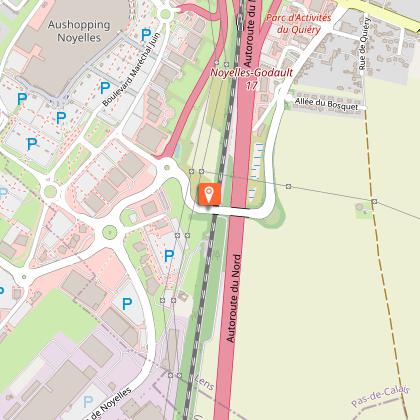
Route de Béthune D943 62750 LOOS-EN-GOHELLE
Show
Neuve-Chapelle Indian Memorial
11 km

Neuve-Chapelle Indian Memorial

At a crossroads on the Richebourg Road stands a high column of white stone between two majestic weeping willows. Flanked by two tigers, the column is surmounted by a Lotus flower, the Star of India and the Imperial Crown. Its base is carved with the words: INDIA 1914-1918. Neuve-Chapelle Memorial is the only place of remembrance on the Western Front to commemorate the sacrifice made by Indian soldiers during the Great War. Inaugurated in 1927, the memorial was the work of Sir Herbert Baker, a famous British architect who also designed Tyne Cot War Cemetery in Ypres, Le Trou Aid Post Cemetery in Fleurbaix, and others. In honour of the Indian soldiers of the Great War The inner south wall of the monument bears the epitaph, 'To the honour of the Army of India which fought in France and Belgium, 1914-1918, and in perpetual remembrance of those of their dead whose names are here recorded and who have no known grave'. Beneath the inscription are listed by regiment the names of the 4,857 soldiers who were reported missing in action. Under the dome opposite the entrance to the memorial, a bronze plaque fixed to the wall in 1964 completes the list with the names of the 206 Indian prisoners of war who died in Germany. Severely tested by the fighting in the summer of 1914, the British Army called upon military units already established in India. The first reinforcements landed in Marseilles in September 1914 and were soon transported to Flanders. The Sikhs, Gurkhas, Punjabis and other Indians fighting in the Battle of Givenchy in December 1914 were ill-prepared for the harsh conditions in the trenches and suffered from a lack of warm clothing and food. In March 1915, during the Battle of Aubers Ridge, they took part in the Battle of Neuve-Chapelle where more than 4,000 of their comrades perished. Six months later, on 25 September, they lost 3,017 soldiers in one day's fighting around Laventie. From the end of 1915 onwards the men of the Indian Corps were gradually relieved and transferred to other fronts in the Middle East.

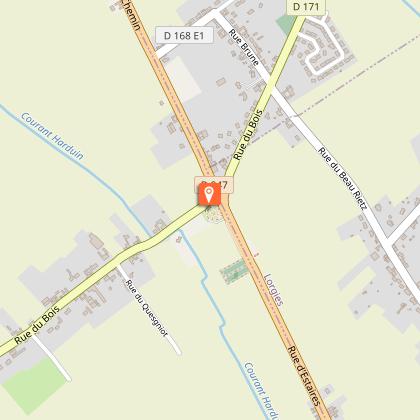
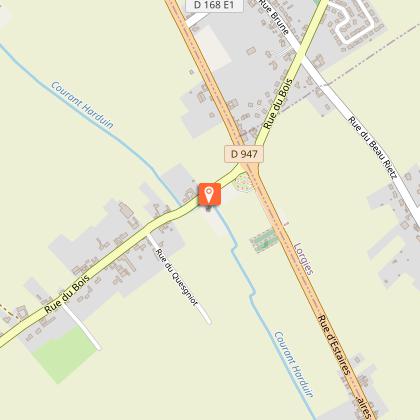
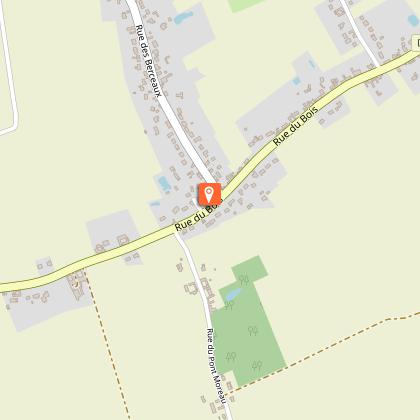
413 Rue du Bois 62136 RICHEBOURG
Show

Where to eat in Bauvin

See more suggestions
A wide selection of restaurants awaits you in Bauvin.
See more suggestions
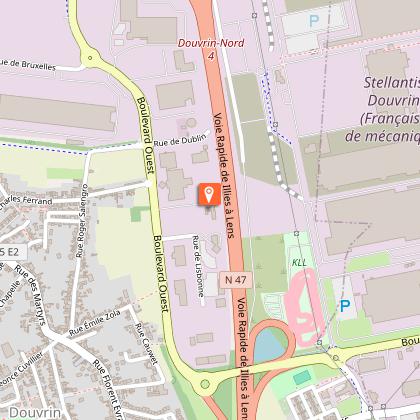
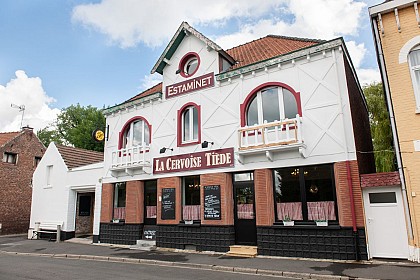
Where to sleep in Bauvin

See more suggestions
Explore hostels and hotels in Bauvin.
See more suggestions
Caution!
We have no information on the difficulty of this circuit. You may encounter some surprises along the way. Before you go, please feel free to inquire more and take all necessary precautions. Have a good trip! 🌳🥾