Tours
Activities
Places of interest
Where to eat
Where to sleep

Sainghin-en-weppes, Nord, Nord-Pas-de-Calais

Are you in charge of the destination?
Nestled in the heart of the Nord-Pas-de-Calais region, Sainghin-en-Weppes is a charming town that captivates with its authenticity and verdant surroundings. Featuring a rich historical heritage and picturesque landscapes, this town offers a plethora of discoveries. Stroll through the tranquil streets, visit the Saint-Pierre-aux-Liens Church, a marvel of Gothic architecture, and explore Georges Bra...See more

What to do in Sainghin-en-weppes

See more suggestions
Explore the bookable activity options in Sainghin-en-weppes for all tastes and ages.
See more suggestions

What to visit in Sainghin-en-weppes

See more suggestions
Visit the historical sites of Sainghin-en-weppes.
See more suggestions
Neuve-Chapelle Indian Memorial
9 km

Neuve-Chapelle Indian Memorial

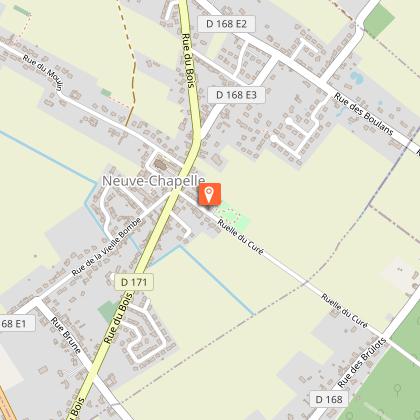
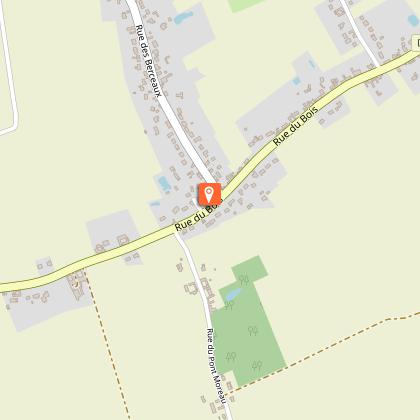
At a crossroads on the Richebourg Road stands a high column of white stone between two majestic weeping willows. Flanked by two tigers, the column is surmounted by a Lotus flower, the Star of India and the Imperial Crown. Its base is carved with the words: INDIA 1914-1918. Neuve-Chapelle Memorial is the only place of remembrance on the Western Front to commemorate the sacrifice made by Indian soldiers during the Great War. Inaugurated in 1927, the memorial was the work of Sir Herbert Baker, a famous British architect who also designed Tyne Cot War Cemetery in Ypres, Le Trou Aid Post Cemetery in Fleurbaix, and others. In honour of the Indian soldiers of the Great War The inner south wall of the monument bears the epitaph, 'To the honour of the Army of India which fought in France and Belgium, 1914-1918, and in perpetual remembrance of those of their dead whose names are here recorded and who have no known grave'. Beneath the inscription are listed by regiment the names of the 4,857 soldiers who were reported missing in action. Under the dome opposite the entrance to the memorial, a bronze plaque fixed to the wall in 1964 completes the list with the names of the 206 Indian prisoners of war who died in Germany. Severely tested by the fighting in the summer of 1914, the British Army called upon military units already established in India. The first reinforcements landed in Marseilles in September 1914 and were soon transported to Flanders. The Sikhs, Gurkhas, Punjabis and other Indians fighting in the Battle of Givenchy in December 1914 were ill-prepared for the harsh conditions in the trenches and suffered from a lack of warm clothing and food. In March 1915, during the Battle of Aubers Ridge, they took part in the Battle of Neuve-Chapelle where more than 4,000 of their comrades perished. Six months later, on 25 September, they lost 3,017 soldiers in one day's fighting around Laventie. From the end of 1915 onwards the men of the Indian Corps were gradually relieved and transferred to other fronts in the Middle East.

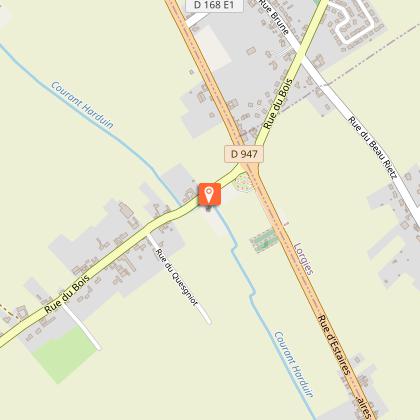
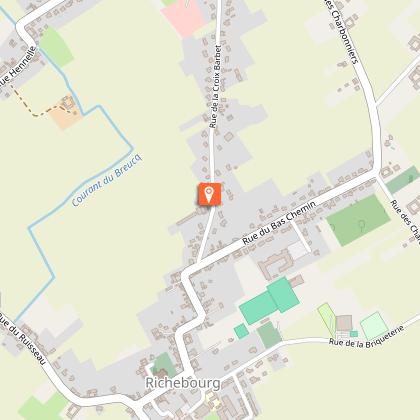
413 Rue du Bois 62136 RICHEBOURG
Show
The Battle of Loos 1915
10 km

The Battle of Loos 1915

This was the largest British offensive mounted in 1915 on the Western Front.  The British would have preferred to remain on the defensive until the BEF numbered 36 divisions and had built up sufficient stocks of ammunition and heavy artillery. However this meant waiting until Spring 1916 and, with the Russians under severe pressure on the Eastern front and the Gallipoli campaign faltering, this was politically impossible. Sir John French's anxiety over the lack of suitable munitions unwisely led him to involve the military reporter Charles Repington. This action ignited a huge controversy back in Britain. The British Army was committed to a battle not of its choosing, in an area unsuited to an attack, without clear objectives and with its major commanders (French and Haig) at loggerheads. The opening saw the first use of poison gas by the British Army, following its introduction by the Germans, and was the first mass engagement of New Army units. Despite heavy casualties, there was considerable success on the first day but the reserve divisions were held too far from the battle front and the whole attack became bogged down. Sir John French had already been much criticised before the battle and his perceived poor handling of his reserve divisions in the battle led to his remaining support in both the Government and Army being severely eroded.He was replaced by Douglas Haig as Commander of the British Expeditionary Force in December 1915. Wikipedia Long, Long Trail

Show

Where to eat in Sainghin-en-weppes

See more suggestions
Come and taste typical dishes of Sainghin-en-weppes.
See more suggestions

Where to sleep in Sainghin-en-weppes

See more suggestions
Choose a comfortable accommodation in Sainghin-en-weppes.
See more suggestions
Caution!
We have no information on the difficulty of this circuit. You may encounter some surprises along the way. Before you go, please feel free to inquire more and take all necessary precautions. Have a good trip! 🌳🥾