Tours
Activities
Places of interest
Where to eat
Where to sleep

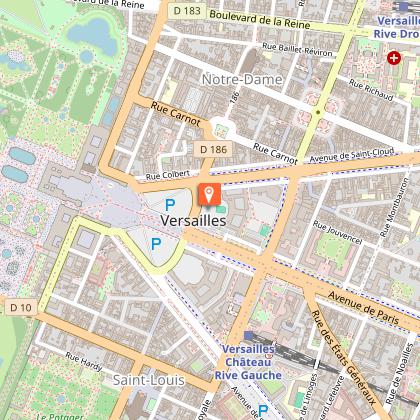
Versailles, Yvelines, Ile de France

Are you in charge of the destination?
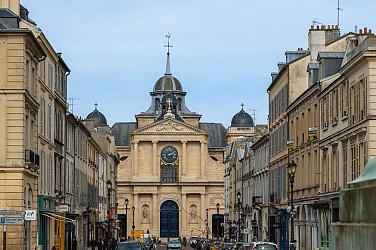
Welcome to Versailles, a captivating city located in Yvelines, at the heart of Île-de-France. Known for its magnificent Palace of Versailles, this city is a true gem of French heritage. The palace, with its dazzling Hall of Mirrors and sumptuous French gardens, will transport you to the glorious era of Louis XIV. But Versailles isn't limited to its palace; walk through its cobblestone streets line...See more

Walking around Versailles

See more suggestions
Take a walk around Versailles.
See more suggestions
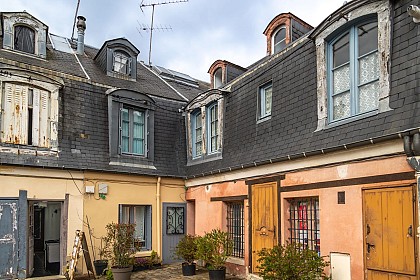
Cycling route - The plain of Versailles
166 m

Cycling route - The plain of Versailles

Explore the Versailles Plain by bike and uncover its historical secrets and the Palace park. A 25 km route blending history, culture, and nature — perfect for a ride with family or friends. Start your bike tour on Avenue Charles de Gaulle, then enter the Palace of Versailles park through the Mariners’ Gate (Porte des Matelots). Ride along the Grand Canal, stretching 1,670 meters, which has been the setting for many memorable festivities. Continue along the Gally Stream, which begins at the Grand Canal. This 22 km-long waterway crosses the Versailles Plain and was once used to supply drinking water, wash clothes, and power mills. As you exit from the back of the park, turn right to discover the Gally Farm. Nestled between the Marly Forest and the hills of Saint-Cyr-l’École, this farm has been patiently cultivated over the centuries by monks, farmers, and gardeners. After leaving the park, you’ll find the Versailles Aerodrome on your left. Since 1909, the Saint-Cyr airfield has lived to the rhythm of take-offs and landings. Next, cross the Versailles Plain, which was once part of the vast Versailles hunting park created by Louis XIV between 1660 and 1685. This magnificent and preserved area is now a sanctuary for many rare natural species. End your ride in Rennemoulin, a village shaped by agricultural, forest, and natural landscapes. Then, complete your loop by passing once again by the Grand Canal and return to your starting point on Avenue Charles de Gaulle. This cycling route offers a full exploration of the history, culture, and natural beauty of the destination.

25 km
Easy
1 place du maréchal Lyautey 78000 Versailles
Show
Cycling route - Discovering Versailles
174 m

Cycling route - Discovering Versailles

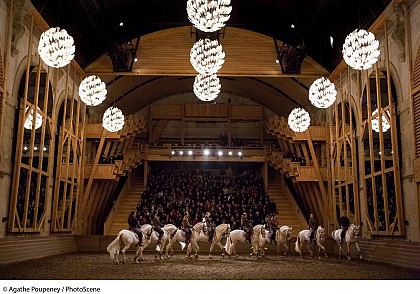
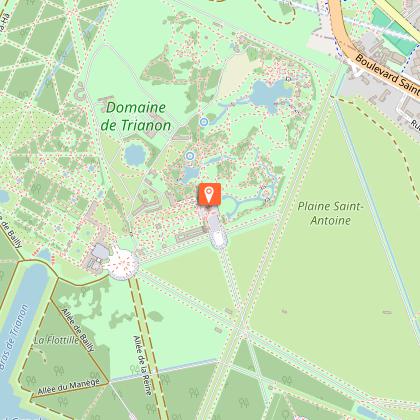
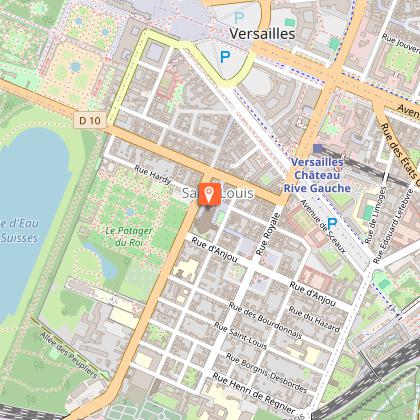
Discover Versailles by bike through its historic neighborhoods and the magnificent Château park. A 14 km route blending history, culture, and nature, perfect for a family outing or a trip with friends. Start at the Carrés Saint Louis, a picturesque spot with historic buildings. Then, head to the Saint Louis Cathedral, an example of classical architecture with impressive stained glass windows. Continue to the Potager du Roi, a historic garden created for Louis XIV, where traditional gardening techniques are still practiced. Stop at the Jeu de Paume Hall, an emblematic site of the Tennis Court Oath, a significant event of the French Revolution. Next, go to the Pièce d'eau des Suisses, a large basin surrounded by lawns and trees, perfect for a break. Enter the park of the Palace of Versailles, famous for its French gardens and groves. Explore the Domaine de Trianon, including the Grand Trianon, the Petit Trianon, and the Queen's Hamlet, which offer a glimpse into royal life. Return to town to visit the Notre-Dame Church, an example of Baroque architecture where many royal events took place. Continue to the Notre-Dame Market Square, the center of the local market with its fresh and artisanal products. Pass by the Hoche Square, the first octagonal square in France, and end your tour at the Equestrian Academy, where equestrian art is showcased. This bike route offers a comprehensive exploration of the history and beauty of Versailles. Please note : Certain areas of the Château de Versailles park will be closed during the Olympic Games.

14 km
Very easy
1 place du maréchal Lyautey 78000 Versailles
Show

What to do in Versailles

See more suggestions
Find bookable activities in Versailles for an unforgettable experience.
See more suggestions
Versailles Palace Skip The Line + Passport Entry with Audioguide
150 m

Versailles Palace Skip The Line + Passport Entry with Audioguide

ArrayWhat to Expect The enchanting Palace of Versailles is one of the most extraordinary achievements in 17th-century European art. Situated just 30 minutes outside Paris, in the village of Versailles, this elaborate complex once thrived as an epicenter of political power for the Kingdom of France. Today, the Palace, also known as Château de Versailles, contains 700 rooms spread across 800 hectares. Each year, it is estimated that approximately 5 million people visit the Palace of Versailles, and between 8 and 10 million people walk through its gardens. Begin your visit by exploring the ornate King's State Apartments. Learn about the French monarchy and explore the themed salons and their elaborate ceiling paintings. Next, make your way to the glittering Hall of Mirrors. After admiring the inside of the Palace, head outdoors and take in the grandeur of the estate’s impressive architecture. Stroll along the cobblestone grounds, through the beautiful French gardens, and pass by the gorgeous Versailles fountains. At Marie Antoinette’s Estate, discover the Trianons and get a peek into her secret life. For tips on how to navigate the palace, make the most of your time, and choose the best experience, refer to our Palace of Versailles tours and tickets collection. If you’d like to maximize your time at the palace of Versailles and get a more in-depth Castle experience, check out the Versailles Half Day Guided Tour ticket.

Meeting Point : Guidatours, 10 Avenue du Général de Gaulle 78000 Versailles
Book from 36 EURBook
Show
Palace of Versailles Entry Ticket with Audioguide
724 m

Palace of Versailles Entry Ticket with Audioguide

ArrayWhat to Expect Begin your visit by exploring the ornate King and Queen's State Apartments. Learn about the French monarchy and peek into the private lives of the infamous King Louis XIV and Marie Antoinette. Next, make your way to the glittering Hall of Mirrors. Designed to protect the ornate walls and ceilings from smoke, the hall’s 357 mirrors were strategically placed to reflect the light of candles. With just a few flames, the reflection from so many mirrors was enough to light up the whole hall! After admiring the inside of the Palace, head outdoors and take in the grandeur of the estate’s impressive architecture. Stroll along the cobblestone grounds and pass by the gorgeous Versailles fountains. At the Carrosses Gallery, travel back in time as you explore carriages, coaches, sculptures and other artifacts left behind by the French Monarch. If you’re short on time or would prefer to skip the long entry lines, a Versailles skip-the-line entry ticket will allow you to save anywhere from 1-3 hours of waiting. If you happen to visit the Palace on a Tuesday, Saturday or Sunday, consider opting for a Versailles Passport ticket and catch one of the famous water fountain and musical shows. Each year, it is estimated that approximately 5 million people visit the Palace of Versailles, and between 8 and 10 million people walk its gardens. A place of immense beauty, Versailles stands as a symbol of France’s monarchy and its glorious history.

Book from 18 EURBook
Show
Palace of Versailles
747 m

Palace of Versailles

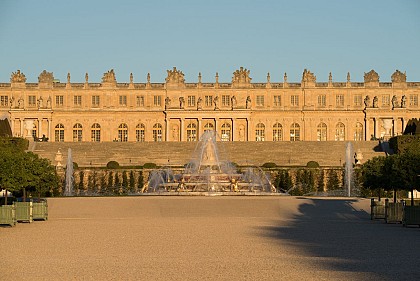
Since 1979, the Palace of Versailles has been listed as a UNESCO World Heritage Site. It stands as one of the finest masterpieces of 17th-century French art. The Palace and the Trianon Estate are open every day, except Mondays. The Palace opens at 9 a.m., while the Trianon Estate opens only from 12 p.m. The Park and Gardens are open daily with free admission (access to the Gardens is ticketed on the days of the Musical Fountains Shows and Night Fountains Shows, as well as during the Musical Gardens). You can only access the Park via: the Queen’s Gate (Grille de la Reine, entrance for pedestrians, cyclists, and vehicles every day), the Saint-Antoine Gate (Porte Saint-Antoine, pedestrians and cyclists every day, vehicles only on weekends and public holidays), the Matelots Gate (Grille des Matelots, pedestrians and cyclists every day), from 7 a.m. to 8:30 p.m., with last entry at 6:15 p.m. in high season, and from 8 a.m. to 6 p.m. in low season. By exploring the Hall of Mirrors, the King’s State Apartments, and the Museum of the History of France, you step into a palace that, until 1789, was the heart of royal power and continued to evolve over the centuries. Originally, Versailles was nothing more than a hunting lodge built by Louis XIII. But it was here that Louis XIV chose to construct the majestic palace we know today, a symbol of absolute monarchy and French classical art. In the 1670s, Louis XIV commissioned the construction of the King’s and Queen’s State Apartments. The most emblematic creation of these ceremonial spaces is undoubtedly the Hall of Mirrors, designed by Mansart. During the following century, the palace kept expanding, with major works such as the Royal Chapel and the Opera. Today, the Palace covers 63,154 m², spread across 2,300 rooms. Although the Palace lost its role as the seat of power in 1789, in the 19th century it was given a new purpose: to become the Museum of the History of France, an idea launched by Louis-Philippe, who ascended the throne in 1830. Many rooms of the palace were then transformed to house collections recounting the great moments of French history, enriched until the early 20th century.

Château de Versailles Place d'armes 78000 Versailles
Book from 0 €Book
Show
Palace of Versailles All Access Passport Entry with Audioguide
812 m

Palace of Versailles All Access Passport Entry with Audioguide

ArrayYour Experience Use Your Passport to Tour the Château de Versailles Your ticket gives you access to the most famous places within the royal estate including the Royal Palace, the Park, Gardens, Marie Antoinette’s Estate, and entry to any exhibitions on show at the time of your visit. If you plan to visit on a Friday, Saturday or Sunday, it’s worth paying the extra €8 for an upgraded Passport ticket, which includes access to the Musical Fountain and Garden shows. Learn About the French Monarchy with the Help of a Multilingual Audio Guide Upon entering the Palace, collect your complimentary audio guide from one of the two pick-up counters located on the ground floor, one at the entrance to the Apartment Ladies and the other at the entrance to the Gallery of Castles. Audio guides are available in 11 languages: Spanish, Chinese, English, French, German, Italian, Japanese, Korean, Polish, Portuguese and Russian. Begin your visit by exploring the ornate King and Queen's State Apartments. Learn about the French monarchy and peek into the private lives of the infamous King Louis XIV and Marie Antoinette. Next, make your way to the glittering Hall of Mirrors. Designed to protect the ornate walls and ceilings from smoke, the hall’s 357 mirrors were strategically placed to reflect the light of candles. With just a few flames, the reflection from so many mirrors was enough to light up the whole hall! Explore 250 Acres of Gorgeously Landscaped Lawns and Fountains After admiring the inside of the Palace, head outdoors and take in the grandeur of the estate’s impressive architecture. Stroll along the cobblestone grounds, through the beautiful French gardens, and pass by the gorgeous Versailles fountains. Next, stop by the Estate of Marie Antoinette and discover the life and antics of the Queen at the Petit Trianon. Walk around the Village of the Queen and English gardens, then see where Marie Antoinette built her own house, a Mill, a Preparation Dairy, a Cave, a Belvedere and the magnificent Temple of Love where lovers get engage. At the Carrosses Gallery, travel back in time as you explore carriages, coaches, sculptures and other artifacts left behind by the French Monarch. If you’re short on time and would prefer to skip the long lines, a Versailles skip-the-line entry ticket will allow you to save your time. If you’d like to maximize your time at the palace of Versailles and get a more in depth Castle experience, click here. Each year, it is estimated that approximately 5 million people visit the Palace of Versailles, and between 8 and 10 million people walk its gardens. A place of immense beauty, Versailles stands as a symbol of France’s monarchy and its glorious history.

Book from 20 EURBook
Show
The Petit Trianon
2.2 km

The Petit Trianon

The Petit Trianon was built between 1763 and 1768 by the architect Gabriel, requested by Madame de Pompadour, mistress then friend of king Louis XV. Madame de Pompadour, who wished to “relieve the king’s boredom” — though no longer his mistress, she remained his friend — was the instigator of this small château, built by architect Gabriel between 1763 and 1768. It was erected near the Botanical Garden and the new menagerie, as Louis XV had a keen interest in the sciences. To please the marquise, always at the forefront of fashion, the king’s architect broke away from the rococo aesthetic and adopted a cubic form with very pure lines, in keeping with the brand-new “Greek style” then in vogue. Its simplicity is only apparent, for each façade is different, designed in relation to the space it overlooks: the courtyard, the French Garden with its elegant pavilion, the Botanical Garden, and the Florist’s Garden. Inside, one finds the same modernity of style. Simpler than the rest of the estate, the decoration of the Petit Trianon lies not in lavish materials — gilding is almost absent — but in the refinement of its sculptures, in a château entirely dedicated to nature. Madame de Pompadour died in 1764 and never saw the château completed. Today, it is above all the memory of Marie-Antoinette that it evokes. In 1774, Louis XVI gave the Trianon estate to his wife, who was able to live here a life apart — too much so for some — from the Court.

Château de Versailles 78000 Versailles
Book from 0 €Book
Show

What to visit in Versailles

See more suggestions
Stroll through the historic districts of Versailles.
See more suggestions
Madame du Barry's private mansion
358 m

Madame du Barry's private mansion

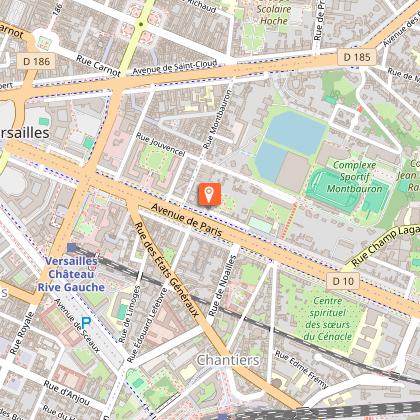
Just a stone’s throw from the heart of Versailles, discover a hidden gem: the elegant townhouse of Madame du Barry, the last mistress of Louis XV. Nestled in a discreet setting, this pavilion is a testament to the splendour and intrigues of the 18th-century court. In 1772, the Countess du Barry acquired this estate to house her staff. She entrusted the construction of sumptuous stables to one of the greatest architects of her time, Claude-Nicolas Ledoux, a leading figure of Neoclassical architecture. But the death of Louis XV in 1774 changed her destiny. In 1775, Madame du Barry ceded the property to the Count of Provence, brother of the new king, Louis XVI. He continued the development works under Jean-François Chalgrin, the future architect of the Arc de Triomphe. Transformed into a military district during the Revolution, the site underwent many changes. In 1902, the stables and the pavilion were separated. While the stables became the Versailles Police Headquarters, the pavilion was acquired in 1937 by the Chamber of Commerce and Industry, which established its offices there while preserving the refined décor and period artworks recalling the presence of Madame du Barry. A rare and captivating visit Today, this exceptional site opens its doors only for guided tours organized by the Versailles Tourist Office. It is a unique opportunity to step into the intimacy of a woman who left her mark on her century, and to discover a remarkably preserved heritage blending history, architecture, and the French art of living. 📍 Information & Reservations For upcoming tour dates or to book your place, please contact us directly.

19, Avenue de Paris 78000 Versailles
Show
Saint-Louis Cathedral
523 m

Saint-Louis Cathedral

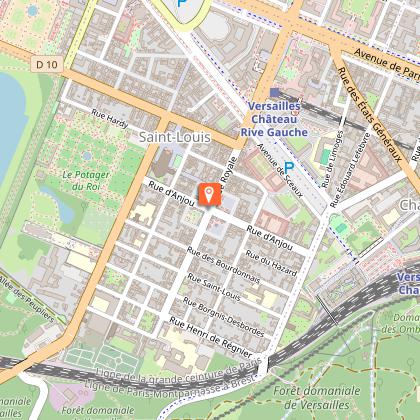
Step into the majestic world of Saint-Louis Cathedral, a masterpiece of French Baroque, and let yourself be amazed by its elegant curves, artistic treasures, and history closely intertwined with that of the Kingdom of France. It was in the wake of the Court’s return to Versailles in 1722, when the young Louis XV came to power, that the Saint-Louis district began to flourish, designed to balance the city against the Notre-Dame district. A provisional church was first erected, before the current cathedral was built between 1743 and 1754, based on the plans of Jacques Hardouin-Mansart de Sagonne, worthy heir of his illustrious grandfather, architect to Louis XIV. Dominated by a bold Baroque style, where curved lines impose themselves with grace — domed roofs, delicate curves of the organ gallery — the church fascinates as much as it stands out at a time when Neoclassicism was gaining popularity. In 1764, the Chapel of the Catechisms, designed by Louis-François Trouard, was added, marking this stylistic evolution. Inside, an exceptional collection of canvases commissioned from the great painters of the reign illuminates the chapels and walls: François Boucher, Jean Restout, Jean-Baptiste Pierre, François Lemoyne… so many prestigious names that give the cathedral its artistic nobility. The monumental organ, crafted by the master organ builder Louis-Alexandre Clicquot, still stands in the gallery, preserving the original 18th-century sounds. The cathedral is not only an architectural gem: it is also a privileged witness to the history of France. In 1789, it was here that the opening mass of the Estates-General was celebrated, in the presence of Louis XVI, Marie-Antoinette, and all the deputies of the kingdom. After the revolutionary turmoil and the closure of places of worship, the Concordat of 1801 restored Versailles’ episcopal status, and the Church of Saint-Louis was chosen as the cathedral. In the 19th century, restorations brought new brilliance: colorful stained-glass windows replaced the original white glass panes. In the Chapel of the Virgin, the windows of the Annunciation and the Assumption, made in 1848 by the Sèvres Manufactory after designs by Achille Devéria, captivate with their finesse and light. Solemnly consecrated in 1843, the Saint-Louis Cathedral of Versailles has been listed as a Historic Monument since 1906. Today, it remains one of the most remarkable treasures of Versailles’ heritage, blending artistic splendor, religious devotion, and royal memory.

4 place Saint-Louis 78000 Versailles
Show
King's Kitchen Garden
539 m

King's Kitchen Garden

Built between 1678 and 1683 at the request of Louis XIV, the Potager du Roi (the King’s Kitchen Garden) is a unique example of the French food garden of the Baroque era, and its original missions remain alive today: to produce, to experiment, and to pass on knowledge. In the heart of Versailles, covering 9 hectares, this kitchen garden is a masterpiece of the French formal garden style, designed for productivity. It was created by Jean-Baptiste de La Quintinie at the request of the Sun King. Today, it is listed as a Historic Monument and proudly bears the prestigious “Remarkable Garden” label. As an integral part of the Versailles Estate, a UNESCO World Heritage Site, the King’s Kitchen Garden has, since the 17th century, been home to gardeners who perpetuate the art of pruning and cultivate an impressive variety of fruits and vegetables. Open to the public since 1991, the Potager du Roi is also the historic site of the École nationale supérieure de paysage (National School of Landscape Architecture), which ensures its preservation, management, and development. In today’s context of ecological transition, this connection allows the site to reaffirm its pioneering identity: urban production focused on short supply chains, experimental cultivation using innovative techniques such as agroecology, and a strong commitment to education, research, and creativity. A rich and varied program The King’s Kitchen Garden is a true place of exchange, culture, and community. Here you can enjoy activities for all ages: gardening, cooking, dance, theater, music, art… and much more! In partnership with the city of Versailles, events such as Esprit Jardin bring together gardening enthusiasts. The Mois Molière festival allows you to (re)discover classical plays in an extraordinary setting. And with Les Saveurs du Potager, the spotlight is placed on the fruits and vegetables grown right here. Visits, workshops, and training Every weekend from April to October, at 11 am, 2:30 pm, and 4 pm, you can join guided tours to discover the richness of the garden alongside professional guides, passionate gardeners, or landscape students. In addition, a wide range of workshops and short training sessions are available to the public, such as The Natural Garden, Design and Cultivate Your Garden, or Medicinal Plants. (Tours available in French only). Become part of the Potager with the Clé du Potager Thanks to the annual Clé du Potager membership card, you can enjoy year-round access to the garden and benefit from exclusive discounts at the on-site boutique-bookshop. Get involved as a volunteer Would you like to get more involved? Become a volunteer and take part in various garden activities: maintenance tasks, gardening support, or cultural event assistance—a unique way to experience the Potager from the inside! The boutique-bookshop The Potager’s shop offers fresh produce harvested directly from the garden, along with products such as juices, jams, honey, coulis, and even plant-based cosmetics! Depending on the season and market days, you’ll find a wide selection of quality goods. The bookshop also features more than 800 specialized titles on gardening, ecology, cooking, agriculture, and landscape design.

10 rue du Maréchal Joffre 78000 Versailles
Show
Notre-Dame Church
655 m

Notre-Dame Church

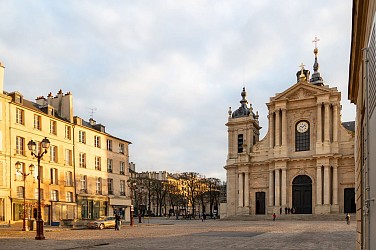
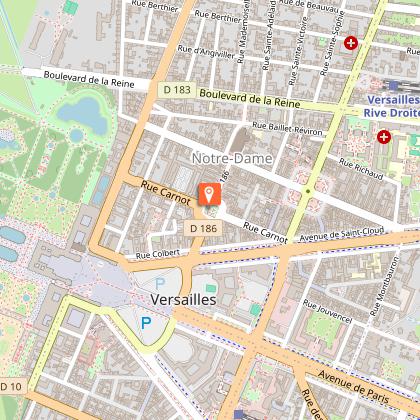
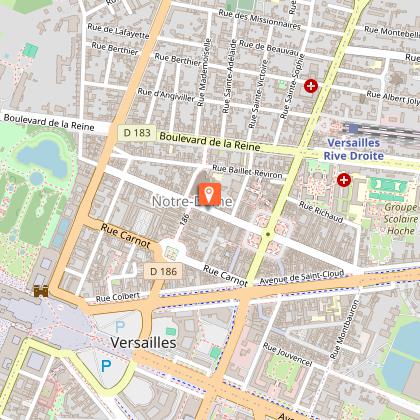
Don't miss the Sun King's parish church, the sober beauty of its architecture and the remarkable works of art in it! The town of Versailles once had a parish church of Saint-Julien, located in the Vieux-Versailles district. When the Notre-Dame district was created, it was decided to transfer it to the north of the Château de Versailles, and a modest church was built, still under the patronage of Saint-Julien. But the installation of the court in Versailles in 1682 changed the status of this parish, which became that of the king: in fact, all the inhabitants of the city then depended on a single parish, and the Royal Chapel was in its dependency. The church of Saint-Julien was far too modest, and the construction of a new church was launched in 1684 on the plans of Jules Hardouin-Mansart, the famous architect of the Sun King. In a very sober classical style, the church was completed in record time (as early as 1686), and from then on served the inhabitants, but also the Court. The king's links with the church of Notre-Dame are evidenced by the parish registers, in which the baptismal, marriage and death certificates of members of the royal family were recorded. Thus, we find the death certificate of King Louis XIV and the marriage certificate of the future Louis XVI with Marie-Antoinette, all scattered among certificates relating to the humblest of parishioners... During the French Revolution, the church temporarily became the cathedral of the new diocese of Seine et Oise, then the temple of Reason, and was stripped of all its ornaments. Returned to worship in 1800, it was refurnished and thus regained its stalls and its splendid altar painting commissioned by King Louis XIV from Michel II Corneille and dedicated to the Assumption of the Virgin, the patronal feast of the kingdom. It also retains its original pulpit and its organ case, as well as a beautiful collection of sculptures made by members of the Royal Academy of Painting and Sculpture during the reign of Louis XIV, and paintings by the king's painters Jean Restout, Carle Van Loo, Louis de Boullogne, Joseph Suvée, Nicolas Brenet, etc. In the 19th century, the Notre-Dame church was given an axial chapel dedicated to the Sacred Heart, in fulfillment of a vow made during the cholera epidemic that ravaged Europe in 1832, but spared Versailles. With a circular plan, it extends the building towards the north. The entire church, which was initially simply listed as a historic monument, was listed in its entirety in 2005.

35 rue de la Paroisse 78000 Versailles
Show
Palace of Versailles
747 m

Palace of Versailles

Since 1979, the Palace of Versailles has been listed as a UNESCO World Heritage Site. It stands as one of the finest masterpieces of 17th-century French art. The Palace and the Trianon Estate are open every day, except Mondays. The Palace opens at 9 a.m., while the Trianon Estate opens only from 12 p.m. The Park and Gardens are open daily with free admission (access to the Gardens is ticketed on the days of the Musical Fountains Shows and Night Fountains Shows, as well as during the Musical Gardens). You can only access the Park via: the Queen’s Gate (Grille de la Reine, entrance for pedestrians, cyclists, and vehicles every day), the Saint-Antoine Gate (Porte Saint-Antoine, pedestrians and cyclists every day, vehicles only on weekends and public holidays), the Matelots Gate (Grille des Matelots, pedestrians and cyclists every day), from 7 a.m. to 8:30 p.m., with last entry at 6:15 p.m. in high season, and from 8 a.m. to 6 p.m. in low season. By exploring the Hall of Mirrors, the King’s State Apartments, and the Museum of the History of France, you step into a palace that, until 1789, was the heart of royal power and continued to evolve over the centuries. Originally, Versailles was nothing more than a hunting lodge built by Louis XIII. But it was here that Louis XIV chose to construct the majestic palace we know today, a symbol of absolute monarchy and French classical art. In the 1670s, Louis XIV commissioned the construction of the King’s and Queen’s State Apartments. The most emblematic creation of these ceremonial spaces is undoubtedly the Hall of Mirrors, designed by Mansart. During the following century, the palace kept expanding, with major works such as the Royal Chapel and the Opera. Today, the Palace covers 63,154 m², spread across 2,300 rooms. Although the Palace lost its role as the seat of power in 1789, in the 19th century it was given a new purpose: to become the Museum of the History of France, an idea launched by Louis-Philippe, who ascended the throne in 1830. Many rooms of the palace were then transformed to house collections recounting the great moments of French history, enriched until the early 20th century.

Château de Versailles Place d'armes 78000 Versailles
Book from 0 €Book
Show

Where to eat in Versailles

See more suggestions
A wide selection of restaurants awaits you in Versailles.
See more suggestions

Where to sleep in Versailles

See more suggestions
Enjoy your stay with accommodations in Versailles.
See more suggestions
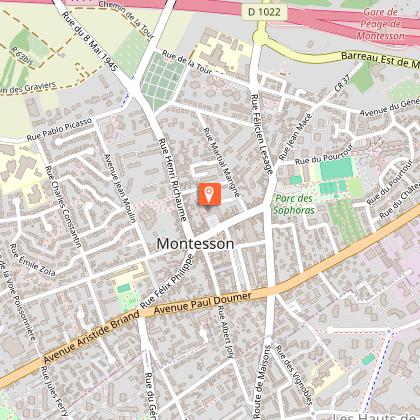
Campanile Montesson-Le Vésinet
12 km

Campanile Montesson-Le Vésinet

An entirely renovated Campanile hotel which invites you to enjoy the calm of this residential district of Montesson Located 15 km from Porte Maillot, our establishment offers a strategic position for business travellers in north-western Paris. Close to Saint-Germain en Laye, Le Vésinet, Port-Marly and Le Pecq, the hotel is easily accessible from the A86, A13 and A14 motorways. Le Vésinet-Le Pecq RER train station (line A serving La Défense and the centre of Paris) is a 15-minute walk away, Use your leisure time here to visit the Palace of Versailles or the Château de Maisons-Laffitte, both within easy reach of our hotel which proposes bright, modern 3-star rooms in Montesson. Our rooms are air-conditioned and sound-proofed and boast a contemporary style. Recently renovated in line with New Generation standards, they feature all the modern comforts needed for a restful stay. The hotel has 3 specially-adapted rooms to accommodate people with disabilities. To make your stay even more pleasant, you can also enjoy the television channels Canal + and Bein Sport, free of charge. We have a restaurant and terrace, as well as a secured indoor car park. In its lush green setting, our restaurant is open for breakfast, lunch and dinner. It is a modern, convivial venue that opens onto a shady terrace accommodating up to 35 people. Our chefs propose traditional French cuisine and seasonal dishes concocted from fresh ingredients. Our all-you-can-eat buffet menus for adults and children will satisfy every appetite,

9 Rue du Chant des Oiseaux 78360 Montesson
Show
Caution!
We have no information on the difficulty of this circuit. You may encounter some surprises along the way. Before you go, please feel free to inquire more and take all necessary precautions. Have a good trip! 🌳🥾