Alert

Alerts

To see around
See more
Open
Close
Show
Show
Show
Show
Show
Show
Show
Show
Show
Show
Show

Oups... It would appear that Cirkwi does not have permission to use your location.

Presentation
Description
Map
Points of interest
Ratings and reviews
See around

Cycling route - Discovering Versailles

Description

Discover Versailles by bike through its historic neighborhoods and the magnificent Château park. A 14 km route blending history, culture, and nature, perfect for a family outing or a trip with friends.

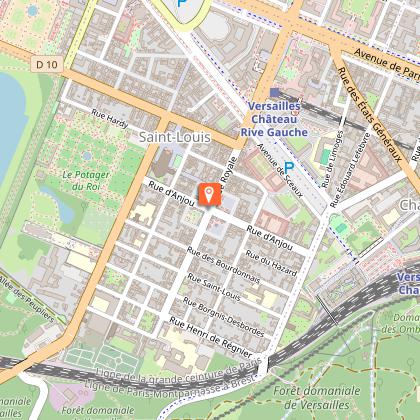
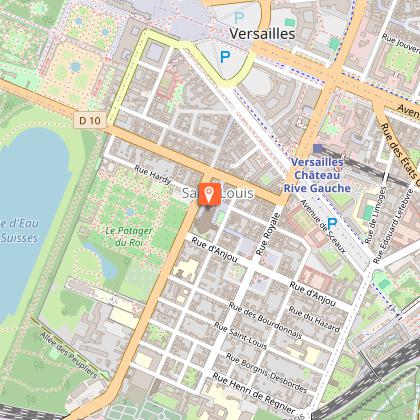
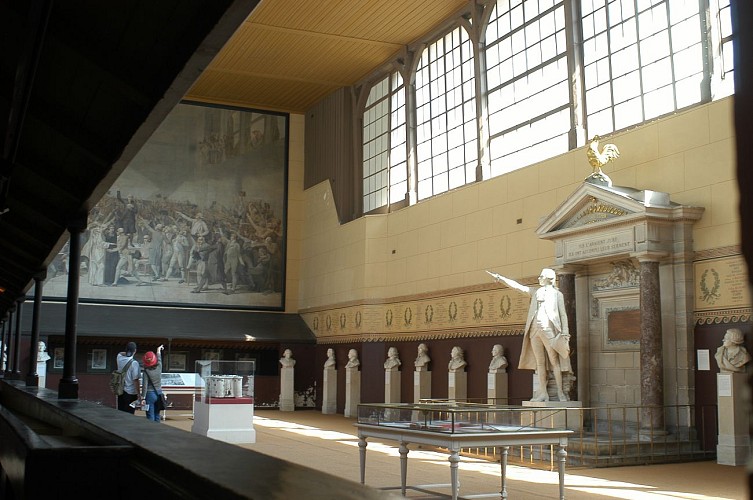
Start at the Carrés Saint Louis, a picturesque spot with historic buildings. Then, head to the Saint Louis Cathedral, an example of classical architecture with impressive stained glass windows. Continue to the Potager du Roi, a historic garden created for Louis XIV, where traditional gardening techniques are still practiced. Stop at the Jeu de Paume Hall, an emblematic site of the Tennis Court Oath, a significant event of the French Revolution.

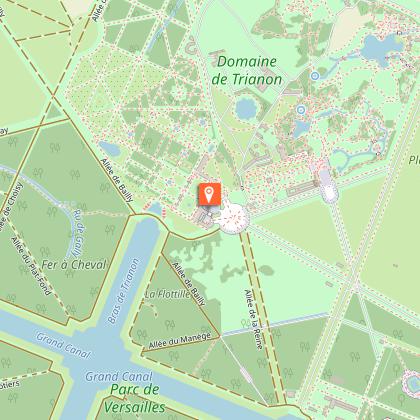
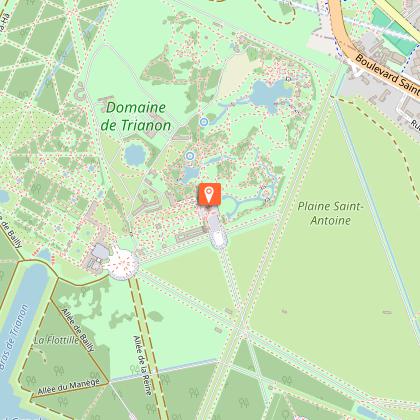
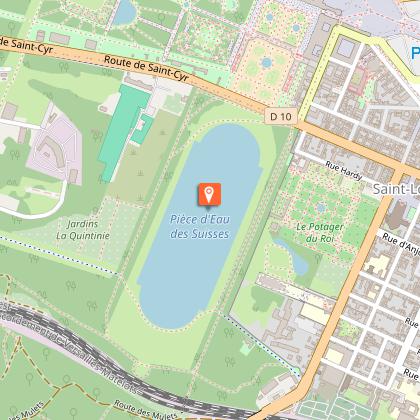
Next, go to the Pièce d'eau des Suisses, a large basin surrounded by lawns and trees, perfect for a break. Enter the park of the Palace of Versailles, famous for its French gardens and groves. Explore the Domaine de Trianon, including the Grand Trianon, the Petit Trianon, and the Queen's Hamlet, which offer a glimpse into royal life.

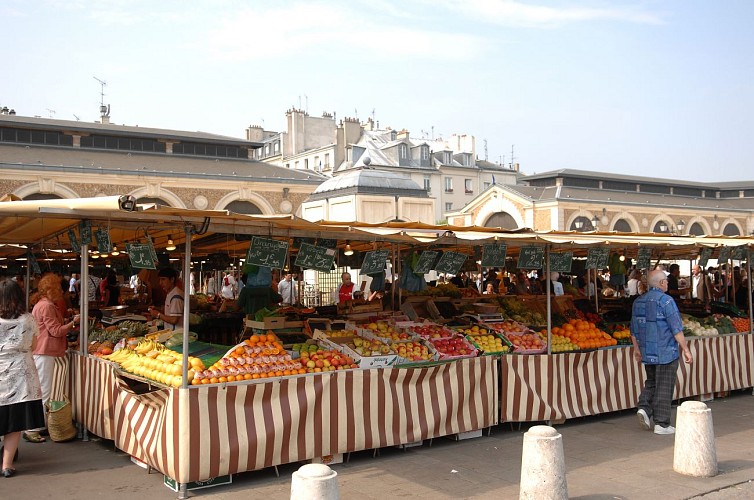
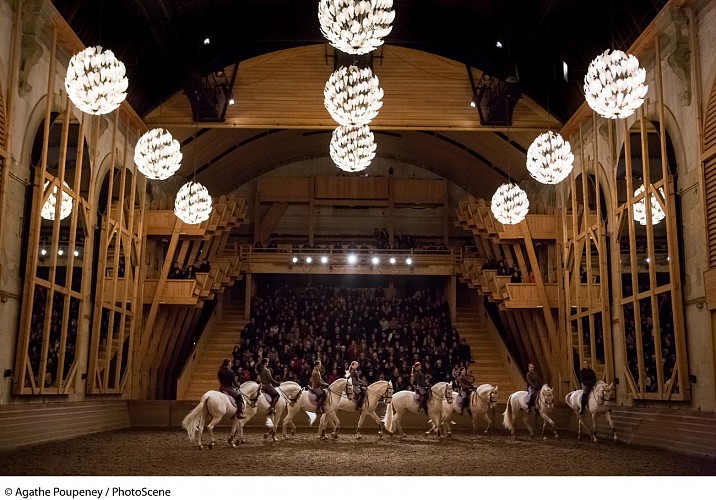
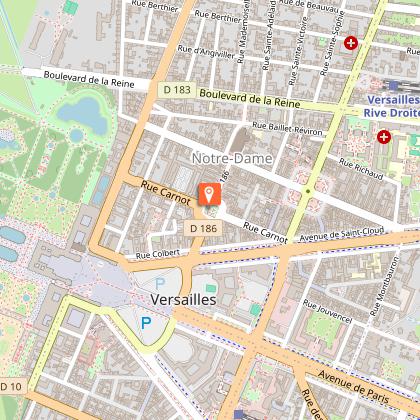
Return to town to visit the Notre-Dame Church, an example of Baroque architecture where many royal events took place. Continue to the Notre-Dame Market Square, the center of the local market with its fresh and artisanal products. Pass by the Hoche Square, the first octagonal square in France, and end your tour at the Equestrian Academy, where equestrian art is showcased. This bike route offers a comprehensive exploration of the history and beauty of Versailles.

Please note : Certain areas of the Château de Versailles park will be closed during the Olympic Games.

Technical Information

Racing biking
Difficulty
Very easy
Dist.
14 km
Show more

Altimetric profile

Starting point

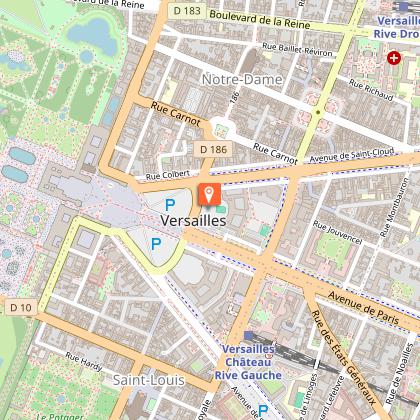
1 place du maréchal Lyautey , 78000   Versailles
Lat : 48.800449Lng : 2.128244

Points of interest

image du object

The Petit Trianon

The Petit Trianon was built between 1763 and 1768 by the architect Gabriel, requested by Madame de Pompadour, mistress then friend of king Louis XV.Madame de Pompadour, who wished to “relieve the king’s boredom” — though no longer his mistress, she remained his friend — was the instigator of this small château, built by architect Gabriel between 1763 and 1768. It was erected near the Botanical Garden and the new menagerie, as Louis XV had a keen interest in the sciences. To please the marquise, always at the forefront of fashion, the king’s architect broke away from the rococo aesthetic and adopted a cubic form with very pure lines, in keeping with the brand-new “Greek style” then in vogue. Its simplicity is only apparent, for each façade is different, designed in relation to the space it overlooks: the courtyard, the French Garden with its elegant pavilion, the Botanical Garden, and the Florist’s Garden. Inside, one finds the same modernity of style. Simpler than the rest of the estate, the decoration of the Petit Trianon lies not in lavish materials — gilding is almost absent — but in the refinement of its sculptures, in a château entirely dedicated to nature. Madame de Pompadour died in 1764 and never saw the château completed. Today, it is above all the memory of Marie-Antoinette that it evokes. In 1774, Louis XVI gave the Trianon estate to his wife, who was able to live here a life apart — too much so for some — from the Court.

Château de Versailles 78000 Versailles
- Office de Tourisme et des Congrès de Versailles Grand Parc -
Consulter
image du object

Saint-Louis Cathedral

Step into the majestic world of Saint-Louis Cathedral, a masterpiece of French Baroque, and let yourself be amazed by its elegant curves, artistic treasures, and history closely intertwined with that of the Kingdom of France.It was in the wake of the Court’s return to Versailles in 1722, when the young Louis XV came to power, that the Saint-Louis district began to flourish, designed to balance the city against the Notre-Dame district. A provisional church was first erected, before the current cathedral was built between 1743 and 1754, based on the plans of Jacques Hardouin-Mansart de Sagonne, worthy heir of his illustrious grandfather, architect to Louis XIV. Dominated by a bold Baroque style, where curved lines impose themselves with grace — domed roofs, delicate curves of the organ gallery — the church fascinates as much as it stands out at a time when Neoclassicism was gaining popularity. In 1764, the Chapel of the Catechisms, designed by Louis-François Trouard, was added, marking this stylistic evolution. Inside, an exceptional collection of canvases commissioned from the great painters of the reign illuminates the chapels and walls: François Boucher, Jean Restout, Jean-Baptiste Pierre, François Lemoyne… so many prestigious names that give the cathedral its artistic nobility. The monumental organ, crafted by the master organ builder Louis-Alexandre Clicquot, still stands in the gallery, preserving the original 18th-century sounds. The cathedral is not only an architectural gem: it is also a privileged witness to the history of France. In 1789, it was here that the opening mass of the Estates-General was celebrated, in the presence of Louis XVI, Marie-Antoinette, and all the deputies of the kingdom. After the revolutionary turmoil and the closure of places of worship, the Concordat of 1801 restored Versailles’ episcopal status, and the Church of Saint-Louis was chosen as the cathedral. In the 19th century, restorations brought new brilliance: colorful stained-glass windows replaced the original white glass panes. In the Chapel of the Virgin, the windows of the Annunciation and the Assumption, made in 1848 by the Sèvres Manufactory after designs by Achille Devéria, captivate with their finesse and light. Solemnly consecrated in 1843, the Saint-Louis Cathedral of Versailles has been listed as a Historic Monument since 1906. Today, it remains one of the most remarkable treasures of Versailles’ heritage, blending artistic splendor, religious devotion, and royal memory.

4 place Saint-Louis 78000 Versailles
- Office de Tourisme et des Congrès de Versailles Grand Parc -
Consulter
image du object

King's Kitchen Garden

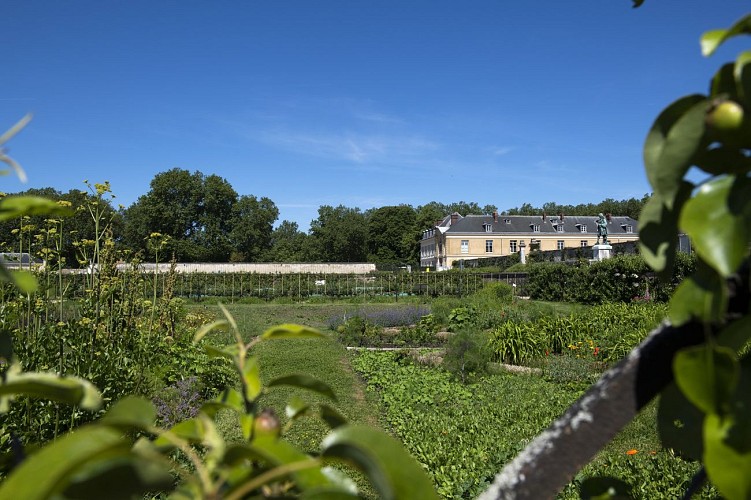
Built between 1678 and 1683 at the request of Louis XIV, the Potager du Roi (the King’s Kitchen Garden) is a unique example of the French food garden of the Baroque era, and its original missions remain alive today: to produce, to experiment, and to pass on knowledge.In the heart of Versailles, covering 9 hectares, this kitchen garden is a masterpiece of the French formal garden style, designed for productivity. It was created by Jean-Baptiste de La Quintinie at the request of the Sun King. Today, it is listed as a Historic Monument and proudly bears the prestigious “Remarkable Garden” label. As an integral part of the Versailles Estate, a UNESCO World Heritage Site, the King’s Kitchen Garden has, since the 17th century, been home to gardeners who perpetuate the art of pruning and cultivate an impressive variety of fruits and vegetables. Open to the public since 1991, the Potager du Roi is also the historic site of the École nationale supérieure de paysage (National School of Landscape Architecture), which ensures its preservation, management, and development. In today’s context of ecological transition, this connection allows the site to reaffirm its pioneering identity: urban production focused on short supply chains, experimental cultivation using innovative techniques such as agroecology, and a strong commitment to education, research, and creativity. A rich and varied program The King’s Kitchen Garden is a true place of exchange, culture, and community. Here you can enjoy activities for all ages: gardening, cooking, dance, theater, music, art… and much more! In partnership with the city of Versailles, events such as Esprit Jardin bring together gardening enthusiasts. The Mois Molière festival allows you to (re)discover classical plays in an extraordinary setting. And with Les Saveurs du Potager, the spotlight is placed on the fruits and vegetables grown right here. Visits, workshops, and training Every weekend from April to October, at 11 am, 2:30 pm, and 4 pm, you can join guided tours to discover the richness of the garden alongside professional guides, passionate gardeners, or landscape students. In addition, a wide range of workshops and short training sessions are available to the public, such as The Natural Garden, Design and Cultivate Your Garden, or Medicinal Plants. (Tours available in French only). Become part of the Potager with the Clé du Potager Thanks to the annual Clé du Potager membership card, you can enjoy year-round access to the garden and benefit from exclusive discounts at the on-site boutique-bookshop. Get involved as a volunteer Would you like to get more involved? Become a volunteer and take part in various garden activities: maintenance tasks, gardening support, or cultural event assistance—a unique way to experience the Potager from the inside! The boutique-bookshop The Potager’s shop offers fresh produce harvested directly from the garden, along with products such as juices, jams, honey, coulis, and even plant-based cosmetics! Depending on the season and market days, you’ll find a wide selection of quality goods. The bookshop also features more than 800 specialized titles on gardening, ecology, cooking, agriculture, and landscape design.

10 rue du Maréchal Joffre 78000 Versailles
- Office de Tourisme et des Congrès de Versailles Grand Parc -
Consulter
image du object

Notre Dame market

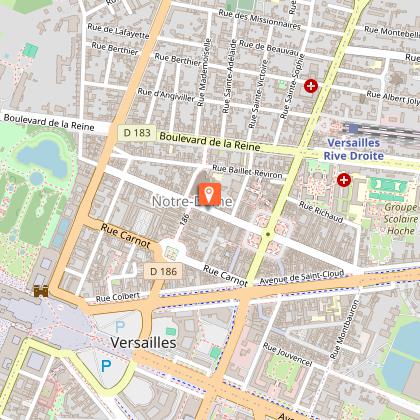
In Versailles, going to the market is much more than just part of daily life: it is the continuation of a centuries-old tradition, alive with colors, flavors, and conviviality.Since 1561, when the lord of Versailles, Martial de Loménie, obtained authorization to set up fairs and markets, the city has continually kept this warm spirit alive at the heart of its neighborhoods. Even today, the markets of Versailles bring the city to life every day of the week. From the emblematic Notre-Dame market to that of Saint-Louis, each district has its own atmosphere and loyal crowd, gathered around fresh, local, and high-quality products. A true crossroads of daily life, the Notre-Dame market — voted “Most Beautiful Market in Île-de-France” — embodies this vibrancy. Since the 17th century, it has occupied the very spot chosen by Louis XIII, who wanted functional halls to protect merchants and their goods. The Notre-Dame market is made up of covered halls (open Tuesday to Sunday) and the famous open-air *Carrés*, where organic farmers, food vendors, and non-food traders set up each week. A lively and ever-evolving place, it adapts to modern trends: consuming better, eating healthy, favoring short supply chains, and supporting sustainable products. Since 2016, the *Carré Bio* has enjoyed growing success, and since 2018, banners have clearly marked local, organic, or environmentally responsible products. But the Versailles market is also an experience to live. People stroll through the stalls in search of seasonal products, meet neighbors at a tasting stand, and discover passionate chefs showcasing artisan flavors. New food spaces are also emerging — such as *Carré à la Marée* and *Carré à la Farine* — to extend the visit with a gourmet break. And that’s not all: non-food stalls also offer clothing, accessories, small appliances, crafts, and practical services (bike repairs, watchmaking, tailoring…). Each visit is an opportunity to find great deals or discover a new vendor. In Versailles, markets are not just places to shop — they are places of meeting, exchange, and tradition. Spaces where past and present come together generously, at the heart of a cherished French art of living. **Notre-Dame Halls (covered market):** * Tuesday to Saturday: 7:00 a.m. – 1:30 p.m. and 3:00 p.m. – 7:30 p.m. * Sunday: 7:00 a.m. – 2:00 p.m. * Closed on Monday **Notre-Dame Carrés (open-air market):** * Tuesday, Friday, and Sunday: 7:30 a.m. – 2:00 p.m.

- Office de Tourisme et des Congrès de Versailles Grand Parc -
Consulter
image du object

Notre-Dame Church

Don't miss the Sun King's parish church, the sober beauty of its architecture and the remarkable works of art in it!The town of Versailles once had a parish church of Saint-Julien, located in the Vieux-Versailles district. When the Notre-Dame district was created, it was decided to transfer it to the north of the Château de Versailles, and a modest church was built, still under the patronage of Saint-Julien. But the installation of the court in Versailles in 1682 changed the status of this parish, which became that of the king: in fact, all the inhabitants of the city then depended on a single parish, and the Royal Chapel was in its dependency. The church of Saint-Julien was far too modest, and the construction of a new church was launched in 1684 on the plans of Jules Hardouin-Mansart, the famous architect of the Sun King. In a very sober classical style, the church was completed in record time (as early as 1686), and from then on served the inhabitants, but also the Court. The king's links with the church of Notre-Dame are evidenced by the parish registers, in which the baptismal, marriage and death certificates of members of the royal family were recorded. Thus, we find the death certificate of King Louis XIV and the marriage certificate of the future Louis XVI with Marie-Antoinette, all scattered among certificates relating to the humblest of parishioners... During the French Revolution, the church temporarily became the cathedral of the new diocese of Seine et Oise, then the temple of Reason, and was stripped of all its ornaments. Returned to worship in 1800, it was refurnished and thus regained its stalls and its splendid altar painting commissioned by King Louis XIV from Michel II Corneille and dedicated to the Assumption of the Virgin, the patronal feast of the kingdom. It also retains its original pulpit and its organ case, as well as a beautiful collection of sculptures made by members of the Royal Academy of Painting and Sculpture during the reign of Louis XIV, and paintings by the king's painters Jean Restout, Carle Van Loo, Louis de Boullogne, Joseph Suvée, Nicolas Brenet, etc. In the 19th century, the Notre-Dame church was given an axial chapel dedicated to the Sacred Heart, in fulfillment of a vow made during the cholera epidemic that ravaged Europe in 1832, but spared Versailles. With a circular plan, it extends the building towards the north. The entire church, which was initially simply listed as a historic monument, was listed in its entirety in 2005.

35 rue de la Paroisse 78000 Versailles
- Office de Tourisme et des Congrès de Versailles Grand Parc -
Consulter
image du object

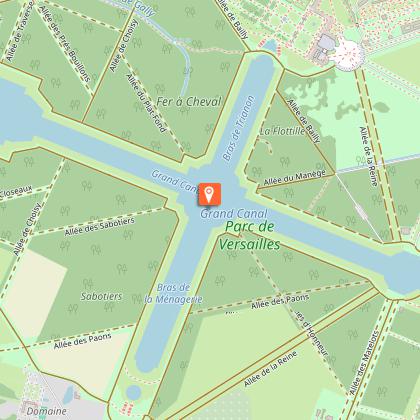
The Grand Canal

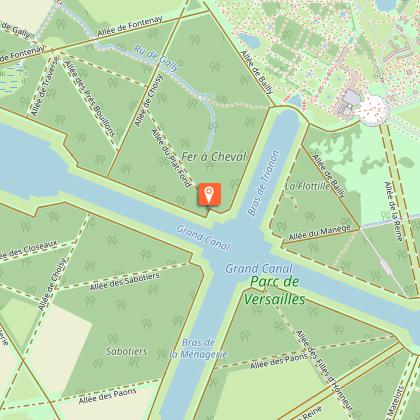
Set around the majestic Grand Canal, the park of the Palace of Versailles stretches over several hectares and is open free of charge all year round.Designed between 1668 and 1679, the Grand Canal is one of the most remarkable creations of André Le Nôtre, King Louis XIV’s landscape gardener. Covering 23 hectares, 60 meters in width, 1,700 meters east to west, and 1,000 meters north to south, the Grand Canal offers an exceptional perspective, carefully designed to highlight the beauty and grandeur of the royal estate. Whether on foot, by bike, or on rollerblades, the Palace park invites you to enjoy a refreshing walk in an extraordinary setting. The full loop around the Grand Canal stretches 5.5 km and can be covered in: - 1h00 to 1h15 on foot, - 25 to 30 minutes by bike, - 35 to 40 minutes on rollerblades. The paved, relatively flat path is wheelchair accessible, allowing everyone to fully enjoy this remarkable natural landscape. A masterpiece of landscape design and nature The Grand Canal forms the main east-west axis of the Versailles gardens. Once a wetland, this part of the park was transformed by Le Nôtre into a vast water reservoir that now serves as an essential decorative element, reflecting changing light through the seasons. Whether you visit the gardens in summer, autumn, or winter, the natural spectacle is breathtaking. Practical information Access to the park is free and can be made through several entrances, notably Boulevard de la Reine or directly from the Palace entrance. Please note, however, that entry to the gardens (the area near the Palace with the groves) is ticketed during the *Grandes Eaux Musicales* in high season. On site, you’ll find several restaurants and tea rooms for refreshments. You can also rent rowboats, bikes, or segways to explore the park in a different way. A unique experience on the water: rowboat rental The Grand Canal, this majestic cross-shaped basin, invites relaxation and contemplation. Renting a rowboat gives you access to an exceptional vantage point over the estate: the groves, fountains, royal perspectives, and the Palace reveal themselves in a peaceful, bucolic setting. This activity is perfect for couples seeking romance, families out for a stroll, or friends in search of something original. Rental hours : daily from 10 a.m. to 6:45 p.m. (last departure at 6:15 p.m.), closed annually in December, January, and February. Rates: available by the half-hour or by the hour, depending on your preference. Let yourself be lulled by the calm of the water, watch swans glide by, and take in the changing light of the park. A timeless experience, not to be missed during your visit to the Versailles estate.

Château de Versailles 78000 Versailles
- Office de Tourisme et des Congrès de Versailles Grand Parc -
Consulter

Additional information

Updated by

Office de Tourisme et des Congrès de Versailles Grand Parc - 15/10/2025
www.versailles-tourisme.com/
Report a problem

Open period

All year round daily.

Contact

Phone : 01 39 24 88 88

Email : tourisme@ot-versailles.fr

Website : http://www.versailles-tourisme.com/

Ratings and reviews

To see around
See more
Open
Close
Show
Show
Show
Show
Show
Show
Show
Show
Show
Show
Show
Caution!
We have no information on the difficulty of this circuit. You may encounter some surprises along the way. Before you go, please feel free to inquire more and take all necessary precautions. Have a good trip! 🌳🥾