Tours
Activities
Places of interest
Where to eat
Where to sleep

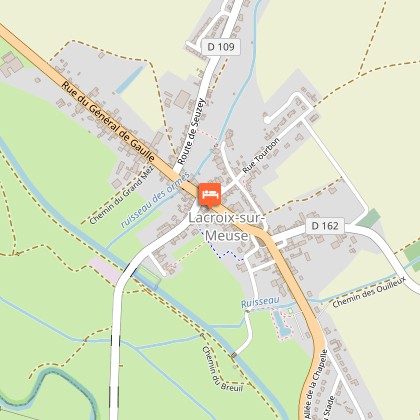
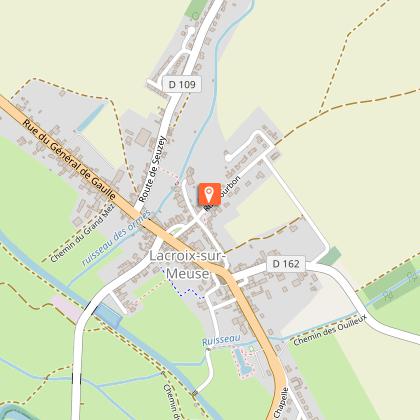
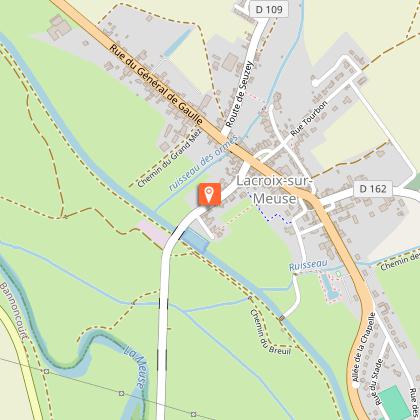
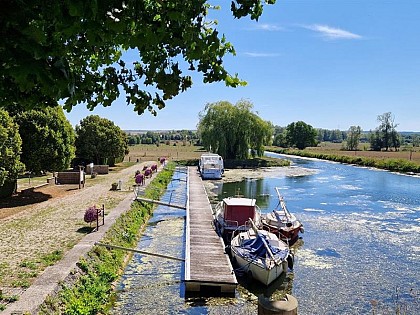
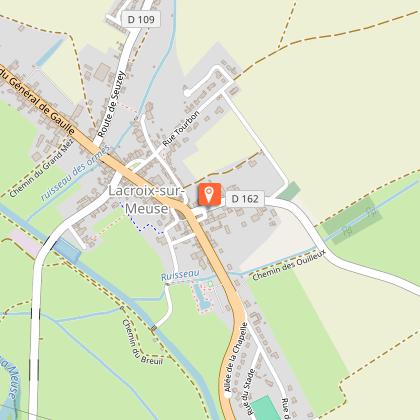
Discover the allure of Lacroix-sur-meuse, Meuse, Lorraine

Are you in charge of the destination?
Nestled in the heart of Lorraine, Lacroix-sur-meuse, Meuse, Lorraine offers a captivating destination rich in history and nature. Begin your journey by exploring the local heritage through strolls within the village, showcasing traditional architecture and Lorraine hospitality. Nearby hiking trails provide an immersion into pristine nature, perfect for walking and cycling enthusiasts. Along the ba...See more

Walking around Lacroix-sur-meuse

See more suggestions
Explore the walking circuits of Lacroix-sur-meuse.
See more suggestions
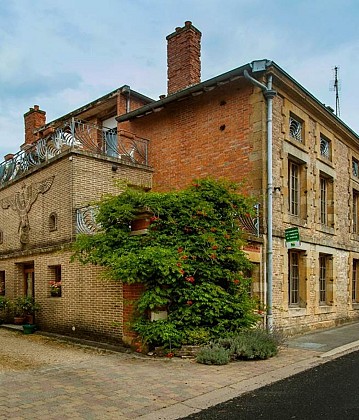
Left bank : through the walking and cycling path
23 km

Left bank : through the walking and cycling path

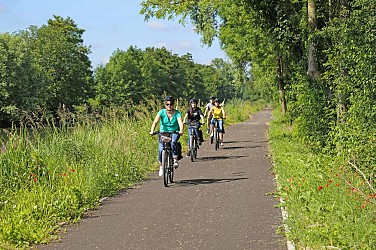
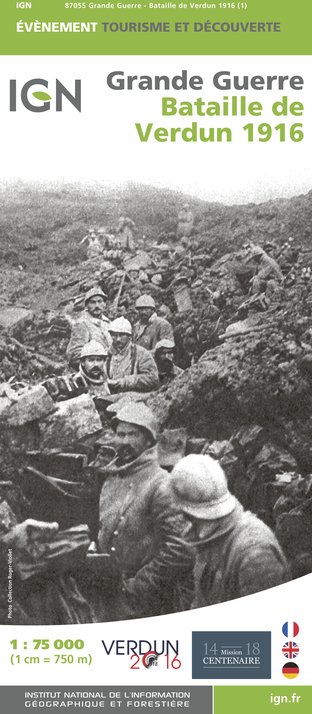
This tour allows you to discover the Left Bank and the beauty of the landscapes of the Meuse Valley along the canal. Dead man’s hill (Le Homme-mort) has suffered some of the most deadliest combats just as much as those on the right bank. Today, it is a pleasant wooded mound that you can enjoy visiting. This course is perfect for a first try of the electric bike. Easy and with little difference in altitude, it will be perfect for a nice stroll with family or friends ! Limited in supply and manpower, the Kronprinz army cannot attack simultaneously on both banks of the Meuse. In order to obtain better results on the right bank, C.Q.G. German prepared the second phase of its offensive whose main objective was to take control of the hills of Mort-Homme (Dead man’s hill) and the Côte 304. These two natural observatories regulated the fires of the French artillery; it is in fact a crucial stake for the offensive continuation. The fighting raged on there for weeks, destroying villages of Esnes-EN-ARGONNE and Chattancourt. Rapidly, the battle peaks became untenable volcanoes; suicidal assaults fade to move on to countless murderous gunshots . To protect themselves from bombing, both sides took refuge on the hillside, digging tunnels. On August 20, 1917, the generals Guillaumat and Pétain begin a to put victorious offensive which has the effect four German divisions attached to the sector Mort-Homme-cote 304 to flight. To the thousands of prisoners, material and armaments captured, must also be added more than twenty thousand victims whose units appear on the current monuments. In this inferno, the village of Cumières will disappear completely and will never be rebuilt.

4 h
48 km
Easy
1 Rue René Panau 55100 Verdun
Show
HIGHLIGHTS OF THE BATTLE OF VERDUN
23 km

HIGHLIGHTS OF THE BATTLE OF VERDUN

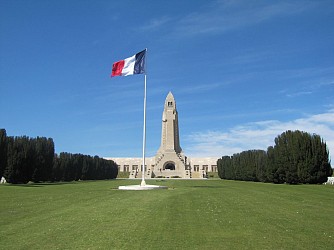
In 1920 the Government decided to create a Red Zone at Verdun, to mark the soil rendered sterile by shell fragments and polluting chemicals. Ten years later, it received its first covering of some 10 million black pines, sent from Austria. The nine destroyed villages included in this Red Zone will never again see the light of day, but the Prefect of the Meuse assures they will be maintained as memorials, by continuing to nominate a mayor to each one. Starting from the Tourism Office, join the Green Way Cycle Path in the Parc Japiot opposite. 4.5 miles. Continue straight on, as far as the Canal Lock at BRAS-SUR-MEUSE. Cross the bridge to reach the opposite bank and follow the canal as far as the next bridge. Leave the Cycle Path, join the road and turn left, to reach the Stop sign opposite the Boulangerie. Turn right onto the main road, then left opposite the restaurant 8.2 miles. Follow the main road and climb up to the Tranchée des Baïonnettes. 8.75 miles. Continue to climb, then after passing the restaurant, turn right and arrive at the Ossuaire de Douaumont. If you climb on foot the 204 steps inside the tower, you will have a 360 degree panoramic view of the entire battlefield 9.25 miles. Retrace your route to the Stop sign. To visit the disappeared village of Douaumont, go left and then immediately right and take the dead-end road to the disappeared village of Douaumont, then return to the main road. Alternatively, to go direct to the Fort de Douaumont, at the Stop sign turn right and descend to the next turning. At the Monument to the Unknown Soldier, turn left, towards the Fort de Douaumont. 9.7 miles. On the road to the Fort de Douaumont, you will cross over the Boyau de Londres. 10 miles. On reaching the Fort de Douaumont, dismount and climb on foot onto the roof of the Fort, where you will have a panorama view of the horizon which in 1916 marked the German frontier. You can also take the path on the left between the shell craters, which in 300 yards leads you to the lookout point. 10.3 miles. Return back to the Monument to the Unknown Soldier and turn left. On your left you will pass Abri (Shelter) 320 and on your right the National Cemetery. 11.8 miles. At the crossroads, turn left and pedal as far as the disappeared village of Fleury-devant-Douaumont. 12.2 miles. Continue straight on and pass the Mémorial de Verdun, dedicated to the Great War 1914-1918. 12.4 miles. Carry on to the Souville Lion, the monument which marks the nearest point to Verdun reached by the Germans in 1916, and where they were finally stopped. 12.75 miles. At the crossroads turn right and descend towards Verdun. You can visit the Souville fortified plateau by taking the small path on the left. There you can visit the unique Bussière twin turret, the Pamart machine gun casemates, and the ammunition shelters. 12.9 miles. On the road descending to Verdun, stop to admire the Maginot Monument on the left. A little further along there is a picnic area in the forest where you can rest. 15.3 miles. After crossing the railway bridge, at the Stop sign, cross over and pass by the Faubourg Cemetery. At the next Stop sign turn right, then immediately left, and pass the Braquier Dragée factory. At the roundabout, turn right and pass the Parc de Londres. Then at the next roundabout, turn left towards the Tourism Office.

4 h
35 km
Medium
1 Place de la Nation 55100 Verdun
Show
the city of verdun : 1 000 YEARS OF HISTORY
23 km

the city of verdun : 1 000 YEARS OF HISTORY

This tour is perfect for a first trip uncovering of Verdun city. This route invites cyclists to discover over the many centuries, from 10th to today; the lively city of Verdun with its docks; Medieval period but also the late modern period of Verdun with its facades and its Art deco. An episcopal city, Verdun has a rich religious heritage since the 16th century, it forms with the cities of TOUL and METZ the province of the «Trois Évêchés» (Three Bishops). From the St-Baptiste Church or St-Victor via the St Nicolas chapel, simply walk the streets of the upper town and stroll along the river Meuse to be convinced. Verdun has an episcopal palace (now the World Peace Center), a cathedral, two old abbeys, seven churches and chapels ... 200 m • From the Tourist Office, take the direction of the Pont chaussée. Before the bridge on the right you can see the Children’s Monument. On the other side is the Porte Chaussée, official entrance of the city in the 14th century, and defensive element of the Grand Rempart. 300 m • Go to the right and follow the road to the roundabout. You will pass in front of the « Défense de Rodin » (19th century) the « Monument to women of the rural world » (monument aux femme du monde rural) 650 m • Turn left and pass in front of the subprefecture and Porte St-Paul (19th century). 1 km • Continue on Mazel Street. You can raise to eyes and contemplate the architecture and Art deco of this street (20th century) 1,3 km • At the end of the street, turn left on the bridge, and take the roundabout and the exit on the right to the City Hall then take the first street on the right (17th century). 4.1 km • Continue your tour to Pré l’Evêque Leisure Center. Enjoy this green area to go around the water. You’ll appreciate the calm and the tranquility. Exit the leisure center and take to the left the Pont Ecluse St-Amand (17th century). It allowed the upstream flooding that keep the city out of reach of enemy cannons then head yourself towards your the left to the Underground Citadel. 6,2 km • At the end, stop yourself at the Carrefour des Maréchaux (16 statutes that represent Generals and Marshals of the First and Second Empire). Go around the ramparts of the Underground Citadel and climb the hill to the right to reach the place de l’étoile. Turn left to reach Porte Châtel, the oldest gate of Verdun (18th century). 6,8 km • Go down to the Monument de la Victoire (Victory Monument) to enjoy the view. Retrace your steps and pedal to Notre-Dame of Verdun Cathedral (10th century) and the World Center For Peace (Centre mondiale de la paix), the former episcopal palace (18th century). 7,4 km • Follow the road and go down to the city center. Pass the Princerie Museum (14th century), then turn right to face 200m lower, the Chapelle Buvignier (Buvignier Chapel, 18th century), place of many exhibitions. Continue straight on the sidewalk and pass the Tour chaussée (Pavement Tower) to reach the Tourist Office.

1 h
14 km
Very easy
1 Bis Rue de la Liberté 55100 Verdun
Show

What to do in Lacroix-sur-meuse

See more suggestions
Explore the bookable activity options in Lacroix-sur-meuse for all tastes and ages.
See more suggestions

What to visit in Lacroix-sur-meuse

See more suggestions
Taste the culinary specialties of Lacroix-sur-meuse.
See more suggestions
Where to eat in Lacroix-sur-meuse

See more suggestions
Experience Lacroix-sur-meuse's gastronomy.
See more suggestions

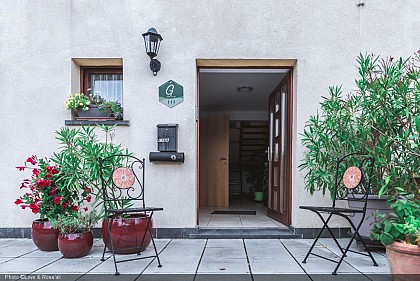
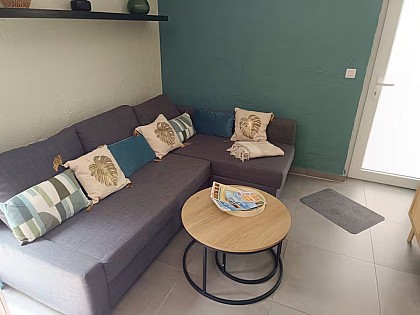
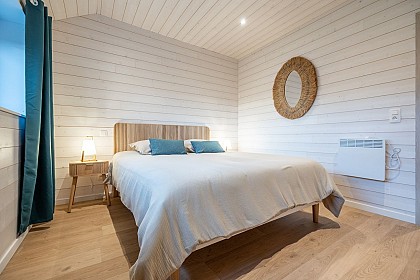
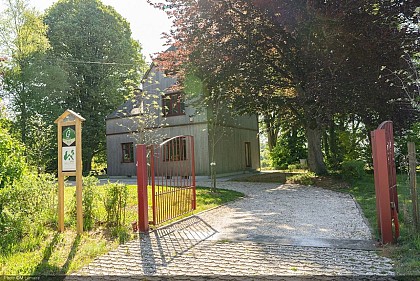
Where to sleep in Lacroix-sur-meuse

See more suggestions
Book a pleasant stay in Lacroix-sur-meuse.
See more suggestions
Caution!
We have no information on the difficulty of this circuit. You may encounter some surprises along the way. Before you go, please feel free to inquire more and take all necessary precautions. Have a good trip! 🌳🥾