Alert

Alerts

To see around
See more
Open
Close
Show
Show
Show
Show
Show
Show
Show
Show
Show
Show
Show

Oups... It would appear that Cirkwi does not have permission to use your location.

Presentation
Description
Map
Points of interest
Ratings and reviews
See around

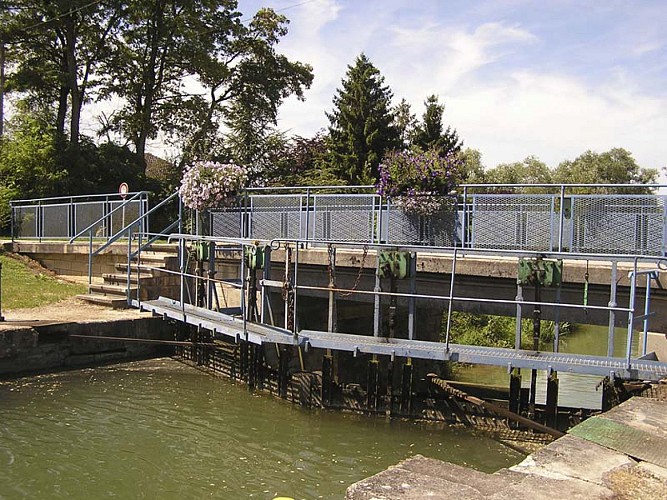
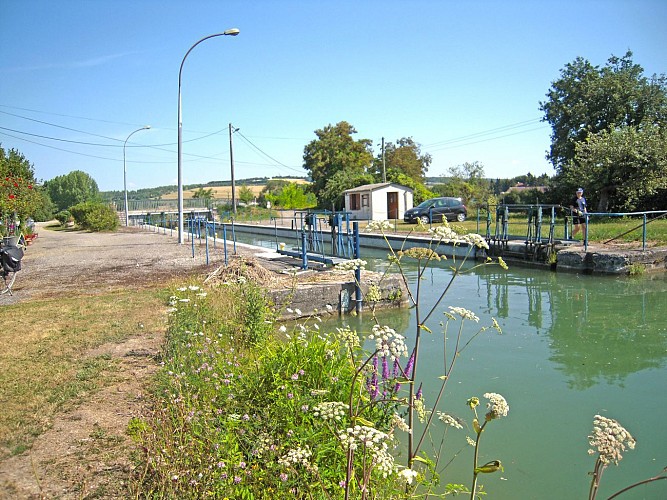
Left bank : through the walking and cycling path
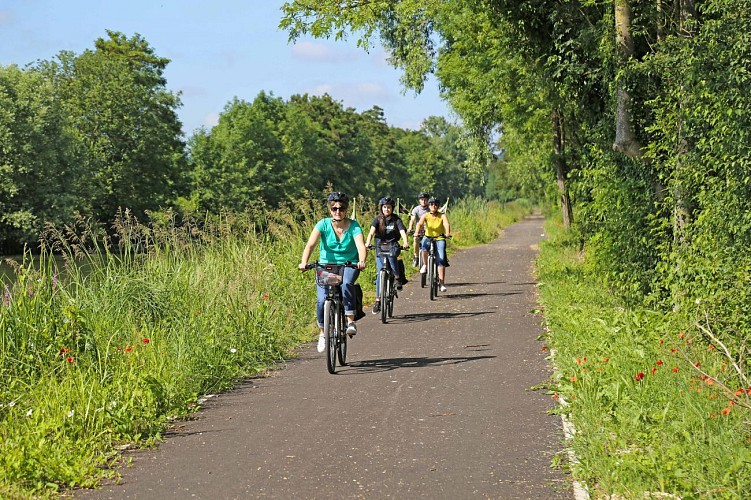
Left bank : through the walking and cycling path
Credit : © Cécile THOUVENIN QUINET / Tourisme Grand Verdun

Description

This tour allows you to discover the Left Bank and the beauty of the landscapes of the Meuse Valley along the canal. Dead man’s hill (Le Homme-mort) has suffered some of the most deadliest combats just as much as those on the right bank. Today, it is a pleasant wooded mound that you can enjoy visiting. This course is perfect for a first try of the electric bike. Easy and with little difference in altitude, it will be perfect for a nice stroll with family or friends !

Limited in supply and manpower, the Kronprinz army cannot attack simultaneously on both banks of the Meuse. In order to obtain better results on the right bank, C.Q.G. German prepared the second phase of its offensive whose main objective was to take control of the hills of Mort-Homme (Dead man’s hill) and the Côte 304. These two natural observatories regulated the fires of the French artillery; it is in fact a crucial stake for the offensive continuation.

The fighting raged on there for weeks, destroying villages of Esnes-EN-ARGONNE and Chattancourt. Rapidly, the battle peaks became untenable volcanoes; suicidal assaults fade to move on to countless murderous gunshots . To protect themselves from bombing, both sides took refuge on the hillside, digging tunnels.

On August 20, 1917, the generals Guillaumat and Pétain begin a to put victorious offensive which has the effect four German divisions attached to the sector Mort-Homme-cote 304 to flight. To the thousands of prisoners, material and armaments captured, must also be added more than twenty thousand victims whose units appear on the current monuments.

In this inferno, the village of Cumières will disappear completely and will never be rebuilt.

Technical Information

Electric bicycle
Difficulty
Easy
Duration
4h (1d)
Dist.
48 km
Show more

Altimetric profile

Starting point

2 Rue René Panau , 55100   Verdun
Lat : 49.16156Lng : 5.38836

Points of interest

image du object

Destroyed village of Cumières-le-Mort-Homme

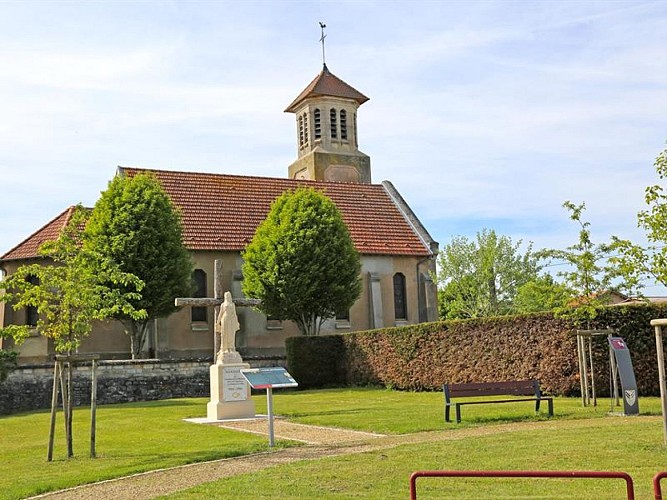
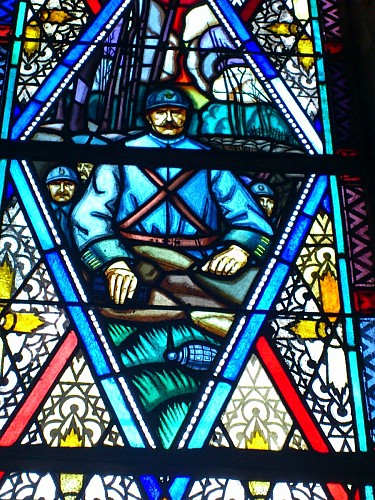
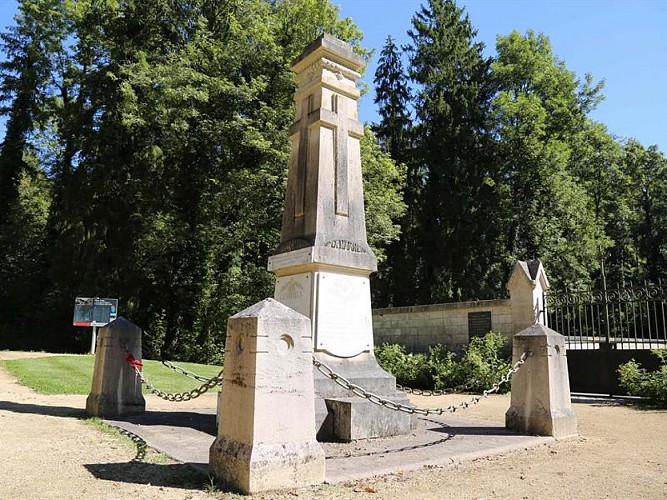
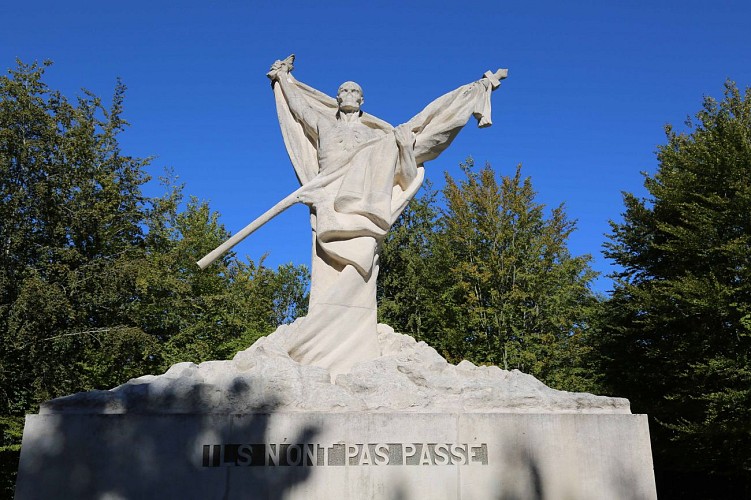
This village, the only one on the left bank of the Meuse among the nine villages destroyed during the war of 1914-18, had 205 inhabitants in 1913. It has very ancient origins, as a sepulchral well dating from the Neolithic period was discovered there in 1873. In the Middle Ages, one of the lords of Cumières began to extort all those who passed through his lands, particularly the inhabitants of Verdun. The latter banded together against him and destroyed his castle in 1439. Nearly five centuries later, the entire village would suffer the same fate, but for different reasons. Indeed, after the German army launched its massive offensive in February 1916 to capture Verdun from the heights on the right bank of the Meuse, the German general staff decided to outflank the French resistance from the west... The Germans first sought to seize the heights of Mort-Homme during a particularly deadly battle that lasted 10 days, from March 6 to 16, 1916. They succeeded and extended their attack on March 20 towards Hill 304, located further west. The fighting was fierce under a veritable deluge of fire and in appalling weather conditions. Further to the east, Cumières, held by the 5th Battalion of the 254th Infantry Regiment, was attacked from May 16 to 23, 1916. The village fell into German hands on May 24, 1916, despite the heroic defense by French infantrymen. It was not until August 20, 1917, that the ruins of the village of Cumières were recaptured by the Marching Regiment of the Foreign Legion. At the end of the war, in 1918, Cumières was placed in the "red zone" along with the entire Mort-Homme hill, then received the unique status of "destroyed village" along with eight other equally devastated villages in the Meuse. Between the two wars, veterans, very active in honoring the memory of the countless soldiers who died, were wounded, or disappeared in the mud of this significant battlefield, helped erect the impressive skeleton monument on Mort-Homme in 1922 and eventually added the name of this bloody hill to that of the destroyed village of Cumières, "Died for France," just like the 10,000 soldiers who fell in this Mort-Homme sector. Finally, like in the other eight destroyed villages on the right bank of the Meuse, Cumières le Mort-Homme erected the Saint-Rémi chapel on August 6, 1933, using the stones from the old church to remind people that this was once a happy village, at the foot of its hill. To see: The Saint-Rémi chapel built with the stones from the old church (paintings by Lucien Lantier); The war memorial; The skeleton monument (a striking work by sculptor Jacques Froment-Meurice, erected by the association of veterans of the 63rd Infantry Division) at the top of Mort-Homme hill; The remains of the mill's former lock.

- Tourisme Grand Verdun -
Consulter

Data author

Place de la Nation 55100 Tourisme Grand Verdun

Ratings and reviews

To see around
See more
Open
Close
Show
Show
Show
Show
Show
Show
Show
Show
Show
Show
Show
Caution!
We have no information on the difficulty of this circuit. You may encounter some surprises along the way. Before you go, please feel free to inquire more and take all necessary precautions. Have a good trip! 🌳🥾